
服务贸易

Search documents
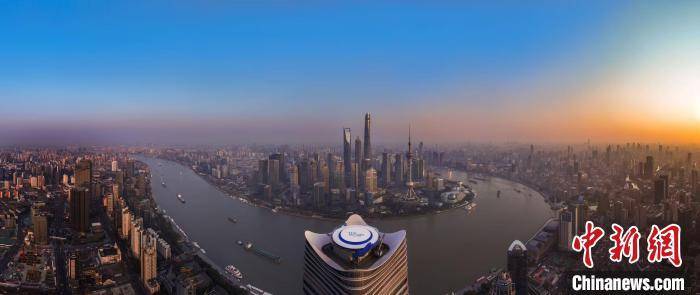
上海北外滩开发建设五周年:重塑“港口价值”跑出经济发展“加速度”
Sou Hu Cai Jing· 2025-05-14 07:26
Core Insights - The development of North Bund in Shanghai has significantly enhanced its economic value, contributing over 3% to the city's economic output despite occupying only 0.3% of its area [1] - The area has attracted nearly 2000 foreign enterprises and is expected to drive a 35.8% increase in actual foreign investment in the Hongkou District by 2024 [1][5] - North Bund aims to become a core functional area for Shanghai's five centers: international economy, finance, trade, shipping, and technology innovation [1][8] Economic Development - North Bund has transformed from a cargo handling port to an international hub and cruise home port, focusing on the integration of shipping, finance, and green low-carbon industries [3][4] - The region has introduced 335 major investment projects with a total investment exceeding 300 billion yuan [1] - The area has gathered over 4700 shipping companies, accounting for nearly 70% of Shanghai's total shipping capacity [1] Industry Focus - North Bund is developing into a "Service Trade Port," emphasizing high-end shipping services, financial technology, and new trade models such as offshore trade and cross-border e-commerce [3][4] - The "Technology Innovation Port" initiative has led to the establishment of a complete innovation chain, with the technology service industry exceeding 70 billion yuan, representing 13% of the city's total [4] - The "Headquarters Economy Port" has attracted 104 headquarters, including 35 regional headquarters of multinational companies [5] Future Development Plans - The next five years are critical for North Bund as it transitions from construction to core functional development, enhancing its global resource allocation and cultural soft power [7][8] - Plans include accelerating the construction of landmark buildings, improving transportation networks, and enhancing public services to create a livable and business-friendly environment [7][8] - The area will continue to focus on high-end industries and technological innovation to solidify its position as a global waterfront area and meeting point [8]

好莱坞焦虑背后的美国服务贸易顺差收缩阵痛
Di Yi Cai Jing· 2025-05-11 12:33
Core Viewpoint - Hollywood is facing significant challenges due to declining international market share, increased competition, and the impact of tariffs, which collectively threaten its historical dominance and the broader U.S. service trade [1][4][14] Group 1: Hollywood's Historical Context and Achievements - Hollywood has evolved over a century, pioneering various film production and distribution methods, and has historically dominated global box office revenues [3][4] - In 2024, Hollywood films occupied 9 out of the top 10 global box office spots, with "Inside Out 2" leading at $1.757 billion [3] Group 2: Current Market Challenges - The global box office revenue for Hollywood films fell to $30.5 billion in the previous year, a 10% decrease, with international market share dropping from 82% to 77% [4] - The number of Hollywood films grossing over $200 million globally decreased from 31 to 23, indicating a contraction across all markets [4] - In North America, the number of Hollywood films earning over $100 million fell from 25 to 22, with a revenue drop of nearly $300 million [4] Group 3: Impact of Streaming Services - Streaming platforms like Netflix and YouTube are increasingly preferred by audiences, with only 34% of U.S. adults favoring cinema, while nearly 80% prefer streaming [5] - The average time spent by U.S. audiences on streaming platforms reached 3.13 trillion minutes weekly, indicating a shift in viewing habits [5] Group 4: Tariff Policies and International Relations - The U.S. tariff policies under the Trump administration have led to reduced imports of American films in China, a crucial market for Hollywood [7][9] - China has historically been a significant market for Hollywood, contributing to a peak revenue of $21.6 billion in 2017, but this has declined to approximately $6.273 billion in 2024 [9] Group 5: Financial Implications and Future Outlook - The average production cost for Hollywood films exceeds $200 million, and rising tariffs on imported materials are expected to increase production costs and reduce profitability [9][10] - The usage rate of Los Angeles studios dropped from over 90% to 63%, with filming days at a six-year low, indicating a contraction in production activity [10] - The U.S. service trade, heavily reliant on Hollywood films, is projected to face significant challenges due to declining revenues and potential retaliatory measures from other countries [13][14]
入选服务业扩大开放综合试点城市后,深圳再次出手服务贸易
2 1 Shi Ji Jing Ji Bao Dao· 2025-05-08 13:04
Core Insights - Shenzhen's service trade development support policy emphasizes the acceleration of digital trade as a primary task [1] - The policy includes financial incentives for service trade enterprises, with rewards up to 1 million yuan for eligible companies [1][2] Group 1: Digital Trade Support - The policy encourages service trade companies to legally transmit data and digital products across borders, aiming to expand the scale of digital service exports [1] - Shenzhen ranks second in China for the number of companies in the digital delivery and ordering trade sectors, with 35 companies listed in the top 100 [1] Group 2: Support for Service Trade Business Development - Shenzhen promotes high-value outsourcing services, including IT outsourcing (ITO) and knowledge process outsourcing (KPO), with rewards up to 1 million yuan for qualifying companies [2] - The city supports the expansion of technology exports, offering rewards based on the actual execution amount, ranging from 80,000 yuan to 1 million yuan [2] - Incentives are also provided for companies engaging in international service outsourcing, with rewards from 50,000 yuan to 100,000 yuan based on execution amounts [2] Group 3: Support for Market Entities - The policy aims to enhance the export capabilities of high-end professional service providers, including accounting and legal services, with rewards up to 1 million yuan [3] - Financial services are also targeted for growth, with incentives of up to 2 million yuan for qualifying financial service trade enterprises [3] - New businesses meeting specific criteria can receive rewards of up to 100,000 yuan for achieving revenue growth [3] Group 4: Rationale for Increased Focus on Service Trade - The global service trade accounts for over 23% of total trade, and China has a long-standing service trade deficit, necessitating competitive enhancements through openness [4] - Shenzhen's strategy includes expanding service trade scale, optimizing structure, and increasing efficiency, with a comprehensive action plan featuring 66 specific measures [4] - Over the past three years, Shenzhen's Commerce Bureau has funded 87 quality service trade enterprises [4] Group 5: Trade Performance - In 2024, Shenzhen's total service trade import and export value exceeded 140 billion USD for the first time [5]
【宏观经济】一周要闻回顾(2025年4月30日-5月6日)
乘联分会· 2025-05-07 08:42
Group 1: Service Trade Performance - In Q1 2025, China's service trade totalled 19,741.8 billion yuan, a year-on-year increase of 8.7% [3] - Service exports reached 8,351.5 billion yuan, growing by 12.2%, while imports were 11,390.3 billion yuan, increasing by 6.2% [3] - The service trade deficit was 3,038.8 billion yuan, a decrease of 244.6 billion yuan compared to the same period last year [3] - Knowledge-intensive service trade grew to 7,524.9 billion yuan, up 2.6%, with significant contributions from business services and telecommunications [3] - Travel services saw the highest growth, with total imports and exports reaching 5,849 billion yuan, a 21.8% increase, and exports surged by 97.5% [3] Group 2: Manufacturing PMI Analysis - In April 2025, the manufacturing PMI was 49.0%, down 1.5 percentage points from the previous month, indicating a decline in manufacturing activity [5] - The production index was at 49.8%, reflecting a slight slowdown in manufacturing production [6] - The new orders index fell to 49.2%, suggesting a decrease in market demand for manufactured goods [7] - The raw materials inventory index dropped to 47.0%, indicating a reduction in the inventory levels of key raw materials [8] - The employment index was at 47.9%, showing a decline in employment levels within the manufacturing sector [9] Group 3: Non-Manufacturing PMI Insights - The non-manufacturing business activity index was 50.4% in April 2025, down 0.4 percentage points but still indicating expansion [10] - The construction sector's business activity index was 51.9%, while the services sector's index was 50.1%, both showing a decline from the previous month [10] - The new orders index for non-manufacturing fell to 44.9%, indicating a drop in market demand [10] - The input prices index was at 47.8%, suggesting a decrease in the overall price level of inputs used in non-manufacturing activities [11] - The business activity expectations index remained optimistic at 56.0%, despite a slight decline [11] Group 4: Comprehensive PMI Overview - The comprehensive PMI output index was 50.2% in April 2025, down 1.2 percentage points but still above the critical point, indicating continued expansion in production activities [13]

2025年首季我国服务贸易迎“开门红” 旅行进出口双向跃升
Sou Hu Cai Jing· 2025-04-30 02:51
Core Insights - China's service trade experienced rapid growth in Q1 2025, with a total import and export value of 19,741.8 billion yuan, marking an 8.7% year-on-year increase [1] - Service exports reached 8,351.5 billion yuan, up 12.2%, while imports totaled 11,390.3 billion yuan, increasing by 6.2% [1] - The service trade deficit narrowed to 3,038.8 billion yuan, a reduction of 244.6 billion yuan compared to the same period last year [1] Travel Services - Travel services emerged as the fastest-growing segment, with imports and exports totaling 5,849 billion yuan, reflecting a 21.8% growth [1] - Travel service exports surged by 97.5%, while imports grew by 14.9% [1] - The growth in travel service exports is attributed to policy relaxations, increased international appeal, and enhanced digital services and payment convenience [1] Outbound Tourism - The demand for outbound tourism among Chinese residents rebounded strongly post-COVID-19, driven by a desire for personalized and high-quality travel experiences [2] - The recovery of international transportation and supply chains has also contributed to the growth of the outbound tourism market [2] - The dual growth in travel service imports and exports reflects the recovery of the global tourism market and highlights the increasing international competitiveness of China's cultural and tourism industry [2]
一季度我国服务进出口总额19741.8亿元 同比增长8.7%
news flash· 2025-04-29 01:33
智通财经4月29日电,2025年一季度,我国服务贸易较快增长,服务进出口总额19741.8亿元,同比增长 8.7%。其中,出口8351.5亿元,增长12.2%;进口11390.3亿元,增长6.2%。服务贸易逆差3038.8亿元, 比上年同期减少244.6亿元。 一季度我国服务进出口总额19741.8亿元 同比增长8.7% ...
商务部:一季度旅行服务出口同比增长97.5%
news flash· 2025-04-29 01:32
Core Insights - The service trade in China experienced rapid growth in Q1 2025, with a total import and export value of 19,741.8 billion RMB, reflecting a year-on-year increase of 8.7% [1] Summary by Categories Overall Service Trade Performance - Total service trade value reached 19,741.8 billion RMB, with exports at 8,351.5 billion RMB (up 12.2%) and imports at 11,390.3 billion RMB (up 6.2%) [1] - The service trade deficit was 3,038.8 billion RMB, which is a decrease of 244.6 billion RMB compared to the same period last year [1] Travel Services - Travel services showed the fastest growth, with total import and export value reaching 5,849 billion RMB, marking a growth of 21.8% [1] - Exports in travel services surged by 97.5%, while imports increased by 14.9% [1]
直面关税战,锻造经济韧性——2025新京智库春季论坛成功举办
Xin Jing Bao· 2025-04-23 02:21
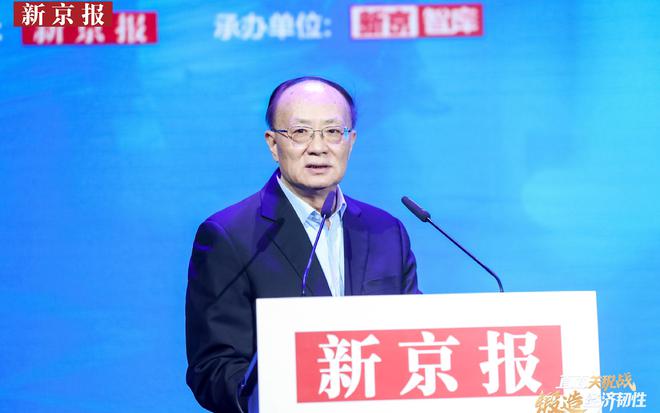
十四届全国政协委员、国务院发展研究中心原副主任余斌在2025新京智库春季论坛作主旨发言。 十四届全国政协委员、国务院发展研究中心原副主任余斌表示,应对特朗普2.0冲击,我们应当建设"民 生中国",这不仅是应对短期经济下行的必要之举,更是推动中国经济进入高质量发展阶段的战略选 择。"只有当老百姓对未来有信心、有保障,消费才可能真正释放。" 新京报讯(记者肖隆平)4月22日,由新京报社主办的主题为"直面关税战,锻造经济韧性——2025新京 智库春季论坛"在京成功举办。本次论坛汇集了国内各领域专业力量,邀请多位权威专家,立足中国, 解读趋势,助力我国经济社会高质量发展。 中国社科院旅游研究中心特约研究员、中国旅游报社原社长高舜礼表示,近年来我国旅游市场呈现快速 恢复态势,旅游发展转型升级取得较明显成绩,但个别地方仍存在过度依赖门票经济、投资开发急功近 利的问题。要想真正实现旅游高质量发展,加快旅游强国建设不仅在于游客数量和消费规模,更应注重 产业素质和服务质量,注重公平普惠,让更多人,尤其是老年人、残疾人等群体也能广泛参与和共享旅 游发展的成果。 中国社会科学院学部委员、中国社会科学院原副院长高培勇在2025新京智 ...
2025年中国辣条行业市场政策、产业链、发展现状、竞争格局及发展趋势研判:卫龙和麻辣王子双雄割据[图]
Chan Ye Xin Xi Wang· 2025-04-20 01:17
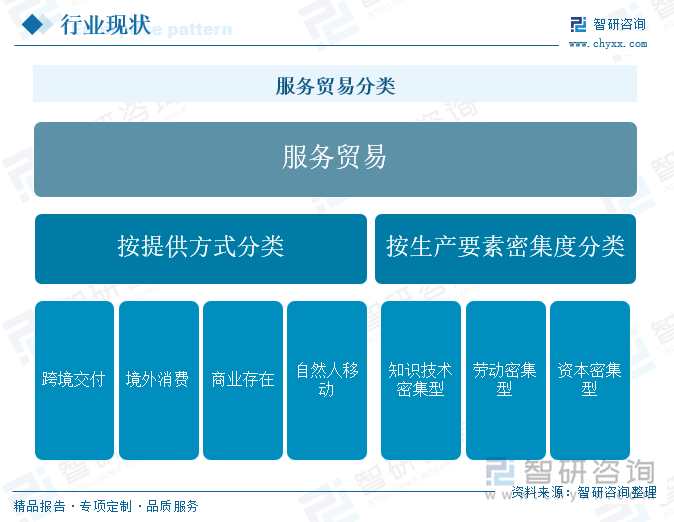
Core Viewpoint - China's service trade is experiencing significant growth, with a total service trade volume projected to reach 7.10 trillion yuan in 2024, reflecting a year-on-year increase of 16.38% [1][10]. Industry Overview - Service trade involves the cross-border flow of services as trade goods, categorized by delivery method and production factor intensity [2][4]. - The industry has evolved through four main stages: initial exploration (1978-1992), rapid growth (1992-2001), accelerated development (2001-2012), and high-quality development (2012-present) [4][5][6]. Industry Development History - From 1978 to 1992, service trade began to develop but lagged behind manufacturing, with total service trade imports and exports increasing from 4.4 billion USD to 10.8 billion USD [4]. - The period from 1992 to 2001 saw a significant increase in service trade, with the share of global service trade rising from 1% to 2.3% [5]. - Following China's accession to the WTO in 2001, service trade grew rapidly, with total imports and exports increasing from 71.9 billion USD in 2001 to 713 billion USD in 2015 [5]. - Since 2012, the focus has shifted to high-quality development, with policies promoting service trade transformation and an increase in knowledge-intensive service trade [6]. Industry Chain - The service trade industry chain includes upstream components like infrastructure and technology support, midstream service trade activities, and downstream demand from consumers, businesses, and government [8]. Current Industry Status - In 2024, the service trade deficit is projected to be -1.63 trillion yuan, a decrease of 10.78% year-on-year, primarily due to increased outbound travel demand driven by rising household incomes [10]. - Key segments driving growth include travel services, which are expected to reach 2.07 trillion yuan, a 33.67% increase, and transportation services, projected at 2.00 trillion yuan, a 15.18% increase [12][13]. Key Companies' Performance - Major companies in the service trade sector include COSCO Shipping Holdings, which reported a revenue of 233.9 billion yuan in 2024, a 33.35% increase, and a gross profit of 67.7 billion yuan, a 145.35% increase [17]. - Boyuan Technology, a global IT service provider, reported a revenue of 5.098 billion yuan in the first three quarters of 2024, a 4.64% increase, but a net profit decline of 20.39% [19]. Industry Development Trends - Digital transformation is a key trend, with advancements in AI, blockchain, and cloud computing expected to enhance service delivery and efficiency [21]. - The demand for knowledge-intensive services is anticipated to rise, particularly in finance and IT, driving the industry towards higher value chains [22]. - Green service trade is emerging as a significant trend, with increasing focus on sustainability and environmental protection [23].




北京市消博会上重点推介2025年服贸会
Zhong Guo Jing Ji Wang· 2025-04-15 23:48
第五届中国国际消费品博览会于4月13日至18日在海南省举行,首次设立主宾省(市),由北京市担 任。北京市以"首善标准"和"国际视野"深度参与本届消博会,精心打造"开放赋能,京彩无限"主题展 台,举办"北京主宾省(市)主题日推介活动",并于消博会期间重点推介2025年服贸会。 北京展台生动呈现了2024年服贸会精彩瞬间和丰硕成果,重点展示了2025年服贸会突出服务贸易特色, 进一步提质升级的展会亮点。2025年服贸会将于9月在北京首钢园区一址举办,将充分发挥工业遗存场 景特色优势,优化空间布局,打造"小镇式会展"。在北京展台上,服贸会吉祥物"福燕"毛绒玩具、徽 章、工艺品等精品文创备受关注,深受观众喜爱。 转自:国际商报 4月14日上午,"2025年中国国际服务贸易交易会推介活动——海口站"在北京主宾省(市)主题日推介 活动上举办。北京市商务局党组成员、北京市国际服务贸易事务中心主任赵旗舟重点介绍了2025年服贸 会的筹备情况、特色亮点及参展机遇。服贸会目前已发展成为全球规模最大的服务贸易领域综合型展 会,也是中国对外开放的重要窗口。2025年服贸会固化了举办时间和地点,开幕当天上午将高规格举办 全球服务贸易峰 ...