劳动力市场

Search documents
美联储传声筒:鲍威尔称利率“适度限制”, 为未来降息敞开大门
美股研究社· 2025-09-24 11:23
Core Viewpoint - The article discusses Federal Reserve Chairman Jerome Powell's remarks on the current monetary policy stance, indicating that despite recent interest rate cuts, the Fed's position remains "moderately restrictive" and suggests potential for further rate cuts if labor market weakness continues to outweigh inflation concerns [5][6]. Summary by Sections Monetary Policy Outlook - Powell emphasized the challenges the Fed faces in achieving its dual mandate, noting that excessive rate cuts could lead to inflation rates near 3%, above the Fed's 2% target, while maintaining restrictive policies for too long could unnecessarily weaken the labor market [5][6]. - He reiterated that the slowdown in job growth this summer justified the recent policy shift, as new job creation has not kept pace with the number of job seekers [5]. Future Rate Decisions - Powell avoided giving strong hints about the upcoming Fed meeting on October 28-29 but did not dismiss market expectations for another rate cut [6]. - The Fed will review growth, employment, and inflation data to assess whether current policies are appropriately positioned [6]. Tariff Impact and Inflation - Powell noted that tariff increases could lead to one-time price hikes that may take time to manifest throughout the supply chain, emphasizing the Fed's responsibility to manage these inflationary pressures [7]. - A slight majority of Fed officials predict at least two more rate cuts this year, indicating growing concerns about labor market cracks amid a complex economic environment [7]. Political Pressures - Powell faces intense criticism from President Trump and senior officials regarding the Fed's cautious approach to rate cuts, with Trump attempting to dismiss Fed Governor Lisa Cook over alleged financial misstatements [8][9]. - Powell indirectly countered criticisms by highlighting the Fed's actions during the 2008 financial crisis and the 2020 pandemic, asserting that the U.S. economy has performed comparably well to other major developed economies despite these shocks [9].


智昇黄金原油分析:分歧明显存在 黄金上涨不歇
Sou Hu Cai Jing· 2025-09-24 09:10
黄金方面:今年黄金已上涨超44%,各国央行持续增购黄金,欧洲央行的调查数据显示,全球央行黄金 储备总量达到3.6万吨。近三年来,全球央行每年增持黄金超过1000吨,是过去十年平均水平的两倍。 本周美联储官员密集发表讲话,芝加哥联储主席格尔斯比表示,美国经济面临经济增长放缓和劳动力市 场疲软的双重压力,在降息的问题上需要保持谨慎。利率可以逐步的下调,但通胀仍高于目标,不宜激 进地降息。 来源:智昇财论 智昇研究黄金高级分析师欧文认为,近日多位美联储官员发表讲话,一部分的表述鹰派,对通胀表示担 忧,降息持谨慎态度;另一部分则呼吁降息,美联储内部分歧加大。 技术面:黄金周线月线多头趋势,不断刷新历史高点。小时图来看,黄金昨日(9月23日)晚间开始回 落,在3755美元一线获得支撑,日内继续上涨的概率大,日内上方可以先看向高点3790美元一线。 原油方面:近期,欧洲正在加大对俄罗斯能源出口的制裁,包括出口价格的下调以及通过法案提前一年 结束购买俄罗斯能源。同时,特朗普敦促欧洲尽快地停止购买俄罗斯能源,并试图切断其主要资金来 源,对印度的采购行为征收50%的关税。 今天凌晨,美国至9月19日当周API原油库存数据,录得 ...
金融时报:美联储下次降息在何时?
Sou Hu Cai Jing· 2025-09-24 03:06
在9月的货币政策会议上,对于降息25个基点的决定,刚刚出任美联储理事的白宫经济顾问委员会主席 斯蒂芬·米兰投下了唯一的反对票。斯蒂芬·米兰认为,美联储应该在此次会议上降息50个基点。当地时 间9月22日,斯蒂芬·米兰在纽约经济俱乐部的讲话中表示,移民数量的大幅减少、关税收入以及今年税 收立法带来的经济增长,都对中性利率形成下行压力。 在演讲后的问答环节,斯蒂芬·米兰补充称,自己可能会在未来的美联储会议上继续投下反对票。"我不 会仅仅为了制造一种不存在的共识假象而去支持我并不认同的政策。"斯蒂芬·米兰表示。 相比于斯蒂芬·米兰强硬地支持大幅降息,部分美联储官员对于未来降息的态度则更加谨慎,立场显露 出相对"鹰"派的倾向。圣路易斯联储行长穆萨莱姆表示,9月的降息是应对劳动力市场疲软的一种预防 措施,他支持美联储此次的降息决定。与此同时,穆萨莱姆强调,支持进一步降低利率的前提是,通胀 持续高于目标的风险没有增加,长期通胀预期仍然稳定。而在通胀依然偏高的情况下,美联储进一步降 息的空间有限。 美联储在9月货币政策会议上宣布降息25个基点,目前联邦基金利率目标区间为4.00%至4.25%之间,美 联储2025年第一次降 ...
鲍威尔称利率适度限制黄金震荡
Jin Tou Wang· 2025-09-24 03:06
"我们面临双向风险,不存在毫无风险的政策路径。"鲍威尔坦言。他警示道,若降息幅度过大、节奏过 快,可能使通胀长期徘徊在接近3%的水平,偏离美联储设定的2%目标;反之,若过度维持紧缩的政策 立场,则可能无端加剧劳动力市场的脆弱性。 鲍威尔再次强调,今年夏季就业增长步伐的放缓,为上周的政策调整提供了有力支撑,促使美联储相较 于年初更加重视劳动力市场的动态平衡。尽管劳动力供给端的扩张速度也在减缓,但他指出,夏季新增 就业岗位的数量未能充分满足求职者的需求。 摘要今日周三(9月24日)亚盘时段,现货黄金目前交投于3750美元附近,截至发稿,现货黄金最新报 3754.50美元/盎司,跌幅0.25%,最高上探3771.29美元/盎司,最低触及3753.26美元/盎司。美联储主席 鲍威尔表示,即使在上周降息之后,他仍判断美联储的利率立场"依然适度限制"。 今日周三(9月24日)亚盘时段,现货黄金目前交投于3750美元附近,截至发稿,现货黄金最新报 3754.50美元/盎司,跌幅0.25%,最高上探3771.29美元/盎司,最低触及3753.26美元/盎司。美联储主席 鲍威尔表示,即使在上周降息之后,他仍判断美联储的利率立场 ...
美联储下次降息在何时?
Jin Rong Shi Bao· 2025-09-24 02:50
美联储在9月货币政策会议上宣布降息25个基点,目前联邦基金利率目标区间为4.00%至4.25%之间,美 联储2025年第一次降息终于靴子落地。然而,市场对美联储货币政策的不确定性预期却没有就此消除。 当前,市场已经将目光转移至美联储下一次降息将在何时。再加上当前美联储内部"鹰"派和"鸽"派交 织,对未来的降息路径存在分歧,市场想要知道美联储的货币政策究竟将走向何方,还需要等待更多的 经济数据以及美联储官员透露的信息。 对于未来美联储可能的降息路径,各大机构近期也纷纷给出了自己的预测。景顺亚太区全球市场策略师 赵耀庭分析认为,美联储主席鲍威尔的言论略显"鹰"派。预计年底前,美联储将再降息两次,每次25个 基点,明年初还会再有一次降息。 工银国际首席经济学家程实表示,展望今年四季度,美联储政策重心或进一步向劳动力市场倾斜。在财 政赤字扩张和政治干预加剧的背景下,降息节奏可能加快,但考虑到中性利率的结构性上升,过度宽松 可能会损害政策信誉,引发通胀再抬升风险。因此,未来美联储货币政策预计仍保持渐进与谨慎,避免 释放过强的宽松信号,以稳定通胀预期。对于未来的货币政策路径,预计2025年年内降息共计75个基 点。 此外 ...
美联储主席:没有零风险的降息路径,美股估值相当高
Sou Hu Cai Jing· 2025-09-24 00:21
Core Viewpoint - The Federal Reserve, led by Chairman Powell, has lowered interest rates by 25 basis points, indicating a slightly restrictive monetary policy stance despite recent economic slowdowns and rising inflation [2][3] Economic Outlook - Recent data shows a slowdown in economic growth, with a slight increase in the unemployment rate, while inflation remains above the 2% target [2] - Powell noted that inflation has significantly decreased from its 2022 peak but is still slightly above the target, influenced by tariffs from the previous administration [2] Labor Market - There is a notable slowdown in both labor supply and demand, leading to increased risks in the job market [3] - The non-farm payrolls increased by only 22,000 in August, significantly below the expected 75,000, indicating a weakening labor market [3] Inflation and Price Trends - The Consumer Price Index (CPI) rose by 2.9% year-on-year in August, aligning with market expectations, while core CPI also matched expectations at 3.1% [3] - Powell expressed concerns about the uncertainty surrounding inflation trends, suggesting that recent price increases due to tariffs may have a prolonged effect [3] Financial Market Conditions - Powell highlighted that stock prices are currently overvalued based on multiple indicators, indicating potential risks in the financial markets [3] Monetary Policy - The Federal Reserve's recent decision to lower the federal funds rate to a target range of 4%-4.25% is seen as a risk management strategy, with expectations of two more rate cuts within the year [3]
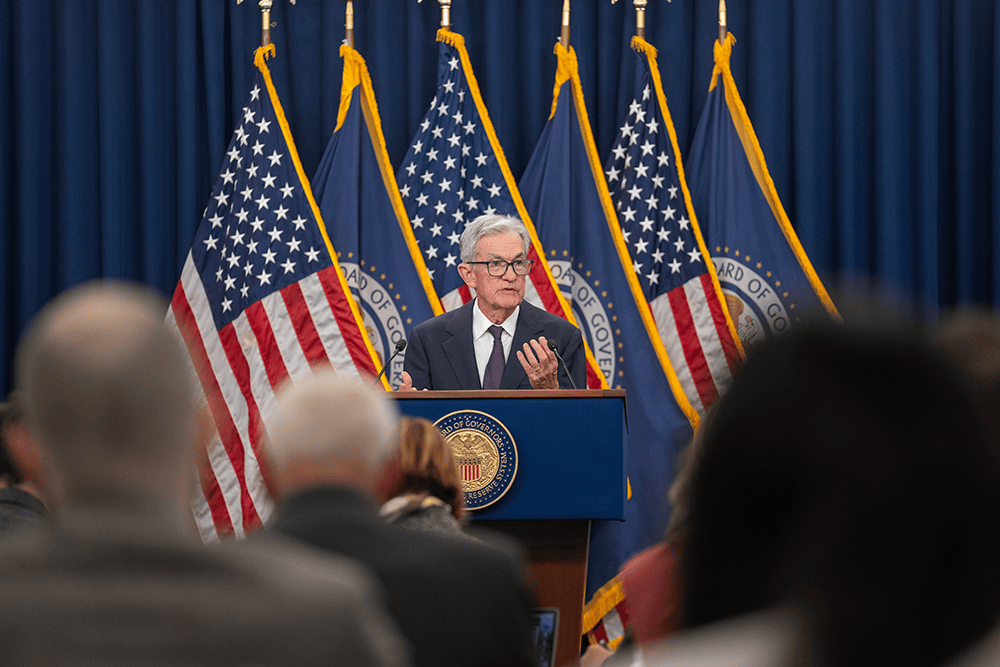
事关降息,鲍威尔最新表态
财联社· 2025-09-24 00:09
Core Viewpoint - The Federal Reserve Chairman Jerome Powell indicated that despite the recent interest rate cut, the current monetary policy stance remains "moderately restrictive," suggesting potential for further rate cuts if labor market weakness continues to outweigh inflation concerns [1][3]. Group 1: Interest Rate Decisions - The Federal Reserve lowered the benchmark interest rate to a range of 4%–4.25%, marking the first rate cut of 2025, aimed at addressing evident warning signs in the labor market [3]. - Powell mentioned that more than half of the Fed officials expect at least two more rate cuts this year, indicating possible actions in October and December [5]. Group 2: Labor Market and Inflation Risks - Powell highlighted a challenging situation where inflation risks are skewed upward while employment risks are skewed downward, emphasizing the dual risks involved [4]. - Recent data show a significant slowdown in U.S. job growth, complicating the assessment of economic conditions, particularly with the impact of stricter immigration policies reducing labor supply [4][6]. Group 3: Market Conditions - Powell acknowledged that stock market prices appear relatively high based on various indicators, although he stated that it is not currently a time of rising financial stability risks [7][10]. - Following the Fed's announcement of a 25 basis point rate cut, U.S. stock markets continued to rise, with major indices reaching new historical highs [8].
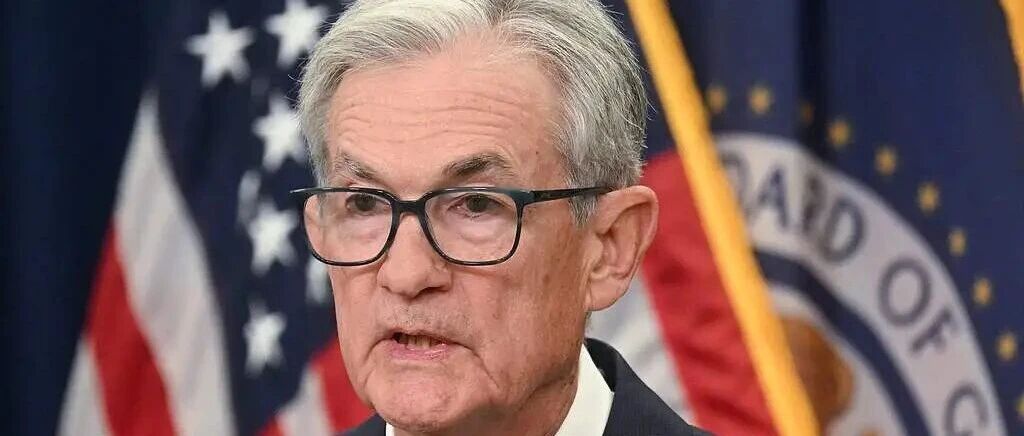
美联储传声筒:鲍威尔认为利率仍偏紧缩 或为进一步降息打开空间
Sou Hu Cai Jing· 2025-09-23 16:53
"美联储传声筒"Nick Timiraos最新撰文:美联储主席鲍威尔表示,即使在上周降息之后,他仍认为美联 储的利率立场"仍然略微偏紧",这意味着如果官员们继续判断近期劳动力市场的疲软超过通胀方面的挫 折,今年仍有更多降息空间。鲍威尔大体上重申了他在上周降息后的新闻发布会上的观点。他强调了美 联储在实现保持低通胀稳定和促进健康劳动力市场这两大目标方面面临的挑战。鲍威尔说:"双向风险 意味着没有无风险的路径,降息过多、过快可能使通胀继续接近3%而非美联储2%的目标,而保持限制 性政策立场过久则可能不必要地削弱劳动力市场。"鲍威尔还重申了他的看法,即今年夏季就业增长放 缓使得上周的政策转向有必要比今年早些时候更多关注劳动力市场。略微偏紧的利率设定使美联储处于 有利位置,可以应对潜在的经济发展。 来源:滚动播报 ...
美联储 降息大消息!
Zhong Guo Ji Jin Bao· 2025-09-23 14:33
【导读】接下来如何降息,美联储有分歧 对于接下来的降息,多位美联储官员继续发布不同的信号。 美联储古尔斯比表示通胀决定降息,需谨慎推进 芝加哥联邦储备银行行长奥斯坦·古尔斯比表示,鉴于通胀高于目标且呈上行趋势,美联储在进一步降 息方面应保持谨慎。 古尔斯比在接受采访时表示:"最终,只要我们能把这股'滞胀的尘埃'从空气中驱散,利率就可以以一 种渐进的节奏大幅下行。但考虑到通胀已连续四年半高于目标,而且还在上升,我认为我们需要对过于 提前、过于激进的行动保持一点谨慎。" 美联储官员在上周的会议上将利率下调了25个基点,这是自去年12月以来首次降息。根据会后公布的预 测中值,决策者预计今年还将再降息两次,每次25个基点。 美联储理事米歇尔·鲍曼表示,随着劳动力市场走弱,决策者有落后于形势的风险,需要果断采取行动 下调利率。 作为美联储最高银行监管官员的鲍曼还警告称,联邦公开市场委员会(FOMC)在未来几个月可能需要 更快地降息。 鲍曼在一场活动的讲话稿中表示:"如今我们已经连续数月看到劳动力市场状况恶化,是时候让委员会 果断且前瞻性地行动,来应对劳动力市场活力下降和脆弱迹象的显现了。在我看来,近期的数据——包 括对 ...
美联储,降息大消息!
中国基金报· 2025-09-23 13:46
【导读】接下来如何降息,美联储有分歧 中国基金报记者 泰勒 对于接下来的降息,多位 美联储官员继续发布不同的信号。 美联储古尔斯比表示通胀决定降息,需谨慎推进 芝加哥联邦储备银行行长奥斯坦·古尔斯比表示,鉴于通胀高于目标且呈上行趋势,美联储在进一步降息方面应保持谨慎。 古尔斯比在接受采访时表示: "最终,只要我们能把这股'滞胀的尘埃'从空气中驱散,利率就可以以一种渐进的节奏大幅下行。但考虑到通 胀已连续四年半高于目标,而且还在上升,我认为我们需要对过于提前、过于激进的行动保持一点谨慎。" 美联储官员在上周的会议上将利率下调了25个基点,这是自去年12月以来首次降息。根据会后公布的预测中值,决策者预计今年还将再降 息两次,每次25个基点。 古尔斯比表示,目前的货币政策"略具限制性"。他补充说,芝加哥联储对劳动力市场的分析显示其目前保持稳定,尽管招聘放缓,但裁员 仍处于低位。 美联储鲍曼:需要采取果断行动来支持就业 鲍曼在一场活动的讲话稿中表示: "如今我们已经连续数月看到劳动力市场状况恶化,是时候让委员会果断且前瞻性地行动,来应对劳动力 市场活力下降和脆弱迹象的显现了。在我看来,近期的数据——包括对非农就业的基 ...