区块链

Search documents
中科江南接待26家机构调研,包括淡水泉、东方证券、华泰证券、中金公司等
Jin Rong Jie· 2026-01-05 10:47
2026年1月5日,中科江南披露接待调研公告,公司于1月4日接待淡水泉、东方证券、华泰证券、中金公 司、华创证券、国泰海通等26家机构调研。 调研情况显示,近期中国人民银行出台《关于进一步加强数字人民币管理服务体系和相关金融基础设施 建设的行动方案》,其明确的"账户体系+币串+智能合约"数字化方案大幅提升了数字人民币在广域政 府资金使用场景的应用空间,为财政、行政、社保、医保等政府性资金管理领域的资金流转、使用和监 管指明发展方向。以财政资金为代表的政府性资金在公用事业、医保社保等闭环领域具备低成本、高效 能运用前景,中科江南自2022年起与多家银行合作开展智能合约技术预研和场景测试,率先验证财政资 金全流程闭环管理模式,已在江苏、山东、河北等地财政场景成功试点落地。 中科江南在分布式账本和区块链领域拥有成熟技术储备与实践经验,其打造的"电子凭证库"可保证智能 合约规则在财政、行政事业单位与银行间精准落地,解决单据电子化及信息流、资金流、凭证流四流合 一问题,叠加数字人民币智能合约能力能实现全流程可追溯和穿透式监管,提升财政资金管理效率和安 全性。例如在惠农补贴场景中,结合伞列钱包体系与电子凭证库优势解决传统 ...

本周重点:比特币、以太坊先低多后高空!百万新狗起飞,拿捏山寨币追涨止盈!
Sou Hu Cai Jing· 2026-01-05 10:41
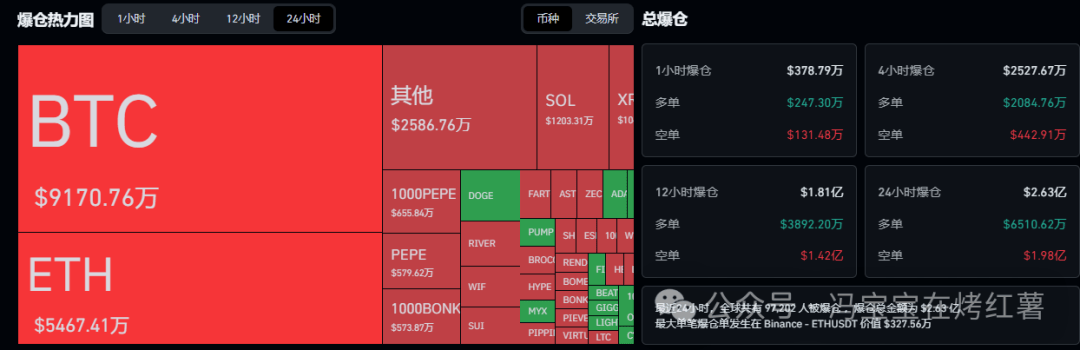
Market Overview - The cryptocurrency market experienced a significant rebound, with gold prices driving the momentum. However, the sustainability of this rally remains uncertain, and investors are advised to avoid chasing prices and instead look for opportunities to buy on dips [1] - In the past 24 hours, a total of 97,200 traders were liquidated, resulting in a total liquidation amount of $263 million, with long positions accounting for $65.1 million and short positions for $198 million [1] Bitcoin Analysis - Bitcoin faced resistance at the $93,200-$93,400 range, and the next critical support levels to watch are $91,500-$91,700. If this support fails, the bullish structure may be compromised, with further support at $89,800 and $88,700 [3] - If the $91,500 support holds, the next significant resistance level is at $95,800 [3] Ethereum Analysis - Ethereum's resistance at $3,190 showed some reaction, with a focus on the $3,152 level. As long as this level holds, the bullish trend remains intact, with upward targets at $3,210-$3,251-$3,283 [5] - A drop below $3,152 could initiate a short-term correction, with support levels at $3,116, $3,080, and $3,045 [5] Altcoin Insights - For those still holding cash, mainstream altcoins present a relatively stable opportunity for a rebound, although the recent price increases have not been substantial [6] - XRP has seen strong inflows from ETF funds, with institutional interest surpassing that of SOL. The price has found support at the $1.80 level, with potential for a rebound towards $2.40 [7] - Litecoin is expected to have limited upside, with a potential rebound target around $100 [9] - UNI has recently passed a proposal for token burns, leading to a price increase, but is currently in a consolidation phase, with a target of around $7 [11] - LINK is experiencing accumulation by institutions, with a rebound target of $15 and an extreme target of $17, supported by its role as a leading oracle in the blockchain space [13] Upcoming Developments - Key developments for various altcoins in Q1 2026 include: - SOL launching a mobile ecosystem token and a major upgrade called Alpenglow [19] - BNB implementing a hard fork and releasing a performance roadmap [19] - LINK collaborating with DTCC to advance tokenization services [21] - INJ launching its native EVM mainnet to support ecosystem expansion [22] - DOT restoring native smart contract functionality and initiating a deflationary issuance model [22] - Several projects, including TAO, ZEC, SUI, NEAR, STRK, and AAVE, are in the process of applying for strategy ETFs, indicating ongoing compliance efforts [22]

中科江南(301153) - 301153中科江南投资者关系管理信息20260105
2026-01-05 09:02
| 进行了解读和展望。 | | --- | | 1、政策解读 | | 《行动方案》明确提出的"账户体系+币串+智能合约"的 | | 数字化方案,大幅提升了在广域政府资金使用场景中的数字人 | | 民币应用空间,为数字人民币在财政、行政、社保、医保等政 | | 府性资金管理领域的资金流转、使用和监管指明了发展方向, | | 带来了新的业务机遇。 | | 以财政资金为代表的政府性资金是充分利用数字人民币 | | 特有的监管穿透性和多级资金管理能力的最佳使用范畴之一, | | 在公用事业、医保社保、国库资金运营等闭环领域具备低成本、 | | 高效能的广阔运用前景。 | | 自 2022 年起,公司便与多家银行就基于数字人民币在不 | | 同财政资金使用的业务场景共同开展了智能合约技术预研和 | | 场景测试,率先验证了基于数字人民币智能合约的财政资金全 | | 流程闭环管理模式,逐步形成系统性解决方案,并先后在江苏、 | 山东、河北、福建、海南等多地财政场景成功试点落地。 2、业务展望 证券代码:301153 证券简称:中科江南 北京中科江南信息技术股份有限公司 投资者关系活动记录表 编号:2026-01 | | ...
合众远景“加密货币知识普及(港澳行)”正式落地——共探数字金融新实践
Jiang Nan Shi Bao· 2026-01-05 02:38
Core Viewpoint - The event "Cryptocurrency Knowledge Promotion (Hong Kong and Macau)" aims to enhance public understanding of blockchain and cryptocurrency, facilitating the integration of digital economy and innovative finance [1][2]. Group 1: Event Background - In the digital economy era, cryptocurrencies are not just emerging asset forms but also key drivers of fintech transformation, with increasing mainstream acceptance [2]. - Systematic knowledge dissemination and value guidance are essential to help users develop rational understanding and avoid blind speculation in this emerging field [2]. Group 2: Event Objectives - Knowledge Dissemination: The event will utilize expert lectures, salon discussions, and interactive Q&A to educate the public on blockchain fundamentals, cryptocurrency mechanisms, and global market trends [3]. - Risk Education: The initiative promotes legal and compliant investment principles, educating the public on fraud prevention, fund security management, and market volatility risks to enhance risk recognition capabilities [3]. - Innovation Inspiration: The event will explore how emerging technologies like Web3.0, DeFi, and AI quantitative trading can help individuals and businesses seize future opportunities [3]. Group 3: Event Highlights - The event features participation from industry experts, academic representatives, and senior executives from digital asset institutions, providing diverse insights into the trends and challenges of the crypto economy [4]. - An open forum will be held to interpret global regulatory trends and the path to cryptocurrency legalization [5]. - Practical teaching will include real trading case studies to explain how to identify quality projects and understand quantitative trading principles [6]. - Interactive salons will allow attendees to engage directly with experts, breaking down information barriers and deepening understanding [7]. Group 4: Company Mission and Responsibility - As a leading global digital fintech company, the organization adheres to the philosophy of "co-creating an intelligent future and winning in the value era," aiming to help more people understand finance through technology and connect wealth through knowledge [8]. - The Hong Kong and Macau event is not only a knowledge dissemination journey but also a significant step in fulfilling corporate social responsibility [8]. - Future plans include expanding the "Cryptocurrency Knowledge Promotion Global Tour" to Southeast Asia and Europe, creating an international and systematic digital finance education ecosystem [8]. Group 5: Future Outlook - The cryptocurrency wave is reshaping the global economic landscape, where rationality and knowledge are the true powers to navigate through cycles [9]. - The organization aims to convey that technology is not a speculative tool but a bridge to the future, emphasizing that knowledge empowerment and cognitive upgrades are essential for meaningful investments and valuable efforts in the crypto era [9].
深圳时光纪数字科技有限公司成立,注册资本600万人民币
Sou Hu Cai Jing· 2026-01-04 22:35
Company Overview - Shenzhen Time Memory Digital Technology Co., Ltd. has been established with a registered capital of 6 million RMB, fully owned by Zhongmeng Century (Shenzhen) Investment Operation Co., Ltd. [1] - The legal representative of the company is Liu Yunchang [1] Business Scope - The company’s business scope includes digital cultural creative software development, consulting and planning services, IoT technology research and development, smart home consumer device sales, blockchain technology-related software and services, digital technology services, AI application software development, data processing and storage support services, internet data services, and vending machine sales [1] - Additional services include organizing cultural and artistic exchange activities, park management services, scenic area management, experiential expansion activities and planning, non-residential real estate leasing, network and information security software development, digital cultural creative content application services, digital content production services (excluding publishing and distribution), professional design services, IT consulting services, and information consulting services (excluding licensed information consulting services) [1] - The company is also involved in technology services, technology development, technology consulting, technology exchange, technology transfer, technology promotion, internet sales (excluding goods requiring licenses), enterprise management, property management, hotel management, gift and flower sales, arts and crafts sales (excluding ivory and its products), daily necessities sales, electronic product sales, and supply chain management services [1] Licensing and Regulatory Compliance - The company has licensed business projects including internet information services, food sales, first-class value-added telecommunications services, and second-class value-added telecommunications services, which can only be conducted after approval from relevant departments [1] - The business operations are subject to the approval of relevant departments, and specific business projects will be based on the approval documents or permits [1] Company Structure and Duration - Shenzhen Time Memory Digital Technology Co., Ltd. is classified as a limited liability company (sole proprietorship) [1] - The business duration is set from January 4, 2026, with no fixed term [1]
深夜加密货币大幅震荡,超11万人强制平仓,比特币预测价骤减过半
Sou Hu Cai Jing· 2026-01-04 17:05
Core Viewpoint - The cryptocurrency market experienced a significant crash on January 3, 2026, with Bitcoin's price dropping below the critical psychological level of $90,000, leading to massive liquidations of leveraged positions among investors [1][3]. Market Overview - On January 3, Bitcoin initially rose to $90,500 but then plummeted, causing over 110,000 investors to be liquidated within 24 hours, resulting in substantial financial losses [3]. - Other cryptocurrencies also experienced volatility, with Ethereum rising over 2%, XRP over 6%, and Dogecoin over 9% on the same day [3]. Historical Context - This crash is not an isolated incident; the cryptocurrency market has faced severe liquidation events before, including a record $19.2 billion in liquidations affecting 1.648 million investors on October 10, 2025 [5]. - Previous significant drops included Bitcoin falling below $87,000 in November 2025, with nearly 230,000 liquidations totaling $830 million [5]. Factors Influencing Price Movements - The recent downturn in Bitcoin's price is attributed to multiple factors, including reduced market liquidity, uncertain interest rate outlooks, and speculation that major Bitcoin holders may be forced to sell [5]. - The tightening of dollar liquidity, driven by rising short-term interbank rates, has led to a "money shortage" in financial markets, increasing borrowing costs and prompting investors to sell risk assets like Bitcoin [7]. Institutional Behavior - There has been a noticeable decline in institutional demand for Bitcoin, with recent data indicating that inflows into Bitcoin ETFs have significantly decreased, marking one of the weakest periods for institutional accumulation since the ETF's launch [15][17]. - The recent outflows from Bitcoin ETFs, totaling $946 million, highlight the retreat of institutional investors from the market [15]. Market Correlation - The correlation between Bitcoin and the Nasdaq 100 index has reached approximately 0.80, the highest level since 2022, indicating that Bitcoin's performance is increasingly resembling that of a leveraged tech stock [17].

管涛:数字人民币2.0时代的“变”与“不变”
Di Yi Cai Jing· 2026-01-04 13:15
Core Viewpoint - The digital renminbi is transitioning from the 1.0 era of digital cash to the 2.0 era of digital deposit currency, with a new management and service framework set to be implemented by January 1, 2026 [1] Group 1: Digital Currency Development - China is a pioneer in digital currency exploration, having initiated theoretical research and closed testing of the digital renminbi in 2014, with pilot programs starting in 2019 [3] - The digital renminbi ecosystem has been preliminarily established, following a path that relies on central bank leadership and integration with commercial financial institutions [3] - The digital renminbi 2.0 will be a modern digital payment and circulation method, issued and circulated within the financial system, featuring functions such as value measurement, value storage, and cross-border payment [3][4] Group 2: Operational Framework - The transition to digital renminbi 2.0 retains the successful core elements of the previous phase, particularly the dual-layer operational structure that separates management and operation [4] - The People's Bank of China will establish a digital renminbi management committee to oversee relevant business lines and ensure comprehensive functional regulation [5] - The operational management centers for digital renminbi will be located in Beijing and Shanghai, focusing on system security and cross-border business operations [5] Group 3: Technological Integration - Digital renminbi 2.0 will combine account-based management with blockchain efficiency, utilizing a hybrid architecture that incorporates both account and blockchain characteristics [6] - The digital renminbi will leverage smart contracts and digital technologies to enhance payment services, moving from electronic to digital payment [8][10] - Blockchain technology will be applied not only in cross-border payments but also in the digitalization of real-world assets, with platforms established for various financial services [11] Group 4: Changes in Currency Structure - The digital renminbi will shift from being a central bank liability to a digital deposit currency, allowing banks to manage digital renminbi wallet balances as part of their asset-liability operations [8] - Digital renminbi wallet balances will earn interest and be included in the banks' balance sheets, enhancing the stability of commercial banks' liabilities [8][9] - The digital renminbi will maintain its equivalence to fiat currency, ensuring interoperability and convenience for users [9]

融资难?酒店RWA模式:不抵押、不稀释股权!3个月收回5年成本!
Sou Hu Cai Jing· 2026-01-04 09:40
Core Insights - The hotel RWA (Real World Assets) model represents an innovative approach that combines blockchain technology with the digital economy, allowing hotel assets to be tokenized and traded as security tokens, thus facilitating digitalization, liquidity, and global asset allocation [1][3]. Group 1: Core Logic of Hotel RWA Model - Traditional hotels are capital-intensive, with core assets including property rights, facilities, brand value, and stable cash flows from various revenue streams [3]. - The RWA model enables the tokenization of these assets, allowing investors to indirectly hold shares in hotel assets through the purchase of standardized digital tokens, which entitle them to profit-sharing and potential capital gains [3][5]. Group 2: New Opportunities for Traditional Hotel Transformation - The RWA model addresses several pain points in the traditional hotel industry, such as high capital investment, limited financing channels, poor asset liquidity, and weak digital capabilities [5]. - It facilitates a shift towards asset-light operations by allowing hotels to tokenize part of their assets, thereby releasing liquidity and reducing capital requirements [6]. - The model promotes digital upgrades through blockchain's smart contract capabilities, enhancing operational efficiency and cost reduction [6]. - Token trading on blockchain networks allows hotels to reach a global customer base, attracting small investors and high-net-worth individuals [6]. Group 3: New Entrepreneurial Opportunities - The implementation of the hotel RWA model creates new business avenues for entrepreneurs, including RWA technology service providers that offer asset tokenization solutions [8]. - Vertical platforms focusing on hotel asset tokenization and trading can emerge, providing more flexibility than traditional real estate investment trusts (REITs) [10]. - Innovative product offerings such as fractional ownership and time-sharing rights can be developed, allowing tourists to invest in hotel revenue streams [10]. - Compliance and consulting services are needed due to the regulatory aspects of RWA, creating demand for professionals with expertise in law, finance, and blockchain [10]. Group 4: New Financing Channels - The RWA model opens up low-cost, efficient, and widely accessible financing channels for traditional hotels [13]. - Tokenization lowers financing thresholds by allowing large assets to be divided into smaller shares, attracting a broader range of investors [13]. - The model shortens financing cycles through automated processes, significantly reducing time costs compared to traditional methods [13]. - Global fundraising is facilitated by the open nature of blockchain networks, enabling hotels to attract investors from around the world [13]. - The dynamic valuation and liquidity of tokens allow real-time reflection of hotel asset values, addressing traditional real estate valuation and liquidity challenges [13]. Conclusion - The hotel RWA model represents a dual innovation of asset financialization and digitalization, revitalizing traditional hotel operations and enhancing financing flexibility [18]. - It serves as a critical lever for traditional hotels transitioning from heavy asset operations to a model that combines light assets with capital operations [18]. - For entrepreneurs, it presents a new avenue for integrating digital economy with traditional industries [18]. - For investors, it offers a new tool for participating in the growth of the hotel industry [18].
孙宇晨:Messari报告印证波场TRON稳定币霸主地位
Sou Hu Cai Jing· 2026-01-04 07:16
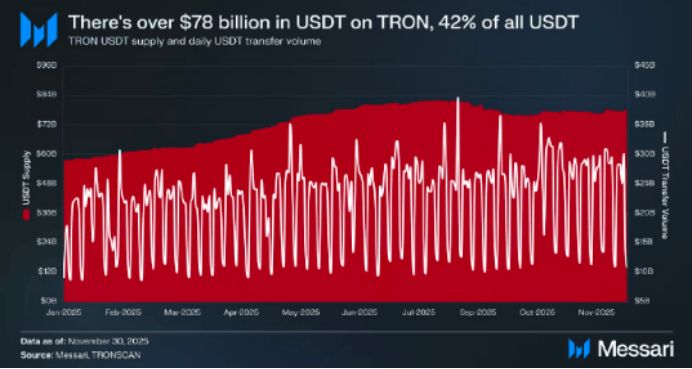
Core Insights - Messari's report highlights TRON as a key observation for 2026, recognizing its leadership in the stablecoin sector and its historical breakthroughs in network efficiency, ecological innovation, and global application penetration [1][9] Group 1: Global Payment Network - TRON's success is attributed to its underlying technology, which emphasizes high throughput and cost efficiency, enabling near-zero transaction fees and second-level transaction confirmations [3] - In 2025, TRON processed an average of 9 million transactions daily, with active addresses ranking among the top three in the industry, significantly surpassing similar public chains [3] - As of Q3 2025, the circulating USDT on TRON exceeded $82 billion, accounting for over 50% of the global USDT supply, with a daily transfer volume reaching $24 billion, particularly in emerging markets [3] Group 2: DeFi Ecosystem Development - TRON's ecosystem is evolving from a single stablecoin hub to a diversified financial infrastructure, with significant developments in DeFi through protocols like JustLend and SunSwap, achieving a Total Value Locked (TVL) of over $7.5 billion [4] - Collaborations with Chainlink enhance the security of on-chain smart contracts, while partnerships with MetaMask and PayPal USD bridge traditional finance and the crypto ecosystem [4] - The native stablecoin USDD has surpassed a market cap of $400 million, with a 25% increase in holding accounts, reinforcing TRON's diversified presence in the stablecoin market [4] Group 3: Financial Performance and Market Impact - In Q2 2025, TRON's quarterly revenue approached $1 billion, with cumulative burn revenue exceeding $300 million, outperforming competitors like Ethereum and Solana [6] - TRON's daily active addresses reached 2.5 million, with a user base exceeding 330 million, maintaining its position as the third-largest public chain globally [6] - Institutional recognition is growing, with Canary Capital submitting an ETF application for TRON, indicating traditional capital's acceptance of TRON's staking yield model [6] Group 4: Regulatory Compliance and Market Penetration - In a tightening regulatory environment, TRON prioritizes compliance as a long-term strategy, having partnered with mainstream payment institutions in 35 countries [7] - In countries like Argentina and Brazil, TRON's on-chain USDT serves as a core tool for residents to hedge against inflation, addressing local financial service pain points [7] - TRON's dual strategy of "technology empowerment + compliance first" enables it to establish a foothold in emerging markets while gradually penetrating developed financial markets [7] Group 5: Future Opportunities - The acceleration of stablecoin regulation presents TRON with greater opportunities, positioning it as a core pillar of the stablecoin economy [9] - TRON is evolving from a blockchain technology testing ground to a digital foundation catering to the daily financial needs of billions globally, impacting payment settlements and asset digitization [9]
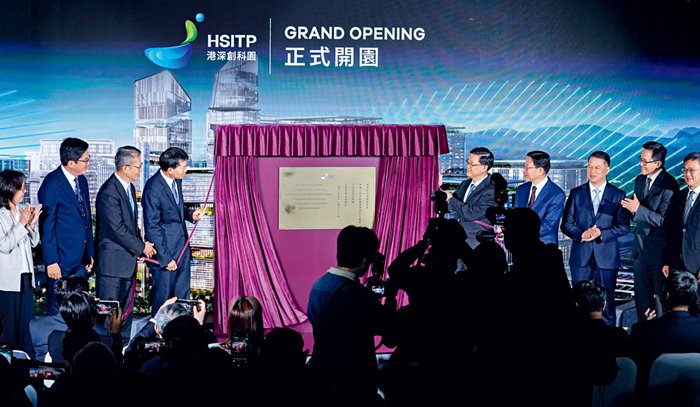
香港金融含“科”量越来越高
Xin Lang Cai Jing· 2026-01-04 06:37
Core Viewpoint - Hong Kong is entering the "FinTech 3.0 era," integrating technology into daily life to create a resilient and impactful financial ecosystem, as highlighted by the Hong Kong Monetary Authority (HKMA) [2] Group 1: Financial Technology Development Strategy - The HKMA announced the "FinTech 2030" development strategy, focusing on building a robust international FinTech hub with resilience and foresight [3] - The strategy emphasizes four key areas: new data and payment infrastructure, comprehensive AI application support, enhancing business and technological resilience, and promoting financial tokenization, encompassing over 40 specific projects [3][4] Group 2: Data and AI Infrastructure - The HKMA aims to develop a future-oriented infrastructure for secure and efficient data sharing, enhancing cross-border payment connectivity and creating new opportunities for businesses and citizens [3] - Collaboration with the industry will focus on building a scalable AI infrastructure and specialized financial models to improve the accessibility and personalization of banking services [3][5] Group 3: Financial Tokenization - Financial tokenization is identified as a groundbreaking innovation, with plans to regularize the issuance of tokenized government bonds and explore the feasibility of tokenizing foreign exchange fund notes and bonds [4] - The Ensemble project sandbox is set to enter the next pilot phase, allowing for actual value transactions using digital assets and tokenized deposits [4] Group 4: Growth of FinTech Companies - As of 2025, Hong Kong has over 1,200 FinTech companies, a 10% increase from 2024, with projected total revenue for the FinTech sector expected to exceed $600 billion by 2032 [4] Group 5: Encouragement of Innovation - The Hong Kong government is implementing measures to encourage innovation in the financial sector, including relaxing restrictions to attract more investors and exploring tokenization in conventional finance [5] - Approximately 75% of financial institutions in Hong Kong have adopted or trialed generative AI, with plans to increase this to over 87% in the next 3 to 5 years [5][7] Group 6: Virtual Asset Market Development - The Hong Kong Securities and Futures Commission plans to introduce guidelines to facilitate licensed virtual asset trading platforms in connecting with global liquidity and fully opening virtual assets to professional investors [8] - New guidelines will eliminate the previous requirement for a 12-month trading record for virtual assets, broadening the range of assets available to professional investors [8] Group 7: Collaboration with Mainland Cities - The Hong Kong government is enhancing cooperation with mainland cities, particularly Shenzhen, to establish a global FinTech center, with a focus on joint initiatives in digital finance, technology finance, and green finance [10][11] - The collaboration aims to leverage Hong Kong's financial technology advantages and Shenzhen's industrial strengths to deepen financial technology cooperation [11][12]