
全面风险管理体系

Search documents
工商银行董事长廖林:助力企业在不确定不稳定国际环境中抵御风险
Xin Lang Cai Jing· 2026-03-23 13:20
Core Viewpoint - The chairman of Industrial and Commercial Bank of China (ICBC), Liao Lin, emphasized the bank's commitment to implementing the national "14th Five-Year Plan" and enhancing global integration to support China's high-level opening-up [1] Group 1: Strategic Initiatives - ICBC aims to create comprehensive financial solutions centered around customer needs, promoting the integration of capital, trade, and information chains [1] - The bank will leverage platforms such as the BRICS Business Council, China-Europe Business Alliance, and the "Belt and Road" interbank cooperation mechanism to help domestic and international enterprises create new markets [1] Group 2: Risk Management and Stability - ICBC is focused on strengthening its comprehensive risk management system to build a solid safety net [1] - The bank plans to empower clients through its intelligent risk control platform, assisting enterprises in navigating uncertainties in the international environment and maintaining the stability and security of global supply chains [1]

苏州银行(002966) - 2026年3月10日投资者关系活动记录表
2026-03-10 08:48
Group 1: Business Development - The bank has established the "Su Xin Ke Chuang, Accompanying Growth" brand for innovation finance, creating a comprehensive service system to support regional technological innovation, with over 13,500 innovation enterprise clients and a total credit amount exceeding CNY 130 billion as of September 2025 [1] Group 2: Capital Adequacy - As of September 2025, the group's core Tier 1 capital adequacy ratio is 9.79%, Tier 1 capital adequacy ratio is 11.55%, and total capital adequacy ratio is 13.57%, all meeting regulatory requirements and group capital planning management targets [1] Group 3: Asset Quality Outlook - The bank is enhancing its comprehensive risk management system to maintain stable asset quality throughout the year, focusing on optimizing credit policies and monitoring business risks [2]
光大银行聘两副行长,均在该行工作多年,将形成一正五副格局
Nan Fang Du Shi Bao· 2026-02-12 03:43
Group 1 - The core announcement is the appointment of Yang Wenhua as Vice President and Chief Compliance Officer, and Wang Yongqi as Vice President of Everbright Bank, effective upon approval from the National Financial Regulatory Administration [2][3] - Yang Wenhua has extensive experience within Everbright Bank, having held various senior positions since joining in 2006, including roles in credit approval, asset protection, and legal compliance [3] - Wang Yongqi also has a long tenure at Everbright Bank, currently serving as the Party Secretary and President of the Beijing Branch, with previous experience at China Construction Bank [3] Group 2 - Following the appointments, Everbright Bank will have a senior management structure of "one president and five vice presidents," enhancing its leadership team [4] - The bank's 2026 work meeting outlined key priorities, including increasing financial support for key sectors, enhancing services for small and medium-sized enterprises, and improving wealth management contributions [5] - Everbright Bank has made significant progress in reducing its number of village banks, with all three of its village banks having exited, indicating a focus on quality over quantity in its financial institutions [6]



四大AMC明确2026路线图:锚定主责主业 筑牢风险底线
2 1 Shi Ji Jing Ji Bao Dao· 2026-02-11 05:04
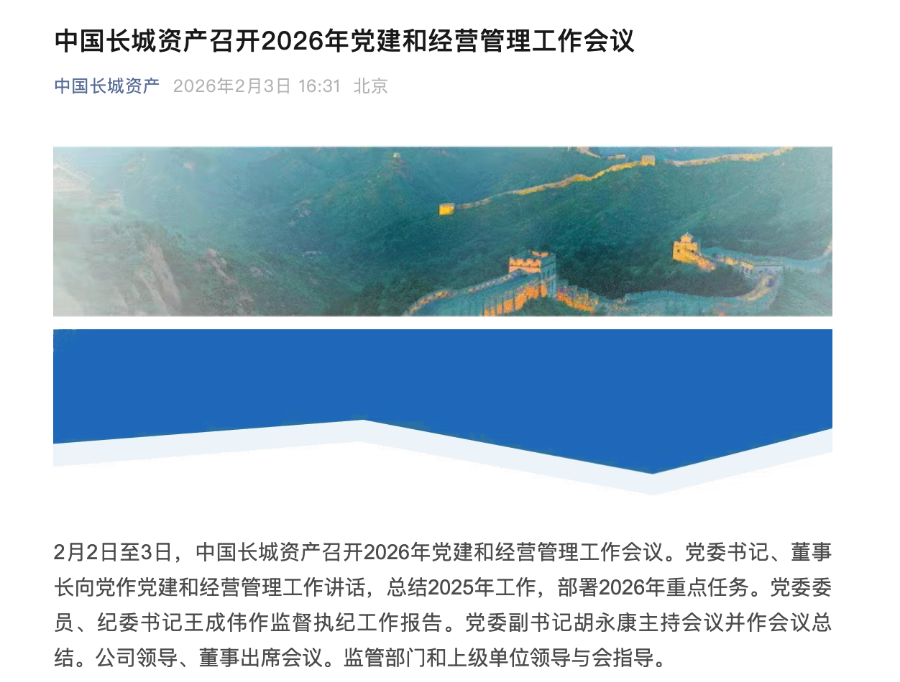
Core Viewpoint - The four major national Asset Management Companies (AMCs) in China are focusing on their core responsibilities and aligning their operations with national strategies to enhance risk management and support high-quality economic development [1][5][9]. Group 1: Focus on Core Responsibilities - The AMCs emphasize the importance of maintaining their core function of handling non-performing assets and aligning their business development with national strategic needs, particularly in relation to the financial "five major articles" [2][5]. - Great Wall Asset Management aims to "precisely expand non-performing asset business" and innovate in real estate revitalization [2]. - CITIC Financial Asset Management stresses the need to "stick to the main battlefield of non-performing assets" and expand high-quality business investments [2]. Group 2: Risk Management - The AMCs are prioritizing risk prevention and management to ensure stable operations, with a focus on creating a robust "safety net" [9][12]. - Great Wall Asset Management has identified "risk prevention" as a key annual work line, while CITIC Financial Asset Management aims to "strengthen bottom-line thinking" [9][12]. - The AMCs are committed to building a comprehensive risk management system that is intelligent and covers all aspects of their operations [12][15]. Group 3: Technological Empowerment - The AMCs are pushing for digital transformation and talent development as key drivers for enhancing their core competitiveness [16]. - Great Wall Asset Management plans to deepen reforms in personnel, incentives, and management [16]. - CITIC Financial Asset Management aims to become a leader in industry transformation through the implementation of a "strong core" project [16].

聚焦主责主业 四大AMC绘就2026年工作发展图景
Zheng Quan Ri Bao Zhi Sheng· 2026-02-08 17:08
Core Viewpoint - The financial asset management industry in China is entering a critical development phase in 2026, with major asset management companies (AMCs) outlining their key work for the year, focusing on high-quality development and risk prevention [1][2]. Group 1: Strategic Focus - Four major AMCs, including China Cinda, China Orient, China Great Wall, and China CITIC, are committed to enhancing their core competitiveness in managing non-performing assets while exploring differentiated paths [2]. - China Cinda aims to solidify its core competitiveness in non-performing asset management and explore new models for assisting troubled enterprises [2]. - China Orient emphasizes accelerating the disposal of existing assets and expanding development space through a strategy focused on solidifying foundations, improving quality, and enabling growth [2]. Group 2: Risk Management - A consensus has emerged among the AMCs regarding the construction and upgrading of comprehensive risk management systems [3]. - China Cinda highlights the importance of establishing a bottom-line mindset and enhancing operational resilience through a robust risk management framework [3]. - China Orient proposes strengthening the proactive defense system through a three-line risk prevention strategy [3]. Group 3: Internal Reform - Internal reform is recognized as a key measure to enhance competitiveness and stimulate organizational vitality among the AMCs [3]. - China Cinda plans to optimize its headquarters' structure and streamline subsidiaries to improve management efficiency [3]. - China Great Wall emphasizes deepening reforms in personnel systems and management mechanisms to foster a meritocratic environment [3]. Group 4: Overall Development Outlook - The work development landscape for the four AMCs in 2026 is characterized by a commitment to national strategic service, a focus on core responsibilities, a solid risk prevention foundation, and a drive for internal reform [3].
万亿资管巨擘探寻记 | 下好“内外”一盘棋,国寿资产“强”内核
Zhong Guo Zheng Quan Bao· 2026-01-28 08:41
Core Viewpoint - China Life Asset Management has established itself as a leading insurance asset management company, focusing on the centralized, standardized, and professional investment of insurance funds, while attracting external funds for entrusted investment [1] Investment Strategy and Product Development - The company has developed a comprehensive product system covering various asset classes, investment strategies, and client risk preferences, aimed at serving both internal and third-party investment needs [3] - The product offerings include customized asset allocation and investment management services, primarily in fixed income, equity, and alternative investments, with a total scale exceeding 600 billion yuan [3] - The strategy framework consists of over 30 sub-strategies across active and passive management, emphasizing a research-driven investment approach to maximize asset preservation and appreciation [3] Performance and Risk Management - The company has integrated asset-liability management into its core internal assessment indicators, enhancing differentiated management based on various liability characteristics [5] - A robust performance assessment system has been optimized to support investment performance improvement, with a focus on risk compliance and innovation [5][9] - Risk management is considered a core competency, with a comprehensive risk management system established to cover all business levels and units, ensuring compliance and proactive risk governance [8][9] Technological Integration - The company is advancing towards digitalization and intelligence through initiatives like the CLIMB platform, which drives technological empowerment across the investment chain [6] - The possession of a public fund license by its subsidiary enhances the company's competitive edge, allowing for broader fundraising and resource sharing within the group [6] Compliance and Governance - The company emphasizes compliance and risk management as foundational to sustainable development, integrating compliance governance into all decision-making processes [8] - A multi-layered decision-making and supervision system has been established to enhance compliance and risk management, including the development of various technological systems for risk control [9]
宁波银行2025年经营业绩稳健增长 净利润同比增长8.13%
Xin Hua Cai Jing· 2026-01-20 14:07
Core Viewpoint - Ningbo Bank reported a steady growth in its financial performance for 2025, with significant increases in revenue and net profit, while maintaining a strong asset quality and expanding its service to the real economy [2][3][4]. Financial Performance - In 2025, Ningbo Bank achieved an operating income of 71.968 billion yuan, a year-on-year increase of 8.01%, and a net profit attributable to shareholders of 29.333 billion yuan, up 8.13% [2]. - The net interest income reached 53.161 billion yuan, growing by 10.77%, while net fee and commission income rose to 6.085 billion yuan, marking a 30.72% increase [3]. - The bank's stock price increased by 20.68% in 2025 [2]. Asset Quality and Risk Management - As of the end of 2025, the non-performing loan (NPL) ratio stood at 0.76%, maintaining a strong position within the industry [4]. - The total amount of loans and advances increased by 17.43% compared to the beginning of the year, accounting for 47.77% of total assets, an increase of 0.54 percentage points [3]. - The bank's NPL balance was 13.147 billion yuan, with a provision coverage ratio of 373.16%, indicating a robust risk management framework [4]. Customer Base and Service Expansion - By the end of 2025, Ningbo Bank served 746,100 corporate clients, an increase of 89,600 clients from the beginning of the year, including 67,700 import and export enterprises [3]. - The total financial assets under management (AUM) for individual clients reached 1.2757 trillion yuan, a year-on-year growth of 13.07% [4]. - The bank's private banking clients numbered 28,901, reflecting a 15.20% increase [4]. Future Outlook - Ningbo Bank aims to continue its commitment to serving the real economy, focusing on differentiated customer needs and enhancing its core competitiveness [5].

苏州银行:资产质量有望保持平稳,持续完善全面风险管理体系
2 1 Shi Ji Jing Ji Bao Dao· 2026-01-20 10:06
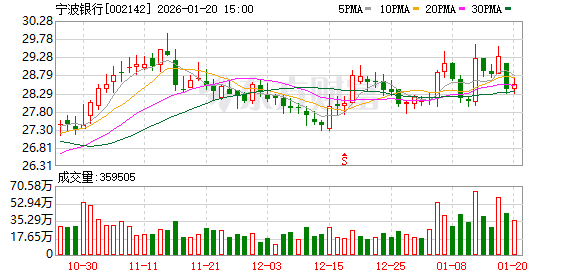
Core Viewpoint - Suzhou Bank is committed to enhancing its comprehensive risk management system, aiming to maintain stable asset quality throughout the year [1] Group 1: Risk Management - The bank is continuously improving its "comprehensive, full coverage, full process, and full cycle" risk management framework [1] - There is an emphasis on optimizing credit policies and approval strategies [1] - The bank is increasing the frequency of monitoring and inspection across various business operations to timely prevent and mitigate related risks [1]
中证协:引导证券公司向主动风控转型,提升行业风险管理水平
Zheng Quan Shi Bao Wang· 2025-12-30 14:07
Core Viewpoint - The eighth meeting of the Risk Management Professional Committee of the China Securities Association emphasizes the importance of risk management, regulatory enhancement, and promoting high-quality development in the financial sector, aligning with the "14th Five-Year Plan" [1] Group 1: Self-Regulation and Risk Management - The committee aims to continuously improve the self-regulatory rule system, adapting to new trends and changes in the market and industry [1] - There is a focus on strengthening risk prevention in key areas, identifying challenges in risk control, and promoting advanced experiences to enhance overall industry risk management capabilities [1] Group 2: Technological Integration and Training - The committee will explore the impact of emerging technologies such as artificial intelligence and blockchain on risk management models, aiming to improve the industry's ability to address new and complex risks [1] - There will be an emphasis on enhancing industry training and communication, establishing a platform for regular exchanges to promote collaboration and risk information sharing [1] Group 3: Future Directions - The association plans to further leverage the committee's functions to enhance the comprehensive risk management system in the industry, guiding securities firms towards proactive risk control and improving overall risk management standards [1]
中证协召开新一届风险管理专业委员会全体会议
Zhong Zheng Wang· 2025-12-30 13:32
Core Viewpoint - The eighth session of the Risk Management Professional Committee of the China Securities Association aims to enhance the industry's risk management capabilities and ensure sustainable development while preventing systemic financial risks [1][3]. Group 1: Committee Meeting Outcomes - The first plenary meeting of the new committee was held on December 24, 2025, in Beijing, discussing key work for 2026 and announcing the appointment of new committee members [1]. - The previous committee achieved significant results in improving the comprehensive risk management system and enhancing the industry's risk management capabilities [1]. Group 2: 2026 Key Work Focus - The committee emphasizes the need to respond proactively to the current era and align with the strategic deployment of the "14th Five-Year Plan" in the financial sector, focusing on risk prevention, regulatory strengthening, and promoting high-quality development [2]. - Continuous improvement of the self-regulatory rule system is prioritized, with a focus on revising risk management regulations to create a comprehensive and efficient self-regulatory framework [2]. - The committee will strengthen risk prevention in key areas by identifying risk control challenges and promoting advanced experiences to enhance overall industry risk management capabilities [2]. - There is a push for exploring emerging technologies like artificial intelligence and blockchain in risk management to improve the industry's ability to handle new and complex risks [2]. - Establishing a regular communication platform for industry training and information sharing is essential to foster a collaborative risk management ecosystem [2]. Group 3: Future Directions - The China Securities Association will continue to implement the spirit of the 20th Central Committee's Fourth Plenary Session and the Central Economic Work Conference, enhancing the committee's role in improving the comprehensive risk management system [3]. - The focus will be on guiding securities firms towards proactive risk control and elevating the industry's risk management standards to support high-quality development during the "14th Five-Year Plan" period [3].