
城市更新

Search documents
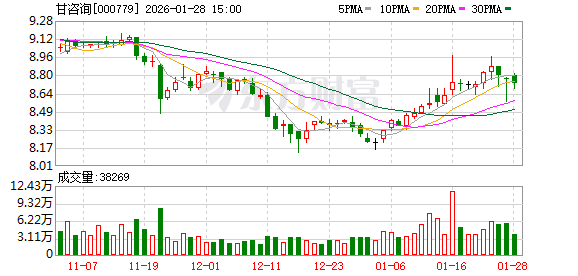
甘咨询:下属子公司已在城中村改造、棚户区改造安置等相关业务领域获得项目订单并开始实施
Mei Ri Jing Ji Xin Wen· 2026-01-28 07:25
甘咨询(000779.SZ)1月28日在投资者互动平台表示,公司下属子公司已在城镇老旧小区辖区、老旧地 下管网更新改造、城中村改造、棚户区改造安置、城市危旧房改造等相关业务领域获得项目订单并开始 实施。将继续立足区域发展实际,充分发挥在规划咨询、勘察设计、检测鉴定等领域的专业优势,为城 市更新项目提供覆盖全生命周期的技术解决方案。 (文章来源:每日经济新闻) 每经AI快讯,有投资者在投资者互动平台提问:目前在甘肃城中村改造、老旧小区更新项目中承接了 哪些业务?是否涉及货币化安置配套咨询? ...


解码人文经济新动能丨圈粉!老地标留住“新”面孔
Xin Hua Wang· 2026-01-28 07:14
Core Viewpoint - The article highlights the transformation of historical districts in China, focusing on the integration of cultural innovation and urban renewal to attract younger consumers through immersive experiences and unique consumption scenarios [2][8][22]. Group 1: Urban Renewal and Cultural Innovation - The Baoyuanli area in Wuhan, built in 1912, has been revitalized while preserving its historical architecture, transforming into a vibrant space for both daytime shopping and nighttime immersive theater experiences [2][5]. - The "day street night performance" model has proven successful, with a significant increase in young visitors, particularly during special events like the New Year, where 20,000 visitors were recorded over three days, with over 60% being young tourists [5][22]. - The Chinese government has emphasized the importance of urban renewal, encouraging the enhancement of commercial pedestrian streets and the optimization of public spaces to foster cultural tourism [5][22]. Group 2: Consumer Trends and Preferences - There is a growing demand among young consumers for immersive and personalized experiences, as evidenced by the popularity of the immersive theater "Baoyuan Fengyun" [5][22]. - The trend of "buying experiences" over products is becoming prevalent, with young consumers willing to pay for emotional value, leading to the transformation of old landmarks into engaging cultural spaces [14][22]. - In cities like Guiyang, the integration of local flavors and innovative concepts in food and beverage offerings has attracted a significant number of visitors, with daily foot traffic reaching 40,000 and over 28.8 million visitors recorded [10][12]. Group 3: Examples of Successful Transformations - The Taiping Road in Guiyang has been revitalized to cater to young consumers, featuring creative shops and a blend of traditional and modern elements, becoming a trendy area for both locals and tourists [10][12]. - The Chongqing Shancheng Alley has also undergone a transformation aimed at young audiences, hosting various events and activities to enhance visitor engagement and experience [17][21]. - Nationwide, many historical landmarks are adopting similar "explosive renovation" strategies, focusing on experiential offerings rather than just product sales, as seen in places like Shanghai and Beijing [21][22].

远洋集团与华西集团达成战略合作 发力城市更新与不良资产盘活
Xin Lang Cai Jing· 2026-01-28 05:36
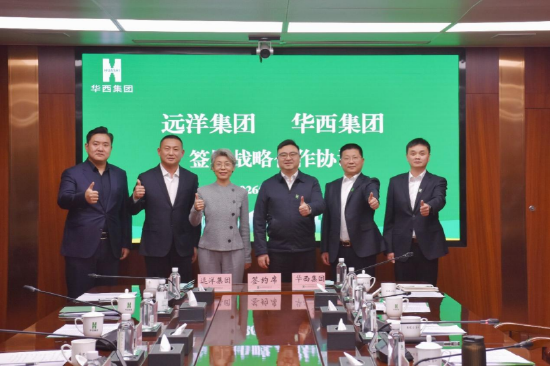
Core Viewpoint - Recently, Ocean Group signed a strategic cooperation agreement with Sichuan Province's large state-owned construction investment company and industry leader, Huaxi Group, focusing on urban renewal and the revitalization of non-performing assets, aiming for deep collaboration across the entire investment, financing, construction, management, and operation chain to explore markets and achieve mutual benefits [1][10]. Strategic Collaboration - The signing ceremony highlighted the warm welcome from Huaxi Group's Deputy General Manager, Gu Jinge, who praised Ocean Group's professional operational management capabilities and full industry chain service level [3][12]. - Huaxi Group has established the Sichuan Urban Renewal Group, taking on the role of the "main force" for urban renewal in the province, leveraging its strong engineering construction capabilities to collaborate with Ocean Group in core areas [3][12]. Cooperation Deepening - This cooperation marks a substantial phase of business synergy between the two companies, focusing on integrating the entire process of investment, financing, construction, management, and operation [8][16]. - Ocean Group will leverage its mature experience in asset operation management and revitalization, while Huaxi Group will contribute its significant advantages in engineering construction and project investment, aiming to explore paths for the value re-creation and enhancement of existing assets [8][17]. Additional Agreements - In addition to the strategic cooperation agreement between Ocean Group and Huaxi Group, Huaxi's 12th Company, Wuhu Shenghong Industrial Investment Co., Ltd., and Zhejiang Jin Special Investment (Suzhou) Enterprise Management Co., Ltd. also signed a strategic cooperation framework agreement, focusing on special investment business and the revitalization of existing assets [10][19].
2026,德州聚焦八个方面精准攻坚
Da Zhong Ri Bao· 2026-01-28 03:17
Core Viewpoint - The government of Dezhou City aims to strengthen its industrial economy and implement various strategic initiatives to enhance economic growth, improve living standards, and ensure social stability while addressing key risks [1]. Group 1: Economic Development Initiatives - The government plans to expand investment by accelerating 735 key projects with a total investment of 120 billion yuan [2]. - A special action to boost consumption will be implemented, focusing on retail innovation and policies for trade-in programs [2]. - The strategy includes enhancing modern service industries through targeted actions for each sector [2]. Group 2: Industrial and Infrastructure Enhancement - The focus will be on consolidating and expanding the foundation of the real economy, nurturing quality projects, and strengthening pillar industries [2]. - The government aims to promote traditional industry upgrades, the growth of emerging industries, and future industry planning [2]. - A plan for the growth of quality industrial enterprises will be implemented, along with improvements to public service systems [2]. Group 3: Urban and Rural Development - Urban renewal will be prioritized with a total investment of 20.9 billion yuan for 123 key urban construction projects [3]. - The government will enhance rural revitalization by expanding high-standard farmland and increasing the number of agricultural processing enterprises [3]. - A new model for real estate development will be promoted to improve housing quality [3]. Group 4: Green and Low-Carbon Transition - The government will lead initiatives for carbon reduction and pollution control, aiming for over 11 million kilowatts of installed renewable energy capacity [3]. - Environmental pollution prevention measures will be implemented, including the replacement of volatile organic compounds and the promotion of old vehicle updates [3]. - Efforts will be made to enhance ecosystem management and promote national water budget management [3]. Group 5: Social Welfare and Safety - The government will implement over 150 employment projects and provide vocational training for more than 12,000 individuals [4]. - Educational resources will be optimized, supporting the establishment of high-level universities and vocational education [4]. - A comprehensive social security network will be developed, including long-term care insurance and home modifications for the elderly [4].
长城基金汪立:市场趋稳,成长与价值轮动
Xin Lang Cai Jing· 2026-01-28 01:29
Group 1: Market Overview - The A-share market exhibited a structural differentiation pattern last week, with broad indices showing mixed performance and funds significantly favoring small and mid-cap stocks and popular growth sectors [1][7] - In terms of industry performance, construction materials, real estate, and military industries strengthened, while chemical, non-ferrous metals, banking, non-banking financials, and telecommunications indices declined [1][7] Group 2: Macroeconomic Analysis - In 2025, China's economy is projected to achieve its annual target with a GDP growth of 5.0%, and a quarterly growth rate of 4.5% in Q4, slightly down from previous periods due to base effects [2][8] - The economic characteristics for Q4 include a dual differentiation: strong industrial production but persistent structural mismatches in capacity and demand, and a divergence between external and internal demand, with external demand supported by an optimized export structure [2][8] - Future policy focus may shift towards expanding domestic demand, enhancing consumption through initiatives like trade-in programs for consumer goods, and investing in new infrastructure and equipment updates to mitigate uncertainties in external demand and pressures on internal demand [2][8] Group 3: Urban Renewal Initiatives - The top-level design for urban renewal is being reinforced, expected to become a significant driver for expanding domestic demand, with the Ministry of Housing and Urban-Rural Development emphasizing high-quality urban development [3][9] - In 2024, there are 60,015 urban renewal projects planned, with a total investment of 2.9 trillion yuan, focusing on the renovation of old urban communities, urban village transformations, and underground pipeline upgrades [3][9] Group 4: Investment Strategies - The investment strategy emphasizes technology growth as a main line, with value stocks also having potential, highlighting the importance of regulatory stability in enhancing market investability [4][10] - Recent large-scale reductions in ETFs by the Central Huijin Investment have stabilized the weighted index, while the technology growth sector has accelerated rotation, maintaining market activity without suppressing it [4][10] - Key investment directions include emerging technologies, non-bank financials benefiting from wealth management demand, and cyclical sectors poised for recovery due to low valuations and improving economic conditions [5][11]
中经评论:原拆原建让老旧危楼焕新
Jing Ji Ri Bao· 2026-01-28 00:04
Core Viewpoint - The article highlights the ongoing urban renewal efforts in China, focusing on the reconstruction of a residential building in Beijing, which serves as a model for similar projects nationwide [1][4]. Group 1: Urban Renewal and Housing Safety - The original building, constructed in 1978, was deemed a D-level hazardous structure, prompting its demolition and reconstruction to address safety concerns and improve living conditions for residents [1]. - The Chinese government is actively promoting urban renewal, emphasizing the renovation of existing buildings, particularly those classified as dangerous [1]. Group 2: Innovative Construction Methods - The project employs a "factory manufacturing + on-site installation" model, significantly reducing construction time and enhancing efficiency, with a 75% increase in building efficiency compared to traditional methods [2]. - The use of prefabricated modules allows for over 90% of construction processes to be completed in a factory setting, minimizing waste and carbon emissions by more than 30% [2][3]. Group 3: Quality Assurance and Financial Innovation - The smart construction approach ensures high-quality housing, with features like improved airtightness, enhanced sound insulation, and integrated safety designs for elderly and children [3]. - The project introduces a financial innovation mechanism, allowing for personal housing renovation loans to alleviate short-term financial pressures on economically disadvantaged families [3]. Group 4: Collaborative Model for Urban Renewal - The project exemplifies a collaborative model involving government, residents, and enterprises, leading to a win-win situation for all stakeholders [4]. - The government plays a crucial role in coordinating efforts and providing support, while residents benefit from improved housing quality and quicker relocation [4].
中银晨会聚焦-20260128
Bank of China Securities· 2026-01-27 23:30
■重点关注 证券研究报告——晨会聚焦 2026 年 1 月 28 日 | 市场指数 | | | | --- | --- | --- | | 指数名称 | 收盘价 | 涨跌% | | 上证综指 | 4139.90 | 0.18 | | 深证成指 | 14329.91 | 0.09 | | 沪深 300 | 4705.69 | (0.03) | | 中小 100 | 8725.73 | (0.20) | | 创业板指 | 3342.60 | 0.71 | | 行业表现(申万一级) | | | | | --- | --- | --- | --- | | 指数名称 | 涨跌% | 指数名称 | 涨跌% | | 电子 | 2.27 | 煤炭 | (2.27) | | 通信 | 2.15 | 农林牧渔 | (1.95) | | 国防军工 | 1.65 | 钢铁 | (1.34) | | 机械设备 | 0.64 | 美容护理 | (1.22) | | 传媒 | 0.48 | 医药生物 | (1.11) | 资料来源:万得,中银证券 中银晨会聚焦-20260128 重点关注 【宏观经济】2025 年工企利润数据点评—期待 2 ...
沈举人巷更新:古巷蝶变涌生机,老城改造见新景
Xin Lang Cai Jing· 2026-01-27 22:08
(来源:南京晨报) 转自:南京晨报 巷子改造后一景。通讯员供图 今年以来,南京市城管局围绕"洁、净、平、亮、序"五个方面,以及"门前三包、违规广告整治、店招 标牌规范"等十个方面持续推进背街小巷整治提升工作,创新实施"一巷一策"与"一户一案",取得阶段 性成效。 一个多月前,鼓楼区华侨路街道启动对沈举人巷的改造更新,让老街巷既留住记忆,又焕发新颜。 明华村入口处,原本略显杂乱的非机动车棚和垃圾分类亭得到统一规划改造,功能也更完善。统一设计 的垃圾箱、车挡与坐凳,融入中式纹样与"四象"图案。针对影响街貌的空调外机,也设计多种风格的装 饰罩美化遮挡。就连道路隔离护栏,也融合"书香街区"元素。点点滴滴改进,让老街坊们深感舒心便 利。 沈举人巷的更新提升,是一次关于城市更新模式的生动实践。它证明街区改造可以不用大拆大建,而是 通过精致景观提升、人性化便民设施与深厚的文化内涵有机结合。记者获悉, 市城管局对全市2611条 街巷分类制定精细化管理标准,落实定人定岗与常态化巡查机制。目前已重点打造玄武区板井巷、鼓楼 区傅厚岗、江北新区引水河路等12条精品特色街巷,形成示范带动效应。通讯员 仇小勇 向巷内而行,曾经单调的围墙 ...
为人民群众打造高品质生活空间
Xin Lang Cai Jing· 2026-01-27 20:00
Group 1 - The core viewpoint of the article emphasizes the importance of urban renewal and high-quality development in the real estate sector as part of the "14th Five-Year Plan" [1][2] - The Ministry of Housing and Urban-Rural Development plans to implement urban renewal actions vigorously, aiming for a high-quality start in housing and urban-rural construction during the "14th Five-Year" period [2][3] - By 2025, significant progress is expected in urban renewal, with 26,000 old urban residential communities undergoing renovation, 14,000 elevators installed, and improvements benefiting over 4.7 million residents [2][3] Group 2 - Key initiatives include the continuous promotion of the renovation of old urban residential communities, the construction of complete communities, and the transformation of small public spaces to enhance community parks and green areas [3] - Development projects will focus on high-quality implementation of infrastructure, including underground pipelines and the renovation of old neighborhoods and historical sites [3] - A three-tiered policy framework will be established to support urban renewal, including a policy and institutional system, a planning and implementation system, and a sustainable financing system for urban construction [3]
探寻更有温度、智慧的城市更新之法
Bei Jing Shang Bao· 2026-01-27 16:46
Core Viewpoint - Urban renewal is a key component in transforming development dynamics and improving public welfare, with Beijing being the first mega-city in China to achieve a reduction in urban expansion [1] Group 1: Urban Renewal Initiatives - In 2025, Beijing plans to complete the renovation of 1,225 old residential communities and improve the environment in 20 key areas, including significant upgrades to 251 bridges [1] - The city aims to enhance its urban governance and accelerate the transformation of its development model by 2026 [1] Group 2: Technological Integration in Urban Renewal - City council member Huang Xiaobin emphasizes the importance of precise planning and comprehensive collaboration, advocating for the use of big data and AI in urban planning to avoid unnecessary renovations [2] - Huang also highlights the need for refined energy management during the operational phase of buildings, suggesting that technology should support energy efficiency in building operations [2][3] Group 3: Policy Support and Market Mechanisms - Huang stresses the importance of market mechanisms and social capital in urban renewal, proposing a shift in policy focus from equipment subsidies to performance-based incentives for energy efficiency [3] - He advocates for green finance to be directed towards smart operations and energy-saving projects, promoting a collaborative model that shares risks and rewards among stakeholders [3] Group 4: Community Governance and Social Integration - City council member Wang Bigang discusses the integration of urban renewal with grassroots governance, emphasizing the need for a more human-centered approach to urban development [4][5] - He suggests that the construction of urban sub-centers should focus on enhancing social cohesion and improving residents' quality of life through empathetic governance [4][6] Group 5: Green Development and Ecological Restoration - City council member Fu Yujie identifies green industry as a core aspect of urban renewal, linking ecological restoration with economic and social value [7] - Fu outlines three key components of Beijing's green development strategy: seed innovation, smart forestry, and the integration of cultural and educational elements into the green economy [8]