强化学习

Search documents
限时16.99万~21.59万元,别克至境L7正式上市
Zhong Guo Qi Che Bao Wang· 2025-09-30 02:38
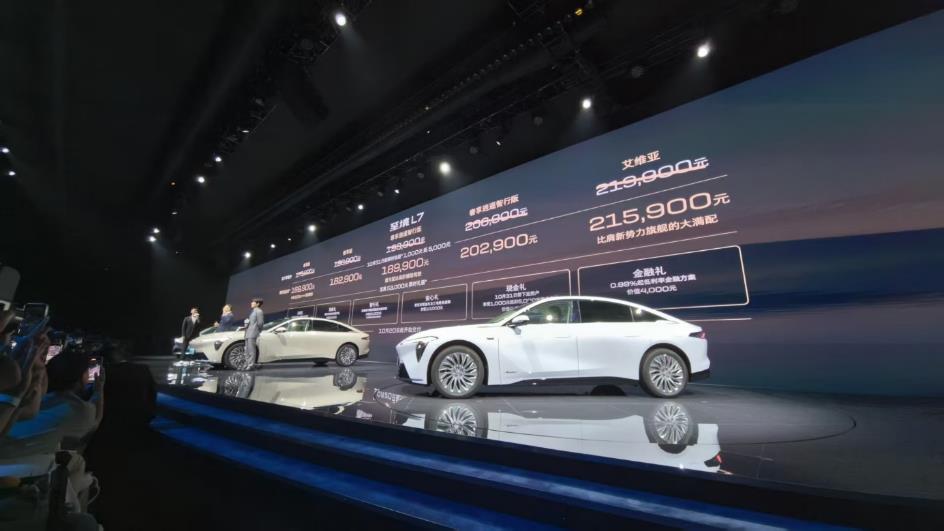
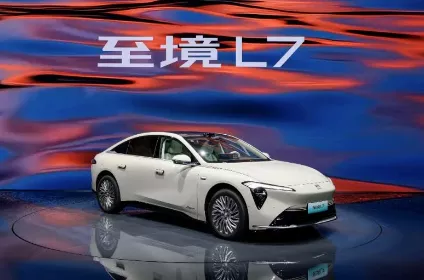
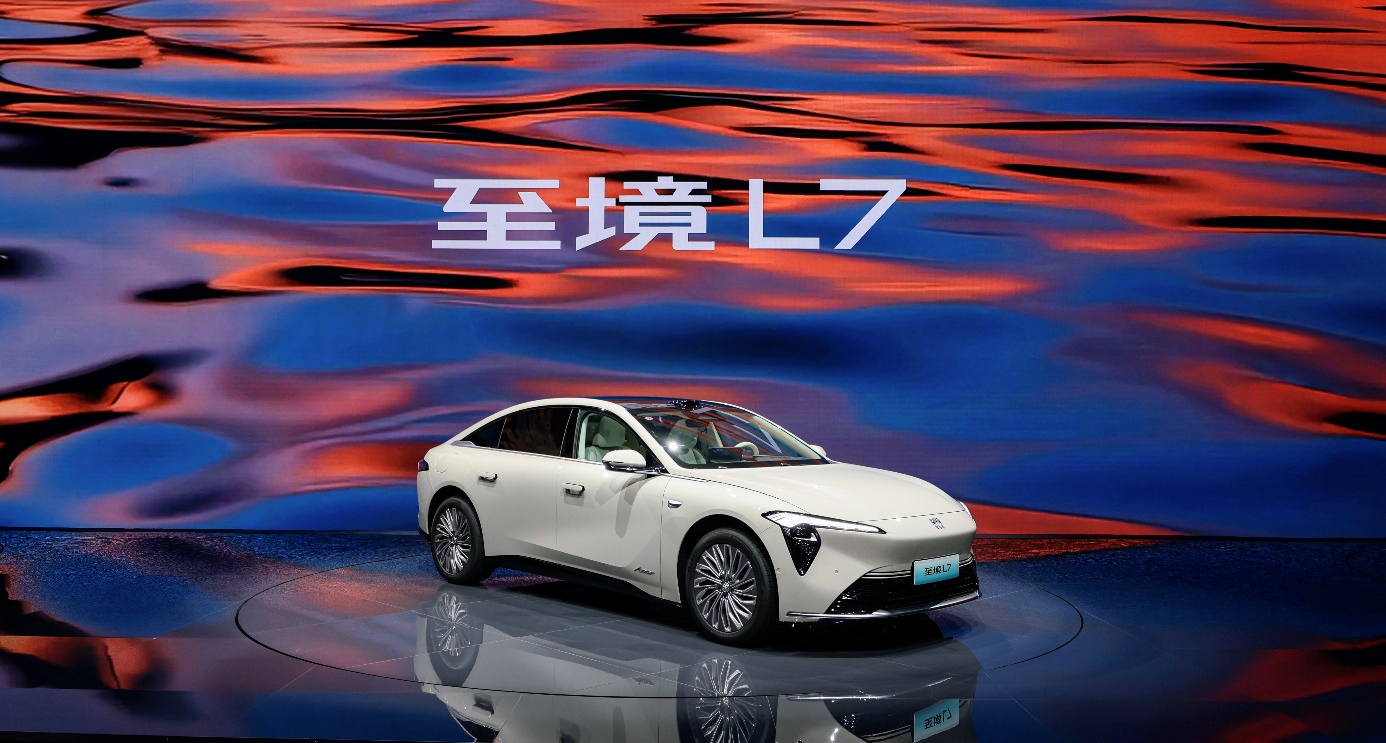
Core Insights - SAIC-GM Buick has officially launched the flagship sedan, the Zhijing L7, with a limited-time price range of 169,900 to 215,900 yuan, targeting the high-end new energy vehicle market [1][2] Pricing and Models - The Zhijing L7 is available in five variants, with the official guide price and limited-time price detailed in a table format [2] - Users can enjoy up to 53,000 yuan in launch benefits and additional cash and upgrade gifts by placing orders before specified deadlines [2] Technology and Performance - The Zhijing L7 features the "Zhenlong" range extender system, providing long-range capabilities and low energy consumption, addressing common industry pain points [4][6] - It boasts a 252 kW range extender single electric drive, equivalent to a 3.0T V6 engine, and achieves a combined fuel consumption as low as 0.5L per 100 km [6] - The vehicle accelerates from 0 to 100 km/h in just 5.9 seconds and maintains performance consistency between charged and uncharged states [6] Battery and Safety - The L7 utilizes the newly developed high-performance Auton 2.0 hybrid battery, offering enhanced safety features and a lifespan of 640,000 km [8] - The battery has undergone rigorous testing, exceeding national standards, and has a track record of 1.6 billion kilometers without self-ignition [8] Intelligent Driving Features - The vehicle is equipped with the "Xiaoyao Zhixing" driver assistance system, featuring the globally first Momenta R6 flywheel model based on end-to-end reinforcement learning [9][12] - It includes advanced features for urban navigation and parking assistance, significantly enhancing user experience [12][14] Interior and Comfort - The Zhijing L7 offers a luxurious interior with high-quality materials and advanced technology, including a 50-inch AR-HUD and a dual-screen design for the driver [19][21] - The vehicle is designed for comfort, featuring multi-functional seats and a high-end sound system with 27 speakers [24][26] Testing and Quality Assurance - The L7 has undergone extensive testing, with over 60 collision tests and a durability testing mileage of nearly 6.5 million kilometers, ensuring high-quality standards [30]


别克至境 L7 正式上市 限时价16.99万 ~21.59万元
Cai Jing Wang· 2025-09-29 23:00
Core Viewpoint - SAIC-GM Buick brand has officially launched the Zhijing L7, offering five models priced between 169,900 to 215,900 yuan, featuring advanced hybrid technology and impressive performance metrics [1][3]. Group 1: Vehicle Specifications - The Zhijing L7 is equipped with the "Zhenlong" range extension system, featuring a 252 kW single electric drive, providing power equivalent to a 3.0T V6 engine [1]. - It includes the industry's strongest 1.5T hybrid dedicated engine, paired with a generator that has a peak power of 100 kW, achieving a combined fuel consumption as low as 0.5L per 100 km [1]. - The vehicle accelerates from 0 to 100 km/h in just 5.9 seconds and has a 302 km pure electric range, with a total range of 1420 km, meeting the needs of over 90% of users for urban commuting [3]. Group 2: Charging and Driving Assistance - The "Zhenlong" system supports the fastest charging in its class at 130 kW, allowing for a 30% to 80% charge in just 18 minutes [3]. - The Zhijing L7 features the Buick "Xiaoyao Zhixing" driver assistance system, which integrates the Momenta R6 flywheel model, providing advanced driving assistance capabilities [3][4]. - The Momenta R6 model utilizes cutting-edge reinforcement learning technology, enabling the vehicle to handle complex driving scenarios smoothly and safely [3]. Group 3: Parking and Technology - The vehicle offers comprehensive parking assistance for various scenarios, including standard, narrow, mechanical, and vertical/horizontal parking, alleviating parking anxiety [4]. - It is equipped with Qualcomm's latest SA8775P chip, providing 72 TOPS of AI computing power for an immersive and natural interaction experience [4]. - The Zhijing L7 features a spacious body design with dimensions of 5032 mm x 1952 mm x 1500 mm, showcasing a luxurious C-class sedan presence [6]. Group 4: Comfort and Design - The vehicle incorporates advanced NVH technology, frameless doors, and high-end lighting features, enhancing its luxurious appeal [6][7]. - It utilizes a sophisticated suspension system with a front double wishbone and rear five-link structure, significantly improving ride comfort and stability [7].
为何我国智能辅助驾驶快速“变聪明”?这两个维度缺一不可
Zhong Guo Jing Ying Bao· 2025-09-29 17:23
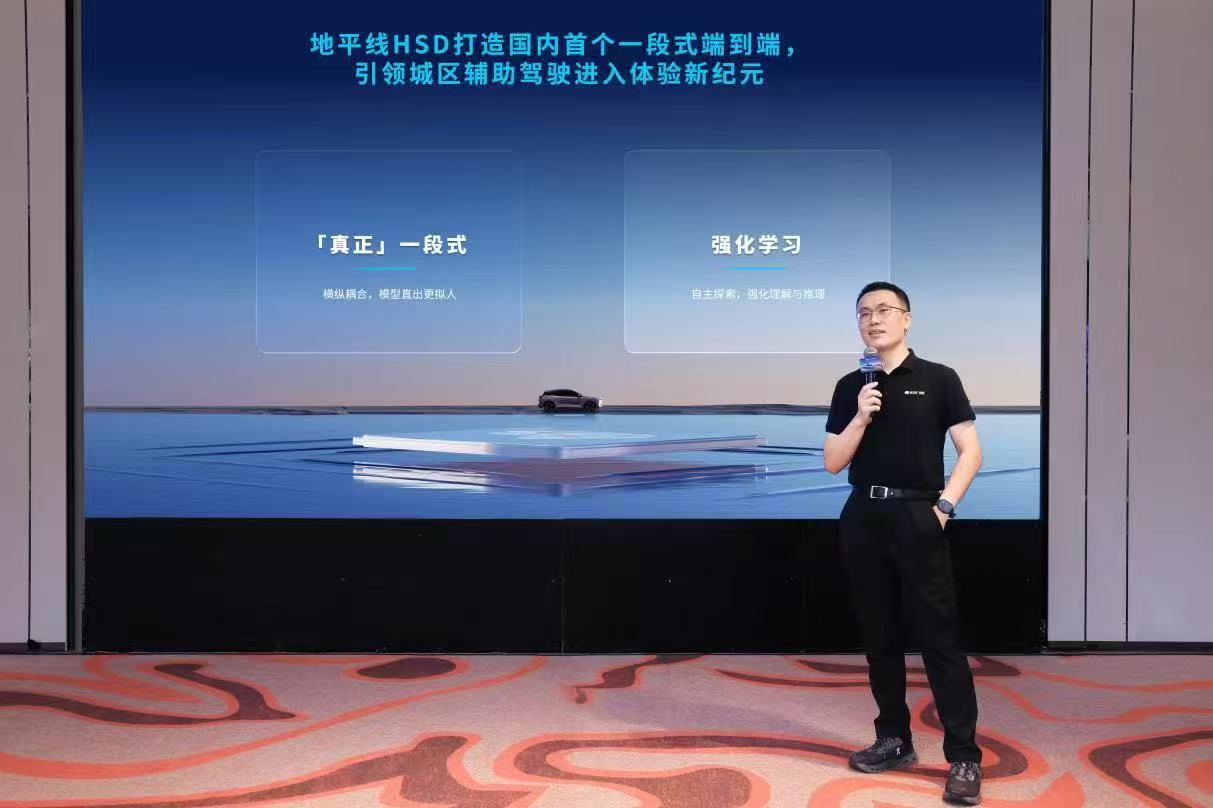
Core Insights - The article highlights three main advantages for China's development in intelligent driving: scenario advantage, ecosystem advantage, and policy advantage [1] - The integration of scenario advantages with advanced intelligent driving platforms marks the transition to the 2.0 stage of automotive intelligence [1] Group 1: Intelligent Driving Technology - Horizon's HSD (Horizon SuperDrive) solution has significantly improved urban driving capabilities, providing a smoother, more human-like, and reliable experience [4] - The "end-to-end + reinforcement learning" architecture is a key highlight of the HSD upgrade, enabling low latency and enhanced safety and efficiency [4][5] - The system's ability to process complex scenarios without modular segmentation allows for a more fluid driving experience, akin to human control [5] Group 2: System Performance - HSD demonstrates ultra-low latency and strong defensive driving capabilities, with rapid responses to unexpected situations such as construction zones and sudden obstacles [6][7] - The system's performance includes smooth control in various driving conditions, maintaining stability and fluidity even in complex traffic scenarios [7] Group 3: Safety and Certification - Horizon has established the largest active safety testing scenario database in the industry, covering over 30,000 scenarios and achieving over 10 million kilometers of testing [10] - The company has received the world's first and only ISO 8800 AI functional safety certification, enhancing its credibility in the global market [10]
至境L7杀到 别克“反击”新势力
Bei Jing Shang Bao· 2025-09-29 13:28
Core Viewpoint - SAIC-GM Buick's new high-end electric vehicle sub-brand "Zhijing" has launched its flagship sedan, Zhijing L7, marking its entry into the competitive electric sedan market against new energy vehicle startups [2][3]. Group 1: Product Launch and Market Positioning - The Zhijing L7 was officially launched on September 28, with five models priced between 169,900 and 215,900 yuan [2]. - The Zhijing brand was introduced in April, with its first model, the "Shijia," positioned as a luxury MPV targeting the million-yuan segment [2]. - The entry of Zhijing L7 into the sedan market is seen as a strategic move to compete with established players and new entrants in the electric vehicle sector [2][3]. Group 2: Technical Specifications and Features - Zhijing L7 is classified as a C-class mid-large sedan, with dimensions of 5032mm in length, 1952mm in width, and 1500mm in height, while its pricing places it in the B-class segment [3]. - The vehicle features the "Zhenlong" range extender system, which includes a 252kW electric drive and a 1.5T hybrid engine, achieving a combined fuel consumption of just 0.5 liters per 100 kilometers [3]. - The pure electric range of Zhijing L7 is 302 kilometers, with a total range of 1420 kilometers, and it supports fast charging from 30% to 80% in just 18 minutes [3]. Group 3: Competitive Landscape and Market Trends - The hybrid vehicle market has seen significant growth, with sales reaching 3.46 million units in the first eight months of the year, a year-on-year increase of 22.8% [3]. - Companies like Li Auto, which have successfully entered the hybrid market, have reported improved sales and profitability, indicating a trend that attracts more manufacturers to this segment [3]. Group 4: Technological Advancements - Zhijing L7 incorporates Buick's "Xiaoyao Zhixing" driver assistance system and is the first to feature the Momenta R6 flywheel model based on end-to-end reinforcement learning [4]. - The vehicle is equipped with Qualcomm's latest SA8775P chip, providing 72 TOPS of AI computing power for an enhanced user experience [4]. - The development of Zhijing L7 reflects a shift in SAIC-GM's strategy, with increased autonomy and efficiency in product development, as well as more frequent communication with General Motors headquarters [4].
降价!DeepSeek,大消息!
证券时报· 2025-09-29 11:55
Core Viewpoint - DeepSeek has launched the DeepSeek-V3.2-Exp model, which introduces a Sparse Attention mechanism to enhance training and inference efficiency for long texts, while maintaining output quality similar to its predecessor, V3.1-Terminus [2][4]. Group 1: Model Performance - The DeepSeek-V3.2-Exp model shows comparable performance to the V3.1-Terminus across various benchmark datasets, with specific scores indicating slight variations in certain areas [5]. - In the MMLU-Pro benchmark, both models scored 85.0, while in the General GPQA-Diamond benchmark, V3.1 scored 80.7 and V3.2-Exp scored 79.9 [5]. - The Sparse Attention mechanism has led to significant improvements in training and inference efficiency without compromising model output [4]. Group 2: Recent Developments - DeepSeek has been active recently, with the V3.1-Terminus model being released on August 21, which introduced a hybrid reasoning architecture and improved efficiency and agent capabilities [8]. - A research paper on the DeepSeek-R1 reasoning model was published in the prestigious journal Nature, marking a significant achievement for Chinese AI research [8][9]. - The new pricing policy for the DeepSeek API has reduced costs for developers by over 50%, making it more accessible [4].

新华汽车实验室|别克至境 L7“逍遥智行”首搭Momenta R6 飞轮大模型,首发体验公开
Zhong Guo Jin Rong Xin Xi Wang· 2025-09-29 11:49
Core Insights - The article highlights the launch of the Buick Zhijing L7, which features advanced driver assistance technology developed in collaboration with Momenta, showcasing its capabilities in various real-world driving scenarios [1][2]. Group 1: Product Launch and Features - The Buick Zhijing L7 is equipped with the "Xiaoyao Zhixing" driver assistance system based on the Momenta R6 flying wheel model, offering full-scene assistance features such as city NOA and "no-stop one-click parking" [1][2]. - The R6 flying wheel model utilizes 4 billion kilometers of driving data to enhance its decision-making capabilities through reinforcement learning, aiming to exceed human driving performance in complex scenarios [2][6]. - The L7's launch price starts at 169,900 yuan, and it is positioned as the first mass-produced model under Buick's high-end new energy sub-brand [6]. Group 2: Testing and Performance - The "Xiaoyao Zhixing" system was tested over a 20-kilometer route, covering various challenging environments, including congested urban areas and narrow mixed traffic [3][4]. - The L7 demonstrated its ability to recognize and respond to complex traffic situations, such as avoiding obstacles and smoothly merging into traffic, showcasing a natural "human-machine co-driving" experience [3][4]. - The system's parking capabilities were highlighted through a challenging parking test, where the L7 could autonomously identify parking spaces and execute parking maneuvers effectively [4]. Group 3: Technical Insights - The integration of AI algorithms and vehicle dynamics is emphasized as a key factor in delivering a smooth driving experience, with the collaboration between Momenta's R6 model and Buick's engineering expertise [5][6]. - The R6 flying wheel model's unique advantages stem from its ability to self-optimize using a vast "question bank," allowing it to make smarter and safer driving decisions [6]. - The L7 also incorporates advanced technologies such as lidar and the Qualcomm 8775 chip, reinforcing its competitive edge in the new energy vehicle market [6].
别克至境L7上市 B级车智电市场引来搅局者
Yang Shi Wang· 2025-09-29 08:26
Core Viewpoint - SAIC-GM Buick brand has officially launched the Zhijing L7, a flagship sedan under its high-end new energy sub-brand, with a price range of 169,900 to 215,900 yuan, aiming to disrupt the current market landscape with its luxury electric configuration at a B-class car price point [1][3]. Group 1: Product Features - The Zhijing L7 is built on the million-level Buick "Xiaoyao" super fusion architecture and features the "Zhenlong" range extender system, which addresses industry pain points with long range and low energy consumption [3][5]. - The "Zhenlong" range extender system offers a powerful 252 kW output, equivalent to a 3.0T V6 engine, enabling 0-100 km/h acceleration in just 5.9 seconds and a quiet engine intervention noise of less than 0.5 dB [5][7]. - The vehicle is equipped with a high-performance, high-safety battery designed specifically for hybrid systems, featuring advanced temperature control and high waterproof and corrosion resistance [7]. Group 2: Advanced Technology - The Zhijing L7 incorporates the "Xiaoyao Zhixing" advanced driver assistance system, utilizing the globally leading Momenta R6 flywheel model based on end-to-end reinforcement learning, providing superior driving assistance capabilities [7][9]. - It features the industry's first "no-stop one-button parking" function and a 50-inch panoramic AR-HUD head-up display, enhancing user experience and safety [7][9]. Group 3: Comfort and Luxury - The vehicle includes unique four-seat full-function floating layer seats, allowing rear passengers to adjust various comfort settings through a central touchpad [9]. - The chassis is designed for luxury, with advanced suspension systems that significantly improve ride comfort and stability, tested under rigorous conditions to ensure long-lasting quality [9].
中国电子电子行业研究报告
Haitong Securities International· 2025-09-29 08:16
Investment Rating - The report does not explicitly provide an investment rating for the industry or specific companies. Core Insights - Apple is developing an internal application similar to ChatGPT to prepare for a major overhaul of Siri, expected to launch in March 2026 [18][20] - The U.S. is considering a 1:1 rule for domestic versus overseas semiconductor production to reduce foreign dependence, which could impact companies like Apple [21][23] - U.S. EV sales are projected to increase by 21% year-over-year in Q3 2025, driven by a rush to purchase before the expiration of tax credits [26][27] Summary by Sections Apple and AI Development - Apple is testing a new app, code-named Veritas, to evaluate new features for Siri, which includes functionalities like searching personal data and photo editing [19][20] - The success of this software is crucial for Apple to regain competitiveness in the AI sector against rivals like Google and Samsung [20] Semiconductor Industry - The proposed 1:1 rule for semiconductor production could lead to tariffs for companies that do not meet the domestic production requirements [21][22] - Initial rules may allow companies to import chips without tariffs if they commit to domestic production [22][23] Electric Vehicle Market - Cox Automotive forecasts that U.S. EV sales will reach approximately 410,000 units in Q3 2025, representing a 21% increase from the previous year [26] - The EV market is expected to contract post-2025, prompting automakers to restructure their EV offerings [27]
上汽通用汽车别克“至境L7”上市
Zhong Zheng Wang· 2025-09-29 07:49
Core Viewpoint - SAIC-GM officially launched the "Zhijing L7" on September 28, with a price range of 169,900 to 215,900 yuan, marking the debut of the high-end new energy sub-brand under Buick [1] Group 1: Product Details - The Zhijing L7 is the first flagship sedan of the Buick sub-brand "Zhijing," built on the "Xiaoyao" super integration architecture [1] - It features the "Zhenlong" range extension system, an advanced driver assistance system "Xiaoyao Zhixing," and the Momenta R6 flywheel model based on reinforcement learning [1] - The vehicle is equipped with Qualcomm's latest SA8775P chip, enhancing its luxury smart cockpit [1] Group 2: Performance Specifications - The Zhijing L7 utilizes a newly developed high-performance, high-safety Aotener 2.0 hybrid battery, offering a pure electric range of 302 km and a comprehensive range of 1,420 km [1] - The vehicle aims to deliver a leading intelligent electric luxury experience at a B-class car price point, inheriting Buick's tradition of superior luxury [1]
别克至境L7上市,限时权益价16.99万元
Zhong Guo Zhi Liang Xin Wen Wang· 2025-09-29 04:42
Core Viewpoint - SAIC-GM Buick brand has launched the Zhijing L7, offering five models at a limited-time price range of 169,900 to 215,900 yuan, targeting the needs of Chinese consumers with advanced range-extending technology [1][19]. Product Launch and Pricing - The Zhijing L7 is available for pre-order through various platforms, with a promotional price for customers who complete the order and payment by October 31 and vehicle delivery by December 31 [3][19]. Technology and Performance - The Zhijing L7 features the "Zhenlong" range-extending system, providing a smooth driving experience comparable to a 3.0T V6 engine, with a 0-100 km/h acceleration time of 5.9 seconds and minimal performance drop in low battery conditions [5][19]. - It offers a pure electric range of 302 km and a comprehensive range of 1,420 km, with fast charging capabilities that allow for 30% to 80% charge in just 18 minutes [7][19]. Safety and Driving Assistance - The vehicle is equipped with the "Xiaoyao Zhixing" advanced driver-assistance system, utilizing the Momenta R6 model for enhanced navigation and parking assistance in complex scenarios [9][19]. - Multiple safety redundancies and alerts are integrated into the driving assistance features, ensuring reliable safety for users [9][19]. Interior and Comfort Features - The Zhijing L7 boasts a luxurious interior with a 50-inch AR-HUD display, dual-screen design, and a high-end sound system with 27 speakers, providing an immersive experience [13][18]. - The seating arrangement includes advanced comfort features such as adjustable lumbar support and massage functions, enhancing passenger comfort [16][18]. Quality and Testing - The vehicle has undergone rigorous testing, exceeding national standards with over 60 crash tests and extensive durability trials, ensuring high-quality manufacturing and safety [19]. Market Positioning - The launch of the Zhijing L7 allows consumers to access luxury configurations typically found in C-class vehicles at B-class prices, while also offering advanced smart features and strong battery technology [19].