中美贸易摩擦

Search documents
中美会谈背后有交易,万亿美元能买通特朗普?美媒编的故事太离谱
Sou Hu Cai Jing· 2025-10-08 05:08
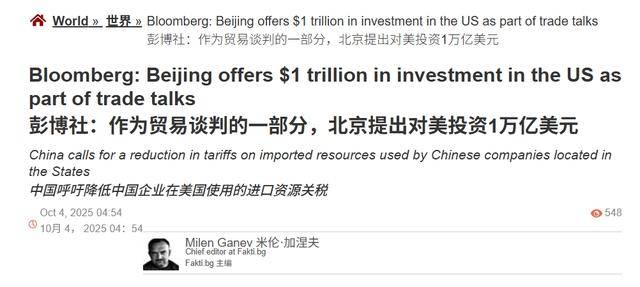
Group 1 - The core idea of the article revolves around China's proposal to invest $1 trillion in the U.S. in exchange for the easing of restrictions on Chinese companies operating in the U.S. [1] - The report from Bloomberg is viewed as exaggerated and hard to believe, given the historical context of similar claims made during the Trump administration [2][5] - The actual performance of the U.S. economy, particularly employment rates, raises doubts about the feasibility of such large investment commitments [3][5] Group 2 - There is a significant decline in direct Chinese investment in the U.S. in recent years, which contradicts the notion of a $1 trillion investment proposal [5][7] - The U.S. has been increasingly restricting Chinese investments under the pretext of national security, making the proposal seem unrealistic [5][7] - The outcomes of the Madrid talks between the U.S. and China did not align with the optimistic claims made by Bloomberg, as restrictions on Chinese investments have continued to tighten [7]

中方不买大豆,美方开始自救,特朗普犯下大忌,王毅将奔赴欧洲
Sou Hu Cai Jing· 2025-10-07 05:42
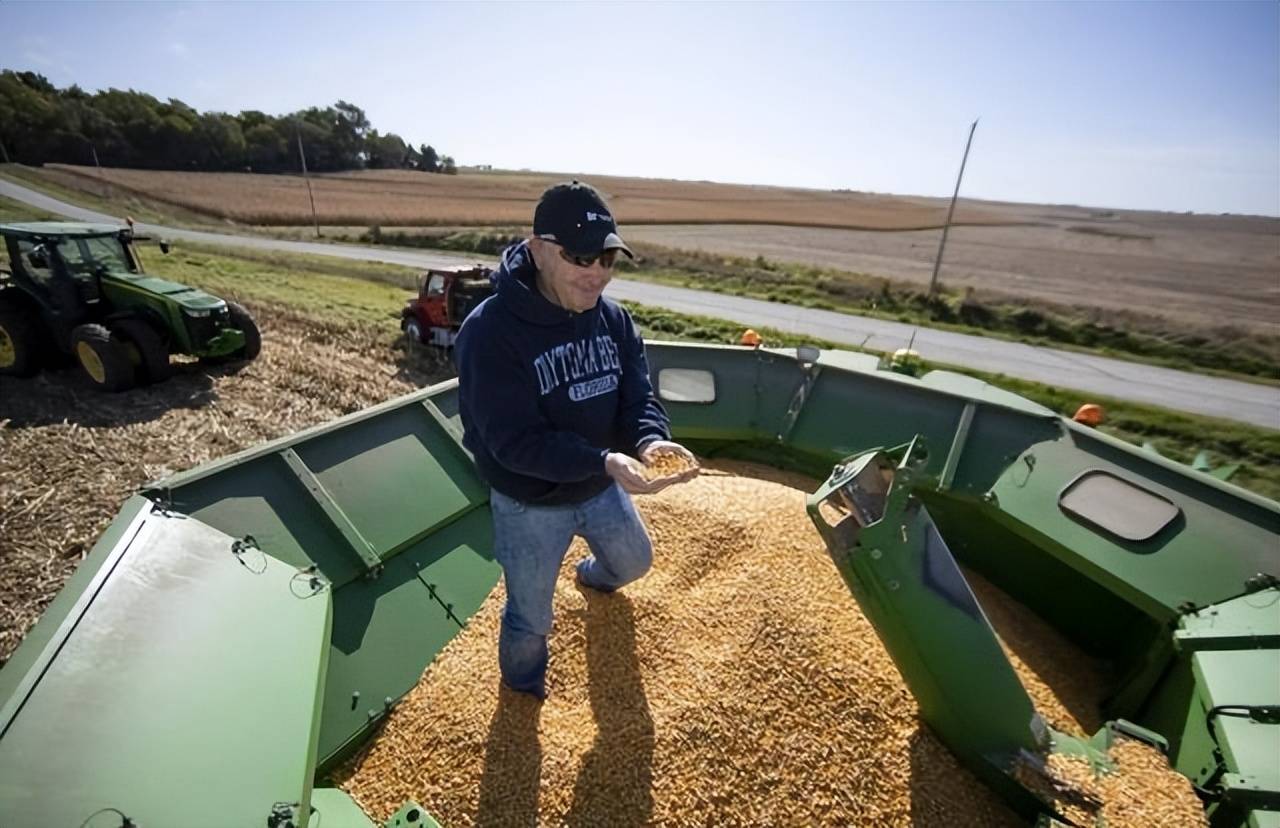
Core Insights - The current harvest season in the U.S. has led to a surplus of soybeans, with American farmers facing anxiety due to a lack of orders from China, prompting the Trump administration to seek solutions [1][3] Group 1: Government Response - The Trump administration is considering using $10 billion to $14 billion in funds to subsidize struggling farmers, sourced from tariff revenues, which were originally paid by American consumers [3] - Trump's focus on agricultural states as key voter bases drives his urgency to implement subsidy policies and promises to address soybean export issues in upcoming meetings with China [3][9] Group 2: China's Strategy - China's decision to not purchase U.S. soybeans is based on rational considerations, as it diversifies its supply sources by increasing imports from Brazil and Argentina, thus stabilizing its soybean supply [5][8] - The Chinese government has invested in infrastructure improvements and expanded its storage systems to reduce reliance on U.S. soybeans, making it less vulnerable to U.S. trade policies [5][8] Group 3: Market Dynamics - The U.S. Department of Agriculture reports that there have been zero orders for U.S. soybeans from China since the start of the new sales season, marking the first occurrence of "zero orders" since 1999 [7] - Last year, China accounted for approximately $12 billion of U.S. soybean exports, representing half of the total exports, highlighting the significant market loss for American farmers [7] Group 4: Political Implications - The soybean issue reflects broader U.S.-China relations, where the agricultural economy's fluctuations directly impact political outcomes, particularly for Trump [9][12] - Trump's reliance on outdated trade war tactics, such as tariffs and subsidies, may not effectively address the underlying issues, as China has adapted its strategies to counter U.S. pressures [9][12] Group 5: Future Outlook - The ongoing negotiations and upcoming APEC meetings may provide further clarity, but China is unlikely to change its stance easily, having transitioned from a passive trade dependent to an active market leader [11][12] - The soybean situation serves as a catalyst for broader changes in global supply chains and political-economic dynamics, indicating a shift in the rules of engagement in international trade [12]
不可思议!我国不买美国大豆,美财长就直接给我们扣上一个大黑锅
Sou Hu Cai Jing· 2025-10-06 05:27
Core Insights - The ongoing US-China trade tensions have significantly impacted soybean trade, with China shifting its purchases from the US to South American countries like Brazil and Argentina, leading to a drastic reduction in US soybean exports [1][3][5] Group 1: Trade Dynamics - China was previously the largest buyer of US soybeans, accounting for over 50% of US soybean exports, but has drastically reduced orders since the trade war escalated [1] - As of 2025, US soybean exports to China have decreased by over 70% compared to the previous year, resulting in severe inventory buildup and price drops for US farmers [1][5] - Brazil and Argentina have seen stable increases in soybean production, with China now sourcing its soybeans from these countries due to their competitive pricing and quality [1][5] Group 2: Government Response - The Trump administration has expressed urgency in addressing the situation, with Trump indicating that China's refusal to buy US soybeans is a tactic in trade negotiations [3] - US Treasury Secretary Scott Bessenet has blamed China for using US farmers as bargaining chips, suggesting that the media will soon see an increase in Chinese purchases of US soybeans [3][5] - The US government plans to announce a support package for soybean producers, potentially amounting to hundreds of millions of dollars, to help mitigate the financial impact on farmers [5] Group 3: International Relations - The trade war has led to a diversification of China's soybean sourcing, with new trade agreements between China and Argentina further complicating the situation for US farmers [5][6] - A leaked message revealed that China purchased at least 10 shipments of soybeans from Argentina, exacerbating the challenges faced by US farmers and highlighting the competitive dynamics in the soybean market [6]
专用集成电路(Asic)行业调查报告-发展规模及主要企业销售数据分析
Sou Hu Cai Jing· 2025-10-05 00:39
Core Insights - The Chinese ASIC market is projected to reach 50.423 billion RMB by 2025, while the global market is expected to reach 149.578 billion RMB. By 2032, the global market size is forecasted to grow to 296.526 billion RMB, with a compound annual growth rate (CAGR) of 10.27% during the forecast period [2] Industry Overview - The ASIC industry can be segmented into semi-custom design ASICs (Standard Cell Based ASIC and Gate Array Based ASIC), fully custom design ASICs, and programmable ASICs. The end-use applications include industrial, automotive, consumer electronics, security, telecommunications, and others [2] - The report provides a detailed analysis of market size, share, and growth trends across various segments [2] Market Leaders - Leading companies in the Chinese ASIC market include ON Semiconductor, Global Unichip Corp, Marvell Technology Group Ltd., Honeywell, STMicroelectronics, Faraday Technology, ams OSRAM, Elmos Semiconductor, Alchip, Intel Corporation, Qualcomm, and Texas Instruments. The report includes charts showing market shares of the top three and top five companies, along with an analysis of sales volume, revenue, pricing, gross profit, gross margin, market share, and development strategies of these companies [3] Regional Market Insights - The Asia-Pacific region is expected to witness strong growth prospects from 2023 to 2028 [3] Product Type Analysis - The semi-custom design ASIC segment is anticipated to contribute the largest market share by 2028 [4] Application Field Distribution - The security segment held the largest market share from 2018 to 2022 [5] - Broadcom is a major player in the ASIC market, holding a 5.80% market share in 2022. Intel Corporation is recognized as a leading semiconductor company, focusing on semiconductor design and manufacturing, AI, autonomous driving, and non-volatile memory solutions [5]


中国订单至今为零,特朗普发现不妙,10艘货船将开往中国,但不是美国的
Sou Hu Cai Jing· 2025-10-02 19:41
Core Insights - The U.S. soybean industry is facing significant challenges due to escalating trade tensions with China, which has led to a decline in soybean exports to the Chinese market [1][3][5] - Despite President Trump's calls for increased soybean orders from China, the country has opted to source soybeans from Brazil and Argentina due to competitive pricing and favorable logistics [3][5][7] - The impact of reduced soybean exports extends beyond agriculture, affecting various sectors of the U.S. economy, including rail freight and port trade, leading to rising unemployment rates [5][7] Group 1: U.S.-China Soybean Trade Dynamics - The U.S. soybean market has historically relied on China, with approximately 25% of U.S. soybeans exported to the country, making it a crucial market for American farmers [1] - Trump's administration has implemented high tariffs on Chinese imports, prompting China to retaliate with a 25% tariff on U.S. soybeans, erasing the price advantage previously held by U.S. soybeans [3] - As a result of these tariffs, the landed price of U.S. soybeans is now about 20% higher than that of Brazilian soybeans, leading to a shift in Chinese purchasing behavior [3] Group 2: Competitive Landscape and Economic Implications - Brazil and Argentina have capitalized on the situation, with Argentina recently eliminating soybean export pre-collection taxes, attracting significant orders from Chinese buyers [5] - The U.S. agricultural sector, particularly soybean and corn, plays a vital role in the overall economy, with agricultural exports exceeding $400 billion, indicating a broad economic impact from reduced soybean sales [5] - The American Soybean Association has highlighted the critical importance of the Chinese market, warning that failure to restore exports could pose unprecedented challenges to the U.S. soybean industry [5][7] Group 3: Future Outlook and Strategic Considerations - China's reduced reliance on U.S. soybeans reflects a shift in market dynamics, as Brazilian and Argentine soybeans offer better pricing and stable supply chains [7] - Continued trade hostilities from the Trump administration may further strain U.S.-China relations, potentially affecting other cooperative projects between the two nations [7] - The ongoing soybean dispute underscores the interdependent nature of U.S.-China economic relations, with China currently holding more leverage in the trade negotiations [7]
中国不买美国大豆,美方仍然态度强硬,哪怕政府停摆,关税也不能停
Sou Hu Cai Jing· 2025-09-29 10:21
Core Viewpoint - The ongoing trade conflict between China and the United States is significantly impacting the U.S. soybean industry, with American farmers facing unprecedented market challenges due to tariffs imposed by the Trump administration [1][3][6]. Group 1: Market Conditions - As the soybean harvest season begins in the U.S. Midwest, farmers are struggling with unsold inventory, with no shipments of U.S. soybeans to China so far this season, contrasting sharply with the 6.5 million tons purchased by China during the same period last year [1][3]. - Historically, over half of U.S. soybean exports relied on the Chinese market, and the cessation of Chinese purchases has severely affected the livelihoods of thousands of farmers [3][5]. - In the first eight months of this year, Brazil exported 66 million tons of soybeans to China, accounting for three-quarters of its total exports, marking a historical high [5]. Group 2: Political and Economic Implications - The Trump administration's tariff policies have led to a significant loss of market share for U.S. farmers, with a previous trade war resulting in a 20% market share loss that has yet to be recovered [5]. - The U.S. government has indicated it may use tariff revenues to subsidize affected farmers, but such measures are unlikely to provide a long-term solution to the underlying market issues [5][8]. - The Trump administration remains steadfast in its tariff policies, even in the face of government shutdown threats, indicating a lack of responsiveness to farmers' growing discontent [6][8]. Group 3: Future Outlook - The ongoing trade tensions and China's diversification of soybean procurement are expected to have lasting impacts on the U.S. soybean market, making it difficult for the U.S. to regain its previous export levels to China [8]. - Farmers are increasingly facing financial pressures and risks of bankruptcy, with warnings from agricultural organizations about the potential collapse of the agricultural economy [5][8].
特朗普政府对进口医疗设备启动调查 中国出口企业影响如何
Di Yi Cai Jing· 2025-09-25 09:19
Core Viewpoint - The Trump administration has initiated Section 232 investigations into imported robots, industrial machinery, and medical devices, which may lead to potential tariffs affecting Chinese medical device exports to the U.S. [1] Group 1: Impact on Medical Device Companies - The stock prices of the top ten medical device companies in A-shares showed mixed results, with Mindray Medical (300760.SZ) increasing by 4.75%, while the largest decline was seen in Yingke Medical (300677.SZ) with a drop of 2.54% [1] - According to the China Chamber of Commerce for Import and Export of Medicines and Health Products, China's medical device export value is projected to reach $24.1 billion in the first half of 2025, marking a 5.0% year-on-year increase. However, exports to the U.S. decreased by 4.41% due to escalating trade tensions, resulting in a market share contraction of 2.26 percentage points compared to the same period in 2024 [1] Group 2: Strategies of Chinese Medical Device Companies - Chinese medical imaging device companies have limited manufacturing presence in the U.S. and primarily rely on direct exports. The U.S. is also pushing for a return of pharmaceutical manufacturing [2] - The impact of potential tariffs varies among medical device companies; low-value consumables may face profit margin pressures, while higher-margin medical equipment companies might absorb tariff costs [2] - The China Chamber of Commerce for Import and Export of Medicines and Health Products indicated that companies are restructuring competitive strategies through "technology tiers + global layout" in response to U.S. tariffs and technology restrictions [2] - Companies like United Imaging Healthcare have established a global service network with seven regional spare parts hubs and 32 country warehouses, while Mindray Medical is advancing its global strategy through digitalization and IoT technology [2] Group 3: Local Production and Market Adaptation - Mindray Medical reported that nearly 70% of its international revenue comes from developing countries, which have market capacities similar to China but with faster growth rates. The company plans to increase the number of countries with local production to 14, with 11 already initiated [3] - Steady Medical (300888.SZ) noted that its sales to the U.S. represent a small portion of its revenue and is closely monitoring the investigation's outcomes while shifting some medical consumables production to the U.S. and nearby regions to mitigate tariff impacts [3]
特朗普政府对进口医疗设备启动调查,中国出口企业影响如何
Di Yi Cai Jing· 2025-09-25 08:56
Core Viewpoint - The U.S. government is initiating investigations into tariffs on imported medical devices and industrial machinery, which may lead to increased taxes affecting Chinese medical device exporters [1][3]. Group 1: Impact on Chinese Medical Device Companies - The stock prices of the top ten medical device companies in A-shares showed mixed results, with Mindray Medical (300760.SZ) increasing by 4.75%, while the largest decline was seen in Yingke Medical (300677.SZ) with a drop of 2.54% [1]. - In the first half of 2025, China's medical device exports are projected to reach $24.1 billion, a year-on-year increase of 5.0%, with the U.S. being the largest market at $5.167 billion, accounting for 21.44% of total exports [1]. - The trade tensions have led to a 4.41% year-on-year decline in exports to the U.S., with a market share contraction of 2.26 percentage points compared to the same period in 2024 [1]. Group 2: Strategic Responses of Companies - Chinese medical device companies are restructuring their competitive strategies in response to U.S. tariffs and technology restrictions, focusing on a "technology tier + global layout" approach [3]. - Companies like United Imaging Healthcare have established a global service network with seven regional spare parts hubs and 32 country warehouses to enhance their market reach [3]. - Mindray Medical is advancing its global strategy through digitalization and smart technology, with significant revenue from developing countries, which are growing faster than the Chinese market [4]. Group 3: Production and Supply Chain Adjustments - Low-value consumable companies, such as Shenguan Medical (300888.SZ), report minimal sales to the U.S. and are closely monitoring the tariff investigations [4]. - Shenguan Medical is shifting some production of medical consumables to the U.S. and nearby regions to mitigate the impact of potential tariffs [4]. - Mindray Medical plans to increase the number of countries with local production to 14, with 11 already initiated, to meet overseas market demands [4].


绝大多数中国大豆订单被巴西拿走,美国豆农焦虑绝望
Sou Hu Cai Jing· 2025-09-24 13:15
Group 1 - The core issue facing U.S. soybean farmers is the lack of orders from China, with the expected export value for 2024 being $12.8 billion, yet no orders have been received this year [2] - Typically, by this time of year, about one-third of the annual soybean sales to China would be completed, representing 8% to 9% of total U.S. soybean production, but this year the actual sales volume is zero [2] - The increase in tariffs has severely impacted U.S.-China trade, raising the landed cost of U.S. soybeans compared to Brazilian soybeans by 531 yuan per ton, resulting in a loss of competitiveness for U.S. soybeans [2] Group 2 - The U.S. agricultural sector is facing significant challenges, including environmental changes and market fluctuations, with a potential agricultural crisis looming by 2025 if the current trend continues [3] - In 2022, the U.S. exported approximately $20 billion worth of agricultural products to China, half of which was soybeans, highlighting the importance of this market for U.S. farmers [3] - The decline in soybean exports has led to many farms going bankrupt, with soybean futures prices hitting a ten-year low, and many farmers unable to cover their costs [3] Group 3 - The U.S. is currently facing a debt of $37 trillion, which limits its ability to address the wave of bankruptcies among farms and related businesses, reminiscent of the economic depression in the 1930s [4] - Farmers are in a situation where they would rather waste their produce than sell it at a loss, similar to historical precedents during economic downturns [4] Group 4 - Brazil has increasingly become the largest supplier of soybeans to China, taking the majority of soybean import orders, while Argentina is also expanding its market share [5] - The U.S. is losing its dominant position in the global soybean market due to price competition and structural adjustments in the supply chain [5] - The reduction in U.S. soybean imports by China has led to increased anxiety and despair among U.S. soybean farmers [5]
突然暴跌!阿根廷取消农作物出口税,影响有多大?
对冲研投· 2025-09-23 12:04
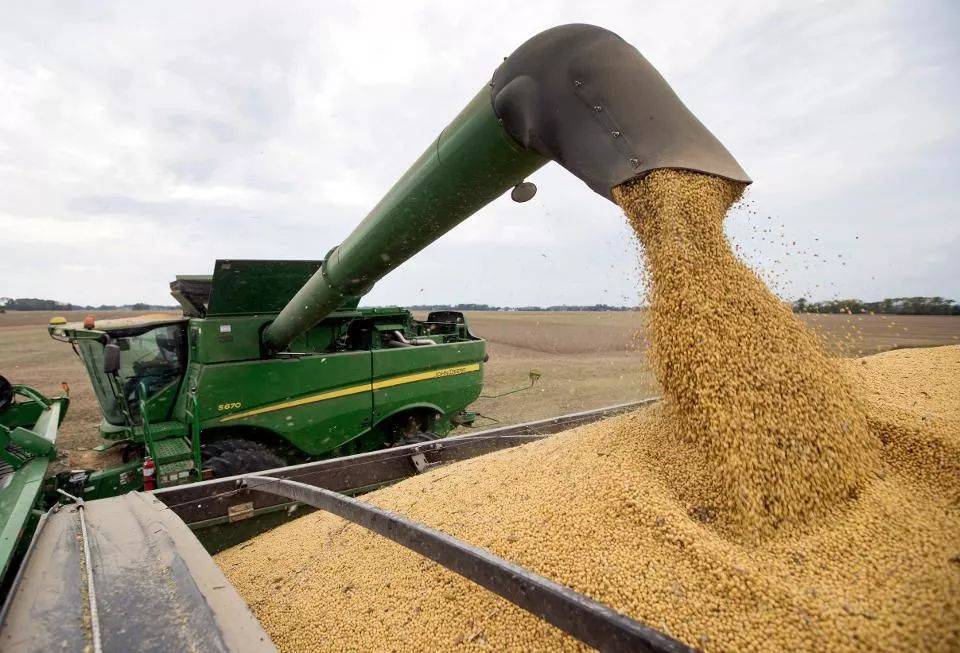
Core Viewpoint - The Argentine government has decided to eliminate export taxes on certain agricultural products, including soybeans, soybean meal, soybean oil, corn, and wheat, before October 31. This policy aims to enhance foreign exchange supply and stabilize the local currency, which may impact global soybean and soybean meal prices [5][7]. Group 1: Argentine Export Policy - The export tax on soybeans was previously set at 26%, and for soybean meal, it was 24.5%. The removal of these taxes is expected to provide a price advantage for Argentine soybeans, potentially affecting the pricing of soybean meal in the domestic market [5][7]. - Argentina is the world's largest exporter of soybean meal and oil, holding 36% and 46% of the global market share, respectively. However, China's imports of soybean meal from Argentina are minimal, with only 32,000 tons expected in 2024 [10][11]. Group 2: Market Dynamics - The recent policy change may exacerbate the already pessimistic outlook for U.S. soybean exports, as China has halted purchases of U.S. soybeans due to trade tensions. This situation creates a narrow competitive window for U.S. soybeans before Brazilian crops become available [10][11]. - The average export of Argentine soybeans from September to December over the past five years is only 1.46 million tons, indicating that the supply shock from Argentina may be limited despite the price advantages [10][11]. Group 3: Price and Supply Analysis - The current domestic inquiry for soybeans is focused on shipments from South America for October and November, with an estimated shortfall of 3.5 million tons for November shipments. The profitability of Brazilian soybeans has worsened, while Argentine soybeans show a significant profitability advantage [11][12]. - The estimated soybean arrivals for September to November are projected at 10.3 million tons, 9 million tons, and 7.5 million tons, respectively, indicating ongoing supply pressure in the near term [12].