
品牌出海

Search documents
黄东文:品牌出海需从“大”到“强”,凤凰是国际化传播首选平台
Feng Huang Wang Cai Jing· 2025-09-23 09:15
Group 1 - The "Phoenix Bay Area Finance Forum 2025" was held in Guangzhou, focusing on the theme "New Pattern, New Path" to explore development opportunities amidst changing circumstances [1] - Huang Dongwen, Vice President of Media Operations at Phoenix Satellite Television, discussed the internationalization of Chinese brands and the launch of the integrated service brand "Phoenix Goes Global" [3] - China has maintained its position as the world's leading trading nation for seven consecutive years, with a total import and export volume increase of approximately 2 trillion yuan last year, equivalent to the foreign trade volume of a medium-sized country [3] Group 2 - Despite the expansion in scale, the quality of brands remains a critical issue for Chinese enterprises in the internationalization process, with Chinese companies' average profit levels being only about 40% of those of U.S. companies [4] - The Brand Finance data indicates that U.S. brands account for 52.9% of the value in the global top 500, while Chinese brands only account for 15%, highlighting the need for improvement in brand value and global operational efficiency [4] - Huang emphasized that true international brands must transcend their cultural origins and establish deep connections with consumers from diverse backgrounds, citing McDonald's as an example of successful localization [4] Group 3 - Phoenix Satellite Television aims to promote Chinese culture and facilitate international exchanges, positioning itself as a key channel for China's national image dissemination [5] - The company seeks to collaborate with more enterprises as "brand partners" to explore new chapters in global development [5]


广东深圳搭建中小企业品牌出海服务平台
Zhong Guo Zhi Liang Xin Wen Wang· 2025-09-23 06:47
Group 1 - Shenzhen has launched a brand overseas service platform to enhance the international influence, competitiveness, and attractiveness of its brands, particularly for small and medium-sized enterprises (SMEs) [1][2] - The initiative aims to gather government, international organizations, enterprises, and industry associations to deepen cooperation and share development opportunities [1][3] - The Shenzhen Market Supervision Administration will help companies improve brand value and global recognition, transitioning from product to brand and moving up the value chain [2][3] Group 2 - A one-stop brand overseas service matrix will be established, leveraging market regulation functions such as intellectual property and advertising to support SMEs [2] - The China Foreign Languages Publishing Administration will assist Shenzhen enterprises in overseas brand launches, product displays, and participation in international exhibitions to expand the international influence of Chinese brands [2][3] - A cultural communication innovation cooperation base has been set up in Shenzhen to create a national-level public service platform for brand overseas expansion [3]
用品牌在亚马逊一半的成本,实现更高的成交
Sou Hu Cai Jing· 2025-09-23 05:45
Core Insights - AliExpress, a cross-border e-commerce platform under Alibaba, has launched the "Super Brand Going Global Plan" to recruit well-known brands, including those from Tmall and major Amazon sellers, aiming to achieve higher sales in key markets at half the cost of Amazon [3] - This initiative is seen as a direct challenge to Amazon, targeting the mid-to-high-end brand market, addressing the difficulties brands face when going global, such as communication issues and lack of customized marketing support [3] - AliExpress leverages its extensive experience in brand operation and is enhancing its infrastructure to support various types of merchants, positioning itself as a viable alternative for brands considering international expansion [3] Consumer-Focused Strategies - AliExpress will launch a "Brand+" dedicated channel to strengthen brand recognition and trust through genuine product certification, free shipping, and price protection mechanisms [4] - The platform has introduced a "Brand Service Center" for merchants, providing real-time advertising performance data, channel conversion analysis, and brand audience insights to facilitate refined operations [4] - Local marketing capabilities are being enhanced, with initiatives like a partnership with Pop Mart to host offline music festivals in Spain, aimed at deepening brand engagement with local consumers [4] Technological Advancements - A comprehensive suite of AI tools has been implemented, including features for selecting trending products, predicting consumer trends, automating store design, and real-time user marketing analysis [4] - AliExpress is the only platform among China's "four small dragons" in cross-border e-commerce to establish a dedicated brand service team, with a reported 70% year-on-year increase in brand registrations and over 500 brands doubling their sales this year [4] Market Positioning - Industry analysis suggests that low-price models may reach a ceiling, and AliExpress's focus on brand development targets the high costs faced by Amazon sellers [4] - By strengthening local operations and service capabilities in mature markets like Europe, AliExpress has the potential to catch up with Amazon and differentiate itself from other platforms in the "four small dragons" category [4]

阿里速卖通启动“超级品牌出海计划”,上线“Brand+”专属频道
Xin Lang Ke Ji· 2025-09-23 02:50
Core Insights - Alibaba's cross-border e-commerce platform AliExpress has launched a "Super Brand Going Global Plan" to recruit well-known brands, offering a cost-effective alternative to Amazon for entering key markets [1][2] - The initiative represents a fundamental change in AliExpress's approach, shifting from relying on promotional bursts to a systematic brand-building strategy [1] - AliExpress aims to become a second growth curve for brands looking to expand internationally, providing a new option for brands considering going global [1] Group 1 - The platform will introduce a "Brand+" dedicated channel to enhance brand recognition and trust through genuine product certification, free shipping, and price protection mechanisms [1] - A "Brand Service Center" will be launched to offer real-time advertising performance data, channel conversion analysis, and customer demographic insights for refined brand operations [1] - AliExpress is leveraging its local marketing capabilities, exemplified by a partnership with Pop Mart to host a music festival in Spain, enhancing brand engagement with local consumers [1] Group 2 - The platform's overseas management services have expanded to nearly 30 countries, strengthening its local service capabilities [1] - A comprehensive suite of brand-specific AI tools has been implemented, including features for selecting trending products, predicting consumer trends, and automating store design and advertising [2] - In the first half of this year, the number of brands on AliExpress increased by 70% year-on-year, with over 500 brands doubling their sales and more than 2,000 brands successfully entering new markets [2]

首届汕头全球跨境电商博览会暨全域电商供应链展会11月启幕
Sou Hu Cai Jing· 2025-09-22 12:56
Group 1 - The first Shantou Global Cross-Border E-Commerce Expo is scheduled to take place from November 27 to 29, 2025, focusing on "procurement from production sources" and adopting an innovative "exhibition first, factory later" model [5] - The expo aims to build an efficient industrial connection bridge, providing one-stop supply chain services for overseas buyers and cross-border e-commerce enterprises, showcasing high-quality products and manufacturing capabilities of Shantou's textile and apparel industry [5] - The event will gather global platform resources, service providers, and representatives of buyers, facilitating resource matching, summit forums, and trend releases to help enterprises overcome challenges in going global [5] Group 2 - Shantou Chaoyang is recognized as a significant textile and apparel industry base in China, possessing a complete industrial chain and strong manufacturing capabilities, yet it faces challenges in building global sales channels and brand expansion [8] - The work team stationed in Chaoyang has been dedicated to leveraging advanced resources from Shenzhen in e-commerce and digital trade, recently organizing a specialized training event for fashion designers, inviting nearly 40 cross-border e-commerce and apparel enterprises from Shenzhen to promote resource sharing and complementary advantages [8] - The work team will continue to act as a "service provider" and "linker," introducing more market resources, operational experience, and digital channels to support Shantou enterprises in expanding their international vision and integrating into the global supply chain [8]

对公司来说,什么是最致命的问题?
创业家· 2025-09-22 10:08
Core Viewpoint - The article emphasizes the importance of understanding consumer needs and effectively integrating technology to create products that resonate with users, drawing lessons from successful Japanese companies in the context of the current AI-driven market landscape [6][11]. Group 1: Insights on Consumer Market - The article discusses how Japanese manufacturing success in the 1980s serves as a model for emerging economies, highlighting the ability to convert technology into user-perceived value [6]. - It points out that future consumer champions will be those who can perfectly blend demand with algorithms, as seen in examples like Plaud and Haivivi [6][9]. - The need for companies to deeply understand consumer scenarios rather than merely focusing on technical specifications is emphasized [6]. Group 2: Course Overview - The article outlines a three-day immersive course aimed at dissecting how Chinese and Japanese consumer enterprises can thrive in a saturated market [7][8]. - It features industry leaders who will share insights on product innovation, brand globalization, and the integration of AI in consumer products [8][9]. - The course aims to help participants identify niche market opportunities and leverage technology for product innovation [9][25]. Group 3: Expert Contributions - Notable speakers include industry veterans from Sony, Uniqlo, and Muji, who will provide practical insights on product development and market strategies [8][13][21]. - The course will cover topics such as data-driven product planning, consumer insights, and the importance of maintaining quality while achieving cost-effective pricing [21][23]. - Participants will learn how to navigate cultural differences in global markets and effectively communicate brand stories to local consumers [20][21].

小熊电器:公司对扫地机器人等产品保持关注
Zheng Quan Ri Bao Wang· 2025-09-22 09:43
Group 1 - The company, Bear Electric (002959), announced on September 22 that it is focusing on products such as robotic vacuum cleaners [1] - The company is committed to expanding its brand internationally and actively exploring emerging markets [1] - The company plans to enhance overseas product research and development, establishing a dual-driven operational system of overseas channel strength and product strength [1]

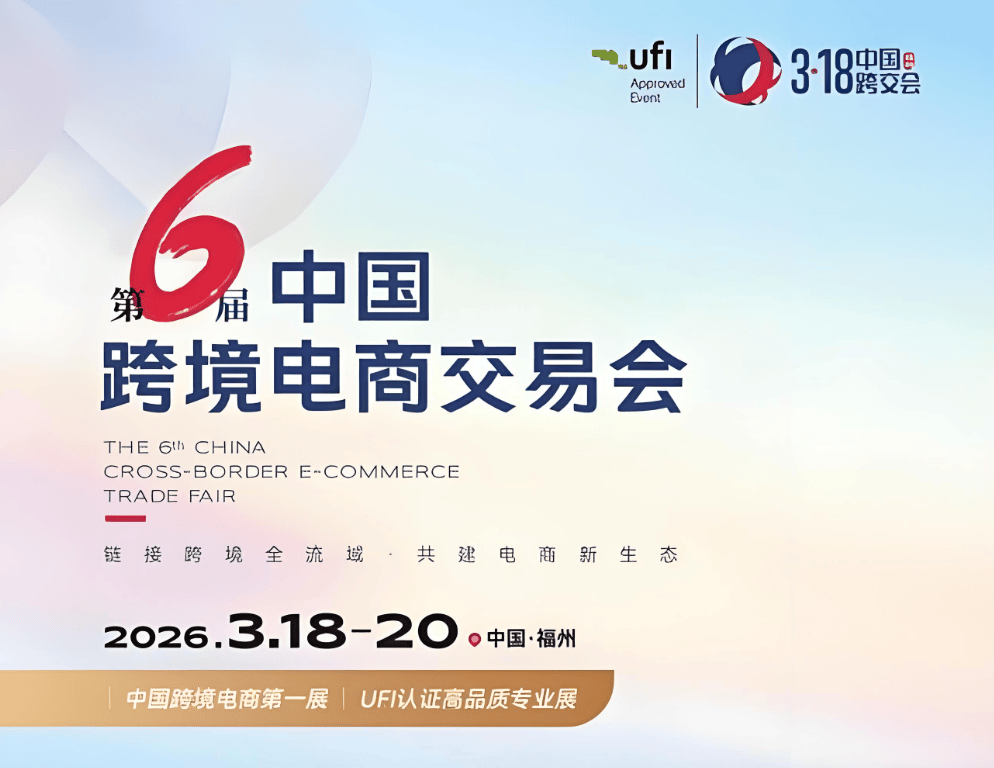
2026福州跨境展:链通全球,跨境领航
Sou Hu Cai Jing· 2025-09-22 05:34
Core Insights - The sixth China Cross-Border E-Commerce Fair will take place from March 18 to 20, 2026, in Fuzhou, focusing on "Digital Empowerment and Cross-Border Win-Win" as its theme, aiming to explore new opportunities in cross-border e-commerce and lead the digital transformation of global trade [1] Group 1: Scale and Platform Development - The exhibition area will exceed 120,000 square meters, a 20% increase from the previous edition, with 10 themed exhibition zones covering the entire industry chain of cross-border e-commerce [3] - Over 2,500 exhibitors are expected, including major platforms like Amazon, eBay, and SHEIN, along with more than 1,000 source factories and service providers [3] - The fair will adhere to UFI international certification standards, enhancing its internationalization and professionalism, providing an efficient platform for exhibitors [3] Group 2: Digital Innovation - Digital technology will be a core focus, showcasing AI applications in cross-border e-commerce, including smart product selection, precise marketing, intelligent customer service, and logistics optimization [6] - The "Brand Going Global" initiative will highlight domestic brands showcasing their products and sharing internationalization experiences, promoting the upgrade from "manufacturing" to "creation" and "branding" [6] Group 3: Geographical Advantages - Fuzhou's advantageous geographical location and comprehensive transportation network make it a key hub connecting the "Belt and Road" initiative with Southeast Asia and Japan/Korea markets [7] - The modern facilities of the Strait International Exhibition Center are conveniently located just 20 minutes from Fuzhou Changle International Airport, facilitating easy access for global exhibitors and buyers [7] Group 4: Future Opportunities - The cross-border e-commerce industry is expected to see two major trends in 2026: the rise of green supply chains and the unlocking of potential in emerging markets [9] - Environmental concepts will be deeply integrated into cross-border logistics and packaging design, becoming a necessary direction for corporate transformation [9] - Emerging markets in Southeast Asia and Latin America will provide significant growth opportunities for Chinese enterprises [9]
湾财周报 人物 蔡国强的“玩火”与反思
Nan Fang Du Shi Bao· 2025-09-21 13:52
一周人物(2025年9月15日-21日) 蔡国强图片自公众号 "蔡国强工作室" "算力过去是,未来也将继续是人工智能的关键,更 是中国人工智能的关键。" 华为副董事长、轮值董事长徐直军 "北汽始终相信余承东是地表最强产品经理,尤其是 余总对市场洞察和战略魄力属于行业顶级,可以说, 余总出品必属精品。" -北汽集团党委书记、董事长张建勇 筒倍 · 云海看联合创始人赵晗病逝,年仅40岁 · 空缺半年后,永辉超市迎来90后CEO ·· ·广东"厂二代"挑大梁: 借SHEIN出海盘活老厂,稳就业促转型 · 高价销售劣质玉石等,"柴怼怼"夫妇被刑拘 … 八章 · · 招商蛇口迎来新舵手!朱文凯掌印 · 雀巢再现人事震荡!现任董事长将卸任, 前CEO日前遭解职 · 网传南航要求旗下网红飞行员删除作品, 涉事双方均回应 ——华为副董事长、轮值董事长徐直军 "北汽始终相信余承东是地表最强产品经理,尤其是余总对市场洞察和战略魄力属于行业顶级,可以 说,余总出品必属精品。" 头条 蔡国强的"玩火"与反思 声音 "算力过去是,未来也将继续是人工智能的关键,更是中国人工智能的关键。" 9月19日,艺术家蔡国强在西藏喜马拉雅山脉江孜热 ...

25W38周观点:摩托车:大排量出口延续高景气-20250921
Huafu Securities· 2025-09-21 09:18
Investment Rating - The report maintains an "Outperform" rating for the motorcycle industry, indicating a positive outlook compared to the broader market [7]. Core Insights - The motorcycle industry continues to experience high demand, with fuel motorcycle sales reaching 1.5635 million units in August, a year-on-year increase of 12.04%. The sales of large-displacement recreational motorcycles (over 250cc) grew by 23.60% to 84,500 units [3][14]. - Exports of motorcycles in August totaled 1.1242 million units, marking a 20.69% increase year-on-year, with export revenue reaching $759 million, up 31.24% [3][14]. - The report highlights the ongoing recovery in domestic demand supported by policy initiatives, particularly in the home appliance sector, with recommendations to focus on major appliance brands like Midea Group, Haier, and Gree Electric [4][39]. Summary by Sections Motorcycle Industry - The report notes that Changan Power's motorcycle sales reached 50,000 units in August, a 73% increase year-on-year, with exports growing by 49% [14]. - Longxin General's motorcycle sales were 117,000 units, down 25% year-on-year, but large-displacement sales increased by 29% [23]. - Qianjiang Motorcycle's total sales were 34,000 units, with exports surging by 85% year-on-year, indicating strong growth despite a slight decline in domestic demand [33]. Home Appliances - The home appliance sector saw a weekly increase of 1.3%, with specific segments like black appliances and kitchen appliances showing positive trends [4][41]. - The report emphasizes the potential for recovery in consumer demand for large appliances due to trade-in programs, suggesting a focus on brands like TCL and Hisense [4][39]. Investment Opportunities - The report identifies several investment opportunities, including: 1. Large appliances benefiting from trade-in programs, recommending brands like Midea and Haier [4][39]. 2. The pet industry as a resilient sector, with companies like Guibao Pet and Zhongchong Co. highlighted [4][39]. 3. Electric two-wheelers expected to see improved domestic sales, with companies like Ninebot and Yadea recommended [4][39]. 4. The global expansion of Chinese brands in clean appliances and tools, with a focus on companies like Roborock and Kingclean [5][40].