人才竞争

Search documents
黄仁勋的话白说了
Hu Xiu· 2025-09-07 12:45
Core Viewpoint - Anthropic, a prominent AI company, has announced the immediate cessation of services to "Chinese-controlled companies" due to legal, regulatory, and security risks, highlighting the growing geopolitical tensions in the AI sector [1][2]. Group 1: Company Overview - Anthropic was founded in 2021 by former OpenAI employees and is considered one of the most promising AI companies in the U.S. after OpenAI [3]. - The decision to halt services to Chinese entities reflects a narrow understanding of the broader AI talent competition, which is fundamentally about human resources rather than specific technologies [4][5]. Group 2: AI Talent Dynamics - Huang Renxun, founder of NVIDIA, emphasizes that 50% of global AI researchers are of Chinese descent, indicating a significant talent pool that the U.S. must recognize [6][8]. - The Hill & Valley Forum, established in 2023, aims to address strategic challenges posed by China's technological rise and foster collaboration between policymakers and the tech industry [9][10]. Group 3: Geopolitical Implications - The U.S. government has implemented policies to restrict the flow of high-end tech talent, particularly in AI and semiconductors, raising concerns about national security and technological dominance [12]. - A report by Digital Science indicates that China is producing nearly half of the world's AI research papers, positioning itself as a leading force in AI research [13]. Group 4: Talent Utilization and Ownership - Despite the significant number of AI talents produced in China, many of these individuals contribute to breakthroughs in U.S. companies, leading to a geographical disconnect between talent supply and value creation [15]. - The success of AI models like ChatGPT is heavily reliant on contributions from Chinese scientists, yet the ownership and commercial benefits remain with U.S. firms, illustrating a disparity in talent versus sovereignty [16]. Group 5: Future of AI Ecosystem - The geopolitical landscape may lead to a fragmentation of the AI ecosystem, with distinct models emerging from the U.S. and China, each reflecting different values and market needs [20][21]. - Companies must adapt to these changes by establishing flexible organizational structures that can attract and retain top talent globally, mitigating risks associated with geopolitical tensions [24]. Group 6: Strategic Recommendations - For nations, merely attracting talent is insufficient; creating an environment that maximizes the potential of top talent through open research cultures and robust intellectual property protections is crucial [23]. - Companies should adopt a global perspective, fostering an inclusive culture and flexible management to build a sustainable talent "moat" [24]. Group 7: Conclusion - The future of technological competition may hinge not on hardware capabilities but on the ability to secure and nurture talent, making it a critical factor in shaping the rules of engagement in the AI landscape [25].

深度|Lovable CEO揭秘AI竞赛真相:争夺顶尖人才比资本更重要,7个月1亿ARR的AI创业增长密码
Z Potentials· 2025-08-27 12:08
Core Insights - The core competition in the AI industry is more about talent acquisition and brand influence rather than just capital investment [5][6][7] - The company aims to provide a platform that evolves into a comprehensive co-founder for users, focusing on creating immense value to retain users [12][33] - The company has achieved significant growth, reaching $100 million in ARR within seven months, with a user base primarily consisting of aspiring entrepreneurs [33][34] Talent Acquisition and Management - The competition for top talent is intense, with companies like Meta offering substantial salaries to attract engineers [5][6] - Identifying the right talent that can thrive in a collaborative environment is crucial, and the company employs unique evaluation methods to assess candidates [7][8] - The future of engineering roles will shift towards a more product-oriented approach, where engineers act as facilitators rather than just coders [6][55] Brand and User Experience - A strong brand is essential for building trust and retaining users, with Apple cited as a prime example of a brand that emphasizes detail and user experience [11] - The company believes that the key to user retention is to create a product that users find indispensable, thus forming a natural defense against competition [12][17] - The focus is on rapid execution and growth, with the idea that a strong user base will lead to a natural formation of a competitive moat over time [14][17] Financial Dynamics - The company acknowledges high operational costs associated with AI, particularly in terms of computational resources, but aims to shift towards a model where user lifetime value outweighs these costs [15][16] - There is a potential for profit through token sales and simplifying user experiences to enhance monetization [21][22] - The company is focused on long-term user engagement rather than immediate profit, aiming to build a loyal customer base that will drive future revenue [22][23] Future Outlook and Innovation - The company is committed to evolving its platform to integrate AI seamlessly into application development, aiming for a future where AI handles routine tasks while humans focus on higher-level design [40][43] - There is an emphasis on creating a more personalized user experience by leveraging AI to understand user context better [32] - The company is aware of the competitive landscape, particularly from established players like OpenAI, and is focused on delivering exceptional user experiences to maintain its edge [26][27] Market Positioning - The company targets a diverse user base, with a significant portion being entrepreneurs looking to build complex applications, while also catering to corporate users and hobbyists [33][34] - The strategy is to democratize access to powerful tools for aspiring entrepreneurs, enabling them to create without the need for extensive coding knowledge [36] - The company believes that its unique positioning and mission will allow it to capture a significant share of the market as it evolves [37][70]


致达控股集团严健军:推进未来人才计划 为浙商企业输送生力军
Shang Hai Zheng Quan Bao· 2025-08-20 11:06
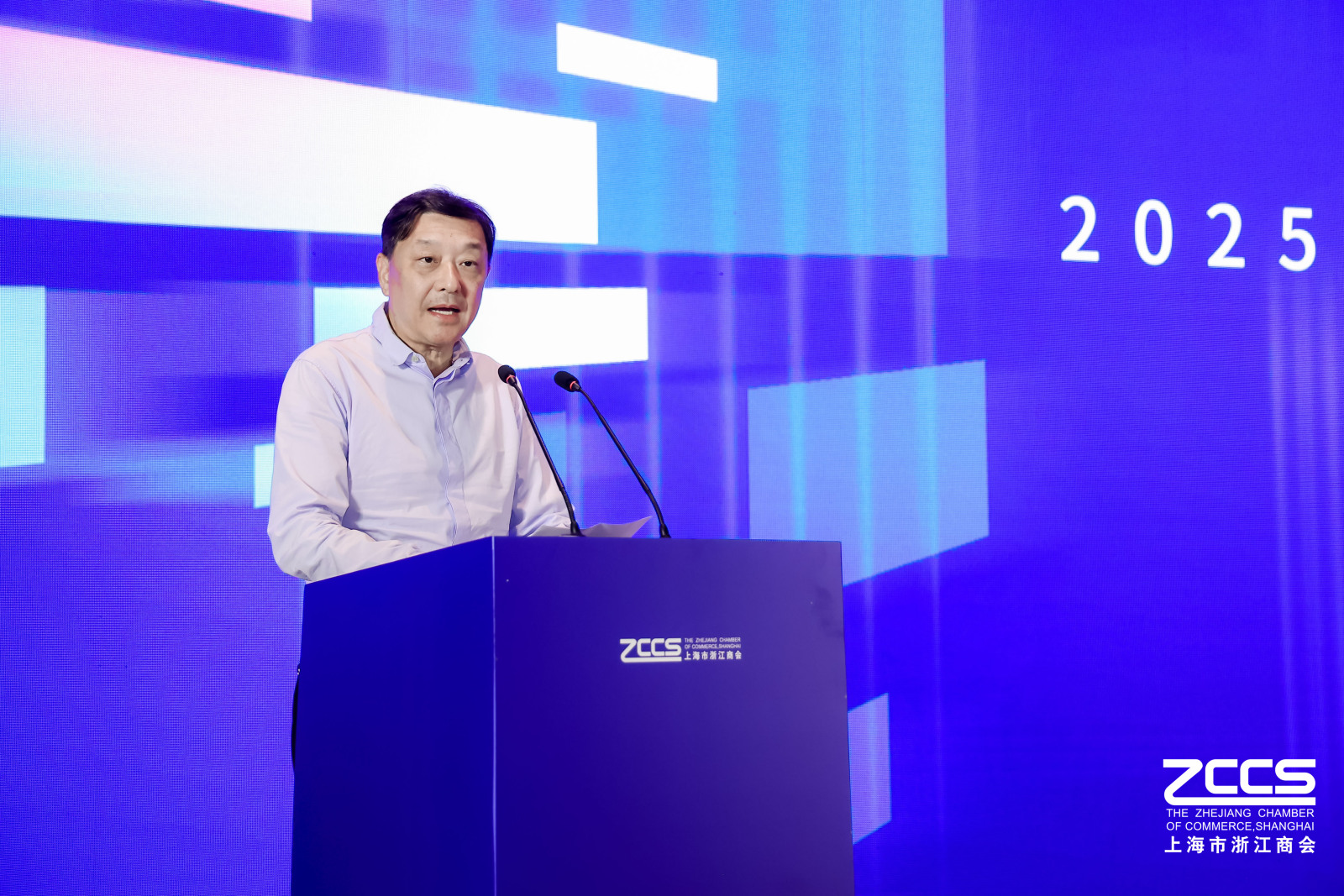
Group 1 - The core viewpoint emphasizes that the technological revolution and industrial transformation present both new opportunities and severe challenges for Zhejiang merchants, highlighting the importance of winning in talent competition to maintain competitive advantages [2] - The first key action proposed is to establish and improve mechanisms to serve enterprise development, focusing on creating quality service platforms and providing advanced management concepts to help businesses address talent recruitment, labor disputes, and management training [2] - The second key action involves gathering outstanding talent and creating a nurturing environment, aiming to build a multi-level talent cultivation system and actively recruit top talents from both domestic and international sources while also focusing on developing local talents [2] Group 2 - The third key action is to promote collaboration and sharing, with the new human resources committee aiming to enhance its role as a bridge by organizing discussions, company visits, and case evaluations to spread advanced management concepts and practices [3] - The committee will strengthen communication and cooperation with government departments, industry associations, headhunting agencies, and human resource service providers to become a robust link in supporting the talent strategy of Zhejiang merchants [3]
合肥给部分毕业生最高10万元补贴,还有城市打出“亲情牌”
第一财经· 2025-07-22 05:59
Core Viewpoint - The employment market in China is undergoing significant changes due to deep economic restructuring and industrial upgrades, with graduates increasingly seeking stable job opportunities in uncertain environments [1]. Summary by Sections - The proportion of 2026 graduates planning to take civil service, public institutions, or teaching positions has risen to 25.1%, an increase of 2.6 percentage points from the previous year, particularly notable among master's degree holders at 35.6% [2]. - State-owned enterprises and public institutions account for a combined intention rate of 73.3%, while the intention to work in private enterprises has dropped to 10.7%, indicating a higher demand for job stability and welfare benefits among graduates [4]. - The attractiveness of non-first-tier cities for employment is increasing, with 34.7% of 2026 graduates actively choosing to move to second-tier and other cities, up 4.6 percentage points from the previous year [5]. - While salary remains a core consideration for graduates, there is a notable increase in the importance placed on interpersonal relationships and team atmosphere, rising by 4.5 percentage points compared to the 2025 cohort [6]. - Cities are increasingly competing for talent, with various attractive policies being implemented. For instance, Hefei offers up to 100,000 yuan in subsidies for graduates in emerging industries, while Wuhan continues its housing discount policy and introduces a one-time employment reward of 5,000 to 20,000 yuan for graduates [7]. - In response to changing employment intentions, new recruitment strategies are emerging. The proportion of companies starting campus recruitment early has risen to 33.6%, while 37.6% of companies are increasing starting salaries [8]. - Forward-looking companies are shifting from merely hiring to nurturing talent and co-building, focusing on bridging skill gaps and fostering innovation through enhanced school-enterprise cooperation and practical growth systems [9].

AI时代的华人打工皇帝:年薪2亿美元!
3 6 Ke· 2025-07-13 02:33
Core Insights - The recent aggressive talent acquisition by Meta from OpenAI highlights the competitive landscape in the AI industry, particularly the significant salaries being offered to attract top talent [1][2][4] Group 1: Talent Acquisition - Meta has reportedly lured 11 employees from OpenAI, with a notable focus on Chinese talent, including Jiahui Yu, who received a compensation package of up to $100 million [1] - The CTO of Meta, Andrew Bosworth, clarified that such high compensation is reserved for a select few senior positions, indicating a strategic approach to recruitment [2] - Ruoming Pang, a former Apple AI team leader, was offered a customized salary package exceeding $200 million, setting a new benchmark in the industry [2][4] Group 2: Salary Trends - Data from Levels.fyi shows that typical salaries for Meta engineers range from $1.5 million to $5 million, with the potential for a 1.5x premium for talent acquisition [4] - The unprecedented salary package for Ruoming Pang, which includes stock options and performance bonuses, reflects a shift in compensation standards within the AI sector [4][6] Group 3: Industry Dynamics - Meta's aggressive hiring strategy is driven by a perceived lag in its AI capabilities compared to competitors, necessitating a robust management system to effectively utilize the newly acquired talent [10] - The influx of Chinese talent into the AI sector in the U.S. underscores the significant role of Chinese researchers in global AI advancements, with over 50% of AI researchers reportedly coming from China [11] Group 4: Broader Implications - The current talent war in AI is seen as a reflection of the broader competition between the U.S. and China, extending from the semiconductor industry to AI [13] - The term "打工皇帝" (working emperor) has emerged to describe the phenomenon of high-paying positions in the tech industry, illustrating the evolving landscape of employment in AI [13]


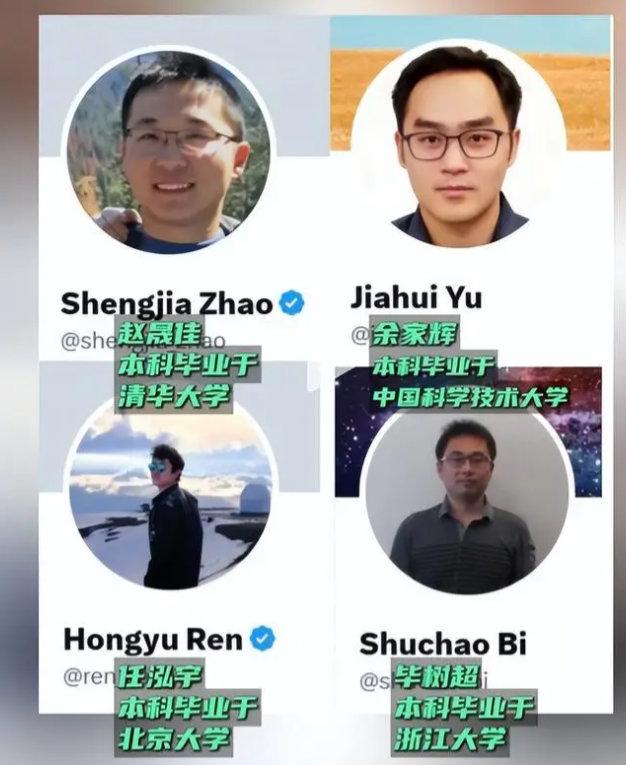
国内培养的4个芯片大牛,被美国1亿挖走:别光愤怒,得有动作了!
Xin Lang Cai Jing· 2025-07-12 15:26
Core Viewpoint - The article discusses the significant talent drain in China's semiconductor industry, exemplified by Meta's aggressive recruitment of four top engineers, highlighting the competitive landscape for talent in the tech sector [1][3][12]. Group 1: Talent Acquisition - Meta offered a staggering $10 million annual salary to each of the four engineers, which is nearly double their previous earnings, showcasing the financial incentives driving talent away from China [3][7]. - The engineers are highly qualified, with backgrounds from top Chinese universities and experience at major tech companies like Google, Apple, and OpenAI, indicating their high value in the semiconductor field [4][5]. - The recruitment strategy employed by Meta emphasizes project freedom and substantial funding, contrasting sharply with the bureaucratic and restrictive environment often found in Chinese companies [5][10]. Group 2: Industry Environment - The article points out that the U.S. has a long history of attracting global talent through financial incentives and supportive research environments, which has been a key factor in its technological advancements [8][12]. - In contrast, many Chinese companies struggle to provide competitive salaries and conducive research conditions, leading to a talent exodus [10][11]. - The narrative suggests that the semiconductor industry in China is at risk of losing its competitive edge due to the departure of top talent, which could have long-term implications for the country's technological capabilities [11][13]. Group 3: Recommendations for Improvement - To retain talent, the article suggests increasing research funding and reducing administrative burdens on scientists, allowing for a more innovative and less pressured work environment [12][13]. - It advocates for the creation of more domestic giants like Huawei and BYD that can invest in R&D rather than diverting funds to other sectors, thereby providing a competitive platform for talent [12][13]. - The article emphasizes the need for a cultural shift in how talent is perceived and treated within the industry, moving away from a focus on loyalty to a more meritocratic and supportive environment [10][12].
OpenAI被曝将重新调整薪酬以应对Meta挖人
news flash· 2025-06-30 03:29
Core Insights - OpenAI is adjusting its compensation structure in response to talent poaching by Meta, which has successfully recruited several senior researchers from OpenAI [1] - OpenAI's Chief Research Officer, Mark Chen, assured team members that the management is actively engaging with eligible candidates and is exploring creative ways to reward top talent [1] - In the past week, eight researchers have left OpenAI to join Meta, with OpenAI's CEO, Sam Altman, expressing concerns about Meta offering signing bonuses of up to $100 million [1]
速递| 应对Meta挖角,OpenAI重构薪酬稳军心,OpenAI高管发文如同“家中遭窃”
Z Potentials· 2025-06-30 03:01
Core Viewpoint - OpenAI is actively addressing the poaching of its researchers by Meta, with leadership committed to improving compensation and recognition for top talent [1]. Group 1 - OpenAI's Chief Researcher Mark Chen sent a memo to employees acknowledging the recent poaching of researchers by Meta, stating that four researchers were taken over the weekend and another four previously [1]. - Chen emphasized that he, along with CEO Sam Altman and other leaders, are communicating with employees who received offers from Meta, indicating a proactive approach to retain talent [1]. - The memo included comments from other researchers, highlighting the importance of not succumbing to pressure from Meta during the decision-making process regarding job offers [1].
黄仁勋直聘!清华“天才少年”任英伟达首席研究科学家
是说芯语· 2025-06-29 02:37
Core Viewpoint - The article highlights the ongoing talent acquisition battle in Silicon Valley, emphasizing the significance of AI experts in the tech industry, as evidenced by NVIDIA's recruitment of prominent Chinese AI researchers Banghua Zhu and Jiantao Jiao [7][8]. Group 1: Talent Acquisition - NVIDIA's CEO Jensen Huang personally recruited two prominent Chinese AI researchers, Banghua Zhu and Jiantao Jiao, indicating the high demand for AI talent in the industry [1][8]. - Banghua Zhu, previously an assistant professor at the University of Washington, will join NVIDIA as the Chief Research Scientist, focusing on application research within the Star Nemotron team [2][5]. - Jiantao Jiao, a professor at UC Berkeley, has expertise in generative AI and machine learning applications across various fields, including natural language processing and computer vision [5][8]. Group 2: Nexusflow Startup - Banghua Zhu and Jiantao Jiao co-founded Nexusflow, a startup utilizing generative AI to help businesses understand cybersecurity data, integrating various security knowledge sources [5][6]. - In September 2023, Nexusflow raised $10.6 million in seed funding, led by Point72 Ventures, with participation from notable venture capital firms [5][6]. Group 3: Competitive Landscape - The article notes a fierce competition for AI talent in Silicon Valley, with major companies like Meta and Google also actively recruiting top researchers from other firms [8]. - The recruitment of AI experts is seen as a critical strategy for tech companies to maintain a competitive edge in the rapidly evolving AI landscape [8].
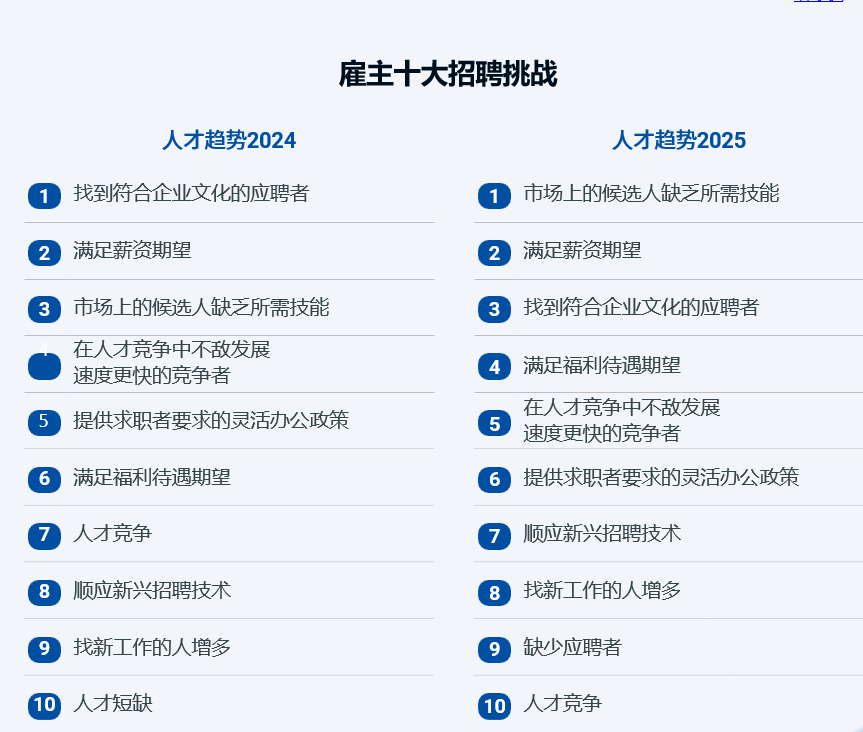
《人才趋势2025》报告发布:人才流动加速,薪酬和技能缺口成企业招聘挑战
Sou Hu Cai Jing· 2025-06-03 09:51
Core Insights - Michael Page's report on talent trends in mainland China highlights five key areas: compensation, flexibility, technology, culture, and values, providing strategic pathways for employers to navigate talent competition [1][2][4] Employment Market Overview - The Chinese job market shows resilience, with the Ministry of Human Resources and Social Security reporting 12.56 million new urban jobs in 2024, surpassing the target of over 12 million [1] - The proportion of active job seekers has increased by 5% compared to last year, indicating a potential end to the period of talent mobility stagnation [1] Recruitment Challenges - Only 20% of employers faced recruitment difficulties in the past year, and 14% encountered talent retention challenges, which is lower than global and regional levels [2] - By 2025, skill matching has become the primary challenge in recruitment, surpassing cultural fit, as candidates' expectations for compensation and benefits continue to rise [2] Employee Expectations - Salary remains the top reason for talent turnover, followed by limited career development opportunities, with training opportunities now viewed as the third most important factor by employees [4] - There is a growing discrepancy between employer perceptions and employee expectations regarding talent development, with employers underestimating the importance of training [4][5] Factors Influencing Job Attraction - The top factors attracting job seekers include incentives and rewards, higher salaries, and clear career development paths, while employers prioritize different aspects [6] - 57% of employees in mainland China frequently use generative AI tools, surpassing global and Asia-Pacific averages, with 86% acknowledging efficiency improvements [6] AI and Workplace Dynamics - Employees express a desire for clearer guidance on generative AI, with only 27% feeling adequately supported by employers, and 42% concerned about job security due to AI [7] - The report also notes a workplace culture dominated by office-first policies, high leadership credibility, and insufficient workplace inclusivity [7]