
人才红利

Search documents
坚持投资于物和投资于人紧密结合——论贯彻落实中央经济工作会议精神
Jing Ji Ri Bao· 2025-12-18 03:02
Group 1 - The central economic work conference emphasizes the need to combine investment in physical assets and human capital, which is crucial for enhancing development momentum and expanding domestic demand [1] - China's economic growth model is undergoing a significant transformation, moving away from reliance on investment-driven growth, which is becoming unsustainable due to diminishing returns [1] - There is a global trend shifting from "capital-intensive" to "talent-intensive" industries, necessitating increased investment in human capital to drive innovation and demand [1] Group 2 - Investment in physical assets has historically led to effective accumulation of material capital, enhancing production capacity and social productivity, which in turn has driven economic growth [2] - There remains substantial potential for future investment in physical assets, particularly in key industries where investment is still insufficient and quality needs improvement [2] - The combination of investment in physical and human capital is essential for economic development, as material capital provides platforms for human capital to realize its value, while human capital enhances the effectiveness of material capital [3] Group 3 - The strategy involves expanding effective investment in the real economy and technological innovation, focusing on key technology gaps and optimizing existing assets [3] - There is a need to improve public services and increase government investment in areas such as education, healthcare, and vocational training to support human capital development [3] - The approach aims to ensure that investments in physical and human capital are mutually reinforcing, promoting a balanced accumulation of both types of capital [3]
95后人才吸引力城市排名 深圳连续三年位居榜首
Nan Fang Du Shi Bao· 2025-12-11 14:12
Core Insights - The report titled "China City Talent Attraction Ranking" indicates that post-95 talent is increasingly drawn to eastern regions, particularly the Yangtze River Delta and Pearl River Delta city clusters, with Shenzhen ranking first for three consecutive years [1][2] Talent Attraction Trends - Post-95 talent prefers economically developed eastern cities, focusing on work-life balance, innovation environment, and cultural industries, rather than solely on salary [2] - Shenzhen's net inflow of post-95 talent exceeds the national average by 1 percentage point, attributed to its low residency threshold and a talent-friendly urban environment [5] City Rankings - Shenzhen ranks first, followed by Beijing and Shanghai, with Hangzhou rising to fourth place and Tianjin entering the top ten for the first time [2] - The top ten cities for post-95 talent inflow include Beijing, Shanghai, Shenzhen, Hangzhou, Nanjing, Guangzhou, Chengdu, Suzhou, Wuhan, and Tianjin, collectively accounting for 41.8% of the total, a decrease of 1 percentage point from last year [3] High-Education Talent - Major cities like Beijing, Shanghai, and Shenzhen attract high-education talent, with a combined share of 19%, although this has decreased by 0.2 percentage points compared to last year [3] - Stronger second-tier cities like Hangzhou and Nanjing are showing greater talent attraction than first-tier cities like Guangzhou [3] Income and Innovation - The cities with the highest disposable income include Shanghai, Beijing, Suzhou, and Hangzhou, with many located in the Yangtze River Delta, indicating a high standard of living [3] - In terms of innovation, Shenzhen, Suzhou, and Zhuhai lead in patent grants per million people, showcasing strong innovation vitality in Guangdong and Jiangsu provinces [4]
从“投资于人”到“丰富人才资源优势”——站在人民立场上想问题、作决策、办事情观察(人民观点)
Ren Min Ri Bao· 2025-12-10 22:54
Core Viewpoint - The essence of modernization is the investment in people, emphasizing the importance of human development alongside economic growth [1][4][9]. Group 1: Investment in People - The concept of "investment in people" is highlighted as a crucial strategy, combining investments in both material and human resources to enhance overall development [1][3]. - The "14 billion people" initiative aims to mobilize the entire society towards modernization, emphasizing the respect and potential of individuals [7][9]. - The integration of human capital development with economic growth is expected to create a virtuous cycle that boosts income and consumption, driving economic expansion [3][4]. Group 2: Economic Development and Infrastructure - Major infrastructure projects, such as the Guizhou Huajiang Gorge Bridge, are designed to improve accessibility and enhance the quality of life for rural populations, thereby stimulating local economies [2][3]. - The development of transportation networks, including bridges and railways, is transforming previously isolated regions into interconnected economic hubs [3][4]. - The focus on urban renewal and the silver economy is expected to generate significant economic opportunities, with estimates suggesting a market size of 7 trillion yuan for the elderly care sector [3][4]. Group 3: Talent and Education - China has a talent pool of 220 million, with over 72 million high-skilled workers, indicating a strong foundation for innovation and economic growth [9][10]. - The enrollment rates in early childhood and higher education have significantly increased, reflecting a commitment to enhancing human capital [9][10]. - The emphasis on STEM education is producing over 5 million graduates annually, positioning China as a leader in innovation [9][10]. Group 4: Social Participation and Community Engagement - The active participation of citizens in community service and urban planning initiatives demonstrates a collective effort towards building a better future [8]. - Programs that cater to cultural and recreational needs in rural areas are enhancing community spirit and social cohesion [8]. - The mobilization of individual efforts is seen as a powerful force in advancing national goals and fostering a sense of belonging among citizens [8][9].
刘蓝予:把握人口高质量发展深刻内涵
Jing Ji Ri Bao· 2025-12-10 00:07
人口是现代化建设最基本的支撑。人口规模、结构、素质和布局深刻影响现代化的发展进程和质 量。习近平总书记指出,人口发展是关系中华民族伟大复兴的大事,必须着力提高人口整体素质,以人 口高质量发展支撑中国式现代化。"十五五"规划建议指出,促进人口高质量发展,健全覆盖全人群、全 生命周期的人口服务体系。人口高质量发展是将巨大人口规模转化为巨大发展优势的关键环节,也 是"人口规模巨大的现代化"的重要呈现形态。深入认识和把握人口高质量发展的深刻内涵,是贯彻高质 量发展要求的题中之义,也是夯实中国式现代化人口支撑的重要前提。 人口素质提升是实现人口高质量发展的核心目标。当前,充分发挥我国人口规模优势,关键在于 将"人口红利"转变为"人才红利"。国际经验表明,人口规模不会自动转化为现代化的内生动力,人口的 知识、技能和健康素质才是人口总量转化为人力资源优势的关键所在。从现实基础看,我国人口素质提 升已取得显著成效。知识素质方面,高等教育毛入学率已超过60%,各级各类学历教育在校生2.86亿 人,较高的劳动者素质为创新发展提供了重要前提;健康素质方面,人均预期寿命达到79岁,并建成世 界上规模最大的医疗服务体系,为经济社会发展 ...
把握人口高质量发展深刻内涵
Jing Ji Ri Bao· 2025-12-09 23:02
人口是现代化建设最基本的支撑。人口规模、结构、素质和布局深刻影响现代化的发展进程和质量。习 近平总书记指出,人口发展是关系中华民族伟大复兴的大事,必须着力提高人口整体素质,以人口高质 量发展支撑中国式现代化。"十五五"规划建议指出,促进人口高质量发展,健全覆盖全人群、全生命周 期的人口服务体系。人口高质量发展是将巨大人口规模转化为巨大发展优势的关键环节,也是"人口规 模巨大的现代化"的重要呈现形态。深入认识和把握人口高质量发展的深刻内涵,是贯彻高质量发展要 求的题中之义,也是夯实中国式现代化人口支撑的重要前提。 人口高质量发展还要求形成科学合理的人口分布。促进城乡、区域之间形成畅通有序、合理均衡的人口 流动和分布格局,是人口高质量发展的一个重要目标。从城乡分布来看,我国城镇化率不断提升,2024 年已经达到67%,与发达国家的差距不断缩小。同时,城乡融合发展不断取得新成果,城乡公共服务高 效衔接,要素双向流动畅通运行,基础设施互联互通,产业协同深度发展。农业转移人口市民化不再是 单纯的空间迁移,"进城落户"有了更加丰富、便利、坚实的综合性公共服务支持。从区域分布来看,人 口持续向沿江、沿海地区及内地城区集聚, ...
特稿丨中国创新为什么行——国际学界关注中国科研发展之道
Xin Hua She· 2025-12-02 12:09
Group 1: Core Insights - China's research and innovation capabilities have significantly improved, with international recognition highlighting its achievements in research output, quality, and collaborative leadership [1][4][5] - The "clustered" innovation ecosystem in cities like Nanjing and Beijing has fostered collaboration among academia, industry, and government, enhancing the efficiency of research-to-application transitions [2][3][4] - China's strategic investment in research and development has led to a substantial increase in funding, with R&D spending growing nearly sixfold from 2007 to 2023, surpassing the EU and nearing the US levels [4][6] Group 2: City-Level Innovations - Nanjing has emerged as a leading innovation hub, showcasing advanced technologies at the World Intelligent Manufacturing Conference, and is now among the top ten global research cities [2][3] - Beijing has maintained its position as the top global research city for nine consecutive years, developing a comprehensive innovation platform [2][3] - Hangzhou has entered the top ten list, fostering significant advancements in artificial intelligence and other key industries [2][3] Group 3: Talent Development - China is experiencing a "scale dividend" in STEM graduates, with 3.6 million graduates in 2020, contributing to a growing pool of research talent [6][7] - The number of Chinese researchers in international collaborations is increasing, with a notable rise in high-impact publications and awards [7] - Top institutions like Tsinghua University and Peking University are attracting elite talent, particularly in foundational scientific research [7]
技能竞赛连发:三场大赛“解码”广东人才新局
2 1 Shi Ji Jing Ji Bao Dao· 2025-12-01 12:32
Group 1 - The core objective of the recent skills competitions in Guangdong is to enhance talent supply to support the development of regional industries, particularly in low-altitude economy and marine sectors [1][2][6] - The Guangdong provincial government has launched a comprehensive plan for 101 vocational skills competitions, aiming to align competition projects with industry needs and promote modern industrial system construction [2][6][7] - The competitions have attracted over 400 skilled talents, focusing on regional specialties such as drones, marine economy, and coffee, indicating a strategic move towards talent cultivation in key industries [1][6][10] Group 2 - The marine economy skills competition highlighted the importance of technical skills in marine oil and gas equipment maintenance, with a significant contribution of 973.8 billion yuan to the province's marine industry [5][10] - The drone skills competition introduced new professional tracks such as precision logistics and emergency response, directly addressing the core applications of the low-altitude economy [6][11] - The ongoing talent strategy transformation in Guangdong is driven by rapid changes in industry demands, emphasizing the need for skilled workers in automation, smart logistics, and other emerging fields [10][11] Group 3 - Guangdong has maintained its position as China's most populous province, with a population of 127.8 million, which is crucial for sustaining its economic growth and talent pool [8][10] - The province's focus on talent development is evident in its "Million Talents Gathering in South Guangdong" initiative and the extensive skills competition plan, aiming to leverage the demographic advantage for industrial upgrades [2][8][11] - Educational institutions are adapting their curricula to incorporate competition standards, fostering a talent training model that integrates practical training with industry needs [11]


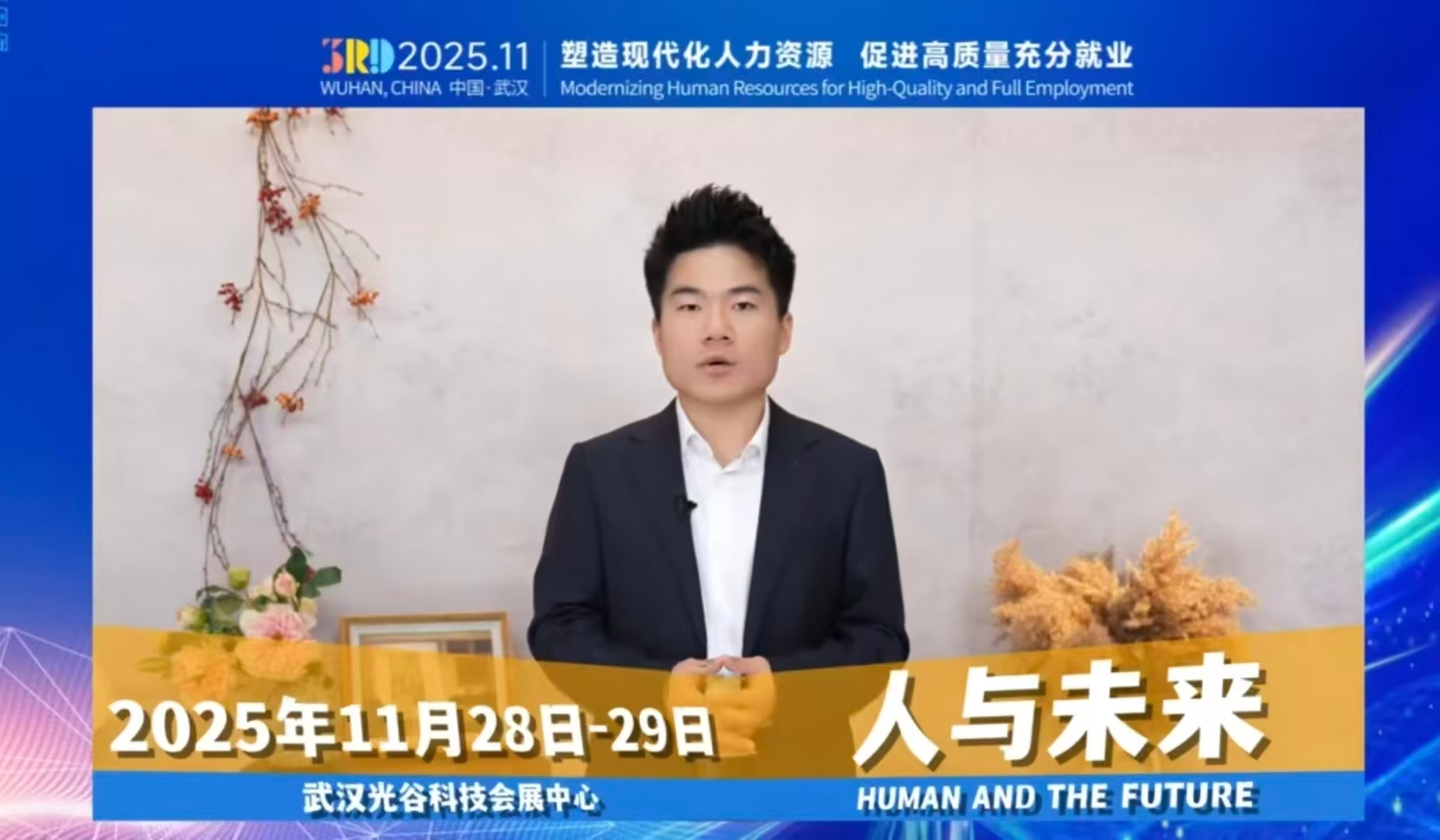
董宇辉发来“邀请函”,人社部的这个大会关注高质量充分就业
Di Yi Cai Jing· 2025-11-24 10:56
Core Insights - The third National Human Resources Service Development Conference will be held on November 28-29, 2025, in Wuhan, focusing on modernizing human resources and promoting high-quality employment [1][3] - The conference aims to create a comprehensive platform for high-level discussions, supply-demand matching, talent attraction, and specialized recruitment [3] Group 1: Employment and Talent Development - The conference emphasizes the transition from demographic dividends to talent dividends, shifting from quantity to quality in talent demand [3] - Recommendations for job seekers include maintaining a lifelong learning attitude, identifying the right career path aligned with national strategic industries, and enhancing communication and innovation skills [3] Group 2: Technological Integration in Employment - The conference will showcase the "2025 Employment Opportunities" initiative, which has been running for 13 years, aimed at providing extensive employment platforms for college students [4] - The integration of AI and big data will be highlighted to achieve precise matching and improve employment stability and satisfaction [4] - The initiative aims to ensure equal employment opportunities for students from non-key universities and disadvantaged groups, promoting fairness in employment [4]
嘉立创切入高端PCB领域,开启全球新一轮硬件创新周期
Xin Lang Cai Jing· 2025-11-13 09:59
Core Insights - The recent launch of 64-layer ultra-high-density PCBs and HDI boards by Jialichuang at the 2025 Electronic Semiconductor Industry Innovation Development Conference marks a significant milestone in China's hardware innovation infrastructure [1] - The rapid iteration of hardware products is undergoing a "cell division" efficiency revolution, indicating that the Chinese hardware market is on the brink of a transformative "iPhone moment" [1][2] - This transformation is driven by innovations in foundational infrastructure, a thriving talent ecosystem, and upgraded market demand, with companies like Jialichuang playing a crucial role as "builders" and "accelerators" [1][5] Hardware Innovation - Hardware innovation has historically been characterized as "slow" and "heavy," but recent developments are changing this perception [2] - Jialichuang's innovative "group order" concept has significantly reduced the cost of single prototype samples from hundreds to tens of yuan and shortened delivery times from weeks to as fast as 12 hours, stimulating innovation [5] - The reduction in hardware R&D costs is opening new consumer markets, with Jialichuang achieving nearly 8 billion yuan in revenue and 999.8 million yuan in net profit in 2024, reflecting year-on-year growth of 18.55% and 35.19% respectively [7] Advanced PCB Technology - The newly released ultra-high-layer PCBs and HDI boards are essential for high-performance applications in aerospace, 5G communication, medical electronics, servers, and data centers [8][10] - The ultra-high-layer PCBs can reach a thickness of 5.0mm with a high aspect ratio of 20:1, and the minimum line width can reach 3.5mil, meeting complex circuit integration and signal integrity requirements [10] - Jialichuang's ability to deliver ultra-high-layer PCB samples in as little as 8 days, at a cost approximately 50% lower than competitors, showcases its advanced innovation capabilities [12] Talent Ecosystem - The innovation in hardware is supported by a growing talent pool, with many young entrepreneurs emerging from academic backgrounds, particularly in robotics [13][14] - Jialichuang has become a trusted partner for these young innovators, providing comprehensive services from PCB design to rapid prototyping, facilitating the transition from concept to reality [14][16] - The number of registered robotics-related companies in China has surged, with nearly 1 million existing firms and a significant increase in new registrations and financing events in 2025 [16][17]

促进高质量充分就业 持续深化社保制度改革——访人力资源社会保障部党组书记、部长王晓萍
Xin Hua She· 2025-11-11 13:44
Core Points - The article emphasizes the importance of promoting high-quality and sufficient employment as part of China's modernization efforts, with a focus on improving social security systems and enhancing people's livelihoods [1][2][3] Employment Achievements - During the 14th Five-Year Plan period, China has achieved significant employment stability, with a total of 60.32 million new urban jobs created by September 2023, exceeding the target of 55 million [2] - The average urban survey unemployment rate over the past four years was 5.3%, which is below the expected control target [2] - The quality of employment has improved, with effective protection of labor rights [2] Social Security System - China has established the world's largest and most comprehensive social security system, with a basic pension insurance coverage rate exceeding 95% [2] - The total scale of pension, unemployment, and work injury insurance funds reached 70.8 trillion yuan, with a cumulative surplus of 9.8 trillion yuan [2] Employment Strategies - The government plans to implement a series of policies to promote high-quality employment, focusing on creating more quality jobs in emerging sectors such as digital economy and high-end manufacturing [4][5] - There is a commitment to address structural employment issues by enhancing vocational training and improving the matching of labor supply and demand [5] Social Security Reform - The article outlines the need for continuous reform of the social security system to enhance its sustainability, equity, and accessibility [7][8] - Plans include developing a multi-tiered pension system and increasing the coverage of social insurance for flexible workers and new employment forms [8] Human Resource Development - The government aims to transform demographic advantages into talent advantages by enhancing human resource development and promoting a skilled workforce [9][10] - There will be a focus on improving the relevance of talent training and implementing reforms in talent development mechanisms [10][11]