
企业治理

Search documents
紫天科技财务造假近25亿元被严惩 企业治理不能用“家族信任”代替“制度约束”
Mei Ri Jing Ji Xin Wen· 2025-08-24 13:18
Core Viewpoint - The case of *ST Zitian (300280) highlights the severe consequences of financial fraud, leading to significant penalties and the potential delisting of the company from the stock market [1][2][3] Group 1: Financial Fraud and Consequences - *ST Zitian has been fined a total of 38.4 million yuan by the Fujian Securities Regulatory Bureau for systemic financial fraud involving nearly 2.5 billion yuan in revenue [1] - The company's market value has plummeted to just over 400 million yuan, representing a loss of over 90% from its peak [2] Group 2: Governance Issues - The family ties among the company's executives led to a lack of accountability, as they engaged in mutual blame rather than cooperating with investigations [1][2] - The case serves as a warning that family-based governance cannot replace institutional constraints, emphasizing the need for independent directors and professional oversight [2] Group 3: Regulatory Compliance - The company's refusal to cooperate with regulatory investigations, including ignoring calls and messages from regulators, demonstrates a blatant challenge to regulatory authority [3] - The regulatory response indicates a zero-tolerance policy towards financial fraud and non-compliance, reinforcing the importance of adhering to market rules [3]

每经热评|紫天科技财务造假近25亿元被严惩 企业治理不能用“家族信任”代替“制度约束”
Mei Ri Jing Ji Xin Wen· 2025-08-24 12:22
Core Viewpoint - The case of *ST Zitian (SZ300280) serves as a cautionary tale for the capital market, highlighting the severe consequences of financial fraud and the importance of corporate governance and regulatory compliance [1][2][3] Group 1: Financial Fraud and Consequences - *ST Zitian has been penalized with a total fine of 38.4 million yuan by the Fujian Securities Regulatory Bureau for systemic financial fraud involving nearly 2.5 billion yuan in revenue [1] - The company's market value has plummeted to just over 400 million yuan, representing a loss of over 90% from its peak [2] Group 2: Corporate Governance Issues - The family ties among the company's executives led to a chaotic blame game during the crisis, demonstrating that familial relationships cannot replace institutional constraints in corporate governance [2] - The case emphasizes the necessity for independent directors and professional oversight to prevent governance failures [2] Group 3: Regulatory Compliance and Market Sentiment - The company's blatant defiance of regulatory investigations, including ignoring communications from regulators, signifies a challenge to regulatory authority and market rules [3] - The regulatory response indicates a zero-tolerance policy towards financial fraud and non-compliance, reinforcing the need for companies to adhere to market regulations [3]
陆金所控股董事会再添强援,李蕙萍履新独董强化治理核心
Ge Long Hui· 2025-08-15 06:15
Group 1 - The core announcement is about the appointment of Ms. Li Huiping as an independent non-executive director, which reflects a governance upgrade at Lufax Holdings [1][2] - The change in the board is part of a broader strategy to enhance diversity and strengthen governance structures, aligning with recent regulatory updates [3][4] - Ms. Li brings over 40 years of experience in law and banking, which will enhance the board's ability to assess risks and evaluate key governance issues [3][4] Group 2 - The appointment of Ms. Li is aimed at improving gender diversity on the board, addressing previous shortcomings in corporate governance [4] - This move is expected to positively impact the company's ESG rating, enhancing its recognition and competitiveness in international capital markets [4][6] - The board's restructuring is seen as a proactive step towards building a modern corporate governance system, signaling the company's commitment to long-term stability and transparency [6]

老牌果汁自曝“家丑”
Nan Fang Du Shi Bao· 2025-08-11 12:14
Core Viewpoint - Beijing Huiyuan Juice has publicly accused its major shareholder, Zhuji Wenshenghui, of failing to fulfill its financial commitments, which has led to a governance crisis and trust issues within the company [1][2]. Group 1: Company Governance Issues - Zhuji Wenshenghui has only contributed 22.8% of the registered capital, with an overdue investment of 850 million yuan that has not been paid despite 11 reminders [1][7]. - The major shareholder controls the board of directors, supervisory board, and the nomination rights for the general manager, despite not meeting its investment obligations [8][9]. - Huiyuan Juice has initiated legal action against Zhuji Wenshenghui and Shanghai Wensheng Asset Management, which has been accepted by the court [8][9]. Group 2: Financial and Operational Challenges - The company is facing a debt restructuring plan that could be stalled due to the lack of incoming funds, with total debts exceeding 10 billion yuan [1][9]. - Huiyuan Juice has reported that over half of its capital reserve is uncertain, and many creditors have not yet received shares, complicating the financial situation [7][9]. - The company has ongoing legal issues, including six enforcement actions totaling nearly 2.6 billion yuan, along with numerous frozen equity and consumption restrictions [9][10]. Group 3: Industry Context - The juice market is highly competitive, with major players like Nongfu Spring and Coca-Cola continuing to expand, putting pressure on Huiyuan Juice's market share [11][13]. - The company has struggled to innovate and adapt to changing consumer trends towards healthier and sugar-free products, which require significant capital investment [13]. - The public dispute with its major shareholder has further eroded market confidence and could hinder the company's operational focus and strategic direction [11][13].


华熙生物前高管45万字手撕“玻尿酸女王”,“财务造假”内幕曝光
Feng Huang Wang Cai Jing· 2025-08-10 09:54
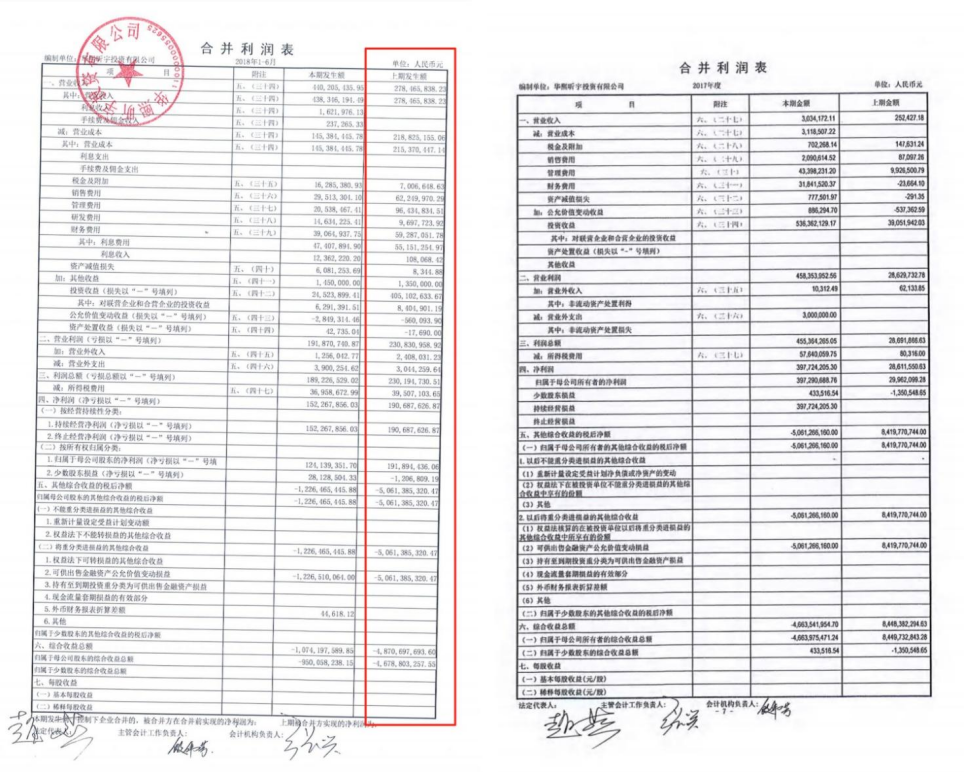
Core Viewpoint - Huaxi Biological is facing serious allegations of financial misconduct, including accusations of financial fraud and inflated revenue figures, as detailed by a former employee who claims to have evidence supporting these claims [1][2][4]. Financial Allegations - The controlling shareholder, Huaxi Xinyu Investment Co., holds 283.5 million shares of Huaxi Biological, representing 58.86% ownership [2]. - The former employee, David, alleges that Huaxi Xinyu concealed the holding of 30 million shares of Jinzhou Bank and committed fraud in bond issuance, as well as inflating revenue figures [1][2]. - Significant discrepancies were noted in financial reports, with 2017's first half revenue reported at 2.78 billion yuan, a dramatic increase from 25 million yuan in 2016, while the annual report showed a return to only 303 million yuan [5][12]. Stock Performance - As of August 7, Huaxi Biological's stock price was 52.19 yuan per share, down over 80% from its peak of 299 yuan in July 2021 [3]. Internal Conflicts and Governance Issues - The company has faced multiple internal disputes, including a recent incident involving a former employee's allegations of workplace bullying and financial misconduct [20][21]. - The company has been under scrutiny for its governance practices, reflecting a broader trust crisis within the organization [22]. Regulatory Scrutiny - The China Securities Regulatory Commission issued a warning to Huaxi Xinyu regarding inaccurate cost disclosures in bond issuance documents, stemming from the allegations made by the former employee [18]. - Previous investigations into the company during its IPO process found no evidence of fraud, despite the ongoing allegations [17]. Historical Context - The former employee claims to have reported financial irregularities to regulatory bodies in 2019, which led to investigations that ultimately cleared the company of wrongdoing at that time [17][18].

娃哈哈经销商发声:影响信心!家族纷争如何影响产业格局?
Nan Fang Du Shi Bao· 2025-07-17 11:16
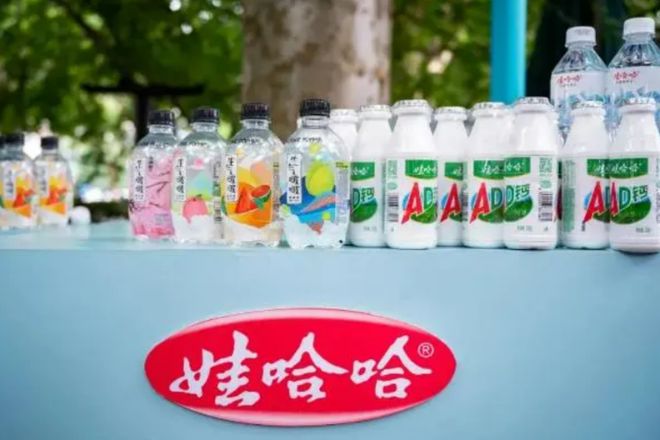
Core Viewpoint - The family dispute within Wahaha has significantly impacted sales and market confidence, raising concerns about the company's future control and succession arrangements [2][3][4]. Company Impact - Following the family dispute news, Wahaha's e-commerce sales dropped from a daily range of 10,000-12,000 units to 5,000-7,500 units between July 14 and 15, with live streaming sessions and participants also decreasing sharply [3][4]. - The ongoing family conflict has led to a deterioration of the brand's image, which has been built on a strong "family culture" and national brand identity, thus undermining consumer trust [4][5]. - Analysts suggest that the management's focus on resolving family disputes may hinder Wahaha's strategic initiatives in product innovation, channel reform, and digital transformation [4][6]. Industry Impact - The family dispute's repercussions extend beyond Wahaha, potentially altering the competitive landscape of the entire beverage industry, as competitors may seize the opportunity to capture market share [5][6]. - Competitors like Nongfu Spring and China Resources Beverages have seen stock price increases, indicating a potential shift in market dynamics due to Wahaha's internal issues [5][6]. - The current sales season is critical, with competitors likely to intensify their marketing efforts, particularly in high-demand segments such as bottled water and functional beverages, which could further disadvantage Wahaha [6].
太极集团: 太极集团公司章程
Zheng Quan Zhi Xing· 2025-07-08 10:19
Core Points - The company, Chongqing Taiji Industry (Group) Co., Ltd., was established on December 28, 1993, and is a publicly listed company since November 18, 1997, on the Shanghai Stock Exchange [3][4][9] - The registered capital of the company is RMB 556.890744 million [3][9] - The company's business philosophy focuses on health and wellness, aiming to become a leading enterprise in traditional Chinese medicine with a strong emphasis on innovation and technology [6][14] Company Structure - The company is a permanent joint-stock company, with the chairman serving as the legal representative [4][5] - The company has established a Communist Party organization to conduct party activities within the company [6][14] - The company’s senior management includes the general manager, deputy general managers, board secretary, and financial director [5][6] Business Scope - The company’s business scope includes the production and retail of pharmaceuticals, health food production, and various medical device manufacturing [6][7] - The company is also involved in research and development in medicine and technology, as well as agricultural products [7][8] Share Structure - The company has issued a total of 556.890744 million shares, all of which are ordinary shares [9][10] - The company can increase its capital through various legal means, including public offerings and employee stock ownership plans [10][11] - The company is restricted from repurchasing its shares except under specific circumstances, such as capital reduction or mergers [10][11] Shareholder Rights - Shareholders have rights to dividends, voting, and the ability to request meetings and propose agenda items [16][17] - Shareholders holding more than 3% of shares for over 180 days can request to review the company's financial records [17][18] - The company must provide legal opinions on the validity of shareholder meetings and decisions [26][27] Governance - The company’s board of directors is responsible for major decisions, including profit distribution and capital changes [24][25] - The company must hold annual shareholder meetings within six months after the end of the fiscal year [26][27] - The company has established procedures for calling and conducting shareholder meetings, ensuring transparency and compliance with legal requirements [28][29]

联翔股份财务总监彭小红离任:年薪40万,已连续3年下降
Xin Lang Zheng Quan· 2025-06-23 10:19
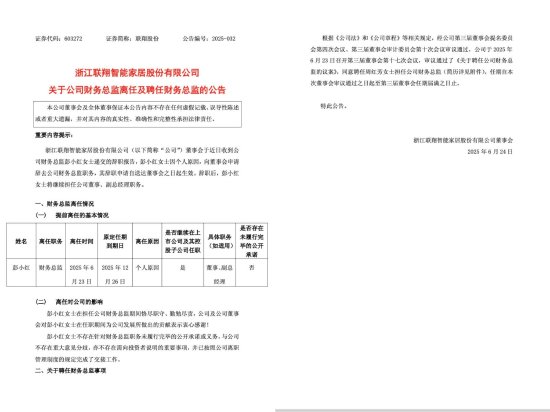
Core Viewpoint - The recent personnel changes at Zhejiang Lianxiang Intelligent Home Co., Ltd. have drawn industry attention, particularly the transition of financial leadership from Peng Xiaohong to Zhou Hongfang, which reflects the company's governance maturity and resilience [1][3]. Group 1: Personnel Changes - Peng Xiaohong served as the financial director for over 8 years and has seen a continuous decline in salary from 523,000 yuan in 2021 to 400,100 yuan in 2024 [2][3]. - Zhou Hongfang, with a strong background in finance across various industries, officially took over as financial director on June 23, 2024, after a 9-month integration period [2][3]. Group 2: Company Performance - In 2024, Lianxiang achieved a significant turnaround, reporting total operating revenue of 216 million yuan, a year-on-year increase of 37.83%, and a net profit of 10.89 million yuan, reflecting a growth of 182.02% [7][8]. - The company has been recognized in the top 100 ESG performance list for Zhejiang listed companies, indicating its commitment to environmental, social, and governance standards [7]. Group 3: Future Outlook - The transition in financial leadership is seen as an opportunity for Lianxiang to inject new vitality into its operations, with expectations for governance mechanisms to drive future growth [8]. - The collaboration between Zhou Hongfang and the remaining management team, including Peng Xiaohong, will be crucial in navigating the complexities of the economic environment [8].

15岁的小米该如何面对期待
Jing Ji Guan Cha Wang· 2025-05-21 02:04
Core Viewpoint - The recent traffic accident involving Xiaomi's SU7 vehicle has raised public concerns about the company's responsibilities and expectations as it transitions from a startup to a major player in the automotive industry [1][2]. Group 1: Company Responsibility - Xiaomi's CEO Lei Jun acknowledged the heightened public expectations and the need for the company to take greater responsibility as it ventures into more complex products like automobiles [1]. - The company must not only focus on technological innovation but also enhance its governance and processes to address social responsibilities effectively [2][3]. Group 2: Public Trust and Communication - Public trust is built through genuine actions and transparent communication, especially in the wake of crises [2][3]. - The expectation for "structural sincerity" from companies includes clear responses, specific measures, and defined accountability [2]. Group 3: Future Directions - As Xiaomi approaches its next phase of growth, it must evolve its values and governance capabilities alongside technological advancements to ensure long-term success [3]. - The company needs to implement systems and processes that reflect its commitment to sincerity and responsibility in order to maintain public trust [3].

公司快评︱因安全事故信披不及时收监管函,恒邦股份为何敢违反规则
Mei Ri Jing Ji Xin Wen· 2025-05-14 02:45
Core Viewpoint - Hengbang Co., Ltd. faces significant issues in information disclosure and safety management, highlighted by a delayed announcement of a serious safety incident and internal governance conflicts [1][2]. Group 1: Incident and Disclosure Issues - On August 3, 2024, a serious safety incident occurred at Hengbang's smelting company, resulting in casualties and production suspension, but the company delayed disclosure until August 13, 2024, a 10-day delay [1]. - The Shandong provincial government's investigation report classified the incident as a major production safety responsibility accident, indicating that the company engaged in concealment and false reporting [1]. - The delayed and misleading information disclosure violates regulations and undermines investor and public rights to information [1]. Group 2: Financial Performance - In 2024, Hengbang's net profit after deducting non-recurring items decreased by 7.65% to 579 million yuan [2]. - The company faces increased competition and market uncertainty, necessitating financial stability alongside improved safety and disclosure practices [2]. Group 3: Governance and Management Recommendations - Hengbang should take this opportunity to comprehensively review and improve its corporate governance structure [2]. - The company needs to establish a robust safety production management system and enhance risk assessment and hazard management to ensure employee safety and operational stability [2]. - Strengthening information disclosure management and internal supervision mechanisms is essential for timely, accurate, and complete information disclosure [2]. - The company should actively address the concerns raised by independent directors and improve communication with investors [2].
