供应链重组

Search documents
华尔街的"七年之痒"背后,斯凯奇退市即自由?
美股研究社· 2025-05-09 11:43
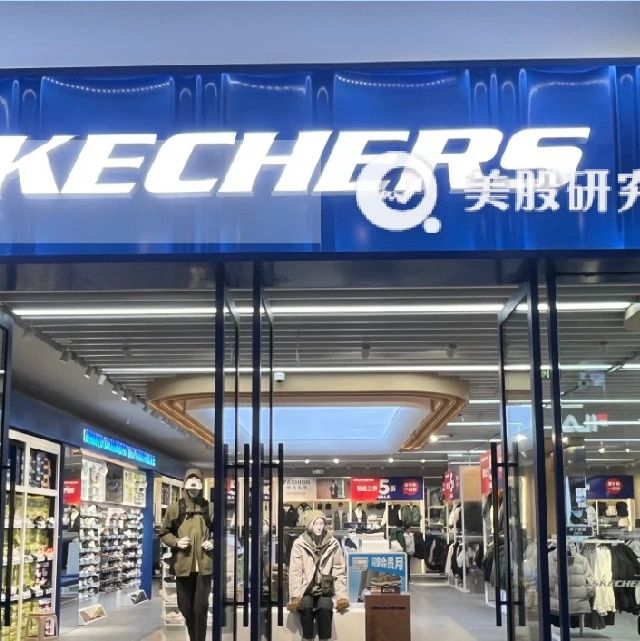
Core Viewpoint - Skechers, the world's third-largest athletic shoe retailer, is facing significant challenges due to new U.S. tariff policies, leading to its decision to go private as a strategic move to escape short-term market pressures and focus on long-term growth [6][10][20] Group 1: Market Context and Challenges - The announcement of Skechers' privatization has caused market turbulence, with its stock price initially surging nearly 25% following a cash acquisition offer from 3G Capital at $63 per share [1][10] - The U.S. government's new tariff policies are expected to increase the tax rate on children's shoes to between 20%-37%, potentially raising overall industry tax rates to 150%-220%, which is unsustainable for low-margin brands like Skechers [7][8] - The footwear sales in the U.S. saw a significant decline of 26.2% year-on-year in Q1 2025, indicating a severe suppression of non-essential consumer demand [7][8] Group 2: Financial Performance and Strategic Decisions - Despite a 7.1% year-on-year revenue growth to $2.41 billion in Q1 2025, Skechers' stock had dropped 26.58% year-to-date before the privatization announcement, highlighting the pressure from market expectations [10][9] - The privatization will provide Skechers with increased cash reserves, allowing for strategic adjustments without the immediate pressure of public market performance [10][20] Group 3: Strategic Focus Post-Privatization - Post-privatization, Skechers aims to restructure its supply chain, reduce reliance on Chinese production, and enhance its manufacturing presence in Vietnam and Indonesia [11][20] - The company plans to innovate its product offerings to create differentiation in the market, particularly against functional brands like Hoka and On [11][20] - A shift towards a direct-to-consumer (DTC) sales model is also planned, which includes closing inefficient retail stores and increasing e-commerce sales [13][20] Group 4: Competitive Landscape in China - Skechers faces intense competition in the Chinese market from local brands like Anta and Li-Ning, which have successfully captured market share through diverse product strategies and cultural marketing [15][16][18] - The brand's sales in the Asia-Pacific region fell by 3% in Q1 2025, indicating challenges in maintaining growth in this critical market [15][16] - The ongoing price competition from international brands like Adidas and Nike further complicates Skechers' position, as these companies have adopted aggressive pricing strategies to penetrate lower-tier markets [17][18] Group 5: Future Outlook and Conditions for Success - The effectiveness of Skechers' privatization strategy will depend on three key factors: the resource integration capabilities of 3G Capital, the brand's resilience through product innovation, and the potential shifts in tariff negotiations [20][22] - The company's ability to navigate the complexities of global trade policies and adapt its capital structure will be crucial for its long-term survival and competitiveness [22]

全球最大珠宝商潘多拉:将生产转移回美国“根本行不通”
Hua Er Jie Jian Wen· 2025-05-08 09:37
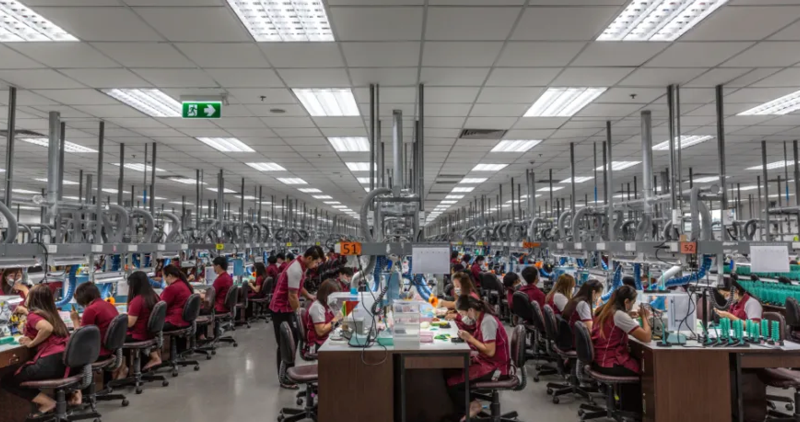
Core Viewpoint - Pandora's CEO Alexander Lacik stated that the company has no plans to restructure its Asian supply chain despite threats from Trump's trade war, emphasizing that relocating production to the U.S. is economically unfeasible [1]. Group 1: Supply Chain and Production - Approximately one-third of Pandora's business comes from the U.S., making it vulnerable to tariffs, as 95% of its jewelry is produced in Thailand [2]. - Lacik highlighted that establishing a new factory would take about three years and requires skilled artisans, which are currently available in Thailand where nearly 15,000 craftsmen work for Pandora [2][4]. - The company faces two main obstacles: the availability of skilled labor and the high labor costs associated with relocating production to the U.S. [4]. Group 2: Economic Considerations - The economic implications of moving production to the U.S. are significant, as the costs would be prohibitively high [4]. - Pandora will continue its low-cost production strategy in Southeast Asia, which means the company will either absorb the tariffs or pass the additional costs onto consumers [4].
巴菲特的最后豪赌:“囤钱”、看好日本为哪般?
Sou Hu Cai Jing· 2025-05-05 09:24
Core Viewpoint - Warren Buffett announced his plan to retire by the end of 2025, recommending Greg Abel as his successor as CEO of Berkshire Hathaway [3] Group 1: Financial Performance - As of Q1 2025, Berkshire Hathaway's cash position reached a record high of $347.7 billion, up from $334.2 billion at the end of Q4 2024 [5] - The company's net profit for Q1 2025 was $4.603 billion, a 64% decrease from $12.702 billion in the same quarter the previous year [9][15] - Total revenues for Q1 2025 were $89.725 billion, slightly down from $89.869 billion in Q4 2024 [15] Group 2: Investment Strategy - Since Q2 2023, Buffett's investment strategy has shifted towards cash and U.S. government bonds, outperforming the annualized return of the S&P 500 [12] - The company experienced an investment net loss of $50.38 billion in Q1 2025, contrasting sharply with a profit of $14.8 billion in the same period last year [9][16] - Buffett's cautious stance on AI investments reflects a broader strategy of avoiding high-risk ventures while focusing on stable returns [18] Group 3: Market Outlook - Buffett expressed optimism about the long-term prospects of the Japanese market, despite global economic uncertainties, with Berkshire's investments in Japan valued at approximately $20 billion [19][21] - The Japanese companies in which Berkshire has invested are characterized by low valuation metrics and high dividend yields, making them attractive for long-term investment [24][26] - The current low-interest-rate environment in Japan provides Berkshire with a favorable financing cost, enhancing the profitability of its investments [26]

WESCO International(WCC) - 2025 Q1 - Earnings Call Transcript
2025-05-01 13:00
Financial Data and Key Metrics Changes - The company reported a 6% organic sales growth in Q1 2025, exceeding expectations, driven by strong performance in the data center business, which grew 70% year-over-year [4][14] - Gross margin remained stable sequentially and improved in the CSS segment, while adjusted EBITDA margin decreased by 60 basis points year-over-year [5][14] - Adjusted earnings per share were $2.21, down 4% from the prior year [15] Business Line Data and Key Metrics Changes - The data center business was a significant growth driver, up 70%, while OEM and broadband businesses experienced high single-digit growth [5][14] - EES organic sales increased by 3%, but reported sales were flat due to foreign exchange headwinds and one less workday [16] - CSS sales grew 18% year-over-year on an organic basis, with data center solutions representing nearly 40% of CSS sales [18][20] Market Data and Key Metrics Changes - The utility market continued to show weakness due to customer destocking and lower project activity, with expectations for recovery in the second half of the year [25][66] - Broadband business grew high single digits, particularly in Canada, while UBS backlog was down 13% year-over-year but up 13% sequentially [25][26] Company Strategy and Development Direction - The company is focused on debt reduction and stock repurchases while investing in tech-enabled business transformation and managing M&A opportunities [7][40] - The strategic focus includes addressing supply chain challenges and leveraging global scale to mitigate tariff impacts [9][33] - The company reaffirmed its full-year outlook, increasing sales growth expectations for the data center business from mid-teens to about 20% [34][35] Management's Comments on Operating Environment and Future Outlook - Management expressed confidence in the recovery of the utility business in the second half of the year, supported by ongoing electrification and grid modernization trends [25][66] - The company acknowledged uncertainties related to tariffs and their potential impact on the global economy but emphasized control over internal initiatives [8][39] - Management noted that while there is a risk of demand destruction due to higher prices, they believe pricing benefits from tariffs could mitigate this risk [108] Other Important Information - The company issued $800 million in senior notes to redeem preferred stock and strengthen its balance sheet, with an estimated annualized net income benefit of approximately $30 million [6][29] - Free cash flow for Q1 was $9 million, exceeding expectations, with a focus on reducing inventory as a percentage of sales [26][27] Q&A Session Summary Question: Clarification on revised outlook regarding tariffs - Management confirmed that no tariff-related price increases were incorporated into the outlook, which assumes organic growth rates of 2.5% to 6.5% [46][48] Question: Supplier price increases and surcharges - Management noted that supplier price increases in Q1 were down 15% year-over-year, but there has been a significant increase in price notifications in Q2 [59][60] Question: Confidence in utility market recovery - Management indicated that they have not seen significant changes in the utility market and expect a return to growth in the second half of the year based on customer activity levels [66][68] Question: Data center growth and customer engagement - Management highlighted strong momentum in the data center business, with customers increasing their scope of supply and no reduction in booking rates [76][78] Question: Pricing dynamics across business units - Management explained that CSS has seen less impact from pricing increases compared to EES, which is more affected by tariffs and supplier pricing dynamics [95][98]

日本央行:如果全球物流出现中断,或进行供应链重组并产生大量成本,进口价格可能会上涨。这可能会反过来抑制国内需求。
news flash· 2025-05-01 03:14
日本央行:如果全球物流出现中断,或进行供应链重组并产生大量成本,进口价格可能会上涨。这可能 会反过来抑制国内需求。 ...
回应关税冲击,丹纳赫Q1财报出炉!
仪器信息网· 2025-04-25 06:11
导读: 丹纳赫发布一季度财报,营收57.41亿美元,同比小幅下降0.95%,核心业务收入持平超预期。此外,关于关税问题,丹纳赫回应相信通过供应链重组和本 土化布局,能够很大程度抵消当前关税影响。 特别提示 微信公众号机制调整,请点击顶部"仪器信息网" → 右上方"…" → 设为 ★ 星标,否则很可能无法看到我们的推送。 关税政策的影响持续发酵。生命科学和诊断领域的巨头丹纳赫发布一季度财报,谈及了如何应对关税影响。 在当前形势下,加速供应链重组与 本土化布局,已然成为企业应对潜在的新政风险的必要之举。 先看财报,丹纳赫2 0 2 5年Q1营收5 7 . 4 1亿美元,同比小幅下降0 . 9 5%。 | | Three-Month Period Ended | | | --- | --- | --- | | | March 28, 2025 March 29, 2024 | | | Sales (GAAP) | | | | Biotechnology | 5 1,612 $ | 1,524 | | Life Sciences | 1,680 | 1,745 | | Diagnostics | 2.449 | 2, ...

Zurn Elkay Water Solutions (ZWS) - 2025 Q1 - Earnings Call Transcript
2025-04-23 13:30
Financial Data and Key Metrics Changes - The company reported Q1 sales of $389 million, representing 5% core growth and 4% reported growth, impacted by 1% from currency fluctuations [9][10] - Adjusted EBITDA for Q1 was $98 million, with an adjusted EBITDA margin of 25.2%, reflecting a 110 basis point year-over-year improvement [10][11] - Net debt leverage ended the quarter at 0.9 times, including $77 million used for share repurchases [11] Business Line Data and Key Metrics Changes - Mid single-digit core sales growth was observed in nonresidential end markets, while residential and some commercial segments showed softness [10] - The company achieved solid execution on growth initiatives, driving sales performance to the higher end of the outlook provided previously [10] Market Data and Key Metrics Changes - The company experienced a 33% increase in the volume of filtered water delivered in Q1, totaling 600 million gallons, driven by growth in the installed base of filtered units [12] Company Strategy and Development Direction - The company is focused on minimizing exposure to China, with plans to reduce COGS from China to 2-3% by the end of 2026 [6][20] - A multiyear strategy has been implemented to restructure the supply chain, aiming for a competitively advantaged cost structure [8][14] - The company is also committed to sustainability, having received recognition for its efforts in this area [12] Management's Comments on Operating Environment and Future Outlook - Management expressed confidence in being price cost positive despite potential new tariffs from non-China sources [6][8] - The company anticipates that the operating environment will involve some level of new tariffs or added costs for the foreseeable future [22][23] - Management reaffirmed full-year guidance, projecting core sales growth in the low to mid-single digits for Q2 [26] Other Important Information - The company has seen a 60% increase in submitted continuous improvement (CI) projects year-over-year, aimed at enhancing operational efficiency [25] - The company is actively evaluating M&A opportunities while maintaining a strong balance sheet and cash flow generation [11] Q&A Session Summary Question: Changes in guidance and volume/price contributions - Management indicated that while there have been many moving parts, they are confident in managing to at least the guidance provided in February [30][31] Question: Impact of pricing on demand - Management acknowledged potential demand destruction but emphasized that they are not constructing guidance based solely on this assumption [46][47] Question: Education vertical spending trends - Management reported no observed slowing or increased hesitancy in the education vertical [55] Question: Confidence in affirming full-year guidance amid tariff risks - Management expressed confidence in their ability to manage effectively despite potential tariff increases [58][59] Question: Competitive positioning and cost structure - Management believes they are well-positioned from a cost perspective relative to peers, with limited available capacity in the industry [108][112] Question: Share buyback strategy - Management confirmed the ability to continue share repurchases based on current cash flow and leverage position [113][114]

Apple's Margins Catch A Break, But Road Ahead Still Looks Bumpy
Benzinga· 2025-04-14 13:09
Core Viewpoint - Apple Inc. has received a temporary reprieve from tariffs on iPhones, iPads, and Macs, but analysts caution that this relief may not be sustainable in the long term due to ongoing political pressures and potential future tariffs on other products [1][2]. Group 1: Tariff Exemptions and Immediate Impact - The Trump administration's decision to exempt certain Apple products from tariffs alleviates immediate margin pressure for the company [1]. - However, analysts suggest that these exemptions are more of a temporary solution rather than a permanent fix, as the political landscape remains uncertain [2]. Group 2: Supply Chain and Manufacturing Challenges - Apple continues to rely heavily on Taiwanese semiconductor manufacturers, which poses a risk if new tariffs are imposed on semiconductors [2][3]. - The company is diversifying its supply chain, with increased iPhone assembly in India and accessory production in Vietnam, but this transition is costly [3][4]. Group 3: Future Outlook and Analyst Sentiment - Despite the challenges, there are positive indicators such as potential consumer demand for the iPhone 16E and favorable foreign exchange rates [5]. - The analyst maintains an Overweight rating on Apple but has reduced the price target from $270 to $245 due to macroeconomic pressures and long-term cost concerns [5].


特朗普对华关税累计或54%,跨境小包到底收多少税?
雷峰网· 2025-04-03 12:27
Core Viewpoint - The article discusses the significant impact of the recent tariff policies announced by the Trump administration, particularly the increase in tariffs on Chinese goods and the cancellation of the $800 exemption for small packages, which is expected to reshape the global trade landscape and affect various industries, especially e-commerce and logistics [2][3][10]. Tariff Policy Changes - Trump announced a plan for "reciprocal tariffs," potentially raising tariffs on Chinese goods by up to 54%, with an average tariff of 67% on Chinese imports [2]. - The new tariffs include a 34% tariff on top of the existing 20%, leading to a cumulative tariff rate of 54% on ordinary goods from China [2]. - Other Asian countries are also affected, with Vietnam facing a 46% tariff, Cambodia 49%, and Thailand 36% [2]. Impact on E-commerce and Logistics - The cancellation of the $800 exemption for small packages means that goods valued at $800 or less will now incur a fixed tax of either $25 or $50, depending on the timing, instead of being exempt [6][8]. - This change is expected to increase the prices of products on low-cost e-commerce platforms by 20-30%, affecting approximately 25% of Shopify merchants who rely on this exemption [8]. - Businesses may need to reassess their shipping strategies, with some opting to establish distribution centers in the U.S. to mitigate costs [11]. Industry Reactions and Future Outlook - The industry is experiencing a shift, with some businesses viewing the tariff changes as an opportunity to enhance their competitiveness through improved product quality and branding [11]. - There is a belief that the end of aggressive price wars will lead to a focus on value creation and brand differentiation [11]. - Companies are encouraged to adopt a localized approach, potentially establishing operations in the U.S. to better navigate the new tariff landscape [11][10].