信息不对称

Search documents
关键信息当尽可能实行“应披露尽披露”
Xin Hua Wang· 2025-08-12 06:26
Core Viewpoint - The article highlights the increasing importance of information disclosure in the capital market, noting a significant rise in the length of annual reports from 155 pages in 2014 to 210 pages in 2019, while simultaneously observing a decline in the disclosure rate of the top five customers and suppliers of listed companies, indicating a trend towards vague disclosures that could hinder market health [1][2]. Group 1 - The increase in the average length of annual reports reflects a growing emphasis on information disclosure among listed companies [1]. - There is a notable decline in the disclosure of the names of the top five customers and suppliers, with companies opting for vague, code-like representations instead [1][2]. - This trend towards vague disclosures undermines the seriousness of information disclosure, which is a fundamental aspect of a well-functioning capital market [1][2]. Group 2 - Enhancing transparency in information disclosure is crucial for reducing information asymmetry in the capital market [2]. - Allowing companies to use vague disclosures could lead to a perception that they can negotiate terms with regulators regarding disclosure transparency, potentially weakening regulatory constraints [2]. - Mandatory disclosure of key information, such as supply chain details, is essential for improving market transparency and enabling effective oversight of potential hidden transactions and financial fraud [2][3]. Group 3 - Companies should not claim commercial secrecy as a reason to withhold information about their top customers and suppliers after going public, as this argument lacks credibility [3]. - The expectation of transparency should be recognized by companies that choose to operate as public entities, similar to public figures sacrificing some personal privacy [3][4]. - Key information regarding the top five customers and suppliers should be disclosed as much as possible to enhance transparency [4].
美联储降息在即,大A抢跑行情,但仍有一坎!
Sou Hu Cai Jing· 2025-08-06 08:48
Group 1 - The recent U.S. non-farm payroll data showed job additions significantly below expectations, leading to renewed discussions on interest rate cuts by Wall Street firms [3][5] - Major financial institutions like Goldman Sachs and Citigroup have increased their predictions for potential interest rate cuts, with Nomura Securities doubling the probability of four rate cuts within the year [3][5] - The current economic situation is compared to last year, but there are key differences, particularly regarding inflation trends [3][5] Group 2 - Market reactions often reflect expectations rather than reality, with poor economic data potentially leading to a bullish stock market as investors bet on Federal Reserve easing [5][13] - There is a noted disparity in information access between retail investors and institutions, with institutions often pricing in information months in advance [12][14] - Key indicators such as the three-month average job additions have fallen below 150,000, which are seen as leading indicators in quantitative models [13][16] Group 3 - The slowdown in wage growth and a significant reduction in temporary workers are additional indicators of economic trends [16] - The article emphasizes the importance of using quantitative tools to detect market movements and funding patterns, which can provide insights that are not immediately visible to average investors [14][15]


吉林金融监管局:部分机动车辆安全统筹存在非法经营的风险
Bei Jing Shang Bao· 2025-08-01 11:45
Core Viewpoint - The Jilin Financial Regulatory Bureau has issued a risk warning regarding "motor vehicle safety pooling business," highlighting the differences in operational models and regulatory environments compared to commercial insurance, which may expose consumers to various risks [1][2]. Group 1: Regulatory Environment - Insurance business should be operated by legally established insurance companies, and unauthorized organizations or individuals may engage in illegal operations within the motor vehicle safety pooling business [2]. - Consumers are advised to verify the qualifications and legality of the sales entities before purchasing pooling insurance to avoid falling into illegal insurance traps [2]. Group 2: Risk Factors - The operational model and terms of motor vehicle safety pooling may differ significantly from commercial insurance, leading to potential uncertainties in claims processing, including unclear terms and complex procedures [2]. - Some pooling businesses may face difficulties in claims due to insufficient funds or poor management, potentially resulting in claim denials and affecting consumer protection [2]. Group 3: Consumer Awareness - Consumers should enhance their risk awareness and avoid impulsive purchases by fully understanding the characteristics and risks associated with motor vehicle safety pooling [3]. - It is crucial for consumers to carefully read contracts and terms to understand coverage, compensation standards, and exclusions before engaging in pooling business [3]. - Consumers are encouraged to monitor regulatory announcements and warnings to stay informed about market dynamics and risks related to motor vehicle safety pooling [3].
金盛贵金属解析黄金操作策略:把握三重锚点,穿越波动周期
Sou Hu Cai Jing· 2025-07-14 08:22
Core Insights - The recent gold market is characterized by a complex interplay of "policy suppression" and "geopolitical support," with domestic gold prices at 778.42 RMB per gram and international gold prices exceeding 3382 USD per ounce, reflecting significant volatility driven by global trade uncertainties and central bank gold accumulation trends [1][3] Group 1: Market Challenges - Liquidity risks are increasing, with COMEX gold futures experiencing weekly fluctuations exceeding 76 USD per ounce, leading to execution delays on some platforms that can exacerbate losses by 20% [3] - Information asymmetry poses a challenge, as ordinary investors struggle to access timely and authoritative analysis, illustrated by a 12% surge in gold ETF holdings due to escalating Middle East tensions, followed by a price correction [3] - Transaction costs are a concern, with London gold spreads typically above 0.5 USD per ounce, resulting in annual costs exceeding 6000 USD for average traders, significantly eroding profit margins [3] Group 2: Dynamic Balance Strategies - A composite strategy of "long-term allocation + short-term trading" is recommended, with a focus on central bank gold purchases as a long-term anchor, suggesting a core asset allocation of 30%-50% [4] - Tactical positioning around Federal Reserve policy changes can create opportunities, particularly when COMEX net long positions are at a near four-quarter low, indicating potential for reverse positioning [5] - Risk management tools, such as a dynamic fund allocation model, can help control individual trade risks to within 2% of account funds, enhancing overall trading safety [6] Group 3: Technological Empowerment - The company offers comprehensive compliance guarantees, with unique transaction codes for trades over 0.1 lots, ensuring transparency and security for client funds stored in licensed banks [8] - Technological innovations include dual-platform access (MT4 and MT5) for rapid order execution and algorithmic trading, enhancing user experience and efficiency [9] - Cost optimization strategies, such as zero commission and low spreads, provide a competitive edge, allowing for greater profit potential during market fluctuations [10] Group 4: Practical Applications - New investors can utilize free demo accounts to familiarize themselves with trading strategies and risk management, starting with small positions [11] - Experienced traders can develop complex strategies by integrating fundamental and technical analyses, leveraging cross-market data for risk-free arbitrage [11] - All-weather investors can benefit from real-time alerts on key price levels and economic data, enabling quick decision-making to protect profits [11] Conclusion - In the context of the "gold super cycle" in 2025, selecting a compliant, efficient, and technologically advanced trading platform is crucial for navigating market volatility, with the company positioned as a reliable anchor for investors amid uncertainty [12]

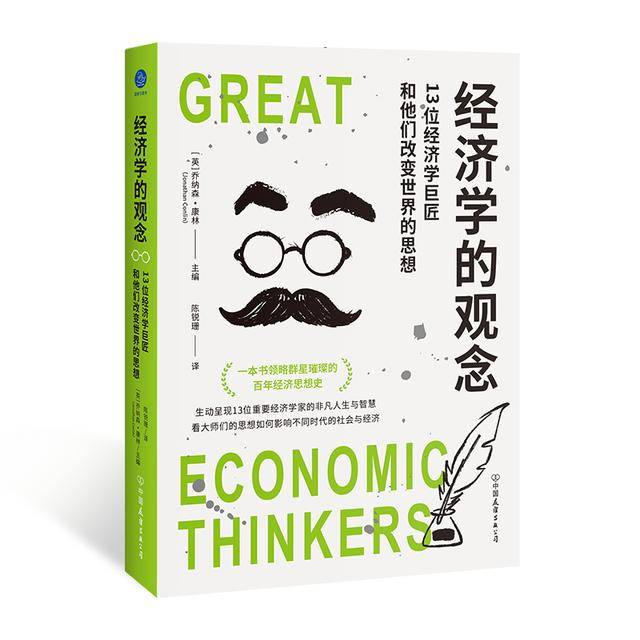
读创今日荐书丨这13位经济学家的思想如何影响世界?
Sou Hu Cai Jing· 2025-07-10 14:31
Core Insights - The book "The Ideas of Economics" focuses on the evolution of economic thought over the past 200 years, presenting a collective biography of influential economists [1][4] - It features 13 prominent economists, including Adam Smith, David Ricardo, Karl Marx, and Joseph Stiglitz, highlighting their contributions to modern economic theory [1][5] Summary by Sections - **Historical Context**: The book emphasizes the need for a comprehensive historical understanding of economic theories to appreciate their relevance and application in contemporary contexts [4] - **Influential Theories**: Key theories discussed include labor division, comparative advantage, marginal utility, and Nash equilibrium, which have shaped discussions on market intervention, taxation, and monetary policy [4] - **Selection Criteria**: The selection of the 13 economists is based on their significant contributions to modern economic thought rather than their radical ideas, acknowledging the challenge of choosing from numerous influential figures [5]
学历贬值如何应对?
集思录· 2025-06-12 14:08
Group 1 - The consensus on the devaluation of academic qualifications is strengthening, with a growing belief that current education heavily relies on innate talent rather than just effort [1] - The proportion of individuals with undergraduate and graduate degrees is increasing, leading to a relative decline in demand for highly educated individuals, resulting in an oversupply [1][2] - The material conditions in China have improved significantly, making it difficult for individuals to starve, as industrial capacity is excessive and agricultural modernization is ongoing [1] Group 2 - In early education, it is important for children to explore various interests and develop mathematical thinking, without the pressure of excelling in every subject [1][2] - During middle school, it is crucial to assess a child's exam-taking abilities and character development, as these experiences are valuable for future challenges [2] - In high school, the focus should be on understanding social realities and engaging in various social activities, regardless of the type of high school attended [2][3] Group 3 - The future of ordinary civil service jobs may not be stable, and the nursing profession is noted for its demanding shift work [4][5] - The funeral industry is identified as a growing sector, while the field of cultural relic restoration remains less understood [6][7] Group 4 - The current education system is viewed as a zero-sum game, where success in exams is dependent on outperforming peers, contributing to the phenomenon of educational competition [8] - The perception that past generations had easier access to higher education is challenged, as historical data shows lower enrollment rates and higher competition [8][9] - High-density talent environments in companies lead to more efficient communication and problem-solving compared to low-density environments [8] Group 5 - The importance of attending the right educational institution is emphasized, as mismatched environments can hinder a child's development [9] - The concept of "high school migration" is discussed, where students may move to different provinces for better educational opportunities, particularly in western provinces [9][10] - The knowledge taught in schools is often outdated, but the ability to learn and think critically remains essential for personal and professional growth [10][11]

新消费涨势汹汹,下一代的茅台出现
Sou Hu Cai Jing· 2025-06-05 16:55
Group 1 - The rise of new consumption stocks in the A-share market is driven by the need for domestic demand due to complex global economic conditions, leading to significant price increases in these stocks [1] - Over 50% of young consumers prefer to spend on personal satisfaction rather than traditional luxury goods, indicating a shift in consumer behavior [1] Group 2 - Retail investors often struggle to time their trades correctly, leading to losses, as they may misinterpret market signals and follow trends without understanding the underlying data [3] - The disparity between retail and institutional investors' perspectives can result in retail investors buying at peaks and selling at lows, often leading to significant losses [3] Group 3 - Understanding institutional trading behavior through data analysis is crucial for retail investors to avoid being misled by market movements [5] - High institutional activity, indicated by dense orange bars in data visualizations, suggests strong institutional interest, while a lack of such activity may indicate that institutions have exited their positions [7][9] Group 4 - Recognizing market manipulation tactics, such as "washing" where institutions sell off shares to scare retail investors into selling, is essential for making informed investment decisions [10][12] - Key indicators for identifying these tactics include the persistence of institutional activity and signs of short covering [13] Group 5 - The primary risk for retail investors lies in information asymmetry, making it vital to gather accurate market information to make informed decisions [14] - Data is a more reliable indicator than price charts or market sentiment, as it reflects true market behavior and trends [16]
头部券商风控再敲警钟:中信、华泰员工“老鼠仓”被罚
Xin Jing Bao· 2025-06-04 02:50
Core Viewpoint - The recent administrative penalties imposed by the Jilin and Anhui Securities Regulatory Bureaus highlight the issue of "rat trading" among securities industry professionals, revealing significant ethical and regulatory shortcomings within the industry [1][6]. Group 1: Incident Details - Two senior IT staff members from Huatai Securities and CITIC Securities were penalized for engaging in "rat trading" by exploiting their system access to obtain non-public information about funds and client accounts [1][2]. - Li Haipeng, a senior manager at CITIC Securities, used his access to the CRM system to conduct synchronized trading with his wife's and sister-in-law's accounts, resulting in a total trading amount of 64.84 million yuan and a profit of 2.13 million yuan from 76 stocks [2][4]. - Shao, a securities professional at Huatai Securities, engaged in similar activities, controlling a trading account that executed synchronized trades on 58 stocks, with a total investment of 31.53 million yuan and a profit of 193,900 yuan [3][4]. Group 2: Regulatory Actions - The penalties for Li Haipeng totaled 4.26 million yuan, while Shao faced a combined penalty of 1.93 million yuan for his trading activities, which included a fine of 300,000 yuan for violations [4][5]. - Both individuals' actions have been characterized as exacerbating information asymmetry in the securities market, reflecting a lack of professional ethics among some industry participants [6][7]. Group 3: Industry Implications - The frequency of "rat trading" incidents has raised concerns about the adequacy of internal controls and ethical training within financial institutions, indicating a need for stronger regulatory oversight [6][7]. - Experts suggest enhancing legal frameworks and increasing penalties to deter such unethical practices, as well as employing big data technologies to improve regulatory efficiency and monitoring capabilities [7].


大A太难?他正成为小散「避风港」
叫小宋 别叫总· 2025-05-23 12:31
Core Viewpoint - The A-share market is experiencing volatility despite positive economic data and favorable policies, leading to confusion among investors about market movements [1] Group 1: Financial Reporting Risks - The financial reporting season presents numerous pitfalls for investors, particularly retail investors who need to be cautious [2] - A significant 35% of companies are expected to show "performance benefits with stock price declines" in Q1 2025, primarily due to institutional investors' prior positioning [4] - In April 2025, 110 companies faced risk warnings due to financial issues, marking a 40% year-on-year increase [4] Group 2: Information Asymmetry - Retail investors must navigate an environment characterized by information asymmetry, where perceived benefits may actually serve as traps set by more informed players [4] - Quantitative trading now accounts for 30% of the A-share market, with high-frequency trading executing thousands of transactions per second, putting retail investors at a disadvantage [4] Group 3: Strategic Recommendations - The "繁华体系策略" public account, led by experienced trader Lao Sun, offers a "reverse harvesting" system designed to help retail investors avoid pitfalls in a complex market [3][7] - Lao Sun employs a unique "three-dimensional analysis" method that combines macroeconomic factors, industry trends, and company fundamentals to identify investment opportunities [8]

证券日报内审委委员闫立良:直面三大课题 共筑资本市场投资者权益基石
Zheng Quan Ri Bao· 2025-05-19 14:24
Core Viewpoint - The seventh "5·15-5·19 Investor Protection Awareness Week" aims to enhance investor knowledge and promote rational, value, and long-term investment principles, focusing on protecting the rights of small and medium-sized investors [1][4]. Group 1: Event Overview - The event is organized by the Securities Daily, with support from various financial institutions and associations, and takes place in Beijing, Shanghai, and Shenzhen from May 15 to 19 [1]. - The theme of the event is "Practicing 'Three Investments' and Strengthening 'Two Safeguards'" [1]. Group 2: Importance of Investor Rights - The event emphasizes the need to enhance investors' awareness of their rights, particularly for the over 220 million investors in China, where individual investors make up over 99% [4]. - Protecting the legal rights of small and medium-sized investors is crucial for the high-quality development of the capital market [4]. Group 3: Challenges and Solutions - There are three main challenges identified: 1. Addressing information asymmetry to improve investors' ability to access and understand information [5]. 2. Ensuring channels for participation and safeguarding investors' rights in corporate governance [5][6]. 3. Strengthening the mechanisms for investor rights protection to reduce costs and complexities in the process [6]. Group 4: Media's Role - The Securities Daily has established a dedicated "Investor Protection" column and continues to promote investor protection initiatives, aiming to create a respectful and supportive environment for investors [6][7].