储能技术

Search documents
高邮锦晨储能有限公司成立,注册资本1000万人民币
Sou Hu Cai Jing· 2026-01-26 22:20
企业名称高邮锦晨储能有限公司法定代表人徐远清注册资本1000万人民币国标行业制造业>金属制品、 机械和设备修理业>其他机械和设备修理业地址高邮市高新区创客中心10楼1005室企业类型有限责任公 司(自然人投资或控股的法人独资)营业期限2026-1-26至无固定期限登记机关高邮市数据局 来源:市场资讯 天眼查显示,近日,高邮锦晨储能有限公司成立,法定代表人为徐远清,注册资本1000万人民币,由淮 安力创新能源有限公司全资持股。 序号股东名称持股比例1淮安力创新能源有限公司100% 经营范围含许可项目:发电业务、输电业务、供(配)电业务;输电、供电、受电电力设施的安装、维 修和试验(依法须经批准的项目,经相关部门批准后方可开展经营活动,具体经营项目以审批结果为 准)储能技术服务;新兴能源技术研发;通用设备修理;专用设备修理;电气设备修理;仪器仪表修 理;电子、机械设备维护(不含特种设备);普通机械设备安装服务;计量技术服务;工程管理服务; 工程和技术研究和试验发展;电力设施器材销售;发电技术服务;技术服务、技术开发、技术咨询、技 术交流、技术转让、技术推广(除依法须经批准的项目外,凭营业执照依法自主开展经营活动) ...
2026年能源及相关行业发展展望:“十五五”规划下中美能源战略差异及投资机会
Guo Tai Jun An Qi Huo· 2026-01-26 11:14
Report Industry Investment Rating No relevant information provided. Core View of the Report - For China, the energy strategy is to clean up traditional energy and shift the development focus to non-fossil energy. It is recommended to overweight industries related to non-fossil energy substitution in China, such as non-ferrous metals and rare earths, and wait for the opportunity of coal's bottom - rebound [1]. - For the US, the energy strategy is to prioritize traditional energy and restrict the development of new energy. It is advisable to be cautiously bearish on crude oil and consider buying on dips to obtain geopolitical conflict premiums [1]. Summary by Relevant Content China's Energy Strategy Traditional Energy - **Coal**: In 2026, coal demand will peak and production will continue to decline, with a structural adjustment of the coal industry. The domestic coal consumption will remain at the peak of 4.8 - 5 billion tons during 2026 and the "14th Five - Year Plan" period. The state will control the scale of new coal - fired power plants, promote the upgrading and transformation of coal - fired power, and develop new coal chemical industry to improve coal utilization efficiency. The coal production growth rate may turn negative in 2026, and production will be concentrated in resource - rich areas [5][8]. - **Petroleum**: To reduce the dependence on oil imports (73.2% in 2025), China will encourage oil exploration and development in 2026, open up the market access for oil and gas exploration, and utilize deep - sea, deep - layer and unconventional oil and gas resources. The "14th Five - Year Plan" will continue to guide the exit of backward production capacity in the petrochemical industry to solve the over - capacity problem [10][11]. New Energy - China has introduced a series of fiscal policies to support new energy development, including tax incentives, subsidies, special funds, and financing support. With the support of the "14th Five - Year Plan", the substitution of new energy for fossil energy is sustainable. The key is to develop energy storage facilities to solve the intermittency and volatility of new energy power generation [12][14]. US Energy Strategy Traditional Energy - **Coal**: The US energy strategy prioritizes traditional energy, with a focus on expanding domestic development. The demand for coal for power generation may increase significantly due to the growth of data centers' power demand. The US government has strong policy support for the coal industry, including providing more mining land, tax incentives, etc. [18][19][23]. - **Petroleum**: The US has set a high production increase target for oil. Although shale oil production is expected to be stable in 2026, traditional oil production will continue to increase slightly. The overall oil price is expected to fluctuate widely between $50 - 60 per barrel in 2026 if geopolitical risks subside [23][24]. Restriction on New Energy and Electric Vehicles - The US restricts the development of electric vehicles and non - fossil energy. The cancellation of electric vehicle subsidies may reduce the demand and penetration rate of electric vehicles, increasing the demand for gasoline and coal - fired power. The "Great and Beautiful Act" and other policies also limit the development of non - fossil energy [26][29]. Analysis of Sino - US Energy Strategy Differences - **Objective Conditions**: The differences in Sino - US energy strategies mainly come from resource endowments. China aims for non - fossil energy substitution to achieve green development and carbon peak goals, while the US tends to increase production of fossil energy [30]. - **Import - Export Structure**: China is highly dependent on imported oil and gas, while the US is a major energy exporter. China will reduce its dependence on imported traditional energy, and the US will develop domestic oil resources [30]. - **Use of Traditional Fossil Energy**: In China, coal is used for power generation, coal chemical industry and steelmaking, while in the US, 90% of coal is used for power generation and export [32]. - **Power Grid Infrastructure**: China's power grid is state - led and unified, with advanced energy storage technology to support non - fossil energy substitution. The US power grid is market - driven, which amplifies the problems of non - fossil energy power generation [32][33]. Investment Recommendations - **Coking Coal Futures**: The transformation of coal chemical industry is expected to relieve the pressure of over - capacity of coking coal. The price is expected to bottom out in 2026Q4 - 2027. Pay attention to coking coal 202610 [34]. - **Crude Oil Futures**: The pattern of oversupply of oil may continue in 2026. With the decline of geopolitical risks, it is advisable to buy on dips [34]. - **Non - ferrous Metals ETF**: Non - ferrous metals are expected to continue to rise in 2026 due to the dual benefits of financial and industrial attributes. The Fed's expected interest rate cut and the demand from the "14th Five - Year Plan" for clean energy and power grid construction support the upward trend [35]. - **Rare Earth ETF**: Rare earths have strategic and industrial attributes, playing an important role in trade negotiations and new energy industries. It is recommended to maintain a certain degree of attention and allocation [35].
新会员 | 海轩新能源:储能液冷管路定制化解决方案专家
中关村储能产业技术联盟· 2026-01-21 13:37
Company Overview - Changzhou Haixuan New Energy Co., Ltd. was established in August 2023 and is located in Xinbei District, Changzhou, Jiangsu Province [4] - The company is a subsidiary of Changzhou Donghai Rubber Factory Co., Ltd., which was founded in 2001 and has multiple subsidiaries across China [4] - The main business of Changzhou Haixuan includes the design, research and development, production, and sales of energy storage equipment pipelines and automotive plastic pipeline products [4] Research and Development - The company has established partnerships with several universities, including Sichuan University and Hunan University, to conduct technical research and collaboration [6] - It has applied for multiple invention and utility model patents in the fields of engineering machinery and automotive products, holding a total of 30 patents, including 3 invention patents and 27 utility model patents [6] - The company has a state-of-the-art laboratory and testing center, covering an area of 3,000 square meters, with over 50 engineering technicians and 60 sets of various testing instruments [6] Production Capabilities - The company utilizes advanced automatic production equipment capable of producing nylon pipes with up to 5 layers, ensuring real-time monitoring of product dimensions [7][9] - The production line incorporates German ETA multi-layer co-extrusion mold technology, achieving a stable production speed of up to 60 meters per minute [9] - The company employs a comprehensive quality control process, including 100% gas-tight testing and traceability of products [7][26] Product Offerings - The main products include liquid cooling pipelines for energy storage units, designed with a focus on quality and reliability [28] - The primary pipeline material is 304 stainless steel, with flexible corrugated pipes used for connections to absorb vibrations and accommodate assembly tolerances [28] - The secondary and tertiary pipelines utilize a three-layer design (PA12/TIE/PP) for enhanced hydrolysis resistance and mature forming processes [28] Industry Engagement - Changzhou Haixuan has confirmed its participation in the 14th International Energy Storage Summit and Exhibition (ESIE 2026), which will take place from March 31 to April 3, 2026, in Beijing [31] - The event is recognized as a barometer for the development of the energy storage industry in China, featuring various significant projects [31]


宁德时代在临汾成立动力科技公司,注册资本2000万
Zhong Guo Neng Yuan Wang· 2026-01-21 03:14
Group 1 - The establishment of Times Qiji Power Technology (Linfen) Co., Ltd. has been officially registered, with a legal representative named Zhang Yan and a registered capital of 20 million RMB [1] - The company's business scope includes operations related to electric vehicle charging infrastructure, battery leasing, recycling and repurposing of used power batteries from new energy vehicles, rental of charging control equipment, energy storage technology services, battery sales, and sales of battery accessories [1] - Times Qiji Power Technology is wholly owned by Times Qiji New Energy Technology (Shenzhen) Co., Ltd., which is a subsidiary of CATL (Contemporary Amperex Technology Co., Ltd.) [1]

数据中心绿电困局,直连难、储能贵,破局路在何方?
Sou Hu Cai Jing· 2026-01-20 03:12
Core Insights - The rapid rise of large models like ChatGPT has led to a significant increase in electricity costs for data centers, which are now approaching the cost of server procurement [1] - China's data center electricity consumption is projected to reach 166 billion kilowatt-hours in 2024, equivalent to the annual output of approximately 1.3 Three Gorges Dam [1] - By 2030, electricity consumption by data centers may account for 3% of the total electricity usage in society, causing localized power shortages in regions like the Yangtze River Delta and Guangdong-Hong Kong-Macau [3] Group 1 - The shift from traditional CPU-based servers to GPU clusters for AI training has increased electricity costs to 30% of operational expenses, compared to 5%-15% previously [5] - A 100P computing power data center can incur electricity costs equivalent to purchasing two apartments in Beijing's Fourth Ring Road annually [5] - The coordination issues with the power grid have led to incidents where data centers had to switch to backup power sources, incurring significant costs [5] Group 2 - The "East Data West Computing" policy aims to alleviate the pressure on electricity costs by utilizing lower electricity prices in western regions [7] - Regions like Inner Mongolia and Ningxia have become attractive for data centers due to electricity prices as low as 0.3-0.4 yuan per kilowatt-hour, which is half the price in eastern regions [8] - However, the instability of renewable energy sources in the west can lead to higher overall electricity costs for data centers [10] Group 3 - Companies are exploring self-generated green electricity, but limitations in rooftop space for solar panels have resulted in only a fraction of their electricity needs being met [12] - Current regulations prevent direct electricity sales from neighboring wind farms, leading to increased costs due to intermediary losses and scheduling fees [15] - Energy storage solutions, such as lithium batteries, have limitations in duration, while alternatives like flow batteries are significantly more expensive [16] Group 4 - New technologies, including hydrogen fuel cells and small modular reactors (SMRs), are being explored to provide sustainable power to data centers, with potential costs as low as 0.35 yuan per kilowatt-hour [18][20] - The GHG Protocol's upcoming "hourly green electricity matching" standard will require real-time matching of green electricity usage, necessitating integrated renewable energy systems near data centers [20] - Companies are currently balancing policy benefits, technological investments, and cost control, as uninterrupted server operation is critical [24]

算力猛增耗电惊人!东数西算能解数据中心能源困局吗?
Sou Hu Cai Jing· 2026-01-19 18:17
Core Insights - The article discusses the increasing energy consumption of data centers in China and the government's initiative "East Data West Computing" to address this issue [2][4][6] - The focus is on the energy transition of data centers, particularly the challenges and opportunities related to green energy usage and cost management [14][19][35] Group 1: Energy Consumption and Government Initiatives - Data centers are significant energy consumers, with their electricity usage continuing to rise [2] - The "East Data West Computing" initiative was established to redirect data processing from the eastern regions to the western regions of China, where energy costs are lower [4][6] - The initiative has led to the establishment of eight national computing hubs and ten clusters to facilitate this energy transfer [6] Group 2: Cost and Resource Management - Western regions offer attractive electricity prices, with costs potentially below 0.4 yuan per kilowatt-hour due to abundant renewable resources [8] - Many companies are shifting their focus to the west for data center construction due to high electricity costs in the east [10] - However, challenges such as high network transmission costs and a shortage of skilled personnel in the west remain significant barriers [10][12] Group 3: Green Energy Transition - Companies are exploring various methods to increase the use of green energy, including distributed renewable energy projects and direct green electricity purchasing [16][19] - The government mandates that new data centers in computing hubs must achieve over 80% green energy usage, presenting a significant challenge for companies [24] - Storage technology, particularly lithium batteries, faces limitations in terms of lifespan and cost, while liquid flow batteries have potential but are not yet widely adopted [21][22] Group 4: Future Technologies and Strategies - Small Modular Reactors (SMRs) are gaining attention as a potential solution for powering data centers, although large-scale application is still a distance away [29] - The integration of microgrids and distributed power systems could enhance energy efficiency and supply stability [33] - The article emphasizes the need for a multi-faceted approach to achieve a green transition in data centers, balancing cost, technology, and policy [35][39]

苏州市绿色动力有限公司成立,注册资本980万人民币
Sou Hu Cai Jing· 2026-01-17 11:30
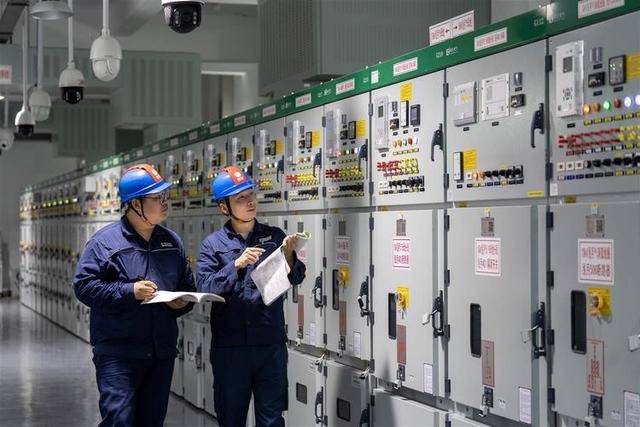
Company Overview - Suzhou Green Power Co., Ltd. has been established with a registered capital of 9.8 million RMB [1] - The legal representative of the company is Li Zhu [1] - The company is located in Suzhou, Jiangsu Province, specifically in the Xiangcheng Economic and Technological Development Zone [1] Shareholding Structure - China Railway 20th Bureau Group Co., Ltd. holds a 60% stake in the company [1] - Shenzhen Lidinpeng Intelligent Technology Co., Ltd. holds a 40% stake [1] Business Scope - The company’s business includes battery manufacturing, sales, and production of battery accessories [1] - It also engages in the research and development of electronic materials and power electronic components [1] - Additional services include charging pile sales, energy storage technology services, and sales of new energy vehicle accessories [1] - The company is involved in various technical services such as consulting, development, and technology transfer [1]

启铭鑫发(宁波)储能有限公司成立,注册资本600万人民币
Sou Hu Cai Jing· 2026-01-17 06:48
天眼查显示,近日,启铭鑫发(宁波)储能有限公司成立,法定代表人为田蕾,注册资本600万人民 币,由北京中启绿力新能源有限公司全资持股。 序号股东名称持股比例1北京中启绿力新能源有限公司100% 经营范围含储能技术服务;新兴能源技术研发;技术服务、技术开发、技术咨询、技术交流、技术转 让、技术推广;风力发电技术服务;太阳能发电技术服务;智能农业管理;碳减排、碳转化、碳捕捉、 碳封存技术研发;节能管理服务;数据处理和存储支持服务;软件销售;电子产品销售;网络设备销售 (除依法须经批准的项目外,凭营业执照依法自主开展经营活动)。 企业名称启铭鑫发(宁波)储能有限公司法定代表人田蕾注册资本600万人民币国标行业科学研究和技 术服务业>科技推广和应用服务业>技术推广服务地址浙江省宁波市北仑区大榭街道滨海南路111号南楼 A9003-8室(承诺申报)企业类型有限责任公司(自然人投资或控股的法人独资)营业期限2026-1-16至 无固定期限登记机关宁波市北仑区市场监督管理局 来源:市场资讯 ...
不缺电的中国,为何仍在狂建电厂?美媒:中国在造电力能源长城!
Sou Hu Cai Jing· 2026-01-16 08:51
Core Insights - China's electricity generation has reached the top globally, expected to exceed 10 trillion kilowatt-hours in 2024, more than double that of the United States, with an energy self-sufficiency rate above 80% [2] - Despite sufficient electricity supply, new power plant projects continue to be approved due to rapidly increasing electricity demand driven by emerging industries [4][6] - The construction of new coal power plants is primarily for backup and grid stability, while renewable energy sources are being expanded significantly [8][9] Group 1: Electricity Generation and Demand - In 2024, China's total installed power capacity is projected to be approximately 3.32 billion kilowatts, with a total generation of 10 trillion kilowatt-hours and electricity consumption around 9.9 trillion kilowatt-hours, indicating a near balance [4] - The demand for electricity is expected to grow significantly, with predictions that total electricity consumption will exceed 14 trillion kilowatt-hours by 2030, averaging a growth rate of 6.5% per year [4][6] Group 2: Renewable Energy Expansion - China has been a leader in renewable energy, with wind and solar power installations accounting for over 60% of global new capacity in recent years [11][24] - Major projects like the "Solar Wall" in the Kubuqi Desert are transforming landscapes and contributing significantly to clean energy generation, with plans to expand to 400 kilometers in length [13][24] Group 3: Energy Security and Strategic Planning - China's reliance on imported energy, particularly from the Middle East, necessitates a focus on self-sufficiency through the expansion of renewable energy sources [6][8] - The construction of new coal power plants is seen as a strategic reserve to ensure energy security amid global competition and climate change [20][24] Group 4: Technological Innovations in Energy Storage - Advances in energy storage technologies, such as pumped storage and battery storage, are crucial for managing the variability of renewable energy sources [15][16] - Virtual power plants are emerging as a solution to optimize energy distribution and enhance grid stability without the need for new power plants [16] Group 5: Environmental Considerations - While coal power capacity is increasing, the focus is on high-efficiency, low-emission plants to minimize environmental impact [21][23] - The integration of agricultural practices under solar panels in projects like the Solar Wall demonstrates a commitment to sustainable development [21]
全球目光聚焦武汉2026储能技术展览会三大不可错过的参会理由
Sou Hu Cai Jing· 2026-01-16 05:25
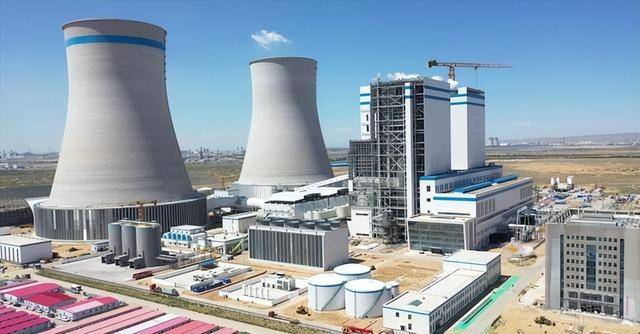
来源:会展信息大全 在新能源转型浪潮席卷全球的当下,一场关于能源未来的盛会即将拉开帷幕。2026年9月22-24日,武汉国际博览中心将迎来全球瞩目的储能技 术展览会。这不仅是一场技术成果的集中展示,更是一次行业趋势的深度预判。本文将从行业变革、技术前瞻与产业机遇三个维度,带您解读 这场能源革命的深远意义。 【行业变革:能源转型催生万亿级市场】 当前全球能源结构正经历前所未有的重构。根据国际能源署报告,到2030年全球储能市场规模预计 突破5000亿美元。这种指数级增长背后,是传统能源体系面临的技术瓶颈与政策压力。以中国为例,"双碳"目标推动下,新能源装机容量持续 攀升,但配套储能系统却长期存在供需失衡。这种矛盾正在催生新的产业机遇。 武汉作为中部崛起的重要引擎,近年来在新能源领域布局尤为突出。2022年该市新增光伏装机容量达18.7GW,储能项目投资同比增长42%。 这种发展态势使得武汉成为储能技术展示的理想舞台。展会期间,参展商将围绕电化学储能、机械储能、热能存储等核心技术展开深度探讨, 展现行业最新发展趋势。 【技术前瞻:三大创新方向引领未来】 本次展会特别设置"前沿技术展区",重点呈现三个具有突破性的技 ...