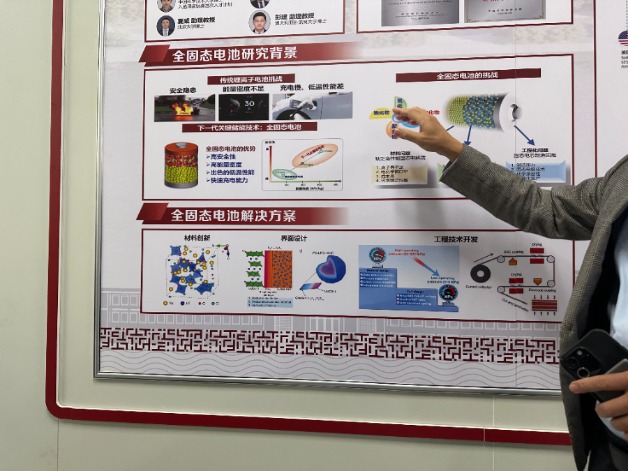
全固态电池

Search documents
8点1氪:机长、副机长被传驾驶舱内打架,长荣航空回应;小米正式回应米黑KOL合作事件;霸王茶姬通报“徒手搅拌奶茶”事件
36氪· 2026-01-07 00:33
Group 1 - EVA Air has suspended the flight duties of the involved captain following an incident where the captain and co-pilot reportedly had a physical altercation in the cockpit during taxiing at Los Angeles Airport. The airline stated that the aircraft's taxi speed was within operational norms and regulations [2] - Xiaomi has responded to a controversy involving a collaboration with a KOL, stating that the engagement has been terminated and that the responsible personnel will face dismissal. The company emphasized that the incident violated its principles and harmed its relationship with fans [2] Group 2 - xAI announced the completion of its Series E funding round, raising $20 billion, exceeding its initial target of $15 billion. Notable investors include Valor Equity Partners and Qatar Investment Authority, with strategic support from Nvidia and Cisco [4] - Tesla has introduced a 5-year interest-free car purchase plan for its Model 3 and Model Y vehicles, with down payments starting at 79,900 yuan and monthly payments as low as 1,918 yuan [7] Group 3 - The Chinese tax law will exclude profit-making medical beauty institutions from VAT exemptions starting January 1, 2026, marking a significant change in the tax landscape for the industry [6] - NIO's CEO Li Bin highlighted that the biggest cost pressure in the automotive industry for 2026 will be the rising prices of memory chips, as the automotive sector competes with the AI industry for resources [9] Group 4 - The first commercial rocket company in China is set to change ownership, with a 29.5904% stake being offered for approximately 3.299 billion yuan, valuing the company at around 11.2 billion yuan [14] - CATL and NIO have signed a five-year strategic cooperation agreement focusing on battery technology and battery swap systems, aiming to enhance collaboration in the electric vehicle market [14]







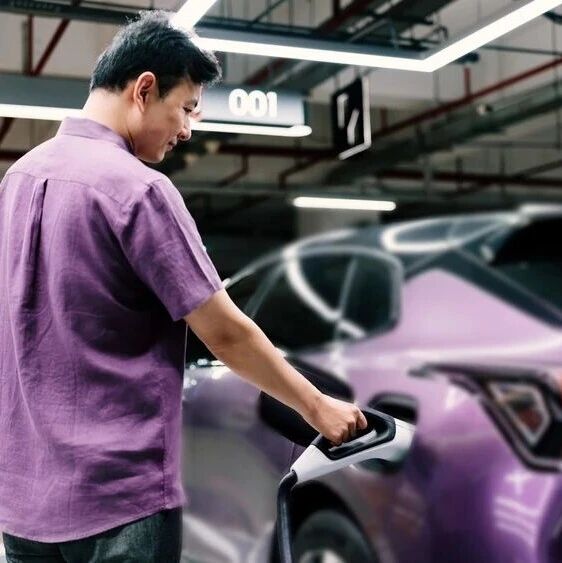
芬兰公司发布“全球首款完美全固态电池”,引争议
Huan Qiu Shi Bao· 2026-01-06 22:49
Core Viewpoint - Donut Lab has introduced the world's first mass-producible all-solid-state battery, which significantly outperforms existing lithium-ion batteries, with a new electric motorcycle set to launch in Q1 2026 [1][2]. Group 1: Battery Performance and Features - The all-solid-state battery boasts an energy density of 400 Wh/kg, can be fully charged in 5 minutes, and maintains over 99% capacity after 100,000 charge cycles [1][2]. - It operates effectively in extreme temperatures, from -30°C to over 100°C, and eliminates risks associated with flammable liquid electrolytes, such as thermal runaway and dendrite formation [1][2]. - The modular architecture of the battery allows for customization in size, voltage, and shape, facilitating integration into various vehicle designs [1]. Group 2: Market Position and Challenges - Donut Lab claims its technology is ready for mass production, contrasting with other solid-state battery technologies that remain in the experimental phase [2]. - The electric motorcycle equipped with the solid-state battery is expected to have a range of 350 kilometers, with a 10-minute charge enabling a 300-kilometer drive, and an optional range-extending battery pack increasing the range to 595 kilometers [2]. - Despite the impressive specifications, skepticism exists regarding the battery's performance claims, particularly due to a lack of detailed information on the materials used [2][3]. Group 3: Comparison with Traditional Batteries - Traditional lithium-ion batteries have an energy density of approximately 200-300 Wh/kg and can undergo 1,000-2,000 charge cycles, typically requiring about 30 minutes to charge from 10% to 80% [3]. - Solid-state batteries replace liquid electrolytes with solid materials, addressing range anxiety and enhancing performance, safety, and lifespan in extreme conditions [3]. - The transition to mass production of solid-state batteries faces significant challenges, including the need for complex environmental control systems during manufacturing [3].
能用1000年的全固态电池,真技术突破还是又一个营销噱头?|有点逸思
Di Yi Cai Jing· 2026-01-06 07:58
Core Viewpoint - Donut Lab, a Finnish startup, claims to have developed the world's first mass-producible all-solid-state battery, which will be used in Verge Motorcycles' TS Pro and Ultra electric motorcycles [1][2] Group 1: Product Features - The all-solid-state battery boasts an energy density of 400Wh/kg, can be fully charged in five minutes, has a cycle life of 100,000 times, and is cheaper than lithium-ion batteries [2][3] - The battery maintains over 99% capacity in extreme conditions, such as -30°C and above 100°C, demonstrating high safety standards [2] - Compared to existing battery technologies, Donut Lab's battery claims a revolutionary cycle life that is 33 times greater than the fifth-generation lithium iron phosphate batteries [3][4] Group 2: Market Position and Competition - Donut Lab aims to deliver the battery with the motorcycles in Q1 of this year, significantly ahead of competitors like Toyota, which has delayed its solid-state battery production timeline to 2027-2028 [4] - The cost of the solid-state battery is stated to be lower than that of lithium-ion batteries, although the current production costs of solid-state batteries are generally higher [4][5] Group 3: Industry Implications - If Donut Lab's claims are validated, it could represent a significant breakthrough in the battery industry, addressing the "impossible triangle" of performance, cost, and safety [2][3] - The skepticism surrounding the feasibility of such advanced battery specifications raises questions about whether this is a genuine technological breakthrough or merely a marketing gimmick [5]
Donut Lab发布全球首款可量产全固态电池
Zheng Quan Shi Bao Wang· 2026-01-06 01:08
(文章来源:证券时报网) 1月5日,Donut Lab在CES展上推出了全球首款可立即投入OEM车辆量产的全固态电池,这一里程碑式 的成果有望从根本上重塑电动出行格局。与众多仍停留在实验室或遥遥无期的路线图上的固态电池概念 不同,Donut Lab声称其已准备好投入实际应用,并将于2026年第一季度开始为Verge Motorcycles的摩托 车型提供动力。Verge方面称,其升级款TS Pro两轮车型将于今年第一季度正式交付用户,届时将成为 全球首款量产的全固态电池驱动电动车。 ...
聚焦智能化 推动差异化 各地推进“十五五”汽车产业新跃迁
Xin Hua Wang· 2025-12-26 02:16
Core Insights - The article discusses the evolving landscape of China's automotive industry during the "15th Five-Year Plan" period, emphasizing the shift towards smart and connected vehicles, as well as differentiated competition among regions [1][3][4]. Group 1: Regional Strategies - Various regions are focusing on their unique strengths to enhance competitiveness, with Zhejiang aiming to build a leading core industry cluster in smart driving, while Chongqing targets becoming a global hub for smart connected new energy vehicles [1][2]. - Inner Mongolia plans to accelerate the application of new energy heavy trucks and autonomous electric mining trucks, while Jiangxi is concentrating on solid-state batteries and smart infrastructure [3]. Group 2: Industry Goals and Trends - The core objective for China's automotive industry during the "15th Five-Year Plan" is to transition from a "big automotive country" to a "strong automotive country," with projections indicating that the number of vehicles in China could reach 420 million to 450 million by 2030 [3][4]. - Key technological breakthroughs are expected in areas such as solid-state batteries, AI models, and distributed drive systems, which will provide significant development opportunities for local industries [3]. Group 3: Policy and Market Dynamics - The shift in automotive industry planning reflects a broader trend of moving from scale expansion to quality enhancement, driven by policy guidance and local practices [4]. - The focus is shifting from universal subsidies to strategic guidance, with an emphasis on technological innovation and market activation policies to support the industry's transformation [4].
向新赛道“突围”,在产业链“会师”
Xin Lang Cai Jing· 2025-12-23 22:12
Core Insights - Jiangsu province achieved a historic best performance in the 14th China Innovation and Entrepreneurship Competition, with 16 companies winning awards, accounting for 35.6% of the national total, and 5 out of 10 finalists being from Jiangsu [1][2][3] Group 1: Award-Winning Companies - Suzhou Yilong Micro Semiconductor Technology Co., Ltd. won the gold medal in the growth enterprise category, focusing on the development of photonic chips for optical communication, with a new chip that offers 2-4 times the speed of current mainstream chips [1] - Suzhou Yuanxiang Micro Technology Co., Ltd. developed a surface dynamic electron microscope for atomic-level defect detection in semiconductor manufacturing, utilizing self-developed technology for non-destructive testing [2] - Suzhou Pairui Biotechnology Co., Ltd. is developing innovative RNA-modifying drugs for cancer treatment, currently conducting Phase II clinical trials in 11 hospitals [2] - Liyang Zhongke Guneng New Energy Technology Co., Ltd. focuses on the development of sulfide solid electrolyte materials for all-solid-state batteries, achieving a 90% reduction in material degradation rate [2][3] Group 2: Technological Innovations - Tianrui Technology (Nantong) Co., Ltd. developed the world's only industrialized non-iridium proton membrane electrolysis catalyst, reducing costs to one-tenth of traditional catalysts [3] - The 16 award-winning companies from Jiangsu collectively hold 302 patents, showcasing their innovative capabilities and contributions to industry development [3] Group 3: Entrepreneurial Ecosystem - The average age of leaders from the 1064 companies that reached the national finals is 41, with a significant number holding advanced degrees and international experience [4] - Companies like Guokewachuang and Yuanxiang Micro have rapidly transitioned from laboratory prototypes to industrial-grade products, demonstrating the importance of combining scientific and entrepreneurial expertise [5][6] - The Jiangsu province has a robust support system for startups, with initiatives that have facilitated over 900 billion yuan in financing and helped nearly 15% of award-winning companies to go public [6] Group 4: Future Development - Companies are optimistic about future growth, with plans for expansion and increased production capabilities, as seen in the recent facility expansions by Suzhou Yilong Micro [7] - The collaborative innovation ecosystem in Jiangsu is seen as a strong support for continuous development and leadership in technology [7]
“固态电池”上市容易,上车可就难多了
虎嗅APP· 2025-12-21 10:08
Core Viewpoint - The article discusses the upcoming IPO of Weilan New Energy, which aims to become the first company to launch solid-state batteries in the A-share market, highlighting the excitement and potential returns in the investment community [4][5]. Group 1: Company Background - Weilan New Energy is backed by prominent investors including Huawei, Xiaomi, and NIO, and is founded by Chen Liquan, known as the "father of lithium batteries" in China [7][6]. - The company's flagship product is the in-situ solidified semi-solid battery, which is positioned as a leading product in the semi-solid battery market [8][5]. Group 2: Product Technology - The in-situ solidification technology allows the battery to maintain safety while enhancing conductivity, combining the strengths of solid and liquid states [14][13]. - The semi-solid battery has demonstrated a high energy density of 360 Wh/kg, with real-world tests showing a range of over 1000 kilometers on a single charge [18][16]. Group 3: Market Challenges - Despite its advantages, the semi-solid battery is expensive, with costs potentially reaching around 300,000 yuan for a 150 kWh battery pack, which is comparable to the price of a NIO ET5 vehicle [18][19]. - Production consistency and yield rates pose significant challenges, as achieving uniformity in the in-situ solidification process is complex and costly [19][20]. Group 4: Industry Context - The article outlines the competitive landscape for solid-state batteries, noting that while Weilan aims for mass production by 2027, the overall industry is still facing significant hurdles in achieving commercial viability [32][34]. - Different countries are pursuing various technological paths for solid-state batteries, with Japan focusing on sulfide electrolytes, the U.S. on polymer/mixed routes, and China adopting an oxide/composite approach [29][31][32].
马斯克预测某车企:没救了,非“死”不可;“AI才女”罗福莉完成小米首秀;国家医保局发文回应生娃不花钱;玛莎拉蒂APP遭下架...
Sou Hu Cai Jing· 2025-12-21 00:16
Group 1 - The National Healthcare Security Administration aims to implement a policy where childbirth costs are minimized, targeting a "no out-of-pocket" expense for eligible individuals by 2025 [4] - By the end of 2025, all 31 provinces and regions in China will include eligible assisted reproductive projects in health insurance, with seven provinces achieving full coverage of hospitalization costs for childbirth [4] - The administration emphasizes the inclusion of flexible employment workers and migrant workers in maternity insurance coverage [4] Group 2 - The State Administration for Market Regulation warns that platforms requiring merchants to offer "lowest prices online" may constitute monopolistic behavior [5] - New guidelines on antitrust compliance for internet platforms have been issued, highlighting eight new types of monopolistic risks [5] Group 3 - Elon Musk predicts the decline of traditional automotive companies, specifically mentioning Ford's contraction in electric vehicle strategy as a sign of the industry's demise [6] - Musk argues that traditional internal combustion engine vehicles are outdated and that the industry is resistant to necessary changes [6] Group 4 - Xiaomi's new AI model, MiMo-V2-Flash, was launched by AI talent Luo Fuli, showcasing significant performance improvements over previous models [6][7] - The model ranks in the top two of global open-source models and offers low-cost, high-speed capabilities [6][7] Group 5 - Maserati's app was removed from the market due to violations of user rights, as reported by the Shanghai Communications Administration [7] - The app provided features for vehicle safety and remote control but faced scrutiny leading to its removal [7] Group 6 - Sunac China announced a plan to fully resolve $9.6 billion in debt through a restructuring process expected to be completed by December 2025 [10] - The company will issue mandatory convertible bonds to creditors as part of the restructuring [10] Group 7 - The launch of Muxi shares saw a significant increase of 568.83% on its first day, with a peak price of 895 yuan per share, leading to a market capitalization of 3320.43 billion yuan [16] - The company focuses on high-performance GPU development and has applications in multiple AI computing clusters [16][17] Group 8 - Databricks completed over $4 billion in financing, achieving a valuation of $134 billion, with participation from major investment firms [18] - The funding round was led by Insight Partners and included contributions from Fidelity and JPMorgan Asset Management [18]
固态电池独角兽启动创业板IPO!小米、华为都投了!
Zheng Quan Shi Bao Wang· 2025-12-14 12:47
Core Viewpoint - Weilan New Energy, a solid-state battery unicorn, is preparing to go public on the ChiNext board with a valuation of 18.5 billion yuan, as disclosed by the China Securities Regulatory Commission [1][2]. Company Overview - Weilan New Energy was established in 2016 and is incubated by the Chinese Academy of Sciences, focusing on solid-state lithium-ion batteries. The company has a strong R&D, production, and sales framework and is recognized as a national-level "specialized and innovative" enterprise and a unicorn [3]. - The company is led by Yu Huigen, who controls 29.25% of the shares through direct and indirect holdings [1]. Product Offerings - Weilan's products are primarily used in three sectors: new energy vehicles, energy storage, and low-altitude economic power. Key products include: - 360Wh/kg high-energy density power cells, capable of over 1000 km range, with mass production for NIO by the end of 2023 [3]. - 280Ah ultra-safe energy storage cells, already in mass production for various energy storage projects [3]. - 320Wh/kg high-energy density low-altitude economic power cells, supplied to multiple domestic and international clients [3]. Recent Developments - At the recent Guangzhou International Auto Show, Weilan and BASF jointly launched a new generation of solid-state battery packs, marking a significant step in the industrialization of solid-state batteries in China [4]. - The collaboration with BASF aims to enhance safety and efficiency through innovative material applications, addressing key concerns in traditional battery technology [4][5]. Financing and Strategic Partnerships - Weilan recently completed a D+ round of financing, attracting strategic investments from various funds, including the Beijing Green Energy and Low Carbon Industry Investment Fund, which reflects strong market confidence in the solid-state battery sector [5][6]. - New shareholders include major players like Guangdong Energy Group, which has initiated comprehensive strategic cooperation in the energy storage field [6]. - Since its inception, Weilan has completed nine rounds of financing, with notable investors including Xiaomi, NIO, Geely, and Huawei [6].


没有一家“明星”车企 宁波何以产出浙江四成新能源车?
2 1 Shi Ji Jing Ji Bao Dao· 2025-12-09 09:44
Core Insights - Ningbo is undergoing a significant industrial transformation in the manufacturing landscape of the Yangtze River Delta, particularly in the automotive sector, with a notable focus on electric vehicles (EVs) [1] - The city has achieved a remarkable increase in automotive production, with a total output of 645,000 vehicles in the first ten months of 2025, including 286,000 EVs, marking a 24% year-on-year growth in automotive manufacturing output [1][2] - The unique industrial evolution in Ningbo is characterized by a "tropical rainforest" model, fostering a collaborative ecosystem rather than a singular focus on star enterprises [1] Vehicle Manufacturing: Dual-Core Drive and Local Roots - Ningbo's automotive layout features a "dual-core drive" model, with Geely representing deep localization and efficient decision-making, while SAIC Volkswagen embodies global manufacturing standards and is undergoing electrification [2] - The SAIC Volkswagen factory in Ningbo is a "star factory" with a production capacity of 300,000 vehicles per year, contributing one-third of the city's EV production [2] - Geely has established a comprehensive ecosystem in Ningbo, including four global headquarters and five manufacturing bases, enabling rapid iteration from design to production [3] Supply Chain: Champion Clusters and Adaptive Evolution - Ningbo hosts over 5,000 automotive parts companies, including 22 national champion enterprises and 97 specialized "little giants," showcasing a robust supply chain [4] - The local supply chain's specialization and geographical clustering have resulted in a rapid response time of 2.3 hours between vehicle manufacturers and core suppliers, significantly lower than the industry average [5] - Companies like Junsheng and Shenglong have successfully adapted to the EV market, transitioning from traditional components to integrated system suppliers [5] Future-Oriented Research and Development - Ningbo is investing in future technologies, such as solid-state batteries, with research led by a team at Dongfang University, aiming to overcome current battery limitations [6][9] - The development of a new superionic conductor has achieved a record ionic conductivity, opening new pathways for solid-state battery applications [8][9] - The city is also advancing in intelligent networking, with automated operations at the Meishan Port and the deployment of L4-level autonomous delivery vehicles [10]