
全国统一电力市场体系

Search documents
国办印发意见安排部署重点任务 2035年全面建成全国统一电力市场体系
Jing Ji Ri Bao· 2026-02-12 23:17
比如,在优化全国统一电力市场体系实现路径上,《意见》首次提出,各层次市场要从"各自报价、各 自交易"逐步转向"统一报价、联合交易",探索相邻省内市场自愿联合或融合的可行方式,并对现货、 中长期、辅助服务、容量等不同品类市场之间的衔接机制提出了具体要求。 国务院办公厅近日印发《关于完善全国统一电力市场体系的实施意见》,围绕新形势新情况新要求,对 未来5年至10年完善全国统一电力市场体系的重点任务进行了安排部署。 经过多年努力,我国电力生产组织方式由计划全面转向市场,全国统一电力市场体系的"四梁八柱"已基 本建立,在层次架构、功能品类、价格机制、参与主体、治理体系、基础规则等方面基本成型,多层次 协同的市场架构基本形成。截至2025年底,我国市场化交易电量达6.6万亿千瓦时,较2015年提升约7 倍,占全社会用电量比重由不足15%上升至64%,除保障性和自发自用电量外全部通过市场实现。 "全国统一电力市场体系是全国统一大市场建设的重要标志,也是深化电力体制改革的重要成果。"国家 发展改革委有关负责人表示,近年来,党中央、国务院对纵深推进全国统一大市场建设、加快构建新型 电力系统等提出新的要求,电力生产方式、消费模 ...
全国统一电力市场体系建设 为相关产业带来发展机遇
Xin Lang Cai Jing· 2026-02-12 22:59
Core Viewpoint - The State Council has issued the "Implementation Opinions on Improving the National Unified Electricity Market System," aiming to establish a basic national unified electricity market system by 2030 and fully complete it by 2035 [1][5]. Group 1: Key Progress and Goals - Significant progress has been made in building the national unified electricity market system, with a goal to achieve a preliminary establishment by 2025 [1][5]. - The construction of the national unified electricity market system has been ongoing for several years, focusing on addressing key bottlenecks such as barriers between regional power grids and inter-provincial obstacles [2][6]. Group 2: Barriers and Solutions - Major barriers to the establishment of the unified electricity market include institutional obstacles, technical bottlenecks, and differences in market rules [2][6]. - Reforms are needed to shift from local protectionism to a unified national approach, accelerate the development of key technologies like smart grids and ultra-high voltage transmission, and unify market rules to ensure fair competition [2][6]. Group 3: Market Dynamics and Renewable Energy - The reform emphasizes the participation of renewable energy in market transactions, with a focus on integrating wind and solar power into the electricity market by 2025 [3][7]. - The introduction of green electricity and green certificate mechanisms will provide pathways for renewable energy to compete fairly in the market, enhancing the efficiency of energy consumption and system operation [3][7]. Group 4: Industry Impact - The establishment of a national unified electricity market will benefit various sectors, including power generation companies, grid companies, and the energy storage industry [4][8]. - Power generation companies will gain broader market access and improved operational efficiency, while grid companies will find new opportunities in network construction and maintenance [4][8]. - The energy storage industry will become increasingly important in addressing the intermittency of renewable energy, entering a phase of rapid development [4][8].
全国统一电力市场建设提速(锐财经)
Ren Min Ri Bao Hai Wai Ban· 2026-02-12 22:50
2月12日,在江苏省兴化市海南镇地段,电力工作人员对盐宜高铁通道内500千伏线路进行升高改造 作业。 汤德宏摄(人民视觉) 近日,国务院办公厅印发《关于完善全国统一电力市场体系的实施意见》(以下简称《意见》), 提出到2030年,基本建成全国统一电力市场体系,市场化交易电量占全社会用电量的70%左右;到2035 年,全面建成全国统一电力市场体系。 业内人士认为,《意见》提出全国统一电力市场顶层设计原则和目标愿景,为新形势下对照纵深推 进全国统一大市场建设要求,深化全国统一电力市场体系建设明确了方向和路径。 "四梁八柱"基本建立 建设全国统一电力市场体系,既是构建新型电力系统、促进电力资源优化配置、保障能源安全稳定 供给的关键支撑,也是纵深推进全国统一大市场建设的必然要求、推动经济稳步增长的基本要素保障。 2015年,党中央、国务院对电力市场化改革进行了系统部署。2021年,中央全面深化改革委员会审 议通过《关于加快建设全国统一电力市场体系的指导意见》。截至2025年底,我国市场化交易电量达 6.6万亿千瓦时,较2015年提升约7倍,占全社会用电量比重由不足15%上升至64%,除保障性和自发自 用电量外全部通过 ...

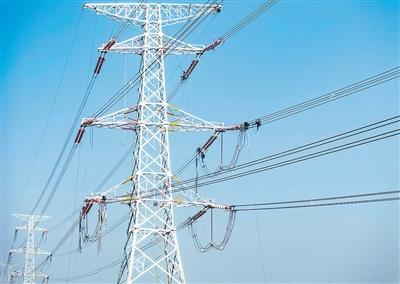
2035年全面建成全国统一电力市场体系
Jing Ji Ri Bao· 2026-02-12 22:04
Core Viewpoint - The State Council has issued implementation opinions to improve the national unified electricity market system, outlining key tasks for the next 5 to 10 years to adapt to new circumstances and requirements [1] Group 1: Market Development Goals - By the end of 2025, the market-based electricity trading volume in China is expected to reach 6.6 trillion kilowatt-hours, a sevenfold increase from 2015, accounting for 64% of total electricity consumption [1] - By 2030, the goal is to have all types of power sources and non-protected users directly participate in the electricity market, with market-based trading volume making up approximately 70% of total electricity consumption [2] - By 2035, the aim is to fully establish the national unified electricity market system, with further maturation of market functions and a steady increase in the proportion of market-based trading volume [2] Group 2: Key Tasks and Innovations - The implementation opinions outline 19 key tasks across five areas: optimizing national electricity resource allocation, improving market functions, promoting equal participation of various operators, establishing a unified market system, and enhancing policy coordination [2] - The opinions propose a shift from "individual pricing and trading" to "unified pricing and joint trading" among different market levels, exploring voluntary integration of adjacent provincial markets [3] - Specific measures are introduced to facilitate the participation of renewable energy in the market, including differentiated market entry paths for various renewable projects and international benchmarks for green electricity trading [3] Group 3: Participation of Private Enterprises - The opinions encourage the participation of private enterprises in the electricity market, particularly in new sectors like energy storage and virtual power plants, by promoting flexible market trading measures [3] - It is emphasized that all electricity users, except for protected users, should gradually participate directly in the electricity market [3] Group 4: Implementation and Coordination - The National Development and Reform Commission will coordinate the implementation of the opinions, enhance policy support, and address any bottlenecks to ensure effective execution of the measures [4] - There is a focus on mobilizing various operators and encouraging societal participation in the construction of the electricity market, adapting to the new electricity system and market-oriented direction [4]
完善全国统一电力市场体系 推动电力资源优化配置
Zhong Guo Jing Ying Bao· 2026-02-12 15:34
Core Viewpoint - The State Council issued the "Implementation Opinions on Improving the National Unified Electricity Market System," aiming to deepen electricity system reform and enhance market and pricing mechanisms to achieve market-based allocation of electricity resources nationwide [1][2]. Group 1: Objectives and Tasks - After ten years of reform, significant progress has been made in China's electricity market construction, with market-based electricity production and a multi-level market structure established [2]. - By the end of 2025, market-based electricity transactions are expected to reach 6.6 trillion kilowatt-hours, accounting for 64% of total electricity consumption, with cross-provincial transactions increasing to approximately 1.6 trillion kilowatt-hours [2]. - The policy aims to address new challenges posed by changes in electricity production methods, consumption patterns, and the rising share of renewable energy [2][3]. Group 2: Future Goals - By 2030, the goal is to establish a basic national unified electricity market system, with market-based transactions accounting for about 70% of total electricity consumption [3]. - By 2035, the market system is expected to be fully established, with a mature market function and a steady increase in the proportion of market-based transactions [3]. Group 3: Implementation Pathways - The Opinions outline a transition from "individual pricing and trading" to "unified pricing and joint trading" across different market levels [4]. - It emphasizes the need to improve cross-provincial trading systems and enhance the integration of the State Grid and Southern Grid for smoother electricity transactions [4][6]. - The establishment of a capacity market is proposed to ensure the profitability of adjustable power sources and enhance system supply capabilities [4]. Group 4: Breaking Barriers and Optimizing Allocation - The policy is seen as a significant benefit for optimizing electricity resource allocation nationwide and improving overall efficiency [6]. - It aims to dismantle regional barriers created by provincial power generation groups, fostering a fair and transparent market environment [6]. - The plan includes enhancing cross-regional electricity trading to facilitate the flow of clean energy from resource-rich western regions to energy-deficient eastern regions, addressing issues of renewable energy waste [6][7]. Group 5: Industry Response - Industry experts suggest that the new policy will require all market participants, including power generation companies and commercial users, to adapt their strategies to the new market rules [7]. - There is an expectation for the policy to overcome past reform challenges and achieve effective implementation [7].
北交所日报:震荡盘整,关注供需错配的涨价行情-20260212
Western Securities· 2026-02-12 13:29
Investment Rating - The report does not explicitly state an investment rating for the industry or specific companies [32]. Core Insights - The North Exchange A-share trading volume reached 16.95 billion yuan on February 11, a decrease of 2.38 billion yuan from the previous trading day, with the North Exchange 50 Index closing at 1525.49, down 0.44% [8][16]. - Among the 293 companies listed on the North Exchange, 73 saw an increase in stock prices, 9 remained flat, and 211 experienced declines [18]. - The top five gainers included Minshida (8.4%), Gebijia (8.0%), Lingge Technology (7.6%), Kebaier (6.9%), and Jinhua New Materials (6.5%) [18]. - The top five decliners were Kaide Quartz (-7.4%), Optoelectronics (-6.1%), Liujin Technology (-5.7%), Hengtong Light (-5.2%), and Kangle Guardian (-4.8%) [18]. Summary by Sections Market Review - On February 11, the North Exchange A-share trading volume was 16.95 billion yuan, a decrease of 2.38 billion yuan from the previous day, with the North Exchange 50 Index closing at 1525.49, down 0.44% [8][16]. - The North Exchange Specialized and New Index closed at 2552.04, up 0.08% [8]. Important News - The State Council aims to establish a unified national electricity market system by 2035, with market-based electricity transactions accounting for about 70% of total electricity consumption by 2030 [21]. - The national standard for vehicle solid-state batteries is expected to be released in July 2026 [22]. Key Company Announcements - Ximic Technology reported a revenue of 96,079,621.14 yuan for 2025, a decrease of 23.05% year-on-year, with a net profit of 4,670,419.54 yuan, down 76.74% [23]. - Lintai New Materials plans to raise up to 380 million yuan through a private placement, with funds allocated for projects related to automotive components and high-end equipment manufacturing [24].
到2030年,市场化交易电量占约70%
Mei Ri Jing Ji Xin Wen· 2026-02-12 10:49
Core Viewpoint - The State Council issued the "Implementation Opinions on Improving the National Unified Electricity Market System," setting key strategic goals for 2030 and 2035 to establish a unified electricity market in China [1][2]. Group 1: Strategic Goals - By 2030, the goal is to basically establish a national unified electricity market system, with market-based trading accounting for approximately 70% of total electricity consumption, excluding guaranteed users [1][2]. - By 2035, the aim is to fully establish the national unified electricity market system, with a steadily increasing proportion of market-based trading [1][2]. Group 2: Market Development and Achievements - Significant progress has been made in building the national unified electricity market system, with a target of achieving preliminary establishment by 2025 [1][2]. - As of the end of 2025, market-based trading volume is expected to reach 6.6 trillion kilowatt-hours, a sevenfold increase since 2015, with the market share rising from less than 15% to 64% [2]. Group 3: Market Mechanisms and Innovations - The "Implementation Opinions" propose a shift from "individual pricing and trading" to "unified pricing and joint trading" across different market levels, exploring voluntary integration of adjacent provincial markets [3]. - A capacity market will be established to support reliable power source construction, with a focus on improving capacity pricing mechanisms for coal, pumped storage, and new energy storage [4]. Group 4: New Energy and Pricing Mechanisms - The "Implementation Opinions" emphasize the establishment of a sustainable pricing settlement mechanism for new energy, encouraging long-term transactions between new energy enterprises and users [5].
电力市场化“70%”量化目标首次明确,电力板块应声上涨
Xin Jing Bao· 2026-02-12 10:19
Core Viewpoint - The establishment of a unified national electricity market is crucial for the development of a new type of power system in China, with significant progress expected by 2025 and a target for 2030 to have 70% of electricity consumption from market transactions [1][2]. Group 1: National Electricity Market Development - The State Council issued an implementation opinion on February 11, aiming to build a unified national electricity market by 2030, where all types of power sources and non-essential users will participate directly in the market [1]. - By 2030, it is projected that the market-based transaction volume will account for approximately 70% of total electricity consumption, with a further increase expected by 2035 [1]. - The National Development and Reform Commission highlighted the need for reform to address challenges posed by changes in electricity production, consumption patterns, and the rising share of renewable energy [1]. Group 2: Capacity Market and Compensation Mechanisms - The opinion proposes exploring the establishment of a capacity market to ensure the profitability of supportive resources like coal power and new energy storage, which are essential for accommodating high proportions of renewable energy [3]. - A reliable capacity compensation mechanism will be gradually established, with market-based methods to guide the orderly development of supportive power sources [3]. - The recent notification from the National Development and Reform Commission and the National Energy Administration aims to improve the capacity pricing mechanism for various power generation sources, including natural gas and new energy storage [3]. Group 3: Participation of Private Enterprises - The opinion encourages greater participation of private enterprises in the electricity market, particularly in new energy storage, virtual power plants, and smart microgrids [4]. - Measures will be introduced to facilitate the flexible participation of new entities in market transactions, promoting rational investment and healthy development [4]. - The opinion aims to enable all electricity users, except for essential users, to participate directly in the electricity market, fostering a diverse and competitive market environment [4].


电力体制改革再提速 谁将受益?
Zhong Guo Dian Li Bao· 2026-02-12 09:20
Core Viewpoint - The State Council issued the "Implementation Opinions on Improving the National Unified Electricity Market System," marking a significant step in China's electricity market reform, transitioning from "accelerating construction" to "improvement" of the market system [1][2]. Group 1: Goals and Objectives - The "Implementation Opinions" set two phased goals: to establish a basic national unified electricity market system by 2030, with market-based trading accounting for approximately 70% of total electricity consumption; and to fully establish the system by 2035, with a steadily increasing proportion of market-based trading [2]. Group 2: Market Structure and Achievements - The national unified electricity market structure has been largely established, transitioning from a planned to a market-oriented production organization over the past decade [4]. - By 2025, the market-based trading volume is expected to reach 6.6 trillion kilowatt-hours, a sevenfold increase from 2015, with the market share rising from less than 15% to 64% [5]. - Cross-provincial and cross-regional electricity trading is projected to grow from less than 0.1 trillion kilowatt-hours in 2015 to approximately 1.6 trillion kilowatt-hours by 2025, an increase of over 15 times [5]. Group 3: Market Mechanisms and Governance - A multi-level collaborative market structure has been formed, ensuring balance and supply security at the provincial level while enhancing inter-grid cooperation for broader resource circulation [5]. - A preliminary market price mechanism has been established, allowing for market-driven pricing of coal and industrial electricity within reasonable ranges [5]. - The governance framework for the electricity market has begun to take shape, with government departments responsible for overall design, regulatory bodies maintaining market order, and trading institutions providing platforms [6]. Group 4: Policy and Regulatory Framework - The "Implementation Opinions" address key systemic and mechanistic obstacles in the current electricity market, focusing on optimizing resource allocation, enhancing market functions, and promoting equal participation from various operators [10]. - The document proposes a shift from "individual pricing and trading" to "unified pricing and joint trading" across different market levels, aiming to improve transaction efficiency and flexibility [10]. Group 5: Participation and Inclusivity - The reform emphasizes increasing participation from private enterprises, particularly in new energy sectors such as storage and virtual power plants, while allowing small and medium-sized commercial users to directly engage in the electricity market [12]. - A diversified market governance system is proposed to ensure safe and regulated market operations, with independent oversight and collaborative management from various stakeholders [12].
博时市场点评2月12日:两市拉锯上涨,创业板收涨1.32%
Xin Lang Cai Jing· 2026-02-12 08:31
Group 1 - The core viewpoint of the news highlights the collaboration of multiple departments in launching the "Happy Shopping Spring Festival" initiative, with 625 billion yuan in national subsidies aimed at boosting domestic consumption during the holiday period [1][2][8] - The initiative includes a trial of prize invoices in 50 cities, with over 1 billion yuan in bonuses to stimulate spending in sectors such as home appliances, automobiles, and tourism [2][8] - The shift in macroeconomic policy from broad stimulus to targeted measures reflects a focus on enhancing consumer spending through detailed policy design [2][8] Group 2 - The U.S. labor market showed unexpected strength in January, with non-farm employment increasing by 130,000, significantly above the expected 65,000, while the unemployment rate fell to 4.3% [3][9] - Despite the strong job growth, the total employment figures for 2025 were revised down by 898,000, indicating a potential slowdown in hiring activities [3][9] - The upcoming CPI data will be crucial for validating expectations regarding interest rate cuts by the Federal Reserve [3][9] Group 3 - The implementation of a unified national electricity market system is set to be completed by 2030, with market-based transactions expected to account for approximately 70% of total electricity consumption [3][9] - The policy aims to stabilize investment expectations in coal power and new energy storage, providing a clear long-term framework for the energy sector [3][9] - Innovations in green electricity trading and differentiated entry for renewable energy directly address the compliance needs of export enterprises [3][9] Group 4 - The A-share market saw an increase, with the Shanghai Composite Index closing at 4,134.02 points, up 0.05%, and the ChiNext Index rising by 1.32% [4][10] - Among the sectors, comprehensive services, electronics, and power equipment showed notable gains, while beauty care and retail sectors experienced declines [10][11] - The market turnover reached 21,610.01 billion yuan, indicating a slight increase from the previous trading day [5][12]
