
城中村改造

Search documents
沙涌南(二期)安置房开工!广州瑶台城中村改造又迎新进展
Nan Fang Du Shi Bao· 2025-12-17 03:46
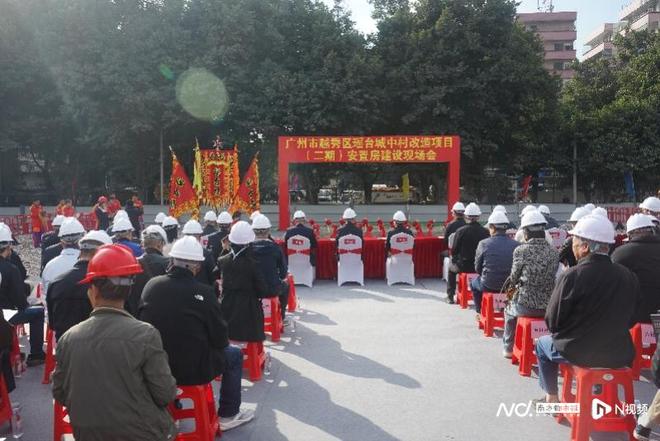
2025年12月16日,广州市越秀区瑶台城中村改造项目(二期)安置房建设现场会在沙涌南村举行,随着 首批机械设备的进场,基坑支护工程正式启动。 瑶台城中村改造项目启动以来,始终将群众安置工作摆在首要位置,提供了回迁安置、货币补偿、购买 存量商品房和房票安置四种方式,满足不同群众的安置需求。此次开工的沙涌南(二期)安置房项目建 设地块总建筑量约13.48万平方米,其中住宅建筑面积约12万平方米,预计2027年全面结构封顶,2028 年完工交付。 沙涌南(二期)安置房项目效果图。 广州市越秀区瑶台城中村改造项目(二期)安置房建设现场会。 作为典型的城中村,该片区公共配套短缺、建筑密集、环境品质不高,村民对改善居住条件、提升生活 品质的呼声强烈。2024年7月,项目改造意愿以高达96.75%的同意率获得通过,彰显了坚实的民意基 础。自2025年5月发布征收决定和补偿安置公告后,沙涌南村首月签约率即超70%,一个半月内突破 80%,三个月内成功突破90%,现在签约率已超98%,提前完成年度签约的既定目标。 改造绝非一拆了之,而是立足长远的高起点规划。瑶台城中村改造项目以"兴产优城"为目标,致力于打 造中心城区高质量发 ...

已查清全国房子数量,过剩到什么程度?数据太夸张,楼市或将大变局?
Sou Hu Cai Jing· 2025-12-13 10:24
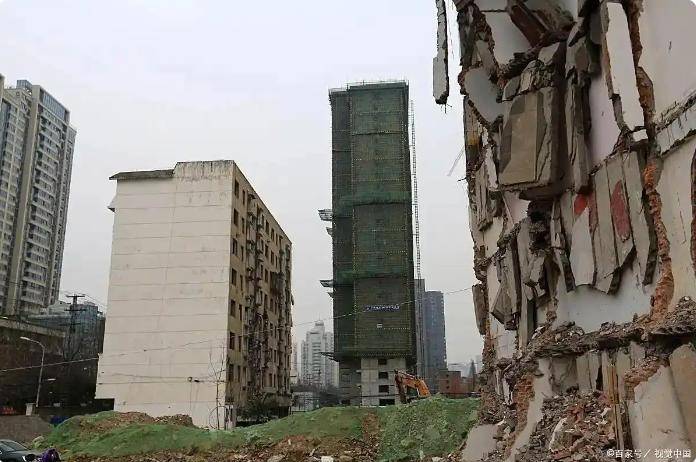
去年春天我在老家看了套房,当时中介跟我说新楼盘有几百套房子没人买,二手房市场更是挂牌无数。 那时候才真正感受到啥叫房子多了。最近终于把这事搞清楚了,数据摆在眼前,情况确实有点严重,但 转机也在慢慢出现。 上个月国家统计部门发布的数据显示,全国百城新建商品住宅库存规模达到4.47亿平方米。这个数字听 起来可能没什么感觉,但换个角度你就明白了。按照现在的销售速度,这些房子要花21.3个月才能全部 卖出去。建筑行业有个普遍认可的标准,库存周期应该在12到14个月,超过这个数字就说明房子过多 了。咱们现在的情况就是,市场上的房子堆积得越来越多,消化的速度跟不上。 房屋库存的问题从2021年开始就慢慢浮现出来了。那几年房地产开发特别活跃,全国各地都在盖房子。 有的地方一年供应出去的房屋面积特别大,但实际成交的面积却远远不够。这就造成了库存逐年增加的 局面。2024年中期的时候情况最严重,有些城市的房屋库存甚至创了历史新高。 细节上看,现在的库存分布很不均匀。一线城市像北上广深这样的地方,情况相对好一些。去年底时, 深圳的新房库存周期从最高时的26个月降到了9个月。这说明大城市虽然有库存,但居民对房子的需求 大,消化速度 ...
认购突破5000套!广州黄埔用加速的房票,告别漫长的拆迁
Nan Fang Du Shi Bao· 2025-12-11 11:30
Core Insights - The "housing ticket" system in Guangzhou's Huangpu District is facilitating rapid residential relocation, with over 5,000 tickets sold in just one month, totaling more than 8.8 billion yuan [1][12] - This initiative represents a government-led acceleration of housing replacement, offering immediate options for residents instead of the lengthy traditional resettlement process [1][3] Group 1: Housing Ticket System - The first housing ticket was issued in April 2024, marking a new model for urban village redevelopment based on legal requisition and clean land transfer [2] - The design of the Huangpu housing ticket focuses on three principles: acceptable compensation standards, support for one-time transfer, and rigid redemption, addressing villagers' needs for certainty [3] - The housing ticket system has transformed the market dynamics, allowing villagers to choose their preferred properties rather than being assigned housing [5] Group 2: Market Dynamics and Developer Response - The establishment of a "housing source supermarket" has changed the relationship between developers and villagers, enabling the latter to actively select properties based on their needs [4][5] - Developers are adapting their strategies to align with the housing ticket system, recognizing its role in driving sales in the secondary market [5] - The flexibility of the housing ticket policy allows for cross-district purchases, meeting the diverse needs of families [5] Group 3: Dual-track Approach - The dual-track model of "housing ticket replacement + original site resettlement" provides villagers with options, balancing the immediacy of housing tickets with the stability of traditional resettlement [6][10] - The government is ensuring that the construction of resettlement housing continues alongside the housing ticket program, with a focus on risk management and project oversight [6][10] Group 4: Administrative Efficiency - The Huangpu District has streamlined the approval process for housing tickets, reducing the time from three months to approximately 18 working days [8] - A precise matching mechanism has been established to balance the issuance of housing tickets with the construction of resettlement housing, ensuring efficient allocation of resources [10] Group 5: Overall Impact - The housing ticket initiative is expected to boost the real estate market by facilitating the sale of over 500,000 square meters of commercial housing and reducing the need for new resettlement housing by 1.08 million square meters [12] - This approach aims to create a more flexible and responsive urban renewal landscape, combining the efficiency of housing tickets with the commitment to traditional resettlement [12]
上海5宗旧改地块协议出让,大华、浦发、华发等房企或将接手开发
Sou Hu Cai Jing· 2025-12-08 14:50
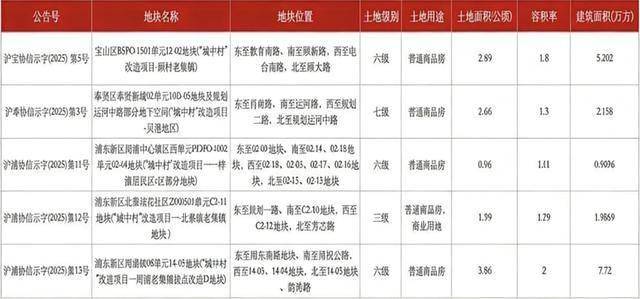
Core Insights - Shanghai's Urban Planning Bureau has announced the public transfer of five residential land parcels, all part of urban village renovation projects located in various districts including Baoshan, Fengxian, and Pudong [1][2] Group 1: Land Parcel Details - The Baoshan District BSP0-1501 land parcel covers an area of 2.89 hectares with a floor area ratio of 1.8, allowing for a planned construction area of 52,020 square meters [3] - The Fengxian District land parcel spans 1.66 hectares with a floor area ratio of 1.3, permitting a planned construction area of 21,580 square meters [4] - The Pudong District land parcel in the Zhoupu area has an area of 0.96 hectares and a floor area ratio of 1.01, allowing for a construction area of 9,700 square meters [5] - Another Pudong District parcel in the Beicai area covers 1.11 hectares with a floor area ratio of 1.79, allowing for a planned construction area of 19,870 square meters [6] - The Zhoupu Town land parcel has an area of 3.86 hectares with a floor area ratio of 2, allowing for a construction area of 77,200 square meters [7] Group 2: Development Requirements - The Baoshan District parcel requires the construction of various waste management facilities, including a garbage room and a large waste room [3] - The Fengxian District parcel mandates a minimum of 100 square meters of commercial space on the ground floor and that over 50% of the residential area must be fully furnished [4] - The Pudong District Zhoupu parcel is surrounded by residential areas, which may affect its development potential [5] - The Beicai parcel requires the developer to retain a community commercial property of 3,572.18 square meters [6] - The Zhoupu Town parcel must include public service facilities such as an elderly activity room and a cultural activity room [7]
超高层+新规!康鹭旧改猛料爆出,要卖多少钱
Sou Hu Cai Jing· 2025-12-07 06:06
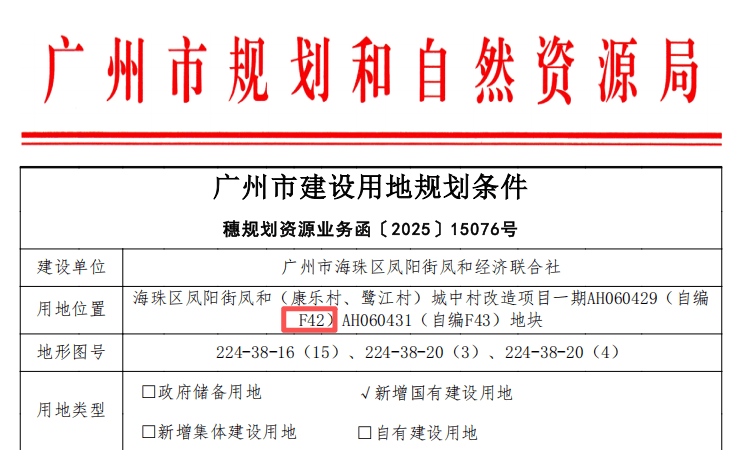
Core Viewpoint - The article discusses the recent successful acquisition of the Nantai Road land parcel by Poly at a total price of 5.275 billion, reflecting a premium of 27.27%, and highlights the ongoing urban renewal project in the Haizhu district, particularly the Kanglu project, which is gaining momentum and attracting attention due to its scale and potential impact on the local economy [1][19]. Group 1: Land Acquisition and Urban Renewal - Poly successfully acquired the Nantai Road land parcel for a total price of 5.275 billion, with a premium of 27.27% [1] - The Kanglu project is identified as the most expensive urban renewal project in Haizhu, with significant progress reported in recent months [8][19] - The F42 land parcel, part of the Kanglu project, has recently had its planning conditions published, indicating a shift towards high-rise developments [2][10] Group 2: Project Details and Expectations - The F42 land parcel is expected to feature high-rise buildings with a height of 135 meters and an estimated 40-43 floors, indicating a substantial development scale [4][21] - Initial estimates suggest that the F42 site could yield approximately 1,700-1,800 residential units, making it a significant community within the Haizhu market [5][21] - The project is anticipated to include a mix of residential units, with minimum sizes projected around 100 square meters, and potentially larger units [5][21] Group 3: Economic Impact and Community Response - The Kanglu project is projected to increase the value of collective property assets from approximately 7 billion to 28.8 billion, indicating a substantial economic uplift for the region [19] - The compensation scheme for residents has been revised to be more favorable, leading to a positive shift in community sentiment and accelerating project progress [19] - The overall urban renewal plan for the Kanglu area is set to unfold over four phases, covering approximately 110 hectares, with a total duration of about 10 years [21]
2026年基建融资大趋势之固收类举债模式的消亡
Sou Hu Cai Jing· 2025-12-06 07:40
Group 1 - The core viewpoint of the article highlights significant changes in infrastructure financing policies in 2023, including the cessation of management library PPP, stricter controls on urban investment bonds, and a shift towards urban renewal projects as the primary means of financing infrastructure [2][3] - The solid income debt model, which relies on government guarantees rather than project revenues, is increasingly being scrutinized, leading to a decline in the issuance of special bonds and urban investment bonds [3][5] - The article emphasizes that the profitability of projects supported by special bonds is insufficient, leading to increased local government financial burdens and a lack of derived investment growth [8][10][12] Group 2 - Special bonds are defined as government-issued bonds for public welfare projects, but their effectiveness is hampered by insufficient project revenues and increased local government financial responsibilities [5][8] - The article discusses the decline in the proportion of special bonds directly used for project investment, indicating a trend towards their generalization and multifunctionality, which undermines their original purpose [14][15] - The issues surrounding special bonds include the creation of fictitious revenues, leading to hidden debts and the misallocation of funds, which complicates regulatory oversight [15][17][19] Group 3 - The management library PPP model has been terminated due to its weak profitability and inability to meet local government funding needs, resulting in a significant decline in new projects [27][32][36] - The article notes that the original intent of PPPs to enhance efficiency has been overshadowed by the need for investment control, leading to a focus on debt management rather than revenue generation [34][36] - The cessation of the management library PPP is attributed to the exhaustion of fiscal space and the inability to generate new hidden debts, rather than solely the creation of new hidden debts [40][41] Group 4 - The article identifies urban village renovation as the only viable path for infrastructure financing, emphasizing its role in increasing GDP through the conversion of rural land into industrial or commercial use [48][50] - Urban village renovation is positioned as a means to stimulate consumption by providing housing for low-income farmers and new urban residents, thereby driving economic activity [54][56] - The article concludes that the current focus on urban village renovation aligns with government policies aimed at sustainable economic growth and efficient land use [58][59]

丰台区太平桥城中村改造安置房一期项目开工
Xin Jing Bao· 2025-12-01 06:09
丰台区太平桥城中村改造项目实施主体为丽泽控股集团和上海宝冶集团的联合体。项目建成后,不仅改 善居民居住条件,更将优化区域环境,助力丽泽金融商务区功能提升,为丰台区构建和谐宜居的城市环 境添砖加瓦。 "原来这个区域是比较低端的商业和平房区。启动项目后,我们仅用3个月就实现了从拆迁到开工。"北 京赋泽房地产开发建设有限公司副董事长毛兆亮介绍道,"预计到2028年,1400余名老街坊将告别'城中 村',原地回迁入住新家,实现期盼已久的'安居梦'。"他表示,建设方将严格把控建设质量,确保居民 早日圆梦新居。 作为丰台区首批7个超大重点城中村改造项目之一,该安置房项目坐落于西二环与西三环之间核心地 段。此次开工的安置房一期项目位于太平桥4号地与7-2号地,规划总用地面积2.8公顷,总建筑面积约 11.57万平方米(含地下),项目绿地率达30%,同时配套养老驿站、社区文体等公共服务设施,全方 位满足居民生活需求,提升居住品质。其中,4号地块位于西三环路丽泽桥北、丽泽16号商业综合体东 侧,区位优势显著。 新京报讯 据"北京丰台"微信公众号消息,11月30日,伴随着挖掘机的阵阵轰鸣,丰台区太平桥城中村 改造安置房一期项目正 ...
呈贡龙街村新地块启动征收,官渡区重点加快巫家坝开发
Sou Hu Cai Jing· 2025-11-25 05:40
Core Insights - The real estate market in Kunming experienced fluctuations in transaction volume and prices, with the average price adjusting to 12,400 yuan per square meter due to concentrated project registrations in the airport area [1] - The Guandu District has outlined key tasks for the year, including the completion of 270,000 square meters of demolition and accelerating the development of the Wujia Ba area [1][7] - Recent data from CRIC indicates a significant increase in market supply and transaction volume, with a 122% increase in supply and a 24% increase in transactions week-on-week [1][3] Market Performance - Three projects in Kunming supplied approximately 31,900 square meters to the market, with a transaction volume of about 58,200 square meters, reflecting a week-on-week increase [1] - The average transaction price was approximately 12,460 yuan per square meter, showing a slight decrease of 1% [1] - The top-selling residential project was Nanshi District's "Bantai Guanyun," achieving sales of about 72 million yuan with an average price of 19,041 yuan per square meter [3] Land Supply and Development - Eleven plots of land were supplied in Kunming's main urban area, with significant attention on three residential plots in Xishan District [1][5] - The ongoing urban renovation project in Chenggong Longjie Village involves a total investment of approximately 3.015 billion yuan, targeting the construction of educational facilities [5][10] Policy and Economic Development - The Guandu District reported a GDP of 88.151 billion yuan in the first half of the year, marking a year-on-year growth of 5.1%, the highest among all districts in the province [7] - The district plans to continue expanding investments and focus on major projects, including the Wujia Ba area and various educational initiatives [7][10] - A hearing will be held regarding the management of residential maintenance funds, aiming to address long-standing issues in fund usage and supervision [11][12]

广州市委召开省级老同志座谈会
Guang Zhou Ri Bao· 2025-11-21 01:51
Core Points - The meeting held by the Guangzhou Municipal Committee focused on soliciting opinions for the "14th Five-Year Plan" development, emphasizing the importance of implementing Xi Jinping's important speeches and directives [2][3] - The discussions included building a modern industrial system, promoting the Guangdong-Hong Kong-Macao Greater Bay Area, and enhancing urban renewal efforts [2][3] Group 1 - The meeting was chaired by the Municipal Party Secretary, Guo Yonghang, with the participation of various senior officials who provided insights on the city's development strategies [2][3] - Key areas of focus included deepening reforms in critical sectors, advancing urban village renovations, and enhancing smart city initiatives [2][3] Group 2 - Guo Yonghang expressed gratitude to senior officials for their contributions to Guangzhou's development and highlighted the significance of the "14th Five-Year Plan" as a critical period for the city [3] - The plan aims to achieve high-quality development through comprehensive reforms, enhancing the city's comprehensive strength and urban functions [3]
上海:推动城中村改造提速、保障性住房扩容提质
Zheng Quan Shi Bao Wang· 2025-11-18 11:57
Core Points - The article emphasizes the importance of enhancing urban living quality and improving people's well-being in Shanghai [1] - It highlights the need for prioritizing livability and accelerating the construction of safe, comfortable, green, and smart housing [1] - The article discusses the acceleration of urban village renovations and the expansion and quality improvement of affordable housing [1] - It mentions the comprehensive renovation of old housing and the promotion of age-friendly modifications [1] - The article calls for the decentralization of public service resources to grassroots levels and the promotion of complete community development [1] - It stresses the integration of elderly care, childcare, and medical facilities within a 15-minute living circle [1] - The article also focuses on the efficient development of service industries such as housekeeping and elderly care, addressing property management challenges [1]