
外汇储备

Search documents
连续15个月增持!金价波动不改央行增持节奏
Di Yi Cai Jing· 2026-02-08 09:37
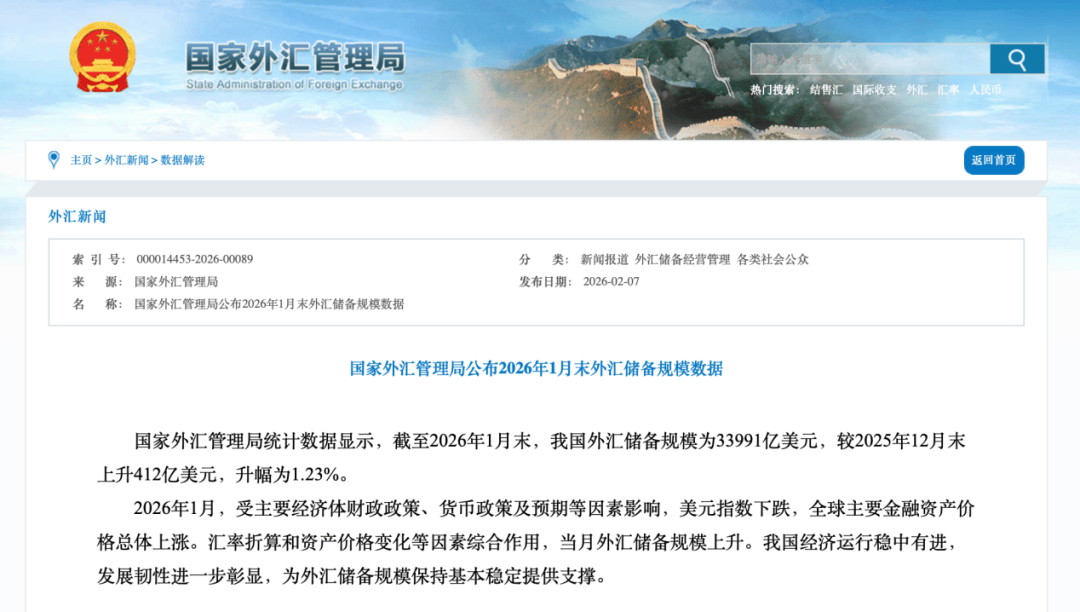
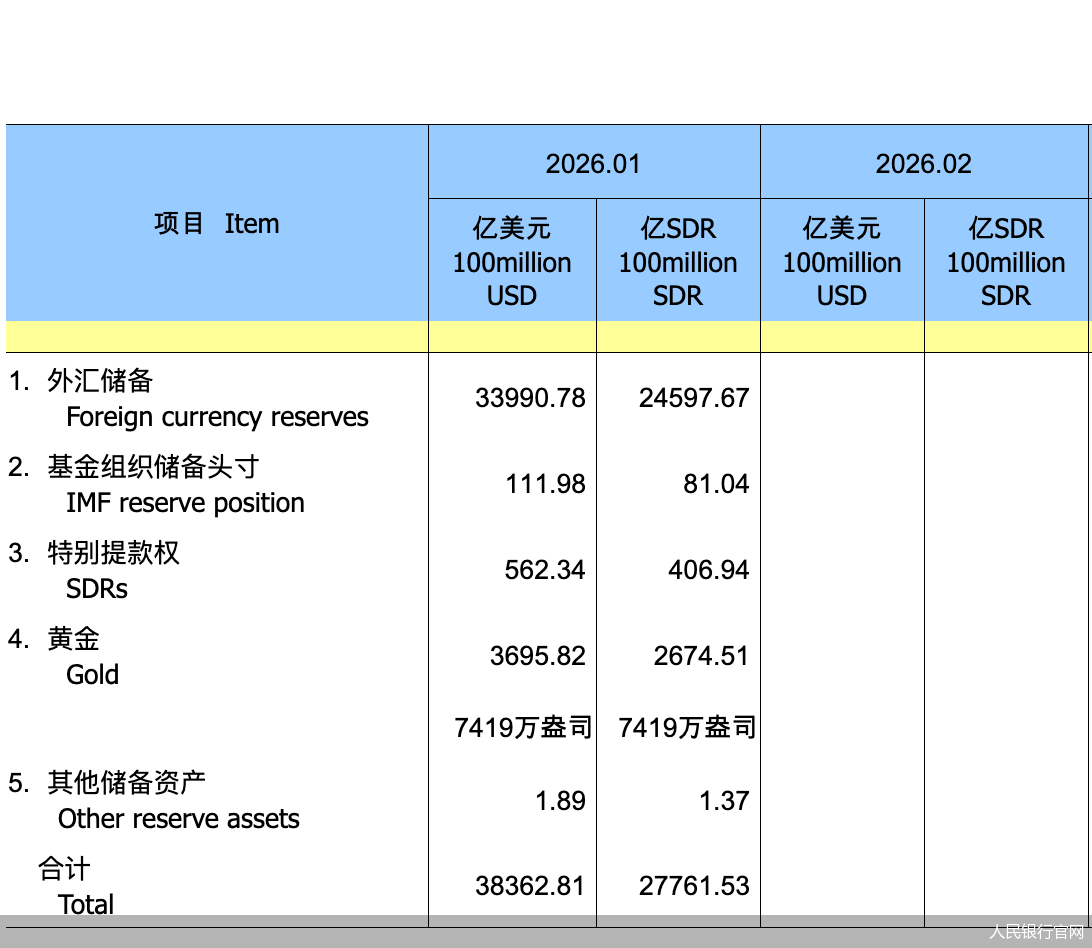
较2025年12月末增加4万盎司 中国央行连续15个月增持黄金。 2月7日,国家外汇管理局发布的最新统计数据显示,截至2026年1月末,我国外汇储备规模为33991亿美 元,较2025年12月末上升412亿美元,升幅为1.23%,续创十年以来新高。 同日公布的官方储备资产数据还显示,2026年1月末,中国官方黄金储备为7419万盎司,较2025年12月 末增加4万盎司,为连续15个月增持黄金。 连续六个月处于3.3万亿美元之上 目前,我国外储规模已连续6个月处于3.3万亿美元之上。 国家金融与发展实验室特聘高级研究员庞溟认为,外汇储备的回升,部分原因是主要非美元货币对美元 走强以及主要金融资产涨跌互现所带来的估值收益,同时也说明国内跨境收支保持基本平衡,企业与居 民的购汇需求相对温和,市场对人民币汇率的预期趋于稳定。 温彬表示,随着跨境投融资便利化政策持续加码,资本市场对外资吸引力将持续增强。我国经济运行稳 中有进,发展韧性进一步彰显,为外汇储备规模保持基本稳定提供了有力支撑。 连续15个月增持黄金 1月份,伦敦现货黄金市场呈现先扬后抑、剧烈波动的格局。虽然国际金价波动剧烈,但我国央行仍保 持每月增持的节奏。 ...
君諾外匯:美元指数触底反弹,年初以来弱势格局是否扭转
Sou Hu Cai Jing· 2026-02-08 08:12
转折出现在1月底。美联储会议维持利率不变,随后特朗普宣布提名凯文·沃什担任美联储主席,市场解 读为可能带来政策确定性的信号。美元指数由此展开反弹,回到97上方运行。然而,反弹力度相对温 和,显示出市场对美元中长期前景仍持谨慎态度。 主要非美货币在此期间表现分化。欧元、英镑兑美元均录得一定涨幅,反映出欧洲经济边际改善与央行 政策立场的支撑。人民币表现尤为突出,兑美元汇率一度突破6.94关口,创2023年5月以来新高。这种 强势既与美元整体走弱相关,也得益于中国经济的企稳迹象。 从政策层面观察,中国人民银行在2月初实施了降准操作,释放长期流动性。这一宽松举措并未对人民 币汇率形成明显压力,显示出当前汇率形成机制具有较强的弹性。外汇管理局同时公布了外汇储备增长 的数据,为人民币汇率提供了基本面支撑。 展望未来,美元指数的走势将取决于美联储政策路径的清晰度以及美国经济的相对表现。若就业与通胀 数据确认放缓趋势,美元可能继续承压;反之,若数据展现出韧性,则支持美元企稳。主要央行货币政 策的分化程度将是决定汇市格局的关键变量。 外汇市场在2026年开年呈现出复杂的波动特征。美元指数经历了先抑后扬的走势,年初一度跌至202 ...

我国外汇储备规模连续六个月超过3.3万亿美元
Yang Shi Wang· 2026-02-07 23:22
央视网消息:国家外汇管理局7日公布,截至2026年1月末,中国外汇储备规模为33991亿美元,较2025 年12月末上升412亿美元,升幅为1.23%。中国外汇储备规模已连续六个月稳定在3.3万亿美元以上。 ...
15个月不间断!中国银行黄金储备背后的黄金策略是什么?
Sou Hu Cai Jing· 2026-02-07 18:28
中国人民银行更新的官方储备资产数据显示,1月末中国黄金储备较去年12月增加4万盎司,延续了自2024年11月以来的连续增持趋势 傍晚时分,黄金交易所收盘的钟声敲响,国际金价在连续多日震荡后收于4950美元/盎司上方。就在同一天,中国人民银行公布了最新数据:截至2026年1月 末,中国黄金储备达7419万盎司,较去年12月末增加4万盎司 中国央行本轮黄金增持始于2024年11月。截至2026年1月末,这一行动已持续 整整15个月 在这15个月期间,2025年全年中国黄金储备增加了86万盎司 实际上,这不是中国央行第一次长时间增持黄金。此前,央行曾有过连续18个月增持的记录,不过在2024年5月曾一度暂停 在当前国际金融环境下,黄金具有独特优势。它作为无主权风险的实物资产,在全球经济不确定性增加、地缘政治风险上升的背景下,成为央行储备多元化 的理想选择。 观察中国央行的增持策略可以发现一个特点:稳中有进,细水长流。相比全球其他一些央行的大规模购金,中国央行选择了每月小幅增持的方式,量级通常 保持在10万盎司以下 这种增持策略既考虑了黄金价格波动的市场风险,也兼顾了长期储备结构调整的需要。东方金诚首席宏观分析师王青 ...

重磅!央行连续15个月增持黄金
Sou Hu Cai Jing· 2026-02-07 15:27
Group 1: Foreign Exchange Reserves - As of the end of January 2026, China's foreign exchange reserves stood at $339.91 billion, an increase of $4.12 billion or 1.23% from December 2025 [2] - The increase in reserves is attributed to factors such as the decline in the US dollar index and the overall rise in global financial asset prices, supported by China's stable economic performance [4] - Analysts expect that the foreign exchange reserves will remain stable, providing support for the RMB exchange rate and acting as a buffer against external shocks [4] Group 2: Gold Reserves - By the end of January, China's gold reserves reached 74.19 million ounces, with an increase of 40,000 ounces, marking the 15th consecutive month of gold accumulation by the central bank [6] - The incremental increase in gold reserves in January was relatively low, attributed to the rapid rise in international gold prices, which has led to a cautious approach in accumulation [9] - Analysts suggest that the necessity to increase gold reserves is rising due to changes in the global political and economic landscape, indicating a long-term strategy for optimizing international reserves [9] Group 3: Gold Price Trends - In January, gold prices experienced significant volatility, with futures and spot gold prices returning above $4,900 per ounce, reflecting an overall upward trend despite some sharp declines [11] - Morgan Stanley analysts maintain a bullish outlook on gold prices, predicting they could reach $6,300 per ounce by the end of 2026, driven by demand from central banks and investors [13] - There is a divergence in views among Wall Street analysts regarding gold prices, with some suggesting that prices may have peaked based on historical data [13][14]
1月末我国外储规模环比上升412亿美元 未来有望保持基本稳定
Zhong Guo Jing Ying Bao· 2026-02-07 14:49
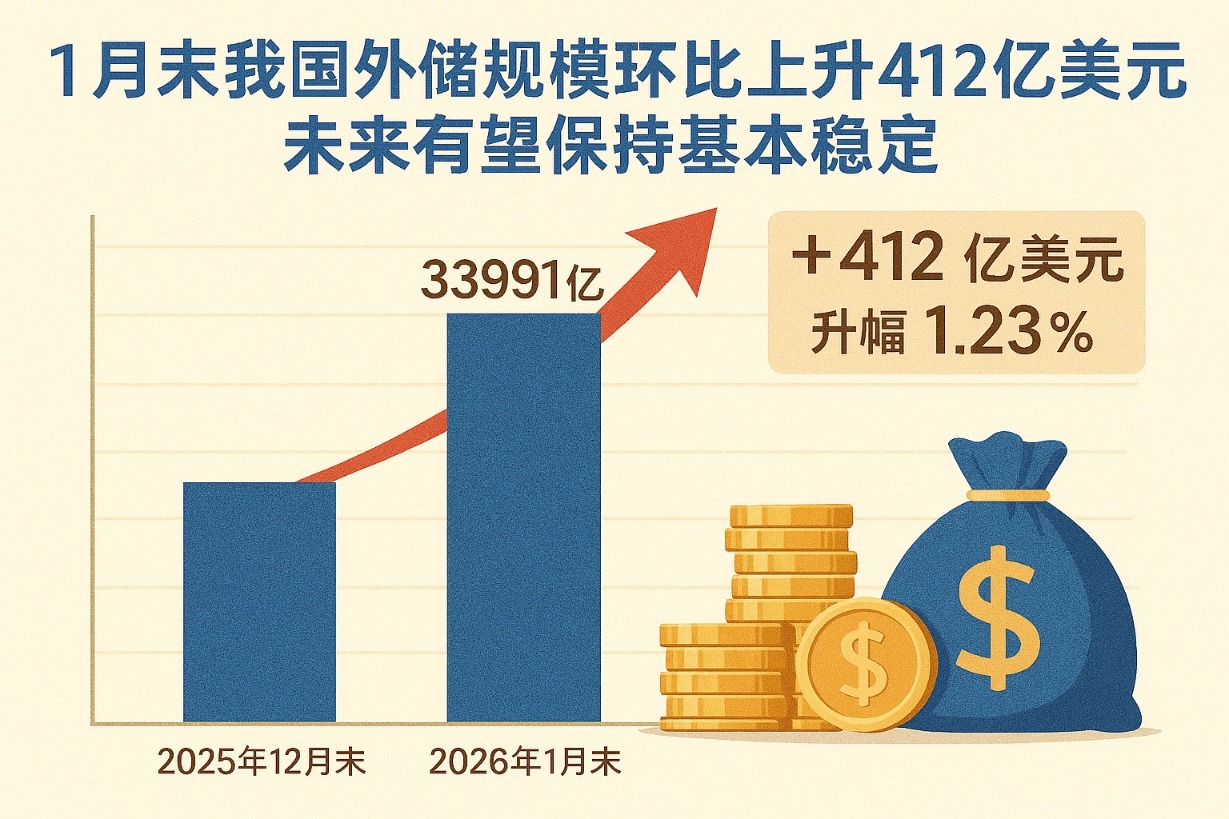
Core Viewpoint - As of January 2026, China's foreign exchange reserves reached $339.91 billion, an increase of $41.2 billion from December 2025, marking a 1.23% rise, the highest since January 2024 [3] Group 1: Factors Influencing Foreign Exchange Reserves - The increase in foreign exchange reserves is driven by three main factors: a temporary decline in the US dollar index, a rebound in global financial asset prices, and a stable trade surplus in China [3] - The State Administration of Foreign Exchange noted that the decline in the US dollar index and the overall rise in global financial asset prices contributed to the increase in reserves [3] Group 2: Currency and Asset Price Movements - In January, the US dollar index fell by 1.4% to 97.0, with non-US currencies strengthening, including the Japanese yen, euro, and British pound, which rose by 1.23%, 0.9%, and 1.6% respectively [4] - The yield on 10-year US Treasury bonds increased by 8 basis points to 4.26%, while global stock markets showed a generally strong performance, with the S&P 500 index rising by 1.4% [4] Group 3: Future Outlook - The resilience of China's foreign trade is expected to continue, with exports reaching a historical high, particularly in the machinery and equipment sectors [4] - The ongoing facilitation of cross-border investment and financing policies is anticipated to enhance the attractiveness of China's capital markets to foreign investors [5] - Overall, China's foreign exchange reserves are expected to remain stable, supported by a strong economic foundation and the attractiveness of RMB assets [5]
今年1月末我国外汇储备升至33991亿美元
Jin Rong Jie· 2026-02-07 13:51
中国国家外汇管理局7日公布的数据显示,截至2026年1月末,中国外汇储备规模为33991亿美元,较 2025年12月末上升412亿美元,升幅为1.23%;中国央行黄金储备为7419万盎司,环比增持4万盎司。 财经频道更多独家策划、专家专栏,免费查阅>> 责任编辑:钟离 ...
外储规模创十年来新高!人民银行买金仍是大方向
Bei Jing Shang Bao· 2026-02-07 11:54
Core Viewpoint - As of the end of January 2026, China's foreign exchange reserves reached a record high of $339.91 billion, marking a 1.23% increase from December 2025, driven by a decline in the US dollar index and an overall rise in global financial asset prices [1][3][5]. Foreign Exchange Reserves - China's foreign exchange reserves stood at $33990.78 million as of January 2026, up by $412 million from December 2025, the highest level since December 2015 [2][3]. - The increase in reserves is attributed to a 1.2% drop in the US dollar index and rising global financial asset prices, with the latter being influenced by factors such as AI investment trends [3][4][5]. - The reserves have remained above $3.3 trillion for six consecutive months, reflecting the resilience of China's economic performance [5][10]. Gold Reserves - As of January 2026, China's gold reserves were reported at 7.419 million ounces, a slight increase from 7.415 million ounces in December 2025, marking the 15th consecutive month of gold accumulation by the People's Bank of China [1][6]. - The ongoing increase in gold reserves is linked to a strong upward trend in international gold prices, with significant gains observed since September 2022 [6][7]. - The strategy of gradual accumulation of gold is seen as a way to mitigate market volatility and optimize the structure of international reserves, especially in light of geopolitical uncertainties [7][9]. Market Implications - The increase in foreign exchange reserves and gold holdings is expected to stabilize market expectations and enhance the attractiveness of RMB-denominated assets, providing greater flexibility for future monetary and exchange rate policies [8][9]. - The People's Bank of China is likely to continue its strategy of increasing gold reserves while moderately reducing US Treasury holdings, aiming to diversify its international reserves [9][10].
外储近3.4万亿创十年新高 黄金连增15个月藏深层考量
Sou Hu Cai Jing· 2026-02-07 11:13
Core Insights - China's foreign exchange reserves have reached approximately $3.4 trillion, marking a ten-year high, with a notable increase of $41.2 billion or 1.23% from December 2025 to January 2026 [1][3] - The increase in foreign reserves is attributed to multiple factors, including a weaker US dollar and rising global financial asset prices, which have positively impacted the valuation of non-USD assets [3][4] - The People's Bank of China (PBOC) has been steadily increasing its gold reserves for 15 consecutive months, reaching 7.419 million ounces, with a cautious monthly increase of 40,000 ounces [3][4] Foreign Exchange Reserves - As of January 2026, China's foreign exchange reserves stand at $33,991 billion, just shy of the $3.4 trillion mark, reflecting a consistent upward trend since July 2025 [3][4] - The stability of foreign reserves is seen as a significant achievement amid global economic fluctuations, providing a solid foundation for the Chinese economy [3][5] Gold Reserves - The PBOC's strategy for gold accumulation is characterized by a "small steps" approach, with monthly increases kept below 100,000 ounces since March 2025, indicating a cautious and strategic accumulation [4][5] - The rationale behind increasing gold reserves includes optimizing the reserve structure and mitigating risks associated with global uncertainties, as gold serves as a non-credit asset [4][5] Economic Implications - The combination of stable foreign reserves and cautious gold accumulation is aimed at strengthening the economic safety net for China, supporting the stability of the RMB exchange rate and providing resilience against external shocks [5] - The long-term goal of increasing gold reserves is to enhance the international credibility of the RMB, facilitating cross-border trade and investment [5]

最新公布:中国外汇储备规模达33991亿美元,央行连续15个月增持黄金!专家:美元延续弱势,金价可能在相当长一段时间内易涨难跌
Mei Ri Jing Ji Xin Wen· 2026-02-07 08:39
Core Viewpoint - As of January 2026, China's foreign exchange reserves reached $339.91 billion, marking an increase of $41.2 billion from December 2025, representing a growth rate of 1.23% [1] Group 1: Current Foreign Exchange Reserves - The foreign exchange reserves are at a relatively high level of over $3.3 trillion [2] - The increase in reserves in January was driven by a combination of factors, including a decline in the US dollar index and a general rise in global financial asset prices [2][3] - The dollar index fell by 1.2% to 97.1 in January, with non-US currencies appreciating against the dollar [2][3] Group 2: Economic Analysis - The increase in foreign reserves is supported by the resilience of China's economy and the ongoing enhancement of cross-border investment and financing policies [1][5] - The strong performance of exports, particularly in the machinery and equipment sectors, has contributed to the stability of foreign reserves [5] - The capital market's attractiveness to foreign investors is expected to continue growing, bolstered by favorable economic conditions [5] Group 3: Gold Reserves - As of January, China's gold reserves stood at 7.419 million ounces, with a slight increase of 40,000 ounces from the previous month [6] - The central bank's gold accumulation is seen as a strategy to optimize the international reserve structure amid rising geopolitical risks and fluctuating international gold prices [6][7] - The current gold reserve proportion is approximately 9.7%, significantly lower than the global average of around 15%, indicating a need for continued accumulation of gold reserves [6][7]
