技术融合

Search documents
工信部信息通信发展司司长谢存:截至上半年,规上轻工业企业数字化研发工具普及率现已达到86.2%,实现经营管理数字化普及率82.3%,技术融合与柔性制造能力的提升,为高附加值产品规模化生产奠定有力基础。
news flash· 2025-07-18 07:34
Group 1 - The core viewpoint is that the digitalization of the light industry sector is advancing, with significant improvements in both digital research and development tools and management practices [1] - As of the first half of the year, the penetration rate of digital R&D tools among large-scale light industry enterprises has reached 86.2% [1] - The digitalization of operational management has achieved a penetration rate of 82.3%, indicating a strong foundation for the mass production of high-value-added products [1]
研判2025!中国定向罗盘行业产业链、进出口及重点企业分析:行业面临技术进口依赖与高端垄断挑战,多重因素加剧进出口市场波动[图]
Chan Ye Xin Xi Wang· 2025-07-05 23:44
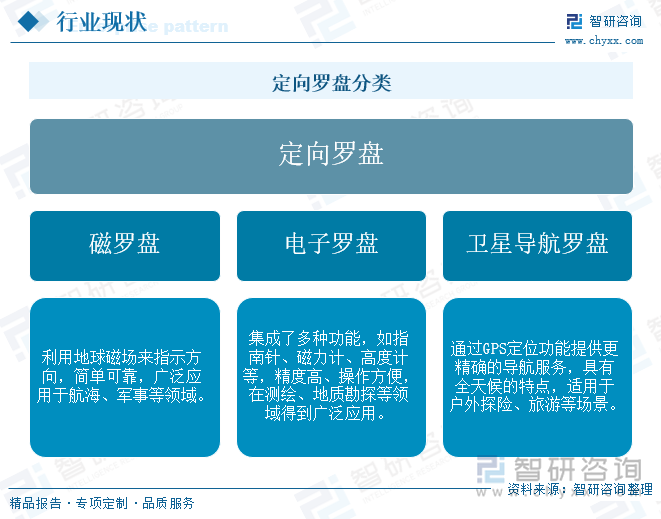
Industry Overview - The directional compass is an instrument that measures direction using the Earth's magnetic field or electronic sensor technology, widely used in geological exploration, navigation, military, surveying, outdoor activities, and feng shui detection [2][4] - The directional compass market in China is experiencing strong demand due to rapid development in geological exploration, surveying, military, navigation, and the expanding outdoor sports market [10] Industry Development History - The directional compass industry in China has evolved through three main stages, from the use of natural compass technology in ancient times to the integration of electronic and satellite navigation technologies in modern times [4][5] - The completion of the BeiDou-3 global network in 2020 has enabled the integration of BeiDou positioning modules into electronic compasses, achieving multi-source fusion navigation [5] Industry Status - From January to May 2025, China imported 17,000 directional compasses, a year-on-year increase of 10.87%, with an import value of 108 million yuan, up 53.81% [10] - During the same period, China exported 3.0387 million directional compasses, a year-on-year decrease of 25.13%, with an export value of 5 million yuan, down 25.63% [10] - Japan dominates China's directional compass imports, accounting for 71.24% of the total import value, highlighting its core position in the high-end industry chain [12] Industry Chain - The upstream of the directional compass industry includes raw materials and components such as magnetic materials, electronic component materials, and precision mechanical materials [6] - The midstream involves the production and manufacturing of directional compasses, while the downstream applications span navigation, aviation, geological exploration, military, surveying, and outdoor activities [6] Key Enterprises - The directional compass industry in China is relatively concentrated, with a few large enterprises holding significant market shares, such as Harbin Optical Instrument Factory, which has a market share exceeding 95% in mechanical and electronic compasses [16][18] - Shenzhen Ruifen Technology Co., Ltd. specializes in inertial navigation and has developed high-precision electronic compasses widely used in various high-end applications [20] Industry Development Trends - The industry is witnessing a wave of technological integration, with a focus on smart and high-precision products driven by the fusion of BeiDou navigation, 5G communication, and artificial intelligence [23] - Market demand is expected to show significant differentiation, with professional sectors requiring high-precision products while consumer markets seek portable and multifunctional compasses [24] - The process of domestic substitution is accelerating, with Chinese companies making breakthroughs in core components, although international competition remains fierce [25]

AI和GEO技术在精准营销领域的未来发展趋势是怎样的?
Sou Hu Cai Jing· 2025-07-05 16:03
Core Insights - The future of AI and GEO technology in precision marketing will see deep integration and intelligent upgrades, providing personalized and efficient marketing solutions that reshape brand-consumer interactions [1] Group 1: Technology Integration - AI large models will combine more deeply with GEO technology, utilizing strong semantic understanding and reasoning capabilities for precise analysis of GEO data [3] - Real-time generation of contextual marketing content will be enabled by integrating dynamic factors such as geographic location, weather, and social hotspots [3] Group 2: Personalized Experience - Future systems will build exclusive knowledge models based on individual user interaction history, achieving higher levels of personalized marketing [3] - Customized product recommendations and marketing activities will be provided based on users' geographic locations and behavioral habits, enhancing user engagement and conversion rates [3] Group 3: Multi-modal Content Development - AI search will increasingly favor multi-modal content, including images, videos, and 3D models [3] - Brands will need to create an optimized matrix of various content forms to improve recommendation priority in AI searches [3] Group 4: Precision Targeting - GEO technology advancements will allow for centimeter-level or higher precision in geographic location targeting [3] - Marketers will be able to conduct precision marketing in smaller areas and specific locations, predicting user movement patterns and consumption needs [3] Group 5: Collaborative Innovation - AI and GEO technologies will integrate with blockchain and IoT for enhanced data timeliness and security [3] - Real-time updates of GEO-related data will be supported by IoT devices, providing accurate data for precision marketing [3] Group 6: Cross-platform Integration - Future developments will focus on cross-platform consistency solutions to maintain unified brand messaging across various generative interfaces [3] - Integration of maps, social media, and e-commerce platforms will create a collaborative ecosystem for traffic flow [3] Group 7: Intelligent Marketing Decisions - AI will leverage GEO data and other multi-source data to provide robust support for marketing decisions [3] - Predictive analysis tools will simulate market responses to different marketing strategies across various geographic locations and user groups [3] Group 8: Privacy and Compliance - With the improvement of relevant regulations, the application of AI and GEO technology in precision marketing will emphasize privacy protection and compliance [3] - Companies must adhere to legal regulations when acquiring and using user geographic location data, ensuring user rights and data security [3]

中外对话 | 中国引领智能绿色转型,合作是唯一通路
Zhong Guo Xin Wen Wang· 2025-06-29 04:58
Core Viewpoint - China is leading the intelligent and green transformation, emphasizing that cooperation is the only pathway to sustainable development [1][6]. Group 1: Emerging Technologies - The World Economic Forum's "2025 Top Ten Emerging Technologies Report" highlights several cutting-edge technologies, including collaborative perception, green nitrogen fixation, and structural battery composite materials [1][5]. - Experts note that artificial intelligence is deeply integrating with green technologies, driving a low-carbon and efficient technological revolution [2]. Group 2: Collaborative and Empowering Technologies - Collaborative perception technology is crucial for integrating various technologies, enabling information sharing among robots, IoT devices, and digital terminals, which supports intelligent decision-making [2][3]. - Structural battery composite materials can embed energy storage functions directly into material structures, significantly reducing weight and enhancing energy efficiency [3]. Group 3: China's Role and Global Cooperation - China is a global leader in photovoltaic installation and artificial intelligence innovation, but it cannot face challenges alone; international cooperation is essential [6]. - The complexity of technology and the global nature of climate issues necessitate a collaborative approach to address intelligent and green challenges [6].
十大新兴技术聚焦健康,技术融合重塑行业格局
第一财经· 2025-06-25 05:57
Core Viewpoint - The integration of emerging technologies such as artificial intelligence, nanotechnology, materials science, synthetic biology, and life sciences is expected to reshape the innovation landscape in the healthcare industry over the next three to five years, addressing the treatment needs of neurodegenerative diseases in an aging population [1][2]. Group 1: Emerging Technologies in Healthcare - The report identifies ten emerging technologies for 2025, with at least four directly related to health: nanoenzymes, engineered living therapies, GLP-1 drugs for neurodegenerative diseases, and autonomous biochemical sensing [2][4]. - The global market for nanoenzymes is projected to grow from $5.13 billion in 2024 to $57.95 billion by 2034, reflecting a compound annual growth rate (CAGR) of 27.4% [5]. - GLP-1 drugs, originally for diabetes, are now being explored for their potential in treating Alzheimer's and Parkinson's diseases, with a market forecast to reach $55.7 billion by 2031 [6]. Group 2: Chronic Disease Management - The focus on chronic disease management is critical due to the large patient base in China and the challenges posed by aging and younger populations facing chronic illnesses [4][5]. - The report emphasizes the need for innovative solutions to address chronic diseases, environmental impacts, and infrastructure pressures [5][8]. - Wearable blood glucose sensors are highlighted as a successful application of autonomous biochemical sensing technology, promoting proactive health management for diabetes patients [7][8]. Group 3: Technology Integration - The report underscores the importance of technology integration, indicating a shift from independent innovations to systematic solutions that can address health and sustainability challenges [10][11]. - The combination of engineered living therapies and nanoenzymes requires deep integration of synthetic biology and medicine, while autonomous biochemical sensing necessitates a blend of materials science, nanotechnology, and wireless technology [10][11]. - The potential for wearable technology to enhance the monitoring of engineered living therapies is noted, indicating a feedback loop between live drugs and external monitoring systems [10]. Group 4: Market Trends and Future Outlook - The pharmaceutical industry is expected to show signs of recovery in 2025, with projected merger and acquisition values ranging from $50 billion to $70 billion, potentially reaching $90 billion under optimal conditions [11]. - The synthetic biology market is anticipated to grow from $17 billion in 2023 to nearly $50 billion by 2028, with the health sector representing the largest share at 38% [12].

十大新兴技术聚焦健康,技术融合重塑行业格局
Di Yi Cai Jing· 2025-06-24 14:48
Group 1 - The report identifies ten emerging technologies expected to have significant impacts in the next three to five years, particularly in healthcare, including nanoenzymes, engineered living therapies, GLP-1 drugs for neurodegenerative diseases, and autonomous biochemical sensing [1][2] - The focus on chronic disease management is emphasized, with a large patient base in China facing challenges from aging and younger populations suffering from chronic conditions [3][4] - The global market for nanoenzymes is projected to grow from $5.13 billion in 2024 to $57.95 billion by 2034, reflecting a compound annual growth rate of 27.4% [4] Group 2 - GLP-1 drugs are gaining attention for their potential applications beyond diabetes, including treatment for Alzheimer's and Parkinson's diseases, with a projected market growth to $55.7 billion by 2031 [5] - The report highlights the importance of automated biochemical sensing technology and engineered living therapies in managing chronic diseases, with wearable glucose sensors being a successful application [5][6] - The integration of various technologies, such as engineered living therapies and nanoenzymes, is seen as crucial for addressing health and sustainability challenges [7][8] Group 3 - The report calls for collaboration among business, government, and scientific communities to support the commercialization and responsible governance of these emerging technologies [8] - The global synthetic biology market is expected to grow from $17 billion in 2023 to nearly $50 billion by 2028, with the health sector representing the largest share [9]
世界经济论坛发布年度十大新兴技术,生成式AI打水印入选
Nan Fang Du Shi Bao· 2025-06-24 09:27
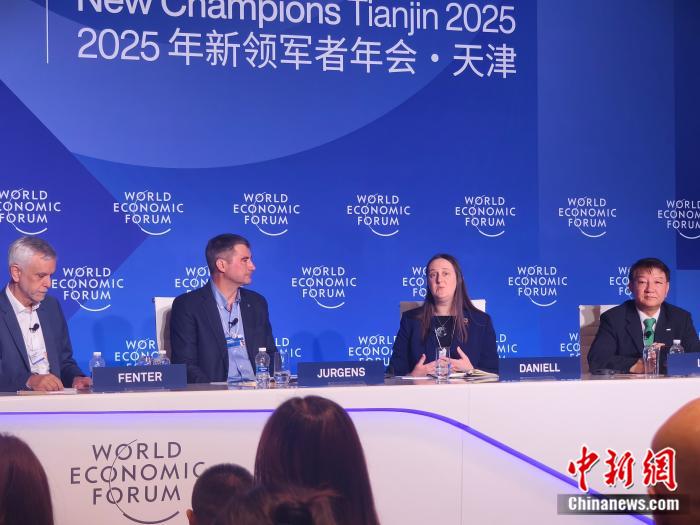
Core Insights - The World Economic Forum's 16th Annual Meeting of the New Champions highlighted ten emerging technologies expected to address global challenges within three to five years, including collaborative sensing, generative watermarks, and green nitrogen fixation [1][2]. Emerging Technologies - **Collaborative Sensing**: A network of interconnected sensors that enhances safety, reduces congestion, and improves crisis response for vehicles, cities, and emergency services [3]. - **Generative Watermarks**: This technology adds invisible tags to AI-generated content, aiding in the identification of authentic information and combating misinformation online [4]. - **Green Nitrogen Fixation**: A novel method for producing fertilizers using electricity instead of fossil fuels, which reduces pollution and carbon emissions, representing a more sustainable approach to agriculture [5]. - **Nanoenzymes**: Synthetic materials that mimic natural enzymes but are more effective, cost-efficient, and easier to use, improving medical diagnostics, environmental cleanup, and manufacturing safety [6]. - **Engineered Living Therapies**: New therapies utilizing beneficial bacteria designed to treat conditions internally, potentially lowering long-term healthcare costs and improving treatment outcomes [7][8]. - **GLP-1 Drugs for Neurodegenerative Diseases**: Originally for diabetes and weight loss, these drugs show promise in alleviating Alzheimer's and Parkinson's diseases, offering new hope for patients [9]. - **Autonomous Biochemical Sensors**: Small intelligent sensors that monitor health or environmental changes continuously, enabling early detection of pollution or diseases, thus saving time and lives [10]. - **Structural Battery Composites**: Materials that store energy while providing structural support, enhancing the efficiency and performance of electric vehicles [11]. - **Salinity Gradient Power Systems**: These systems generate clean electricity by harnessing energy at the intersection of salt and fresh water, providing a stable power source for coastal areas [12]. - **Advanced Nuclear Technologies**: New compact nuclear designs and alternative cooling systems offer safer, lower-cost clean energy solutions, crucial for supporting a reliable zero-carbon power system as electrification and AI demand increase [13].

盘和林:链博会“六链一展区”透露三大投资新风向
Sou Hu Cai Jing· 2025-06-20 01:03
Group 1 - The third Chain Expo will be held in Beijing from July 16 to July 20, with the theme "Linking the World, Co-Creating the Future" [2] - The expo will feature six chains and one exhibition area, including advanced manufacturing, smart vehicles, green agriculture, clean energy, digital technology, health living, and supply chain services [3] Group 2 - Three new investment trends are highlighted: 1. Technology integration driving industrial upgrades, such as the combination of advanced manufacturing and digital technology creating a trillion-level market demand [4] 2. Green economy restructuring the value chain, emphasizing the importance of green supply chains to achieve carbon neutrality goals [4] 3. Emerging consumer demands creating new sectors, focusing on precision medicine, the silver economy, and smart home appliances [4] Group 3 - The collaboration between smart vehicles and clean energy is particularly noteworthy, involving cross-chain cooperation among vehicle manufacturers, energy companies, and material suppliers [5] - The presence of international tech giants like NVIDIA at the expo indicates a trend of localization and collaboration with Chinese companies in the AI innovation ecosystem [6] Group 4 - AI is rapidly penetrating various sectors such as medical rehabilitation, smart manufacturing, and smart agriculture, transforming into AI+ applications [8] - The establishment of a "New Product Launch Zone" at the expo aims to create a four-dimensional cooperation network, facilitating technology validation, global procurement, standard-setting collaboration, and investment financing [9]


研判2025!中国可穿戴腕带设备行业产业链、相关政策及出货量分析:全球可穿戴腕带设备市场出货量增长13%,生态驱动转型加速[图]
Chan Ye Xin Xi Wang· 2025-06-15 02:56
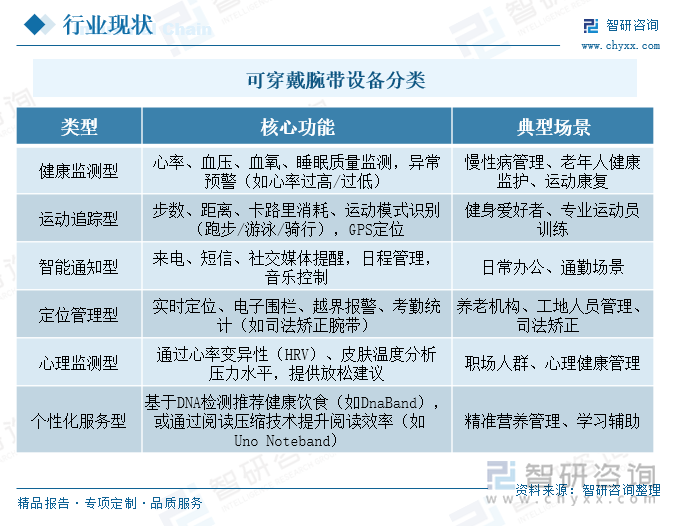
Core Insights - The global wearable wristband device industry is experiencing rapid growth and transformation, with Q1 2025 shipments reaching 47 million units, a 13% year-on-year increase, driven by low base effects and recovering market demand [1][14] - Major product categories, including basic bands, basic watches, and smartwatches, have all seen significant growth, becoming key drivers of market expansion [1][14] - The market is shifting from a "hardware-driven" model to an "ecosystem-driven" model, with manufacturers accelerating the development of platforms and services to enhance user retention and sustainable revenue [1][14] Industry Overview - Wearable wristband devices are portable electronic devices worn on the wrist, integrating sensors, chips, and smart algorithms for health monitoring, activity tracking, and information interaction [2] - The industry has evolved through four main stages: the nascent phase (2000-2014), rapid growth phase (2015-2018), innovation upgrade phase (2019-2023), and stable development phase (2024-present) [5][6][7] Current Industry Status - In Q1 2025, Xiaomi regained the top position in global shipments with 8.7 million units, a 44% increase, primarily due to the popularity of the Redmi Band 5 [16][21] - Apple ranked second with 7.6 million units shipped, a 5% increase, while Huawei maintained third place with 7.1 million units, a 36% increase [16][18] - Samsung's shipments surged by 74% to 4.9 million units, leveraging a dual-track strategy to expand its user base in emerging markets while maintaining a premium position in developed markets [16] Industry Development Trends - The industry is witnessing a technological convergence that drives product evolution towards "unobtrusive, proactive, and specialized" devices [23] - Wearable devices are increasingly penetrating vertical markets such as healthcare, industrial safety, and elder care, with specific requirements for reliability and compliance [25] - Chinese manufacturers are building competitive advantages through "hardware + software + services" ecosystems, while facing intensified global competition from established players like Apple and Samsung [26]

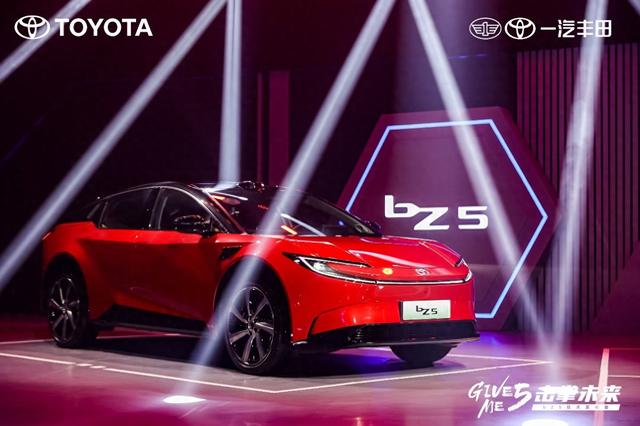
2025年一季度实现正增长 一汽丰田成为合资品牌转型范式
Bei Jing Ri Bao Ke Hu Duan· 2025-05-27 02:57
Core Viewpoint - The article highlights the transformation of China's automotive industry from "market for technology" to "global technology output," with joint venture companies playing a crucial role in reshaping industry value. FAW Toyota's growth of 9.6% and 51% share of electric models in Q1 2025 exemplifies this shift, emphasizing the need for deep integration of global technology and local market demands to transition from a technology follower to a value creator [1][5]. Group 1: Technological Integration and Market Adaptation - FAW Toyota's bZ5 model demonstrates precise market demand understanding, combining Toyota's global safety standards with local driving conditions through the RCE system [3]. - The Toyota Pilot intelligent driving assistance system, enhanced by Momenta's data, showcases a significant leap in technology collaboration, achieving superior predictive capabilities in complex urban environments [3]. - The TSS system aims for zero traffic accident fatalities, with a response time of 0.1 seconds, supported by over 20 million global users' data, reinforcing safety as a core value [3][5]. Group 2: Brand Transformation and Market Strategy - FAW Toyota has established itself as a benchmark for transformation within joint venture brands, achieving consecutive quarters of positive sales growth and over 50% share in both electrified and high-end models [5][7]. - The TNGA-K platform's model share exceeding 60% reflects the success of its "technology equality" strategy, making high-end features accessible to more affordable models [5]. - The "5Q service system" has led to a seven-year streak of top customer satisfaction in after-sales service, with significant improvements in service efficiency [7]. Group 3: Customer Engagement and Ecosystem Development - FAW Toyota's "Time Renewal, Dual Participation" campaign lowers purchase barriers, offering a tiered incentive for trade-ins based on vehicle age, enhancing customer loyalty [9][10]. - The "group purchase discount" strategy activates new market segments, allowing customers to save on popular models while ensuring they receive Toyota's global reliability and safety standards [10][12]. - The combination of "group purchase discounts and vehicle age subsidies" creates a customer lifecycle operation system, deepening brand loyalty and engagement through ongoing service benefits [12].