投资者保护

Search documents
揭穿“陈小群”神话,龙虎榜“标签化”可休矣
Mei Ri Jing Ji Xin Wen· 2026-01-26 14:39
Group 1 - The article highlights the controversy surrounding the mysterious figure "Chen Xiaoqun" in the A-share market, which has been linked to speculative trading practices that exploit retail investors [1] - A recent report by "Daily Economic News" exposed the profit chain behind the speculation of "Chen Xiaoqun" concept stocks, leading to a self-purification of information dissemination in the A-share market [1] - Following the report, several brokerage firms and third-party platforms quickly removed the "Chen Xiaoqun" label from their trading boards, indicating a shift towards more responsible trading practices [1] Group 2 - The labeling practices associated with the trading board have been criticized for contradicting the regulatory goal of investor protection, as they mislead investors with unverified "top-tier capital" tags [2] - The article discusses the negative impact of these labels, citing examples of retail investors suffering losses due to blind faith in these tags, which highlights a failure in investor education and protection [2] - The recent cleanup of labels is seen as a necessary corrective measure to realign with the fundamental duty of not misleading investors [2] Group 3 - The article argues that removing misleading labels from trading data is essential for paving the way for value investing and reducing market volatility caused by short-term speculation [3] - It emphasizes the need for stricter information verification mechanisms by third-party platforms and brokerages to ensure compliance in disclosing capital seat information [3] - The regulatory body is urged to establish clear industry standards for information processing and to intensify oversight against practices that create "capital myths" and mislead investors [3] Group 4 - The article concludes that a combination of industry self-discipline and regulatory guidance is necessary to strengthen investor protection and foster a stable and fair capital market [4]


A股公司退市将呈现多元化、精准化、快节奏
Zheng Quan Ri Bao· 2026-01-22 16:36
Group 1 - The core viewpoint of the articles highlights the increasing trend of delistings in the A-share market, with *ST Aowei potentially becoming the first company this year to meet the market cap delisting criteria due to its continuous low market value [1][2] - The A-share market is undergoing a transformation from speculative trading to a focus on value, as evidenced by the market's response to companies with poor fundamentals, leading to a more efficient pricing mechanism [2][3] - Major illegal delistings have become a prominent type of delisting this year, with companies like Dongfang Tong and Guangdao Digital Technology being forced to delist due to significant violations [3][4] Group 2 - The trend of voluntary delistings is increasing, with companies like Debon Logistics opting for this route to better align with industry developments and avoid competition [4][5] - Financial delistings are also on the rise, with companies like Shanghai Guijiu and Wanfang Town Investment warning of potential financial delisting due to expected low revenues and negative profits [5][6] - The delisting landscape is expected to remain diverse, with a focus on expediting the removal of low-quality companies and enhancing the transparency and rigidity of the delisting mechanisms [5][6]


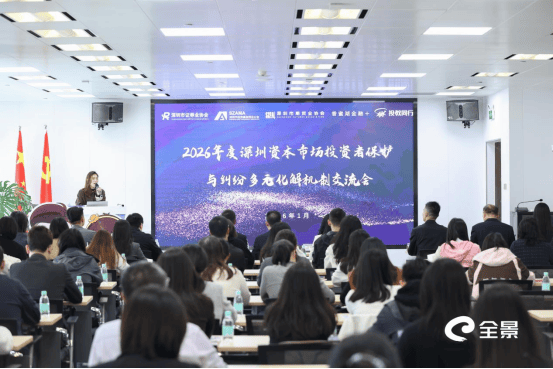
深圳市证券业协会举办2026年度深圳资本市场投资者保护与纠纷多元化解机制交流会
Sou Hu Cai Jing· 2026-01-16 10:35
Group 1 - The core focus of the meeting was to enhance the investor protection mechanism in Shenzhen's capital market and to discuss the 2026 investor education work plan [1][3] - Over 100 representatives from securities, funds, and futures institutions attended the event, indicating strong industry participation [1] - The Shenzhen Securities Association aims to deepen collaboration with various institutions and society to elevate investor protection efforts [3] Group 2 - Liu Dan Yue, Vice President of Hunan Securities Association, provided a comprehensive analysis of policies aimed at strengthening the protection of small and medium investors, covering eight key areas including issuance, market trading, and legal safeguards [5] - Liu emphasized the integration of investor education with wealth management, customer service, and brand promotion, highlighting its importance in enhancing service capabilities [5] - The meeting served as a high-quality platform for professionals in investor education, promoting a systematic and effective development of investor education work [11] Group 3 - Lawyer Xue Yizhong discussed the revised mediation rules for securities and futures disputes, aiming to enhance the professionalism and standardization of dispute resolution [7] - The Shenzhen Education Development Foundation presented initiatives combining finance, education, and public welfare, showcasing efforts to empower youth through financial literacy [9]
贵州持续健全投资者保护体系 切实保护中小投资者合法权益
Zheng Quan Shi Bao Wang· 2026-01-15 07:28
2025年,贵州证监局、贵州证券业协会深入学习贯彻党的二十大及二十届历次全会精神,认真落实资本 市场新"国九条"和证监会党委各项决策部署,持续健全投资者保护体系,切实保护中小投资者合法权 益,努力提升投资者获得感和满意度。 加大监管执法力度 推动履行投资者保护主体责任 一是推动上市公司切实提升信息披露质量。督促上市公司健全内部问责追责机制,推动董监高等"关键 少数"勤勉尽责,提高信息披露质量,保障投资者知情权,8家公司信息披露获A级评价,公司家数占比 排名全国第5。 二是引导上市公司积极回报投资者。引导上市公司加大分红力度,通过增持回购稳定股价,提振投资者 信心。12家公司合计实施股份回购72.46亿元。上市公司实施现金分红总额686.08亿元,中期分红总额 306.53亿元,年度现金分红总额、中期分红总额分别排名全国第8位、全国第4位。 三是进一步加强投资者关系管理。举办2025年全国首场投资者集体接待日活动,35家上市公司董监高 等"关键少数"代表180余人现场参会,连续多年实现上市公司参与率和董事长总经理出席率100%,投资 者围绕外部冲击、经营质量、公司治理等提问,各上市公司积极回应,应答尽答,答复率 ...
沪深北交易所调整融资保证金比例
Zheng Quan Ri Bao· 2026-01-14 15:40
此次将融资保证金比例上调至100%,意味着投资者进行融资交易时需要缴纳更多的自有资金作为保证 金。例如,调整前,投资者只需投入80万元保证金,即可融得100万元资金用于证券买入,实际杠杆率 可达1.25倍;调整后,若想融得相同额度的100万元资金,投资者需足额缴纳100万元保证金,杠杆率从 1.25倍回落至1倍。 和讯信息首席策略投资顾问胡晓辉对《证券日报》记者表示,此次融资保证金比例上调的时机选择具有 较强针对性。从交易数据来看,自去年10月份以来,A股融资融券规模持续攀升,融资融券每日成交占 全天成交的比例长期维持在10%以上的高位。在此背景下,上调融资保证金比例是必要且及时的举措, 核心目的是防范杠杆资金过度涌入带来的交易风险。 中航证券首席经济学家董忠云在接受《证券日报》记者采访时表示,提高融资保证金比例直接增加了新 开融资合约的资金门槛和成本,适当降低杠杆水平,有效遏制新增杠杆资金的过快流入,防止风险局部 集聚;同时,通过提高门槛,引导投资者保持理性,避免因杠杆过度放大而遭受损失,体现了"投资者 保护"的监管理念。 1月14日,经中国证监会批准,沪深北交易所发布通知调整融资保证金比例,将投资者融资买 ...
视频|证监会副主席陈华平:将投资者保护贯穿于监管全流程 A股投资者已超2.5亿 95%以上为中小投资者
Xin Lang Cai Jing· 2026-01-11 12:22
Core Viewpoint - The article highlights the formation of MACD golden cross signals, indicating potential upward trends in certain stocks, suggesting a favorable market condition for investors [1]. Group 1 - The MACD golden cross signals have formed, which is a technical indicator often associated with bullish market trends [1].
涉及投资、融资,证监会副主席陈华平最新发声
Sou Hu Cai Jing· 2026-01-11 11:37
Core Viewpoint - The China Securities Regulatory Commission (CSRC) aims to improve the institutional environment for long-term investments and enhance the participation of various long-term funds in the market [1] Group 1: Institutional Improvements - The CSRC will optimize the Qualified Foreign Institutional Investor (QFII) system to attract and retain diverse capital [1] - There will be a focus on enhancing the effectiveness of regulatory enforcement and improving investor education and protection systems [1] - The CSRC emphasizes strict legal enforcement against severe violations, aiming to build investor trust and confidence [1] Group 2: Investment and Financing Coordination - The CSRC highlights the need for a balanced relationship between investment and financing functions in the capital market [1] - It notes that an imbalance in investment and financing can increase market volatility and vulnerability [1] - The coordination of investment and financing is described as a dynamic process that requires continuous adjustment rather than a static balance [1]
证监会:突出打大、打恶、打重点 从严惩治各类恶性违法行为
Xin Lang Cai Jing· 2026-01-11 06:52
Core Viewpoint - The China Securities Regulatory Commission (CSRC) emphasizes the importance of the 14th Five-Year Plan in advancing China's modernization and building a strong financial nation, focusing on risk prevention, strong regulation, and promoting high-quality development [1] Regulatory Focus - The CSRC plans to enhance the effectiveness of regulatory enforcement and continuously improve the investor education, service, and protection system [1] - The commission will adhere to strict legal regulations, emphasizing the crackdown on major and malicious violations, and will implement more representative litigation and advance compensation cases to boost investor trust and confidence [1]
资本市场的制度韧性:在投资者保护框架下塑造高质量市场生态
Shang Hai Zheng Quan Bao· 2026-01-08 16:49
Core Viewpoint - The resilience of the capital market is built on the interrelated concepts of inclusiveness, adaptability, and coordination, centered around investor protection as the core anchor [1][19]. Group 1: Institutional Resilience - Institutional resilience refers to the capital market's ability to maintain stability, effectively operate, quickly recover, and continuously evolve in the face of internal and external shocks, market fluctuations, and innovative challenges [2]. - Enhancing institutional resilience is essential for achieving high-quality development and is supported by improved inclusiveness, adaptability, and coordination within the capital market [2][3]. Group 2: Investor Protection - Upgrading investor protection is fundamental, transitioning from a defensive framework focused on preventing fraud to a proactive approach that encourages positive incentives for investors [4][7]. - Effective investor protection must ensure that investors not only avoid losses but also share in the growth of enterprises, requiring a governance structure that safeguards minority shareholders' rights [7][8]. Group 3: Inclusiveness - A vibrant and resilient capital market must possess sufficient inclusiveness, allowing for the coexistence of diverse enterprises, risk profiles, and investor types [8][9]. - The establishment of the Sci-Tech Innovation Board and the Beijing Stock Exchange has significantly enhanced the inclusiveness of the financing side, enabling a broader range of innovative companies to access capital [9][10]. Group 4: Adaptability - The adaptability of the capital market is crucial for responding to changes in technology, industry, and market conditions, requiring regulatory policies to evolve alongside new business models and risks [13][14]. - True adaptability is built on a foundation of investor protection, ensuring that new risks are identified and managed without compromising the safety of investors [14]. Group 5: Coordination - The capital market must effectively balance the relationship between financing needs and investment returns, ensuring that neither side is disproportionately favored [15][16]. - Coordination is dynamic rather than static, allowing for adjustments based on the different stages of enterprise development and investor risk preferences [17][18].
去年超30家公司退市:监管全链条追责,大幅提高违法成本
2 1 Shi Ji Jing Ji Bao Dao· 2026-01-05 10:48
Core Viewpoint - The year 2025 marked a significant increase in regulatory scrutiny of listed companies in China's A-share market, with over 80 companies and more than 200 individuals investigated, highlighting a trend towards stricter enforcement of regulations since the introduction of the new "National Nine Articles" [2] Group 1: Regulatory Environment - The regulatory environment in 2025 has become increasingly stringent, reflecting a consistent approach by the China Securities Regulatory Commission (CSRC) to enforce strict regulations [2] - The A-share market saw the delisting of 32 companies, with many being removed due to long-term operational issues or fraudulent activities [2] Group 2: Financial Fraud Characteristics - Financial fraud has become more concealed, long-term, and widespread, with companies employing various methods to inflate revenues significantly [3][5] - "Empty trade" has emerged as a mainstream tool for revenue inflation, with companies like *ST Dongfang inflating revenue by 16.13 billion yuan from 2020 to 2023, with 50.44% of 2022's revenue being fictitious [3] - Some companies have been found to engage in "asset stripping," where controlling shareholders treat listed companies as cash machines, severely harming minority shareholders [3] Group 3: Enforcement and Accountability - The regulatory framework has shifted from reactive measures to proactive governance, with a focus on source governance and a comprehensive accountability system being established [5] - Record penalties have been imposed, with *ST Gaohong receiving a fine of 125 million yuan, marking a new high for disclosure violations [5] - The scope of accountability has expanded to include controlling shareholders, directors, supervisors, and intermediary institutions, indicating a move towards comprehensive liability [6] Group 4: Legal and Judicial Developments - The efficiency of law enforcement has significantly improved, with a notable reduction in the time from evidence discovery to investigation initiation [7] - Courts have begun to adopt a parallel application mechanism for representative lawsuits, enhancing support for investor claims [8]