指数化投资

Search documents
霍华德·马斯克最新炉边谈话:30倍市盈率对真正伟大公司而言不算昂贵,要担心的是标普500“七巨头”以外的那些……
聪明投资者· 2026-02-03 07:02
Core Viewpoint - The article emphasizes the importance of understanding risk, market cycles, and investor psychology in making investment decisions, highlighting that successful investing is not just about buying good assets but buying them at the right price [5][25][39]. Group 1: Understanding Risk - Risk is defined not as price volatility but as the probability of negative outcomes, emphasizing that true risk lies in uncertainty rather than price fluctuations [7][29][67]. - The experience of significant losses in the past has led to a strong aversion to risk, reinforcing the idea that investment success is more about the price paid than the quality of the asset [23][25]. - Investors should be cautious of relying solely on mathematical indicators to assess risk, as they may not capture the true nature of potential losses [8][26]. Group 2: Market Environment and Interest Rates - The long-term decline in interest rates over the past 40 years has significantly influenced asset valuations, making investments appear more attractive as borrowing costs decrease [42][44]. - Lower interest rates create a "double dividend" for investors using leverage, as both asset values increase and borrowing costs decrease, leading to inflated returns that may not reflect true investment acumen [46][49]. - The current market environment is characterized by high valuations, suggesting a need for a cautious and rational investment approach rather than an overly optimistic one [85][86]. Group 3: Investor Psychology and Market Cycles - Market prices often deviate significantly from intrinsic values due to investor sentiment, which swings between extreme optimism and pessimism [75][78]. - The article discusses the importance of recognizing when market sentiment is overly optimistic, as seen in the rapid price increases following a period of extreme pessimism in 2022 [82][84]. - A rational investment strategy involves understanding the relationship between price and intrinsic value, and making decisions based on market psychology rather than following the crowd [77][79].


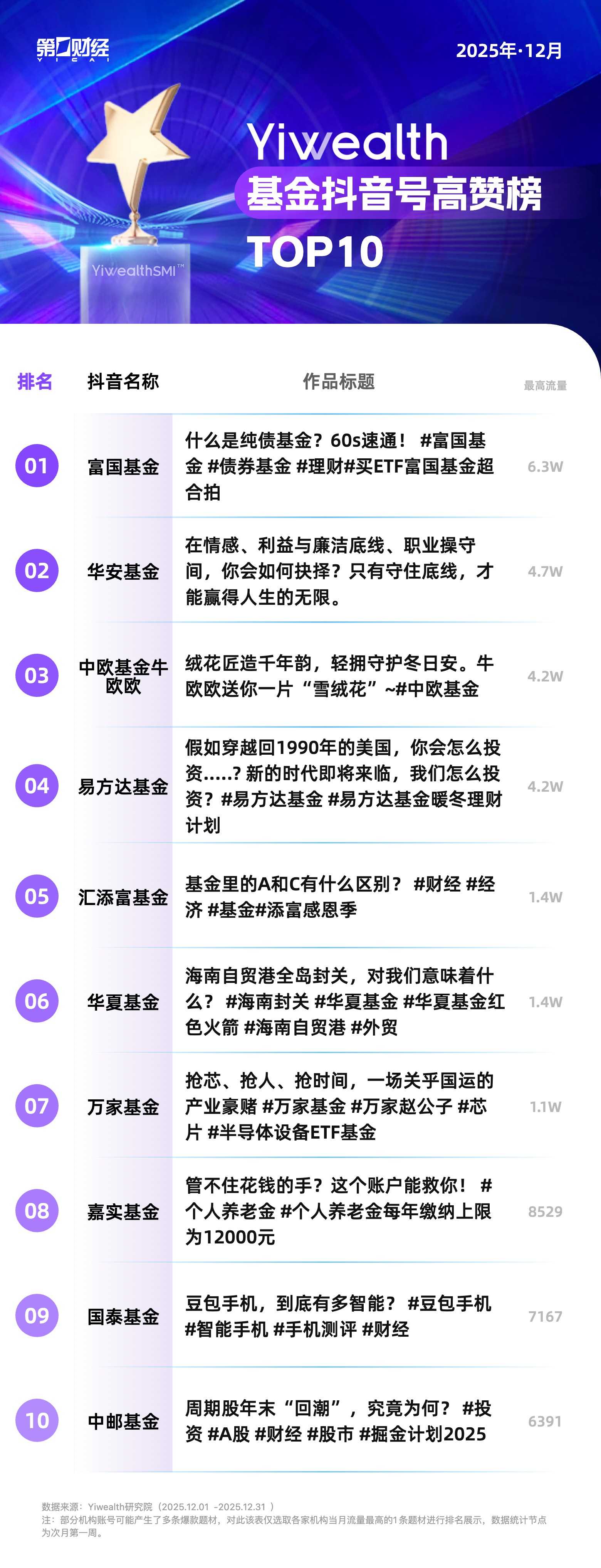
YiwealthSMI|万家基金7分钟作品上榜!抖音财经内容向深度价值转型?
Di Yi Cai Jing· 2026-02-02 05:12
Group 1 - The core viewpoint of the article highlights the transformation of Douyin's financial content towards deeper value, as evidenced by the popularity of educational content and the shift in user preferences from fragmented information to high-value learning [2][6][7] - The top three funds in the December fund social media index are China Europe Fund, Huaxia Fund, and Huaan Fund, with several funds replacing others in the top rankings [1][2] - E Fund's video on the historical failure of investing in automotive and aviation stocks during the 1990s tech revolution received over 60,000 likes, indicating a strong user engagement with high-information content [2][6] Group 2 - Wanji Fund's seven-minute deep dive into the chip industry, analyzing its ten-year development and transition from blind expansion to precise investment, also garnered over 10,000 likes, showcasing the acceptance of in-depth analysis on Douyin [2][6] - Other funds like Fuguo Fund and Huitianfu Fund focused on basic investment knowledge, with Fuguo explaining pure bond funds and Huitianfu discussing the differences between A and C share classes, reflecting the educational trend in financial content [2][5] - The article notes that Douyin's financial content is increasingly characterized by its focus on hot topics, as seen in the analyses of current events like the Hainan Free Trade Port and the "Doubao" smartphone by Huaxia Fund and Guotai Fund [2][6]
科技行情进入验证期 指数化参与更具优势
Xin Lang Cai Jing· 2026-02-01 19:22
Core Viewpoint - The investment value of Hong Kong stocks, particularly in the context of new economy and technology assets, is being re-evaluated as a significant market for long-term investment strategies [1][2]. Group 1: Investment Value of Hong Kong Stocks - Hong Kong stocks have accumulated a large number of new economy enterprises, including internet platforms, biomedicine, and high-end manufacturing, which share common characteristics in business models, growth stages, and financing needs [2]. - The market structure of Hong Kong stocks is more aligned with serving medium to long-term capital rather than short-term trading, emphasizing the importance of asset structure and long-term allocation [2][5]. - As the Chinese technology industry matures, Hong Kong has become a key market for observing and participating in Chinese technology assets, attracting global funds seeking growth and scarcity [2]. Group 2: Changes in Technology Investment - The technology sector remains a long-term focus, but the investment approach is shifting from emotion-driven to fundamental verification, necessitating participation through representative indices and tools [1][3]. - The Hang Seng Tech Index is highlighted as a representative index for Hong Kong technology assets, reflecting the overall structure of the sector and maintaining a balance between thematic focus and broad-based characteristics [3][4]. - Current technology investments emphasize valuation and fundamental alignment, with a noticeable differentiation within the tech sector as funds favor companies with performance support or clear industrial progress [3][4]. Group 3: Diversification and Asset Allocation - The role of overseas assets, including Hong Kong stocks, is increasingly seen as a "low correlation supplement" to address the rising correlation among domestic assets, which diminishes the effectiveness of traditional diversification [5][6]. - Institutional investors, particularly long-term funds like insurance, prioritize duration matching, certainty, and long-term returns, leading to a preference for assets that do not move in sync with domestic asset prices [5][6]. - The diminishing role of real estate as a non-correlated asset has prompted investors to seek new structural solutions in asset allocation, with Hong Kong QDII products viewed as tools to enhance asset structure and provide diversified income sources [6].

基金市场科技赛道愈发清晰
Jing Ji Ri Bao· 2026-01-29 22:21
2025年是基金投资者收获感满满的一年,随着资本市场回暖向好,证券投资基金业绩迎来显著改善。 Wind数据显示,2025年全年公募基金行业为投资者带来的利润突破2.6万亿元。展望2026年,市场机构 普遍认为,在资本市场深化改革、企业盈利持续改善、长期资金加速入市的背景下,基金行业在居民财 富积累与资产配置中的功能将进一步强化。 权益类基金业绩亮眼 过去一年,人工智能、生物科技等前沿技术蓬勃发展,全球科技创新进入密集活跃期,中国科技创新叙 事也翻开新的一页。以DeepSeek为代表的科技公司在全球人工智能领域里脱颖而出,驱动市场对科技 股乃至中国资产展开新一轮重估,A股市场整体呈现震荡上扬态势。截至2025年12月31日收盘,上证指 数、深证成指当年分别上涨18.41%、29.87%,为基金业绩增长奠定了坚实基础。 权益类基金"赚钱效应"明显。中国银河证券基金研究中心数据显示,2025年股票基金、混合基金的平均 净值增长率分别达29.79%、27.38%。在科技板块行情全面走高的背景下,多数绩优权益类产品顺势重 仓科技赛道,全年有超80只主动权益基金实现收益翻倍。 川财证券首席经济学家陈雳表示,2025年以来 ...
可转债ETF规模反超主动可转债基金
Zheng Quan Ri Bao· 2026-01-29 17:17
Core Insights - The overall market for convertible bond funds is experiencing a decline in scale despite the expansion of "fixed income +" funds, with convertible bond funds seeing a reduction in assets [1] - The performance of convertible bond funds remains strong, with 70% of products showing positive net value growth in the last quarter of the previous year [1] - The scale of convertible bond ETFs has surpassed that of actively managed convertible bond funds, indicating a shift towards index-based investment strategies [1] Group 1 - As of the end of 2025, the total scale of 38 actively managed convertible bond funds is 58.101 billion yuan, down by 2.5 billion yuan in the fourth quarter, while the scale of 2 convertible bond ETFs is 61 billion yuan, down by 9.1 billion yuan, resulting in a total reduction of 11.638 billion yuan [1] - The shift towards index-based investment in convertible bonds is driven by demand from long-term funds such as insurance and pension funds, which prefer stable asset allocation and risk control [2] - The scarcity of investable convertible bonds in the market has compressed the space for actively managed funds to generate excess returns, leading to a trend where some actively managed funds are transitioning to an "index-enhanced" style [2] Group 2 - Convertible bond ETFs are favored for their unique advantages, including lower fees compared to actively managed products, superior liquidity allowing for T+0 trading, and high tracking efficiency with controlled tracking errors [3] - The market trend indicates a clear shift towards index-based convertible bond products, with non-index products experiencing a noticeable contraction [2] - The current environment suggests that the demand for index-based strategies will continue to grow as the industry enters a phase of index-based development [2]
ETF兵器谱、金融产品每周见20260129:股债恒定ETF与传统固收+的竞争格局分析:指数特征、策略优势、对标产品-20260129
Shenwan Hongyuan Securities· 2026-01-29 08:11
- The report discusses the characteristics and competitive landscape of fixed-income ETFs and traditional fixed-income plus products, focusing on multi-asset indices such as constant proportion, target risk, target date, risk control, and risk parity indices[1][3][7] - The constant proportion indices include various combinations of stock and bond indices, with rebalancing triggered by deviations or on a quarterly basis[10][11][12] - The report evaluates the performance of these indices over the past three years, showing that indices with equity positions of 10% or less can control drawdowns within 1.5% and achieve annualized returns between 3% and 5%, similar to low-volatility fixed-income plus products[3][27][31] - The constant proportion ETFs have advantages such as lower management fees compared to traditional fixed-income plus funds, optimized rebalancing mechanisms, and transparent strategies[3][36][37][39] - Competing products include quantitative fixed-income plus strategies from mature teams like Bosera Funds and new entrants like Taiping Fund, Penghua Fund, and Yinhu Fund, which enhance indices such as CSI 300, CSI 1000, and Sci-Tech 100[3][41][43] - The report also compares the development of multi-asset ETFs in the US, noting that they are more commonly structured as FOFs, with the iShares Allocation series being a representative example[3][60][62]
美联储暂缓降息,科创半导体ETF、半导体设备ETF华夏回调,存储基本面仍扎实
Sou Hu Cai Jing· 2026-01-29 03:44
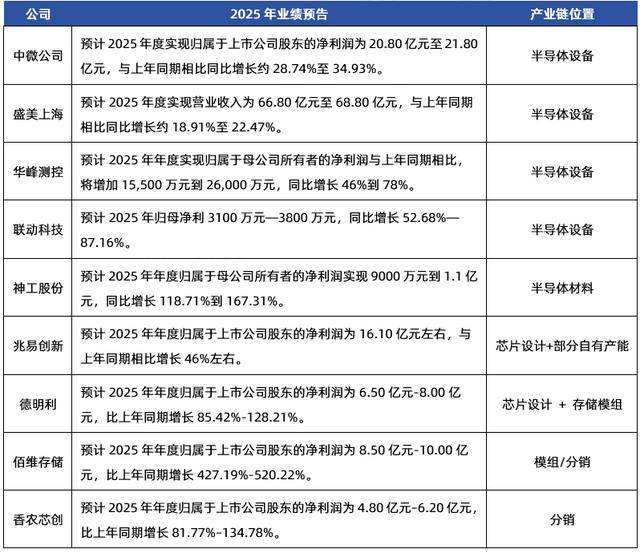
Group 1 - The core viewpoint of the articles highlights the impact of the Federal Reserve's interest rate decisions on the semiconductor industry, indicating that high rates lead to cautious capital expenditure among companies, while lower rates stimulate investment in technology and equipment [2][3] - The semiconductor sector is experiencing a mixed performance, with some stocks rising while others fall, but the trend of domestic substitution remains a key trading logic in the market [1] - Historical data shows that during past interest rate cuts, global semiconductor sales have significantly increased, suggesting a strong correlation between monetary policy and semiconductor demand [3] Group 2 - The fundamentals of the memory chip market remain solid, with companies like SK Hynix and Samsung reporting record revenues and profits in the fourth quarter, indicating robust performance in the sector [4][5] - Several companies in the semiconductor supply chain are expected to achieve substantial profit growth in 2025, with projections indicating increases in net profits ranging from approximately 28.74% to over 520% for various firms [6] - For investors, a strategy of index-based investment in semiconductor ETFs is recommended to mitigate risks associated with individual stocks, with several ETFs available that cover the entire semiconductor industry chain [7]

香港首只中证A500ETF上市——普通投资者需要知道的几件事
Sou Hu Cai Jing· 2026-01-28 07:45
Core Viewpoint - The launch of the first ETF tracking the CSI A500 index in Hong Kong allows international investors to more easily participate in the overall performance of core A-share assets [1][2]. Group 1: ETF Overview - The CSI A500 index includes 500 representative A-share companies with larger market capitalizations and higher trading volumes, covering various sectors such as finance, consumption, manufacturing, and technology [1]. - The ETF does not actively select stocks but aims to closely follow the index's performance, meaning it will likely rise or fall with the index [1]. - This ETF represents a "packaged version" of A-shares available for trading on the Hong Kong market, simplifying the investment process for international investors [3]. Group 2: Investment Implications - The CSI A500 index is considered more comprehensive compared to the CSI 300 index, making it a more diversified choice for investors looking to follow the overall A-share market rather than betting on a few large-cap companies [4]. - The listing of the ETF signals that broad-based indices are increasingly accepted by international investors, who often use index-based investments to enter new markets [4][6]. - The ETF's structure allows for compliance with cross-border investment regulations, directing funds into the A-share market [5]. Group 3: Market Dynamics - Hong Kong continues to play a bridging role between the mainland market and global capital, with a growing variety of product forms [6]. - The method of participating in A-shares is becoming more standardized, with more funds opting for index tools for market entry [7]. - The launch of the CSI A500 ETF is seen as a structural change, making A-shares more accessible and familiar to global investors [8].
“拥抱康波”!公募鏖战ETF,谁将定义下半场?
Sou Hu Cai Jing· 2026-01-23 00:18
Core Viewpoint - The ETF market in China is experiencing rapid growth, reshaping the public fund industry and becoming a critical factor for survival among fund companies [1][2][3]. Group 1: ETF Market Growth - The total scale of ETFs in China is projected to grow from 2 trillion yuan in 2024 to 3.7 trillion yuan, and further to 6 trillion yuan by 2026, marking a 60% increase [1]. - By the end of 2025, the scale of public ETFs is expected to reach an unprecedented 6 trillion yuan, equivalent to about 5% of the total market capitalization of A-shares [3]. - The growth rate of domestic ETFs from 2016 to mid-2025 is approximately 30% annually, making it the largest ETF market in Asia [4]. Group 2: Competitive Landscape - Leading companies like Huaxia Fund have reached significant milestones, with its ETF scale surpassing 1 trillion yuan, while other firms like E Fund and Southern Fund are also building substantial positions [5]. - The disparity in ETF scale among fund companies is widening, with over 100 firms yet to enter the ETF market, and about one-third of those that have entered having ETF scales below 10 million yuan [5][6]. - The competition is shifting from simple product offerings to a more complex ecosystem involving brand recognition and operational depth [10][12]. Group 3: Fee Structure and Policy Impact - The average management fee for stock ETFs has decreased from 0.46% at the beginning of 2024 to 0.25% by mid-2025, significantly reducing investor costs [7]. - Regulatory policies have facilitated the expansion of the ETF market, including simplified product approval processes and encouragement of capital inflow [6][8]. - A wave of fee reductions has intensified competition, leading to a concentration of resources among more efficient leading players [7][10]. Group 4: Brand and Product Differentiation - Fund companies are increasingly focusing on brand differentiation through product renaming and enhanced visibility, addressing the issue of product homogeneity in the ETF market [8][9]. - The shift towards a more systematic brand competition reflects a broader understanding of the need for trust and ecosystem cohesion in the ETF business [9][14]. - Huaxia Fund's strategy includes a diverse product matrix and proactive engagement in index development, enhancing its competitive edge in the ETF space [11][12].
“拥抱康波”!公募鏖战ETF,谁将定义下半场?
券商中国· 2026-01-22 23:34
Core Viewpoint - The article discusses the transformative impact of ETFs on the public fund industry in China, highlighting the rapid growth and competitive dynamics within the sector as it shifts towards index-based investment strategies [2][4][5]. Group 1: ETF Growth and Market Dynamics - The total scale of ETFs in China is projected to grow from 2 trillion yuan to 3.7 trillion yuan in 2024, and further to 6 trillion yuan by 2026, indicating a 60% increase [2]. - By the end of 2025, the scale of public ETFs is expected to reach an unprecedented 6 trillion yuan, representing about 5% of the total A-share market capitalization [4]. - The rapid growth of ETFs is reshaping the capital market, transitioning it from a retail-driven environment to one governed by rules and asset allocation logic [4][5]. Group 2: Competitive Landscape - The competition among fund companies has intensified, focusing on fee rates, liquidity, and product diversity, with leading firms like Huaxia Fund emerging as key players [3][6]. - As of January 2026, Huaxia Fund's ETF scale reached 1,016.42 billion yuan, making it the first public fund company to surpass the trillion yuan mark in non-cash ETFs [6]. - The disparity in ETF scale among fund companies is widening, with over 100 firms still not participating in the ETF market, and many existing players struggling to reach significant scale [6][7]. Group 3: Regulatory and Policy Influences - Regulatory policies have played a crucial role in the expansion of the ETF market, including simplified product approval processes and the promotion of ETF interconnectivity [7]. - A significant fee reduction trend has emerged, with the average management fee for stock ETFs dropping from 0.46% in early 2024 to 0.25% by mid-2025, enhancing investor affordability [8][9]. Group 4: Branding and Product Differentiation - A wave of product renaming has swept the industry, with major fund managers like Huaxia Fund adopting new naming conventions to enhance product recognition and brand loyalty [9][10]. - The focus of competition is shifting from mere product offerings to a more comprehensive brand narrative, addressing the issue of product homogeneity in the ETF market [10][11]. Group 5: Huaxia Fund's Competitive Advantage - Huaxia Fund has established a robust ecosystem for its ETFs, characterized by a diverse product matrix and a commitment to low fees and high liquidity [14][15]. - The company's strategy involves integrating active research capabilities into passive investment tools, allowing for innovative product development that anticipates market trends [16][17]. - This comprehensive approach has positioned Huaxia Fund as a leader in the ETF space, creating a sustainable competitive advantage that is difficult for others to replicate [18].