智能化变革

Search documents
华为轮值董事长孟晚舟发表新年致辞:智能时代的新征程已经开启
Sou Hu Cai Jing· 2025-12-30 02:28
Core Viewpoint - The company emphasizes the importance of embracing the wave of intelligent transformation as a long-term strategic opportunity, highlighting that past successes do not guarantee future achievements and that victory belongs to those who dare to confront challenges and engage in self-criticism [1][8]. Group 1: Strategic Focus - The company is committed to deepening its industry vertical operations and leveraging its diverse capabilities to empower various sectors [7]. - A focus on building an open-source ecosystem around its Kunpeng and Ascend technologies aims to meet the diverse needs of different industries [7]. - The "water strategy" is designed to enhance pipeline flow, integrating AI into communication networks to transition from connectivity to intelligent connectivity [7]. Group 2: Technological Advancements - The company is advancing AI technology integration with industry knowledge, shifting from isolated efficiency improvements to enhancing core business operations [6]. - The development of AI data centers is aimed at maximizing output efficiency, ensuring that every watt generates more tokens [7]. - Innovations such as liquid cooling and ultra-fast charging are being implemented to provide high-quality charging experiences wherever needed [7]. Group 3: Ecosystem Development - The company has successfully assisted operators in building 5G-A networks, providing high-speed connectivity to 60 million users [4]. - The HarmonyOS ecosystem has accelerated from being merely usable to highly functional, with 36 million users benefiting from improved experiences [4]. - Collaborations with automotive partners have led to the installation of intelligent systems in over 1.4 million passenger vehicles, enhancing safety and driving experiences [4]. Group 4: Commitment to Sustainability - The company has produced over 20 trillion kilowatt-hours of green electricity, equivalent to planting 1.45 billion trees, showcasing its commitment to sustainability [5]. - The company aims to explore AI applications in various sectors, including healthcare, steel production, and oil and gas exploration, to drive efficiency and innovation [5].

华为轮值董事长孟晚舟,最新发声
第一财经· 2025-12-30 02:26
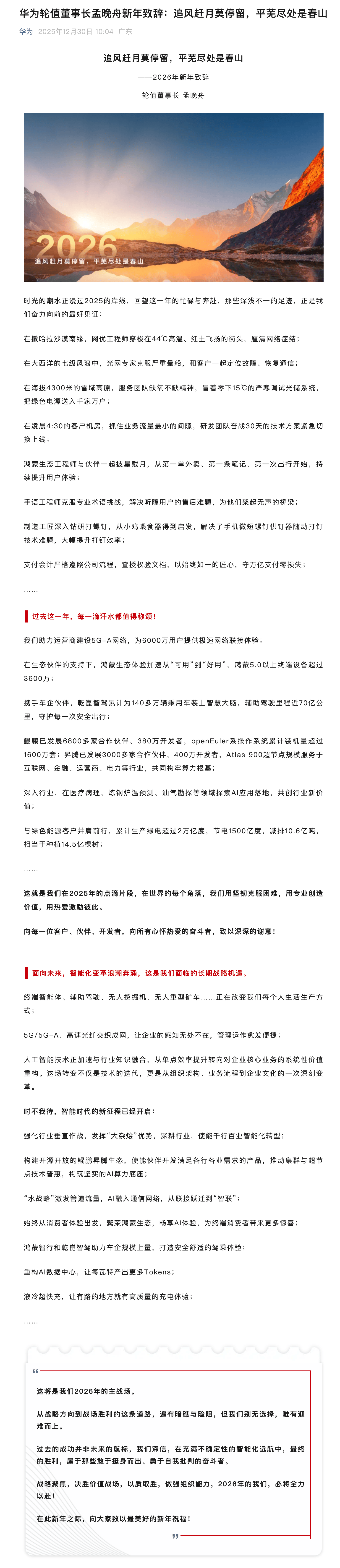
Core Viewpoint - The core message emphasizes the transformative impact of artificial intelligence (AI) on business operations, shifting from efficiency improvements to a comprehensive value reconstruction of core business processes [1][7]. Group 1: Strategic Focus for 2026 - The company will concentrate on vertical industry operations, building an open-source ecosystem for Kunpeng and Ascend, and enhancing the HarmonyOS ecosystem while reconstructing AI data centers [1][8]. - The journey towards strategic goals is acknowledged to be fraught with challenges, but the company is committed to facing these difficulties head-on [1][8]. Group 2: Achievements in 2025 - The company has supported operators in building 5G-A networks, providing high-speed connectivity to 60 million users [5]. - The HarmonyOS ecosystem has seen over 36 million devices with versions above Harmony 5.0, indicating significant user experience improvements [5]. - Collaborations with automotive partners have led to the installation of smart systems in over 1.4 million vehicles, contributing to nearly 7 billion kilometers of assisted driving [5]. - The Kunpeng ecosystem has expanded to over 6,800 partners and 3.8 million developers, while the openEuler operating system has reached an installation base of over 16 million [5]. Group 3: Future Opportunities - The ongoing wave of intelligent transformation presents a long-term strategic opportunity for the company [6]. - The integration of AI into various sectors is expected to enhance operational efficiency and create new value across industries [7]. - The company aims to leverage its strengths in AI and connectivity to drive innovation and improve consumer experiences [7].

华为轮值董事长孟晚舟新年致辞:智能化变革浪潮奔涌是我们面临的长期战略机遇
Di Yi Cai Jing· 2025-12-30 02:16
Core Viewpoint - The company emphasizes the long-term strategic opportunities presented by the wave of intelligent transformation, which is reshaping production and lifestyle through advanced technologies [1] Group 1: Technological Advancements - Intelligent terminals, assisted driving, unmanned excavators, and unmanned heavy-duty mining trucks are changing the way individuals live and work [1] - The integration of 5G/5G-A and high-speed fiber networks enhances enterprise perception and operational management [1] - Artificial intelligence technology is accelerating its integration with industry knowledge, shifting from isolated efficiency improvements to a systematic value reconstruction of core business operations [1] Group 2: Organizational Transformation - The ongoing transformation is not just a technological iteration but also a profound change in organizational structure, business processes, and corporate culture [1]
孟晚舟发布华为新年致辞:战略聚焦,以质取胜
Feng Huang Wang· 2025-12-30 02:13
Core Insights - The core strategy of the company is "strategic focus" and "quality-driven success" [1][2] - The company aims to seize long-term opportunities in the intelligent transformation while avoiding opportunism [2] Business Progress - In 2025, the company will focus on advancements in 5G-A, Harmony ecosystem, QianKun intelligent driving, and industry digitalization [1] - The 5G-A network currently serves 60 million users [1] - Over 36 million devices are running Harmony 5.0 and above, with more than 350,000 applications and services available in the app market [1] - QianKun intelligent driving has been deployed in over 1.4 million vehicles, with nearly 7 billion kilometers driven using assisted driving [1] - The digital energy sector has produced over 2 trillion kilowatt-hours of green electricity, resulting in a reduction of 1.06 billion tons of emissions [1] Strategic Initiatives - The company emphasizes strengthening vertical operations across various industries and deepening its presence in intelligentization [1] - The Kunpeng and Ascend ecosystems are being developed, with over 6,800 partners for Kunpeng and over 3,000 for Ascend [1] - The "Water Strategy" is being implemented to transition networks from connectivity to "intelligent connectivity" [1] - Over 80 AI application agents have been launched within the Harmony AI experience [1] - The company is also focusing on AIDC reconstruction and ultra-fast charging network development [1] Future Plans - The company plans to increase investment in core technologies over the next three years, particularly during economic downturns [2] - Quality management will be elevated to a strategic level, aiming for "high quality and maintenance-free product lifecycle" [2] - A three-year training program is planned to cultivate a workforce capable of tackling challenges in the intelligent era [2]

首批15家领航级智能工厂出炉!长三角成智造标杆集聚高地
Guo Ji Jin Rong Bao· 2025-12-03 13:04
Core Insights - The Ministry of Industry and Information Technology, along with five other ministries, has announced the first batch of 15 leading smart factories for 2025, showcasing advancements in key industries such as equipment manufacturing, raw materials, electronic information, and consumer goods [1] - The Yangtze River Delta region, particularly Shanghai, Jiangsu, and Zhejiang, has excelled in this initiative, with Shanghai leading the nation in the number of selected factories [1][3] - The establishment of a tiered cultivation system for smart factories began in 2024, categorizing them into four levels: basic, advanced, excellent, and leading, with the leading level representing the pinnacle of smart manufacturing in China [1][4] Industry Developments - Leading smart factories are demonstrating significant innovation value, with Shanghai Aerospace Equipment Manufacturing Factory achieving a reduction in launch costs through an intelligent full-process chain model [2] - In the raw materials sector, Nanjing Steel has achieved a 98.5% on-time delivery rate for customized steel production using digital twin and AI technologies, while Baosteel has gained a competitive edge through data-driven manufacturing [2] - Hikvision in the electronic information sector has reduced production line changeover time by 50% through self-developed IoT, AI, and big data technologies, providing replicable solutions for the electronics manufacturing industry [2] Regional Performance - Shanghai has cultivated 2 national leading smart factories, 28 national excellent smart factories, and over 300 advanced smart factories, maintaining its position as the top city in China for smart manufacturing [3] - The city plans to focus on a three-pronged development strategy that includes tiered cultivation of smart factories, providing smart manufacturing system solutions, and building a standard framework for smart manufacturing [3] - Leading smart factories serve as demonstration models, promoting innovation and transformation across the supply chain, with modular solutions available for small and medium-sized enterprises to facilitate their own smart upgrades [3] Construction Achievements - As of now, China has established over 35,000 basic smart factories, more than 7,000 advanced smart factories, 230 excellent smart factories, and 15 leading smart factories [4] - Smart factory upgrades have led to an average reduction of 29% in product development cycles, a nearly 22% increase in production efficiency, and a 20% decrease in carbon emissions [4] - Leading smart factories are positioned as integrated platforms for technological innovation, standard output, and industry collaboration, aligning with the core demands of high-quality manufacturing development during the 14th Five-Year Plan [4]
电厂会“思考” 设备能“自理”
Zhong Guo Dian Li Bao· 2025-12-02 08:08
Core Insights - The article highlights the significant transformation of the Zhundong Power Plant through the implementation of intelligent systems, which have redefined traditional electricity production paradigms [1][2][3] Group 1: Intelligent Transformation - The Zhundong Power Plant has established a comprehensive smart system covering equipment, production, and personnel, aimed at enhancing safety, efficiency, and environmental sustainability [2][3] - The plant's intelligent station model, referred to as the "Zhundong Model," integrates technology with core production principles, moving away from traditional reliance on human experience to data-driven decision-making [2][3] Group 2: Operational Efficiency - The introduction of robots and AI has significantly reduced the need for manual inspections, allowing for more precise monitoring and maintenance of equipment [2][3][4] - The plant has achieved full automation in coal handling processes, enhancing operational efficiency while eliminating hazardous manual labor [4] Group 3: Advanced Monitoring Systems - The plant employs advanced monitoring systems that utilize various technologies, such as infrared and acoustic sensors, to detect anomalies and provide real-time alerts [3][6] - Drones are used for inspections, drastically reducing the time and risk associated with traditional methods, allowing for quick and accurate data collection [3][4] Group 4: Smart Decision-Making - The "smart brain" of the plant autonomously adjusts operations based on real-time environmental data, optimizing energy consumption and preventing operational issues [6][7] - The intelligent monitoring system continuously learns from operational data, improving its predictive capabilities and recommendations over time, thus enhancing overall safety and efficiency [6][7] Group 5: Contribution to Energy Revolution - The Zhundong Power Plant is positioned at the forefront of the energy revolution, contributing to the development of a safe, efficient, and clean modern energy system through ongoing technological innovation [7]
比亚迪的“刀片”和日本市场的“铠甲”
Jing Ji Guan Cha Wang· 2025-11-03 04:48
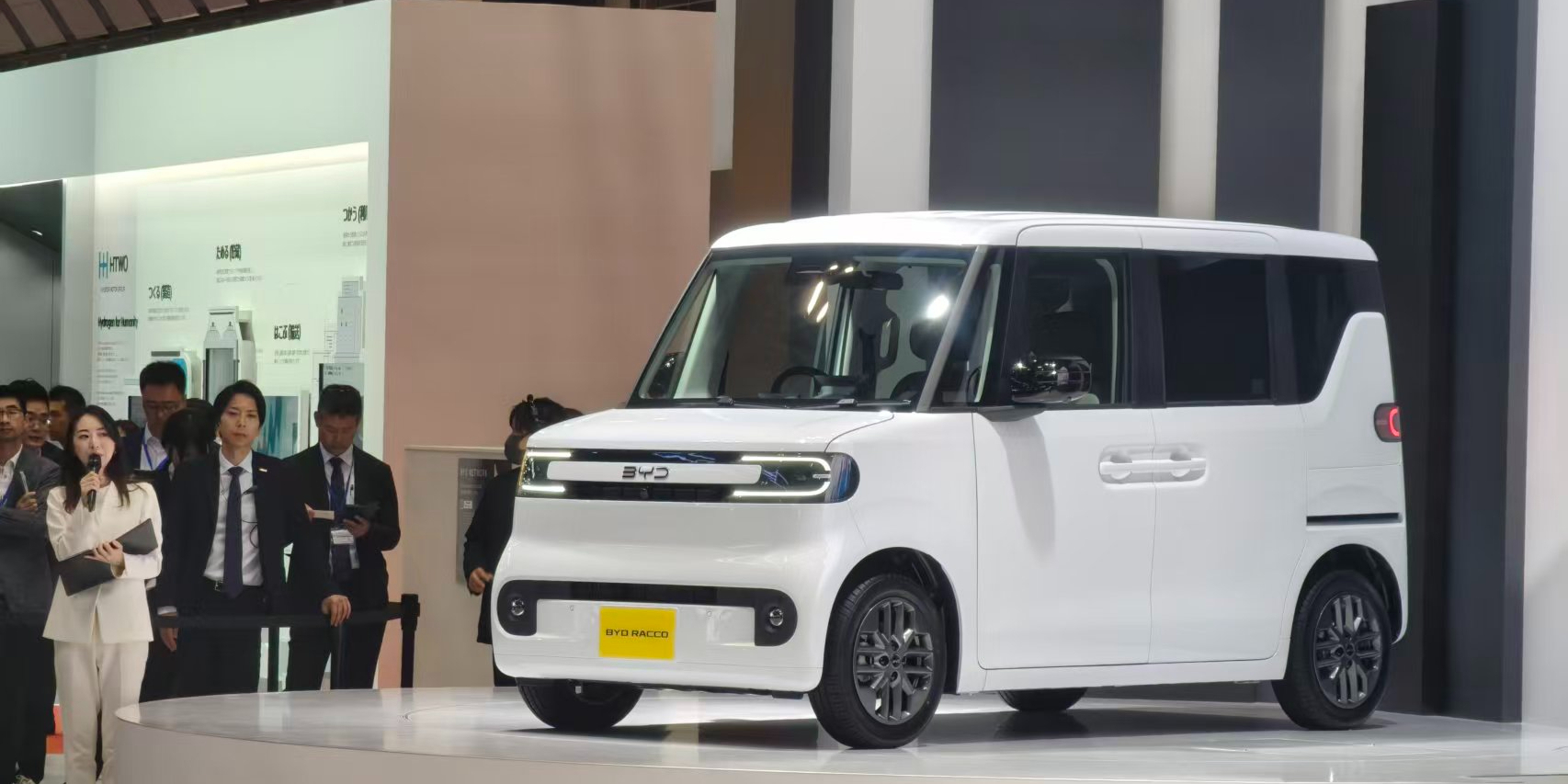
Core Viewpoint - The 2025 Japan Mobility Show highlights the contrasting approaches of Japanese automakers focusing on electrification and future mobility, while only BYD represents the advanced electrification level of Chinese automakers [2][3]. Group 1: Japanese Automakers' Initiatives - Japanese automakers showcased a diverse range of electric and future mobility products, including Toyota's Corolla concept car, Honda's "0 series" electric models, and Nissan's new LEAF [2]. - Other Japanese brands like Mazda, Subaru, Suzuki, and Mitsubishi also presented their electrification products, indicating a strong local commitment to electric mobility [2]. - The event reflects Japan's automotive industry contemplating and adjusting to the wave of electrification and automation, although the transformation is still in its early stages [3]. Group 2: BYD's Market Position - BYD has been in the Japanese market for over 20 years, initially focusing on battery and electronic businesses before introducing electric buses and commercial vehicles since 2015 [4]. - In the last three years, BYD has launched several passenger car models in Japan, including ATTO3, DOLPHIN, SEAL, and SEALION7 [5]. - BYD's sales in Japan have reached approximately 7,100 units, which is modest compared to its performance in other global markets, highlighting the challenges of penetrating the Japanese market [8]. Group 3: K-Car Strategy - BYD's introduction of the K-EV model, specifically designed for the Japanese market, aims to address local consumer preferences for K-Cars, which account for 35% to 40% of the market share [8][9]. - The K-EV offers a range of 180 kilometers and features like sliding doors, differentiating it from traditional small displacement fuel K-Cars [8]. - The success of BYD's K-Car in Japan will depend on the speed of changing consumer perceptions towards electric vehicles [9]. Group 4: Market Dynamics and Future Outlook - The Japanese automotive market is dominated by local brands, with over 90% market share, making it difficult for non-Japanese brands to compete [8]. - Despite the challenges, there is a growing acceptance of electric vehicles in Japan, with a 45.7% increase in registered imported electric vehicles from last year to the first half of this year [10]. - BYD plans to expand its product lineup in Japan, aiming to establish 7 to 8 models by 2027 and increase its sales points from 66 to 100 [7][10].

“一”见中国|一块煤炭的生命之旅
新华网财经· 2025-09-30 12:13
Core Viewpoint - The article emphasizes the transformation of China's coal industry from traditional methods to modern, intelligent practices, showcasing the innovative development of the energy sector in China [2][9]. Group 1: Intelligent Transformation in Coal Mining - The coal industry in China has moved away from "extensive" mining practices, integrating intelligence throughout the entire process of coal extraction, washing, and transportation [5]. - The Shenhua Group's Shendong Daliuta coal mine exemplifies this intelligent transformation, featuring organized and technologically advanced operations [6]. - Advanced machinery, such as high-efficiency coal cutters, can extract over 36,800 tons of coal per day, significantly improving production efficiency and worker safety through remote operation systems [6][8]. Group 2: Efficient Coal Processing - After extraction, coal undergoes a transformation at the washing and selection center, where an intelligent sorting system can process 3,400 tons of coal per hour, effectively separating coal from impurities [8]. - The coal can be further processed into various chemical products, maximizing its value, with the recovery of fine coal slurry reaching 4 million tons annually [8]. - The intelligent loading system ensures precise loading with an error margin of only 0.05 tons, minimizing resource waste and reducing dust pollution during transportation [8]. Group 3: Distribution and Impact - The processed coal is transported via an intelligent railway system to various regions, including Beijing-Tianjin-Hebei and the southeast coast, serving as a vital energy source for power plants [9]. - The entire journey of coal reflects not only the energy flow but also the significant modernization and innovation within China's coal industry [9].
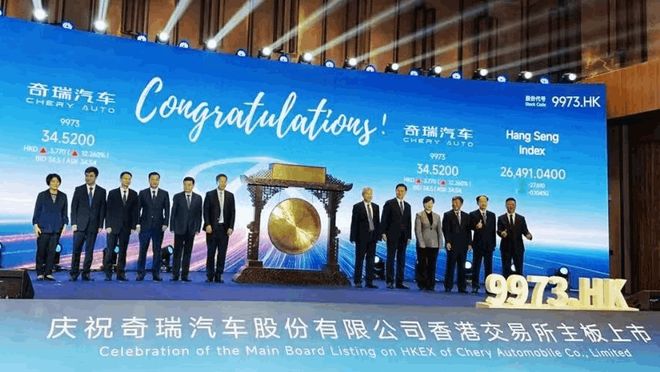
奇瑞汽车IPO廿一年终登陆港交所,IDG资本智慧出行投资版图再迎上市新企
Xin Lang Cai Jing· 2025-09-25 03:28
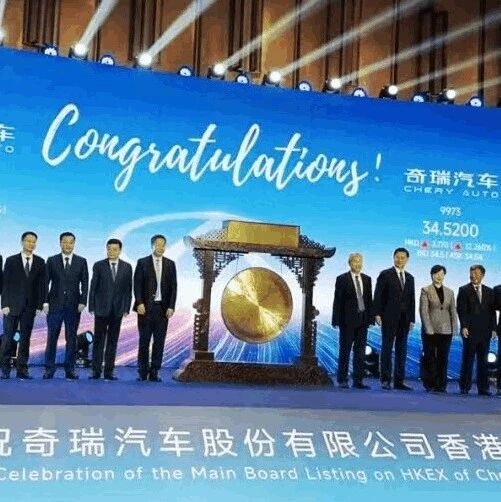
Core Viewpoint - Chery Automobile Co., Ltd. is set to officially list on the Hong Kong Stock Exchange on September 25, 2025, under the stock code "9973," raising a total of HKD 9.145 billion, potentially becoming the largest IPO of an automotive company in Hong Kong in 2025 [2] Group 1: Company Overview - Chery has become the second largest independent passenger car brand in China and the eleventh largest globally, based on 2024 global passenger car sales [2] - Chery is the only company among the top twenty global passenger car manufacturers to achieve over 25% growth in sales across electric vehicles, fuel vehicles, domestic market, and overseas market from 2023 to 2024 [2] - The company has exported over 13 million vehicles since its first export in 2001, ranking first in China's independent brand passenger car exports for 22 consecutive years since 2003 [3] Group 2: Growth and Strategy - Chery's electric vehicle sales exceeded 580,000 units in 2024, marking a year-on-year increase of 232.7%, with Q1 2025 sales reaching 163,500 units, up 171.8% [3] - The company has implemented a multi-technology route for its new energy strategy, maintaining core technology advantages in fuel vehicles while actively promoting electrification [3] - Chery has achieved significant sales in various international markets, ranking first among Chinese independent brands in Europe, South America, and the Middle East and North Africa in 2024 [3] Group 3: Investment and Support - IDG Capital has made two significant investments in Chery in 2023 and early 2024, providing ongoing support in international technology cooperation, market expansion, and capital structure optimization [4] - IDG Capital has a long-standing presence in the automotive industry, supporting numerous innovative companies in the smart vehicle and autonomous driving sectors [5] - The firm aims to drive technological iteration, industry integration, and global competition, positioning itself as a key enabler in the evolving smart mobility landscape [6]
奇瑞汽车IPO廿一年终登陆港交所,IDG资本智慧出行投资版图再迎上市新企
IPO早知道· 2025-09-25 03:06
Core Viewpoint - Chery Automobile is set to go public on the Hong Kong Stock Exchange on September 25, 2025, with an IPO that could raise approximately HKD 9.145 billion, making it the largest IPO of a car company in Hong Kong for 2025 [2] Group 1: Company Overview - Founded in 1997, Chery has become the second-largest independent passenger car brand in China and the eleventh-largest globally, based on projected 2024 sales [2] - Chery is the only company among the top twenty global passenger car manufacturers to achieve over 25% growth in sales across electric vehicles, fuel vehicles, and both domestic and overseas markets from 2023 to 2024 [2] Group 2: International Expansion - Chery has been exporting vehicles since 2001, with sales in over 100 countries and regions, totaling over 13 million units sold globally [3] - The company has maintained its position as the top exporter of independent brand passenger cars in China for 22 consecutive years since 2003 [3] - In 2024, Chery ranked first among Chinese independent brands in sales in Europe, South America, and the Middle East and North Africa, and second in North America and Asia (excluding China) [3] Group 3: New Energy and Technology Strategy - Chery's new energy vehicle sales exceeded 580,000 units in 2024, marking a year-on-year increase of 232.7% [3] - In Q1 2025, Chery continued its rapid growth with new energy vehicle sales of 163,500 units, up 171.8% year-on-year [3] - The company is pursuing a multi-technology route for its new energy strategy, maintaining its core competencies in fuel vehicle engines while actively transitioning to electric vehicles [3] Group 4: Investment and Support - IDG Capital has made significant investments in Chery in 2023 and early 2024, focusing on international technology cooperation, market expansion, and capital structure optimization [4] - IDG Capital has a long history in the automotive industry and has supported numerous innovative companies in the mobility sector, including Xpeng, NIO, and Pony.ai [4][5] - The firm aims to drive technological iteration and industry integration, positioning itself as a key enabler in the evolving smart mobility landscape [5]