未来能源

Search documents
商业航天、核聚变、超导……国防军工板块热点密集!机构:“十五五”军民贸有望共振
Xin Lang Cai Jing· 2025-12-14 11:43
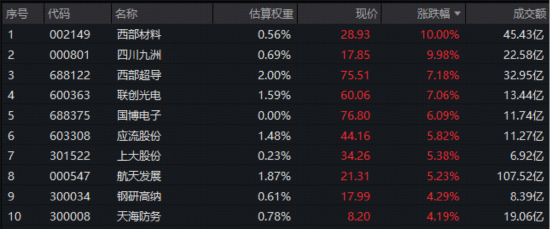
国防军工热度居高不下!12月12日,商业航天、可控核聚变、超导等多题材联袂带动,高人气国防军工 ETF(512810)收盘价再创逾1个月新高,相关成份股表现尤为亮眼,西部材料6天4板再创新高,应流 股份、航天发展亦创历史新高,四川九洲尾盘封板。 | 序号 | 什么样 | 名称 | 估算权重 | 现价 | 涨跌幅 ▼ | 成交额 | | --- | --- | --- | --- | --- | --- | --- | | 1 | 002149 | 西部材料 | 0.56% | 28.93 | 10.00% | 45.43 Z | | 2 | 000801 | 四川九洲 | 0.69% | 17.85 | 9.98% | 22.58亿 | | 3 | 688122 | 西部超导 | 2.00% | 75.51 | 7.18% | 32.95亿 | | 4 | 600363 | 联创光电 | 1.59% | 60.06 | 7.06% | 13.44亿 | | ਦੇ | 688375 | 国博电子 | 0.00% | 76.80 | 6.09% | 11.74亿 | | 6 | 603308 | 应流股份 | 1 ...


涨停,新高!国防军工板块牛股扎堆,512810连涨三周!
Xin Lang Cai Jing· 2025-12-12 11:54
Core Viewpoint - The defense and military industry is experiencing a significant surge, driven by themes such as commercial aerospace, controllable nuclear fusion, and superconductivity, leading to a new high for the popular defense military ETF (512810) [1][7]. Group 1: ETF Performance - The defense military ETF (512810) closed at a new high, marking a 2.59% increase over the week, significantly outperforming the Shanghai Composite Index (-0.34%) and the CSI 300 Index (-0.08%) [2][8]. - The ETF has achieved three consecutive weeks of gains, with a total trading volume of 409 million yuan for the week, indicating a substantial increase in trading activity compared to the previous week [2][8]. Group 2: Stock Performance - Notable stocks within the ETF include: - Western Materials (002149) with a 10.00% increase, closing at 28.93 yuan and a trading volume of 454.3 million yuan [2][8]. - Sichuan Jiuzhou (000801) rose by 9.98%, closing at 17.85 yuan with a trading volume of 2.258 billion yuan [2][8]. - Aerospace Development (000547) increased by 5.23%, closing at 21.31 yuan with a trading volume of 10.752 billion yuan [2][8]. Group 3: Industry Trends - The defense and military sector is witnessing a rebound from previous lows, primarily driven by the accelerated development of new domains and technologies, including commercial aerospace and future energy [4][10]. - The industry is evolving from a reliance on domestic demand to a new development model characterized by three driving forces: domestic demand foundation, foreign trade expansion, and civilian-military integration [4][10]. - Analysts predict that the military industry will stabilize and improve, with a potential resurgence in demand expected in 2025, coinciding with the start of the new five-year plan in 2026 [4][10]. Group 4: Investment Opportunities - The defense military ETF (512810) serves as an efficient investment tool, covering various hot themes such as commercial aerospace, controllable nuclear fusion, and military AI, making it a one-click investment option for core assets in the defense sector [5][11].
今晚21:30,中央广播电视总台首届《直通未来年度盛典》将播出
母基金研究中心· 2025-12-09 09:02
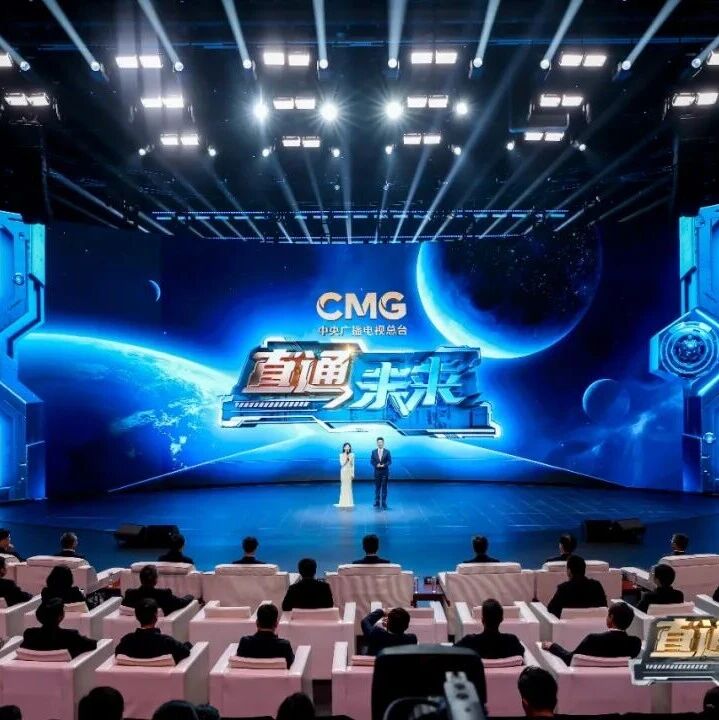
Group 1 - The first "Directly Connecting to the Future Annual Ceremony" was held on November 6 in Suzhou, Jiangsu Province, focusing on the theme "The Future of Industry, Industry of the Future" to showcase future industry samples and share emerging technology commercialization models [2] - The ceremony will be broadcasted on CCTV Finance Channel on December 9 at 21:30, with simultaneous streaming on new media platforms [4] - Key focus areas of the ceremony include low-altitude economy, artificial intelligence, embodied intelligence, commercial aerospace, brain-computer interfaces, and future energy, featuring leading companies and innovative entities from these sectors [2] Group 2 - The event was attended by representatives from over a hundred future industry sample companies, industry experts, and notable investment institutions, highlighting China's innovative strength and new landscape in future industries [2]
首批265名科技工作者拟入选河南郑州中小学科学顾问专家库
Zheng Zhou Ri Bao· 2025-11-18 12:19
Core Viewpoint - The establishment of the Zhengzhou Primary and Secondary School Science Advisory Expert Database aims to enhance the quality of science education in Zhengzhou, leveraging the expertise of 265 selected science professionals from various sectors [1][2] Group 1: Expert Database Formation - The Zhengzhou Education Bureau, in collaboration with the Science and Technology Bureau and the Science and Technology Association, has created the "Zhengzhou Primary and Secondary School Science Education Advisory Expert Database" [1] - The first batch of 265 experts has been selected through a process involving public solicitation, unit recommendations, targeted invitations, and qualification reviews [1] Group 2: Expert Profiles - The selected experts come from diverse institutions including universities, research institutes, science museums, youth palaces, museums, cultural centers, libraries, hospitals, and technology enterprises [1] - These experts possess strong theoretical foundations, extensive practical experience, and significant industry influence in fields such as artificial intelligence, robotics, biotechnology, and renewable energy [1] Group 3: Implementation Timeline - The public announcement of the first batch of expert members will take place from November 17 to November 21, 2025 [2] - After the expert members are confirmed, local primary and secondary schools will select one or more experts from the database to be appointed as science vice principals based on a "nearby and mutual selection" principle [2]
母基金研究中心助力中央广播电视总台首届《直通未来年度盛典》
母基金研究中心· 2025-11-08 08:47
Group 1 - The event "Directly Connecting to the Future Annual Ceremony" was held in Suzhou, Jiangsu Province, focusing on the theme "The Future of Industry, Industry of the Future" to showcase future industry samples and share emerging technology commercialization models [2] - The ceremony aligns with the strategic direction of nurturing and expanding emerging and future industries as outlined in the 20th Central Committee's Fourth Plenary Session, presenting innovative achievements in future industry tracks and analyzing application scenarios and development paths [4][5] - The event featured key figures from various sectors, including the Ministry of Industry and Information Technology and representatives from leading future industry companies, highlighting advancements in low-altitude economy, artificial intelligence, embodied intelligence, commercial aerospace, brain-computer interfaces, and future energy [7][8] Group 2 - The ceremony included discussions on the development, opportunities, and challenges in the commercial aerospace sector, featuring industry leaders and experts [11] - The Mother Fund Research Center announced the initiation of the 2025 annual list evaluation to encourage excellence in private equity mother funds and promote healthy development in the equity investment industry [13][17]

10月新登记12家私募基金管理人,较上月增加7家丨睿兽分析
创业邦· 2025-11-07 00:09
Core Viewpoint - In October 2025, the Asset Management Association of China approved the registration of 12 new private equity and venture capital fund managers, including 7 state-owned and 5 market-oriented institutions [5][6]. Group 1: Fund Managers Overview - Jiangsu Nongken Yida Private Fund Management Co., Ltd. was established on May 16, 2005, with a registered capital of 10 million RMB, primarily focusing on modern agriculture and related investments [7]. - Xiangjiang Zhijing (Shenzhen) Private Equity Investment Fund Management Co., Ltd. was founded on August 25, 2025, with a registered capital of 50 million RMB, controlled by a major cultural state-owned enterprise [7]. - Gansu Longfa Private Fund Management Co., Ltd. was established on July 31, 2024, with a registered capital of 10 million RMB, controlled by the Lanzhou New Area Financial and State-owned Assets Supervision Administration [7]. - Central Enterprise Strategic New Industry Development Private Fund Management Co., Ltd. was founded on September 29, 2025, with a registered capital of 100 million RMB, backed by five central enterprises [8]. - Beijing Guofeng Private Fund Management Co., Ltd. was established on April 18, 2024, with a registered capital of 10 million RMB [8]. - Henan Natural Resources Private Fund Management Co., Ltd. was founded on November 1, 2023, with a registered capital of 20 million RMB, focusing on ecological restoration and resource management [8]. - Nantong Strategic New Private Fund Management Co., Ltd. was established in July 2024, with a registered capital of 40 million RMB, focusing on strategic emerging industries [8]. - Other fund managers include Beijing Junke Danmu, Hangyu Aerospace Information Industry Fund, Longtian (Shenzhen) Private Equity Fund, Zhejiang Provincial Innovation Industry Fund, and Hangzhou Leap Capital, each with specific focuses and capital structures [7][8]. Group 2: Registration and Capital Analysis - Among the 12 newly registered fund managers, 8 have a paid-in capital ratio of 100%, while Xiangjiang Zhijing has a notably low ratio of 20% [13]. - The average time taken for registration was 83 days, with the fastest being 9 days for Central Enterprise Strategic New Industry Development Fund and the slowest being 264 days for Nantong Strategic New Fund [15]. - The registration process involved 10 different law firms providing legal services to the fund managers [17]. Group 3: Capital and Operational Insights - The registered capital and paid-in capital analysis shows that most fund managers have met their capital commitments, with some like Henan Natural Resources having only 50% paid-in capital [14]. - The operational focus of these funds includes strategic emerging industries such as artificial intelligence, aerospace, and high-end equipment, aligning with national development strategies [8][9].

创业板指涨近3%创年内新高,光储能赛道受资金关注
Sou Hu Cai Jing· 2025-10-30 06:07
Group 1 - The three major indices opened lower, with the Shanghai Composite Index down 0.21%, the Shenzhen Component Index down 0.22%, and the ChiNext Index down 0.32% [1] - The Federal Reserve announced a 25 basis point cut in the benchmark interest rate to a range of 3.75% to 4.00%, marking the second consecutive meeting of rate cuts [1] - A fund initiated by the State-owned Assets Supervision and Administration Commission (SASAC) has a first-phase scale of 51 billion yuan, focusing on supporting industries such as artificial intelligence, quantum technology, and future energy [1] Group 2 - In the first nine months of this year, domestic energy storage projects added 255.8 GWh of new tenders, a year-on-year increase of 97.7% [2] - The fourth quarter is typically a peak season for tenders, with annual tenders expected to reach at least 361.6 GWh [2] - The market is witnessing a positive rotation of hotspots, with significant performance in the new energy and non-ferrous metal sectors, which is beneficial for the continuation of the current upward trend [2]

文字早评:宏观金融类-20251030
Wu Kuang Qi Huo· 2025-10-30 03:03
Report Industry Investment Ratings No relevant content provided. Core Views of the Report - For the stock index, after a continuous rise, hot sectors are rotating rapidly, with technology remaining the market's main theme. Policy support for the capital market remains unchanged, and the medium - to - long - term strategy is to go long on dips [4]. - For treasury bonds, the central bank's restart of treasury bond trading is short - term positive for the bond market. In the medium term, the bond market in the fourth quarter is affected by fundamentals, the implementation time of fund fee regulations, and institutional allocation power. The overall bond market may oscillate, with potential for an oscillatory recovery [7]. - For precious metals, after Powell's hawkish statement, gold and silver prices dropped in the short term. The Fed's easing monetary policy needs time to be released, but the "rate cut + balance - sheet expansion" policy is strengthened. It is recommended to go long on silver on dips [9]. - For non - ferrous metals, most metal prices are expected to show an oscillatory and strong - running trend due to factors such as improved Sino - US relations, expected Fed rate cuts, and supply disturbances [12][14][17][19]. - For black building materials, in the long - term, steel prices have an upward logic under a loosening macro - environment, but in the short - term, real demand is weak. The iron ore market is oscillating, and the black sector is not pessimistic in the long - term [34][36][44]. - For energy and chemicals, different products have different trends. For example, rubber prices are rising, and for oil, a low - buying and high - selling strategy is maintained, with short - term waiting recommended [51][58]. - For agricultural products, different products have different trends. For example, the short - term trend of pig prices is a rebound, while the medium - term trend is downward, and the egg market is expected to bottom out [80][82]. Summaries by Related Catalogs Macro - Financial Stock Index - **Market Information**: Sino - US leaders will meet; a central - enterprise strategic emerging industry development fund is launched; domestic energy - storage project tenders are increasing; some companies' Q1 - Q3 net profits are rising [2]. - **Strategy**: The market's main theme is technology, and the medium - to - long - term strategy is to go long on dips [4]. Treasury Bonds - **Market Information**: Bond contract prices have changed; Sino - US leaders will meet; a city business improvement plan is issued; the central bank conducts reverse repurchase operations [5][6]. - **Strategy**: The short - term bond market is positive, and the medium - term market is affected by multiple factors, with an expected oscillatory recovery [7]. Precious Metals - **Market Information**: Gold and silver prices are rising; the Fed's October interest - rate meeting has a "hawkish rate - cut" tone [8]. - **Strategy**: Go long on silver on dips, with reference price ranges provided [9]. Non - Ferrous Metals Copper - **Market Information**: LME copper prices hit a record high; inventory and price differentials have changed [11]. - **Strategy**: Copper prices are expected to oscillate strongly, with reference price ranges provided [12]. Aluminum - **Market Information**: Aluminum prices rose and then fell; inventory and price differentials have changed [13]. - **Strategy**: Aluminum prices are expected to oscillate strongly, with reference price ranges provided [14]. Zinc - **Market Information**: Zinc prices rose; inventory and price differentials have changed [15]. - **Strategy**: Zinc prices are expected to oscillate strongly in the short - term [17]. Lead - **Market Information**: Lead prices rose; inventory and price differentials have changed [18]. - **Strategy**: Lead prices are expected to run strongly in the short - term [19]. Nickel - **Market Information**: Nickel prices rebounded; cost and price information of related products are provided [20]. - **Strategy**: Short - term observation is recommended, and long positions can be considered at appropriate prices [21]. Tin - **Market Information**: Tin prices rose; supply and demand information is provided [23]. - **Strategy**: Tin prices are expected to oscillate at a high level in the short - term, with observation recommended [23]. Carbonate Lithium - **Market Information**: Carbonate lithium prices rose [24]. - **Strategy**: Caution is recommended, and overseas mining company quarterly reports should be monitored [25]. Alumina - **Market Information**: Alumina prices rose; inventory and price differentials have changed [26]. - **Strategy**: Short - term observation is recommended, with attention to supply - side policies [28]. Stainless Steel - **Market Information**: Stainless steel prices rose; inventory and price differentials have changed [29]. - **Strategy**: Observation is recommended due to unresolved supply - demand contradictions [29]. Casting Aluminum Alloy - **Market Information**: Casting aluminum alloy prices rose; inventory and price differentials have changed [30]. - **Strategy**: Prices are supported by cost and supply factors [31]. Black Building Materials Steel - **Market Information**: Steel prices rose; inventory and price differentials have changed [33]. - **Strategy**: In the long - term, steel prices have an upward logic, but in the short - term, real demand is weak [34]. Iron Ore - **Market Information**: Iron ore prices rose; inventory and price differentials have changed [35]. - **Strategy**: Iron ore prices are expected to oscillate, with attention to Sino - US talks [36]. Glass and Soda Ash - **Market Information**: Glass prices rose, and soda ash prices fell; inventory and price differentials have changed [38][40]. - **Strategy**: Glass prices rebounded due to short - term sentiment, and soda ash prices are expected to oscillate narrowly [39][40]. Manganese Silicon and Ferrosilicon - **Market Information**: Prices rose; inventory and price differentials have changed [41]. - **Strategy**: The black sector is not pessimistic in the long - term, and manganese silicon and ferrosilicon are likely to follow the sector [43][44]. Industrial Silicon and Polysilicon - **Market Information**: Industrial silicon and polysilicon prices rose; inventory and price differentials have changed [45][48]. - **Strategy**: Industrial silicon prices are expected to fluctuate with sentiment, and polysilicon supply - demand may improve [46][49]. Energy and Chemicals Rubber - **Market Information**: Rubber prices rose; different views on supply and demand are provided [51][52]. - **Strategy**: Short - term trading is recommended, and a hedging strategy is suggested [56]. Crude Oil - **Market Information**: Crude oil and related product prices fell; inventory data are provided [57]. - **Strategy**: A low - buying and high - selling strategy is maintained, with short - term waiting recommended [58]. Methanol - **Market Information**: Methanol prices rose; inventory and price differentials have changed [59]. - **Strategy**: Observation is recommended due to import uncertainties [59]. Urea - **Market Information**: Urea prices rose; inventory and price differentials have changed [60]. - **Strategy**: Observation or long - position opportunities at low prices are recommended [61]. Pure Benzene and Styrene - **Market Information**: Prices and inventory data have changed [62]. - **Strategy**: Benzene and styrene prices may stop falling, with attention to BZN spread [63]. PVC - **Market Information**: PVC prices rose; inventory and price differentials have changed [64]. - **Strategy**: A short - term long - position reduction and medium - term short - position strategy are recommended [65]. Ethylene Glycol - **Market Information**: Ethylene glycol prices rose; inventory and price differentials have changed [66]. - **Strategy**: A short - position strategy is recommended [67]. PTA - **Market Information**: PTA prices rose; inventory and price differentials have changed [68]. - **Strategy**: Attention is paid to potential production - cut signals [69][70]. p - Xylene - **Market Information**: p - Xylene prices rose; inventory and price differentials have changed [71]. - **Strategy**: p - Xylene prices mainly follow crude oil, with attention to PTA production - cut signals [72]. Polyethylene (PE) - **Market Information**: PE prices rose; inventory and price differentials have changed [73]. - **Strategy**: PE prices are expected to oscillate at a low level [74]. Polypropylene (PP) - **Market Information**: PP prices rose; inventory and price differentials have changed [75]. - **Strategy**: PP prices are under pressure due to supply - demand and inventory [77]. Agricultural Products Live Pigs - **Market Information**: Pig prices fluctuated; regional price changes are provided [79]. - **Strategy**: Short - term rebound and medium - term short - position strategies are recommended [80]. Eggs - **Market Information**: Egg prices were stable or fell; supply and demand information is provided [81]. - **Strategy**: Observation is recommended as the market is expected to bottom out [82]. Soybean Meal and Rapeseed Meal - **Market Information**: Soybean and soybean meal prices changed; inventory and import cost data are provided [83]. - **Strategy**: A short - position strategy on rebounds is recommended [84]. Oils and Fats - **Market Information**: Oil prices fell; palm oil production and export data are provided [85]. - **Strategy**: Palm oil prices are expected to oscillate weakly before export improvement [86]. Sugar - **Market Information**: Sugar prices rose; import control policies are provided [87]. - **Strategy**: A short - position strategy after a rebound is recommended [88]. Cotton - **Market Information**: Cotton prices rose; supply and demand information is provided [89]. - **Strategy**: Cotton prices have limited upward space in the short - term [90].
音频 | 格隆汇10.30盘前要点—港A美股你需要关注的大事都在这
Ge Long Hui A P P· 2025-10-29 23:22
Group 1: Global Economic Developments - The Federal Reserve lowered interest rates by 25 basis points and plans to halt quantitative tightening (QT) starting in December, although a rate cut in December is not guaranteed [1] - The U.S. stock market showed mixed results, with Nvidia rising approximately 3%, reaching a total market capitalization of $5 trillion, making it the first company to achieve this milestone [1] - The Bank of Canada also lowered interest rates by 25 basis points [1] - The Norwegian Sovereign Wealth Fund achieved a 5.8% return in Q3, with equity investments returning 7.7% [1] - The U.S. plans to expedite the approval process for biosimilars [1] Group 2: Chinese Market Developments - The Beijing Securities Regulatory Bureau and five other departments released policies to attract medium- and long-term capital into the market [2] - The top ten holdings of public funds for Q3 include Ningde Times, Zhongji Xuchuang, and Industrial Fulian [2] - A strategic emerging industry development fund initiated by state-owned enterprises has a first phase scale of 51 billion yuan, focusing on AI, quantum technology, and future energy sectors [2] - Copper supply risks have increased due to mining disruptions, leading to record-high copper prices [1] - South Korea and the U.S. reached a trade agreement, with South Korea planning to invest $350 billion in the U.S. [1] Group 3: Company Performance Highlights - Guizhou Moutai reported a Q3 net profit of 19.224 billion yuan, a year-on-year increase of 0.48% [2] - Industrial Fulian's Q3 net profit reached 10.373 billion yuan, a year-on-year increase of 62.04% [2] - Lao Baigan's Q3 net profit was 79.3923 million yuan, a year-on-year decrease of 68.48% [2] - China Rare Earth's net profit for the first three quarters increased by 195% due to rising rare earth product prices [2] - Midea Group's net profit for the first three quarters grew by 19.51%, driven by revenue increases in robotics and automation [2] - New Yisheng's net profit for the first three quarters surged by 284%, benefiting from investments in AI computing power [2] - Jindi Co. announced plans to invest 288 million yuan in a digital transformation project for high-end precision bearing retainers [2]





【早报】深夜,美联储降息、鲍威尔重磅发声;规模510亿元,央企战新基金启动
财联社· 2025-10-29 23:14
Macroeconomic News - The meeting between Chinese President Xi Jinping and U.S. President Trump is scheduled for October 30 in Busan, South Korea, focusing on strategic and long-term issues in China-U.S. relations [1][2] - The People's Bank of China is committed to deepening capital market reforms and expanding high-level financial openness to attract foreign investment [1][2] Industry News - The Federal Reserve has lowered the benchmark interest rate by 25 basis points to 3.75%-4.00%, marking the fifth rate cut since September 2024 [4] - A strategic emerging industry development fund with a scale of 51 billion yuan has been launched, focusing on supporting industries such as artificial intelligence, quantum technology, and future energy [4][5] - The Ministry of Commerce and other departments have issued a notice to enhance the integration of technologies like AI and blockchain in urban commercial systems [5] Company News - Kweichow Moutai reported a net profit of 19.224 billion yuan for the third quarter, a year-on-year increase of 0.48% [7] - Sinopec announced a third-quarter net profit of 8.3 billion yuan, up 3.5% year-on-year, and is continuing share buybacks [7] - NewEase reported a net profit of 6.327 billion yuan for the first three quarters, a significant increase of 284% [7] - Tianfu Communication announced a net profit of 1.465 billion yuan for the first three quarters, up 50.07% year-on-year [7] - Tianqi Lithium reported a net profit of 180 million yuan for the first three quarters, marking a return to profitability [7] - Industrial Fulian reported a net profit of 22.487 billion yuan for the first three quarters, a 49% increase, driven by high-growth products like AI servers [7] - WuXi AppTec's major shareholder plans to reduce its stake by up to 2% [7] - Dongni Electronics disclosed that its annual report contained false records, leading to a name change to ST Dongni starting October 31 [7] - Guokai Military Industry signed a 466 million yuan annual order contract for military trade products, expected to positively impact the company's performance [8] - Dayou Energy reported a net loss of 1.122 billion yuan for the first three quarters due to declining product prices [9] - Midea Group announced a net profit of 37.883 billion yuan for the first three quarters, a year-on-year increase of 19.51% [9] - Peking University Pharmaceutical's chairman has been criminally detained and is temporarily unable to perform duties [9] - China Rare Earth reported a net profit of 192 million yuan for the first three quarters, a year-on-year increase of 195% [10] - Shandong Gold reported a net profit increase of 92% for the first three quarters, benefiting from rising gold prices and sales volume [10] - Huizhou Intelligent announced that its 2019 and 2020 annual reports contained false records, leading to a name change to ST Huizhou [10] - China Unicom's subsidiary participated in the investment of the central enterprise strategic emerging fund [11] - Shikang Co. reported a net loss of 3.105 billion yuan for the first three quarters [11] - Hangyang Co. received a stake increase from CITIC Financial Assets, reaching a 5% holding [11] - Western Gold reported a net profit increase of 168% for the first three quarters, driven by increased sales and prices of gold products [11] Investment Opportunities - The demand for AI server storage is exceeding expectations, with major companies like Samsung and SK Hynix operating at full capacity [15][16] - The market for enterprise-level SSDs is expected to grow significantly due to the increasing requirements for data transmission and computation in AI applications [16] - The price of tungsten has surged, leading to significant price increases for hexafluoride tungsten suppliers targeting semiconductor manufacturers [17]