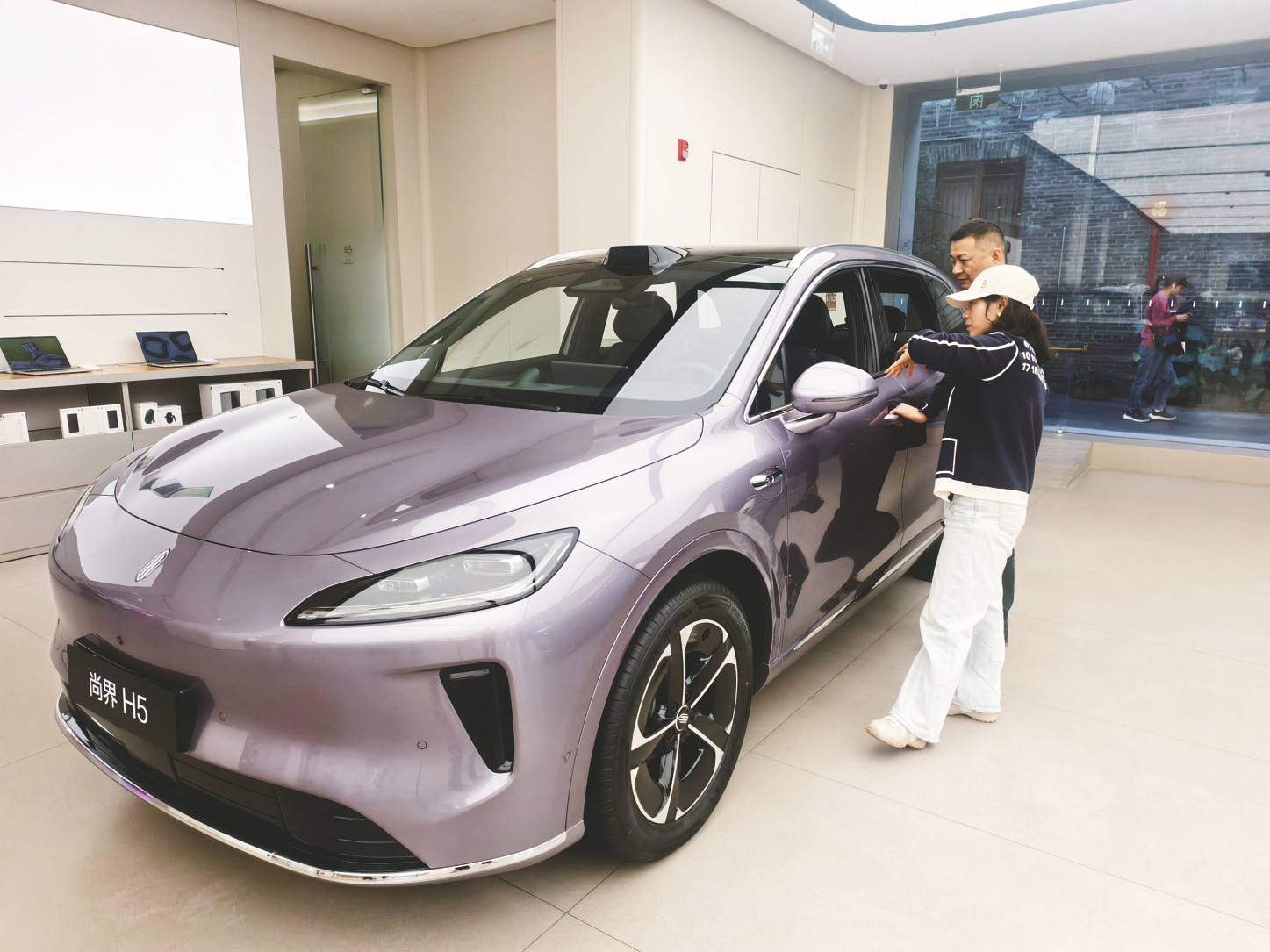
汽车以旧换新补贴

Search documents
有门店单日客流量破千!“新‘国补’+车企限时促销”点燃元旦车市
Mei Ri Jing Ji Xin Wen· 2026-01-05 14:33
Core Viewpoint - The introduction of the new "National Subsidy" policy and various promotional strategies by car manufacturers have significantly boosted consumer interest and foot traffic in car dealerships during the New Year holiday period, indicating a potential increase in automotive sales for 2026 [1][12][22]. Group 1: Consumer Behavior - Many consumers are waiting for the new "National Subsidy" policy to make vehicle purchases, as evidenced by increased foot traffic in dealerships during the holiday season [1][3]. - Sales personnel report that daily customer traffic has exceeded a thousand, with staff working long hours without breaks due to high demand [3]. Group 2: Promotional Strategies - Car manufacturers have launched various promotional policies, including limited-time subsidies on vehicle purchase taxes, "0% interest" financing, and cash discounts, in response to the new subsidy policy [3][4]. - Over ten automotive brands have announced January promotional policies affecting more than 70 vehicle models [3]. Group 3: Tax and Subsidy Changes - Starting January 1, 2026, the vehicle purchase tax for new energy vehicles will be set at 5%, but several brands are offering tax subsidies to offset this cost [4][6]. - The new subsidy policy will transition from fixed subsidies to proportional subsidies based on vehicle price, maintaining the upper limit for subsidies [12][14]. Group 4: Impact of New Policies - The new "National Subsidy" policy is expected to mitigate the impact of the vehicle purchase tax changes and stimulate automotive consumption in 2026 [12][15]. - The implementation of the "old-for-new" vehicle replacement policy has already shown significant results, with over 1.15 million vehicles replaced in 2025, contributing to substantial new car sales [20][22]. Group 5: Regional Implementation - Several regions, including Jiangxi and Hebei, have begun implementing the new subsidy policies, allowing consumers to apply for up to 20,000 yuan in subsidies for vehicle purchases [16][19]. - The central government has allocated 625 billion yuan for the first batch of subsidies in 2026, aimed at supporting the "old-for-new" vehicle replacement initiative [19].

2026年1月橡胶策略报告-20260105
Guang Da Qi Huo· 2026-01-05 05:04
光期研究 2 0 2 6年1月橡 胶 策 略 报 告 2 0 2 6 年 1 月 1 光大证券 2020 年 半 年 度 业 绩 E V E R B R I G H T S E C U R I T I E S 橡胶:旺产转低产,胶价震荡 p 2 | | 目 | 录 | | --- | --- | --- | | 1、价格:期货盘面宽幅震荡 | | | | 2、供应:天胶国内进入停割季 | | | | 3、需求:轮胎库存累库高位 | | | | 4、库存:天然橡胶库存中性 | | | | 5、持仓 | | | p 3 1.1 价格:RU盘面月涨幅1.27%,NR盘面月涨幅3.1%,BR盘面月跌幅10.61% 图表:NR主力合约走势(单位:元/吨) 图表:沪胶主力价格(单位:元/吨) 图表:BR主力合约走势(单位:元/吨) 10000 12000 14000 16000 18000 20000 22000 24000 26000 28000 RSS3 SCRWF 沪胶主连 8500 9500 10500 11500 12500 13500 14500 15500 16500 17500 2022-09 2022- ...
大和:维持对中国汽车产业正面看法 料海外市场仍是主要增长动力
智通财经网· 2026-01-02 09:31
大和认为,此次补贴规模与去年非常相似,这消除了市场对政府会在今年大幅削减补贴金额的担忧。 智通财经APP获悉,大和发布研报称,内地已发布2026年汽车以旧换新补贴的细则,自今年1月1日起生 效,明确了个人购车者的两种补贴渠道。该行维持对中国汽车产业的正面看法,并继续将国内的政策支 持(包括此项以旧换新计划)视为能够稳定换车需求、缓冲周期性疲软的影响,而海外市场(出口及国际化 扩张)仍是中国汽车制造商的主要增长动力。 ...
2026年汽车以旧换新补贴
Xin Lang Cai Jing· 2026-01-02 08:12
Core Viewpoint - The article discusses the implementation of a vehicle scrappage and replacement subsidy policy in 2026, aimed at encouraging consumers to replace old gasoline and diesel vehicles with new energy vehicles or smaller fuel vehicles. Group 1: Subsidy Details - Consumers who scrap gasoline passenger cars registered before June 30, 2013, diesel and other fuel passenger cars registered before June 30, 2015, or new energy passenger cars registered before December 31, 2019, will receive a one-time subsidy when purchasing eligible new vehicles [2][19]. - A subsidy of 12% of the new car sales price (including tax) will be provided for scrapping eligible old vehicles and purchasing new energy passenger cars, with a maximum subsidy amount of 20,000 yuan [3][19]. - For scrapping eligible fuel passenger cars and purchasing fuel vehicles with an engine displacement of 2.0 liters or less, a subsidy of 10% of the new car sales price will be granted, with a maximum subsidy amount of 15,000 yuan [5][19]. Group 2: Application Process - The subsidy policy will be effective from January 1, 2026, and consumers can apply for the subsidy through two main channels: mobile platforms (WeChat, Alipay, Douyin, and Yunshanfu) or the National Automobile Circulation Information Management System website [6][10]. - Required application materials include identity verification documents, bank account information, and proof of scrapped vehicle ownership, among others [12][24]. - The scrapped vehicle must be registered in the applicant's name by January 8, 2025, to qualify for the subsidy [5][19].

大和:维持对中国汽车产业正面看法,预计海外市场仍是主要增长动力
Ge Long Hui· 2026-01-02 04:36
Core Viewpoint - The report from Daiwa indicates that the mainland has released details on the 2026 vehicle trade-in subsidy, effective from January 1, which clarifies two subsidy channels for individual car buyers [1] Group 1: Policy Support - Daiwa maintains a positive outlook on the Chinese automotive industry, viewing domestic policy support, including the trade-in plan, as a means to stabilize vehicle replacement demand and mitigate the impact of cyclical weakness [1] - The scale of this subsidy is similar to last year's, alleviating market concerns about a significant reduction in government subsidies this year [1] Group 2: Growth Drivers - The overseas market, including exports and international expansion, remains a primary growth driver for Chinese automotive manufacturers [1]
新势力车企2025销量公布:零跑夺得销冠,小米、小鹏也超目标
新华网财经· 2026-01-02 02:55
| 车企 | 2025年全年(辆) | 同比 | 2024年全年(辆) | | --- | --- | --- | --- | | 比亚迪 | 460. 24万 | 7.73% | 427.21万 | | 吉利汽车 | 302. 46万 | 38. 96% | 217.66万 | | 奇瑞集团 | 280.64万 | 7.80% | 260. 39万 | | 长城汽车 | 132.37万 | 7. 33% | 123.33万 | | 零胞 | 59.66万 | 103. 13% | 29.37万 | | 鸿蒙智行 | 58.91万 | 32. 38% | 44.50万 | | 小鵬 | 42.94万 | 126. 02% | 19万 | | 小米 | 预计超41万 | 预计超203% | 超13.5万 | | 理想 | 40.63万 | -18.82% | 50.05万 | | 长安启源 | 超40万 | 超173% | 14.63万 | | 劇来 | 32.60万 | 46. 90% | 22.2万 | | 奕派科技 | 27.58万 | 28. 30% | 约21.30万 | | 岚图 | 15.02万 ...
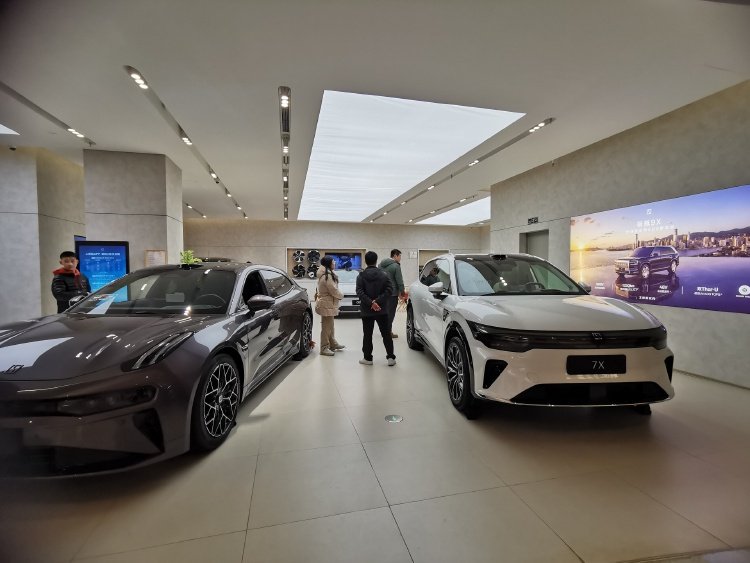
2025年造车新势力成绩单揭晓:零跑夺冠,多家品牌面临目标压力
Jin Rong Jie· 2026-01-02 00:17
Core Insights - The new energy vehicle market in 2025 saw significant growth, with Leap Motor leading in sales, delivering nearly 600,000 units, while other brands faced challenges in meeting their annual targets [1][2][11] Sales Performance - Leap Motor achieved the highest sales with 596,555 units, followed by Lantu with 150,169 units, and Zhiji with 81,017 units [2] - The top-performing brands forming a leading group with annual sales exceeding 400,000 units include Leap Motor, Hongmeng Zhixing, Xiaopeng, Seres, Xiaomi, and Li Auto [2] Monthly Performance - In December 2025, over 60% of new energy vehicle brands set monthly delivery records, indicating a strong end-of-year performance [3] - Hongmeng Zhixing topped the December delivery chart with 89,611 units, marking three consecutive months of record deliveries [4] - Leap Motor delivered 60,423 units in December, maintaining a strong performance above 60,000 units [5] - Xiaomi's monthly deliveries surpassed 50,000 units, showing a significant increase compared to its average monthly performance [6] Target Achievement - Brands that exceeded their sales targets include: - Leap Motor: Target of 500,000 units, actual sales of 596,555 units, achieving 119.32% of the target [7] - Xiaopeng: Target of 350,000 units, actual sales of 429,445 units, achieving 122.69% of the target [7] - Xiaomi: Target of 350,000 units, actual sales over 410,000 units, achieving approximately 117.14% of the target [7] - Brands facing pressure in meeting their targets include: - NIO: Target of 440,000 units, actual sales of 326,028 units, achieving 74.09% of the target [8] - Li Auto: Adjusted target of 640,000 units, actual sales of approximately 406,315 units, achieving about 63.48% of the target [8] Policy Outlook - The automotive industry is expected to benefit from supportive policies in 2026, including continued subsidies for trade-ins and reduced vehicle purchase taxes for new energy vehicles [9][10] - These policies aim to stabilize market expectations and encourage consumer purchases, laying a foundation for steady growth in the automotive market in 2026 [10] Market Trends - The competitive landscape among new energy vehicle brands is becoming clearer, with significant growth in sales and a potential for further differentiation among brands in 2026 [11]




2026年,上海将继续开展汽车以旧换新补贴活动
Xin Lang Cai Jing· 2026-01-01 06:26
(来源:劳动报) 转自:劳动报 二是汽车置换更新方面,2026年,对个人消费者通过售卖方式转让登记在本人名下的乘用车,并购买纳入工业和信息化部《减免车辆购置税的新能源汽车车 型目录》的新能源乘用车或2.0升及以下排量燃油的乘用车,给予一次性补贴。对换购符合上述条件新能源乘用车的,按新车销售价格的8%给予补贴,补贴 金额最高1.5万元;对换购符合上述条件燃油乘用车的,按新车销售价格的6%给予补贴,补贴金额最高1.3万元。 个人消费者申请汽车置换更新补贴,其所提交的《二手车销售统一发票》和《机动车销售统一发票》所载明的开票日期,以及转让的乘用车旧车《机动车登 记证书》所载明的最近一次转让登记日期和新购置乘用车《机动车登记证书》所载明的注册登记日期,均应在2026年1月1日之后。参与申请补贴的乘用车旧 车所有人和新购置乘用车所有人应为同一个人消费者。所转让的乘用车旧车,应当于2025年1月8日前登记在申请人名下;所新购置的符合条件的乘用车,其 《机动车销售统一发票》和《机动车登记证书》应在上海市开具或办理。 每名消费者在2026年内只可享受一次汽车报废更新补贴或一次汽车置换更新补贴。 头图来源:图虫 一是汽车报废更 ...
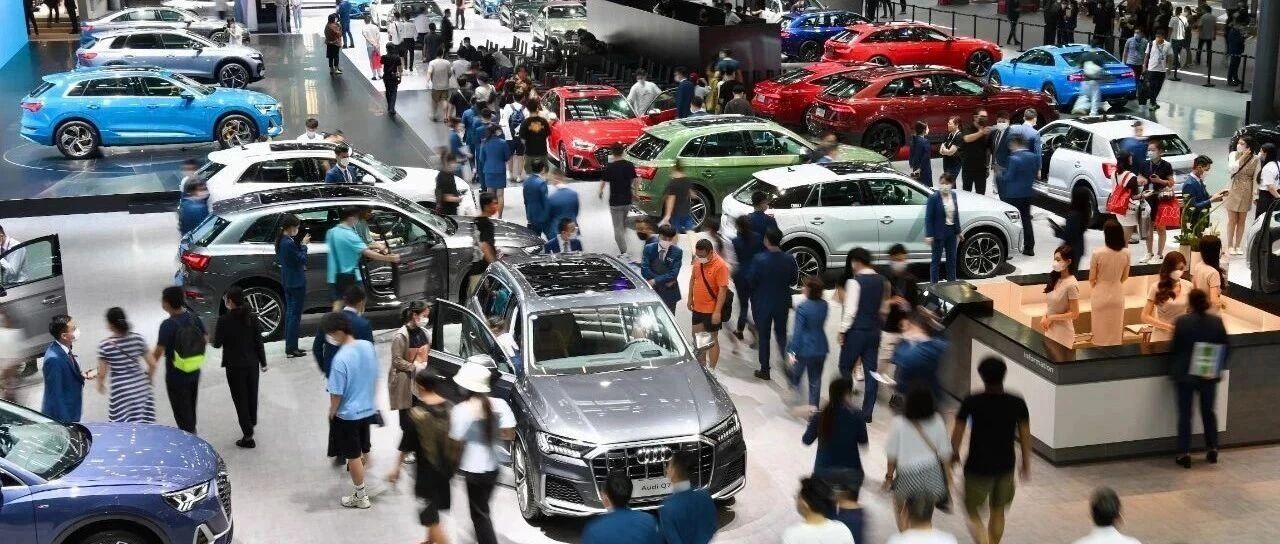
“懂车更懂你 马上焕新驾”,“2026年上汽新春欢乐购”重磅来袭
Zhong Guo Jin Rong Xin Xi Wang· 2026-01-01 02:33
Core Viewpoint - The Ministry of Commerce and eight other departments have released the implementation details for the 2026 vehicle trade-in subsidy, continuing to support vehicle scrapping and replacement with nationwide subsidies based on a fixed percentage of new car sales prices [1] Group 1: Promotional Activities - SAIC Group has launched the "2026 SAIC Spring Festival Happy Purchase" campaign, offering various differentiated discount packages across multiple brands including Roewe, MG, and Audi, aimed at making car purchases more economical and convenient for consumers [1] - During the promotional period, SAIC Group's dealerships will be decorated with a "Red Gold National Style" theme, creating a festive atmosphere with interactive experience zones and themed gifts for test drivers [4] Group 2: Discounts and Offers - The "2026 SAIC Spring Festival Happy Purchase" campaign features significant cash discounts, with Roewe and MG offering up to 37,000 yuan in cash benefits, along with additional incentives such as store gifts and financial offers [5] - Various brands under SAIC are providing unique promotional offers, including tax subsidies, limited-time bonuses, and exclusive benefits like lifetime warranties and special purchase funds [5]


最高补贴2万元 线上办理更便捷
Xin Lang Cai Jing· 2026-01-01 00:15
消费者在销售点了解新车性能。 本报记者宋延康 摄 ■本报记者罗颢 新年到,计划购车的市民迎来重磅利好。昨日,商务部等8部门联合印发《2026年汽车以旧换新补贴实施细则》(以下简称《细则》),明确2026年个人消 费者报废或置换旧车购置新车可享一次性补贴,最高金额达2万元,补贴申请全程线上办理,审核兑付流程进一步优化,切实降低市民购车成本。 报废更新补贴 符合条件的申请,原则上在提交申请之日起,3个工作日内完成受理,15个工作日内完成审核,30个工作日内兑付补贴资金。 据悉,该《细则》自2026年1月1日起正式执行,各省级部门将结合本地实际制定具体实施细则。有购车计划的市民可提前核对自家旧车是否符合条件,合理 规划购车时间,充分享受政策红利。 特别提醒 要注意的是,参与补贴的旧车需在2025年1月8日前登记在申请人名下,且新车与旧车所有人必须为同一个人消费者。 每位消费者在2026年政策实施期间只能选择享受一次汽车报废更新补贴或一次汽车置换更新补贴,补贴申请审核期间,新购置汽车需登记在申请人名下。 此次汽车"国补"覆盖报废更新和置换更新两类情形,针对不同车型设定差异化补贴标准,新能源车型补贴力度更突出。在报废更 ...