
绿色创新

Search documents
品牌蓄力 高质增长 图文详解星巴克中国四季度及全财年业绩报告
Yang Zi Wan Bao Wang· 2025-10-30 05:05
Core Insights - Starbucks reported strong performance in Q4 of FY2025, with continuous revenue growth for four consecutive quarters and positive same-store sales for two consecutive quarters [1][5][10] - The growth in same-store sales is attributed to product innovation, expansion of the delivery channel, and enhanced membership benefits [1][10][38] Financial Performance - Q4 revenue reached $831.6 million, marking a 7.4% year-over-year increase [5][6] - Full-year revenue for FY2025 was $3.105 billion, reflecting a 19.6% year-over-year growth [7][8] - Same-store sales increased by 42% year-over-year, with a 2% quarter-over-quarter growth [10] Product Innovation - The launch of the revamped tea latte series has expanded non-coffee options, boosting afternoon sales [1][12] - New breakfast sandwich offerings tailored to Chinese consumer preferences have increased food sales [1][12] Delivery and Membership Growth - The "Star Delivery" service continues to grow, benefiting from increased platform traffic and user subsidies [1][14] - Active membership in the "Star Club" reached a record high of 25.5 million by the end of FY2025 [1][22] Store Expansion - By the end of FY2025, Starbucks had 8,011 stores nationwide, entering 1,091 county-level markets [18] - In Q4, 183 new stores were opened, with a total of 415 new stores for the fiscal year [18][20] Strategic Partnerships and Community Engagement - Starbucks has partnered with China Eastern Airlines to enhance customer experience and engagement [22] - The company has invested over 41 million yuan in community initiatives, benefiting 200,000 people [35] Sustainability Initiatives - A strategic partnership with Envision aims to promote carbon reduction and green innovation in the coffee industry [29][30] Technological Advancements - Starbucks has relocated its innovation center to Shenzhen, focusing on digital transformation and technological integration [32] Leadership Perspective - The CEO highlighted the company's confidence in the Chinese market, emphasizing the importance of innovation and high-quality growth [38]



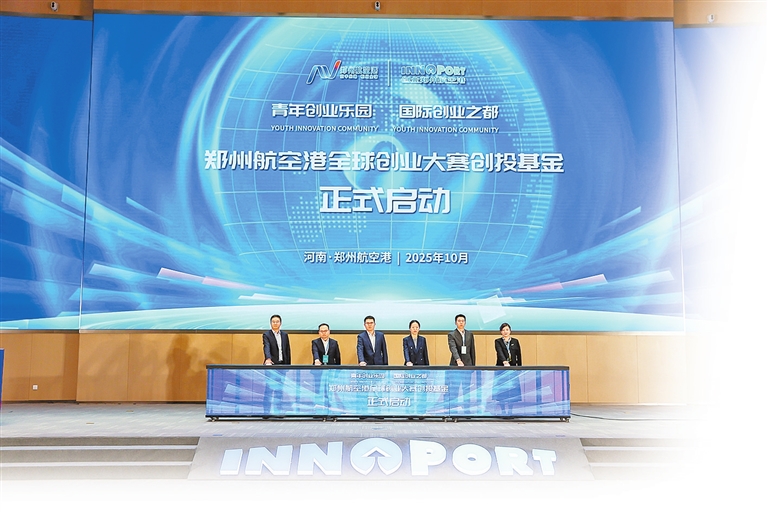
郑州航空港“立”起全球创业新坐标——2025第二届郑州航空港全球创业大赛总决赛暨全球创业者大会综述
He Nan Ri Bao· 2025-10-29 00:30
Core Insights - The INNOPORT Second Zhengzhou Airport Global Entrepreneurship Competition and Global Entrepreneurs Conference took place on October 27-28, showcasing 34 high-quality projects competing for investment and recognition [1][3][20] - The event featured prominent speakers, including Chinese Academy of Sciences academician Li Yongfang, who discussed entrepreneurship, innovation ecosystems, and industry transformation trends [1][7][15] - A 5 billion yuan venture capital fund was launched to support quality projects, and 22 entrepreneurial ecosystem partners were announced to provide intellectual and resource support for the airport's entrepreneurial ecosystem [1][19] Competition Highlights - The competition included two categories: Growth Group and Startup Group, covering cutting-edge fields such as artificial intelligence, biomedicine, aerospace, new materials, and renewable energy [4][8] - Notable projects included "AI-Diabetes Fatty Liver Drug" from Harvard University, which won the Startup Group first prize, and "High-Precision Laser Manufacturing Robot" which won the Growth Group first prize [9][10] - The projects demonstrated high technological barriers and clear market demand, indicating strong potential for commercialization and investment value [8][9] Entrepreneurial Ecosystem Development - The Zhengzhou Airport has established a comprehensive support system for entrepreneurship, including a global entrepreneurship competition, a global entrepreneurs conference, and various funding initiatives [19][22] - The system aims to provide a worry-free environment for entrepreneurs across five dimensions: space, resources, project implementation, talent, and overall entrepreneurial ecosystem [19] - The event also included a financing matchmaking session to connect investment institutions with quality entrepreneurial projects, emphasizing the commitment to fostering a robust entrepreneurial ecosystem [17][19] Global Engagement - The Global Entrepreneurs Conference attracted over 300 entrepreneurs, investors, and industry leaders from around the world, providing insights and development strategies [10][20] - International experts shared their experiences and insights, highlighting Zhengzhou Airport's role as a pioneer in embracing the Fourth Industrial Revolution [11][14] - The conference aimed to position Zhengzhou Airport as a "Youth Entrepreneurship Paradise" and an "International Entrepreneurship Capital," enhancing its competitive advantage in urban development [14][22]

镜观·回响|培育绿色创新的亚太增长动能
Xin Hua She· 2025-10-28 12:54
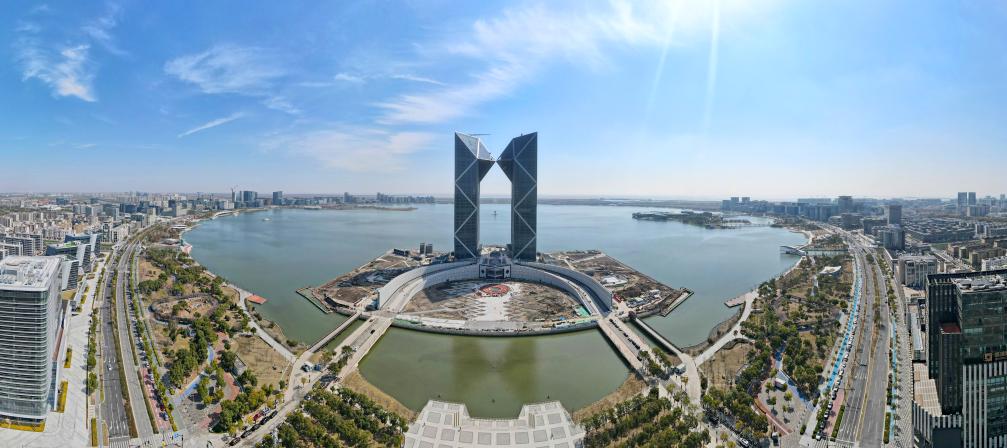
Core Viewpoint - The Asia-Pacific region, representing one-third of the world's population and over 60% of the global economy, is a vital growth engine and leader in regional economic integration, with a focus on green innovation as a key driver for sustainable development in 2024 [1][4]. Group 1: Economic Integration and Innovation - The Asia-Pacific region is characterized by its significant contribution to global trade, accounting for nearly half of the total trade volume [1]. - China is actively deepening cooperation in green innovation to enhance development momentum in the Asia-Pacific region [4]. Group 2: Infrastructure and Technological Advancements - The Chancay Port in Peru, a key project under the Belt and Road Initiative, is set to become a major shipping hub connecting Asia and Latin America, officially opening in November 2024 [7]. - The Suzhou Industrial Park, a collaboration between China and Singapore, is a hub for emerging industries such as biomedicine and new materials, fostering AI-driven enterprises [9]. - The Tianjin Eco-City, a significant cooperation project between China and Singapore, showcases smart city infrastructure, including intelligent public services [10]. Group 3: Renewable Energy and Electric Vehicles - Indonesia's first 5G smart warehouse and innovation center was inaugurated, marking a significant step in technological advancement in logistics [12]. - Malaysia's "Durian Cloud Platform," developed by Alibaba Cloud, utilizes smart sensors for agricultural guidance, enhancing productivity in durian farming [13]. - Chile has launched a fully electric public transport system with 121 Chinese-made electric buses, becoming the first city in South America to achieve this milestone [14]. - The solar power projects in Malaysia and Thailand demonstrate China's commitment to providing clean energy solutions in the region [17][19]. Group 4: Automotive Industry Expansion - BYD has announced its plans for passenger vehicle development in South Korea, indicating the brand's expansion in the electric vehicle market [15]. - The 2024 Sydney International Electric Vehicle Expo featured numerous Chinese electric vehicle brands, highlighting the growing interest and market presence in Australia [15].

特稿丨从“十五五”全球热词看中国新机遇
Xin Hua Wang· 2025-10-26 02:03
新华社北京10月25日电 中国共产党第二十届中央委员会第四次全体会议23日闭幕。全会审议通过了《中共中央关于制定国民经济和社会发展第 十五个五年规划的建议》。 这次重要会议引发多国人士和国际舆论广泛关注与热烈讨论。"'十五五'规划""高质量发展""绿色创新""高水平对外开放""互利共赢"……这些全球 媒体和学者热议的关键词,展现了世界对于共享中国发展新机遇的热切期待。 以"五年规划"为世界提供确定性 新华社记者借助大数据工具,梳理了世界各地105家媒体近期关于党的二十届四中全会的报道,结果显示"五年规划"是最高频出现的词之一。各国 媒体和学者认为,"十五五"规划建议不仅是中国未来五年的发展蓝图,对世界也具有深远影响。 西班牙《世界报》的文章说,对中国人民而言,每一个五年规划都显著改善了民众生活,并引领着这个东方大国的发展进程。五年规划是一幅战 略路线图,描绘着今后五年里中国的经济和社会发展目标。 "五年规划是中国国家治理体系的重要组成部分。"古巴国际政策研究中心中国问题专家爱德华多·雷加拉多说,中国提出要到2035年基本实现社会 主义现代化,"十五五"时期对这一目标而言是一个承前启后的关键阶段,"十五五"规划 ...
特稿|携手擘画亚太繁荣新图景
Xin Hua Wang· 2025-10-26 01:40
Core Points - The article highlights the anticipation surrounding President Xi Jinping's attendance at the APEC Leaders' Informal Meeting, emphasizing the importance of his proposals for cooperation and development in the Asia-Pacific region [1][2][3]. Group 1: APEC Meeting Significance - The APEC meeting is viewed as a critical moment for fostering cooperation in the Asia-Pacific region, with Xi's participation expected to enhance regional collaboration and sustainable economic development [2][3]. - Xi's previous contributions to APEC, including the Beijing Declaration, continue to guide the agenda and are highly regarded by regional experts [2][3]. Group 2: China's Role in Regional Development - China is recognized as a steadfast supporter of APEC, with its initiatives aimed at promoting open and inclusive cooperation among member economies [3][4]. - Experts express hope that Xi will introduce new ideas and proposals to strengthen regional cooperation and address challenges posed by unilateralism and protectionism [3][4]. Group 3: Economic Growth and Innovation - The article notes that Xi's emphasis on green innovation and digital transformation is expected to create new growth momentum for the Asia-Pacific region [6][7]. - China's commitment to high-quality development and sustainable practices is seen as a driving force for regional economic advancement [6][7]. Group 4: Global Economic Governance - The article discusses the importance of Xi's global governance initiatives, which aim to enhance cooperation and address global challenges, thereby contributing to regional stability and prosperity [10]. - The anticipation of Xi's leadership in promoting a cooperative and inclusive economic framework is highlighted as essential for the Asia-Pacific's role in global economic governance [10].
特稿|从“十五五”全球热词看中国新机遇
Xin Hua She· 2025-10-25 13:34
Group 1 - The "15th Five-Year Plan" is a significant development blueprint for China, expected to have profound implications for the global economy [2][3] - The plan emphasizes "high-quality development," with a strong focus on innovation and green transformation, which are seen as key drivers for China's future economic growth [4][6] - International media highlight China's commitment to expanding high-level openness and cooperation, particularly through initiatives like the Belt and Road Initiative [7][8] Group 2 - The plan aims to enhance China's technological self-reliance and innovation, particularly in advanced manufacturing sectors such as digital economy and new energy vehicles [4][5] - China's green transformation is a focal point, with significant advancements in renewable energy and sustainable practices being recognized globally [6][7] - The commitment to high-level openness is expected to provide valuable cooperation opportunities for developing countries, enhancing China's role as a global economic engine [3][8]
从“十五五”全球热词看中国新机遇
Xin Hua She· 2025-10-25 12:17
Core Points - The Fourth Plenary Session of the 20th Central Committee of the Communist Party of China concluded on October 23, approving the "Suggestions on Formulating the 15th Five-Year Plan for National Economic and Social Development" [1][2] - The "15th Five-Year Plan" is seen as a significant blueprint for China's development over the next five years, with implications for global economic stability and growth [2][3] - Key themes such as "high-quality development," "green innovation," and "high-level opening up" have garnered international attention, reflecting global interest in China's development opportunities [1][4] Group 1: Five-Year Plan Significance - The "Five-Year Plan" is a crucial strategic roadmap for China's economic and social development, significantly improving the lives of its citizens [2][3] - The "15th Five-Year Plan" is viewed as a pivotal phase towards achieving the goal of basic socialist modernization by 2035, emphasizing long-term stability and growth [2][3] - International media highlight the "15th Five-Year Plan" as a source of confidence for global economic prospects, showcasing China's pragmatic development outlook [2][3] Group 2: High-Quality Development - "High-quality development" and "innovation" are central themes in the discussions surrounding the "15th Five-Year Plan," indicating a strong focus on technological advancement [4][5] - China aims to enhance its economic model through advancements in digital economy, new energy vehicles, and artificial intelligence, positioning itself as a leader in high-quality development [4][5] - The emphasis on green transformation and sustainable practices is evident, with China leading in renewable energy and green manufacturing [4][5] Group 3: Open Economy and Global Cooperation - The plan emphasizes expanding high-level opening up and creating win-win cooperation, which has been positively received by the international community [6][7] - Recent measures to reduce foreign investment restrictions and expand service sector openness are highlighted as steps towards greater global integration [6][7] - The "Belt and Road Initiative" is recognized as a key component of China's strategy to enhance international cooperation and economic connectivity [6][7]
聚焦碳金融与绿色创新,多位大咖共探国际变局下全球治理新路径
Xin Lang Cai Jing· 2025-10-24 04:36
Core Insights - The 2025 Sustainable Global Leaders Conference highlighted the transformative changes in global economic governance, emphasizing the significant role of carbon markets and carbon finance, particularly in China [1][2][3]. Group 1: Global Economic Governance - Global economic governance is at a critical "crossroads," necessitating a restructuring of the existing framework due to the misalignment between old systems and current developments [2]. - The share of developing economies in global GDP is projected to rise from 25% in 2000 to 45% by 2024, shifting governance discourse towards a more balanced North-South dynamic [2]. - The deepening of South-South cooperation among developing countries facilitates consensus in sustainable development [2]. Group 2: Carbon Market Development - The global carbon market has seen significant progress, with 38 carbon markets operational, covering 23% of global greenhouse gas emissions [4]. - China's carbon market, initiated in 2021, has expanded to include approximately 3,500 enterprises, with a total quota of 8 billion tons, representing 53.33% of the global carbon market quota [4]. - The release of China's first central-level document on carbon market construction and the announcement of new Nationally Determined Contributions (NDC) goals provide a clear development roadmap for the carbon market [4]. Group 3: Future of Carbon Finance - The growth of the carbon market lays a solid foundation for carbon finance innovation, which still has significant untapped potential [5]. - Establishing differentiated internal motivation mechanisms for high-emission enterprises and linking carbon performance to financing costs for small and medium enterprises is essential [5]. - The integration of AI and big data in carbon finance can enhance efficiency and reduce costs, exemplified by innovative practices that significantly lower resource input for banks [5]. Group 4: Carbon Finance Ecosystem - A comprehensive carbon finance ecosystem requires support from third-party professional institutions, data technology companies, and green finance certification bodies [6]. - The establishment of standards and methods for evaluating green low-carbon performance is crucial for advancing the ecosystem [6]. Group 5: Interaction Between Carbon Finance and Green Innovation - Carbon finance must clarify its value orientation towards "zero carbon" to drive innovation and investment in low-carbon technologies [7]. - The interaction between carbon finance and green technology is vital for overcoming challenges faced by enterprises in pursuing environmental sustainability [8]. Group 6: Future Directions for Carbon Finance - The next decade will focus on the internationalization of carbon finance, with significant potential in developing countries [11]. - Key development priorities include creating a unified core carbon market, enhancing market vitality through financial innovation, and strengthening international cooperation [11]. - New financial tools, such as RWA (Real World Assets), can link carbon assets to the market, providing new financing avenues for low-carbon technologies [12].
“十四五”期间我国绿色发展成效显著亮点突出
Bei Jing Ri Bao Ke Hu Duan· 2025-10-17 13:28
Core Insights - During the "14th Five-Year Plan" period, China has made significant achievements in promoting comprehensive green transformation in economic and social development, establishing green development as a new international competitive advantage [1][2] Group 1: Green Development Achievements - China has launched the world's largest carbon market and has seen renewable energy capacity surpass that of thermal power for the first time [1] - In the first nine months of this year, China's production and sales of new energy vehicles both exceeded 10 million units [1] - The average annual concentration of PM2.5 in cities at or above the prefecture level was 29.6 micrograms per cubic meter, significantly lower than the average level during the "13th Five-Year Plan" [1] Group 2: Global Leadership in Green Technology - China is leading global green transformation in various sectors, including transportation, hydrogen energy, and steel [1] - According to the International Energy Agency, global electric vehicle sales are expected to continue growing, with China accounting for over 11 million units, nearly two-thirds of the global market share [1] - China is recognized as one of the cleanest steel producers in the world, as noted by the World Steel Association [1] Group 3: International Recognition - The international community acknowledges China's successful exploration of a path that balances economic growth with green development [2] - The International Monetary Fund highlights China's leading position in green innovation, which serves as a new growth engine for the country [2]
中国经济圆桌会丨“十四五”期间我国绿色发展成效显著亮点突出
Xin Hua Wang· 2025-10-17 12:43
Core Insights - During the "14th Five-Year Plan" period, China has made significant achievements in promoting comprehensive green transformation in economic and social development, establishing green development as a new international competitive advantage [1][2] Group 1: Green Development Achievements - China has launched the world's largest carbon market and has seen renewable energy capacity surpass that of thermal power for the first time [1] - In the first nine months of this year, China's production and sales of new energy vehicles both exceeded 10 million units [1] - The average annual concentration of PM2.5 in cities at or above the prefecture level was 29.6 micrograms per cubic meter, significantly lower than the average level during the "13th Five-Year Plan" [1] Group 2: Global Leadership in Green Technology - China is leading the global green transition in various sectors, including transportation, hydrogen energy, and steel [1] - According to the International Energy Agency, global electric vehicle sales are expected to continue growing, with China accounting for over 11 million units, nearly two-thirds of the global market share [1] - China is recognized as one of the cleanest steel producers in the world, as noted by the World Steel Association [1] Group 3: International Recognition - The international community acknowledges China's successful exploration of a path that balances economic growth with green development [2] - The International Monetary Fund has highlighted China's leading position in green innovation, which serves as a new growth engine for the country [2]