专星送

Search documents
饿了么的“橙色”新生:阿里的即时零售新棋局
Sou Hu Cai Jing· 2025-12-13 03:52
Core Insights - Alibaba is integrating Ele.me with Taobao Flash Purchase, marking a significant move in the instant retail sector, showcasing strong organizational synergy and combat effectiveness [2] - Taobao Flash Purchase achieved a peak of 120 million daily orders in August, with 300 million monthly active buyers, indicating a shift from quantity to quality [2] - Morgan Stanley reports that Alibaba's market share in China's food delivery market has risen to 42%, reflecting the strategic value of the Ele.me and Taobao combination [2] Group 1: Strategic Moves - The upgrade of Ele.me to Taobao Flash Purchase signifies a transition from single-point competition in food delivery to a comprehensive instant service model under Alibaba's consumer platform strategy [2][11] - The integration is seen as a necessary evolution in the instant retail industry, aligning with the shift from "single-point delivery" to "full-domain instant service" [2][11] - The strategic investment from Alibaba aims to break the previous growth constraints faced by Ele.me, allowing for a more robust competitive stance against rivals [7][10] Group 2: Technological Advancements - Ele.me has adopted AI technology to enhance operational efficiency, transitioning from traditional methods to a tech-driven model, which includes the development of the "Holo Shield" system for compliance and the AI assistant "Xiao E" for delivery optimization [5] - The platform's service capabilities have expanded beyond food delivery to include a wide range of products, indicating readiness for a seamless integration with Taobao Flash Purchase [6] Group 3: Market Positioning - The rebranding to Taobao Flash Purchase is viewed as a strategic move to capture consumer mindshare in the instant retail space, leveraging Alibaba's financial resources for user acquisition and retention [7][8] - The collaboration between Ele.me and Taobao is expected to enhance the service chain, transforming traditional e-commerce delivery from next-day to hourly delivery [8][10] Group 4: Future Directions - The upgrade is not merely a rebranding but a strategic alignment with Alibaba's broader consumer ecosystem, positioning Ele.me as a critical infrastructure component for the company's future growth [13][14] - The focus on high-frequency consumer categories, such as pharmaceuticals and convenience goods, is essential for driving growth in the instant retail sector [11][12]


饿了么升级变橙:阿里锚定长期投入,淘宝闪购奔向即时零售王座
创业邦· 2025-12-11 04:50
Core Insights - The article discusses the significant transformation of Ele.me into Taobao Flash Purchase, highlighting the strategic shift in the instant retail sector driven by Alibaba's commitment and resources [3][10][19] - It emphasizes the impressive performance metrics of Taobao Flash Purchase, including a peak daily order volume of 120 million and a monthly active buyer count of 300 million in August, indicating a transition from quantity to quality [2][11] Group 1: Strategic Shift and Market Position - The upgrade of Ele.me to Taobao Flash Purchase signifies a strategic alignment with Alibaba's broader consumer platform strategy, moving from a standalone delivery service to a key component of a comprehensive instant retail ecosystem [3][10] - This transition is seen as a response to the competitive landscape, where Ele.me aims to leverage its delivery capabilities to enhance Alibaba's overall service offerings [9][15] - The integration of Ele.me into Alibaba's ecosystem allows for improved resource allocation and operational efficiency, breaking the previous cycle of limited growth due to resource constraints [13][19] Group 2: Technological Advancements - Ele.me's evolution is supported by the implementation of AI technologies, which have transformed traditional operational models into data-driven systems, enhancing delivery efficiency and reducing costs [7][8] - The introduction of AI tools, such as the "Holo Shield" system and the AI assistant "Xiao E," has improved compliance and operational effectiveness, positioning Ele.me at the forefront of innovation in the delivery sector [7][8] Group 3: Market Dynamics and Consumer Engagement - The article notes that the shift to Taobao Flash Purchase is not merely a rebranding but a strategic move to capture consumer mindshare in the instant retail space, where the term "flash purchase" has been popularized by competitors [10][18] - The focus on high-frequency consumer categories, such as pharmaceuticals and convenience goods, aligns with the evolving demands of the market, allowing for a more comprehensive service offering [16][18] - The integration of Ele.me's delivery network with Taobao's extensive merchant resources enhances the overall consumer experience, facilitating faster and more diverse delivery options [11][19]

星巴克中国易主,压力给到了瑞幸
36氪· 2025-11-05 09:20
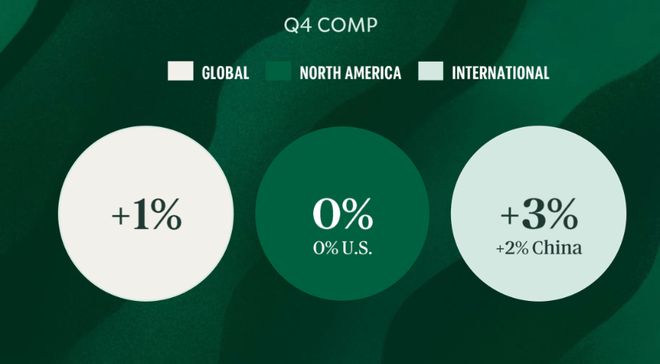
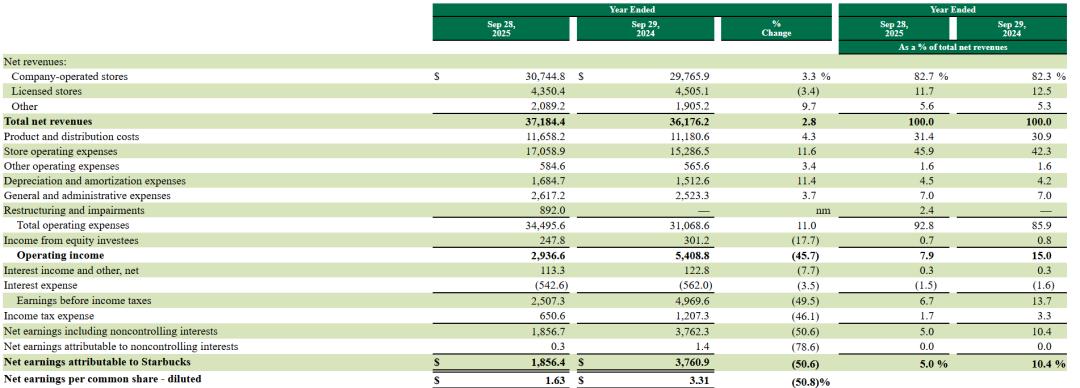
Core Viewpoint - Starbucks has entered a strategic partnership with Boyu Capital to establish a joint venture for its retail operations in China, retaining 40% ownership while Boyu will hold up to 60% [5][6]. Financial Performance - Starbucks reported a 5% year-over-year increase in global revenue for fiscal year 2025, with a notable 1% growth in same-store sales in Q4, marking the first positive growth in seven quarters [7][8]. - In fiscal year 2025, Starbucks' total revenue reached $37.18 billion, up 2.8% from the previous year, with company-operated stores contributing $30.74 billion, a 3.3% increase [9][10]. - In China, total revenue for fiscal year 2025 was $3.105 billion, reflecting a 5% year-over-year growth, with Q4 revenue at $831.6 million, a 6% increase [13][14]. Market Dynamics - The international segment showed strong performance, with a 3% increase in same-store sales, driven by markets like Japan, the UK, and Mexico [8]. - The Chinese market is seen as a key driver for overall growth, with Starbucks focusing on product innovation, delivery service growth, pricing optimization, and store expansion [15][16]. Competitive Landscape - Starbucks is facing intense competition in the Chinese market, particularly from new tea brands and other coffee chains, leading to significant price reductions in its product offerings [16][19]. - The company has engaged in a price war, with significant price cuts on various products, which may impact its premium brand positioning [20][22]. Operational Challenges - Despite the revenue growth, Starbucks' operating profit margin fell to 2.9% in Q4 2025 from 14.4% in the same period last year, indicating rising operational costs [24]. - High coffee bean prices are expected to remain a challenge for at least the next two quarters, affecting profitability [25][26]. Strategic Initiatives - The joint venture with Boyu Capital aims to expand the number of Starbucks stores in China to 20,000, focusing on lower-tier cities where competition is increasing [28]. - Starbucks has entered 1,091 county-level markets in China, with a total of 8,011 stores, but has seen a decline in comparable store sales due to a 5% drop in average ticket price [28][30].

星巴克中国易主,压力给到了瑞幸
3 6 Ke· 2025-11-04 11:24
Core Viewpoint - Starbucks has officially announced a strategic partnership with Boyu Capital to establish a joint venture for operating its retail business in China, with Boyu holding up to 60% equity for approximately $4 billion, while Starbucks retains 40% [1][3]. Financial Performance - Starbucks reported a 5% year-over-year increase in global revenue for fiscal year 2025, with a notable 1% growth in same-store sales in Q4, marking the first positive growth in seven quarters [1][2]. - In fiscal year 2025, Starbucks' total revenue reached $37.18 billion, with net revenues from company-operated stores at $30.74 billion, reflecting a 3.3% increase [3]. - In China, Starbucks achieved total revenue of $3.105 billion for fiscal year 2025, a 5% increase year-over-year, with Q4 revenue at $831.6 million, up 6% [4][5]. Market Dynamics - The international segment of Starbucks performed well, with a 3% increase in same-store sales in Q4, driven by strong performances in markets like Japan, the UK, and Mexico [2]. - The Chinese market is seen as a crucial driver for overall growth, with significant contributions from product innovation, delivery service growth, and pricing optimization [4][6]. Competitive Landscape - Starbucks has engaged in aggressive pricing strategies, including a significant price reduction on several non-coffee products to compete in the "takeout war" among major delivery platforms [6][9]. - The company faces challenges from a competitive pricing environment, which may impact its premium brand positioning in China [8][9]. Operational Challenges - Despite the positive revenue growth, Starbucks' operating profit margin fell to 2.9% in Q4 from 14.4% a year earlier, primarily due to rising coffee bean prices [11]. - The company has been experiencing a decline in comparable store sales, with a 1% decrease attributed to a 5% drop in average transaction value [14]. Future Outlook - Starbucks aims to expand its store count in China to 20,000, focusing on lower-tier cities to capture a broader customer base [13]. - The company has entered 1,091 county-level markets in China, with a total of 8,011 stores, indicating a strategy to penetrate deeper into the market [14].
估值超130亿美元,星巴克中国易主
2 1 Shi Ji Jing Ji Bao Dao· 2025-11-04 00:56
Core Viewpoint - Starbucks has finalized a strategic partnership with Chinese alternative asset management firm Boyu Capital to establish a joint venture for its retail operations in China, with Boyu holding up to 60% equity and Starbucks retaining 40% [1][3][4]. Group 1: Joint Venture Details - The joint venture will be headquartered in Shanghai and manage approximately 8,000 Starbucks stores across China, with plans to expand to 20,000 stores in the future [3]. - The deal values Starbucks' retail business in China at over $13 billion, which includes the equity transferred to Boyu, the retained equity value, and future royalty income [1][4]. - Starbucks CEO Brian Niccol emphasized that Boyu's local market expertise will accelerate Starbucks' expansion, particularly in smaller cities and emerging regions [3]. Group 2: Financial Performance - For the fiscal year ending September 28, 2025, Starbucks China reported a revenue increase of 6% to $831.6 million, with a total annual revenue growth of 5% to $3.105 billion [6]. - The operating profit margin for Starbucks China has remained in double digits, with profits and margins improving for four consecutive quarters [6]. - Same-store sales in China grew by 2%, with transaction volume increasing by 9%, although the average ticket price declined by 7% [9]. Group 3: Market Position and Competition - Starbucks faces increasing competition from local brands like Luckin Coffee, which reported a 47.1% revenue growth in Q2, significantly outpacing Starbucks [11]. - Luckin Coffee has expanded its store count to 26,206, creating a substantial gap in market presence compared to Starbucks [12]. - The competitive landscape indicates that Starbucks is losing its previous dominant position in the Chinese market, necessitating a shift towards localization and partnership with local firms [11][13]. Group 4: Strategic Changes - Starbucks is implementing price adjustments and promotional activities to drive sales, including a price reduction on key products [7][8]. - The company is also enhancing its delivery services, which have seen record sales, contributing to overall revenue growth [8]. - The shift towards a more localized operational approach is seen as essential for Starbucks to maintain its brand identity while adapting to the Chinese market [10][13].
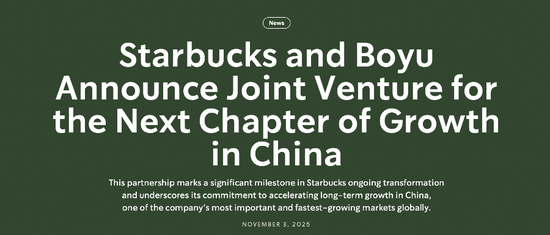
估值超130亿美元,星巴克中国易主
21世纪经济报道· 2025-11-04 00:50
Core Viewpoint - Starbucks has entered a strategic partnership with Boyu Capital to establish a joint venture for its retail operations in China, with Boyu holding up to 60% equity and Starbucks retaining 40% [1][2]. Group 1: Joint Venture Details - The joint venture will be headquartered in Shanghai and will manage approximately 8,000 Starbucks stores across China, with plans to expand to 20,000 stores in the future [2]. - The deal values Starbucks' retail business in China at over $13 billion, which includes the equity transferred to Boyu, the retained equity value, and future royalty income [1][4]. Group 2: Market Position and Growth Potential - Starbucks' CEO Brian Niccol emphasized that Boyu's local market expertise will accelerate Starbucks' expansion, particularly in smaller cities and emerging regions [3]. - Boyu's partner highlighted the strong brand image Starbucks has built in China and the opportunities for more localized experiences [3]. Group 3: Financial Performance - For the fourth quarter of fiscal year 2025, Starbucks China reported a revenue increase of 6% to $831.6 million, with a full-year revenue growth of 5% to $3.105 billion [5]. - The operating profit margin for Starbucks China has remained in double digits, with profits and margins improving for four consecutive quarters [5]. Group 4: Competitive Landscape - Starbucks faces increasing competition from local brands like Luckin Coffee, which reported a 47.1% revenue growth in Q2, significantly outpacing Starbucks [9]. - Luckin Coffee has expanded its store count to 26,206, creating a substantial gap in market presence compared to Starbucks [9]. Group 5: Localization Efforts - Starbucks is shifting towards a more localized operational model, allowing its Chinese team greater autonomy in decision-making [6][10]. - The company has also engaged in partnerships with local platforms like Xiaohongshu and integrated its membership system with Eastern Airlines [6]. Group 6: Cultural Considerations - The challenge for Starbucks lies in maintaining its core cultural values while adapting to the Chinese market, as the company has historically emphasized a customer-centric service culture [10].
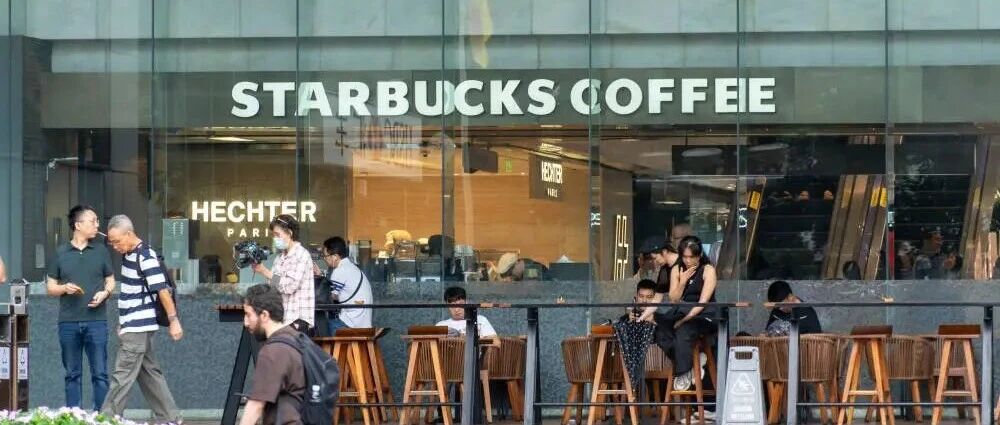
星巴克中国易主:博裕将持合资企业至多60%股权丨消费一线
2 1 Shi Ji Jing Ji Bao Dao· 2025-11-03 23:20
Core Viewpoint - Starbucks has finalized a strategic partnership with Chinese alternative asset management company Boyu Capital, forming a joint venture to operate Starbucks' retail business in China, with Boyu holding up to 60% equity and Starbucks retaining 40% [1][2]. Group 1: Joint Venture Details - The joint venture will be headquartered in Shanghai and manage approximately 8,000 Starbucks stores across China, with plans to expand to 20,000 stores in the future [1]. - The enterprise value of the joint venture is estimated at around $4 billion, excluding cash and debt, with Starbucks' total retail business in China valued at over $13 billion [1][4]. - Starbucks will continue to own the brand and intellectual property rights, licensing them to the new joint venture [1]. Group 2: Market Position and Growth Potential - Starbucks' CEO Brian Niccol emphasized that Boyu's local market expertise will accelerate Starbucks' expansion, particularly in smaller cities and emerging regions [2]. - Boyu's investment reflects a recognition of Starbucks' potential for further localization and operational improvement in China [3]. - The deal positions Starbucks favorably in negotiations, as the company's Chinese business valuation has exceeded initial expectations [5]. Group 3: Financial Performance - For the fourth quarter of fiscal year 2025, Starbucks China reported a revenue increase of 6% year-over-year to $831.6 million, with a full-year revenue growth of 5% to $3.105 billion [6]. - The operating profit margin for Starbucks China remains in double digits, with profits and margins improving for four consecutive quarters [7]. Group 4: Strategic Changes and Market Dynamics - Starbucks has implemented price adjustments and promotional activities to drive growth, including a price reduction on key products starting June 10 [8][9]. - The company has also expanded its delivery services, achieving record sales in its delivery business [9]. - Despite these efforts, Starbucks faces increasing competition from domestic brands like Luckin Coffee, which has significantly expanded its store count and revenue [12][13]. Group 5: Cultural and Operational Considerations - The shift towards a joint venture indicates a move towards greater localization in operations, allowing for more autonomy within the Chinese team [11]. - However, there are concerns about maintaining Starbucks' cultural identity and operational standards during this localization process [15][16].
星巴克四季度财报:中国市场净营收、同店销售、经营利润率连续稳健增长
Xin Lang Cai Jing· 2025-10-31 09:53
Core Insights - Starbucks China reported strong performance in Q4 of FY2025, with revenue growth and improved profit margins, indicating a successful recovery trajectory in the market [1][2] Financial Performance - Revenue for Q4 increased by 6% year-on-year, reaching $831.6 million, while total revenue for FY2025 grew by 5% to $3.105 billion [1] - Same-store sales rose by 2%, with a 9% increase in transaction volume, and operating profit margins remained in double digits [1] Growth Drivers - The growth in same-store sales is attributed to multi-dimensional innovation, including product innovation, expansion of the delivery channel, and enhanced membership benefits [1] - The newly launched tea latte series and breakfast sandwich offerings have contributed to increased sales, particularly during afternoon hours [1] Store Expansion - In Q4, Starbucks opened 183 new stores and entered 47 new county-level markets, totaling 415 new stores for FY2025 [2] - As of the end of FY2025, Starbucks operates 8,011 stores across 1,091 county-level cities in China [2] Operational Efficiency - New stores have maintained high profitability levels, with new openings contributing above-average same-store sales within two years [3] - The CEO emphasized the company's commitment to sustainable high-quality growth in the Chinese market, supported by over 60,000 partners delivering exceptional service [3]
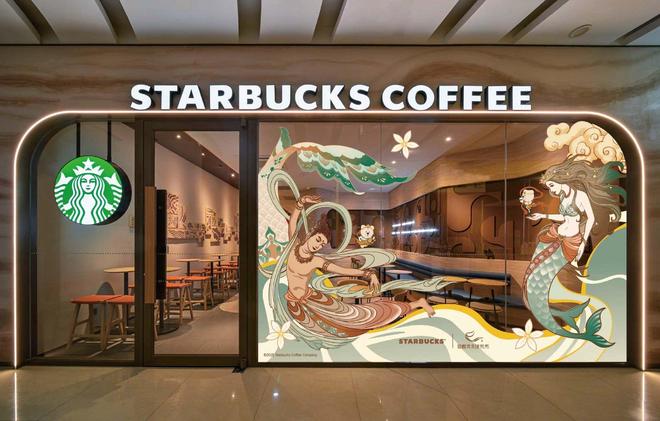
买下年入220亿的星巴克中国,是笔好生意吗
2 1 Shi Ji Jing Ji Bao Dao· 2025-10-31 09:44
Core Insights - Starbucks China reported a revenue growth of 6% year-on-year to $831.6 million (approximately RMB 5.913 billion) for the fourth quarter of fiscal year 2025, with a full-year revenue increase of 5% to $3.105 billion (approximately RMB 22.077 billion) [2] - The operating profit margin for Starbucks China has remained in double digits, with operating profit and margin improving for four consecutive quarters [2] Revenue and Sales Performance - Same-store sales in Starbucks China grew by 2% year-on-year, with transaction volume increasing by 9%, although average transaction value decreased by 7% [8] - The company opened 8,011 stores across 1,091 county-level cities by the end of fiscal year 2025, maintaining high profitability levels for new stores [8] Pricing Strategy and Promotions - The core driver of growth in Starbucks China is attributed to price adjustments, with significant price reductions on key products starting June 10, resulting in a notable increase in sales for iced tea and tea latte products [7] - Starbucks has also engaged in various promotional activities, including leveraging social media trends to launch limited-time products that achieved record daily sales [7] Market Position and Competition - Starbucks is currently in the process of selling equity in its China operations, with potential valuations exceeding $4 billion, and possibly over $10 billion when including franchise fees [11] - Competitors like Luckin Coffee are rapidly expanding, with a reported 47.1% year-on-year revenue growth, highlighting the competitive landscape in the Chinese coffee market [14] Strategic Partnerships and Local Adaptation - Starbucks is enhancing its local operations by empowering its Chinese team, allowing for more localized decision-making and product offerings [8][9] - The company is also collaborating with platforms like Xiaohongshu to transform its stores into themed community spaces, aiming to attract a broader customer base [8] Future Outlook - Starbucks CEO expressed confidence in retaining a significant portion of equity in the Chinese market while recognizing the long-term growth potential [12] - The ongoing changes in Starbucks' operational strategy reflect a need to adapt to the evolving market dynamics in China, balancing its global brand identity with local market demands [15]
买下星巴克中国,是笔好生意吗?丨消费快评
2 1 Shi Ji Jing Ji Bao Dao· 2025-10-31 01:17
Core Viewpoint - Starbucks China is increasingly seen as an attractive investment target, with significant growth potential and ongoing operational improvements [1][6]. Financial Performance - In Q4 of FY2025, Starbucks China reported a revenue increase of 6% year-on-year to $831.6 million (approximately RMB 5.913 billion) [1]. - For the entire FY2025, revenue grew by 5% to $3.105 billion (approximately RMB 22.077 billion) [1]. - The operating profit margin for Starbucks China has remained in double digits, with profits and margins improving for four consecutive quarters [1]. Growth Drivers - The primary driver of growth in Starbucks China is attributed to price adjustments, with significant price reductions on key products starting June 10 [3]. - The company has seen a doubling in sales of iced tea and continuous growth in its tea latte offerings [3]. - Starbucks has also benefited from promotional activities and innovations, such as the launch of seasonal products that achieved record daily sales [3][4]. Store Expansion and Performance - As of the end of FY2025, Starbucks China operated 8,011 stores across 1,091 county-level cities, maintaining high profitability levels for new stores [4]. - Same-store sales increased by 2% year-on-year, with transaction volume up by 9%, although the average transaction value decreased by 7% [4]. Strategic Changes - Starbucks is decentralizing decision-making to empower local teams, allowing for more localized operations [5]. - The company is exploring partnerships for its Chinese operations, with potential valuations exceeding $4 billion, and possibly over $10 billion when including franchise fees [7][8]. Competitive Landscape - The competitive environment is intensifying, with local brands like Luckin Coffee showing significant growth, reporting a 47.1% year-on-year revenue increase [9]. - Luckin Coffee has expanded its store count to 26,206, significantly outpacing Starbucks in terms of growth and market presence [9][11]. Cultural Considerations - Starbucks' operational culture, which emphasizes customer care and employee engagement, is a critical aspect of its brand identity [12]. - The challenge lies in maintaining this culture while adapting to the local market dynamics and potential changes in ownership structure [13].