
肿瘤免疫治疗

Search documents
PD-1/VEGF双抗交易热潮回归?荣昌生物签下56亿美元授权
Di Yi Cai Jing· 2026-01-13 02:03
Group 1 - AbbVie has secured a licensing agreement with Rongchang Biopharma worth up to $5.6 billion, which includes an upfront payment of $650 million and potential milestone payments of up to $4.95 billion [1] - The agreement grants AbbVie exclusive rights to develop, manufacture, and commercialize RC148, a bispecific antibody targeting PD-1 and VEGF, outside of Greater China [1] - RC148 is designed to enhance anti-tumor immune responses while inhibiting tumor-driven angiogenesis, and is currently undergoing clinical trials in China for various advanced malignancies [1] Group 2 - The PD-1/VEGF dual antibody market has seen increased interest, especially after Kangfang Biopharma's dual antibody demonstrated potential superiority over Merck's Keytruda in clinical trials [3] - Major pharmaceutical companies are investing in PD-1/VEGF dual antibodies, with significant licensing deals such as the $6.06 billion agreement between 3SBio and Pfizer, and the $11.1 billion collaboration between Bristol-Myers Squibb and BioNTech [3] - However, following disappointing overall survival data from Kangfang Biopharma's dual antibody, market enthusiasm for PD-1/VEGF dual antibodies has cooled, raising questions about the future potential of this therapeutic class [4] Group 3 - The recent licensing deal between Rongchang Biopharma and AbbVie may indicate a resurgence in interest in the PD-1/VEGF dual antibody space [4] - Kangfang Biopharma's partner, Summit, has submitted a new drug application to the FDA for its PD-1/VEGF dual antibody, targeting specific lung cancer patients, which could further influence market dynamics [4]


撕掉肿瘤细胞“隐身衣”!我国科学家在攻克癌症免疫耐受难题上有新突破
Xin Hua She· 2026-01-08 10:25
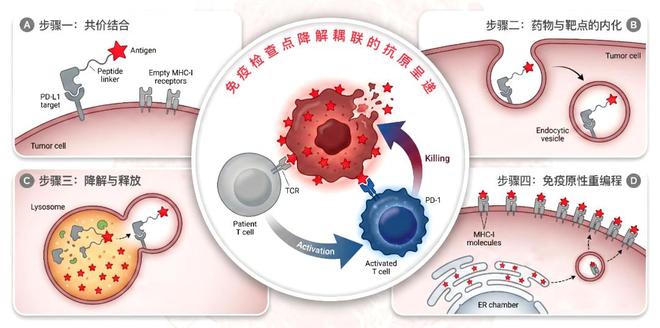
Core Insights - A new protein-targeted degradation technology developed by a team from Peking University aims to address the challenge of tumor cells evading the immune system, effectively transforming these "invisible enemies" into identifiable targets for treatment [1][2]. Group 1: Technology and Mechanism - The innovative molecule named "intra-tumoral vaccine chimeric" (iVAC) allows for the entry into tumor cells without relying on specific surface markers, enabling the destruction of PD-L1 proteins that inhibit immune activation [2][3]. - iVAC processes and presents active antigen fragments on the surface of tumor cells, effectively providing them with an "identity label" that the immune system can recognize [2]. Group 2: Efficacy and Advantages - Compared to traditional immune checkpoint blockade therapies, iVAC demonstrates significant anti-tumor effects by enhancing the immune system's ability to recognize and eliminate tumor cells, while also activating effector T cells that can target virus-infected tumor cells [3]. - The small size of the iVAC molecule allows it to penetrate dense solid tumors effectively, contributing to its strong anti-tumor efficacy [3]. Group 3: Future Prospects - The research team is actively working on the clinical translation of this promising technology, which has been recognized as a significant theoretical foundation for the development of new treatment methods [3].
北大团队巧施“特洛伊木马”行动,取得癌症疫苗新突破
Guan Cha Zhe Wang· 2026-01-08 07:29
Core Insights - The emergence of tumor immunotherapy, particularly PD-1/PD-L1 antibodies, has transformed cancer treatment, but over 60% of patients with non-small cell lung cancer do not respond to existing therapies, highlighting the challenge of "cold tumors" that evade immune detection [1][2] - A new study published in Nature by teams from Peking University and Shenzhen Bay Laboratory introduces a novel approach to reactivate "cold tumors" through a mechanism called "checkpoint degradation-coupled antigen presentation" [1][2] Group 1: Research Findings - The research team developed a dual-function chimeric molecule called iVAC that simultaneously achieves "immune checkpoint degradation" and "high-quality antigen delivery," effectively reprogramming cancer cells to present antigens [4][6] - iVAC molecules can activate antigen-specific CD8+ T cells, showing efficacy comparable to bone marrow-derived dendritic cells (BMDCs) in stimulating immune responses [7] - The study identified cytomegalovirus (CMV) antigens as a target for iVAC, leveraging the presence of dormant memory T cells in the human body that can be awakened to attack tumors [8][10] Group 2: Technological Innovations - The meTPD technology enables targeted degradation of membrane proteins, allowing cancer cells to present high-quality antigens, thus transforming them into effective vaccine carriers [3][6] - iVAC's design integrates three components: a covalent PD-L1 nanobody, a degradation moiety, and an immune peptide segment, facilitating a Trojan horse strategy to convert immune-suppressive cancer cells into immune system messengers [6][10] - The research indicates that iVAC can effectively activate memory T cells in various cancer patients, demonstrating significant potential for broader applications in cancer immunotherapy [8][10]
趋势研判!2026年中国双特异性抗体药物行业政策、产业链、市场规模、应用分布、竞争格局及未来展望:中国市场规模有望增至15亿美元,约占全球5.60%[图]
Chan Ye Xin Xi Wang· 2026-01-08 01:34
Core Viewpoint - The bispecific antibody drug market is rapidly expanding, with significant applications in cancer treatment, autoimmune diseases, and infections, and is projected to reach a global market size of $19.1 billion by 2025 and $26.8 billion by 2026 [1][5]. Group 1: Market Overview - The global bispecific antibody drug market is expected to grow to $19.1 billion by 2025, with China's market size projected at approximately $800 million, accounting for about 4.19% of the global market [5]. - By 2026, the global bispecific antibody drug market is anticipated to reach $26.8 billion, with China's market size expected to be around $1.5 billion, representing about 5.60% of the global market [5]. - Nearly 80% of the drug pipeline for bispecific antibodies is concentrated in the cancer treatment sector, particularly in solid tumors [7]. Group 2: Industry Definition and Mechanism - Bispecific antibodies, also known as bispecific or dual-function antibodies, can bind to two different antigens or two different epitopes of the same antigen, enhancing therapeutic effects and reducing adverse reactions [3][4]. - The primary mechanisms of bispecific antibodies include mediating immune cell killing, blocking dual-target signals, and promoting the formation of functional protein complexes [5]. Group 3: Industry Chain - The upstream of the bispecific antibody industry chain involves raw materials such as cell culture media, chromatography media, and key equipment like bioreactors and detection devices [9]. - The midstream focuses on the research and production of bispecific antibody drugs, while the downstream is primarily composed of medical institutions, especially large hospitals specializing in oncology and autoimmune diseases [9]. Group 4: Competitive Landscape - Major global players in the bispecific antibody field include Roche, Amgen, Johnson & Johnson, and several others, while domestic companies include BeiGene, Innovent Biologics, and others [11]. - The development of bispecific antibodies is still in progress, with ongoing exploration of target combination strategies and production technologies [11]. Group 5: Future Outlook - The future of bispecific antibodies lies in their application in cancer treatment and tissue regeneration, with a focus on addressing multiple targets in pathological processes to enhance therapeutic efficacy [14]. - New strategies and clinical trials are emerging, indicating a potential for new bispecific antibody drugs to be approved for market entry soon [14].



宜明昂科-B(01541):即时点评:重获IMM2510全球权利,海外研发有望加速推进
Guoyuan Securities2· 2026-01-07 11:32
Investment Rating - The report suggests a positive outlook for the company, indicating that it is significantly undervalued with a market capitalization of only HKD 2.7 billion, and recommends active attention to the stock [8]. Core Insights - The company has regained global rights for IMM2510 and IMM27M, allowing it to accelerate overseas clinical development [2][8]. - Clinical data for IMM2510 shows promising results, with an objective response rate (ORR) of 35.3% and a progression-free survival (PFS) of 9.4 months, outperforming similar products [3]. - The differentiated advantages of IMM2510 include its ability to activate antibody-dependent cellular cytotoxicity (ADCC) and a broader VEGF blocking mechanism, which may lead to superior efficacy compared to competitors [4][8]. - The safety profile of IMM2510 is manageable, with common grade 3 treatment-related adverse events reported at 8.7% [5][6]. - The company has a rich pipeline with significant product potential, including the CD47CD20 bispecific antibody (IMM0306) and CD47 fusion protein (IMM01), both showing promising clinical efficacy [7][8]. Summary by Sections - **Regained Rights**: The company has terminated its agreement with Axion, regaining control over the global development and commercialization rights for IMM2510 and IMM27M, which is expected to enhance the pace of clinical research [1][2]. - **Clinical Data**: The clinical efficacy of IMM2510 is highlighted by its ORR of 35.3% and PFS of 9.4 months, indicating strong performance compared to similar therapies [3]. - **Differentiation**: IMM2510's unique design allows for enhanced immune response and broader action against various VEGF receptors, positioning it favorably in a competitive market [4]. - **Safety Profile**: The safety of IMM2510 is considered acceptable, with manageable adverse events reported during trials [5][6]. - **Pipeline Potential**: The company’s pipeline includes several promising candidates, with ongoing trials indicating strong potential for future growth in various therapeutic areas [7][8].
复宏汉霖(02696.HK):HLX37在晚期/转移性实体瘤患者中的1期临床研究于中国大陆完成首例患者给药
Ge Long Hui· 2025-12-29 09:54
Core Viewpoint - The company has completed the first patient dosing in a Phase 1 clinical trial of HLX37, a dual-specific antibody targeting PD-L1 and VEGF, for advanced/metastatic solid tumors in mainland China [1][2] Group 1: Clinical Trial Details - The Phase 1 study is an open-label trial assessing the safety, tolerability, pharmacokinetics (PK), and preliminary efficacy of HLX37 in patients with advanced/metastatic solid tumors [1] - The trial consists of two parts: Part 1a involves dose escalation (including monotherapy and combination therapy) with six dose levels ranging from 1.0 mg/kg to 45.0 mg/kg administered every three weeks; Part 1b will expand based on results from Part 1a [1] - The primary endpoint is to evaluate the incidence of dose-limiting toxicities (DLT) to determine the maximum tolerated dose (MTD) and recommended Phase 2 dose (RP2D) for both monotherapy and combination therapy [1] Group 2: Mechanism and Potential Benefits - HLX37 is designed to target two different pathways: it blocks the PD-1/PD-L1 signaling pathway to restore T-cell activity against tumors and inhibits VEGF to reduce tumor angiogenesis, potentially leading to synergistic anti-tumor effects and reduced risk of resistance [2] - Preclinical studies indicate that HLX37 can inhibit tumor growth and has a favorable safety profile [2] - The National Medical Products Administration (NMPA) approved the Phase 1 clinical trial application for HLX37 in November 2025 [2]
信达生物(01801) - 自愿公告 -达伯欣(伊匹木单抗N01注射液)获中国国家药品监督管理局批准...
2025-12-28 23:30
香港交易及結算所有限公司及香港聯合交易所有限公司對本公告的內容概不負責,對其準確性 或完整性亦不發表任何聲明,並明確表示,概不對因本公告全部或任何部分內容而產生或因倚 賴該等內容而引致的任何損失承擔任何責任。 信達生物製藥 INNOVENT BIOLOGICS, INC. (於開曼群島註冊成立的有限公司) (股份代號:1801) 自願公告 達伯欣® (伊匹木單抗N01注射液)獲中國國家藥品監督管理局批准 聯合信迪利單抗用於結腸癌新輔助治療 本公告由信達生物製藥(「本公司」,連同其附屬公司統稱「本集團」)自願作出,以 告知本公司股東及潛在投資者本集團最新業務更新。 本公司董事會(「董事會」)欣然宣佈達伯欣® (伊匹木單抗N01注射液,細胞毒性T 淋巴細胞相關蛋白4(「CTLA-4」)單克隆抗體(「單抗」),研發代號:IBI310)獲得 中國國家藥品監督管理局(「NMPA」)批准上市,聯合信迪利單抗用於可手術切除 的IIB-III期微衛星高度不穩定型(「MSI-H」)或錯配修復缺陷型(「dMMR」)結腸 癌患者的新輔助治療。達伯欣® (伊匹木單抗N01注射液)是中國首個獲批的國產抗 CTLA-4單抗,也是全球首個 ...
趋势研判!2026年中国TIL疗法行业概述、产业链、市场现状、竞争格局及发展趋势分析:市场规模持续增长,国内企业有望在全球竞争中占据一定的份额[图]
Chan Ye Xin Xi Wang· 2025-12-28 01:01
Core Insights - TIL cell therapy is emerging as a cornerstone drug for tumor immunotherapy, compatible with various drug forms, and is expected to follow PD-(L)1 antibodies as a new generation treatment [1][7] - The global TIL therapy market is projected to reach $1.04 billion in 2024, with estimates of $2.08 billion in 2025, $3.70 billion in 2026, and $5.98 billion in 2027 [1][7] - By 2030, the global TIL therapy market is expected to grow to $16.92 billion, with China's market reaching approximately $2 billion [1][7] TIL Therapy Industry Definition and Characteristics - TIL refers to immune cells present in the tumor microenvironment, including T cells, B cells, NK cells, and macrophages, which are crucial for anti-tumor immunity [2] - TIL therapy involves extracting TIL cells from a patient's tumor, expanding and activating them in a lab, and reinfusing them to enhance anti-cancer effects [3][5] TIL Therapy Clinical Trial Pipeline - As of December 2024, there are 88 TIL therapy pipelines in clinical trials globally, with 69.3% in Phase I, 15.9% in Phase I/II, 13.6% in Phase II, and 1.1% in Phase III [1][7][8] TIL Therapy Market Size and Growth - The TIL therapy market is rapidly expanding, with significant growth expected in the coming years, driven by increasing clinical trial activity and market demand [1][7][15] - The first TIL therapy in China is anticipated to enter the commercial market around 2027, with an estimated market size of $0.18 billion [1][7] TIL Therapy Industry Chain - The TIL therapy industry chain includes upstream components like cell culture media and equipment, midstream personalized drug production, and downstream applications in hospitals and treatment centers [8] Competitive Landscape - Several companies are actively developing TIL therapies, including Iovance Biotherapeutics, Obsidian Therapeutics, and Junshi Biosciences, with Junshi's GC101 being a leading candidate in China [9][11] Development Trends in TIL Therapy - TIL therapy is still in clinical trial stages, with ongoing research focused on improving efficacy, safety, and accessibility [15] - The industry is expected to see increased capital investment and innovation, with a focus on overcoming immune suppression in the tumor microenvironment [15]

PNAS:孙强/黄红艳合作揭示增强NK细胞抗肿瘤免疫新靶点
生物世界· 2025-12-26 10:30
Core Insights - Prostate cancer is the second most common malignant tumor in men globally, characterized by treatment resistance and high recurrence risk, presenting significant challenges for therapy [2] - Immune therapy has shown significant clinical benefits in various solid tumors, but its efficacy in "cold" tumors like prostate cancer remains limited, necessitating strategies to activate immune responses [2] - A recent study published in PNAS reveals that PSAT1 drives a feedback loop that enables prostate cancer cells to evade NK cell immune surveillance, providing new molecular targets and intervention strategies for treating "cold" tumors [2][10] Group 1: Research Findings - The research team found that PSAT1 is significantly overexpressed in prostate cancer tissues and correlates with poor patient prognosis, while its expression is negatively associated with the infiltration of key immune effector cells, particularly NK cells [4] - PSAT1 regulates immune evasion by enhancing the phosphorylation of YBX1, which subsequently increases PSAT1 transcription, forming a stable positive feedback loop [4] - YBX1, upon entering the nucleus, activates the expression of HLA-E, an inhibitory ligand for NK cells, leading to NK cell dysfunction and preventing their ability to kill prostate cancer cells [5] Group 2: Clinical Implications - In vitro and in vivo experiments demonstrated that targeting or inhibiting PSAT1 significantly reduces the immune evasion capability of prostate cancer cells, enhancing NK cell-mediated tumor cell killing and effectively suppressing tumor growth [6] - The combination of PSAT1 knockdown and NK cell infusion shows synergistic effects in inhibiting tumor growth, highlighting the therapeutic potential of disrupting this immune evasion pathway [6] Group 3: Future Directions - The study suggests that targeting the PSAT1-YBX1-HLA-E pathway could convert "cold" tumors into "hot" tumors that are more responsive to NK cell immunotherapy, opening new avenues for treatment [10] - Preliminary data indicate that this mechanism may also be present in other malignancies with high HLA-E expression, such as lung cancer and glioma, suggesting broader therapeutic potential [10]

复宏汉霖H药胃癌围手术期适应症申报上市,肿瘤免疫治疗迎来里程碑
Jianghai Securities· 2025-12-23 07:23
Investment Rating - The industry investment rating is "Overweight" (maintained) [7] Core Insights - The report highlights the significant breakthrough of Fuhong Hanlin's PD-1 inhibitor, H drug, which has received acceptance for registration for perioperative treatment of resectable gastric cancer, marking a key advancement in tumor immunotherapy [7] - The global tumor immunotherapy market is projected to grow at a compound annual growth rate (CAGR) of 8.0% from 2025 to 2031, indicating a substantial market opportunity as the treatment landscape expands from late-stage to early-stage therapies [7] - The report emphasizes the potential for A-share companies to benefit from this innovation, particularly those involved in tumor immunotherapy and related services [7] Summary by Sections Industry Performance - The industry has shown relative returns of -3.06% over the past month, -9.84% over the past three months, and -7.91% over the past year compared to the CSI 300 index [3] Recent Developments - The report discusses various recent developments in the pharmaceutical and biotechnology sector, including supportive policies in Sichuan and significant collaborations in the industry [4] Investment Recommendations - The report suggests focusing on "frontier breakthrough leaders" and "core assets in tumor innovation," recommending attention to companies such as Heng Rui Medicine, WuXi AppTec, and Kelun Pharmaceutical [7]