脑机接口

Search documents
5亿!阿里腾讯同时出手,脑机接口再现大额融资
思宇MedTech· 2026-03-21 03:10
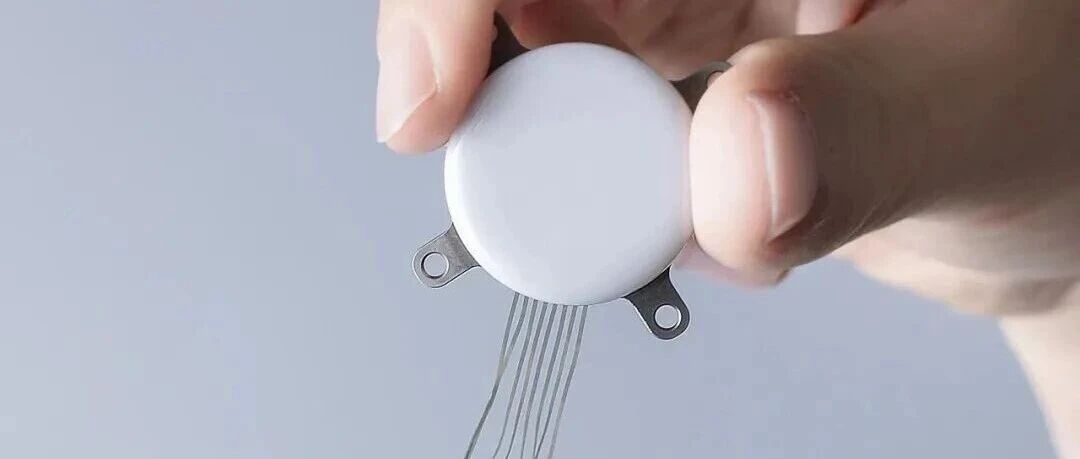
Core Viewpoint - Shanghai Ladder Medical Technology Co., Ltd. has completed a strategic financing round of 500 million RMB, led by Alibaba, to support the development of brain-machine interface and neural modulation technologies [2][3]. Company Overview - Shanghai Ladder Medical Technology Co., Ltd. focuses on the research and clinical application of invasive brain-machine interface systems and related neural modulation devices, particularly in the areas of brain-machine interface medical applications and neural function reconstruction [3]. Product and Technology Summary - The company is developing an invasive brain-machine interface system (WRS02) designed for brain signal acquisition and brain-controlled interaction applications. This system features a 256-channel wireless high-throughput interface and has entered the special review process for innovative medical devices by the National Medical Products Administration. Clinical implantation and functional validation were completed in early 2026, with plans for multi-center registration clinical trials within the year [4][5]. - The deep brain stimulation system (DBS) is aimed at treating neurological disorders such as Parkinson's disease and epilepsy, utilizing closed-loop neural modulation technology. Initial clinical research implantation has been completed, with further clinical trials planned [7]. Financing History - The financing history of the company includes: - March 13, 2026: B+ round, 500 million RMB led by Alibaba [8]. - December 17, 2025: B+ round led by Shanghai Guotou Pioneer Private Fund Management Co., Ltd. [8]. - February 10, 2025: B round, 350 million RMB led by Qiming Venture Partners [8]. - December 30, 2022: A round, several hundred million RMB led by Yuanhe Origin [8]. - December 19, 2022: Angel round, several million RMB led by Source Capital [8]. Patent Situation - The company holds several patents related to its technologies, including: - A flexible electrode for spinal cord applications, authorized on March 10, 2026 [10]. - Various implantable devices and methods for electrode implantation, with several patents granted and pending [10].


宇树IPO来了,年收入17亿;字节超60亿美元出售沐瞳科技;泡泡玛特回应7年前买的盲盒才发货;特斯拉计划从中国采购200亿光伏设备丨邦早报
创业邦· 2026-03-21 01:11
Group 1 - The core viewpoint of the article highlights significant developments in various companies and industries, including IPO applications, acquisitions, and strategic shifts towards AI and automation [3][4][12][18]. Group 2 - YuTree Technology's IPO application has been accepted by the Shanghai Stock Exchange, aiming to raise 4.202 billion yuan, with projected revenues of 1.708 billion yuan in 2025, a 335.36% increase year-on-year, and a net profit of 600 million yuan, up 674.29% [3]. - ByteDance has agreed to sell Moonton Technology for over 6 billion USD, signaling a strategic focus on AI, as the company has made significant investments in this area [3]. - Tesla is reportedly seeking to procure 2.9 billion USD worth of photovoltaic manufacturing equipment from Chinese suppliers to meet its solar manufacturing goals in the U.S. [4]. - The international oil price surge is expected to impact the textile industry, particularly synthetic fibers like polyester, which have seen price increases from 7,000 yuan/ton to 9,600 yuan/ton [5]. - Xiaopeng Motors forecasts a total revenue of 76.72 billion yuan in 2025, representing an 87.7% increase, with a projected vehicle delivery of 429,400 units, a 125.9% increase from 2024 [5]. - The AI digital artist initiative has raised questions about potential copyright infringement, focusing on whether the public can recognize the likeness of real celebrities [20][21]. - The China Passenger Car Association predicts that retail sales of narrow passenger vehicles in March will reach approximately 1.7 million units, with new energy vehicles expected to account for around 900,000 units [23].




顶层战略加码,医保政策护航,脑机接口:热度持续高涨,谁是核心概念股?
市值风云· 2026-03-20 10:16
Core Viewpoint - The article emphasizes the rising importance of brain-computer interfaces (BCI) in the investment landscape, driven by policy support and technological advancements, marking it as a key area for investors in the upcoming years [3][4]. Policy and Market Dynamics - The Chinese government has included BCI in its "14th Five-Year Plan" as one of the six key future industries, indicating strong policy backing [3]. - The National Healthcare Security Administration has integrated BCI into the medical insurance system, establishing a preliminary commercial closed loop [5]. Technological Advancements - Significant breakthroughs in invasive and semi-invasive BCI technologies have been achieved, with domestic teams making progress that rivals international leaders [6][7]. - A notable development includes the creation of high-throughput, stretchable flexible electrodes, which address issues faced by traditional electrodes during dynamic brain movements [8]. Clinical Applications and Trials - Clinical trials have shown promising results, with a semi-invasive BCI system improving hand function in patients with spinal cord injuries [9]. - Neuralink has made strides in its invasive BCI technology, achieving FDA breakthrough device designation for its brain chip implants [10]. Non-Invasive Applications - Non-invasive BCIs are gaining traction in rehabilitation and consumer electronics, with a focus on their ease of use and portability [11]. - Domestic research teams have developed non-invasive solutions that are cost-effective and show high product viability [11]. Capital Market Trends - The investment landscape for BCI is heating up, with nearly 30 financing rounds completed in the sector this year, totaling over 5 billion yuan [16]. - Companies like BrainCo have raised significant funds and are preparing for IPOs, indicating strong market interest [16][17].

2026年-两会-未来能源-具身智能产业政策专题
2026-03-20 02:27
Summary of Conference Call Records Industry Overview - The conference call discusses the future energy and embodied intelligence sectors, highlighting their inclusion in the "14th Five-Year Plan" as key future industries, with a focus on controllable nuclear fusion, new batteries, and green hydrogen [1][2][3]. Key Points and Arguments Future Energy Sector - The government report for 2026 emphasizes the completion of major wind and solar projects, with new energy storage capacity exceeding 130 million kilowatts and non-fossil energy consumption reaching 21.7% [2]. - The report introduces a national low-carbon transition fund aimed at fostering hydrogen energy and green fuels, indicating a growing emphasis on these areas [2][3]. - The "14th Five-Year Plan" outlines 109 major projects, with 17 related to future energy and embodied intelligence, representing over 15% of the total [1][3]. Embodied Intelligence Sector - The global shipment of humanoid robots is projected to reach approximately 18,000 units by 2025, focusing on high-risk rescue and repair applications in B2B scenarios, and elderly care and medical assistance in B2C scenarios [1][4][5]. - Industry representatives suggest enhancing policies for autonomous driving, including a shift from L2 to L4 levels, and establishing standards for humanoid robots [4][5]. Investment Insights Nuclear Fusion - The investment logic for nuclear fusion indicates that while core market targets are clear, the commercialization cycle for primary market players is lengthy, making revenue and profit predictions challenging [6][7]. - Opportunities exist in core components, particularly in areas like divertors, which remain underexplored by the market [6][7]. Hydrogen Energy - The hydrogen sector is experiencing a mismatch between its industrial heat and capital market interest, characterized by a "hot industry, cold capital" phenomenon [6][7]. - The anticipated wave of IPOs for leading hydrogen companies is expected around 2030, supported by a national fund focused on low-carbon transitions [7]. Additional Important Insights - Industry representatives propose various recommendations, including the establishment of a national-level fusion manufacturing innovation center and enhanced financing support for private enterprises in the hydrogen sector [3][4]. - The humanoid robot industry is expected to transition from small-scale applications to broader market penetration during the "14th Five-Year Plan" period, with a focus on high-value tasks [5]. This summary encapsulates the critical insights from the conference call, providing a comprehensive overview of the future energy and embodied intelligence sectors, along with investment opportunities and challenges.
山西证券研究早观点-20260320
Shanxi Securities· 2026-03-20 01:58
Core Insights - The report highlights that the Chinese pharmaceutical industry is entering a significant era of innovation, with a total of 204 innovative drugs and 265 innovative medical devices approved by the National Medical Products Administration since the 14th Five-Year Plan began. In the first seven months of 2025 alone, 50 innovative drugs and 49 innovative medical devices were approved, indicating a robust pipeline of approximately 30% of global innovative drugs under research in China [6]. Industry Commentary - The report emphasizes the development of a multi-tiered payment system that supports the growth of innovative drugs and medical devices. The State Council approved a comprehensive plan to support innovative drug development, which includes the promotion of commercial health insurance to facilitate the inclusion of innovative drugs in reimbursement lists. The 2025 National Medical Insurance Drug List added 114 new drugs, including 50 first-class innovative drugs, and the first commercial insurance innovative drug directory was also released, including 19 drugs [6]. Investment Strategy - The report suggests that the pharmaceutical sector's price-to-earnings (PE) valuation is currently below historical averages. With expectations of positive growth in 2026, the sector is anticipated to yield positive returns. Key areas of focus include innovative drugs, CXO companies, AI healthcare, brain-computer interfaces, innovative medical devices, and the recovery of medical equipment tenders and consumer spending [6].
湘财证券晨会纪要-20260320
Xiangcai Securities· 2026-03-20 00:23
Industry and Company Overview - The medical consumables industry is witnessing significant advancements, particularly with the approval of the NEO system by Borui Kang Medical Technology, marking it as the world's first invasive brain-computer interface medical device to receive regulatory approval [2] - NEO is designed for patients aged 18 to 60 who suffer from quadriplegia due to cervical spinal cord injuries, enabling them to control a pneumatic glove through brain signals for actions like grasping and drinking [2] - The device has completed 36 clinical trials, showing varying degrees of improvement in patients' grasping abilities and some signs of neural reorganization [2] Investment Insights - The brain-computer interface sector is becoming a focal point in medical technology, driven by top-level policies, technological breakthroughs, and payment assurances, indicating a shift from laboratory research to industrialization [5] - There is a clear application direction for brain-computer interfaces in treating paralysis, stroke, and ALS, which is expected to boost demand for related implantable systems and high-end consumables [5] - The medical consumables industry, particularly interventional devices and neurosurgical implants, is anticipated to benefit from heightened interest and policy support [5] - As healthcare demands rise, the diversification and personalization of medical supply will play a crucial role, with commercial insurance enhancing the multi-tiered healthcare system, contributing to market confidence [5] - Key investment opportunities include leading companies with strong cost control and innovation capabilities, particularly those involved in high-value consumables like implantable devices and electrophysiology [5] - Companies such as Huatai Medical, Microelectrophysiology, and Maipu Medical are highlighted for their rich product lines and high innovation levels, while orthopedic consumables firms like Weigao Orthopedics are noted for their improving performance [5]
【太平洋科技-每日观点&资讯】(2026-03-20)
远峰电子· 2026-03-19 15:05
Market Overview - Major indices showed declines with ChiNext Index down by 1.11%, Shanghai Composite Index down by 1.39%, Shenzhen Component Index down by 2.02%, STAR Market 50 down by 2.44%, and North Exchange 50 down by 3.33% [1] - TMT sector led the gainers with SW discrete devices up by 0.77% and SW communication application value-added services up by 0.46% [1] - TMT sector faced losses with SW integrated circuit packaging and testing down by 3.40%, SW other electronics III down by 3.36%, and SW digital chip design down by 3.23% [1] Domestic News - In semiconductor materials and equipment, Rongda Photoelectric announced that its first high-end photoresist dry film production line is expected to be completed and enter trial production in the second half of 2026, with no specific orders yet [1] - NAND flash memory giant Kioxia officially announced the cessation of all TSOP packaging products, indicating a complete exit from the low-capacity MLC NAND market [1] - Chipsea Technology stated that due to significant increases in global upstream core materials and key precious metals, costs for wafers and packaging have risen sharply, leading to a price increase of 10%-20% for related product models [1] - Alibaba's CEO Wu Yongming indicated that Alibaba has formed a complete full-stack AI capability from AI infrastructure to applications, accelerating the development of its MaaS platform, with token consumption on the platform increasing sixfold over the past three months [1] Overseas News - According to TrendForce, the semiconductor industry is expected to grow by 24.8% year-on-year in 2026, reaching approximately $218.8 billion, driven by investments from North American cloud service providers and AI startups [2] - Samsung Electronics plans to invest over 110 trillion KRW in facilities and R&D this year, a more than 20% increase from the previous year, and is also pursuing large-scale acquisitions in future growth areas [2] - Global OLED manufacturers are transitioning from existing 6th generation panels to investing in 8.6 generation panels, with significant investments planned by Korean and Chinese companies starting from 2024 [2] - MPS, an analog chip manufacturer, announced a price increase for certain power management and analog chips due to rising costs across the supply chain, effective from May 1, 2026 [2] AI News - Xiaomi launched three self-developed large models, with MiMo-V2-Pro having over 1 trillion parameters and ranking 8th globally and 2nd domestically in the Artificial Analysis leaderboard [3] - MiniMax released the M2.7 large model, which has self-evolution capabilities and can participate in its own training optimization [3] - NVIDIA is transitioning from a chip manufacturer to a full-stack AI lab, planning to invest $26 billion in R&D for open-source large models over the next five years [3] - MuleRun launched a product that allows users to operate without installation, featuring 24/7 cloud operation capabilities and core features like self-evolution and proactive engagement [3] Industry Tracking - Beijing Mirror Shield Technology, a commercial space domain awareness service provider, announced the completion of nearly 10 million yuan in angel financing to expand its global optical observation network [4] - A Chinese research team revealed a new theoretical framework for high-performance brain-computer interfaces (BCI) based on the encoding rules of the brain's motor cortex for handwriting actions [4] - EmboX launched China's first bookable home cleaning robot service, marking a significant step for embodied intelligence into household applications [4] - Wanyuantong's annual report indicated that its factory in Thailand is expected to start production in Q3 2026, gradually expanding its capacity to support overseas customers [4] High-Frequency Data Updates - Semiconductor material prices have shown fluctuations, with 4N zinc oxide powder priced at 1.725 yuan/kg, and 5N zinc oxide powder at 1,905 yuan/kg, reflecting daily changes [5]
产业经济周报:社零增速超预期,全球晶圆代工保持高景气-20260319
Tebon Securities· 2026-03-19 10:19
Consumption Sector - In January-February 2026, the total retail sales of consumer goods reached 86,079 billion yuan, with a year-on-year growth of 2.8%, the highest increase since October 2025[6] - The retail sales of essential goods, such as tobacco and alcohol, grew by 19.1%, significantly higher than the overall retail sales growth[11] - Automotive retail sales saw a decline of 7.3% year-on-year, marking five consecutive months of negative growth, primarily due to the impact of the Spring Festival holiday and policy adjustments[12] Health Sector - On March 13, 2026, the National Medical Products Administration approved the registration of the first invasive brain-machine interface medical device, marking a significant milestone in clinical applications[14] - The domestic brain-machine interface market is projected to grow, with a forecasted market size of 3.83 billion yuan in 2025, reflecting a year-on-year growth of 20%[20] Hard Technology Sector - The global wafer foundry industry is expected to generate approximately 169.5 billion USD in revenue in 2025, a year-on-year increase of 26.3%[25] - TSMC's revenue is projected to reach 122.54 billion USD in 2025, with a year-on-year growth of 36.1%, increasing its market share from 64.4% to 69.9%[26] High-end Manufacturing Sector - In February 2026, a total of 17,226 excavators were sold, a year-on-year decrease of 10.6%, with domestic sales down by 42%[32] - For January-February 2026, total excavator sales reached 35,934 units, showing a year-on-year growth of 13.1%, driven by strong export performance[32]



医药行业2026年投资策略:多层次支付体系持续完善,中国创新初现锋芒
Shanxi Securities· 2026-03-19 06:24
Investment Strategy - The multi-level payment system supports the development of innovation in the pharmaceutical industry, with China's innovation beginning to shine [11][12][14] - The approval of innovative drugs and medical devices by the National Medical Products Administration has reached 204 and 265 respectively since the 14th Five-Year Plan, with 50 innovative drugs approved in the first seven months of 2025 [11][12] - The total amount of license-out transactions in China's pharmaceutical industry reached $92.03 billion in the first three quarters of 2025, indicating rapid growth and increased international competitiveness of Chinese innovative drugs [11][12] Medical Insurance and Payment Mechanisms - The commercial health insurance market is expected to grow, with a premium scale of CNY 977.3 billion in 2024, supporting the development of innovative drugs and devices [12][43] - The introduction of a commercial health insurance directory for innovative drugs in 2025 marks a shift towards a multi-payment model, enhancing the payment structure for innovative drugs [36][37] - The basic medical insurance system focuses on essential coverage, while commercial insurance emphasizes innovation and advanced treatments, facilitating the commercialization of leading-edge medical technologies [14][36] Pharmaceutical Industry Trends - Chinese innovative drugs are making significant strides in international markets, with a notable increase in license-out transactions, particularly in the oncology sector [48][49] - The global oncology drug expenditure is projected to grow from $144 billion in 2019 to $441 billion by 2029, driven by innovative therapies such as ADCs and bispecific antibodies [48][58] - The commercialization of biosimilars is steadily progressing, with opportunities arising from the expiration of original patents in the global market [48][49] Medical Devices and Services - The medical device sector is experiencing growth due to policy support and demand release, with a focus on high-end medical equipment and innovative medical consumables [15][23] - The trend of high-end customized medical consumables is gaining traction, with Chinese manufacturers increasingly integrated into the global supply chain [15][23] - The development of brain-computer interface technology and AI medical applications presents significant investment opportunities [15][23] CXO and Life Sciences - Chinese CXO companies are enhancing their global competitiveness through superior technology and cost efficiency, with a recovery in order volumes expected in 2026 [4][15] - The investment environment for innovative drugs is improving, leading to a resurgence in orders for CXO companies since 2025 [4][15]



时报观察丨以雷霆手段严惩上市公司蹭热点炒概念
证券时报· 2026-03-18 23:48
Core Viewpoint - The article discusses the increasing scrutiny and penalties imposed by regulatory authorities on listed companies engaging in "hype" or "concept" trading, particularly in emerging sectors like brain-computer interfaces and commercial aerospace. The China Securities Regulatory Commission (CSRC) is taking a firm stance against such practices, emphasizing the need to protect investor interests and maintain market order [1][2]. Group 1: Regulatory Actions - Multiple listed companies have faced significant fines for attempting to leverage trending concepts to boost stock prices, with penalties reaching hundreds of thousands of yuan and involving accountability for key executives [1]. - The CSRC's approach to tackling hype trading has intensified, with cases moving swiftly from investigation to punishment, often within a month [1]. - The regulatory body has made it clear that any actions that mislead investors under the guise of concept trading will be dealt with severely, indicating a zero-tolerance policy [1]. Group 2: Legal Framework - The legal classification of hype trading is often seen as "misleading statements," falling under the category of information disclosure violations, with criminal accountability relying on strict conditions outlined in Article 161 of the Criminal Law [2]. - The threshold for criminal prosecution is high, requiring significant financial impact or severe consequences, which makes it challenging to pursue criminal charges in many cases [2]. - In contrast to more mature markets like the U.S., where securities fraud is routinely prosecuted, the current Chinese legal framework allows many hype trading cases to remain at the administrative penalty level, limiting the deterrent effect [2]. Group 3: Need for Reform - The low cost of illegal activities in the face of substantial profit incentives encourages some companies to take risks, highlighting the need for stronger enforcement mechanisms and lower thresholds for criminal accountability [3]. - Strengthening the connection between administrative and criminal penalties is essential to increase the costs associated with hype trading and to protect the rights of small and medium investors [3].