
区块链技术

Search documents
ALCO HOLDINGS(00328)附属与国英潜丰就共同于RWA及区块链技术上进行战略合作订立谅解备忘录
智通财经网· 2025-09-17 10:15
Core Viewpoint - ALCO HOLDINGS has signed a memorandum of understanding with Shenzhen Guoying Qianfeng Investment Holdings to collaborate on real-world assets and blockchain technology, aiming to enhance its 3C digital product leasing business and explore innovative financing models in international capital markets [1] Group 1: Strategic Collaboration - The memorandum outlines a strategic partnership to promote self-operated 3C digital product leasing and pilot asset tokenization [1] - The collaboration will strengthen brand cooperation, focusing on the application of RWA tokenization and the development of digital leasing asset products for international markets [1] Group 2: Market Potential - The 3C digital leasing market is in a rapid growth phase, characterized by a large market size and low penetration, indicating significant blue ocean opportunities [1] - Guoying Qianfeng's investment project employs a mature no-deposit leasing operation model, creating a closed loop in customer acquisition, risk control, and capital recovery [1] Group 3: Benefits of Tokenization - The introduction of the RWA tokenization mechanism aims to accurately map leasing assets and digital equity, enhancing asset transparency and investor confidence [1] - On-chain registration and circulation are expected to improve liquidity, providing the company with ongoing synergistic effects and opportunities for capital market value discovery [1]
ALCO HOLDINGS(00328) - 自愿公告合作谅解备忘录
2025-09-17 09:55
香 港 交 易 及 結 算 所 有 限 公 司 及 香 港 聯 合 交 易 所 有 限 公 司 對 本 公 告 的 內 容 概 不 負 責,對其準確性或完整性亦不發表任何聲明,並明確表示,概不對因本公告全部 或任何部分內容而產生或因倚賴該等內容而引致的任何損失承擔任何責任。 (於百慕達註冊成立之有限公司) (股份代號:328) 網址︰ http://www.alco.com.hk 自願公告 合作諒解備忘錄 本公告乃由Alco Holdings Limited(「本公司」,連同其附屬公司統稱為「本集團」)按 自 願 性 基 準 作 出 , 以 將 本 集 團 業 務 發 展 之 最 新 消 息 告 知 本 公 司 股 東 及 潛 在 投 資 者。 合作諒解備忘錄 本公司董事會(「董事會」)欣然宣佈,於2025 年9月17 日( 收市後 ),本公司間接全 資附屬公司深圳愛高創科控股有限公司與深圳國英潛豐投資控股有限公司(「國英 潛豐」)簽署訂立一份合作諒解備忘錄(「諒解備忘錄」)。 根據諒解備忘錄,訂約方達成共同於現實世界資產(「RWA」)及區塊鏈技術上進行 戰略合作,以推動自營3C數碼產品租賃業務,開展租賃資產 ...
中企出海求新,金融叙事改写
3 6 Ke· 2025-09-17 09:32
Core Viewpoint - The article discusses the increasing importance and benefits of cross-border RMB settlement for Chinese foreign trade enterprises, highlighting the resilience of China's foreign trade amidst external pressures and the evolving landscape of cross-border financial services. Group 1: Cross-Border RMB Settlement - A Zhejiang foreign trade enterprise found that using cross-border RMB settlement significantly reduced exchange rate risks and improved operational efficiency compared to traditional USD settlements [1] - The People's Bank of China has been actively promoting the convenience of cross-border RMB settlement, enhancing cooperation with foreign central banks [1][9] - The RMB's global payment function has strengthened, with its internationalization level steadily increasing, supported by policy and market forces [3][12] Group 2: Financial Institutions' Role - Chinese financial institutions are evolving from single service providers to ecosystem hubs, responding to the diverse needs of enterprises in cross-border financial services [2][15] - The establishment of the Cross-Border Interbank Payment System (CIPS) has optimized payment pathways, reducing transaction times and costs [6][10] - Banks are increasingly offering tailored financial solutions, such as currency risk hedging and supply chain financing, to meet the specific needs of enterprises [16][19] Group 3: Market Trends and Challenges - The shift in trade flows towards Southeast Asia and other emerging markets has led to a growing demand for multi-currency settlement options among foreign trade enterprises [9][10] - Despite the progress, challenges remain, including the need for improved financial infrastructure in certain regions and the complexities of international regulations [22][32] - The competitive landscape in cross-border financial services is intensifying, with institutions needing to innovate to maintain a competitive edge [35] Group 4: Future Outlook - The article emphasizes the necessity for banks to enhance their cross-border financial ecosystems and to integrate data systems with customs, tax authorities, and logistics providers for better service delivery [34] - There is a call for more supportive policies to facilitate cross-border financing and to lower barriers for small and medium-sized enterprises in accessing financial products [35]


千循科技盘中涨超7% 公司拟斥资2500万港元收购朋克代码科技100%股权
Zhi Tong Cai Jing· 2025-09-17 05:52
Core Viewpoint - Qianxun Technology (01640) has signed a non-binding memorandum of understanding for a potential acquisition of 100% equity in Web3 fintech company Punk Code Limited for no more than HKD 25 million, aiming to explore blockchain-based financial technology products [1] Group 1 - Qianxun Technology's stock price increased by over 7% during trading, currently up 5.29% at HKD 4.98, with a trading volume of HKD 10.24 million [1] - The acquisition is intended to leverage the company's existing second-hand digital trading business to develop a blockchain wallet and customized blockchain payment solutions for the second-hand digital industry [1] - The target company, Punk Code Limited, was founded in Hong Kong and has a founding team primarily from Tencent, indicating strong industry expertise [1] Group 2 - The board believes that the potential acquisition will enable the company to develop new business opportunities in the blockchain wallet application field, which is experiencing rapid global growth [1] - The acquisition could expand the company's customer base and strengthen its leading position in the industry [1] - The board is confident that if the acquisition is realized, it will effectively enhance the company's core competitive barriers and create strategic leverage for long-term shareholder value enhancement and returns [1]
“躺枪”的预制菜都是科技与狠活儿吗?
Ke Ji Ri Bao· 2025-09-16 23:22
Core Viewpoint - The recent controversy surrounding the use of pre-prepared meals in the restaurant industry highlights concerns about consumer rights and the potential negative impacts on the pre-prepared food industry, despite the focus not being solely on pre-prepared meals [1] Group 1: Industry Concerns - The pre-prepared food industry faces the risk of "bad money driving out good" if low-cost, substandard products dominate the market, which could hinder innovation and quality [2] - Regulatory bodies have issued guidelines to enhance food safety and promote high-quality development in the pre-prepared food sector, emphasizing the need for technological innovation and collaboration with research institutions [1][2] Group 2: Technological Innovations - Advanced preservation technologies, such as liquid nitrogen freezing, can extend the shelf life of seafood without preservatives, maintaining taste and nutritional value [1] - Research indicates that modern cold chain technology and preservation methods result in minimal nutritional loss in pre-prepared meals, sometimes outperforming leftover dishes [3] Group 3: Consumer Transparency - The implementation of blockchain and traceability technologies can empower consumers by providing transparent information about food products, allowing them to make informed choices [4] - The shift towards consumer-driven transparency in food safety and quality is essential for fostering trust and encouraging responsible consumption [4]
千循科技(01640)就拟收购朋克代码科技100%股权订立谅解备忘录
智通财经网· 2025-09-16 14:52
Group 1 - The company, Qianxun Technology, has signed a non-binding memorandum of understanding for a potential acquisition of 100% equity in Punk Code Technology Hong Kong Limited, with a maximum consideration of HKD 25 million [1] - The final consideration will be determined based on an independent valuation report and the results of due diligence, considering comparable industry transaction prices [1] - The target company is a Hong Kong-based Web3 fintech firm, founded by a team with significant experience from Tencent, focusing on blockchain technology and digital asset solutions [2] Group 2 - The potential acquisition is expected to enable the company to develop new business in the blockchain wallet application area, which is rapidly growing globally [3] - This acquisition could expand the company's customer base and strengthen its industry leadership position [3] - The board believes that if the acquisition is realized, it will effectively enhance the company's core competitive barriers and create strategic leverage for long-term shareholder value enhancement [3]
山东神光投顾上海分公司:移动支付新趋势,数字货币交易所
Sou Hu Cai Jing· 2025-09-16 07:38
Core Insights - The rapid development of mobile payment technology is creating new opportunities for digital currency exchanges, as digital currencies are increasingly accepted as a payment method [1][3] - Mobile payment's convenience and widespread adoption provide a solid foundation for the growth of digital currency exchanges, facilitating easier and safer transactions [1][3] - The rise of digital currency exchanges is significantly impacting the financial market by breaking the monopoly of traditional financial systems and offering users more investment options [3] Summary by Sections Mobile Payment and Digital Currency Exchanges - Mobile payment technology enhances the ease of transferring and paying funds, promoting the circulation and trading of digital currencies [1][3] - Digital currency exchanges serve as central platforms for trading, making buying and selling digital currencies more accessible and secure [1] Impact on Financial Markets - Digital currency exchanges disrupt traditional financial systems, providing more investment choices and trading opportunities for users [3] - The volatility of digital currencies introduces new investment risks and challenges, necessitating effective regulation by financial institutions and authorities [3] - The application of blockchain technology in digital currency exchanges improves transaction security and reduces costs, enhancing their competitiveness [3] Future Development Directions - The future of digital currency exchanges is expected to be more diversified and internationalized, with increasing global recognition of digital currencies [3][4] - Digital currency exchanges must innovate continuously to offer a wider range of products and services to meet diverse user needs [3] - Strengthening cooperation with international financial markets will be essential for promoting the circulation and application of digital currencies globally [3][4]

真实世界资产代币规模超2000亿元,211家发行商入局
2 1 Shi Ji Jing Ji Bao Dao· 2025-09-16 07:05
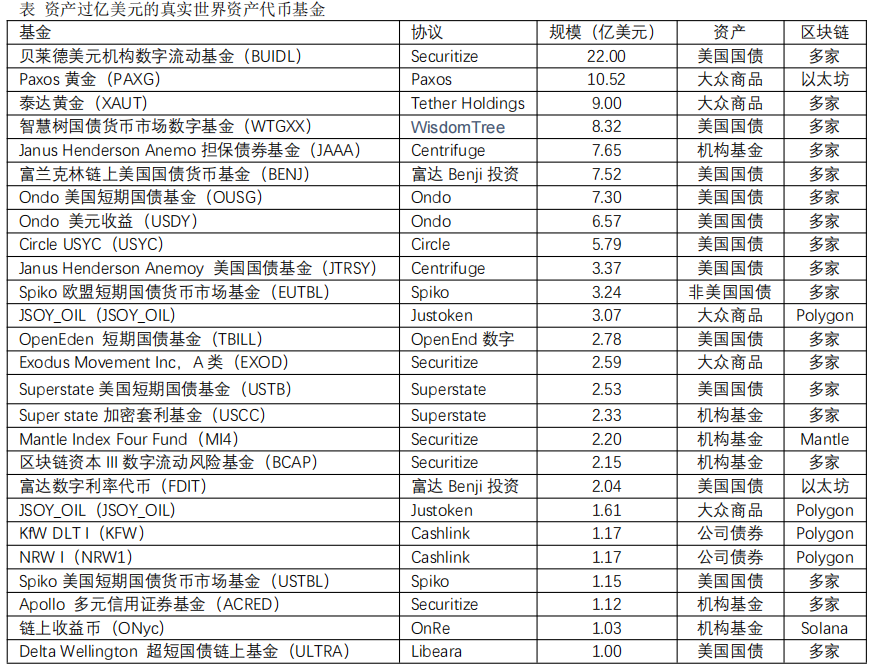
Core Insights - The tokenization of real-world assets (RWAs) has rapidly gained momentum, achieving significant milestones in a short period, with a total market value of $29.27 billion as of September 12, 2023 [1][5][7] - Major asset classes in tokenization include private credit ($16.72 billion), U.S. Treasury bonds ($7.42 billion), and commodities ($2.01 billion), among others [1][5] - The development of asset tokenization faced challenges due to legal uncertainties and a lack of market infrastructure, but recent legislative changes have paved the way for growth [4][5][10] Market Overview - As of September 12, 2023, there are 389,136 asset holders and 211 issuers, including prominent asset management firms like BlackRock and Fidelity [1][5] - The market for asset tokenization has surged from $5 billion to nearly $30 billion in the past two years, indicating a strong upward trend [5][10] Historical Context - Early attempts at asset tokenization faced significant hurdles, including legal gaps and weak investor participation, leading to a high failure rate of projects [3][4] - Notable early projects included a luxury hotel and a student housing tokenization, both of which encountered liquidity issues and legal challenges [3][4] Legislative Developments - The passage of the GENIUS ACT in July 2023 has removed legal barriers for asset tokens and stablecoins, facilitating a more structured approach to asset tokenization [4][5] - BlackRock's issuance of U.S. Treasury tokens in March 2024 is a strategic move to demonstrate the feasibility of asset tokenization to both political and investment communities [4][5] Advantages of Asset Tokenization - Asset tokenization offers several advantages over traditional finance, including transparency through shared ledgers, flexible custody arrangements, programmability via smart contracts, and enhanced accessibility to financial markets [10][11] - The ability to fractionalize large assets allows for broader participation in financial markets, reducing barriers to entry for investors [10][11] Future Potential - The private market remains largely untapped, with significant potential for asset tokenization in areas such as private equity, private credit, infrastructure, and real estate [13][14] - BlackRock anticipates that the demand for U.S. infrastructure investment will reach $68 trillion from 2024 to 2040, highlighting a key area for future growth in asset tokenization [14] Regional Developments - Hong Kong's approach to asset tokenization differs from the U.S., focusing on a diverse range of asset classes and emphasizing the construction of a digital finance ecosystem [15] - The launch of the RWA registration platform in Hong Kong signifies a commitment to establishing standards and guidelines for asset tokenization [15] Impact on Financial Systems - The rise of asset tokenization and stablecoins is expected to disrupt traditional financial systems, potentially leading to a new international monetary and financial order [17][18] - Predictions suggest that the global market for tokenized assets could exceed $30 trillion by 2030, indicating a transformative shift in the financial landscape [17][18]


211家发行商入局,真实世界资产代币化是喧嚣还是新趋势?
2 1 Shi Ji Jing Ji Bao Dao· 2025-09-16 01:49
Core Insights - The rapid growth of real-world asset tokenization has reached a market size of $29.27 billion as of September 12, 2023, with 389,136 asset holders and 211 issuers, including major asset management firms like BlackRock and Fidelity [1][3] - The tokenized assets are primarily categorized into private credit ($16.72 billion), U.S. Treasury bonds ($7.42 billion), commodities ($2.01 billion), and alternative funds, among others [1][3] - The legalization of asset tokenization in the U.S. has been facilitated by legislative efforts, notably the GENIUS ACT, which has removed legal barriers and allowed for a surge in market activity [3][10] Group 1: Historical Context and Challenges - The journey of asset tokenization has faced significant challenges, with over 90% of projects failing to achieve basic trading volumes before 2021 due to legal uncertainties, weak investor participation, and lack of liquidity mechanisms [2][3] - Early attempts at asset tokenization, such as the St. Regis Aspen hotel project, faced liquidity issues and investor dissatisfaction due to complex structures and additional fees [2] Group 2: Advantages of Asset Tokenization - Asset tokenization offers several advantages over traditional finance, including shared ledger information that enhances transparency and reduces information asymmetry [4][5] - The flexibility in custody arrangements and programmability through smart contracts improve operational efficiency and user experience [6][7] - Tokenization enhances financial inclusion by breaking down large assets into smaller units, making them more accessible to a broader range of investors [6][7] Group 3: Future Potential and Market Trends - The private market holds significant untapped potential, with a focus on private equity, private credit, infrastructure, and real estate as key areas for future growth [8] - The global market for tokenized assets is projected to exceed $30 trillion by 2030, indicating a transformative shift in the financial landscape [10][11] - Hong Kong's approach to asset tokenization emphasizes a diverse range of asset classes and a focus on building a digital financial ecosystem, contrasting with the U.S. model [9][10] Group 4: Impact on Global Financial Systems - Asset tokenization and stablecoins are expected to disrupt the traditional dollar-based international monetary system, providing equal competition for currencies from other regions [10][12] - The evolution of a new international monetary and financial system based on blockchain technology is anticipated to occur more rapidly than previous shifts in economic power [12]
云锋金融配售1.9亿新股 以扩大股东基础及增强股份流动性
Zhi Tong Cai Jing· 2025-09-16 00:08
Core Viewpoint - Yunfeng Financial (00376) announced a placement of 191 million new shares at a price of HKD 6.1 per share, raising approximately HKD 1.17 billion to enhance its shareholder base and capital foundation, while increasing market liquidity [1] Group 1: Fundraising Details - The placement was conducted on a "old shares first, new shares later" basis, with the placement price representing a premium of about 16% over the average closing price of the previous five days and a premium of about 38% over the average closing price of the previous ten days [1] Group 2: Use of Proceeds - The raised funds will primarily be used for system facility upgrades, talent recruitment, and related capital needs, including the launch of comprehensive virtual asset trading services and virtual asset-related investment management services [1] Group 3: Future Vision - The company aims to continue promoting the deep integration of traditional finance and blockchain technology, with a vision to create a new generation Web3 financial service ecosystem, encapsulated in the slogan "Everything on the chain, linking the world" [1]