
数字化

Search documents
中投发布2024年业绩:净资产达1.37万亿美元
证券时报· 2025-12-09 10:41
Core Viewpoint - The report highlights that China Investment Corporation (CIC) has achieved a total asset of $1.57 trillion and a net asset of $1.37 trillion as of December 31, 2024, with an annualized net return on foreign investments of 6.92% over the past decade, exceeding performance targets by 61 basis points [1]. Group 1: Investment Performance and Strategy - As of the end of 2024, CIC's foreign investment portfolio has a public market stock allocation of 34.65%, with the top five sectors being Information Technology (25.85%), Financials (16.41%), Consumer Discretionary (11.85%), Health Care (9.88%), and Industrials (9.72%) [3]. - The company maintains strategic focus amid a challenging global macroeconomic environment characterized by high interest rates, inflation, and geopolitical changes, while also optimizing investment models and enhancing risk management systems [1][9]. Group 2: Central Huijin's Role - Central Huijin, a wholly-owned subsidiary of CIC, has increased its holdings in exchange-traded funds (ETFs) to support market stability, acting as a stabilizing force in the capital market since 2008 [11]. - Central Huijin aims to enhance the governance and core competitiveness of its controlled institutions, ensuring compliance and effective risk management to protect state-owned financial assets [12].

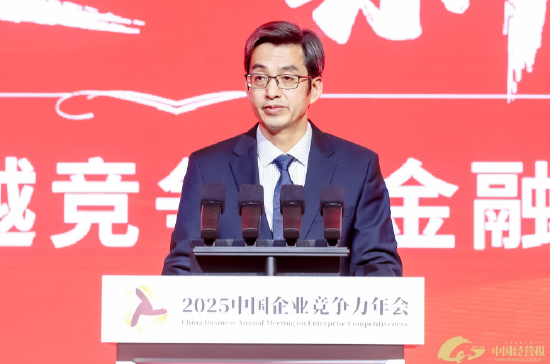
张荣旺:数字化、智能化正深刻重塑金融生态
Xin Lang Cai Jing· 2025-12-09 07:14
专题:2025中国企业竞争力年会 "2025中国企业竞争力年会"于12月9日至10日在北京举行。《中国经营报》副总编辑张荣旺在致辞中表 示,2025 年作为 "十四五" 规划收官之年与 "十五五" 新征程开启的关键节点,我国金融业在金融强国 建设目标引领下,持续深化改革创新,在服务实体经济、防控金融风险、扩大双向开放等领域实现了规 模与质量的历史性跨越。"数字化、智能化正深刻重塑金融生态"他说。 尤为值得关注的是,金融服务实体经济的质效全面提升,围绕做好金融 "五篇大文章",金融资源精准 投向国家重大战略、重点领域和薄弱环节,为高质量发展提供有力支撑。 其中,科技金融领域政策框架持续完善,覆盖科技型企业全生命周期的融资服务体系日益健全,推动科 技、产业、金融形成良性循环。 在此背景下,他表示,金融行业需以更高站位、更强担当、更实举措主动融入中国式现代化大局,以创 新驱动破解难题,以深化改革增强内生动力,以高水平开放拓展发展空间,提升金融供给与实体经济需 求的适配性。 新浪声明:所有会议实录均为现场速记整理,未经演讲者审阅,新浪网登载此文出于传递更多信息之目 的,并不意味着赞同其观点或证实其描述。 责任编辑:李 ...
临沂绘就幸福河湖新图景
Da Zhong Ri Bao· 2025-12-09 02:57
"为提升河湖长履职效能,我们结合莒南水系连通及水美乡村建设项目,全面升级河湖管理系统, 实现了河湖'天上看、云端管、地上查、智慧治'的立体化监管格局,数字化已成为幸福河湖建设的核心 引擎。"莒南县河长办常务副主任、县水利局局长李永山介绍。 "十四五"以来,临沂市以河湖长制为抓手,统筹水资源、水生态、水环境治理,数字化赋能成效显 著。全市成功创建淮河流域幸福河湖4个、省级幸福河湖37个,沂河城区段更是入选国家级示范河湖。 在治理层面,累计完成沂蒙山区域山水林田湖草沙一体化治理项目46个,治理面积达620平方公里;实 施小流域综合治理59条,新增水土流失治理面积679平方公里,水土保持率提升至76.23%。通过母亲河 复苏行动,实施生态补水1.07亿立方米,统筹调度沂河、沭河等4条重点河流水资源,并整治河湖"四 乱"问题超过1.7万处。兰山区、莒南县的国家级水系连通及水美乡村建设也顺利完成,河湖生态持续向 好。 守护每一条河流,滋养每一片湖泊。如今,在数字技术的强力赋能下,临沂的河湖管理正朝着更精 准、更高效、更智慧的方向迈进。一幅清水长流、安全宜居、人文兴盛的生动画卷,正在广阔的沂蒙大 地上全面铺展,诠释着"幸 ...
数智技术赋能西南最大飞机维修基地建设
Ke Ji Ri Bao· 2025-12-09 00:56
Group 1 - The construction of the first phase of the aircraft maintenance base at Kunming Changshui International Airport, the largest in Southwest China, has officially commenced, with a focus on digital and intelligent technologies [1] - A comprehensive monitoring system has been established to ensure safety during construction, covering various elements such as personnel, machinery, materials, and the environment [1] - The project employs digital construction methods, including BIM (Building Information Modeling), which enhances construction quality and efficiency while providing reliable data support for airport operations [1] Group 2 - The project team emphasizes the importance of digital construction platforms, which facilitate complete and easily accessible electronic documentation, aiding in design and construction management [2] - Advanced technologies such as grid management, 5G tower cranes, robotics, and smart construction systems are being utilized to create a modernized hub project [2] - Once completed, the facility will offer comprehensive maintenance services for mainstream aircraft, including inspections, painting, disassembly, modification, and accessory repairs [2]
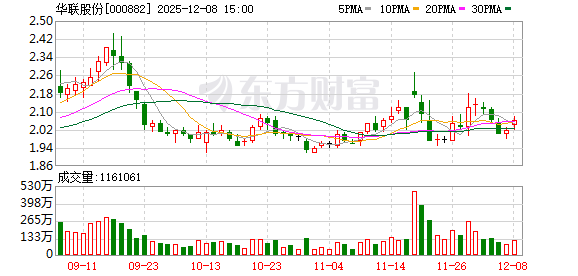
华联股份:公司持续关注新技术在商业经营中的应用
Zheng Quan Ri Bao· 2025-12-08 11:37
Group 1 - The company is actively exploring the application of new technologies in its business operations [2] - The company is focusing on leveraging digitalization to enhance business development [2]

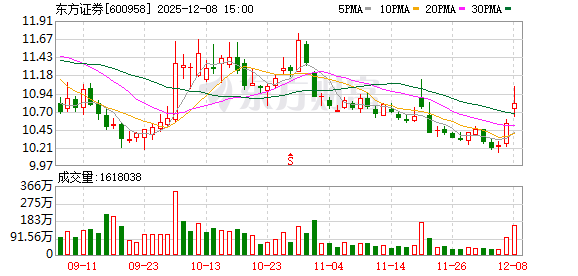
东方证券董事长辞职
Shang Hai Zheng Quan Bao· 2025-12-08 11:29
Group 1 - The core point of the article is the resignation of Gong Dexiong from his positions as Chairman and Executive Director of Dongfang Securities due to work relocation, effective December 8, 2025, with a planned tenure until November 21, 2027 [1][3] - Gong Dexiong has been a significant figure in the financial industry, holding key positions across various sectors including trust, securities, futures, and asset management, showcasing his extensive management experience [6] - During his tenure, Gong proposed a "three-step" medium to long-term strategic roadmap aimed at establishing a competitive and influential modern investment bank [5][7] Group 2 - Under Gong's leadership, Dongfang Securities focused on comprehensive reforms, emphasizing digitalization, group integration, and internationalization, while targeting major wealth management and investment banking sectors [7][8] - The company reported strong financial performance, with Q3 2025 revenues reaching 4.707 billion yuan, a 40.25% increase year-on-year, and a net profit of 1.647 billion yuan, up 38.35% [9] - Dongfang Securities implemented a share buyback plan from May to August, repurchasing 26.7 million A-shares for a total of 250 million yuan, indicating a commitment to maintaining company value and shareholder rights [10]

美的集团董事长方洪波:丹纳赫模式,为中国企业提供一套“穿越周期的行动纲领”
Xin Lang Cai Jing· 2025-12-07 15:04
Group 1 - The value of the "Danaher Model" lies not only in deconstructing a legendary enterprise but also in providing a "cross-cycle action plan" for Chinese companies in uncertain times, emphasizing the importance of strategic determination, adherence to common sense, and cultural resilience [1][6] - Midea Group began learning from the Toyota Production System in 2004 but found limited success until it adopted the Danaher Business System (DBS) through a consulting firm, leading to the establishment of the Midea Business System (MBS) aimed at lean transformation [1][7] - By 2018, Midea's domestic factories completed their lean transformation, with MBS being fully implemented across various divisions and factories, significantly improving operational efficiency [1][8] Group 2 - Midea Group established the MBS Capability Center in 2020, creating over 60 lean educational materials for domestic factories and suppliers, and began empowering overseas factories in 2023, resulting in an average annual efficiency increase of approximately 15% [2][8] - The Danaher Group's early acquisitions were strategic, focusing on undervalued assets, and its evolution towards a healthcare focus illustrates that a company's boundaries depend on the radius of its core capabilities rather than just capital [3][9] - Midea's approach to lean management, inspired by DBS, integrates digitalization, allowing for a seamless connection between advanced digital technologies and management systems, positioning it for future efficiency competition [3][9] Group 3 - The global strategy of the Danaher Group is characterized by a dual approach of internal and external growth, emphasizing the importance of technology, culture, and management systems [4][10] - The book "The Danaher Model" serves as a dense management tool, addressing key questions for entrepreneurs and investors about mergers and acquisitions, the evolution of lean management, and balancing localization with integration in globalization [5][10] - The Danaher Group's founder completed its first acquisition with a loan of $1 million over 40 years ago, and the company's market value has since exceeded $200 billion, demonstrating the importance of process adherence and efficiency [5][10]


邬爱其丨200家工厂告诉我的中国制造业真相
Xin Lang Cai Jing· 2025-12-07 11:57
Group 1 - The core issue facing many small and medium-sized manufacturing enterprises in China is their low profit margins, with over 70% of them having a net profit margin below 5%, and many below 2% [2][26] - The manufacturing sector's contribution to GDP is 26.2% in 2023, but this figure masks the struggles of many companies within the industry [2][26] - The end of high growth has led to market saturation and fierce price competition, making it difficult for companies to transition to digital and intelligent operations [3][27] Group 2 - There is a noticeable absence of younger workers in traditional manufacturing sectors, with many opting for industries that offer better working conditions and higher pay [4][28] - The age structure of skilled labor in China is concerning, with less than 30% of skilled workers under 35, compared to over 50% in countries like Japan and Germany [6][29] - The societal perception of factory work has shifted, leading to a decline in the attractiveness of manufacturing jobs among younger generations [6][30] Group 3 - There is a disconnect between management theory and the realities of manufacturing, with less than 5% of top management research focusing on frontline management in the manufacturing sector [8][31] - Many companies are finding success through practical, localized solutions rather than relying on Western management theories [8][32] - The resilience of Chinese manufacturing is evident in the innovative practices developed by companies to improve efficiency and reduce costs [11][34] Group 4 - Companies are increasingly adopting lean management practices tailored to their specific contexts, leading to significant improvements in efficiency [12][35] - Emotional management strategies, such as treating employees as family, have proven effective in retaining talent and reducing turnover rates [12][36] - Innovative organizational structures, such as profit-sharing models, are being implemented to foster a sense of ownership among workers [12][37] Group 5 - The manufacturing ecosystem in China consists of 40 million small and medium-sized enterprises, with only 14,000 classified as specialized and innovative, highlighting a significant imbalance in research focus [16][39] - The majority of research is concentrated on large enterprises, neglecting the operational needs and challenges faced by smaller companies [16][39] - A shift in focus is needed from large-scale innovation to enhancing the efficiency and effectiveness of smaller firms within the manufacturing sector [18][41] Group 6 - The transformation of China's manufacturing industry requires three key shifts: from scale thinking to specialization, from product innovation to process innovation, and from copying Western models to developing Chinese wisdom [18][41][42] - Emphasizing process improvements can yield substantial financial benefits, as seen in companies that focus on increasing production yield [20][44] - Understanding the cultural context of Chinese workers is crucial for developing effective management practices that resonate with their values and motivations [22][45]
北京丰台营养餐协会成立24小时成交1.4亿元
Bei Jing Shang Bao· 2025-12-06 11:06
Core Viewpoint - The establishment of the Beijing Fengtai District Nutrition Meal Association marks a significant step in transforming the group meal industry, with a focus on value competition rather than price competition, supported by a robust supply chain and government initiatives [1] Group 1: Industry Developments - The Fengtai District has initiated a transformation from traditional wholesale to an integrated model of "centralized procurement + central kitchen + dining terminal," leveraging its geographical and supply chain advantages [1] - A total of 400 enterprises and 14 quality group meal companies participated in the event, resulting in 72 preliminary cooperation intentions and a transaction amount of 1.4 billion yuan [1] Group 2: Future Prospects - The Fengtai District Business Bureau plans to establish a group meal industry alliance to deepen the advantages of centralized procurement and distribution, with an expected growth of over 40% in the regional group meal industry scale in the next three years [1] - The trend towards digitalization, diversified scenarios, and brand aggregation in the group meal industry is becoming inevitable, as highlighted by industry experts [1]
焦点科技副总裁李丽洁:真正具有战略定力的企业在加速全球化布局
2 1 Shi Ji Jing Ji Bao Dao· 2025-12-06 01:52
Core Insights - The forum focused on the theme "Innovation Without Boundaries, Intelligence to See the Future," highlighting the importance of digitalization and AI in the context of cross-border trade and globalization [1]. Group 1: Digitalization and Cross-Border Trade - Companies have evolved from early attempts at using digital platforms to now having digital tools as standard for going global, with a shift from B2B cross-border e-commerce to a mature ecosystem including B2C, cross-border logistics, and payment [1]. - The challenges faced by Chinese companies have shifted from initial technology and channel issues to more complex regional compliance, localization operations, and supply chain restructuring [1]. Group 2: Globalization Strategy - In the face of geopolitical pressures and tariff barriers, companies with strategic determination are accelerating their global expansion, with leaders planning their production capacity and supply chains more rationally [2]. - The launch of the "New Maritime Plan" by the company aims to assist businesses in penetrating emerging markets in Southeast Asia, the Middle East, and Africa, fostering deep connections with local business associations and channel partners [2]. Group 3: AI Integration - The company is strategically advancing AI empowerment across the entire supply chain, providing AI tools for buyers and sellers to enhance user experience and transaction efficiency [2]. - AI model technology is expected to bring profound changes to cross-border trade, necessitating companies to adopt AI in both product strategies and platform operations [2]. Group 4: Future Outlook - There is confidence in the ability of Chinese companies, especially SMEs, to expand globally through a combination of digitalization and deep localization [4]. - The importance of human connections remains significant in the current wave of globalization, emphasizing that while digital tools are crucial, the inherent warmth and decision-making ability of individuals are invaluable [4]. - With the support of digital tools and platforms, combined with the determination and flexibility of entrepreneurs, Chinese manufacturing is expected to continue rising in the global value chain [4].
