民营经济

Search documents
发展民营经济的理论内涵和实践导向
Jing Ji Ri Bao· 2025-09-11 22:51
Core Viewpoint - The development of the private economy is essential for achieving the "Two Centenary Goals" and the Chinese Dream of national rejuvenation, as emphasized by General Secretary Xi Jinping. The government aims to encourage, support, and guide the healthy and high-quality development of the private economy while ensuring the consolidation and development of the public economy [1][2]. Encouragement and Support for Private Economy - The private economy is recognized as a vital component of China's economic system, contributing significantly to productivity and common prosperity. The government has implemented various measures to support its growth, viewing the private sector as an integral part of socialism with Chinese characteristics [2][3]. - The private economy is crucial for building a high-level socialist market economy, requiring a balance between effective markets and proactive government intervention. This includes encouraging the growth of private enterprises and their integration into global supply chains [3][4]. Technological Innovation - The private sector plays a key role in technological innovation, contributing over 70% of technological advancements in China. The government encourages private enterprises, especially tech firms, to increase R&D investments and participate in national technology initiatives [4][5]. Common Prosperity - The private economy is essential for promoting common prosperity, with a focus on creating stable employment opportunities and reducing income disparities. The government aims to support the growth of private enterprises to enhance job creation and improve income distribution [5][6]. Policy Implementation - Effective measures are needed to address challenges faced by private enterprises, such as financing difficulties and market competition pressures. The government plans to implement tax reductions and improve access to financing for small and medium-sized enterprises [7][8]. - The government emphasizes the importance of a unified market and fair competition to foster a conducive environment for private economic growth [6][8]. Strategic Direction - The government will provide clear guidance through economic planning and strategic policies to support the private economy's high-quality development. This includes enhancing core competitiveness and promoting innovation [12][14]. - The legal framework will be strengthened to protect the rights of private enterprises and ensure a fair market environment, with the implementation of the Private Economy Promotion Law [13][14].
成都高新区“进解优促”激发民营经济活力
Zhong Guo Chan Ye Jing Ji Xin Xi Wang· 2025-09-11 22:30
Group 1 - The core viewpoint highlights the robust growth of the private economy in Chengdu High-tech Zone, with 25,200 new private enterprises established and a private economy value added of 1,040.1 billion yuan in the first half of 2025 [1] - Chengdu High-tech Zone has implemented a comprehensive service mechanism for enterprises, focusing on addressing common issues related to policies, markets, finance, and talent through a specialized problem-solving team [1] - The zone has conducted visits to 3,584 enterprises, resolving over 1,000 enterprise requests with a completion rate of 97.97%, demonstrating a strong commitment to responsive service [1] Group 2 - Chengdu High-tech Zone has launched a supply-demand matching platform and released 20 technology innovation application scenarios, enhancing enterprise development through diverse application scenarios [2] - Eight application scenarios, including AI smart diagnosis and unmanned buses, have been successfully implemented, with over 80 scenario lists published to support innovation [2] - The financial service system for private enterprises has been improved, with 60 enterprises visited, resulting in a total of 600 million yuan in new pre-credits and 239 million yuan in loans issued [2] Group 3 - The zone has introduced an "automatic enjoyment" service model, allowing enterprises to receive benefits without the need for active application, streamlining the process significantly [3] - Companies can now receive subsidies directly through data comparison, exemplified by a software company receiving a 30,000 yuan employment subsidy without submitting application materials [3] Group 4 - In the first half of the year, Chengdu High-tech Zone disbursed a total of 519 million yuan in industrial support funds, benefiting over 12,500 enterprises [4] - The zone has nurtured 3,612 innovative small and medium-sized enterprises, 1,128 specialized and innovative enterprises, and 142 national-level "little giant" enterprises, leading in various metrics within Sichuan Province and Chengdu [4] - Future plans include deepening enterprise service mechanisms, expanding application scenarios, enhancing financial support, and optimizing talent services to further stimulate the innovation vitality of the private economy [4]
广西邀民营企业携手打造面向东盟人工智能国际合作高地
Zhong Guo Xin Wen Wang· 2025-09-11 18:56
Group 1 - The core viewpoint emphasizes the importance of private enterprises in Guangxi's artificial intelligence development and the region's potential as a hub for international cooperation with ASEAN [1] - Guangxi is positioned as a key area for investment, with the slogan "Investing in Guangxi is investing in the future" gaining traction among investors [1] - The region aims to build an artificial intelligence industry ecosystem that integrates research and development from major cities with applications in ASEAN [1] Group 2 - As of July 2023, Guangxi has 4.394 million private business entities, reflecting a year-on-year growth of 4.47% [2] - The local government is focused on enhancing the business environment and implementing policies to support the healthy and high-quality development of the private economy [2] - Guangxi aims to leverage its industrial, resource, and ecological advantages to strengthen private enterprises and promote their growth [2]
长三角新阶层力量汇聚 “嘉温昆太”共话民营经济
Zhong Guo Xin Wen Wang· 2025-09-11 13:31
Core Viewpoint - The event "Jiawen Kun Tai" focuses on promoting high-quality development of the private economy in the Yangtze River Delta, emphasizing the role of new social strata in driving innovation and industry upgrades [1][3]. Group 1: Event Overview - The sixth "Jiawen Kun Tai" event took place in Wenzhou, Zhejiang Province, with the theme "Gathering New Forces to Promote New Development of the Private Economy in the Yangtze River Delta" [1]. - Participants included representatives from Shanghai, Wenzhou, Kunshan, and Taicang, highlighting the collaboration among these regions [1]. Group 2: Role of New Social Strata - The new social strata are recognized as significant contributors to technological innovation and the development of the private economy [3]. - Key speakers included executives from NIO and local business associations, discussing how new social strata can empower and promote high-quality development in the private sector [3]. Group 3: Professional Talent Development - The "Three Masters" (lawyers, accountants, tax advisors) are expanding their roles into various fields, evolving into comprehensive service providers and multi-skilled talents [3][5]. - There is a noted talent gap for composite professionals and challenges related to digital development and regional disparities [5]. Group 4: Collaborative Initiatives - A "Three Masters" service team was established to create a collaborative platform for sharing resources such as information, talent, and technology across the four regions [5]. - The initiative aims to enhance the service brand's influence and improve service quality while fostering networking among new social strata [5].


“益企京彩”海淀开讲,首都民营经济政策宣讲服务团惠企赋能
Bei Ke Cai Jing· 2025-09-11 08:21
Group 1 - The "Yiqi Jingcai" policy promotion service team aims to enhance the implementation of private economy policies in Haidian District, facilitating high-quality development of the private sector [1][2] - The service team focuses on bridging the gap in policy implementation, ensuring that policies are effectively communicated and utilized by enterprises [1][2] - Haidian District is committed to creating an internationally competitive business environment, supporting private enterprises in cost reduction, efficiency improvement, and innovation [2] Group 2 - The Beijing Development and Reform Commission has been optimizing the development environment for private enterprises by enhancing policy frameworks and service mechanisms [2] - The future industry is identified as a key area for high-quality development, integrating common technologies and leading-edge technologies across multiple fields [3]
广西打造营商环境“强磁场” 铸就民营经济“强引擎”
Zhong Guo Xin Wen Wang· 2025-09-11 02:48
Group 1 - Guangxi is enhancing its business environment by creating a "strong magnetic field" to boost the private economy, focusing on market-oriented, legal, international, and convenient service improvements [1][2] - In the first half of the year, 823,000 business entities in Guangxi achieved "one code for all" access, and 100,000 businesses utilized cloud services for cross-regional migration [1][2] - Guangxi has implemented significant reforms, reducing application materials, processing time, and approval times by 87.5%, 88.9%, and 95.2% respectively [1][2] Group 2 - Guangxi is the only Chinese province adjacent to ASEAN, serving as a frontier for open cooperation, with 100% of customs administrative approvals processed online [1][2] - The province has initiated a one-stop testing reform that reduces duplicate testing by approximately 40% and shortens testing time by over one day [2] - By July 2025, Guangxi is projected to have 4.394 million private business entities, marking a year-on-year growth of 4.47% [2] Group 3 - The private economy in Guangxi contributes significantly, accounting for 50% of tax revenue, 60% of GDP, 70% of total imports and exports, over 80% of urban employment, and 95% of business entities [2] - Guangxi plans to further enhance the political ecology and optimize the business environment, ensuring better service quality and support for private enterprises [2][3] - The Guangxi government aims to support enterprises in expanding their overseas business through cross-border connections and policy interpretations [3]
上半年全省民营经济贷款余额超7万亿元、同比增长8%金融活水精准滴灌,民营经济发展强劲
Xin Hua Ri Bao· 2025-09-10 23:35
Core Insights - The Chinese government emphasizes the need to address financing difficulties for private enterprises, highlighting the importance of the private economy in Jiangsu for job creation, technological innovation, and fiscal revenue [1] Group 1: Financial Support for Private Enterprises - Jiangsu's private economy loan balance reached 7.02 trillion yuan, with an 8% year-on-year increase [1] - The province has 712 listed companies, with over 70% being private enterprises, indicating a strong presence of private firms in the capital market [1] - Financial institutions in Jiangsu are innovating products to support private enterprises, including various loan types and insurance products [2][3] Group 2: Innovation in Financial Products - Jiangsu Bank launched "Equipment Update Loans," providing 6.5 billion yuan across 317 transactions to support equipment upgrades [2] - The "1650" industry chain digital customer acquisition system has facilitated 779.8 billion yuan in credit for 30,500 industry chain clients [3] - New insurance products have been developed to mitigate risks for technology companies, with over 800 million yuan in coverage for low-speed unmanned driving equipment [3] Group 3: Capital Market Developments - The A-share market has seen significant growth, with 52 Jiangsu-listed companies doubling their stock prices this year [4] - Jiangsu Bank introduced "Equity Option Loans" to support high-growth technology companies while addressing concerns about early equity dilution [4] Group 4: Policy and Collaborative Efforts - Financial service centers have been established to provide comprehensive support to private enterprises, including financial consulting and policy promotion [6] - The provincial financial office has organized nearly 100 events to promote financial services for the real economy across 13 cities [6][7] - The "Jiangsu Small and Micro Enterprises Financing One-Stop" system has been developed to streamline financing processes for small enterprises [7]
金融活水精准滴灌,民营经济发展强劲
Xin Hua Ri Bao· 2025-09-10 23:28
Group 1 - The core viewpoint emphasizes the importance of addressing the financing difficulties faced by private enterprises in Jiangsu, as highlighted by President Xi Jinping during the private economy symposium [1] - Jiangsu's private economy plays a crucial role in entrepreneurship, employment, technological innovation, and fiscal revenue, significantly contributing to the province's economic and social development [1] - As of mid-2023, the loan balance for the private economy in Jiangsu reached 7.02 trillion yuan, marking an 8% year-on-year increase [1] Group 2 - Jiangsu's financial institutions have introduced a diverse range of products to support private enterprises, including various loan types and insurance products [2] - The "Equipment Update Loan" launched by Jiangsu Bank has provided 6.5 billion yuan across 317 transactions, demonstrating the bank's commitment to facilitating equipment upgrades for private enterprises [2] - Approximately 90% of high-tech enterprises and 70% of provincial R&D institutions in Jiangsu are private enterprises, indicating their significant role in innovation and development [2] Group 3 - Jiangsu Bank has innovatively launched the "1650" industry chain digital customer acquisition system, providing 779.8 billion yuan in credit to 30,500 industry chain clients [3] - The insurance sector, represented by Zijin Insurance, has introduced innovative insurance products to mitigate risks for technology-driven enterprises, providing over 800 million yuan in risk coverage for autonomous driving companies [3] - Zijin Insurance has also provided more than 6.5 billion yuan in risk coverage for the new energy private economy [3] Group 4 - The A-share market has seen significant performance from Jiangsu-listed companies, with 52 companies doubling their stock prices this year, reflecting the province's strategic focus on emerging industries [4] - Jiangsu Bank's "Equity Option Loan" aims to support technology-driven private enterprises by providing credit while allowing for equity stake options, with 1.2 billion yuan allocated to nearly 30 companies [4] - The establishment of new investment divisions by Yida Capital indicates a strategic shift to better align with future technology and industry trends [4] Group 5 - A promotional event for the Jiangsu Strategic Emerging Industry Fund Cluster was held in Shenzhen, aiming to attract top investment institutions to support Jiangsu's emerging industries [5] Group 6 - The establishment of financial service centers for private enterprises in Jiangsu aims to provide comprehensive financial services, including consultations and policy promotion [6] - Nearly 100 "Financial Services for the Real Economy" events have been organized across Jiangsu, enhancing the outreach of financial support to private enterprises [6] Group 7 - As of August 2025, the Jiangsu Financial Services platform has registered over 2.02 million enterprises, with 84% being private enterprises, facilitating credit access of 6.49 trillion yuan [7] - The development of the "Jiangsu Small and Micro Enterprises Financing One-Stop" system aims to streamline financing processes for small enterprises [7] - Financial institutions in Jiangsu have conducted visits to over 4.03 million enterprises, providing credit support of 3.02 trillion yuan to 582,900 enterprises [7]

《计量促进民营经济发展壮大若干措施(征求意见稿)》公开征求意见
Zhong Guo Xin Wen Wang· 2025-09-10 07:49
Core Viewpoint - The National Market Supervision Administration has released a draft titled "Measures to Promote the Development and Growth of the Private Economy" to solicit public opinions, aiming to enhance the role of measurement in improving the quality, efficiency, innovation capability, and market competitiveness of private economic organizations [1][2]. Group 1: Specific Measures - The draft outlines eight specific measures to address the prominent needs and weaknesses in the measurement sector for private economic development, including strengthening policy support and optimizing measurement administrative approval services [2]. - It emphasizes the need to shorten the time required for the verification and calibration of measuring instruments, and to simplify the approval process for improvements to existing measuring instruments produced by private organizations [2]. - The establishment of a regular communication mechanism to gather measurement needs from private economic organizations is proposed, leading to the creation of a measurement demand list [2]. Group 2: Support for Innovation and Services - The draft encourages capable private organizations to undertake measurement technology innovation tasks and supports them in key projects that enhance new productive forces [2]. - It proposes ongoing initiatives like "Measurement Services for Small and Medium Enterprises" to help private organizations improve their measurement management systems [2]. - The document also highlights the importance of building platforms for private organizations to participate in the construction of industrial measurement testing centers, thereby enhancing their advanced measurement capabilities [2]. Group 3: Energy Efficiency and International Expansion - The measures aim to assist private organizations in establishing comprehensive energy and carbon measurement systems, promoting energy efficiency and carbon reduction [2]. - It supports private organizations in participating in evaluations for energy and water efficiency leaders and encourages the international expansion of measurement systems [2]. - The draft also includes provisions for supporting the export of products from private organizations by providing measurement services [2]. Group 4: Talent Development - The draft emphasizes the collaboration between higher education institutions, research institutes, and vocational training organizations with private economic organizations to cultivate measurement skill talents [2]. - It supports the involvement of professional measurement technical talents from private organizations in technical committees or working groups [2].
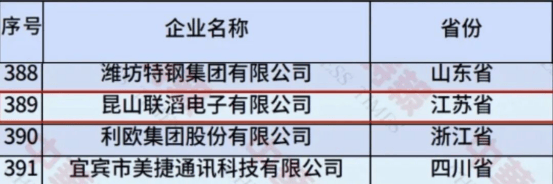
中国制造业民营企业500强!昆山锦溪这家企业新入选
Sou Hu Cai Jing· 2025-09-10 06:42
Group 1 - The "2025 China Manufacturing Private Enterprises Top 500" list has been officially released, with four companies from Kunshan making the list, including Kunshan LianTao Electronics Co., Ltd., which is a new entrant this year [1][2] - Kunshan LianTao Electronics Co., Ltd. is a national high-tech enterprise engaged in the R&D, manufacturing, and sales of products such as antennas, linear motors, and wireless chargers. The company has been actively seizing new opportunities and driving industry transformation towards digitalization and greening through independent innovation [2] - The list is considered the most authoritative and comprehensive ranking in the field of China's private economy, based on the previous year's revenue indicators. LianTao Electronics' strong development momentum reflects not only its comprehensive strength but also the robust growth potential of the private economy in Jinxikou Town [4] Group 2 - Jinxikou will continue to enhance the advantages of the private economy, leveraging leading enterprises to drive growth, optimizing the business environment, and strengthening support for enterprise services and innovation [4]