
设备更新贷

Search documents
构建适配先进装备制造业集群的现代金融体系
Xin Lang Cai Jing· 2026-01-13 20:53
Core Viewpoint - The article emphasizes the need for a modern financial support system that aligns with the development of advanced equipment manufacturing clusters in China, addressing structural mismatches in the current financial support framework [1][2]. Group 1: Structural Mismatches in Financial Support - There is a structural mismatch between financial support and the evolution of advanced equipment manufacturing clusters, which hampers the upgrading of industry capabilities and the transformation process [1][2]. - Financial resources are unevenly distributed, with advanced equipment manufacturing clusters concentrated in eastern coastal regions, while central and western regions face challenges such as limited financing channels and low credit availability [2][3]. - The financing structure shows a mismatch in terms, with a lack of "patient capital" for equipment manufacturing enterprises that require long-term funding due to their high asset intensity and long R&D cycles [2][3]. Group 2: Need for Systematic Financial Reform - A systematic approach is needed to deepen financial supply-side structural reforms, creating a financial support system that covers the entire lifecycle of clusters and enhances collaboration among government, banks, and enterprises [1][4]. - Current financial services do not effectively match the evolving needs of industry clusters, with a tendency to favor mature enterprises over early-stage ones, leading to gaps in support across different development stages [2][3]. Group 3: Recommendations for Financial Support System - It is recommended to establish a diversified financing system that integrates equity, debt, loans, and guarantees, addressing the unique characteristics of the equipment manufacturing industry [5][6]. - Financial product innovation should be promoted throughout the lifecycle of enterprises, including models for technology introduction and government credit enhancement in the formation stage, and green bonds in the mature stage [6][7]. - The establishment of specialized, market-oriented cluster promotion institutions is suggested to improve the efficiency of policy transmission and better match enterprise financing needs with financial institutions [3][6]. Group 4: Importance of Financial Empowerment - Financial empowerment should not merely involve capital injection but should focus on institutional innovation and product adaptation to foster deep integration between the financial system and advanced equipment manufacturing clusters [7]. - A modern financial support system is essential for facilitating the transition from traditional manufacturing to intelligent manufacturing, ultimately contributing to the construction of a modern industrial system and achieving high-level technological self-reliance [7].
2025普惠金融报告
Bei Jing Shang Bao· 2025-12-14 07:47
Core Insights - China's inclusive finance has evolved from a historical leap of "from nothing to something" to a focus on "precision" and "quality" in the next decade, addressing challenges such as customer homogeneity and rising risk control costs [1][3][10] Development and Achievements - The balance of inclusive loans for small and micro enterprises reached 36.5 trillion yuan, a year-on-year increase of 12.1%, more than double the end of the 13th Five-Year Plan [3][4] - Financial services have expanded to rural areas, achieving nearly 100% coverage of insurance services in towns and villages [5][10] - The concept of inclusive finance was officially proposed in 2013, aiming to provide financial services to underserved groups [4][10] Challenges and Market Dynamics - The transition from a "blue ocean" to a "red ocean" market has led to increased competition among financial institutions, with challenges such as customer homogeneity and rising acquisition costs [10][12] - Banks face difficulties in identifying new clients, particularly in rural areas where small businesses often lack collateral [10][12] - The insurance sector struggles with accurately pricing inclusive health insurance products for low-income groups [11][12] Future Directions - The next decade will focus on enhancing the quality of inclusive finance, with an emphasis on creating a high-level inclusive financial system that supports common prosperity [13][14] - A new coordination mechanism for supporting small and micro enterprises is being established to improve financial service accessibility [14][15] - Financial institutions are encouraged to innovate and develop tailored financial products for specific groups, enhancing service delivery through digital transformation [15][16]
2025普惠金融报告|普惠十年记
Bei Jing Shang Bao· 2025-12-14 06:47
Core Insights - China's inclusive finance has evolved from a historical leap of "from nothing to something" to a focus on "precision" and "quality" in the next decade, with challenges such as customer homogeneity and rising risk control costs [1][12] - The development of inclusive finance has been marked by policy breakthroughs, technological empowerment, and service expansion, reaching rural areas and enhancing financial services beyond just credit [4][6] Group 1: Development Achievements - As of Q3 2025, the balance of inclusive loans for small and micro enterprises reached 36.5 trillion yuan, a year-on-year increase of 12.1%, more than double the end of the 13th Five-Year Plan [5] - The average interest rate for newly issued inclusive loans in 2024 was 4.13%, down 33 basis points from the previous year, indicating a trend towards more affordable financing [5] - The balance of agricultural loans reached 51.36 trillion yuan, growing by 9.8%, which is higher than the general loan growth rate [5] Group 2: Policy and Framework - The concept of inclusive finance was formally introduced in China in 2013, aiming to address the "Matthew effect" in financial services, where resources were concentrated among large enterprises [6] - The State Council issued a development plan for inclusive finance in 2015, establishing a framework to enhance financial services for underserved sectors [6][17] - The Central Financial Work Conference recognized inclusive finance as a key pillar for high-quality national development [8] Group 3: Challenges and Market Dynamics - The inclusive finance sector has transitioned from a "blue ocean" to a "red ocean," facing increased competition and challenges such as customer homogeneity and rising costs [12][13] - Financial institutions are struggling with the balance between expanding coverage and ensuring sustainable risk management, leading to issues like "picking the best" clients while neglecting smaller enterprises [13][14] - Specific challenges include the difficulty in assessing risks for small businesses and the need for insurance products to cover previously underserved populations [13][14] Group 4: Future Directions - The next decade will focus on enhancing the quality of inclusive finance, with an emphasis on creating a supportive monetary environment and improving service capabilities [16][19] - A new coordination mechanism for supporting small and micro enterprises is being established to facilitate better connections between banks and businesses [17] - The goal is to build a high-quality comprehensive inclusive finance system by 2025, with ongoing optimization of financial services for key sectors [17][18]


为发展新质生产力提供长期资金支持
Jing Ji Ri Bao· 2025-12-04 00:41
Core Viewpoint - The article emphasizes the importance of long-term capital support for the development of new quality productivity in China, which is driven by technological innovation and modernization [1][2]. Group 1: Long-term Capital and Technological Innovation - Long-term capital is crucial for the transformation of scientific and technological achievements, as it supports continuous investment in basic research and enterprise R&D activities [2][4]. - The lack of stable long-term investment can disrupt innovation processes and hinder the conversion of technological achievements into practical applications [2][5]. Group 2: Policy Framework and Government Initiatives - The Chinese government encourages the development of angel investment, venture capital, and private equity to enhance the role of patient capital in supporting modern industrial systems [3]. - Recent policies have been introduced to create a more comprehensive institutional framework for long-term capital, including guidelines for government investment funds and mechanisms to facilitate financing for technology enterprises [3][4]. Group 3: Current Investment Trends and Data - In 2024, China's R&D expenditure reached 36,326.8 billion yuan, with an intensity of 2.69%, consistently exceeding the average level of EU countries [4]. - The loan balance for technology-based small and medium-sized enterprises reached 3.46 trillion yuan by June 2025, reflecting a year-on-year growth of 22.9% [4]. Group 4: Challenges and Recommendations - There is a mismatch between long-term investment and the needs of new quality productivity, with issues such as a preference for short-term projects and uneven capital allocation across sectors [5][6]. - Recommendations include optimizing the investment environment, expanding patient capital, and innovating financial products to enhance support for technological innovation [5][6].
祝国平:为发展新质生产力提供长期资金支持
Jing Ji Ri Bao· 2025-12-04 00:14
Group 1 - The core viewpoint emphasizes the need for high-level technological self-reliance and innovation as a foundation for China's modernization, highlighting the importance of long-term capital in fostering new productive forces [1][2][3] - New productive forces are characterized by technological breakthroughs, innovative allocation of production factors, and deep industrial transformation, with a significant increase in total factor productivity as a key indicator [1][2] - The government is actively promoting the development of angel investment, venture capital, and private equity to enhance the role of patient capital in supporting modernization and new productive forces [3] Group 2 - In 2024, China's R&D expenditure reached 36,326.8 billion yuan, with an intensity of 2.69%, consistently exceeding the average level of EU countries [4] - The annual growth rate of R&D expenditure during the first four years of the 14th Five-Year Plan was 10.5%, ranking among the top of major global economies [4] - By mid-2025, loans to technology-based SMEs reached 3.46 trillion yuan, with a year-on-year growth of 22.9%, outpacing other loan categories [4] Group 3 - Despite progress, there remains a mismatch between long-term investment and the needs of new productive forces, with issues such as a preference for short-term investments and uneven capital allocation across sectors [5][6] - Recommendations include optimizing the investment environment, expanding patient capital, and innovating financial products to enhance long-term capital support for technological innovation [5][6] - Specific measures proposed include improving tax incentives for investment in technology transfer and mid-term trials, and encouraging state-owned capital to invest in innovation and strategic emerging industries [6]
金融活水润泽“小生意”
Jing Ji Ri Bao· 2025-12-01 22:20
Core Insights - The People's Bank of China reported that in the first three quarters, financial institutions issued 14.5 trillion yuan in loans to the real economy, accounting for 48.3% of the total social financing increase during the same period [1] - The report emphasizes the importance of individual businesses and small enterprises in the market economy and highlights the continuous inflow of credit resources into inclusive finance to support these entities [1] Summary by Sections Support for Individual Businesses - Individual businesses are crucial for market activity and employment stability. In the first half of the year, 13.278 million new business entities were established, including 8.629 million individual businesses [2] - Financial services are aimed at alleviating funding difficulties for individual businesses, which can create 2 to 3 jobs per business [2] - As of Q3, Jiangsu Province reported a loan balance of 966.1 billion yuan for individual businesses, an increase of 13.2 billion yuan year-on-year [2] Policy Guidance and Financial Tools - The government is enhancing policy guidance and utilizing tools like re-loans and rediscounts to ensure funds reach the real economy [3] - The average interest rate for new loans to individual businesses in Jiangsu decreased by 0.63 percentage points year-on-year, reaching a historical low [3] - Financial support must be tailored to the diverse needs of individual businesses, with specific strategies for survival, development, and growth types [3] Financial Services for Small and Micro Enterprises - As of September, there were 63.487 million small and micro enterprises in China, with 98.1% classified as micro enterprises [5] - The government has introduced 23 specific measures to improve financing conditions for small and micro enterprises [5] - Financial institutions are innovating products and services to meet the unique needs of small and micro enterprises, including equipment upgrade loans and flexible repayment options [6][9] Comprehensive Services and Coordination - Financial institutions are providing comprehensive services to small and micro enterprises, which have more complex financing needs compared to individual businesses [7] - The financial regulatory authority has emphasized the importance of addressing pain points in inclusive finance services, particularly for private and small enterprises [8] - Collaborative mechanisms are being established to enhance financing support, with over 1,500 enterprises visited by Beijing Rural Commercial Bank this year, resulting in financing support exceeding 2.5 billion yuan [8] Innovation and Technology in Financial Services - The development of digital finance is seen as a new path for inclusive finance, with technology improving risk assessment and approval efficiency [11] - Financial institutions are encouraged to adapt to market changes and customer needs while ensuring sustainable commercial viability [11] - The optimization of banking products, technology, policies, and ecosystems is crucial for the high-quality development of inclusive finance [10]
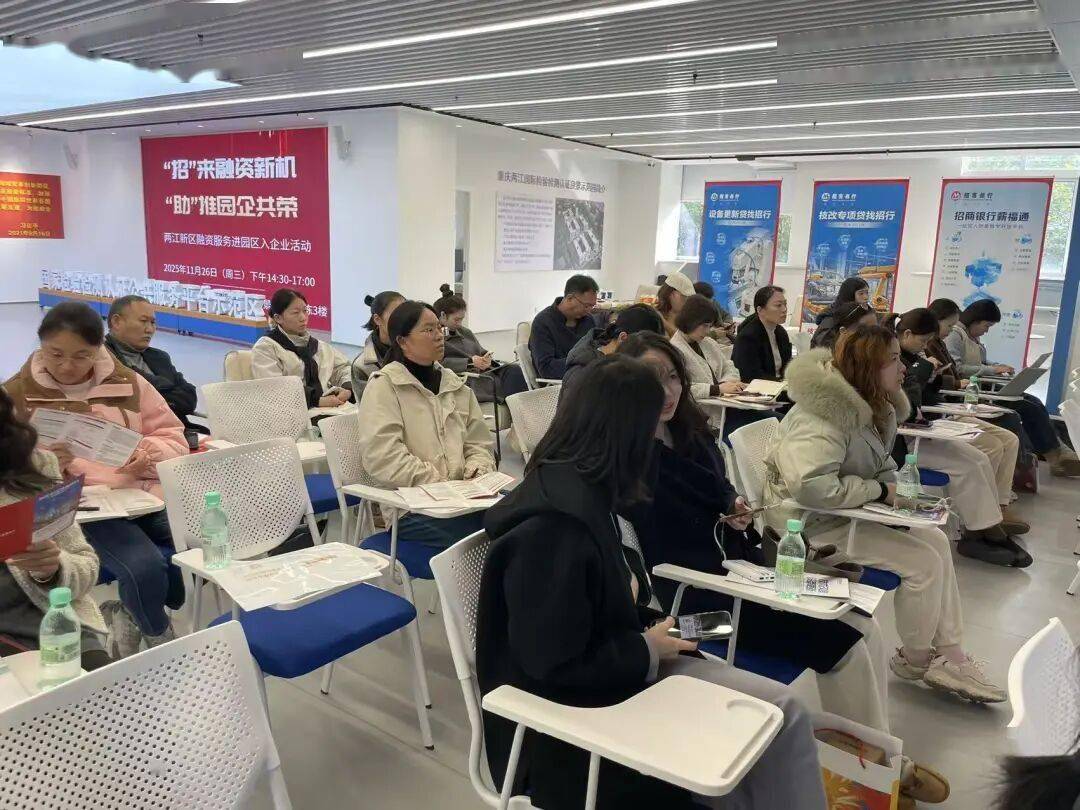
活动简讯|“招”来融资新机 “助”推园企共荣——两江新区融资服务进园区入企业活动顺利举行
Sou Hu Cai Jing· 2025-11-28 06:14
Core Insights - The event "Financing New Opportunities to Boost Park Enterprises" was held in Liangjiang New Area to enhance financial support for the manufacturing sector in Chongqing [1] - The event was co-hosted by the Chongqing Small and Medium Enterprises Development Service Center and China Merchants Bank Chongqing Branch, with participation from nearly 30 enterprises and relevant organizations [1] Policy Interpretation - The Chongqing Small and Medium Enterprises Development Service Center provided detailed explanations of five key policies aimed at addressing core funding needs for enterprises, including emergency turnover funds and credit loans for small and medium enterprises [3] - The policies were broken down into applicable scope, application conditions, and processing procedures to help enterprises effectively utilize policy benefits [3] Financial Empowerment - China Merchants Bank introduced various financial products tailored for technology-driven enterprises, focusing on needs such as technological upgrades and capacity expansion [5] - Specific products discussed included special loans for technological transformation, equipment updates, intellectual property pledge loans, and innovation loans, along with case studies and interest rate advantages [5] Interactive Engagement - Representatives from participating enterprises actively discussed their financing needs related to technological investment, equipment updates, and research innovation, engaging in deep interactions with policy interpreters and bank representatives [8] - The event facilitated direct communication between government, enterprises, and banks, leading to preliminary financing cooperation intentions among some enterprises [8] Conclusion - The financing service event established a "green channel" for policy communication and bank-enterprise connections, enabling enterprises to grasp the latest financing policies and financial products while allowing financial institutions to better understand actual enterprise needs [10] - The organizing company plans to continue collaborating with government units and financial institutions to host similar effective and practical events [10]

从“找”到“送”!平顶山高新区精准服务让金融活水直达企业
Sou Hu Cai Jing· 2025-11-17 08:13
Group 1 - The core viewpoint of the articles highlights the transformation of financial services in the Shahe Industrial Park, where banks are now providing on-site services to companies, significantly reducing the time and effort required for financing [1][2] - The park has established a dedicated service team to conduct in-depth visits to enterprises, identifying their operational status and funding needs, resulting in the identification of six companies with financing requirements [1] - Collaborative efforts with banks have led to the introduction of tailored financial products, such as "Specialized and Innovative Loans" and "Equipment Upgrade Loans," which have helped four companies reduce their financing costs by nearly 15% on average [1] Group 2 - The park has developed an "online + offline" dual-channel for bank-enterprise connections, including a WeChat group for real-time policy updates and personalized consultations based on enterprise needs [2] - In 2023, the Shahe Industrial Park has organized eight bank-enterprise matching events, successfully assisting four companies in securing over 23.4 million yuan in financing [2] - Future plans include further optimization of financing service mechanisms to support enterprises in focusing on their development [2]
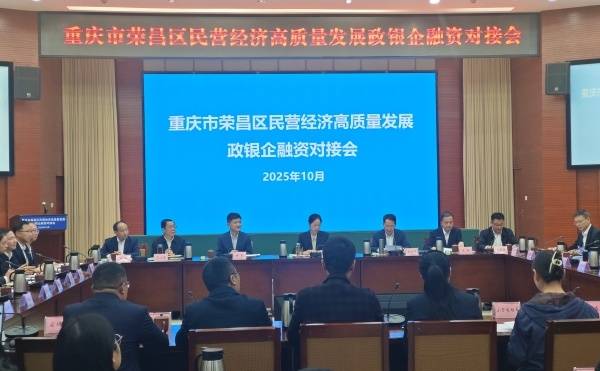
荣昌区举办2025年民营经济高质量发展政银企融资对接会
Sou Hu Cai Jing· 2025-10-29 04:36
Group 1 - The Rongchang District held a financing matchmaking conference aimed at promoting high-quality development of the private economy, attracting 11 banks and 80 private enterprises [2][3] - The conference focused on the theme "Gathering Innovation to Drive the Future," facilitating dialogue between government, financial institutions, and private enterprises to address financing challenges [2] - A total of 10 financing agreements were signed during the event, amounting to 682 million yuan, covering key sectors such as intelligent manufacturing and the poultry industry [2] Group 2 - As of January to September this year, the Rongchang District had over 70,000 private economic entities, with a loan balance of 9.512 billion yuan, reflecting a year-on-year growth of 8.32% [2] - Financial institutions have introduced 76 specialized products to meet the full-cycle financing needs of enterprises, with the average interest rate for new private enterprise loans dropping to 3.31% [2] - The Rongchang District aims to normalize government-bank-enterprise interactions, targeting an additional 5 billion yuan in credit for private enterprises by the end of the year [3]


做深做精“五篇大文章”,恒丰银行以金融创新助力齐鲁拓新局
Di Yi Cai Jing· 2025-10-24 08:01
Core Viewpoint - Shandong province is on track to achieve a GDP of 10 trillion yuan by 2025, driven by systematic high-quality development strategies and robust financial support from institutions like Hengfeng Bank [1][2]. Group 1: Economic Development and Financial Support - Hengfeng Bank has positioned itself as a key player in supporting Shandong's economic growth by focusing on traditional and emerging industries, aligning with national strategies [1][2]. - The bank's assets reached 1.56 trillion yuan, with revenue of 14 billion yuan and net profit of 3 billion yuan in the first half of the year, marking two consecutive years of growth in both revenue and profit [2]. - Hengfeng Bank has reduced its non-performing loan ratio to 1.48%, indicating a stable and improving financial health [2]. Group 2: Technological and Industrial Innovation - The bank is actively involved in supporting technological innovation and industrial upgrades, particularly in the context of Shandong's "new and old kinetic energy conversion" strategy [3][4]. - Hengfeng Bank has established a comprehensive financial service system tailored for technology-driven enterprises, addressing their specific challenges [5][6]. - The bank has provided significant financial support to various projects, including a 100 million yuan loan to a glass manufacturing company for equipment upgrades, enhancing its competitive edge [4]. Group 3: Green Finance Initiatives - Hengfeng Bank has integrated ESG principles into its operations, focusing on green finance as a core strategy to support low-carbon and environmentally friendly projects [8][9]. - The bank launched a "carbon reduction loan" that links loan interest rates to companies' carbon data, incentivizing businesses to reduce emissions [9][10]. - The bank's green loan balance grew by 37.74% year-on-year, with a notable increase in green credit in the province [12]. Group 4: Rural Revitalization and Inclusive Finance - Hengfeng Bank has been instrumental in promoting rural revitalization through financial innovation, providing substantial loans to agricultural enterprises [13][14]. - The bank has tailored financing solutions for various agricultural projects, including a 200 million yuan loan for a modern dairy farming project [15][16]. - The bank's inclusive finance initiatives have led to a 27.35% increase in loans to small and micro enterprises, with a 21.76% rise in rural inclusive loans [16].