东数西算

Search documents
弃白酒投AI!信澳基金规模暴涨12倍,背后逻辑太清醒
Sou Hu Cai Jing· 2025-11-23 11:51
Core Insights - Liu Xiaoming, the manager of Xinda Australia Fund, has achieved remarkable success, with his fund's net asset value soaring from 0.4 yuan to 1.52 yuan within a year, resulting in a 12-fold increase in scale to 4.487 billion yuan [1][15][30] Fund Performance and Strategy - The fund initially focused on consumer stocks but faced challenges as these stocks weakened in early 2023, leading to a significant decline in performance [5][6] - Liu shifted his strategy to invest heavily in the liquor sector, including top brands like Luzhou Laojiao and Wuliangye, but this move also faced difficulties due to high inventory levels in the industry [6][10] - In mid-2024, Liu made a bold decision to pivot towards the AI sector, allocating nearly 70% of the fund's assets to electronics and communications, which proved to be a timely and successful move [10][12] Market Trends and Predictions - The AI sector is anticipated to be a major market driver by 2025, supported by ongoing demand for computing power and advancements in AI technologies [10][12] - Liu's strategic investments in PCB companies and leading CPO stocks have led to significant gains, with the fund's performance increasing by over 80% in a single quarter [14][15] Fund Size and Implications - The fund's size increased dramatically from 344 million yuan to 4.487 billion yuan in just one quarter, enhancing its ability to invest in large-cap stocks [15][17] - However, the rapid growth in size has introduced challenges, such as reduced flexibility in trading smaller stocks and increased difficulty in adjusting positions [18][20] Industry Context - The success of Liu's fund reflects broader trends in the AI industry, driven by national initiatives and increased capital expenditure from major tech companies [25] - The story serves as a reminder of the importance of a fund manager's ability to assess market trends and adjust strategies accordingly, especially in a rapidly evolving sector like AI [27][28]


甘肃打造AI创新高地 校企签约建首批专家智库
Zhong Guo Xin Wen Wang· 2025-11-23 01:27
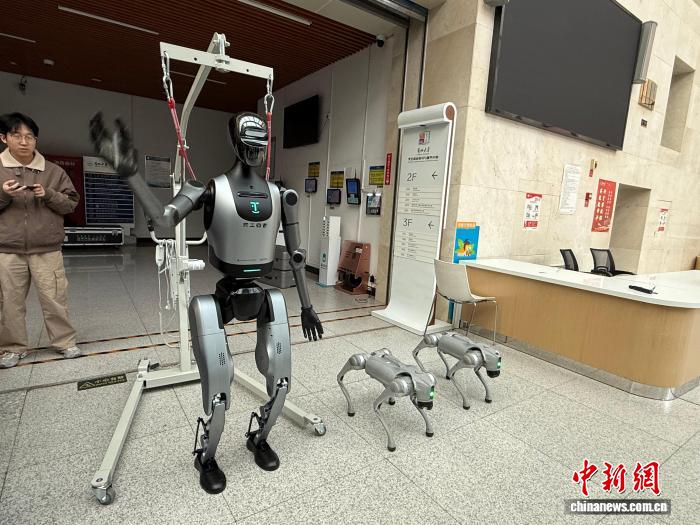
当日,2025年甘肃省人工智能产业创新发展峰会在兰州大学举行,来自全国两院院士、专家、业界精英 约300余人齐聚,围绕AI大模型应用、低空经济、算力网络建设等核心议题深入研讨,为甘肃数字产业 赋能、区域数字经济高质量发展建言献策。 当前,我国正以"新质生产力"培育为主线,纵深推进数字技术与实体经济深度融合,"东数西算"国家工 程有序实施,人工智能创新发展战略全面提速,甘肃省拥有"东数西算"国家枢纽节点(庆阳)的战略区位 优势,叠加储量丰富的风光电新能源资源,以及特色农业、文化旅游、装备制造等底蕴深厚的产业基 础,在数字技术与实体经济融合发展方面具备得天独厚的条件,数字产业发展潜力持续释放。 中新网兰州11月23日电 (王牧雨)兰州大学22日与中核四〇四有限公司、中国科学院近代物理研究所签署 合作协议,共同开展核工业智能巡检、稀土数字孪生等关键技术攻关。同时,甘肃省人工智能学会聘任 140位专家学者、企业家组成甘肃省人工智能领域首批专家智库。 2025年11月22日,图为活动现场所展示的智能机器人等智能产品。王牧雨摄 据了解,目前,兰州大学已构建从基础研究到应用开发的全链条创新体系,在开源操作系统、藏医药大 模 ...
以“绿”为墨 执“新”为笔——内蒙古电力集团内蒙古超高压供电公司“十四五”发展回眸
Zhong Guo Jin Rong Xin Xi Wang· 2025-11-22 08:20
转自:新华财经 今年是"十四五"规划收官之年,5年间,内蒙古电力集团内蒙古超高压供电公司聚焦电网建设运维主责 主业,持续提升电网服务保障能力,加快推进电网绿色智能转型,努力建设成为内蒙古推进现代化建设 的"稳定器"和"压舱石"。 在库布其沙漠腹地,内蒙古超高压供电公司负责建设的蒙西至京津冀直流送端500千伏配套工程正抓紧 建设。该项目新建5座500千伏变电站,可将鄂尔多斯中北部1200万千瓦清洁电能通过特高压打捆输送至 京津冀地区的负荷中心进行消纳…… 内蒙古超高压供电公司不断加强电网建设与绿色算力等新兴产业的规划衔接,大力推动东营、新区北、 黄合少等服务内蒙古绿色算力和低空经济的重点工程建设,深度挖掘"绿电+算力"潜力,为内蒙古建设 国家"东数西算"工程枢纽提供强劲的电力支撑。 目前,内蒙古超高压供电公司正逐步建成联通内外的超高压主干网架结构,前瞻布局特高压工程,年内 完成蒙西——达拉特1000千伏交流特高压工程核准,全力保障区内、外电力供应和新能源并网消纳,电 网安全裕度、供电能力、新能源消纳比例、外送容量稳步提升。 笃行:数智驱动 管理精益 数智驱动与精益管理是安全生产的基石和保障。内蒙古电网首座数字孪 ...
算力赋能 “数字经济”迸发时代脉动——2025世界计算大会观察
Xin Hua She· 2025-11-21 17:03
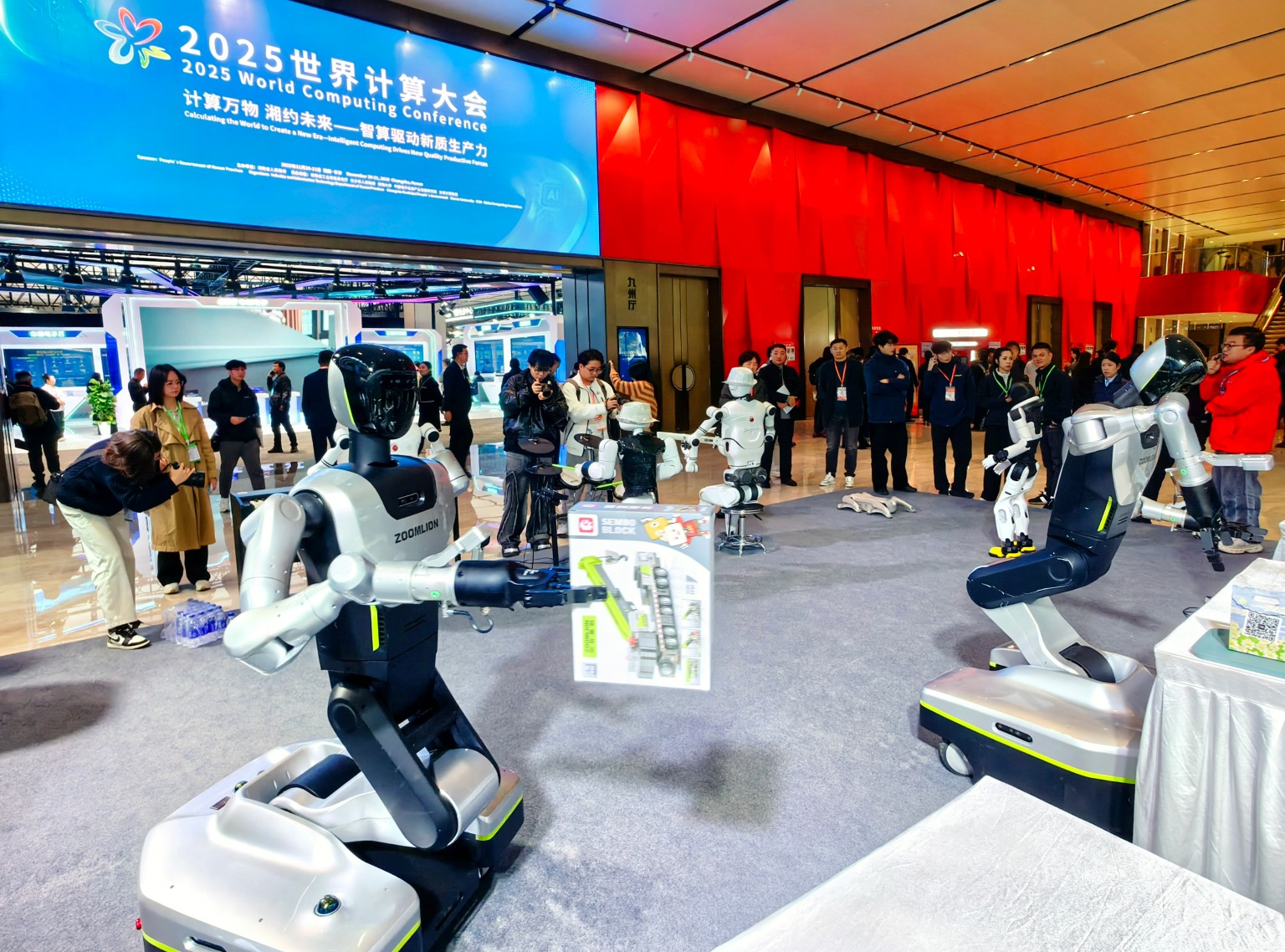
Group 1 - The 2025 World Computing Conference showcases advancements in computing power, featuring innovations such as large models, robots, and brain-computer interfaces, highlighting the pulse of the "digital economy" era [1] - The conference emphasizes the accessibility of large models, with many companies presenting open-source models that allow small and medium enterprises to develop applications without significant investment [1][2] - The event features a variety of robots demonstrating capabilities in entertainment, logistics, healthcare, and more, showcasing the versatility and application of robotics in various sectors [1][3] Group 2 - The conference highlights the achievement of global computing power reaching the ZFLOPS level, which supports over one million commercial computing services across key industries like finance, manufacturing, and healthcare [1][4] - Companies like Huawei and Sugon present cutting-edge products such as supernode systems and brain-computer interfaces, indicating ongoing advancements in computing infrastructure [2] - The Ministry of Industry and Information Technology emphasizes the need for coordinated development of computing power and networks to drive higher quality growth in the computing industry [4]
GPU算力为何引发全球电荒?
Sou Hu Cai Jing· 2025-11-21 16:35
Group 1 - The core issue facing the AI industry is shifting from a shortage of chips to a shortage of electricity, as highlighted by Microsoft CEO Satya Nadella [2][4] - OpenAI plans to access 4.5GW of electricity in Texas by 2025, equivalent to the output of five nuclear power plants, indicating the growing demand for power in AI [1][4] - The International Energy Agency predicts that electricity consumption in the AI sector will increase tenfold by 2026 compared to 2023, with generative AI's annual electricity consumption expected to surge from 7TWh in 2023 to 393TWh by 2028 [4][7] Group 2 - The energy crisis is exacerbated by aging electrical infrastructure in the US and Europe, with over 70% of transformers in the US being over 25 years old [12][10] - The EU plans to invest €30 billion to create a network of regional AI factories and gigawatt-level data centers, but faces significant energy supply challenges [6][10] - The US data center electricity shortfall is projected to reach 49GW between 2025 and 2028, equivalent to the electricity needs of 33 million American households [4][7] Group 3 - Tech companies are exploring various solutions to address the electricity shortage, including building gas power plants and relocating data centers to countries with less developed power supplies [11][15] - Google has initiated the "Light Catcher Project," which aims to use solar energy in space to power TPU chips, reflecting innovative approaches to energy sourcing [14][19] - China's energy infrastructure advantages position it favorably in the global AI competition, with a unified grid and significant renewable energy capacity [15][17] Group 4 - Nuclear power is becoming a preferred solution for tech giants to meet the energy demands of AI data centers, with companies like Microsoft and Amazon investing in small modular reactors (SMRs) [18][19] - Geothermal energy is also being considered as a stable clean energy source, with the potential for 24/7 power generation [22][24] - The "East Data West Computing" initiative in China aims to optimize the distribution of computing resources and renewable energy, addressing the mismatch between energy supply and demand [30][31]





算力赋能,“数字经济”迸发时代脉动——2025世界计算大会观察
Xin Hua She· 2025-11-21 16:28
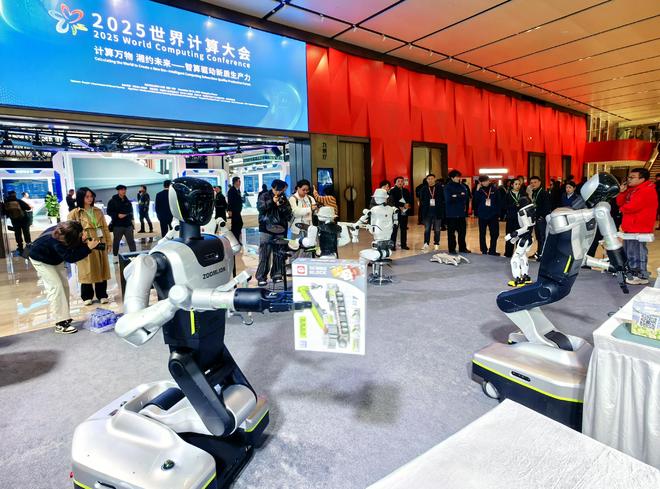
Core Insights - The 2025 World Computing Conference showcases advancements in computing power, emphasizing the rise of the digital economy and innovative technologies such as large models, robotics, and brain-computer interfaces [1][3] Group 1: Innovations in Computing - The conference highlights that the global computing power has reached the ZFLOPS level for the first time, enabling the commercialization of over one million computing services across key sectors like finance, manufacturing, and healthcare [3] - A significant number of open-source large models with hundreds of billions of parameters are now available, allowing small and medium enterprises to develop applications without substantial investments [1][3] Group 2: Robotics and Applications - The exhibition features a variety of robots demonstrating capabilities in music, art, logistics, and healthcare, showcasing the versatility and potential of robotic technology in various industries [1][3] - Companies like Huawei and Sugon present cutting-edge products such as super-node systems and brain-computer interfaces, indicating a strong focus on advanced computing infrastructure [3][4] Group 3: Future Industry Trends - The Ministry of Industry and Information Technology emphasizes the need to leverage advanced computing as a core driver for technological innovation, aiming for higher quality development in the computing industry [4]
雅江集团成都狂拿地!万亿央企憋大招,中国算力要干翻美国?
Sou Hu Cai Jing· 2025-11-21 08:12
这场布局的最终结局,堪称科技与能源的双向奔赴,有趣又解气。未来几年,成都的机架规模将突破80 万个,成为西部最大的算力集群,再通过骨干光纤网络连接重庆、西安等西部城市,形成庞大的"西部 算力池"。西部用廉价绿电训练AI大模型,东部凭借人口密集、市场广阔的优势直接应用成果,完美解 决了地域资源错配的问题。反观美国,不仅电网基建老旧,765kV输电走廊仅能支持6-7GW负荷,还面 临公用事业公司不愿签署长期购电协议的困境,科技巨头自建离网电力的进度也屡屡滞后。当中国的算 力中心用上0.1元/度的绿电,美国同行还在为0.7元/度的电费发愁时,成本差距带来的竞争力鸿沟将难 以逾越。更讽刺的是,美国因芯片制裁给中国算力制造的硬件成本压力,也被绿电的低价优势轻松对冲 ——搭载国产芯片的服务器,即便硬件成本高20%,但全年运营成本能降低30%,整体成本反而比美国 服务器低10%。届时,无论是大模型研发、自动驾驶,还是数字经济、智能制造,中国都能借助全球最 廉价、最清洁、规模最大的算力资源实现快速发展,曾经的"赶超美国"将不再是空谈,而是水到渠成的 结果。 "运筹帷幄之中,决胜千里之外",国家层面的战略布局,往往藏在看似寻常 ...

筑牢安全底座 承接万卡算力 中国电信内蒙古分公司实现两大技术突破
Zhong Guo Chan Ye Jing Ji Xin Xi Wang· 2025-11-21 00:07
Core Insights - China Telecom Inner Mongolia Branch has made significant breakthroughs in quantum secure transmission and computing power capacity, aligning with the national strategy of "East Data West Computing" [1][2] Group 1: Quantum Secure Transmission - The first nationwide 400G quantum secure OTN line has been successfully launched, connecting data centers in Anhui and Inner Mongolia, marking a key step in the industrial application of quantum communication [2] - The line integrates OTN optical transmission technology with quantum encryption, achieving a product that combines high bandwidth transmission with quantum-level security [2] - The technology features include a super-converged architecture, full-stack domestic production, and cross-domain scheduling capabilities, providing a scalable solution for high-security industries [2] Group 2: Power System Upgrade - China Telecom's Inner Mongolia Information Park has upgraded its power supply capacity to 32MW to meet the urgent demands of national-level computing tasks [3] - The introduction of the integrated power module 3.0 solution has saved 40% of distribution space and reduced installation time to two weeks, significantly enhancing deployment efficiency [3] - The system operates with a link efficiency of 97.8% under the S-ECO model, demonstrating a dual enhancement of power supply capacity and energy efficiency [3] Group 3: Future Outlook - The company plans to continue driving technological innovation and enhancing its layout in core nodes of the "East Data West Computing" strategy, contributing to the construction of a digital Inner Mongolia and the national integrated computing network [4]

从“信息天路”到“草原算力谷” 新型数字基建“铺就”内蒙古产业发展路
Zheng Quan Ri Bao· 2025-11-20 16:10
Core Insights - Inner Mongolia is transforming its digital infrastructure to enhance connectivity and support high-quality industrial development, creating a "broadband frontier" that integrates advanced technology into the daily lives of local herders and industries [1][2][6]. Group 1: Digital Infrastructure Development - The "broadband frontier" initiative has significantly improved communication in remote areas, with 168 herder families now enjoying broadband access speeds of 1000 Mbps, thanks to the deployment of 900MHz low-frequency base stations [2]. - The introduction of smart board technology has led to the intelligent upgrade of base stations, with over 3,500 5G-A base stations now operational in Hohhot, ensuring continuous coverage in urban and key areas [2]. Group 2: Environmental Protection and Monitoring - In the Daxing'anling region, 290 dedicated base stations have been established to enhance network coverage, enabling advanced monitoring technologies like drones and ecological sensing devices to protect forest areas [3]. - The integration of these technologies has improved fire detection capabilities, allowing for precise identification of potential fire hazards [3]. Group 3: Industrial Upgrades through Digital Technology - The mining sector is experiencing a transformation with the implementation of 5G-A networks, allowing for the operation of 100 autonomous mining trucks, significantly enhancing operational efficiency and safety [5]. - In the coking industry, the deployment of high-performance 5G private networks has led to a 10% increase in production efficiency and a 30% reduction in on-site personnel [6]. Group 4: Data Centers and Computing Power - Inner Mongolia is emerging as a "computing power hub," with modern data centers capable of providing 370,000 PFlops of computing power, supporting digital demands from eastern regions [7]. - The launch of the world's first Huawei Ascend 910C air-cooled super node cluster marks a significant milestone in domestic technology, converting local resources into powerful computing capabilities for AI and other high-intensity tasks [7]. Group 5: Connectivity and Data Transmission - The establishment of a computing power intelligent network and ultra-low latency connections aims to create a national integrated computing network, facilitating rapid data transmission across regions [8]. - The opening of the first 400G quantum-secure dedicated line in the region enhances cross-regional data transfer security, contributing to the overall digital infrastructure [8]. Group 6: National Digital Infrastructure Strategy - The developments in Inner Mongolia reflect a broader national strategy to digitize traditional infrastructure and enhance competitiveness in various industries, paving the way for future growth [9].
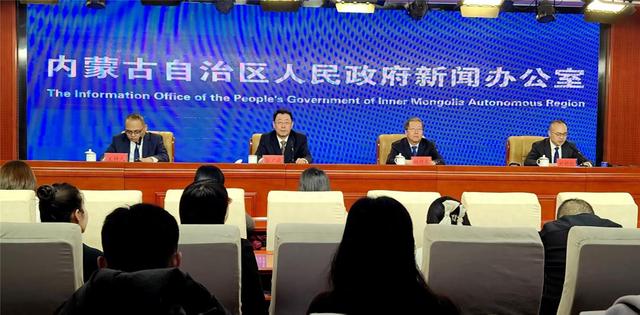
回眸“十四五” | 内蒙古走出了一条以绿色算力为支撑的发展新路径
Nei Meng Gu Ri Bao· 2025-11-20 11:26
Core Insights - Inner Mongolia is advancing its digital transformation in alignment with the national "East Data West Computing" strategy, focusing on building a high-quality development path supported by green computing power [1][3]. Group 1: Digital Infrastructure Development - The computing power infrastructure in Inner Mongolia has seen significant growth, with total computing power increasing from less than 20,000 P to 218,000 P, and intelligent computing power exceeding 200,000 P, leading the nation [3]. - A low-latency computing service network has been established, covering key regions with response times of 2 milliseconds for "Hohhot-Baotou-Erdos-Ulanqab," 5 milliseconds for "Beijing-Tianjin-Hebei," and 20 milliseconds for the Yangtze River Delta [3]. Group 2: Data Industry Growth - Inner Mongolia is developing a comprehensive data industry ecosystem, transforming data from resources into assets and capital, with over 800 data merchants in the data trading center and transaction volume exceeding 80 million [3][4]. - The region has created over 30 high-quality data sets in sectors such as energy, agriculture, and ecology, with a total data scale exceeding 1,500 TB [3]. Group 3: Employment and Enterprise Development - More than 60 data labeling companies have been introduced, creating nearly 7,000 jobs, and nine regional trusted data spaces have been cultivated, with some recognized as national pilot projects [4]. - Major companies like Baidu, Huawei, Alibaba, and Douyin have been attracted to the region, supporting 31 national-level large model training and inference projects, with total model training parameters exceeding one trillion [4]. Group 4: Artificial Intelligence Applications - Inner Mongolia is implementing "Artificial Intelligence +" initiatives across 12 sectors, including energy, healthcare, agriculture, and transportation, resulting in numerous applications such as 215 intelligent coal mines and 369 autonomous vehicles in open-pit mining [4]. - The region is also focusing on AI technology breakthroughs in ecological safety supervision, smart livestock farming, mineral resource forecasting, and geological disaster monitoring [4].