
现代化产业体系

Search documents
国家发展改革委:将研究设立国家级并购基金
Xin Hua Cai Jing· 2026-01-20 05:38
Group 1 - The National Development and Reform Commission emphasizes the importance of the National Venture Capital Fund as a benchmark to promote innovation and entrepreneurship, and plans to establish a national-level merger and acquisition fund [1][2] - There is a recognition of the current economic challenges in China, particularly the imbalance of strong supply and weak demand, necessitating a focus on expanding domestic demand [1] - A strategic plan for expanding domestic demand from 2026 to 2030 will be developed to align with the new trends in demand and the needs of the new technological revolution and industrial transformation [1] Group 2 - The focus will be on deepening the construction of a unified national market to enhance market vitality and shift from "price competition" to "value competition" [2] - Measures will be taken to regulate market entry, ensure fair competition, and manage capacity to address the temporary oversupply issues [2] - A quality brand strategy will be implemented to guide the resolution of "involution" competition and promote a healthy market order [2]
研究设立国家级并购基金!国家发改委最新宣布
Zheng Quan Shi Bao· 2026-01-20 03:17
国家发展改革委副主任王昌林表示,当前我国经济运行存在供强需弱的问题,接下来要坚持把宏观政策 的发力点放在做强国内大循环上,全方位扩大国内需求。重点是要适应需求升级的趋势,结合新一轮科 技革命和产业变革的需要,研究制定出台2026—2030年扩大内需战略实施方案,为以新需求引领新供 给、以新供给创造新需求提供强有力的创新举措和要素保障,努力实现供需互促、循环升级。 国家发改委:研究设立国家级并购基金 加强政府投资、基金布局规划 国家发展改革委副主任王昌林表示,要坚持把发展经济的着力点放在实体经济上,加快构建现代化产业 体系。实体经济是我国经济发展的根基,要适应产业转型升级的需要,通过创新不断催生新的供给,催 生新的就业岗位。坚持智能化、绿色化、融合化方向,推动重点产业提质升级,大力培育壮大新兴产业 和未来产业,深入开展"人工智能+"行动。要发挥好国家创业投资基金行业标杆作用,研究设立国家级 并购基金,加强政府投资基金布局规划和投向指导,促进创新创业创造,加快培育和发展新质生产力。 1月20日,国新办举行新闻发布会,介绍落实中央经济工作会议精神,推动"十五五"实现良好开局有关 情况。 国家发改委:将研究制定出台2 ...
广州市政协委员建言献策:既有对广州发展深度思考 更是对广州这座城市深深的热爱
Zhong Guo Fa Zhan Wang· 2026-01-20 01:44
Group 1 - The Guangzhou Municipal Political Consultative Conference emphasized the importance of building a modern industrial system, fostering emerging industries, and enhancing service quality through high-quality suggestions [1] - The conference highlighted the need to activate innovation capabilities, support the construction of innovation platforms, and strengthen talent support for technological advancements [1] - There is a focus on optimizing the business environment to promote a market-oriented, legal, and international first-class business environment [1] Group 2 - Eight representatives from the Guangzhou Political Consultative Conference discussed key issues related to urban development, artificial intelligence empowerment, and cultural soft power, reflecting a deep commitment to the city's long-term growth [2] - Proposals included expanding the scope of national subsidies for the aging-friendly home industry and promoting high-quality development in this sector, addressing significant social and strategic needs [3] - Recommendations were made to accelerate the intelligent upgrade of the customized home industry through AI integration, addressing challenges such as talent shortages and high operational costs [3] Group 3 - Proposals were made to establish a fault-tolerant mechanism for state-owned venture capital in Guangzhou to enhance the legal framework and provide a stable environment for investment [4] - The report noted a decline in private investment in Guangzhou, with a 16.7% year-on-year decrease in the first half of 2025, prompting suggestions to broaden investment fields and improve financing support [4] - Recommendations included creating a high-quality investment environment to support technological advancements and address challenges in fundraising and industry cultivation [5]

广州市领导与市政协各界别委员代表和港澳地区市政协委员座谈会召开
Guang Zhou Ri Bao· 2026-01-20 01:40
冯忠华强调,2026年是"十五五"开局之年,做好今年工作意义重大、责任重大。希望市政协及广大政协 委员始终坚持以习近平新时代中国特色社会主义思想为指导,深入学习贯彻习近平总书记对广东、广州 系列重要讲话和重要指示精神,坚定拥护"两个确立"、坚决做到"两个维护",坚持围绕中心、服务大 局,发扬优良传统、发挥独特优势,深入协商议政、积极建言献策、开展民主监督,凝心聚力推动"十 五五"开好局起好步,奋力开创广州现代化建设新局面。要携手在推进粤港澳大湾区"一点两地"建设上 展现新作为,运用好共同承办十五运会和残特奥会的有益经验,抢抓要素市场化配置综合改革试点等机 遇,积极推动大湾区市场一体化,助力南沙开发建设加力提速、全面展开,促进穗港澳三地社会、文 化、体育、青少年等方面交流合作,共同绘就同心筑梦、携手奋进的时代画卷。要携手在发展新质生产 力上扛起新担当,聚焦关键核心技术攻关、科技成果转化等重点领域深入开展调查研究,主动为高校科 研团队、创业项目、投资机构等牵线搭桥,推动穗港澳深化合作,助力广州建设具有国际竞争力的现代 化产业体系;积极参与共建现代化国际化营商环境,协助党委和政府做好政策宣传、预期引导,合力推 动政 ...
范波在吴中区调研
Su Zhou Ri Bao· 2026-01-20 00:16
Core Viewpoint - The emphasis is on building a modern industrial system by leveraging opportunities in artificial intelligence and promoting technological innovation, industrial development, and AI empowerment [1]. Group 1: Industrial Development - The focus is on enhancing the role of leading enterprises to drive collaborative breakthroughs in key technologies and extend the industrial chain [2]. - Companies are encouraged to maintain an innovative spirit and increase R&D investment, particularly in smart consumer electronics, to expand their global market presence [2]. - The need for a first-class business environment is highlighted to support the development of a modern industrial system [2]. Group 2: AI and Technology - The OPC Artificial Intelligence Industrial Park is identified as a key area for fostering entrepreneurship, with a focus on strengthening support for computing power, algorithms, and data [2]. - The importance of nurturing a vibrant ecosystem for AI development is emphasized, including services for startup incubation and financing [2]. Group 3: Strategic Planning - The necessity for strategic planning in Wu Zhong District is stressed, focusing on identifying unique advantages and promoting the upgrade of traditional industries while nurturing emerging and future industries [3]. - Innovation leadership is prioritized, with a call for enhancing the role of enterprises in innovation and leveraging high-level platforms for deeper integration of technological and industrial innovation [3]. - The goal is to attract and cultivate top-tier enterprises, including "chain master" companies and hidden champions, to continuously enhance industrial capabilities and core competitiveness [3].


21社论丨5%增速凸显中国经济向新向优
2 1 Shi Ji Jing Ji Bao Dao· 2026-01-19 23:06
Economic Growth - In 2025, China's GDP surpassed 140 trillion yuan, marking a 5% increase from the previous year, maintaining a leading growth rate among major global economies [1] - Domestic consumption significantly contributed to economic growth, with total retail sales of consumer goods reaching 50 trillion yuan, and final consumption expenditure accounting for 52% of economic growth [1] Investment Trends - Although overall investment has slowed, the investment structure is optimizing, with a focus on key areas such as infrastructure and modern industrial systems [2] - Key infrastructure investments in pipeline transportation, electricity, and water projects achieved double-digit growth, while equipment purchasing investment rose to 18% of total investment [2] Service Sector Contribution - The service sector contributed 61.4% to economic growth in 2025, with its share of GDP increasing to 57.7% [2] - Modern service industries, including information technology and finance, are thriving, alongside emerging service formats like live e-commerce and instant retail [2] Industrial Development - The construction of a modern industrial system is progressing, with high-tech manufacturing showing strong growth and leading industrial quality development [3] - Traditional industries are also upgrading, with an increase in green low-carbon products and a steady advancement in green transformation [3] Policy Measures - China plans to implement proactive macroeconomic policies to expand domestic demand and optimize supply structure [4] - A series of systematic measures are expected to enhance the quality and reasonable growth of the economy, ensuring a strong start for the 14th Five-Year Plan [4]
因煤而兴 以丝为擎(十九城产业新坐标·河南经济新方位)
He Nan Ri Bao· 2026-01-19 22:47
Core Viewpoint - The nylon new materials industry is becoming a significant engine for high-quality development in Pingdingshan, with a focus on transforming from a coal-dominated economy to a diversified industrial base [2][3]. Group 1: Industry Development - Pingdingshan is leveraging its rich coal and salt resources to extend its industrial focus from coal chemical to nylon chemical, aiming to establish a world-class trillion-level nylon new materials industry base [2]. - The city has over 200 enterprises and projects in the nylon new materials sector, with production capacity exceeding 4 million tons [3]. - The carbon-based nylon chemical industry chain in Pingdingshan is now the most complete globally, covering upstream coal mining to downstream textile and dyeing industries [3]. Group 2: Company Highlights - Henan Shennong Nylon Technology Co., Ltd. is a key player in the civil nylon silk industry, filling a production gap in Pingdingshan and addressing a shortfall in Henan Province [3]. - The company has developed over 10 types of nylon yarn, with capabilities ranging from 6D to 100D, showcasing lightweight and breathable characteristics [4]. - The company’s high-performance nylon silk was used in sportswear for the 2022 Beijing Winter Olympics, demonstrating the quality of local nylon products [4]. Group 3: Technological Advancements - Pingdingshan's nylon industry is advancing through technology innovation, with the successful launch of a domestic 100,000 tons/year production facility for nylon 66, reducing reliance on imports [4]. - The integration of industry, innovation, and talent is being emphasized to enhance the competitiveness of the nylon sector [4]. - Future plans include investments exceeding 80 billion yuan in key nylon new materials projects over the next five years to further scale the industry [4].

以先进制造业为骨干 打造世界级高端产业集群
Zhong Guo Zheng Quan Bao· 2026-01-19 21:11
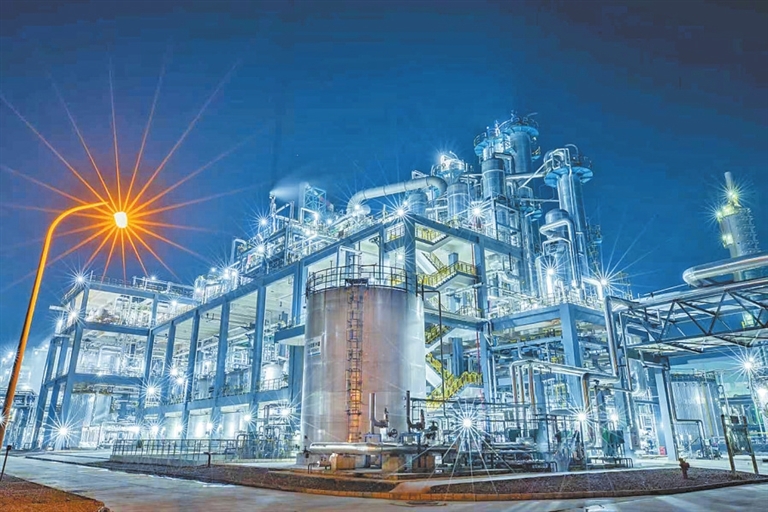
Core Viewpoint - The "15th Five-Year Plan" for Shanghai aims to accelerate the construction of a world-class socialist modern international metropolis, emphasizing the importance of the "Five Centers" in enhancing the city's global influence and competitiveness [1][2]. Group 1: Five Centers Development - The "Five Centers" are crucial for Shanghai's modernization, focusing on enhancing the city's capabilities and core competitiveness through innovation and coordinated development [1][2]. - The plan emphasizes the integration of economic, financial, trade, shipping, and technological innovation functions to strengthen global resource allocation capabilities [2]. Group 2: Modern Industrial System - The proposal outlines the construction of a "2+3+6+6" modern industrial system, with advanced manufacturing as the backbone, aiming to create world-class high-end industrial clusters and promote the "Shanghai Manufacturing" brand [2]. - The focus will be on the digital and green transformation of traditional industries, leveraging artificial intelligence to enhance production processes and operational efficiency [3]. Group 3: Leading Industries - Shanghai will accelerate the development of three leading industries, including integrated circuit equipment, innovative pharmaceuticals, and artificial intelligence, to achieve breakthroughs across the entire industrial chain [3]. - The plan highlights the importance of agile layout in key areas such as quantum technology, brain-machine interfaces, and biomanufacturing to foster future growth [3].
上海“十五五”规划建议 以先进制造业为骨干 打造世界级高端产业集群
Zhong Guo Zheng Quan Bao· 2026-01-19 21:09
Core Viewpoint - The "15th Five-Year Plan" for Shanghai aims to accelerate the construction of a world-influential socialist modern international metropolis, emphasizing the importance of the "Five Centers" in achieving national strategies and ensuring national security [1][2]. Group 1: Five Centers Development - The "Five Centers" are crucial for Shanghai's modernization, focusing on enhancing the city's capabilities and core competitiveness through innovation and coordinated development [2][3]. - The plan outlines systematic deployments to elevate Shanghai's status as an international economic center, enhance its international financial competitiveness, upgrade its international trade center, build a leading global shipping center, and strengthen its role as an international technology innovation hub [2][3]. Group 2: Modern Industrial System - The proposal emphasizes constructing a "2+3+6+6" modern industrial system, with advanced manufacturing as the backbone, aiming to create world-class high-end industrial clusters and promote the "Shanghai Manufacturing" brand [4]. - Traditional industries are encouraged to undergo digital and green transformation, leveraging artificial intelligence to enhance design, optimize production processes, and improve operational efficiency [4]. - The plan highlights the development of three leading industries over the next five years, focusing on integrated circuit equipment, innovative pharmaceuticals, and comprehensive advancements in artificial intelligence [4].
上海未来五年怎么干?加快建设“五个中心” 打好城市转型升级攻坚战
Shang Hai Zheng Quan Bao· 2026-01-19 18:48
Core Viewpoint - Shanghai aims to enhance its international economic center status and overall competitiveness through a comprehensive five-year development plan, focusing on advanced manufacturing, financial services, international trade, shipping, and technological innovation [1][2][3]. Group 1: Five Centers Development - The "Five Centers" strategy is central to Shanghai's modernization efforts, emphasizing the need to build a robust international economic, financial, trade, shipping, and technological innovation center [6][7]. - Specific initiatives include constructing a modern industrial system characterized by advanced manufacturing, with a focus on a "2+3+6+6" framework [10][11]. Group 2: Economic and Social Development Goals - The main objectives for the "15th Five-Year" period include achieving high-quality development, enhancing urban core functions, and significantly improving social governance and civilization levels [3][4]. - By 2035, Shanghai aims to double its per capita GDP compared to 2020 and establish itself as a globally influential socialist modern metropolis [3]. Group 3: Policy and Strategic Focus - The planning document emphasizes a shift from concept-driven development to practical governance, highlighting the importance of high-quality development and effective market mechanisms [5]. - It also stresses the need for a comprehensive approach to urban governance, balancing development and security [5]. Group 4: Industrial System Construction - The plan outlines a clear strategy for maintaining a reasonable proportion of manufacturing within Shanghai's economy, recognizing its importance for resilience and innovation [8]. - It identifies key sectors for high-end service industry development, including finance, trade, and shipping, with specific measures to enhance their global competitiveness [9]. Group 5: Future Industry Focus - The plan includes fostering world-class enterprises as a key task, with tailored guidance for businesses of various sizes to stimulate innovation and growth [9]. - Future industries are categorized into six areas, including future materials and future health, to ensure long-term economic sustainability [11].