
京津冀协同发展

Search documents
京唐城际铁路12月30日全线贯通运营
Xin Lang Cai Jing· 2025-12-26 22:03
Core Viewpoint - The Jing-Tang Intercity Railway will achieve full-line operation on December 30, enhancing connectivity between Beijing and Tangshan, and providing a faster travel option for commuters [3]. Group 1: Project Overview - The Jing-Tang Intercity Railway starts from Tongzhou District in Beijing, passing through Langfang City and Baodi District in Tianjin, and ends in Tangshan City, with a total of 8 stations [3]. - The fastest travel time from Tongzhou Station to Tangshan Station will be 55 minutes, offering more convenient travel options for the public [3]. Group 2: Regional Development Impact - The full operation of the Jing-Tang Intercity Railway supports the integration of Tangshan into the "one-hour" transportation, living, logistics, and economic circles of Beijing [3]. - The railway's opening is expected to promote regional economic and social development and deepen the coordinated development of the Beijing-Tianjin-Hebei region [3]. - The project is part of the broader strategy to enhance transportation infrastructure, facilitating efficient movement of people and goods across the region [3].

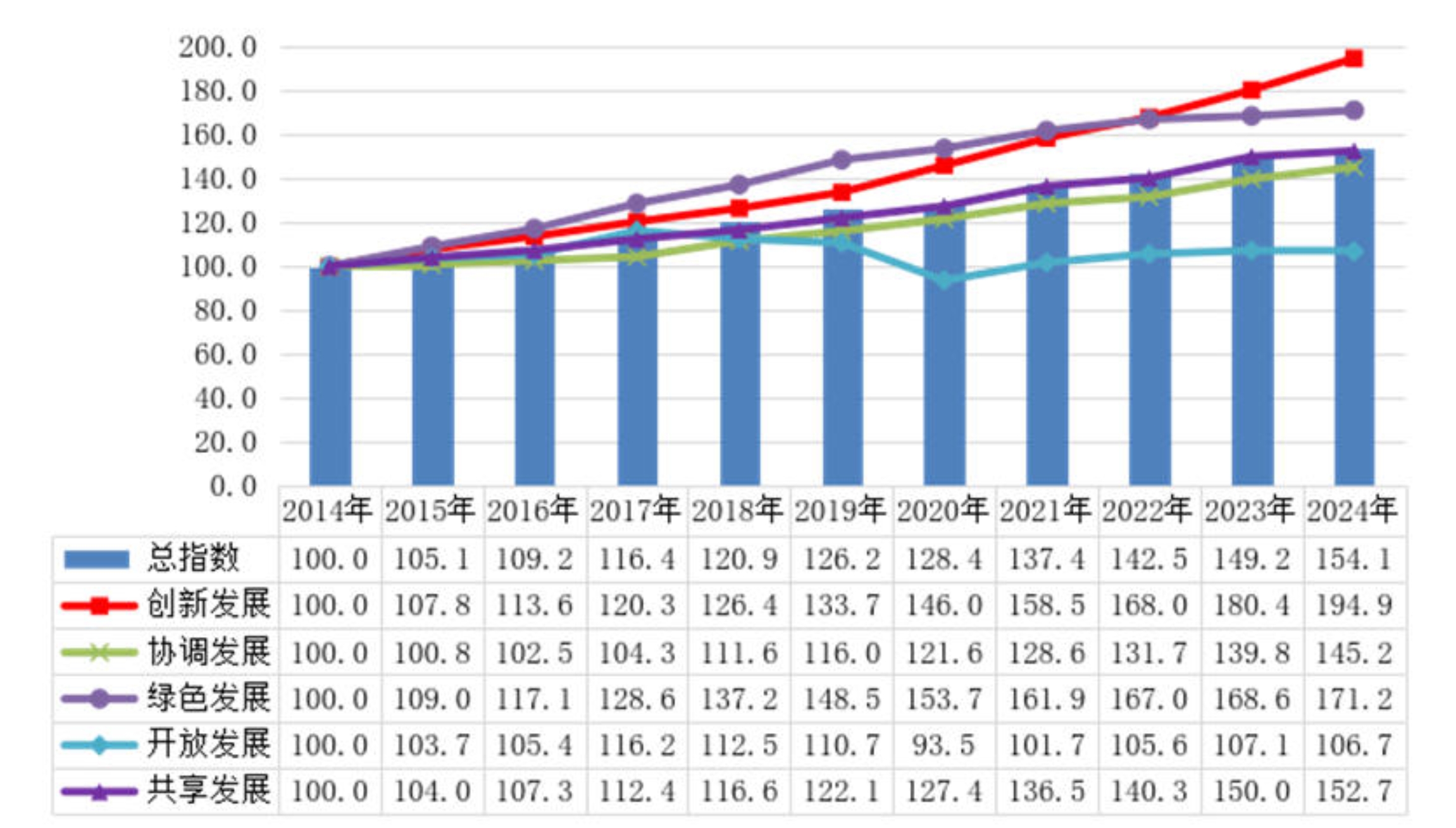
var title1 = '加速构建协同发展格局'; var title2 = '2024年京津冀区域协同发展指数继续提升'; var title3 = '';
Guo Jia Tong Ji Ju· 2025-12-26 08:37
Core Insights - The article highlights the progress and achievements in the coordinated development of the Beijing-Tianjin-Hebei region, emphasizing innovation, coordination, green development, openness, and shared growth as key areas of focus for 2024 [2][3]. Innovation Development - The innovation development index reached 194.9, an increase of 14.5 from 2023, indicating significant growth in innovation input and output [3]. - The region's R&D expenditure intensity was 4.22%, with Beijing leading at 6.58%, showcasing its strong original innovation capabilities [3]. - The number of patents granted reached 355,000, a 2.9% increase, with the number of effective invention patents per ten thousand people growing by 15.7% to 74.3 [3][4]. Coordination Development - The coordination development index improved to 145.2, up by 5.4 from the previous year, reflecting enhanced cross-regional industrial collaboration [5]. - The added value of high-tech manufacturing industries grew by 9.6%, 8.9%, and 11.2% in Beijing, Tianjin, and Hebei, respectively [5]. - Urbanization rate in the region reached 71.2%, with a reduction in the income disparity between urban and rural residents to 2.51 [5]. Green Development - The green development index increased to 171.2, a rise of 2.6, indicating ongoing improvements in ecological conditions [6]. - Average PM2.5 concentrations decreased to 30.5 µg/m³ in Beijing, 38.1 µg/m³ in Tianjin, and 37.7 µg/m³ in Hebei, with respective reductions of 4.7%, 8.0%, and 2.3% [6]. - The proportion of water quality at or above Class III in national surface water monitoring points reached 82.6%, an increase of 2.2 percentage points [6]. Open Development - The open development index slightly declined to 106.7, down by 0.4, amid global trade challenges [8]. - The total import and export value for the region was 5.03 trillion yuan, a 0.1% increase, with high-tech product exports growing significantly [8]. - International cargo throughput reached 820 million tons, a 10.6% increase, and international passenger throughput saw a substantial recovery [8]. Shared Development - The shared development index rose to 152.7, an increase of 2.7, reflecting improvements in public services and infrastructure [9]. - The operational mileage of railways and highways exceeded 11,000 kilometers, facilitating better connectivity within the region [9]. - Per capita disposable income for residents in the region increased nominally by 4.5%, 4.5%, and 5.4% in Beijing, Tianjin, and Hebei, respectively [9].
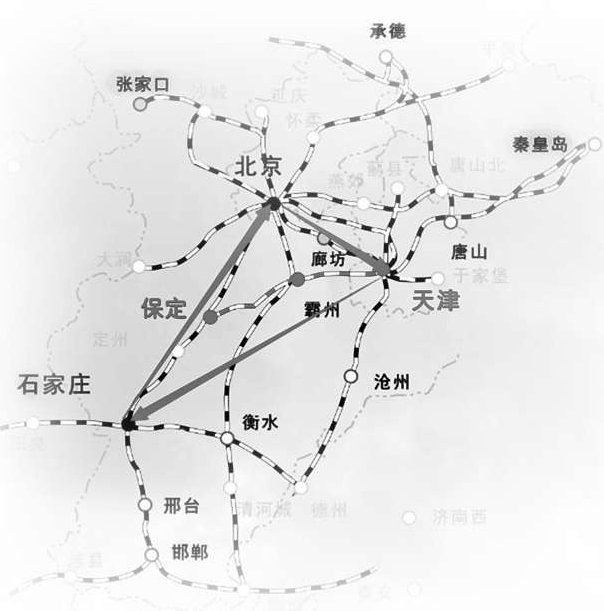
一条津保线盘活“轨道金三角”
Bei Jing Wan Bao· 2025-12-26 07:20
Core Insights - The opening of the Tianjin-Baoding Railway has significantly improved transportation efficiency in the Beijing-Tianjin-Hebei region, creating a "golden triangle" of rail connectivity between Beijing, Tianjin, and Shijiazhuang [1][3][10] - The railway has facilitated nearly 100 million passenger transfers that previously required a detour through Beijing, thus alleviating traffic pressure on the capital [8][10] - The railway has enhanced commercial activities and tourism in the region, with daily train operations increasing from 4.5 pairs to 48 pairs, and average daily passenger volume rising from under 2,000 to 4,400 [10][11] Transportation Efficiency - The Tianjin to Baoding travel time has been reduced from 2.5 hours to 1 hour, while the Tianjin to Shijiazhuang journey has been cut from 3 hours to 1.5 hours [10] - The railway has expanded its operational reach, connecting to major cities such as Shenyang, Dalian, and Wuhan, thus broadening its impact on regional mobility [10] Economic Impact - The Baoding area, known for its bag production, has seen a surge in business due to the railway, with annual production reaching approximately 1 billion bags and a market share of 30% in China [7][11] - The opening of the railway has led to increased foreign procurement activities, with international buyers now able to travel directly from Beijing to Baoding for business [7][8] Passenger Statistics - As of November 30, 2025, the railway has transported a total of 98.07 million passengers, with significant traffic recorded at Baigou Station and Baiyangdian Station [11] - The passenger demographic includes family visitors, business professionals, and students, indicating a diverse user base benefiting from the railway's services [11]
10项京津冀共建共享示范场景在唐发布
Xin Lang Cai Jing· 2025-12-26 04:41
Group 1 - The event focused on "scene innovation and co-construction and sharing," showcasing 10 demonstration scenarios for collaborative development in the Beijing-Tianjin-Hebei region [1][2] - Key scenarios presented include intelligent connected vehicle testing, active support and aggregation of new energy networks, and advanced membrane material verification applications [1] - The event also released a demand list of 100 scenarios from Hebei Province and a capability list of 100 scenarios from Beijing and Tianjin, facilitating technology and capital matchmaking [1] Group 2 - This initiative aligns with the central economic work conference's directive to promote the deep integration of technological and industrial innovation [2] - The event serves as a platform for showcasing innovative achievements, efficient resource allocation, and exchange of highlights among various innovation entities in the region [2] - Since the first conference, new technologies and products have been trialed in Hebei, leading to the establishment of several new enterprises and injecting new momentum into the collaborative development of the Beijing-Tianjin-Hebei region [2]
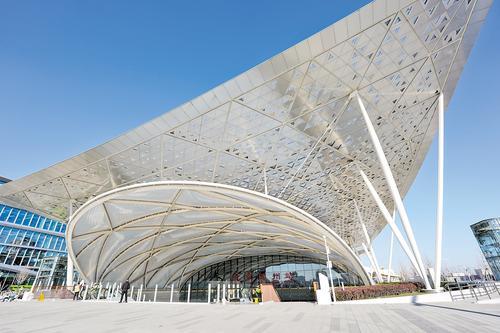
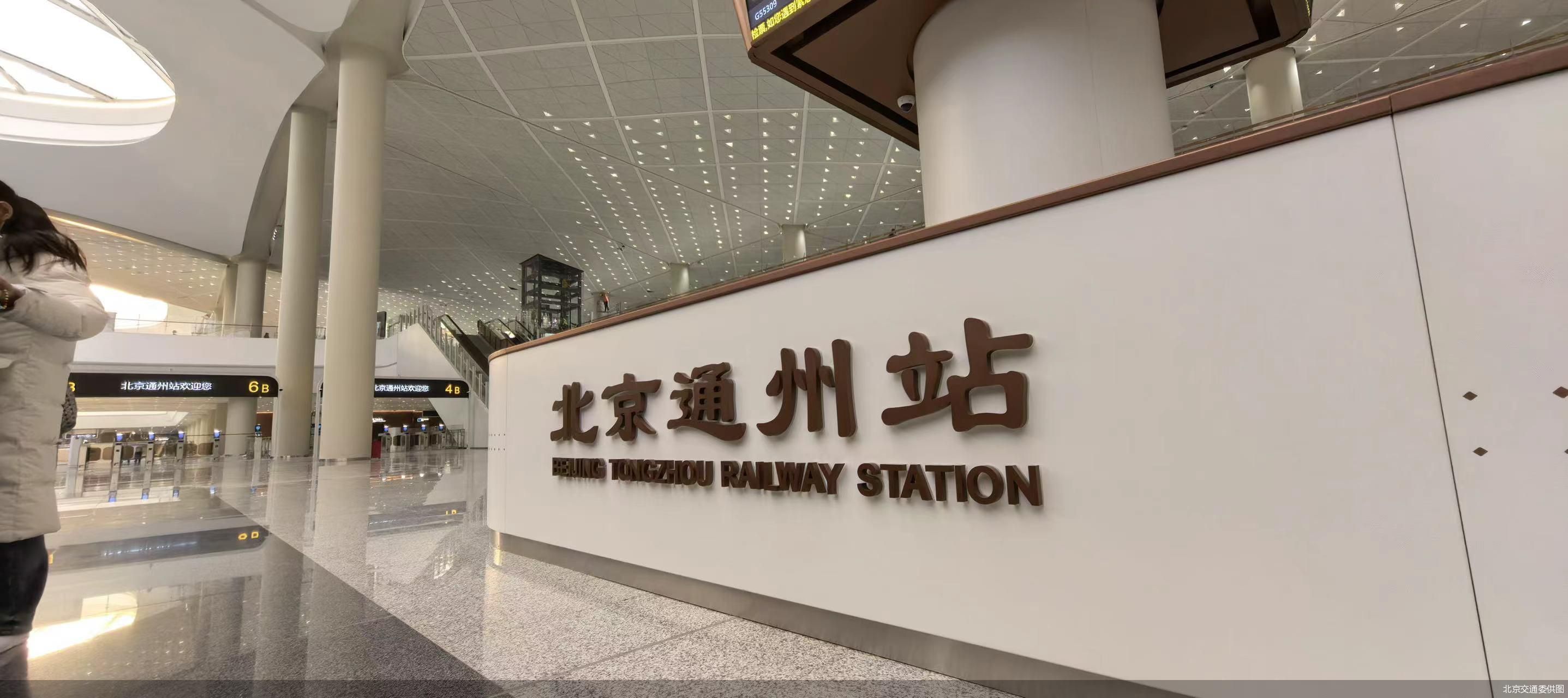
最快90分钟到秦皇岛站 北京通州站将于12月30日正式开通
Bei Jing Shang Bao· 2025-12-26 03:13
Core Points - Beijing Tongzhou Station will officially open on December 30, providing diverse and convenient travel options for routes to Tianjin, Tangshan, Qinhuangdao, Xianghe, Dachang, and Yanjiao, significantly contributing to the "Railway on the Beijing-Tianjin-Hebei" initiative and promoting high-quality economic and social development [2] Group 1: Transportation Infrastructure - The initial operation of Beijing Tongzhou Station will include the full opening of the Jing-Tang Intercity Railway and the Jing-Bin Intercity Railway, with plans to operate 12 pairs of trains, reducing travel times to Tangshan, Baodi, Beichen, and Qinhuangdao to 55 minutes, 26 minutes, 56 minutes, and 90 minutes respectively [3] - The station will facilitate a transfer to Metro Line 6 (Beiyunhe East Station) with a transfer distance of approximately 600 meters, and adjustments to 8 bus routes, including 2 new customized bus lines [4] Group 2: Future Developments - The Tongzhou Station is the first core facility to be operational within the larger vice-center hub, which will be gradually opened in phases, aligning with the Beijing Urban Master Plan (2016-2035) and promoting coordinated development in the Beijing-Tianjin-Hebei region [5] - The hub will feature an innovative underground design that integrates railway stations and transit systems, freeing up valuable surface space for urban development, with the first phase including various facilities such as underground layers and parking areas [5]
跨区协作破季节壁垒,张北司炉工解锁“冬夏双薪”
Xin Lang Cai Jing· 2025-12-26 00:35
Core Viewpoint - The "Zhangbei Boiler Operator" labor brand serves as a significant project in the labor cooperation between Beijing, Tianjin, and Hebei, providing stable employment opportunities for thousands of farmers during the winter season, thus enabling them to share in the benefits of regional development [1][6]. Group 1: Employment and Training - The "Zhangbei Boiler Operator" program has transformed the winter season from a period of unemployment into a time of income generation for local farmers, allowing them to earn nearly 4,000 yuan per month [1][2]. - The program includes a "nanny-style" training service that offers free training for farmers, ensuring they acquire the necessary skills to secure employment [2][5]. - As of now, approximately 2,400 individuals have been trained and certified as boiler operators, with around 1,000 working in Beijing each year [6]. Group 2: Economic Impact - Each heating season, boiler operators can earn an average additional income of 18,000 yuan, significantly improving their financial situation [6]. - The program has created a stable income pathway for farmers, allowing them to engage in agricultural activities during the summer and work as boiler operators in the winter, thus ensuring year-round income [6][7]. Group 3: Development and Future Plans - The Zhangbei County Employment Service Center has established a "Beijing Office" to provide coordination and rights protection services for boiler operators, addressing their concerns while working away from home [5]. - Future plans include enhancing labor cooperation mechanisms, prioritizing training and job placement for rural laborers, and developing an online and offline service network for better employment guidance [7].
《渤海湾中部水域船舶定线制》明年1月1日起正式实施
Bei Jing Ri Bao Ke Hu Duan· 2025-12-25 08:12
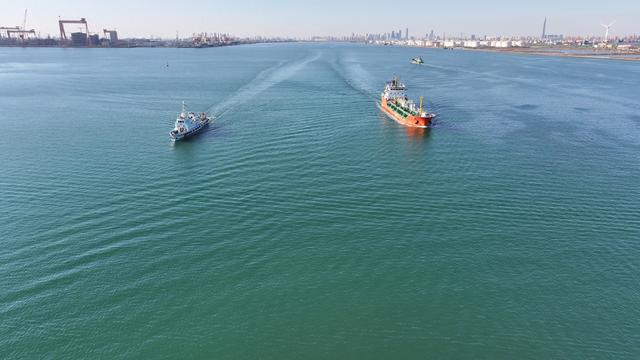
Core Viewpoint - The implementation of the "Ship Routing System in the Central Waters of the Bohai Bay" starting January 1, 2026, aims to enhance navigation safety and efficiency in the Bohai Bay, supporting the coordinated development of the Beijing-Tianjin-Hebei region and the national transportation strategy [1][3]. Group 1: Implementation Details - The routing system will be effective for five years and covers key waters where the shipping lanes of Tianjin Port, Caofeidian Port, and Huanghua Port intersect, with a total length of approximately 19 nautical miles [1][3]. - The design combines an internationally recognized "lane-based navigation system" with "safety zones," creating an orderly structure from east to west [3]. Group 2: Economic Impact - The Bohai Bay's central-western ports have rapidly developed, with a total throughput of 1.5 billion tons and a merchant ship traffic volume of 100,000 vessels [3]. - The routing system is significant for advancing the Beijing-Tianjin-Hebei coordinated development strategy and establishing a world-class port cluster in the region [3]. Group 3: Regulatory Changes - Unlike the previous mandatory reporting system, the new routing system does not require mandatory reporting but mandates adherence to basic rules such as listening on VHF channels and avoiding random crossings [5]. - The system prohibits anchoring, fishing, and aquaculture within the designated waters to ensure smooth navigation and safety [5]. Group 4: Monitoring and Enforcement - The Tianjin Maritime Safety Administration has implemented a comprehensive monitoring system combining VTS (Vessel Traffic Service) and multi-dimensional patrols to ensure effective enforcement of the routing system [5]. - Since the trial implementation began on June 1, 2024, there has been a significant improvement in navigation order, with increased compliance rates and no reported maritime traffic accidents [5].

加速构建协同发展格局 2024年京津冀区域协同发展指数继续提升
Guo Jia Tong Ji Ju· 2025-12-25 07:00
Core Viewpoint - In 2024, the Beijing-Tianjin-Hebei (Jing-Jin-Ji) region has made significant progress in collaborative development, with an overall development index of 154.1, reflecting a 4.9 increase from 2023. The region emphasizes innovation, green development, and coordinated growth while facing challenges in open development [1]. Group 1: Innovation Development - The innovation development index reached 194.9, a 14.5 increase from 2023, indicating strong growth in innovation input and output [2]. - The region's R&D expenditure intensity is 4.22%, with Beijing leading at 6.58%, positioning it among the top global innovation clusters [2]. - Patent authorizations totaled 355,000, a 2.9 increase from the previous year, with an effective invention patent ownership of 74.3 per ten thousand people, marking a 15.7 increase [2]. Group 2: Coordinated Development - The coordinated development index improved to 145.2, up by 5.4 from 2023, highlighting the vitality of key areas [4]. - The added value of high-tech manufacturing increased by 9.6%, 8.9%, and 11.2% across the three regions [4]. - Urbanization rate reached 71.2%, a 0.6 percentage point increase, while the income ratio between urban and rural residents decreased to 2.51 [4]. Group 3: Green Development - The green development index rose to 171.2, a 2.6 increase from 2023, reflecting ongoing ecological improvements [5]. - Average PM2.5 concentrations were 30.5, 38.1, and 37.7 micrograms per cubic meter for the three regions, with reductions of 4.7%, 8.0%, and 2.3% respectively [5]. - The proportion of water quality assessment points meeting or exceeding Class III standards reached 82.6%, a 2.2 percentage point increase [5]. Group 4: Open Development - The open development index decreased to 106.7, down by 0.4 from 2023, amid global trade challenges [6]. - Total import and export value was 5.03 trillion yuan, a 0.1 increase from the previous year, with high-tech product exports growing significantly [6]. - International cargo throughput reached 820 million tons, a 10.6 increase, with the addition of 12 direct shipping routes under the RCEP agreement [6]. Group 5: Shared Development - The shared development index increased to 152.7, up by 2.7 from 2023, indicating improvements in public services and infrastructure [7]. - The operational mileage of railways and highways exceeded 11,000 kilometers, facilitating a half-hour travel time between Beijing and Xiong'an [7]. - Per capita disposable income for residents in the three regions was 85,415 yuan, 53,581 yuan, and 34,665 yuan, reflecting nominal growth rates of 4.5%, 4.5%, and 5.4% respectively [7].
燕赵沃野喜三增 粮安菜丰惠民生——河北2025年粮食生产交出亮眼答卷
Xin Lang Cai Jing· 2025-12-25 05:03
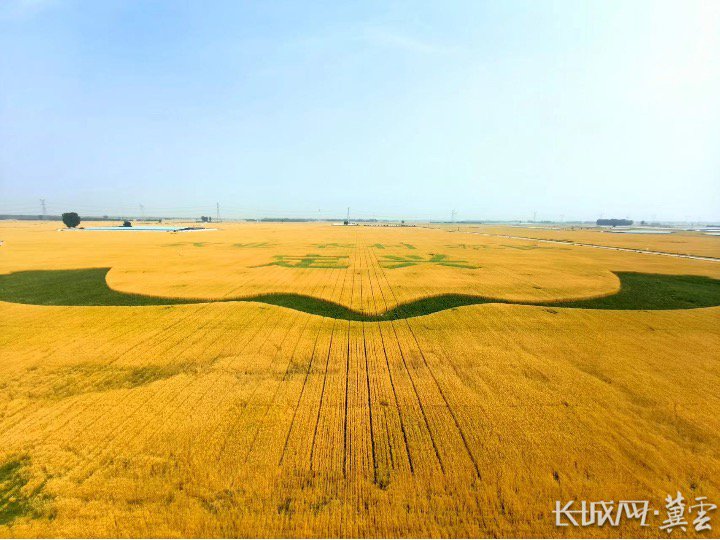
Core Insights - The core message of the articles highlights the significant achievements in grain production in Hebei Province for 2025, with a total grain output of 784 billion jin and a planting area of 96.91 million acres, showcasing a steady growth in key agricultural metrics [1] Group 1: Grain Production Achievements - Hebei Province's grain planting area reached 96.91 million acres, with a total output of 784 billion jin and an average yield of 404.5 kg per acre, marking a steady increase across all three key indicators compared to the previous year [1] - The province has implemented the strategy of "storing grain in the ground and technology," focusing on agricultural high-quality development through technological innovation and facility upgrades [1] Group 2: Agricultural Infrastructure and Technology - Since the 14th Five-Year Plan, Hebei has constructed and upgraded 17.52 million acres of high-standard farmland, addressing issues like land fragmentation and declining quality [2] - The introduction of smart irrigation systems and precision farming techniques has led to an expected increase of over 20% in corn yields in demonstration farms [4] - Hebei has focused on the construction of high-standard farmland on saline-alkali land, with 520,000 acres planned for 2023-2024, improving crop yields significantly [4][5] Group 3: Agricultural Innovation and Expertise - The integration of new varieties, technologies, equipment, and skilled farmers has been identified as the key to increasing grain yields, with over 350 high-quality crop varieties developed [7] - The province has established 39 wheat and 69 corn yield demonstration counties, promoting high-yield farming techniques [7] Group 4: Vegetable Production and Supply Chain - Hebei is also enhancing its vegetable production, with an expected total output of over 58 million tons in 2025, and a significant portion of this supply directed towards the Beijing market [12] - The establishment of a "clean vegetable" initiative aims to standardize production processes and improve the quality of vegetables supplied to urban areas [16] Group 5: Future Agricultural Goals - The provincial government plans to continue enhancing grain production capacity and deepen agricultural collaboration with the Beijing-Tianjin-Hebei region, aiming to strengthen the "Hebei clean vegetable" brand [18]
7.61亿条企业信用数据全量共享
Xin Lang Cai Jing· 2025-12-24 23:56
新添52项京津冀区域协同地方标准 聚焦公共交通、生态环保等多个重点领域率先突破,三地市场监管部门建立区域协同标准协作模 式,"十四五"以来共发布京津冀区域协同地方标准52项,涉及交通运输、公共卫生、市场监管等领域。 目前,三地累计实现6573项标准共享。通州、武清、廊坊建成全国首个国家基本公共服务标准化试点, 在全国推广。 在计量技术规范共享方面,"十四五"以来,三地市场监管部门围绕高精尖产业、能源资源、生态环境和 医疗卫生等重点领域,共建计量技术规范33项,共享计量技术规范413项,充分发挥计量技术规范在科 学研究、工业生产等方面的基础作用。京津冀共建计量技术规范的工作模式被推广至整个华北地区,围 绕生态环境、安全生产和生命健康等领域,共建华北大区计量技术规范13项,在更大范围、更深层次推 动区域计量技术协同、同质同标。 本报记者 张楠 "十四五"时期,7.61亿条企业信用数据全量共享,1400余万家企业、个体工商户等机构数据跨地域互 通,抽检发现的不合格产品信息在京津冀三地实现共享……记者从市市场监管局昨天召开的"推进京津 冀协同发展"主题新闻发布会上了解到,"十四五"时期,京津冀市场监管协同发展取得显著 ...