美国通胀

Search documents
机构:关税对美国通胀的影响可能要到年底才会达到峰值
news flash· 2025-07-31 09:21
Core Viewpoint - The impact of tariff increases on U.S. inflation is expected to peak around the end of the year, as tariffs typically take several months to fully affect consumer prices [1] Economic Outlook - The core inflation rate in the U.S. is projected to be around 3.0% this year, which will compress real income and hinder economic growth [1] - The company anticipates that U.S. economic growth will further slow down but is expected to avoid recession, with a projected real GDP growth rate of approximately 1.0% for this year [1] - As tariff pressures ease, a rebound in growth to about 1.8% is expected next year [1]
美联储2025年7月议息会议点评:中性偏鹰,淡化指引
Ping An Securities· 2025-07-31 08:38
Group 1: Federal Reserve Meeting Insights - The Federal Reserve maintained the federal funds target rate in the range of 4.25-4.50%, aligning with market expectations[2] - The balance sheet reduction pace remains unchanged at $5 billion in Treasury securities and $35 billion in MBS monthly[2] - The statement highlighted increased economic uncertainty, with three key adjustments made to previous language regarding economic activity and net exports[2] Group 2: Market Reactions and Economic Indicators - Market sentiment turned hawkish, with the 10-year Treasury yield initially dropping before rising, and the S&P 500 index reversing gains[2] - July's ADP employment report showed an increase of 104,000 jobs, exceeding the expected 76,000[8] - The second quarter GDP growth rate was reported at 3.0%, surpassing the market expectation of 2.6%[8] Group 3: Inflation and Tariff Impacts - Powell indicated that tariffs have a slower-than-expected impact on inflation, with core PCE expected to be 2.5% and 2.7% respectively[2] - Data from Cavallo et al. (2025) shows that U.S. import prices are rising faster than domestic prices, with significant increases in prices of goods imported from China[8] - A majority of businesses plan to pass on tariff costs to consumers within three months, indicating a potential rise in consumer prices[8] Group 4: Future Outlook and Risks - The Fed's reluctance to provide guidance on a potential September rate cut reflects a cautious stance amid economic uncertainties[8] - Risks include high uncertainty surrounding U.S. tariff policies and their impact on inflation, as well as potential downward pressure on employment exceeding expectations[8]
美联储内部降息分歧加大 短期美元指数或走强
Xin Hua Cai Jing· 2025-07-31 07:42
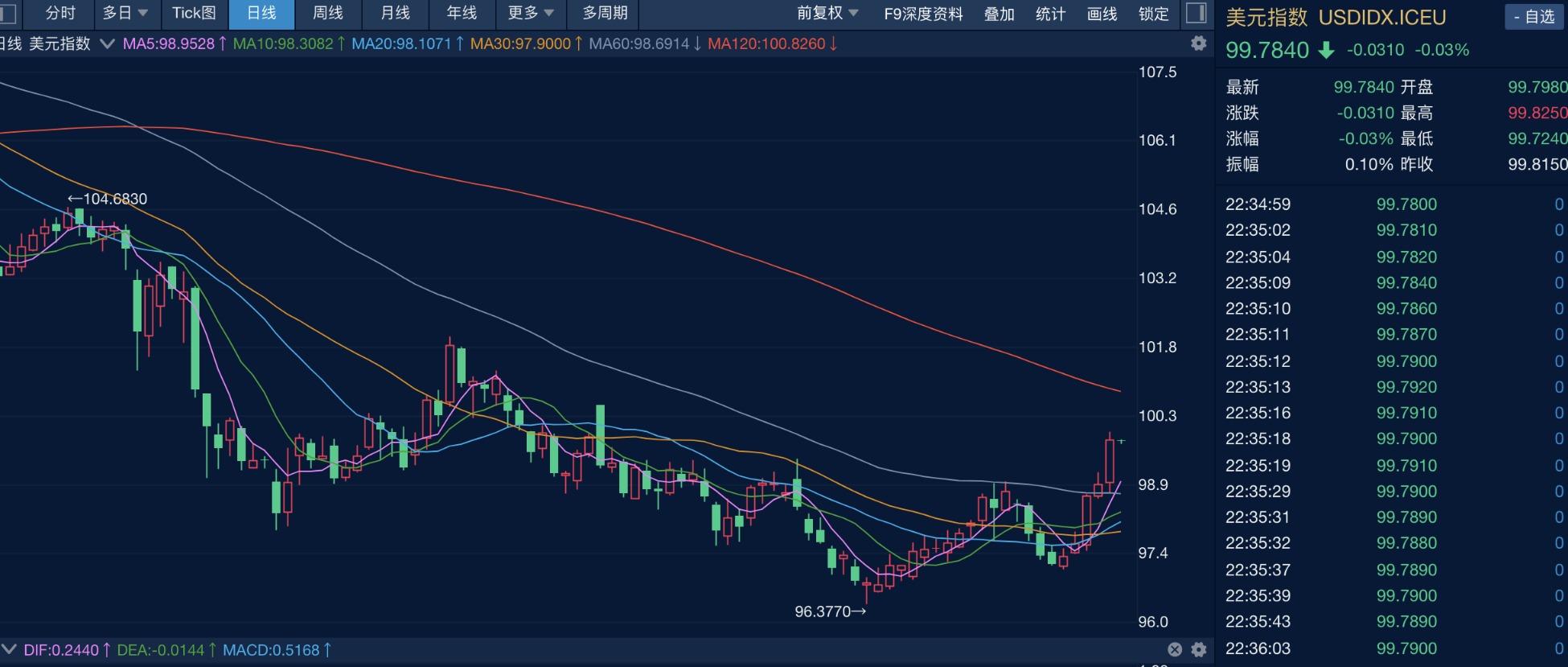
新华财经上海7月31日电(葛佳明)美联储当地时间7月30日结束货币政策例会后如期维持利率不变。值得注意的是,两位美联储理事克里斯托弗·沃勒 (Christopher Waller)和米歇尔·鲍曼(Michelle Bowman)均投下反对票,二人主张应在此次会议上降息25个基点。这是1993年以来美联储首次出现两位理 事反对货币政策决议的情况,凸显美联储内部对于降息存在较大分歧。 美联储主席鲍威尔当天在货币政策例会后结束的记者会上的表态相对"鹰派",并未对9月是否降息给出明确指引,称需要更多数据来确认关税政策对美国通 胀的传导效应,市场对美联储今年内降息的预期明显下调。那么美联储究竟何时重启降息周期?短期大幅反弹的美元还有上行空间吗? 但中金公司研究部宏观分析师肖捷文则持不同看法。肖捷文认为,关税带来的通胀风险尚未解除,且美国劳动力市场依然稳固,因此美联储尚不具备降息的 条件。 市场对美联储后续降息路径分歧加剧 美联储7月议息会议仍然延续此前"观望"的基调,静待更多经济数据"出炉"进行判断,未来核心变量基本取决于美联储判断关税对通胀的冲击是否为"一次性 的"短期影响以及美国就业市场状况。 财通证券首席经济学家 ...

美国7月FOMC会议点评:鲍威尔发言较为鹰派,9月降息可能性偏低
Guoxin Securities· 2025-07-31 06:22
Economic Overview - The Federal Reserve maintained the federal funds rate target range at 4.25-4.5% after the July FOMC meeting, indicating a low probability of rate cuts in September[2] - The U.S. GDP growth rate for Q2 was reported at 3%, significantly higher than Q1's -0.5% and above the 2024 forecast of 2.8%[6] - A 30% decline in imports contributed positively to GDP growth, while private investment negatively impacted GDP by 3.1% in Q2[6] Employment and Inflation - The labor market remains solid, with an average monthly job addition of 150,000 and an unemployment rate steady at 4.1%[9] - Inflation is still above the 2% target, with Powell noting that service sector inflation is easing but tariffs are pushing up prices on certain goods[12][13] Monetary Policy Outlook - The likelihood of a rate cut in September is low, with Powell emphasizing the need for more economic data to assess the impact of tariffs[14] - The Fed's dual mandate focuses on price stability and maximum employment, rather than economic growth alone[14] - There were dissenting votes from two Fed officials advocating for a 25 basis point cut, marking the first time since 2020 that more than one official opposed Powell[14] Future Projections - The Fed may delay rate cuts until Q4, as it requires additional economic data to evaluate the effects of recent tariff negotiations[15] - If trade agreements are reached by August, the earliest potential rate cut could occur in October[15]
风口纵横|又不降息!鲍威尔硬刚特朗普,还顺手“放鹰”
Sou Hu Cai Jing· 2025-07-31 05:18
Core Viewpoint - The Federal Reserve has decided to maintain interest rates in the range of 4.25% to 4.50%, marking the fifth consecutive meeting without a rate cut, despite pressure from President Trump for a reduction [2][4]. Group 1: Federal Reserve's Decision - The Federal Reserve's Open Market Committee had 12 voting members, with 9 supporting the decision to keep rates unchanged, while 2 members voted for a 25 basis point cut [4]. - This marks a rare occurrence where both the President and a Federal Reserve member publicly advocate for a rate cut, reflecting the pressure from Trump on Fed Chairman Powell [5]. Group 2: Economic Indicators - Recent economic indicators show a slowdown in economic activity in the first half of the year, with the unemployment rate remaining low and inflation still high, indicating uncertainty in the economic outlook [5][6]. - The second quarter GDP growth was reported at an annualized rate of 3%, significantly higher than the first quarter's -0.5%, but this growth was primarily due to a reduction in imports rather than a robust economic recovery [9]. Group 3: Future Outlook - Powell indicated that the decision for the September meeting will depend on upcoming employment and inflation data, suggesting that no immediate rate cut is guaranteed [6][7]. - Analysts suggest that while there may be short-term inflation risks, the overall economic growth is expected to continue slowing, with potential rate cuts later in the year [10][11].

议息投票出现分歧——7月美联储议息会议解读【陈兴团队•财通宏观】
陈兴宏观研究· 2025-07-31 01:01
Core Viewpoint - The Federal Reserve decided to maintain the benchmark interest rate at a target range of 4.25%-4.5%, with two members voting against this decision, advocating for a 25 basis point cut, marking the first dissent since 1993 [1] Economic Conditions - The Federal Reserve's assessment of economic conditions was downgraded to "growth of economic activity moderated" from "expand at a solid pace," indicating a slowdown in economic growth [6] - The labor market is showing signs of cooling, with June's non-farm payrolls increasing slightly to 147,000, but half of this increase was due to government jobs, while private sector employment declined [2][5] - The labor force participation rate is decreasing, and wage growth is slowing, suggesting a weakening labor market [2][5] Inflation Trends - Inflation is experiencing short-term rebound risks, with June inflation rising primarily due to increases in energy and core goods, while core services inflation remains stable [2][5] - The Federal Reserve maintains that inflation is still somewhat elevated, and the process of returning to target levels is halfway complete [4] - Tariff costs are gradually being passed on to consumers, but the impact of tariffs on inflation is expected to be temporary [4][5] Market Reactions - Following the Federal Reserve's announcement, the market's expectation for a rate cut in September significantly decreased from over 60% to below 50% [7] - The stock market experienced a decline, while bond yields rose and the dollar index increased, reflecting market uncertainty regarding inflation and economic conditions [7]

凌晨重磅!美联储公布→
第一财经· 2025-07-30 23:52
作者 | 第一财经 樊志菁 北京时间7月31日凌晨2点,美联储公布利率决议。 联邦公开市场委员会(FOMC)以9-2的方式决定维持利率区间在4.25%-4.50%不变。美联储主席 鲍威尔表示,可以在等待关税政策是否推高通胀的同时保持利率稳定。他透露,尚未就9月可能的政 策调整"作出任何决定"。受此影响,美股尾盘跳水,美元指数逼近100大关,国际金价走弱。 美联储重申等待关税影响明朗化 决议声明称,尽管净出口的波动影响了数据,但最近的指标表明,经济活动继续以稳健的速度扩张。 失业率仍然很低,劳动力市场状况稳健,通货膨胀率有所上升。 FOMC重申,寻求在长期内实现最大就业率和2%的通货膨胀率。经济前景的不确定性有所增加,委 员会关注其双重任务的双向风险。 美联储主席鲍威尔在会后新闻发布会上表示,今年上半年经济增长有所放缓,但美联储完全有能力应 对潜在的发展。"与去年的2.5%相比,2025年上半年的增长放缓至1.2%。增长放缓主要反映了消 费支出的放缓。"美联储主席表示,"我们认为,目前的货币政策立场使我们能够及时应对潜在的经 济发展。" 2025.07. 31 本文字数:2232,阅读时长大约4分钟 在本次会议 ...
2票反对!美联储按兵不动 9月降息尚存悬念
Di Yi Cai Jing· 2025-07-30 23:40
北京时间7月31日凌晨2点,美联储公布利率决议。 美联储主席鲍威尔在会后新闻发布会上表示,今年上半年经济增长有所放缓,但美联储完全有能力应对 潜在的发展。"与去年的2.5%相比,2025年上半年的增长放缓至1.2%。增长放缓主要反映了消费支出的 放缓。"美联储主席表示,"我们认为,目前的货币政策立场使我们能够及时应对潜在的经济发展。" 谈及关税的影响,美联储主席表示,"更高的关税已经开始体现在一些商品的价格上,但对经济活动和 通货膨胀的总体影响还有待观察。" 联邦公开市场委员会(FOMC)以9-2的方式决定维持利率区间在4.25%-4.50%不变。美联储主席鲍威尔 表示,可以在等待关税政策是否推高通胀的同时保持利率稳定。他透露,尚未就9月可能的政策调整"作 出任何决定"。受此影响,美股尾盘跳水,美元指数逼近100大关,国际金价走弱。 美联储重申等待关税影响明朗化 决议声明称,尽管净出口的波动影响了数据,但最近的指标表明,经济活动继续以稳健的速度扩张。失 业率仍然很低,劳动力市场状况稳健,通货膨胀率有所上升。 FOMC重申,寻求在长期内实现最大就业率和2%的通货膨胀率。经济前景的不确定性有所增加,委员 会关注其 ...
毕马威(KPMG)首席经济学家Swonk:将开始看到更多与关税相关的美国通胀。美联储可能要到2025年年底才会降息。
news flash· 2025-07-30 18:20
毕马威(KPMG)首席经济学家Swonk:将开始看到更多与关税相关的美国通胀。 美联储可能要到2025年年底才会降息。 ...
刘煜辉:中美之间若贸然对抗升级 将引发全球资产价格共振调整
Xin Lang Zheng Quan· 2025-07-29 08:25
Group 1 - The core viewpoint is that the current U.S. Federal Reserve's communication strategy is intentionally ambiguous, aiming to extend the negotiation cycle and create monetary space, influenced by political factors as the election approaches and inflation pressures persist [1][2] - The persistent inflation in the U.S. is attributed to structural cost increases resulting from a deep restructuring of the global supply chain, rather than traditional overheating demand or supply-demand mismatches [1] - The past 40 years of moderate inflation in the U.S. were largely supported by a global supply chain centered around China, which has been disrupted since 2021 due to geopolitical tensions and the breakdown of globalization [1] Group 2 - The sensitivity and vulnerability of global capital market valuations have increased, with a warning that lack of strategic coordination between the U.S. and China could lead to rising inflation expectations, higher interest rates, and a compression of valuations [2] - The adjustment of global asset prices is closely tied to the trajectory of geopolitical dynamics, emphasizing that the only path to resolving U.S. inflation issues is through easing tensions and rebuilding cooperative logic [2]