
生物制造

Search documents
实现规模与质量双重跃升
Jin Rong Shi Bao· 2025-11-28 00:51
Core Insights - China's high-end manufacturing industry has achieved historic breakthroughs in innovation, digital transformation, and modernization of the industrial chain during the "14th Five-Year Plan" period, transitioning from "catching up" to "keeping pace" and then to "leading" [1] Group 1: Scale and Profitability Growth - The number of high-end manufacturing listed companies in China reached 2,503 by the end of 2024, a growth of over 50% from 1,661 in 2020, with a compound annual growth rate (CAGR) of 10.80%, significantly higher than the overall A-share market growth of 6.52% [2] - The total market value of these companies increased to 32.47 trillion yuan, and total assets reached 27.24 trillion yuan, representing a 68.79% growth over five years, with an annual CAGR of 13.98%, surpassing the A-share average of 9.40% [2] - Revenue for high-end manufacturing companies grew from 9.36 trillion yuan in 2020 to 15.41 trillion yuan in 2024, with a CAGR of 13.27%, while net profit maintained a high CAGR of 12.28%, indicating strong internal growth momentum [2] Group 2: Contributions to Tax and Employment - In 2024, tax contributions from high-end manufacturing companies reached 253.90 billion yuan, with a five-year CAGR of 10.85% [3] - The number of employees in this sector reached 10.35 million, with a five-year CAGR of 9.00%, highlighting its role in absorbing technical talent and stabilizing the job market [3] Group 3: High-Quality Development Achievements - R&D intensity in high-end manufacturing companies increased, with R&D spending as a percentage of revenue rising from 5.06% in 2020 to 6.06% in 2024, totaling 934.12 billion yuan in annual R&D expenditure, with a CAGR of 18.51% [4] - The number of R&D personnel grew from 1.17 million to 1.84 million, with a CAGR of 12.07%, providing continuous intellectual support for technological iteration and industrial upgrading [4] - Overseas revenue for high-end manufacturing companies increased from 2.09 trillion yuan to 4.31 trillion yuan from 2020 to 2024, with a CAGR of 19.81%, indicating a rising internationalization level [4] Group 4: Market Value Management and Shareholder Returns - The total market value of the industry increased by 3.36 trillion yuan in 2024, with significant growth in sectors like semiconductors, communication equipment, and electronics, all exceeding 15% [5] - Total dividends for the year reached 362.95 billion yuan, with a dividend payout ratio of 52.59%, an increase of 14.68 percentage points from 2023 [5] - Share buybacks totaled 83.93 billion yuan, with high activity in sectors such as power equipment, electronics, and pharmaceuticals [5] Group 5: Future Outlook - The high-end manufacturing sector is positioned to play a crucial role in China's transition from a "manufacturing giant" to a "manufacturing power," focusing on strategic emerging industries and enhancing the self-sufficiency of supply chains [5][6] - The sector is expected to occupy a more central position in the global industrial landscape, supporting long-term economic growth and contributing to China's modernization efforts [6]


天津“十五五”规划建议:加快推动信创、生物医药、新能源、新材料、航空航天等成长为支柱产业
Zheng Quan Shi Bao Wang· 2025-11-27 23:59
Core Viewpoint - The Tianjin Municipal Committee emphasizes the development of advanced manufacturing, focusing on high-end, intelligent, and green directions, while promoting new industrialization and upgrading traditional industries [1] Group 1: Advanced Manufacturing Development - The plan aims to enhance competitiveness in industries such as petrochemicals, automotive, equipment manufacturing, and metallurgy through intelligent and green manufacturing [1] - There is a strong push for the large-scale application of new technologies, products, and scenarios, particularly in emerging industries like biomedicine, new energy, and aerospace [1] Group 2: Future Industry Layout - The strategy includes exploring viable business models, market regulation rules, and risk-sharing mechanisms to promote sectors like biomanufacturing, low-dimensional materials, and hydrogen energy [1] - The initiative aims to establish new economic growth points through innovations in brain-machine interfaces, embodied intelligence, and advanced computing [1] Group 3: Consumer Goods Manufacturing - The plan also focuses on actively developing the terminal consumer goods manufacturing sector and cultivating advanced manufacturing brands [1] - There is an emphasis on improving quality infrastructure and standard systems, alongside strengthening environmental and safety regulations [1]
国家发展改革委: 积极推动基础设施REITs进一步扩围
Zhong Guo Zheng Quan Bao· 2025-11-27 21:11
Group 1: Infrastructure REITs Expansion - The National Development and Reform Commission (NDRC) is actively promoting the expansion of infrastructure REITs to include urban renewal facilities, hotels, sports venues, and commercial office facilities [1][2] - Since the launch of infrastructure REITs in 2020, the NDRC has collaborated with the China Securities Regulatory Commission (CSRC) to expand the market, initially including logistics, toll roads, municipal facilities, and industrial parks, and later adding clean energy, data centers, affordable rental housing, water conservancy, cultural tourism, and consumer infrastructure [2] - Currently, the issuance scope covers 12 major industries and 52 asset types, with 18 asset types from 10 industries having completed their first issuance [2] Group 2: Development of Embodied Intelligence Industry - The embodied intelligence industry, represented by humanoid robots, is experiencing rapid growth at over 50% due to innovation and demand [3] - There are currently over 150 humanoid robot companies in China, but there are concerns about the risk of product redundancy and limited R&D space [3][4] - The NDRC is working on establishing industry standards and an entry-exit mechanism to ensure fair competition and orderly development of the industry [4] Group 3: Reform Initiatives - The 14th Five-Year Plan suggests focusing on emerging industries such as low-altitude economy, biomanufacturing, and embodied intelligence [5] - The NDRC plans to promote reforms in three areas: market entry, scenario development, and resource allocation to address barriers to industry development [5] - Efforts will be made to optimize the market entry environment and support the cultivation of comprehensive and high-value scenarios, with the aim of gradually solidifying these into long-term legal arrangements [5]
小菌种“撬动”大制造
Zheng Quan Ri Bao Zhi Sheng· 2025-11-27 16:07
Core Insights - The article discusses the transformative potential of biomanufacturing, which utilizes microorganisms to create sustainable products, thereby reducing reliance on fossil fuels and minimizing environmental impact [1][2][4]. Group 1: Biomanufacturing Overview - Biomanufacturing is defined as a process where microorganisms convert renewable resources into valuable products, such as biodegradable plastics and high-performance materials [2][3]. - The shift from traditional petrochemical-based production to biomanufacturing is seen as essential for achieving a more sustainable industrial model [2][4]. Group 2: Economic Impact and Market Potential - The biomanufacturing industry in China is approaching a total scale of nearly 1 trillion yuan, driven by policy support and capital investment [6]. - Utilizing agricultural waste, such as crop straw, could potentially generate over 1 million tons of biodegradable plastic annually, creating a market worth hundreds of billions [5][6]. Group 3: Industry Development and Collaboration - Companies like Kasei Biotech are forming strategic partnerships to develop biobased materials, demonstrating a collaborative approach to building a competitive biomanufacturing ecosystem [7]. - The integration of biomanufacturing in various sectors, including healthcare and consumer products, is expanding, with companies innovating in areas like biodegradable medical materials and low-sugar food products [8]. Group 4: Challenges and Barriers - The biomanufacturing sector faces challenges in scaling up from laboratory to industrial production, particularly in optimizing microbial strains and production processes [9][10]. - Regulatory hurdles and slow approval processes for genetically engineered strains hinder the speed of innovation and market entry for new biomanufactured products [9][10].

国家发展改革委:建立健全具身智能行业准入和退出机制 保障产业有序发展
智通财经网· 2025-11-27 08:43
Group 1: Development of Embodied Intelligence Industry - The embodied intelligence industry in China is rapidly developing, driven by emerging capital and technological advancements, with a projected market size reaching hundreds of billions by 2030 [16] - The government aims to promote healthy and standardized development of the embodied intelligence industry by establishing industry standards, evaluation systems, and mechanisms for market entry and exit [16][1] - Key technological breakthroughs are being supported, focusing on collaborative models, computational power adaptation, and data integration to address industry bottlenecks [16][1] Group 2: Infrastructure REITs Expansion - The National Development and Reform Commission (NDRC) is actively expanding the scope of infrastructure REITs to include urban renewal facilities, hotels, sports venues, and commercial office facilities [10][9] - Currently, the issuance scope covers 12 major industries and 52 asset types, with 18 asset types from 10 industries having achieved initial public offerings [2][9] - The NDRC is working to optimize the application process and improve project approval efficiency while ensuring quality and risk management [10][9] Group 3: Credit Repair Management - The NDRC has introduced a Credit Repair Management Method, effective from April 1, 2026, to streamline the credit repair process and enhance the rights of credit subjects [17] - The method categorizes credit information into three types: minor, general, and serious, aiming to improve the efficiency of credit restoration [17] - A unified mechanism through the "Credit China" website will facilitate the repair process, ensuring timely updates and transparency [17] Group 4: Two Major Construction Projects - The NDRC has allocated significant funding for major construction projects, with 7 trillion yuan in 2022 and 8 trillion yuan in 2023 to support 1465 and 1459 "hard investment" projects respectively [5][6] - The focus is on enhancing urban infrastructure, transportation networks, and food security through large-scale irrigation projects [6][5] Group 5: AI Application Testing Bases - The establishment of national AI application testing bases aims to bridge the gap between technological innovation and practical application across various industries [13][14] - These bases are designed to facilitate resource integration, supply-demand matching, and promote the commercialization of AI technologies [15][14] Group 6: Emerging Industries and Future Development - The NDRC is addressing challenges in emerging industries such as embodied intelligence, low-altitude economy, and biomanufacturing by improving market access and regulatory frameworks [26] - The focus is on optimizing market entry conditions, supporting scenario cultivation, and enhancing resource allocation mechanisms to foster innovation [26]
国家发改委:正在积极推动基础设施REITs进一步扩围至城市更新设施、酒店、体育场馆、商业办公设施等更多行业领域和资产类型
Sou Hu Cai Jing· 2025-11-27 08:41
Core Insights - The National Development and Reform Commission (NDRC) has reported significant progress in the "Two Heavy" construction initiative, with substantial funding allocated for infrastructure projects aimed at enhancing national strategic capabilities and safety [2][3] Infrastructure Development - The NDRC has allocated 7 trillion yuan (approximately 1 trillion USD) in 2022 and 8 trillion yuan (approximately 1.2 trillion USD) in 2023 for 1,465 and 1,459 "hard investment" projects respectively, demonstrating a strategic and forward-looking approach [2] - Key areas of focus include urban infrastructure, major transportation projects along the Yangtze River, food security initiatives, and improvements in social welfare facilities such as high schools and hospitals [3] REITs Expansion - The NDRC is actively promoting the expansion of infrastructure Real Estate Investment Trusts (REITs), which have included various asset types since their inception in 2020, now covering 12 major industries and 52 asset types [4][5] - Recent efforts aim to further expand the REITs to include urban renewal facilities, hotels, sports venues, and commercial office spaces, enhancing support for the real economy [4] Private Economy Promotion - The implementation of the Private Economy Promotion Law has led to over 3,300 local study sessions and 11,000 training sessions, fostering a supportive environment for private enterprises [6] - The NDRC has introduced over 140 supporting measures to address core concerns of private enterprises, including a regulatory framework to prevent illegal fees [6] State-owned Forest Farms - The NDRC has issued guidelines to modernize state-owned forest farms, which cover 11.84 million acres and hold 3.81 billion cubic meters of forest stock, focusing on enhancing ecological product supply and resource management [7] - Key innovations include new management models, support for specialized industries, and the integration of modern technology in forest management [7] Emerging Industries - The NDRC is addressing challenges in emerging industries such as low-altitude economy and biomanufacturing by improving regulatory frameworks and market access [8] - The focus is on optimizing market entry conditions and supporting the development of integrated application scenarios to facilitate innovation [8][9] Energy Sector Developments - The NDRC has reported that the new energy storage capacity has exceeded 100 million kilowatts, significantly increasing the country's ability to manage power systems [10] - The hydrogen energy sector has also seen growth, with over 150,000 tons of green hydrogen production capacity established, supporting the transition to cleaner energy sources [10]
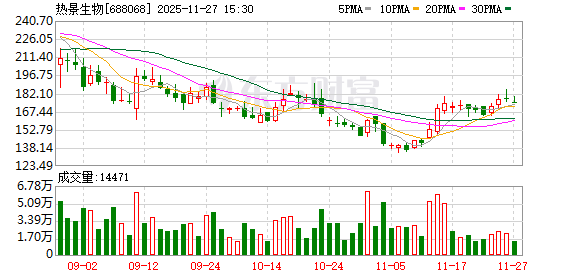
直面掌门人|热景生物林长青:锚定生物技术核心 热景生物出海与深耕并行
Shang Hai Zheng Quan Bao· 2025-11-27 07:59
Core Viewpoint - The company, as the first IVD listed enterprise on the Sci-Tech Innovation Board, is transitioning from in vitro diagnostics to biopharmaceuticals, aligning with the national bio-manufacturing strategy and focusing on long-term growth through global expansion and innovation in the biopharmaceutical sector [2][4]. Group 1: Industry Trends and Company Strategy - Biomanufacturing is recognized as a strategic emerging industry for the next decade, with biopharmaceuticals being a key battleground due to high technical barriers [4]. - The company's expansion from in vitro diagnostics to biopharmaceuticals is seen as a natural extension of its core competencies in biotechnology, emphasizing the interconnectedness of diagnostic and therapeutic technologies [4][5]. - The company has made significant investments in basic research, resulting in publications in top-tier journals and the establishment of a solid R&D framework [4]. Group 2: Innovation and Product Development - The company adheres to the "uniqueness and firstness" principle in its innovation pipeline, focusing on unmet clinical needs and developing products such as the world's first antibody drug for myocardial infarction [8][10]. - The company has developed advanced technologies in liver cancer early screening, which are widely used in high-risk populations and included in expert consensus guidelines [8]. - The company aims to achieve the goal of "Chinese scientists discovering first, Chinese enterprises transforming first, and Chinese hospitals conducting clinical trials first" in its drug development efforts [8]. Group 3: Global Market Expansion - The company has initiated overseas expansion since 2019, achieving over 600 foreign certifications and establishing a presence in Southeast Asia, South Asia, the Middle East, and Latin America [10]. - The company positions its products as high-quality and cost-effective alternatives to those from developed countries, aiming to provide better healthcare options for developing nations [10]. - The company emphasizes the importance of international certifications and understanding local market needs as key factors for successful overseas operations [10].

入选国家中试平台,嘉必优做对了什么?
Jing Ji Guan Cha Wang· 2025-11-27 02:50
Core Insights - The Ministry of Industry and Information Technology of China has officially released the first batch of the "Biomanufacturing Pilot Capability Construction Platform List," with Jia Bi You Biotechnology (Wuhan) Co., Ltd. being recognized for its strong technological foundation and industrial application capabilities in biomanufacturing [1][2] - Biomanufacturing has been elevated to a national strategic level, identified as a key growth point in the "14th Five-Year Plan," and is expected to play a crucial role in supporting China's dual carbon goals and green transformation [2][6] - Jia Bi You is positioned as a "full-chain player" in the biomanufacturing sector, having successfully industrialized key nutritional ingredients and expanded its product line to include high-value items such as DHA and HMOs [3][6] Industry Context - The emphasis on biomanufacturing in the "14th Five-Year Plan" reflects the need for China to enhance its economic structure and address global industrial competition, particularly in high-value areas like green manufacturing and functional molecules [2][4] - The selection of "symbolic projects" by regulatory authorities aims to identify companies that can represent China's competitiveness in high-end nutritional raw materials and green manufacturing [2][4] Company Developments - Jia Bi You has been recognized for its innovative capabilities, having its product 2'-fucosyllactose (2'-FL) selected as a "symbolic product" in biomanufacturing, alongside its inclusion in the high-performance bioreactor innovation list [3][6] - The company is actively implementing an "AI + synthetic biology" strategy, enhancing its research and manufacturing processes through automation and advanced technologies [4][5] - Jia Bi You has established an intelligent research platform and is developing proprietary computational tools to optimize its biomanufacturing processes, significantly improving efficiency and product quality [5][6] Strategic Positioning - Jia Bi You is strategically aligned with national policies, having developed a platform-based approach that integrates AI and synthetic biology to enhance its production capabilities [7][8] - The company has proactively engaged in regional industrial planning, positioning itself to benefit from favorable policies and market opportunities in the biomanufacturing sector [7][8]

以新质生产力赋能县域经济高质量发展
Zhong Guo Jing Ji Wang· 2025-11-26 07:07
Core Viewpoint - The article emphasizes the importance of developing new quality productivity as a key strategy for achieving high-quality economic development in Guangxi's Chongzuo City, particularly in Fusui County, in line with the spirit of the 20th Central Committee's Fourth Plenary Session [1][12]. Group 1: Understanding New Quality Productivity - New quality productivity is essential for transforming the county's economic model, moving from traditional extensive growth to high-quality, innovative development [2][3]. - It serves as a tactical adjustment for the county's industrial structure, focusing on key technological innovations and optimizing resource allocation [2][3]. - The development of new quality productivity is crucial for enhancing the county's innovation capabilities and core competitiveness [3]. Group 2: Seizing Historical Opportunities - To cultivate new quality productivity, it is vital to understand the existing industrial landscape and identify key areas for technological upgrades [4]. - Recognizing and leveraging local development advantages is necessary to avoid homogeneous competition and build a sustainable industrial foundation [4]. - The county should capitalize on emerging industries such as low-altitude economy and artificial intelligence to create new growth drivers [4]. Group 3: Addressing Transformation Challenges - There are challenges in technology transfer capabilities and a lack of alignment between local industry needs and academic research [5]. - Structural issues persist, with a high proportion of traditional resource-based industries and a small scale of strategic emerging industries [5]. - Attracting and retaining top talent remains a significant challenge for the county [5]. Group 4: Promoting Innovation and Open Cooperation - The county should focus on precise innovation strategies tailored to local industries, addressing specific challenges through targeted innovation nodes [7]. - Open cooperation should aim to establish the county as a leader in niche markets, leveraging its geographical advantages for cross-border industrial development [8]. Group 5: Implementing Industrial Renewal Plans - The county's industrial upgrade requires a dual approach, enhancing traditional industries while fostering new strategic sectors [9]. - Emphasis should be placed on digital transformation and the development of specialized industrial parks to support long-term growth [9]. Group 6: Building a New Factor Attraction System - The county must create a factor configuration system that aligns with new development concepts, focusing on talent attraction and integration with local industries [10]. - Digital economy integration with traditional sectors is essential for improving efficiency and driving growth [10]. Group 7: Enhancing Public Services and Governance - Improving public service quality is crucial for boosting local development momentum, with a focus on optimizing the business environment [11]. - The county should adopt smart governance practices to streamline administrative processes and enhance service delivery [11].
华熙生物跌2.05%,成交额9409.20万元,主力资金净流出90.00万元
Xin Lang Cai Jing· 2025-11-26 06:21
Core Viewpoint - Huaxi Biological experienced a decline in stock price, with a year-to-date drop of 4.52% and a significant decrease in revenue and net profit for the first nine months of 2025 compared to the previous year [1][2]. Company Overview - Huaxi Biological Technology Co., Ltd. was established on January 3, 2000, and went public on November 6, 2019. The company is located in Jinan, Shandong Province, and focuses on microbial fermentation and cross-linking technology platforms to develop bioactive materials for health [1]. - The company has a full industry chain business model that includes raw materials, medical terminal products, functional skincare products, and functional foods, serving global pharmaceutical, cosmetic, food manufacturing companies, medical institutions, and end-users [1]. Financial Performance - For the period from January to September 2025, Huaxi Biological reported operating revenue of 3.163 billion yuan, a year-on-year decrease of 18.36%, and a net profit attributable to shareholders of 252 million yuan, down 30.29% year-on-year [2]. - The company has distributed a total of 1.138 billion yuan in dividends since its A-share listing, with 528 million yuan distributed over the past three years [3]. Shareholder Information - As of November 20, 2025, Huaxi Biological had 30,100 shareholders, a decrease of 0.62% from the previous period, with an average of 16,014 circulating shares per shareholder, which increased by 0.62% [2]. - Major shareholders include various ETFs, with significant reductions in holdings noted for several funds, indicating a potential shift in institutional investment [3].
