
生态文明建设

Search documents
受权发布|中华人民共和国国家公园法
Xin Hua She· 2025-09-12 16:06
Core Points - The law aims to promote high-quality construction of national parks, enhance protection and management, and maintain the authenticity and integrity of important natural ecosystems [3][4][5] - National parks are defined as specific land and marine areas approved by the State Council, primarily aimed at protecting representative natural ecosystems while ensuring scientific protection and rational use of natural resources [3][4] - The establishment of a unified, standardized, and efficient management system for national parks is mandated, with responsibilities assigned to various government departments [5][7][19] Chapter Summaries General Principles - The law emphasizes the leadership of the Communist Party of China and the principle of ecological protection first, integrating protection and development [3][4] - National parks are to be included in national economic and social development plans by local governments [4][5] Layout and Establishment - The state will scientifically plan the overall development layout of national parks, strictly determining the conditions for establishment and the number and scale of parks [11][12] - Local governments are responsible for preliminary work and public consultation before proposing national park establishment to the State Council [13][14] Protection and Management - A holistic approach to the protection of natural ecosystems is mandated, with the establishment of monitoring networks and data sharing [18][19][20] - Specific regulations are set for core protection areas and general control areas, with restrictions on human activities [21][22][23] Participation and Sharing - Public participation in national park protection is encouraged, with a focus on education and awareness [35][36] - Local residents are to be involved in the management and protection of national parks, with their rights and interests safeguarded [39][40] Guarantee and Supervision - A diversified funding system for national parks is established, encouraging contributions from various sectors [32][46] - Regular assessments of the ecological status and management effectiveness of national parks are mandated [25][49] Legal Responsibilities - Clear penalties are outlined for violations of the law, including fines and restoration obligations [55][56][57] - Local governments are empowered to create specific regulations based on local conditions, enhancing the law's applicability [62][63]
《国家公园法》表决通过 鼓励和支持公众参与保护
Di Yi Cai Jing· 2025-09-12 12:17
Core Viewpoint - The National Park Law of the People's Republic of China was passed on September 12, 2023, and will take effect on January 1, 2026, establishing a unified and efficient management system for national parks, emphasizing integrated ecological protection and resource utilization [1][2]. Summary by Sections National Park Law Overview - The law consists of 7 chapters and 63 articles, covering general principles, layout and establishment, protection and management, participation and sharing, guarantees and supervision, legal responsibilities, and supplementary provisions [1]. - It aims to promote high-quality national park construction, scientific protection, and rational use of natural resources, fostering harmony between humans and nature [1]. Management and Structure - The law emphasizes ecological priority and strict protection, with a focus on building an ecological civilization [2]. - It establishes a management system that includes both central and provincial government oversight, creating a collaborative mechanism among various levels of government [2]. Public Participation and Community Involvement - The law encourages public participation in national park protection and promotes environmental education [2]. - Local governments are required to work with national park management agencies to protect surrounding natural resources and develop nearby communities responsibly [2]. Progress and Achievements - During the 14th Five-Year Plan period, significant progress has been made in national park construction, with the establishment of the first five national parks [2]. - The management system has been innovated to ensure unified settings, hierarchical management, and zoned control [2]. Challenges and Global Context - The construction of national parks in China is noted to be the fastest globally, yet it faces challenges such as structural conflicts between ecological protection and local economic development [3]. - The presence of local residents and human-wildlife conflicts complicate community governance in national parks [3]. Importance of National Parks - National parks are described as essential for human survival, providing clean air, water, and a stable climate, thus serving as vital ecological products for society [4].
《国家公园法》表决通过,鼓励和支持公众参与保护
Di Yi Cai Jing· 2025-09-12 10:00
Core Points - The National Park Law establishes a unified and efficient management system for national parks in China, emphasizing integrated protection of natural ecosystems [1][2] - The law aims to promote high-quality national park construction, scientific protection, and rational use of natural resources, fostering harmony between humans and nature [1][2] - The law encourages public participation in national park protection and education, and mandates local governments to collaborate with management agencies [2] Summary by Sections National Park Law Overview - The National Park Law consists of 7 chapters and 63 articles, effective from January 1, 2026, focusing on management, protection, and legal responsibilities [1] - It emphasizes ecological priority and strict protection, aiming to build an ecological civilization [1][2] Implementation and Management - During the 14th Five-Year Plan, significant progress has been made in national park construction, with the establishment of a basic institutional framework and the operation of the first five national parks [2] - The management system includes central and provincial government oversight, with a clear division of responsibilities and collaborative mechanisms [2] Challenges and Opportunities - The construction of national parks in China is noted to be the fastest globally, despite facing challenges such as ecological protection versus local economic development [5] - The presence of local residents and human-wildlife conflicts complicates community governance in national parks [5] - National parks are essential for providing clean air, water, and climate stability, benefiting the broader population [6]

全国人大常委会法工委:近五年来新制定法律36件,修改63件次
Xin Jing Bao· 2025-09-12 04:56
Group 1 - The legislative framework in China has seen significant developments, with 36 new laws and 63 amendments enacted from 2021 to the present, enhancing the legal system to support high-quality economic development [1] - Key laws aimed at promoting the private economy and improving various sectors include the Private Economy Promotion Law, Energy Law, and Rural Revitalization Promotion Law, among others [1] - The current effective legal framework consists of 306 national laws, over 600 administrative and supervisory regulations, and more than 14,000 local regulations [1] Group 2 - Recent legislative efforts have focused on creating a favorable environment for development, including amendments to basic laws related to national institutions and the introduction of the National Unity Promotion Law [2] - New laws have been established to safeguard national security and social stability, such as the Data Security Law and the Anti-Foreign Sanctions Law, alongside amendments to existing laws [2] - The legal system has been strengthened to improve the quality of life, with laws like the Personal Information Protection Law and the Anti-Telecom Network Fraud Law being enacted [2] Group 3 - Environmental protection has been prioritized with the introduction of laws such as the Yellow River Protection Law and the Wetland Protection Law, reflecting a commitment to ecological civilization [2] - Ongoing legislative efforts include the review of the Ecological Environment Law Code draft, indicating a systematic approach to environmental governance [2]
官宣确定!2025全球滨海论坛将于9月24日至25日在江苏盐城举行
Yang Zi Wan Bao Wang· 2025-09-11 10:10
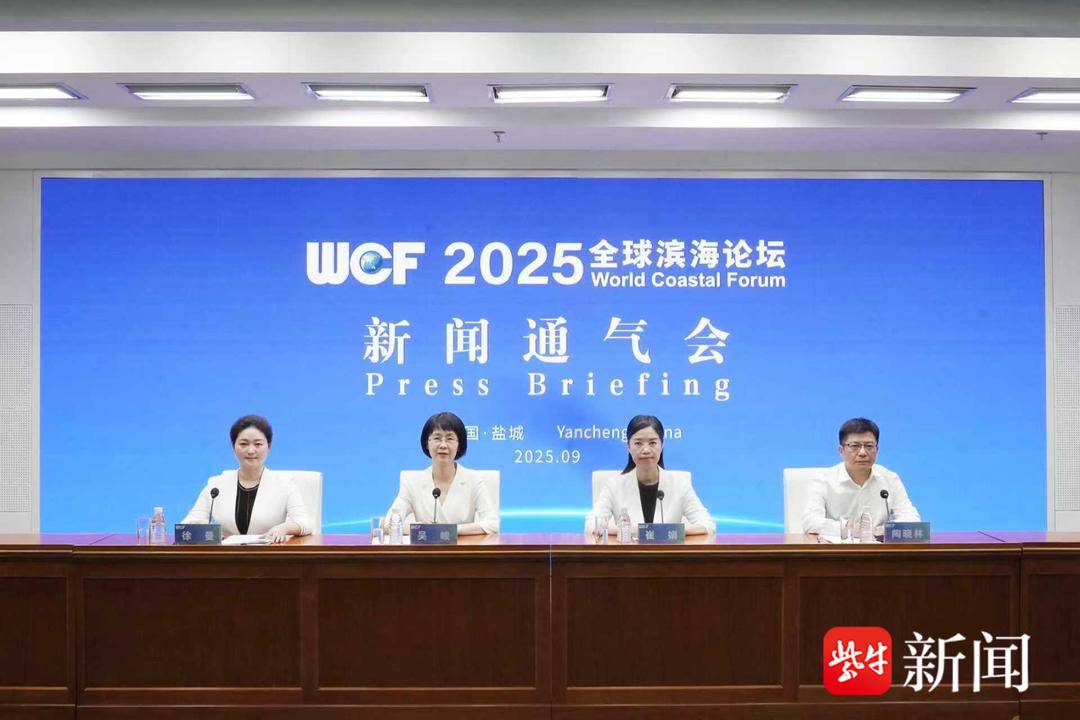
Core Points - The 2025 Global Coastal Forum will be held in Yancheng, Jiangsu Province, on September 24-25, 2025, with preparations underway [3][4][8] - The forum aims to promote ecological protection and sustainable development, aligning with Xi Jinping's ecological civilization thoughts [6][9] - The event will feature various activities, including parallel forums and workshops, with an expected attendance of around 300 participants from various sectors [6][9] Group 1 - The forum is co-hosted by the Jiangsu Provincial Government, the Ministry of Natural Resources, and the National Forestry and Grassland Administration, and it has received international attention and praise [3][4] - The forum's theme is "Beautiful Coastal Areas: Ecological Priority and Green Development," focusing on the harmonious coexistence of humans and nature [6][9] - The forum will release flagship knowledge products, including the first systematic assessment report on global coastal ecosystems, addressing a gap in comprehensive evaluations [4][9] Group 2 - Jiangsu Province has implemented the first local regulation in China to promote marine economic development, establishing a comprehensive development planning system [7] - The province emphasizes technological innovation, with over 700 high-tech marine enterprises and significant advancements in marine power generation and equipment manufacturing [7] - The forum will enhance international cooperation and partnerships, expanding from 15 to 25 member organizations across five continents [4][9] Group 3 - The forum's preparations are prioritized by Yancheng City, focusing on high-level hosting and effective communication to ensure successful outcomes [8] - The event will feature a diverse range of activities, including an international bird-watching carnival to engage the public and enhance community involvement [9] - The forum aims to create a global dialogue platform for experts and leaders in marine economy, environmental protection, and low-carbon development [9]
市人大常委会专题询问生态文明建设工作
Hang Zhou Ri Bao· 2025-09-11 02:09
Group 1 - The city government has set specific goals for environmental quality improvement, green low-carbon transformation, and ecological safety protection, aiming for no heavy pollution days and achieving 100% compliance with water quality standards [1][2] - The government is committed to completing environmental inspection feedback, promoting blue sky, clear water, and clean land initiatives, and implementing ecological civilization regulations [2][3] - The relationship between ecological protection and economic development is emphasized as both opposing and mutually reinforcing, with a focus on high-level protection and high-quality development [2][3] Group 2 - Air quality improvement is a priority, with PM2.5 levels reduced from 70 µg/m³ in 2013 to 30 µg/m³ in 2024, maintaining national air quality standards [3] - The city plans to enhance management of small water bodies by categorizing them and establishing a three-tier management mechanism to ensure effective oversight [3][4] - The city has achieved full coverage of waste classification in 93 streets and 5,271 communities, with plans to strengthen grassroots efforts and improve waste disposal standards [4]
“两山”理念在河南丨溱洧二水流淌诗情绿意——“诗中风光今又现”之新郑篇
He Nan Ri Bao· 2025-09-10 23:38
Core Viewpoint - The article highlights the cultural and ecological significance of the Zhenfeng Garden and Weishui Park in Xinzheng, showcasing their development as recreational spaces that blend nature and local heritage [1][2][3][4][5]. Group 1: Zhenfeng Garden - Zhenfeng Garden, established in 2002, covers an area of approximately 274,000 square meters, with 183,000 square meters designated for greenery and 91,000 square meters for water, achieving a green coverage rate of 82.8% [2]. - The garden features over 400 species of flora and fauna, and has undergone several environmental enhancements, attracting various bird species [2]. - It is themed around the "Zheng Feng" poetry, with 21 poems inscribed on stones, earning it the nickname "Love Park" among locals [2]. Group 2: Weishui Park - Weishui Park, also known as the Shuangjie River, is referred to as the mother river of Xinzheng, with a total investment of 568 million yuan and covering over 1,200 acres [3]. - The park has been open for five years and is designed to showcase both natural beauty and cultural heritage, making it a popular destination for visitors [3]. - The transformation of the Shuangjie River area from a polluted environment to a clean and beautiful urban landscape is emphasized, highlighting the importance of ecological restoration [4]. Group 3: Ecological and Cultural Integration - The development of both parks reflects a commitment to ecological civilization, integrating water, greenery, and culture to enhance the poetic and green ambiance of Xinzheng [5]. - The parks incorporate elements from historical periods, merging ancient cultural landscapes with modern ecological designs, thereby promoting local heritage [4].
生态游要“流量”更要“留量”
Jing Ji Ri Bao· 2025-09-10 22:12
Core Insights - The article emphasizes the growing popularity of ecological tourism in China, with a projected visitor count of 2.761 billion in 2024, highlighting its appeal for both tourists and local communities [1] Group 1: Ecological Tourism Growth - Ecological tourism, including forest, wetland, and grassland tourism, is increasingly favored by tourists seeking close contact with nature [1] - The concept of "green mountains and clear waters are as valuable as mountains of gold and silver" is exemplified through the economic benefits that ecological tourism brings to local residents [1] Group 2: Challenges in Ecological Tourism - Issues such as homogenized development and excessive commercialization threaten the integrity of ecological tourism, leading to a lack of unique local characteristics [1] - The article calls for a shift from rapid, large-scale growth to a focus on quality and sustainable development in ecological tourism [1] Group 3: Enhancing Visitor Experience - The need to move from mere sightseeing to immersive experiences is highlighted, suggesting that tourists should engage in interactive and educational activities [2] - Unique local elements, such as rare species or traditional crafts, should be leveraged to create distinctive tourism experiences [2] Group 4: Community Involvement - The article advocates for local communities to take a leading role in ecological tourism, ensuring they benefit from the resources and participate in management [3] - Successful examples include the establishment of "ecological guardians" in Wuyi Mountain National Park, employing local residents to balance conservation and development [3] Group 5: Sustainable Development - The sustainable development of ecological tourism requires a meticulous approach, transitioning from quantity to quality [3] - The goal is to create a lasting emotional connection with visitors while ensuring the continuous value of natural resources [3]
专访俞海:抓住关键人、关键岗、关键事,实现生态环境保护责任体系全链条管理
Zhong Guo Huan Jing Bao· 2025-09-07 23:15
Core Viewpoint - The newly issued "Regulations on the Responsibility System for Ecological and Environmental Protection of Local Party and Government Leaders" aims to establish a comprehensive, clear, and interconnected responsibility system for ecological and environmental protection, enhancing the overall effectiveness of local leadership in ecological civilization construction [1][3][6]. Group 1: Responsibility System Structure - The responsibility system emphasizes comprehensive coverage, ensuring that all local party and government leaders are held accountable for ecological and environmental protection [4][8]. - It clarifies the responsibilities of seven categories of local party and government leaders, linking responsibility to specific roles and tasks [8][9]. - The system aims to achieve a full-cycle management approach, ensuring that responsibilities are clearly defined, understood, and executed [3][6]. Group 2: Key Principles - Comprehensive coverage involves detailing responsibilities down to individuals and specific tasks, focusing on key personnel and positions [4][5]. - Consistency between rights and responsibilities ensures that each leader's authority corresponds with their duties, preventing any misalignment [4][6]. - Clear rewards and penalties are established to encourage proactive engagement while maintaining strict oversight [5][6]. Group 3: Implementation and Monitoring - The regulations outline specific monitoring and accountability mechanisms, including ecological protection inspections and performance evaluations [10][11]. - Local leaders are required to regularly analyze ecological conditions and assess environmental risks, ensuring informed decision-making [12][14]. - The regulations promote a shift from passive responses to proactive environmental governance, emphasizing the importance of early detection and intervention [13][15].

专访|中国生态文明建设为世界提供范例——访联合国环境规划署气候和清洁空气联盟秘书处负责人马丁娜·奥托
Xin Hua Wang· 2025-09-07 05:12
Core Viewpoint - China's ecological civilization construction serves as a global model, encouraging and accelerating actions related to air quality management worldwide [1][2]. Group 1: Achievements in Air Quality Management - Air pollution is a significant global challenge and the second leading cause of death worldwide [1]. - China has made substantial progress in air quality management, with 203 cities meeting air quality standards by 2023, representing approximately 60% of the monitored 339 cities [1]. - China is recognized as the fastest country in the world for improving air quality, largely due to the implementation of the Air Pollution Prevention and Control Action Plan initiated in 2013 [1]. Group 2: Policy and Investment Impact - Strict standards, improved monitoring systems, a transition to clean energy, industrial upgrades, and investments in clean transportation have led to significant improvements in air quality in China [2]. - The Chinese government's commitment to ecological civilization has integrated carbon reduction, pollution control, and green growth, creating remarkable ecological and green development achievements [1][2]. Group 3: Global Cooperation and Vision - The United Nations Environment Programme is assisting developing countries, particularly in Africa, to improve air quality through data sharing and regional cooperation [3]. - The Chinese ecological civilization concept aligns with the current global development theme, emphasizing that the pursuit of a clean environment can foster new green industries without sacrificing economic growth [3].