第三代半导体

Search documents
立昂微涨2.02%,成交额2.06亿元,主力资金净流入1846.69万元
Xin Lang Cai Jing· 2025-08-22 03:11
Company Overview - Lian Microelectronics, established on March 19, 2002, is located in Hangzhou Economic and Technological Development Zone, specializing in semiconductor silicon wafers and power semiconductors [1] - The company was listed on September 11, 2020, and operates within the electronic-semiconductor-semiconductor materials industry, with involvement in satellite navigation, integrated circuits, specialized new technologies, automotive chips, and third-generation semiconductors [1] Stock Performance - As of August 22, Lian Microelectronics' stock price increased by 2.02%, reaching 26.30 CNY per share, with a trading volume of 206 million CNY and a turnover rate of 1.18%, resulting in a total market capitalization of 17.657 billion CNY [1] - Year-to-date, the stock price has risen by 6.18%, with a 3.75% increase over the last five trading days, 5.62% over the last 20 days, and 11.39% over the last 60 days [1] - The company has appeared on the "Dragon and Tiger List" once this year, with the most recent occurrence on April 22 [1] Financial Performance - For the period ending March 31, Lian Microelectronics reported a revenue of 820 million CNY, reflecting a year-on-year growth of 20.82% [2] - The company recorded a net profit attributable to shareholders of -81.03 million CNY [2] - Since its A-share listing, Lian Microelectronics has distributed a total of 637 million CNY in dividends, with 342 million CNY distributed over the past three years [2] Shareholder Information - As of March 31, the number of shareholders decreased by 2.01% to 73,400, while the average number of circulating shares per person increased by 2.05% to 9,152 shares [2] - Among the top ten circulating shareholders, Hong Kong Central Clearing Limited holds 8.1552 million shares, a decrease of 1.3789 million shares compared to the previous period [2]

至纯科技涨2.02%,成交额1.36亿元,主力资金净流入1044.33万元
Xin Lang Cai Jing· 2025-08-22 03:11
Group 1 - The core viewpoint of the articles highlights the recent performance and financial metrics of Zhichun Technology, including stock price movements and trading volumes [1][2] - As of August 22, Zhichun Technology's stock price increased by 2.02% to 27.23 CNY per share, with a total market capitalization of 10.447 billion CNY [1] - The company has seen a year-to-date stock price increase of 8.66%, with notable gains over various trading periods: 4.33% in the last 5 days, 6.78% in the last 20 days, and 5.46% in the last 60 days [1] - Zhichun Technology has appeared on the trading leaderboard four times this year, with the most recent instance on April 7, where it recorded a net buy of 8.0238 million CNY [1] - The company operates in the semiconductor equipment sector, with its main business involving semiconductor process equipment and technology support [1] Group 2 - As of March 31, the number of shareholders for Zhichun Technology reached 117,300, an increase of 75.37% compared to the previous period [2] - The company reported a revenue of 728 million CNY for the first quarter of 2025, reflecting a year-on-year decrease of 10.32% [2] - Zhichun Technology has distributed a total of 248 million CNY in dividends since its A-share listing, with 136 million CNY distributed over the past three years [2] - Among the top ten circulating shareholders, Hong Kong Central Clearing Limited is the sixth largest, holding 3.4318 million shares as a new shareholder [2]

斯达半导涨2.00%,成交额3.29亿元,主力资金净流入237.33万元
Xin Lang Cai Jing· 2025-08-22 03:08
Company Overview - Stada Semiconductor Co., Ltd. is located at 988 Kexing Road, Nanhu District, Jiaxing City, Zhejiang Province, established on April 27, 2005, and listed on February 4, 2020 [1] - The company primarily engages in the design of power semiconductor chips and modules, mainly focusing on IGBT technology [1] Stock Performance - As of August 22, Stada's stock price increased by 2.00%, reaching 98.81 CNY per share, with a trading volume of 329 million CNY and a turnover rate of 1.40%, resulting in a total market capitalization of 23.662 billion CNY [1] - Year-to-date, Stada's stock price has risen by 10.79%, with a 1.04% increase over the last five trading days, a 14.47% increase over the last 20 days, and a 21.95% increase over the last 60 days [1] Financial Performance - For the period from January to March 2025, Stada achieved a revenue of 919 million CNY, representing a year-on-year growth of 14.22% [2] - The company has distributed a total of 885 million CNY in dividends since its A-share listing, with 671 million CNY distributed over the past three years [2] Shareholder Information - As of March 31, 2025, Stada had 56,800 shareholders, a decrease of 3.58% from the previous period, with an average of 4,213 circulating shares per shareholder, an increase of 3.72% [2] - Among the top ten circulating shareholders, Hong Kong Central Clearing Limited is the fourth largest, holding 3.516 million shares, a decrease of 230,700 shares from the previous period [2] Industry Context - Stada belongs to the Shenwan industry classification of Electronics - Semiconductors - Discrete Devices, and is associated with sectors such as new energy vehicles, third-generation semiconductors, automotive chips, specialized and innovative enterprises, and chip concepts [1]

士兰微涨2.07%,成交额4.70亿元,主力资金净流入3172.66万元
Xin Lang Cai Jing· 2025-08-22 02:41
Core Viewpoint - Silan Microelectronics has shown significant stock performance and financial growth, indicating a positive outlook for the company in the semiconductor industry [1][2]. Financial Performance - As of March 31, 2025, Silan Microelectronics achieved a revenue of 3 billion yuan, representing a year-on-year growth of 21.70% [2]. - The net profit attributable to shareholders reached 149 million yuan, with a remarkable year-on-year increase of 1072.43% [2]. - The company has distributed a total of 720 million yuan in dividends since its A-share listing, with 208 million yuan distributed in the last three years [3]. Stock Market Activity - On August 22, the stock price of Silan Microelectronics rose by 2.07%, reaching 28.62 yuan per share, with a trading volume of 470 million yuan and a turnover rate of 0.99% [1]. - The company’s market capitalization stands at 47.626 billion yuan [1]. - Year-to-date, the stock price has increased by 10.16%, with notable gains of 4.15% over the last five trading days, 8.95% over the last twenty days, and 18.12% over the last sixty days [1]. Shareholder Structure - As of March 31, 2025, the number of shareholders decreased by 9.10% to 285,700, while the average number of circulating shares per person increased by 10.01% to 5,823 shares [2]. - The top ten circulating shareholders include Hong Kong Central Clearing Limited, which holds 42.4541 million shares, an increase of 2.0967 million shares from the previous period [3].

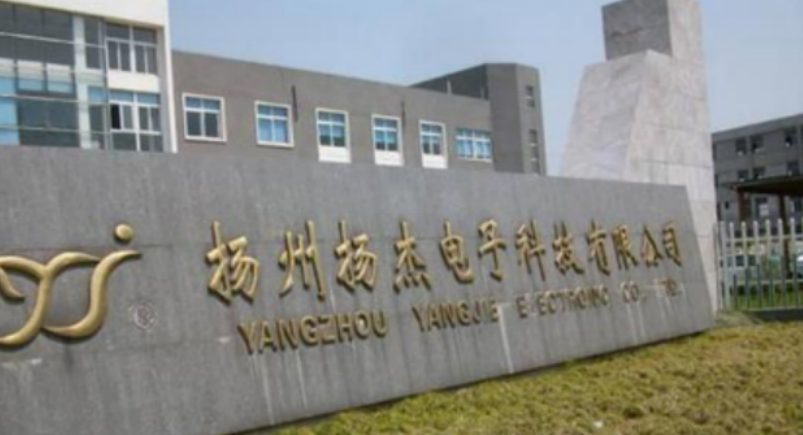
扬杰科技(300373):行业需求扩张国产化加速,业绩稳步上升
Guotou Securities· 2025-08-21 08:40
Investment Rating - The report maintains a "Buy-A" investment rating for the company, with a target price of 70.49 CNY for the next six months [4][6]. Core Views - The company reported a revenue of 3.455 billion CNY for the first half of 2025, representing a year-on-year growth of 20.58%, and a net profit of 601 million CNY, which is a 41.55% increase compared to the same period last year [1][4]. - The expansion of industry demand and the acceleration of domestic production are driving the company's steady performance. The domestic market is stimulated by policies such as the old-for-new exchange, while sectors like automotive electronics and AI are contributing to new growth [2][3]. - The company is one of the few large-scale enterprises in China that integrates the entire vertical supply chain from monocrystalline silicon wafer manufacturing to terminal sales and services. It is increasing its investment in third-generation semiconductor chips, particularly SiC power devices, and has established partnerships with several Tier 1 automotive clients [3][4]. Financial Summary - The projected revenues for the company from 2025 to 2027 are 7.421 billion CNY, 8.905 billion CNY, and 10.686 billion CNY, respectively. The expected net profits for the same period are 1.276 billion CNY, 1.493 billion CNY, and 1.748 billion CNY [4][10]. - The company is expected to achieve a PE ratio of 30 times in 2025, which corresponds to the target price of 70.49 CNY [4][10]. - The company's net profit margin is projected to be 17.2% in 2025, with a return on equity (ROE) of 13.2% [10][11].

中国“芯”光:Micro-LED 照亮显示产业破壁之路
Feng Huang Wang Cai Jing· 2025-08-21 04:58
Core Viewpoint - The article discusses the revolutionary potential of Micro-LED technology in the display industry, highlighting Shenzhen-based Siton Technology as a leader in this field, which is transforming visual experiences and paving the way for future applications in various sectors [1][3][4]. Group 1: Micro-LED Technology Overview - Micro-LED technology represents a significant advancement in display technology, characterized by self-emitting pixels that offer high brightness (up to 10 million nits), low power consumption (10% of LCD and 50% of OLED), and exceptional response times [5][6]. - The technology is seen as a solution to the limitations of previous display technologies such as LCD and OLED, which struggle with brightness, power efficiency, and longevity [5][6]. Group 2: Development Journey of Siton Technology - Siton Technology was founded in 2018 by Dr. Liu Zhaojun and Dr. Qiu Chengfeng, combining expertise in technology and industrialization to advance Micro-LED applications [12][13]. - The company established the first Micro-LED pilot production line in Shenzhen in 2019, and has since expanded to a production base in Xiamen, with plans for mass production in 2024 [13][18]. Group 3: Market Potential and Future Outlook - The global Micro-LED market is projected to reach $1.4 billion in 2024 and $9.3 billion by 2030, indicating strong growth potential [15]. - China is emerging as a leader in Micro-LED technology, with the highest number of patent applications in 2020, and government support for new display technologies [15][16]. - Siton Technology's innovations and strong manufacturing capabilities position it well to capitalize on the growing demand for advanced display solutions across various industries, including AR, medical, and consumer electronics [8][16][19].


【公告全知道】第三代半导体+芯片+数据中心+可控核聚变+华为!公司数据中心服务器电源形成批量订单
财联社· 2025-08-20 15:35
Group 1 - The article highlights significant announcements in the stock market from Sunday to Thursday, including "suspensions and resumption of trading, shareholding changes, investment wins, acquisitions, earnings reports, unlocks, and high transfers" [1] - Important announcements are marked in red to assist investors in identifying investment hotspots and preventing various black swan events, providing ample time for analysis and selection of suitable listed companies [1] Group 2 - A company has formed bulk orders for data center server power supplies, focusing on third-generation semiconductors, automotive chips, data centers, controllable nuclear fusion, and Huawei [1] - Another company is applying precision bearing products in the industrial robot sector, integrating robotics, reducers, chips, and new energy vehicles [1] - A company has seen its net profit grow over 15 times year-on-year in the first half of the year, deepening its layout in key materials for solid-state batteries and hydrogen energy [1]

新洁能20250820
2025-08-20 14:49
Summary of Conference Call Transcript Company Overview - The company discussed is 新洁能 (New Energy Co.) - The focus is on the semiconductor industry, particularly power semiconductors and related technologies Key Financial Performance - Q2 revenue reached 480 million CNY, a quarter-on-quarter increase of 7.04% [2] - Net profit attributable to shareholders was 127 million CNY, up 17.16% quarter-on-quarter [2] - For the first half of 2025, total revenue was 930 million CNY, a year-on-year increase of 6.44% [3] Growth Drivers - Growth attributed to recovery in downstream sectors, inventory optimization, and increased domestic substitution demand [4] - The company is experiencing a stable increase in orders, with visibility extending one to two quarters ahead [4][12] - Emerging fields such as automotive, AI computing, and robotics are showing significant progress [4][13] Research and Development - R&D expenses increased by 31% year-on-year [6] - SGT MOS platform revenue share reached 45%, with over 1,200 product models [6] - The company is advancing third-generation silicon carbide (SiC) MOSFETs, with the second generation already in mass production [24] Market Expansion - The company is expanding into Southeast Asia and the Americas through its Singapore subsidiary, which is expected to contribute millions in revenue this year [7][19] - The company maintains strategic partnerships with supply chain partners, enhancing production capabilities [8] Application Areas - Revenue distribution in application areas: Industrial Automation 39%, New Energy Vehicles 15%, Robotics 7%, and others [9] - The automotive sector is a key focus, with over 300 vehicle-grade MOSFET products launched [9][17] Supply Chain Management - The company is enhancing supply chain relationships to counter cost pressures, maintaining a stable gross margin [8] - Significant production increases in silicon-based products at partner facilities [8] Market Trends and Outlook - The automotive sector is expected to see continued growth, with optimism for the second half of the year [16] - The company anticipates stable demand in the photovoltaic energy storage sector due to policy incentives [9] Pricing Strategy - Pricing is influenced by market conditions and strategic relationships with key customers [20] - The company is cautious about passing on cost increases to customers, focusing on maintaining long-term partnerships [20] Emerging Applications - The company is well-positioned in emerging applications, rapidly introducing products to leading customers [33] - Focus on integrating power, analog, and digital products to support long-term growth [34] Future Strategy - The company aims for steady development while encouraging ongoing communication with investors [35]

捷捷微电20250820
2025-08-20 14:49
Summary of Conference Call for JieJie Microelectronics Company Overview - JieJie Microelectronics reported a revenue of 1.6 billion yuan and a total profit of 270 million yuan for the first half of the year, showing year-on-year growth. The non-recurring net profit increased by 46%, primarily due to the disposal of an old factory asset [2][3]. Revenue Breakdown - Revenue by product segments: - MOS products: 753 million yuan (47%) - Thyristors: 283 million yuan (17%) - Protection devices: 541 million yuan (34%) [4]. Capacity and Utilization - The company's production capacity is nearly at full utilization, with the 8-inch line producing approximately 110,000 wafers monthly, and an output of about 100,000 wafers [13]. - The depreciation expense for the production line is estimated to be around 800 million yuan for 2025 [14]. Market Conditions and Pricing - The overall market is in a slow recovery phase with intense competition. The company adjusted the prices of some MOS products downwards by 4% to 15% in April and May, leading to a decrease in gross margin [6][3]. - The gross margins for different products are as follows: - Thyristors: 44.8% - Protection devices: 30% - MOS: 33% [6]. Downstream Application Areas - The distribution of downstream application areas is as follows: - Industrial: 43.55% - Consumer: 36.25% - Automotive: 15.79% - Communication: 1.82% [7]. Future Outlook and Goals - The company has adjusted its revenue target for the second half of the year to 2 billion yuan, with growth expected mainly from industrial (light storage, servers), consumer, and automotive electronics sectors [5][17]. - The company plans to launch approximately 200 automotive-grade MOSFET products this year [21]. R&D and Innovation - The company collaborates with research institutions to develop third-generation semiconductors, although high costs have delayed mass production. The R&D expense ratio for the second quarter was 5%, with an expectation of at least 6% for the year [5][24]. - There is a significant potential for domestic power semiconductor localization, with 70% of the market still open for domestic substitutes [22]. Inventory and Cash Flow - The company maintains a good inventory level, primarily stocking MOS products to meet varying demands [25]. - The strong operating cash flow is attributed to the gradual increase in capacity, especially in the 8-inch line [8]. Strategic Investments - The company is focusing on project investments and mergers to expand its product structure in response to market changes and to seize opportunities during industry consolidation [28]. Conclusion - JieJie Microelectronics is navigating a competitive landscape with strategic pricing adjustments, a focus on automotive applications, and ongoing R&D efforts to enhance its market position and product offerings. The company aims to leverage its strengths in the semiconductor market while addressing challenges posed by market dynamics.

扬杰科技H1实现营收34.55亿元,净利润同比增长41.55%
Ju Chao Zi Xun· 2025-08-20 07:18
Core Insights - The company reported a revenue of 3.45 billion yuan, representing a year-on-year increase of 20.58% [3] - Net profit attributable to shareholders reached 601 million yuan, up 41.55% compared to the previous year [3] - The company has increased its investment in the third-generation semiconductor chip industry, particularly in SiC power devices [2] Financial Performance - Revenue for the reporting period was 3,454,861,057.06 yuan, compared to 2,865,255,202.25 yuan in the same period last year, marking a growth of 20.58% [3] - Net profit attributable to shareholders was 601,345,162.23 yuan, up from 424,843,451.68 yuan, reflecting a 41.55% increase [3] - The net profit after deducting non-recurring gains and losses was 559,030,742.52 yuan, a rise of 32.33% from 422,451,942.72 yuan [3] - The net cash flow from operating activities was 757,490,803.53 yuan, an increase of 43.43% from 528,137,435.41 yuan [3] - Basic and diluted earnings per share were both 1.12 yuan, up 43.59% from 0.78 yuan [3] - The weighted average return on equity was 6.63%, compared to 5.03% in the previous year [3] Industry Trends - The semiconductor industry continues to experience growth, particularly in automotive electronics, artificial intelligence, and consumer electronics, driving the company's main business growth [1] - The company has integrated lean production concepts into its power semiconductor production processes, enhancing operational efficiency through process optimization and cost management [1] Product Development - The company has increased its focus on third-generation semiconductor chips, particularly SiC MOS products, which have been upgraded from second to third generation [2] - The SiC chip factory has achieved product coverage for 650V, 1200V, and 1700V with resistance ranging from 13mΩ to 500mΩ [2] - The company has developed an automated production line for automotive power modules, capable of producing 168,000 three-phase bridge HPD modules annually [4] - Key technologies such as low parasitic inductance and direct water cooling have been researched for high power density and low thermal resistance applications [4] - The company has filed for 15 intellectual property rights during the reporting period, including 9 domestic invention patents [4]