数字技术

Search documents
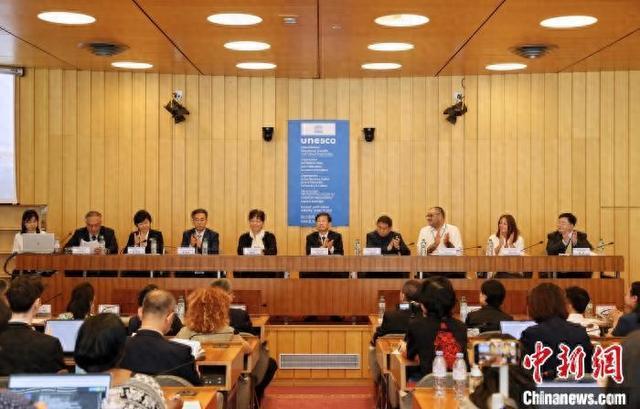
“数字技术服务世界遗产可持续发展” 边会暨北京中轴线论坛成功举办
Huan Qiu Wang Zi Xun· 2025-07-13 12:32
Core Viewpoint - The event "Digital Technology for Sustainable Development of World Heritage" was successfully held, highlighting the role of digital technology in the protection and management of world heritage sites [1][3][4]. Group 1: Event Overview - The event took place on July 12 at UNESCO headquarters in Paris during the 47th World Heritage Conference [1]. - It was co-hosted by HIST, UNOSAT, and other organizations, attracting over 120 representatives from more than 20 countries, including France, Bulgaria, Cambodia, Zimbabwe, and Mexico [4]. Group 2: Key Contributions and Recognitions - HIST's Director, Guo Huadong, emphasized the significant contributions of HIST to UNESCO's goals and the recognition of its Phase II development achievements [3]. - The Chinese National Commission for UNESCO expressed China's commitment to the World Heritage Convention and its support for heritage protection initiatives [3]. Group 3: Digital Technology Applications - The event showcased the importance of digital technology in the sustainable development of world heritage, with presentations on various case studies from organizations like Tencent and the International Centre for the Study of the Preservation and Restoration of Cultural Property [4]. - A report on the successful application for the Beijing Central Axis as a World Heritage site was released, along with the international version of the "Cloud Central Axis" app [4]. Group 4: HIST Background - HIST, established in July 2011 in Beijing, is the first UNESCO research institution based on space technology, aimed at providing support for the protection and management of world heritage sites [5].

“登”明代商船游万国 全景漫游莫高窟……走,去博物馆体验“穿越”之旅
Yang Shi Xin Wen· 2025-07-13 07:27
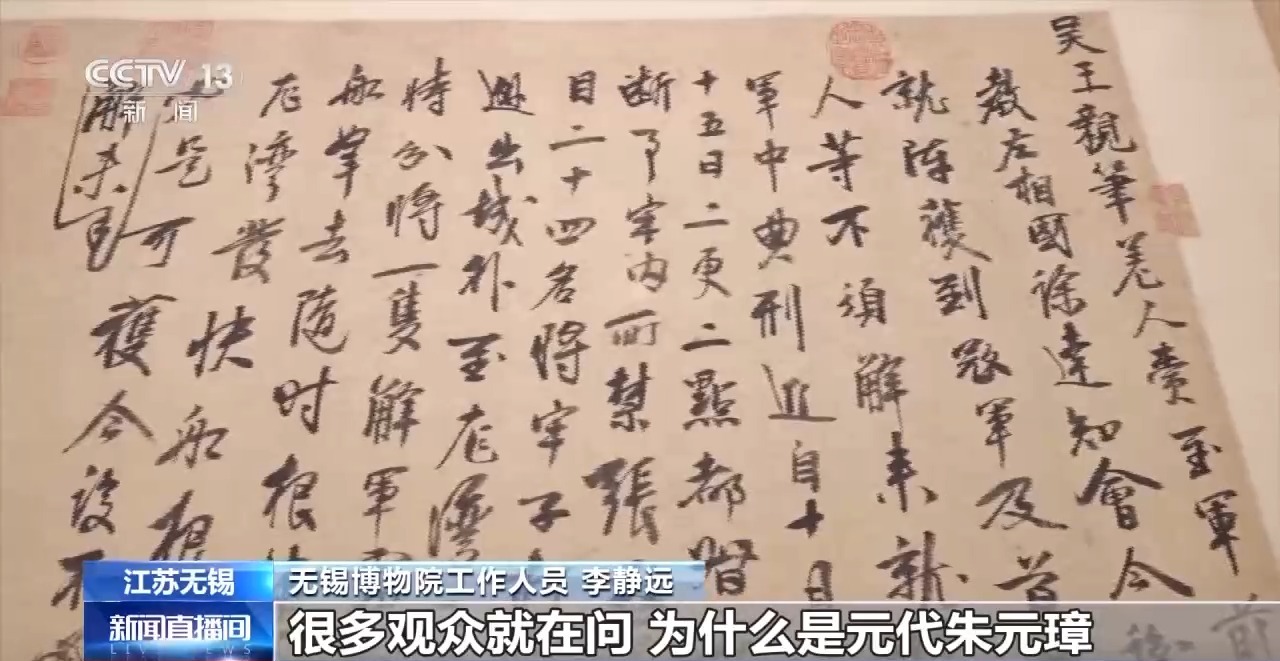
Group 1 - The article highlights the increasing popularity of museums during the summer, particularly focusing on the Wuxi Museum's exhibition that combines traditional art with modern technology [1] - The Wuxi Museum exhibition features over 60 pieces of fine cultural relics, including 13 first-class collections, primarily showcasing calligraphy and paintings [2][4] - A notable piece in the exhibition is a calligraphy scroll by Zhu Yuanzhang from the Yuan Dynasty, which is significant as it predates the establishment of the Ming Dynasty [3][4] Group 2 - The exhibition also includes other rare items such as a Ming Dynasty gold thread hair cover and Tang Yin's "Autumn Forest Walk" [7] - The museum employs digital technologies like AR, VR, and 3D modeling to create immersive experiences that allow visitors to engage with the cultural context of the artifacts [9] - The Nanjing Museum is also utilizing digital technology in its exhibition of the "Kunyu Wanguo Quantu," a Ming Dynasty world map, enhancing visitor understanding of its historical significance [10][11] Group 3 - The "Kunyu Wanguo Quantu" is noted as the earliest and most complete Chinese version of a world map, created in collaboration between Italian missionary Matteo Ricci and Ming scholar Li Zhizao [13][15] - The map features illustrations of both real and mythical creatures, reflecting the knowledge and imagination of the time [16] - The Nanjing Museum offers a VR immersive exhibition that allows visitors to experience the historical context of the map in a dynamic way [18][20] Group 4 - In Hangzhou, the Zhejiang Museum is showcasing an exhibition that combines physical artifacts with digital immersive experiences, featuring 81 items from various ancient caves [23][24] - The exhibition allows visitors to explore the evolution of cave art through VR technology, enhancing their understanding of the cultural heritage [26] - The curator emphasizes the integration of technology and content to make the artifacts more engaging and relatable to the audience [28]
上海国际金融中心一周要闻回顾(7月7日—7月13日)
Guo Ji Jin Rong Bao· 2025-07-13 07:20
Group 1: Key Meetings and Collaborations - Shanghai Mayor Gong Zheng met with Prudential Group CEO Huakang Yao, emphasizing the importance of financial openness and collaboration in asset management and green finance [2] - The Shanghai Financial Industry Association held a successful re-election meeting, with a focus on enhancing the role of the association in supporting economic development and financial innovation [3] Group 2: Policy and Regulatory Developments - The Shanghai Municipal Financial Office convened a meeting to convey the spirit of the 12th Municipal Committee's seventh plenary session, outlining future work deployment [4] - A notice was issued regarding the 2025 Shanghai Oriental Talent Plan, inviting applications for outstanding youth projects in the financial sector [5] Group 3: Financial Support Initiatives - Shanghai encourages financial institutions to provide seamless and non-repayment loans to small and medium-sized enterprises in the software and information services sector [6][7] - The Shanghai Futures Exchange released an international version of its business rules to facilitate high-level openness in the futures market [10] Group 4: Market Developments - The first batch of Sci-Tech Innovation Bond ETFs was established, with net subscription amounts exceeding 2.9 billion yuan [8] - The Shanghai Stock Exchange and Shenzhen Stock Exchange announced the upcoming launch of several specialized indices focusing on niche markets [9] Group 5: Financial Technology and Innovation - The Shanghai Financial Technology Innovation Regulatory Tool Workgroup announced the testing phase for six new innovative applications aimed at enhancing digital finance [11] - Shanghai Rural Commercial Bank issued a $30 million non-resident acquisition loan to support a domestic pharmaceutical company's cross-border acquisition [12] Group 6: Long-term Investment Regulations - The Ministry of Finance introduced new regulations for insurance companies to enhance long-term investment stability and sustainability [14] - The National Financial Supervision Administration released guidelines for the appropriate management of financial products to protect consumer rights [15]




2025年第9期数智新闻《数文新视界》
Qi Lu Wan Bao· 2025-07-11 12:11
Group 1: Digital Culture Innovations in Shandong - The Qilu Cultural Model has been selected as a major technological innovation project in Shandong Province, marking it as the only cultural project in the province's key research and development plan [1] - The project aims to address significant technological needs for economic and social development, focusing on breakthroughs in key technologies, innovative product development, and demonstration of innovative achievements [1] Group 2: Upgrades in Cultural Institutions - The online Shandong Anti-Japanese War Memorial Hall has undergone a comprehensive upgrade, set to open on July 7, featuring six core highlights including immersive experiences and interactive education [2] - The new museum integrates cutting-edge technologies such as the metaverse and AI to enhance historical narratives and visitor engagement [2] Group 3: Cultural Heritage and Digital Technology - The dance drama "The Great Dazhu" promotes the digital film set of the Dazu Rock Carvings at the Shanghai Cooperation Organization Film Festival, showcasing the realistic restoration of cultural heritage through virtual technology [2] - The "Buddhist Realm Dual Radiance" exhibition at the Wuxi Lingshan Museum utilizes 3D printing and virtual restoration technologies to recreate over 70 representative artifacts from the Longmen Grottoes, enhancing museum economics through digital innovation [2][3] Group 4: Museum Engagement and Visitor Experience - The Hunan Museum's "Digital Han Life" project employs AI to restore Han Dynasty clothing and 3D animations for immersive experiences, extending opening hours to accommodate increased visitor demand [3] - The "Future Cinema" unit at the Shanghai International Film Festival features immersive films, allowing audience interaction with characters through AR/VR technology [4] Group 5: International Collaborations in Cultural Heritage - Shiyou Technology has secured global development rights for Angkor Wat, planning to revitalize Angkor culture through virtual performances and cultural derivative products [6] - The first AI Art Exhibition in Nantes, France, explored the intersection of technology and culture, emphasizing AI as a creative tool rather than a replacement for human artistry [7] - China Silk Road Group launched a one-stop global cultural asset service platform during the Cyber Defense and Security Exhibition in Malaysia, integrating Web3.0 technologies to address digital protection and cross-border circulation of cultural heritage [7]
陈春花:今天影响组织选择的两个关键变量
Jing Ji Guan Cha Bao· 2025-07-10 09:06
Group 1: Key Variables Influencing Organizational Forms - The two critical variables affecting organizational choices today are the technological environment and the institutional environment [1] - The digital technology has become the foundational infrastructure for societal operations, leading to profound changes in organizational forms, productivity, and production relationships [2][3] - Human activities have expanded into the digital and virtual realms, allowing for direct participation in value creation across material production, interpersonal communication, and self-awareness activities [3][4] Group 2: Economic Value from Interpersonal Activities - The economic value generated from interpersonal activities has exceeded expectations, with live streaming as a prime example, creating a trillion-dollar market [4] - The rise of interpersonal activities has also highlighted the significance of self-awareness activities, as seen in young individuals creating sustainable living environments through digital technology [4][5] Group 3: Institutional Environment and Organizational Relationships - The choice of organizational forms is significantly influenced by the institutional environment, which emphasizes a "community of shared future for mankind" [6] - Companies are increasingly held accountable for social responsibility, which has become a key metric for performance evaluation [6][7] Group 4: Characteristics of Symbiotic Relationships - The core characteristics of symbiotic relationships in organizational structures include mutual relationships, resource sharing based on usage rights, information sharing for decision-making, and shared benefits and risks [7] - The shift from a focus on maximizing individual benefits to establishing sustainable symbiotic relationships is crucial for organizational stability [7][8] Group 5: Emergence of Symbiotic Relationships - The interplay of technological and institutional environments has led to the emergence of symbiotic relationships across industries and between enterprises and society [8] - There is a growing recognition of the need to view oneself within the broader context of societal and natural interconnections, reflecting traditional Chinese cultural values [8][9] Group 6: Transition to a Symbiotic Philosophy - The evolution of cognition necessitates a shift from adversarial relationships to symbiotic relationships for organizations to thrive in the digital age [9] - The "symbiotic philosophy" can be reinforced through mutual subjectivity, interactive effects, co-creation of value, and overall evolution of entities [10][11][12]
订单亮眼 产能扩张 并购火热 A股公司全球化布局多点开花
Shang Hai Zheng Quan Bao· 2025-07-09 18:22
Group 1: Core Insights - A-share companies are experiencing significant overseas expansion, with notable achievements in infrastructure, biomedicine, and equipment manufacturing, leading to large overseas orders [2][3] - The shift in Chinese enterprises' overseas strategy is moving from cost-driven to innovation-driven, leveraging advanced supply chains, international talent, and digital technologies [2] Group 2: Large Orders and Competitive Strength - A-share companies have secured substantial overseas contracts, particularly in the infrastructure sector, with notable projects including a $1.6 billion contract for a gas processing plant in Iraq and contracts totaling approximately 5.34 billion yuan for the China-Kyrgyzstan-Uzbekistan railway [3][4] - In the biomedicine sector, companies like Rongchang Bio are accelerating internationalization, exemplified by a licensing agreement with Vor Bio worth up to $4.1 billion [4] - Equipment manufacturing firms are also making strides, with agreements such as a $406 million contract for a conveyor system in Guinea, enhancing their international market presence [4] Group 3: Accelerated Overseas Capacity Layout - Several A-share companies are intensifying their overseas production capacity, viewing local production as a key driver for global competitiveness [6] - Companies like Linglong Tire are investing $1.193 billion in a production base in Brazil, aiming for an annual output of 14.7 million high-performance tires [6] - Other firms, such as North Special Technology and Zhongke Electric, are also establishing production bases in Thailand and Oman, respectively, to enhance their global supply chain [7] Group 4: Rising Trend of Overseas Mergers and Acquisitions - The number of disclosed overseas mergers and acquisitions by A-share companies has surpassed 60 in the first half of the year, with a focus on electronics, automotive parts, and machinery [9] - Companies are pursuing overseas acquisitions to enter emerging markets and enhance their technological capabilities, as seen with Dongshan Precision's dual acquisitions in the optical communication sector [9][10] - The strategy of overseas mergers and acquisitions is aimed at resource and market integration, with firms like Luoyang Molybdenum consolidating their overseas mineral resource reserves [10]






陕西中砚数智化科技有限责任公司成立,注册资本500万人民币
Sou Hu Cai Jing· 2025-07-09 12:57
Company Overview - Shaanxi Zhongyan Smart Technology Co., Ltd. has been established with a registered capital of 5 million RMB [1] - The legal representative is Guo Jinpeng, and the company is wholly owned by Shaanxi Zhongyan Hongsheng Energy Technology Co., Ltd. [1] Business Scope - The company’s business scope includes technology services, development, consulting, and transfer, as well as 5G communication technology services and digital technology services [1] - It also focuses on emerging energy technology research and development, sales of new energy power equipment, integrated circuit chip design, and various digital content services [1] - Additional areas of operation include artificial intelligence, big data services, smart agriculture management, and sales of smart home consumer devices [1] Regulatory Information - The company is classified under the national standard industry of scientific research and technical services, specifically in engineering and technical research and experimental development [1] - The business license allows for operations in various sectors, subject to approval for certain projects [1]
VR观展成常态 数字技术让文物“触手可及”
Zhong Guo Xin Wen Wang· 2025-07-09 01:22
Group 1 - The core viewpoint of the articles highlights the increasing integration of VR technology in cultural exhibitions, transforming the way audiences interact with historical artifacts and art [1][2] - The exhibition "相无古今——石窟艺术超感沉浸体验" in Hangzhou showcases the use of VR, XR, and MR technologies to recreate and present the essence of seven major grotto arts, allowing visitors to engage with the art in a more immersive manner [1] - The application of digital technologies in museums, such as the "良渚VR大空间·神纹之约" project, enables visitors to experience historical events and archaeological processes, thus enhancing the educational value of cultural heritage [2] Group 2 - The shift from traditional "one-way viewing" to "multi-dimensional participation" in exhibitions is driven by the demand for immersive and interactive experiences among audiences [2] - Experts emphasize the importance of balancing vividness and rigor in the application of digital technologies to ensure a positive interaction between technology and culture [2]
当文物“破壁”相会:数字技术重塑博物馆经济丨外滩消费志
2 1 Shi Ji Jing Ji Bao Dao· 2025-07-07 09:32
Core Viewpoint - The integration of digital technologies such as 3D printing and online scanning is transforming the museum experience, allowing for the virtual representation of cultural artifacts and enhancing audience engagement across distances [1][2]. Group 1: Exhibition and Technology - The "Dialogue Exhibition" at the Lingshan Museum features over 70 representative works from the Longmen Grottoes, utilizing 3D printing and line scanning technologies to create high-precision replicas [4][5]. - The exhibition employs virtual restoration techniques to recreate damaged artifacts and those lost overseas, showcasing the potential of digital technology in cultural preservation [5][9]. - The immersive experience is enhanced through AR and VR technologies, allowing visitors to engage with the art in a more interactive manner [6][7]. Group 2: Museum Economy and Market Potential - The museum economy is experiencing significant growth, with the number of exhibitions and educational activities increasing, leading to a 15.5% rise in visitor numbers to 1.49 billion in 2024 [1][9]. - Cultural and creative product sales reached 3.428 billion yuan, marking a 63.7% increase, indicating a robust market for museum-related merchandise [1]. - The development of diverse IP and cross-industry collaborations, such as those seen with the Sanxingdui Museum and the Palace Museum, highlights the potential for revenue generation through innovative product offerings [9][10]. Group 3: Challenges and Future Directions - The industry faces challenges such as the homogenization of experiences and the high costs associated with new technologies, which may hinder the effective integration of digital innovations [6][8]. - There is a need for a balance between technological advancement and cultural depth to ensure that digital narratives enhance rather than overshadow the cultural significance of artifacts [11].
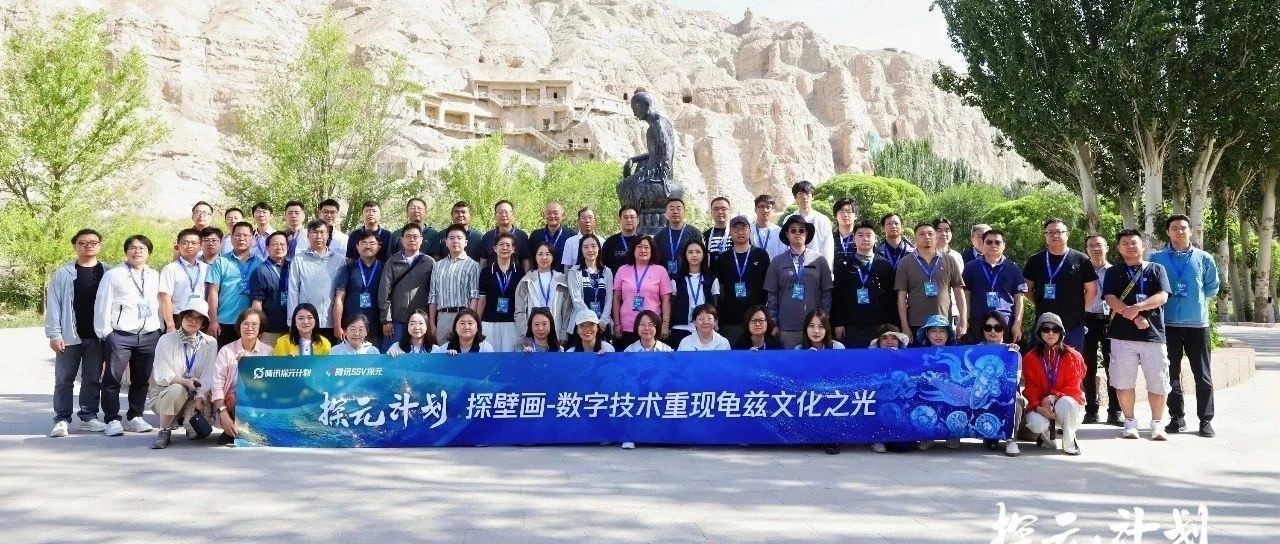
探元计划新疆站|太赫兹无损识别+AI补全壁画,助力克孜尔石窟数字保护
腾讯研究院· 2025-07-07 09:24
Core Viewpoint - The "Tanyuan Plan 2024" aims to leverage advanced digital technologies, including AI and terahertz time-domain spectroscopy, to enhance the preservation and restoration of the Kizil Grottoes, a significant cultural heritage site in Xinjiang, China [3][4][11]. Summary by Sections Event Overview - The "Tanyuan Plan 2024" co-creation camp was held in Kuqa, focusing on the identification and AI virtual restoration of the Kizil Grottoes' smoke-damaged murals, aiming to enhance technical effectiveness and explore cultural revitalization [1][4]. Historical Significance - Kizil Grottoes, established from the late 3rd century to the 8th-9th century, are among the earliest and most comprehensive grotto complexes in China, recognized as a national key cultural relic protection unit since 1961 and listed as a UNESCO World Heritage site in 2014 [3][4]. Technological Innovations - The Tanyuan Plan collaborates with various technical partners to utilize terahertz time-domain spectroscopy for non-destructive identification of murals, alongside AI technologies for virtual restoration, showcasing significant potential in cultural heritage preservation [4][20][21]. Expert Contributions - Experts from various institutions, including Zhejiang University and Tencent, are involved in the project, sharing insights on the application of AI and digital technologies in mural restoration and cultural heritage protection [4][15][20]. Collaborative Efforts - The event featured discussions on cross-disciplinary collaboration, emphasizing the integration of digital technologies in the protection and revitalization of Kizil Grottoes, aiming to create a replicable model for similar cultural heritage sites [17][30]. Future Directions - The project aims to establish a complete chain of "virtual restoration - academic research - public dissemination," facilitating the living inheritance of ancient civilizations and exploring new paths for the protection and revitalization of Chinese cultural heritage [30].