
普惠金融

Search documents
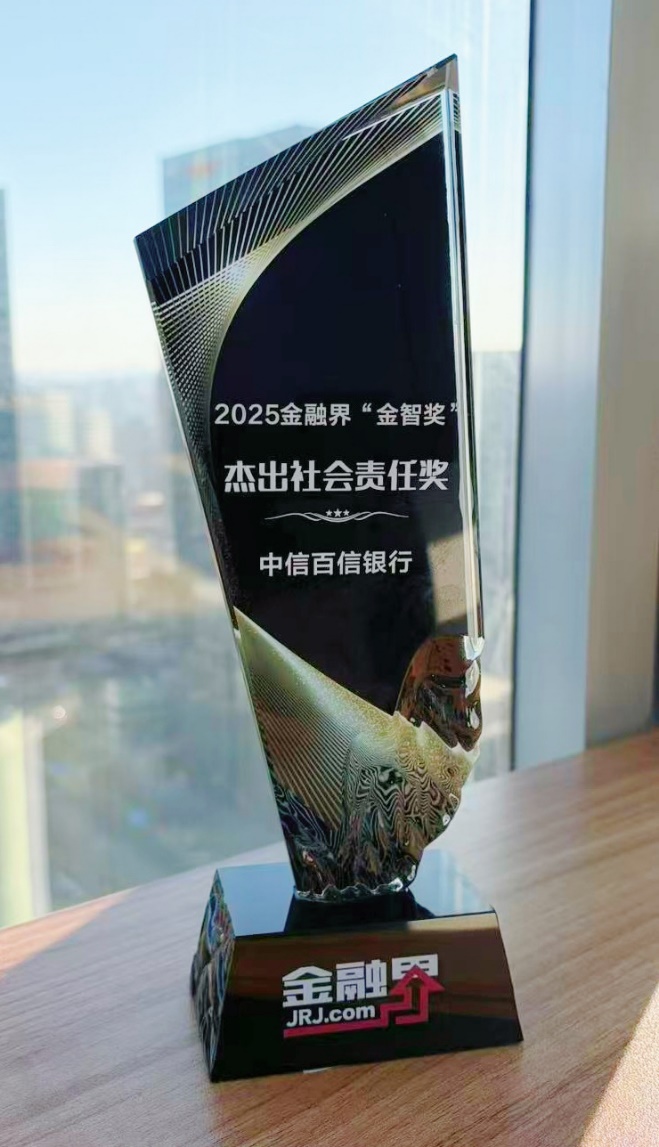
中信百信银行“看见一百个信心的朝向”普惠金融公益计划荣获“杰出社会责任奖”
Jin Rong Jie· 2025-12-30 10:11
Core Insights - CITIC Baixin Bank received the "Outstanding Social Responsibility Award" at the "Qihang·2025 Financial Annual Conference" for its innovative practices in promoting inclusive finance, recognizing its commitment to social responsibility and support for small and micro enterprises [1] Group 1: Public Welfare Promotion - The project "Seeing a Hundred Directions of Confidence" has focused on five typical small and micro enterprises in sectors such as catering, consumption, and technology innovation, generating over ten million exposures through various promotional activities [2] - The stories and promotional videos of these enterprises have gained significant attention and coverage from major media outlets, enhancing the visibility of small and micro businesses [2] - CITIC Baixin Bank initiated a recruitment plan for the inclusive finance brand promotion, encouraging more small business owners to participate and support business growth [2] Group 2: Policy Support and Product Services - CITIC Baixin Bank has launched the "Entrepreneurial Guarantee Loan" product, supported by government subsidies, to address the common financing challenges faced by small and micro enterprises [3] - The bank has introduced a fully online, unsecured "Business Loan" product, leveraging digital capabilities to streamline the application process and improve approval efficiency to a matter of minutes [3] Group 3: Technological Empowerment in Financial Services - The bank has developed the "Bailian System," a digital solution for small and micro enterprises, which utilizes digital credit and integrates multiple data sources to create a dynamic operational profile for businesses [4] - The automated operations of the system have improved overall approval efficiency by approximately 65%, with some scenarios allowing for funding within minutes [4] - The system dynamically adjusts credit limits and interest rates based on real-time business performance, enhancing the accessibility of inclusive financial services for small and micro enterprises [4]

海尔融资租赁:深耕普惠金融,助力中小微企业高质量发展
Zhong Guo Jin Rong Xin Xi Wang· 2025-12-30 10:07
作为国内领先的融资租赁企业,海尔融资租赁积极响应国家"做好普惠金融大文章"的号召,重点布局智 能制造、医疗健康、教育文化、农牧食品等领域,致力于为中小微企业提供专业化、定制化的综合金融 解决方案,助力企业突破发展瓶颈,推动普惠金融服务增量、扩面。 转自:新华财经 中小微企业是国民经济的重要基石,尤其在新兴产业中,它们以敏捷的反应能力和持续的创新活力,成 为推动经济高质量发展的关键力量。然而,融资难、融资贵始终是制约其成长壮大的突出瓶颈。在传统 信贷模式之外,以"融资+融物"为特色的融资租赁,因其灵活、贴合企业实际需求的特点,正日益成为 服务中小微企业、践行普惠金融的重要生力军。 这一企业服务的案例,只是海尔融资租赁服务万千中小微企业的一个缩影。自成立以来,海尔融资租赁 始终坚持将中小微企业作为重点服务客群,聚焦新材料、先进制造、电子信息、生物医药等战略新兴产 业和未来产业,围绕中小微企业设备更新核心需求,有效推动企业设备迭代与产业结构优化。截至2025 年上半年,公司累计服务小微企业4121家,投放金额超过98亿元。 坚守数字化创新路径,以科技赋能提升普惠金融服务质效 在普惠金融的实践中,如何优化服务效率、降 ...
中信银行郑州分行:金融赋能农业产业链发展
Xin Lang Cai Jing· 2025-12-30 08:48
Group 1 - The core viewpoint of the news is that CITIC Bank's Zhengzhou branch has launched the "Heart-to-Heart Fertilizer Scene Loan" business, which injects financial support into the agricultural industry chain through innovative financial solutions, demonstrating the bank's commitment to serving the real economy and promoting inclusive finance [1][2] - Heart-to-Heart Group is recognized as a leading enterprise in the agricultural sector, playing a crucial role in ensuring national food security and driving technological upgrades and green transformation in the fertilizer industry [1] - The bank has established a dedicated service team to address the financing challenges faced by enterprises and distributors, conducting in-depth research and creating a communication mechanism to enhance service efficiency and responsiveness [1] Group 2 - The successful launch of the "Heart-to-Heart Fertilizer Scene Loan" has effectively alleviated financing difficulties for Heart-to-Heart Group's distributors, reducing financing costs and providing solid financial support for inventory preparation and business expansion [1] - CITIC Bank's Zhengzhou branch is transitioning from a "product-driven" approach to a "scene-based ecological operation," aiming to create replicable and scalable inclusive financial service models [2] - The bank plans to seize opportunities during the peak season for agricultural inventory preparation, expanding the coverage of inclusive loans to provide more convenient and efficient financial services for the agricultural industry chain [2]

陆控获评“金骏马服务实体卓越机构”奖
Zheng Quan Ri Bao· 2025-12-30 08:41
Core Viewpoint - Shanghai Lufax Information Technology Co., Ltd. (Lufax) has been awarded the "Golden Horse Outstanding Institution for Serving the Real Economy" for its contributions to empowering small and micro enterprises through innovative financial services [2] Group 1: Financial Services Innovation - Lufax has upgraded its financing service brand to "Ping An Rongyi," focusing on the needs of small business owners and individual operators, utilizing a "technology + finance" dual-drive model to stimulate the real economy [2] - The company has implemented a "people + enterprise" risk control concept to create a comprehensive financing lifecycle management solution for small and micro enterprises, enhancing credit asset utilization and aligning financial services with industrial transformation [2] Group 2: Inclusive Finance and Digital Financial Services - Lufax has adopted a "three savings" service philosophy (saving worry, time, and money) and is driving its services through a dual-engine model of "micro financing + consumer finance," significantly improving accessibility and convenience of financial services [3] - By the end of Q3 2025, 13.68 million customers have received timely financing services from Ping An Rongyi [3] - The company is advancing its "AI in All" strategy, leveraging AI and big data to create a diverse intelligent service matrix, resulting in a 2.5 times increase in per capita productivity and a 75% improvement in review efficiency [3] Group 3: Green Development and Social Responsibility - Lufax is committed to the national "dual carbon" goals and has launched a "green finance +" action plan to support the development of green industries, including special financing solutions for electric vehicles [4] - The company has partnered with the China Women's Development Foundation to promote the "@Her Entrepreneurship Program," assisting over 2,500 rural women in developing unique industries, thereby activating rural economic vitality [4] - Lufax plans to continue focusing on key areas such as rural revitalization, green development, and technological innovation, aiming to contribute to high-quality financial development and the construction of a financially strong nation [4]
邮储银行洛阳市分行持续深化“阳光信贷”宣传活动
Huan Qiu Wang· 2025-12-30 07:52
Core Viewpoint - The Postal Savings Bank of China's Luoyang branch has been actively promoting the "Sunshine Credit" initiative since 2025 to enhance transparency in financial services and build public trust in credit operations [1][2] Group 1: Promotion Activities - The bank has implemented a multi-dimensional promotional model by engaging with business circles, enterprises, and service points to ensure comprehensive outreach [1] - A three-in-one promotional matrix has been established, centered around the bank's service points, incorporating "service points + halls + counters" [1] - The bank has set up thematic posters and animated videos in service points to visually present the entire credit application, approval, and disbursement process, making it easier for customers to understand the "Sunshine Credit" services [1] Group 2: Public Engagement and Transparency - The bank has proactively disclosed supervision and reporting channels, encouraging public participation in oversight to foster a community governance atmosphere [1] - Staff members distribute "Sunshine Credit Supervision Cards" to customers, providing detailed one-on-one explanations of loan application conditions, processes, and interest rate policies to ensure clear understanding of credit services [1] - The promotional activities have significantly increased awareness and transparency of the bank's credit services, demonstrating its commitment to inclusive finance and public service [2] Group 3: Economic Impact - The "Sunshine Credit" initiative is expected to promote more transparent, efficient, and secure financial services, thereby providing stronger financial support for the high-quality economic development of Luoyang City [2]

普惠金融—小微指数显示:2025年三季度,小微企业融资成本稳步下降
Zhong Guo Jing Ji Wang· 2025-12-30 05:22
Core Insights - The "Inclusive Finance - Micro and Small Enterprises Index" indicates a significant decrease in financing costs for micro and small enterprises by Q3 2025, with a continuous increase in funding supply and improved quality of financial services [1][2] Group 1: Financing Trends - By the end of September 2025, the balance of inclusive micro and small loans reached 36.1 trillion yuan, a year-on-year increase of 12.2%, driven by ongoing optimization of systems and innovation in products and services [1] - The financing supply index reached 209.45 points in Q3 2025, reflecting a quarter-on-quarter increase of 2.12%, indicating ample financing supply [1] - Over 70% of micro and small enterprises reported that the financing amounts met their needs, showing high satisfaction with financing [1] Group 2: Cost and Efficiency - The financing price index fell to 65.32 points, a decrease of 4.92% quarter-on-quarter, indicating a stable decline in comprehensive financing costs for inclusive micro and small enterprises [2] - The weighted average interest rate for newly issued loans in September was approximately 3.1%, down about 40 basis points from the same period last year [2] - The financing efficiency index rose to 215.09 points, with nearly 60% of micro and small enterprises able to receive loans in a timely manner, reflecting improved financing efficiency [2] Group 3: Financial Service Quality - The inclusive finance service index showed improvements in both accessibility and quality, with the accessibility index at 203.47 points (up 3.02% quarter-on-quarter) and the quality index at 111.76 points (up 0.31% quarter-on-quarter) [2] - The inclusive finance development index remained stable at 52.48 points, with a slight increase of 0.21% quarter-on-quarter, indicating a positive trend in the development of micro and small enterprises [3] - The business environment for micro and small enterprises continues to improve, with the inclusive finance - micro business index at 57.85 points, reflecting a slight increase of 0.02% quarter-on-quarter [3] Group 4: Sector Analysis - Financing price indices across five major sample industries (wholesale and retail, manufacturing, leasing and business services, construction, and scientific research and technical services) showed declines, indicating the effectiveness of accommodative monetary policies [3] - The accessibility and quality indices for financial services in these sectors also increased, with construction, manufacturing, and scientific research sectors seeing over 2% growth in accessibility [3]
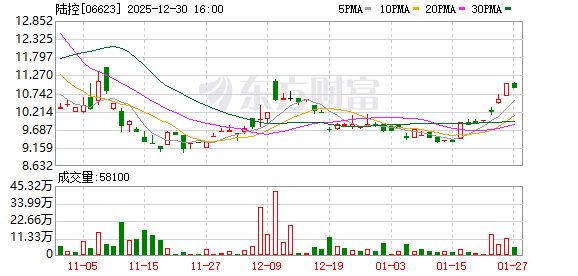
以“AI in ALL”打造金融“五篇大文章”样本丨陆控及旗下平安融易双双获评为年度优秀机构
2 1 Shi Ji Jing Ji Bao Dao· 2025-12-30 03:24
Core Insights - The company,陆控, has been recognized as the "Outstanding Digital Financial Institution of the Year" at the "2025 Financial Annual Conference" for its innovative practices in digital finance [1] - The company continues to implement its "AI in ALL" strategy, integrating digital finance, technology finance, and green finance into its inclusive finance operations [1] Group 1: Digital Technology and Innovation - The company leverages technologies such as artificial intelligence, cloud computing, blockchain, and big data to enhance its digital services, focusing on financing guarantees for local key industries and small micro-economies [2] - The recently launched "Yunfan" solution is the first AI-driven remote financing service in the non-bank credit sector, achieving a 158% increase in productivity through the use of AI coaches for customer service representatives [2] - The "Zhihun" project utilizes large model technology and machine learning to automate due diligence processes, reducing processing time by 90% and achieving a 93% accuracy rate in application dimensions [3] Group 2: Financial Services and Support - The "Prism" project aims to support local key industries by analyzing their financing needs and usage patterns, providing a comprehensive financial service ecosystem that addresses various financing challenges [3] - The "Smart Customer Service 3.0" initiative has improved customer service efficiency, increasing resolution rates by 2% and reducing the need for human intervention by 14%, while customer satisfaction rose from 80% to 85% [4] - The "Che e Loan" green financing program offers exclusive benefits for small micro-enterprises, facilitating access to lower financing rates for new energy vehicle owners, with over 4.22 billion yuan in loans disbursed by September 2025 [4] Group 3: Community Engagement and Support - The company emphasizes grassroots engagement by establishing a professional team that actively serves local small micro-economies, providing tailored financing solutions and support [5] - A case study highlights how the company assisted a cattle farmer in Shandong by providing 500,000 yuan in financing, resulting in a 50% increase in production capacity and a nearly 30% rise in income [6] - The company has partnered with the China Women's Development Foundation to support female entrepreneurship, distributing 43.1 million yuan in micro-loans to over 2,500 women, thereby promoting local employment and industry development [7]
精准施策提升小微企业融资效率
Jin Rong Shi Bao· 2025-12-30 02:07
Core Viewpoint - The Central Economic Work Conference emphasizes the need for financial institutions to enhance support for key areas such as expanding domestic demand, technological innovation, and small and micro enterprises in the 2026 economic work plan [1] Group 1: Financial Support for Small and Micro Enterprises - As of September 2025, the balance of inclusive micro and small loans reached 36.1 trillion yuan, reflecting a year-on-year growth of 12.2%, indicating effective financial support measures for small and micro enterprises [1] - The financing success for small and micro enterprises is characterized by increased volume, expanded coverage, and reduced costs, demonstrating the effectiveness of various financial support initiatives [1] - The emergence of many small and micro enterprises in new and future industries highlights their characteristics of being asset-light, high-tech, and high-growth, while also facing significant risks [1] Group 2: Credit Value and Information Sharing - The national platform for sharing credit information on cash flow for small and micro enterprises has established records for over 60 million enterprises, facilitating financing exceeding 1.1 trillion yuan [2] - The platform converts "data flow" into "credit flow" by analyzing cash flow and transaction data, enabling banks to assess creditworthiness more effectively [2] - Various regions are integrating government service data and intellectual property data to create comprehensive financing service platforms for small and micro enterprises, enhancing loan accessibility [2] Group 3: Transparency in Financing Costs - The People's Bank of China initiated a pilot program to clarify comprehensive financing costs for enterprises, promoting transparency and trust between banks and businesses [3] - The initiative has exposed hidden fees and reduced loan costs, improving overall satisfaction and trust among enterprises [3] - Some banks have begun to cover evaluation and pledge supervision fees, demonstrating a commitment to supporting the real economy [3] Group 4: Tailored Financial Products for Technology Enterprises - Financial institutions are adopting a "invest early, invest small, invest long-term, and invest in hard technology" approach, providing tailored financial products for technology-oriented small and micro enterprises [4] - Local governments are utilizing industry funds and loan interest subsidies to encourage financial institutions to increase support for small and micro enterprises [4] - Financial institutions are beginning to match financing products to the entire lifecycle of enterprises, offering specialized loans based on the qualifications and assets of key personnel [4] Group 5: Continuous Improvement in Financing Environment - The ongoing improvement in the financing environment is allowing more small and micro enterprises to experience supportive financial services [4] - Many regions are exploring successful experiences in breaking down information barriers and converting data into credit using big data and artificial intelligence [5] - There is a need for further institutional innovation to address the challenges of risk and return matching in financing [5]
山东聊城 深耕支付场景创新
Jin Rong Shi Bao· 2025-12-30 02:03
为推动普惠金融向纵深发展,中国人民银行聊城市分行深入践行"支付为民"理念,以支付场景建设为抓 手,聚焦惠农、便民、养老等重点领域,指导辖内银行机构与非银行支付机构打造了一系列特色鲜明、 成效显著的创新项目。 "我们始终把满足群众金融需求作为出发点和落脚点,以场景创新为突破口,不断扩大聊城普惠支付覆 盖面,提升服务可得性和满意度,让金融服务的便利与温度直达城乡末梢。"中国人民银行聊城市分行 党委委员、副行长郑晓敬表示。 便民升级:村口服务站打通"最后一公里" "以前卖菜过磅要记台账,对账要向收购商逐笔核对,耗时大半天不说,还容易出错。现在扫一下'过磅 牌',重量、金额直接同步到手机,钱当天就到账,还能查蔬菜卖到哪了!"在莘县香瓜蔬菜市场,菜农 王振国一边操作"农福商务通"平台的扫码功能,一边展示手机里的结算记录。 "把老人送到养老院,最担心的就是预交费的资金安全。万一机构经营出问题,辛苦攒的养老钱可能就 打了水漂。现在有了监管平台,费用按月划扣,我们做子女的也能安心了!"聊城市高新区养老院入住 老人王桂英的子女在了解"智慧养老预收费监管平台"后,彻底打消了顾虑。 立足县域特色农产品行业发展禀赋,中国人民银行聊城 ...
国泰海通获“金骏马服务实体卓越机构”奖
Zheng Quan Ri Bao Wang· 2025-12-29 13:42
站在新起点,国泰海通相关负责人表示,未来将强化打造一流投行的使命担当,持续优化体制机制,释 放融合新活力与新动能。通过实施更具系统性、变革性、前瞻性的战略举措,不断强化核心能力,构建 客户经营新模式与新优势,充分发挥先行探路、示范引领、辐射带动作用,助力全球要素资源向上海集 聚,持续提升上海国际金融中心建设能级,为中国资本市场高质量发展贡献更大力量。 2025年以来,国泰海通坚持以客户为中心,统筹整合融合与经营管理工作,主动服务国家和上海重大发 展战略,扎实做好科技金融、绿色金融、普惠金融、养老金融、数字金融"五篇大文章",巩固提升核心 竞争优势,经营业绩实现大幅增长。 本报讯 (记者张文湘 见习记者占健宇)近日,在《证券日报》社有限责任公司举办的"2025证券市场年 会暨2025金骏马颁奖典礼"上,国泰海通(601211)证券股份有限公司(以下简称"国泰海通")凭借在 服务国家战略、赋能实体经济等方面的突出实绩,成功获得"金骏马服务实体卓越机构"奖。 ...
