绿色消费

Search documents
商务部:将推进汽车流通消费改革试点
Xin Jing Bao· 2025-11-27 03:51
Core Viewpoint - The Ministry of Industry and Information Technology, along with five other departments, has issued a plan to enhance the adaptability of supply and demand for consumer goods, aiming to further stimulate consumption in China [1] Group 1: Automotive Sector - The Ministry of Commerce will promote reforms in automotive circulation, expand the second-hand car market, and develop the automotive aftermarket, including modifications, rentals, events, and RV camping [1] - Retail sales of passenger cars increased by 7.9% from January to October this year, indicating a sustained growth trend in the automotive sector [1] Group 2: Home Appliances and Furniture - Retail sales of home appliances, furniture, and communication equipment have grown by approximately 20% year-on-year for the same period, highlighting strong consumer demand in these categories [1] Group 3: New Consumption Models - The government will actively promote the "first launch economy," encouraging companies to release new products, open flagship stores, and host debut events [1] - There is a focus on developing health consumption and enhancing the quality of health-related goods and services [1] - The initiative also aims to foster digital and green consumption, integrating artificial intelligence with consumer trends to create new growth points [1]
韩晶:统筹生产生活向绿而行
Jing Ji Ri Bao· 2025-11-27 00:01
Core Viewpoint - The article emphasizes the dual approach of leveraging both "effective markets" and "proactive government" to support green low-carbon development, highlighting the importance of a collaborative effort in achieving sustainable growth [1][4]. Group 1: Green Production and Technology - Green production relies on technological innovation to replace high-carbon technologies with low-carbon or zero-carbon alternatives, which is essential for enhancing green supply [3]. - Countries are focusing on key emerging technologies related to renewable energy and low-carbon solutions, as seen in initiatives like the U.S. "Key and Emerging Technologies List 2024" and the EU's "Horizon Europe Strategic Plan 2025-2027" [3]. - There is a need to promote low-carbon technology applications and explore new energy storage solutions, such as virtual power plants, to advance clean production and circular economy practices [3]. Group 2: Green Consumption - The transition to low-carbon consumption depends on both green technologies that reduce energy consumption and the preservation of traditional green lifestyles [3]. - It is crucial to stimulate green consumption awareness and behaviors to enhance the scale and structure of green consumption [3]. - Initiatives promoting resource conservation and waste classification are essential for fostering a green lifestyle and building a beautiful China [3]. Group 3: Policy and Institutional Support - A robust institutional framework is necessary to support green low-carbon development, which includes effective market mechanisms and proactive government policies [4]. - Policies related to taxation, pricing, finance, land use, and government procurement should be aligned to facilitate green development [4]. - Establishing standards for green product design, procurement, and manufacturing, along with a certification system, is vital to eliminate misleading green claims [4].
统筹生产生活向绿而行
Jing Ji Ri Bao· 2025-11-26 22:39
Core Viewpoint - The article emphasizes the dual approach of leveraging both "effective markets" and "proactive government" to support green low-carbon development, highlighting the importance of a collaborative effort in achieving sustainable growth [1][4]. Group 1: Green Production and Technology - Green production relies on technological innovation to replace high-carbon technologies with low-carbon or zero-carbon alternatives, which is essential for improving green supply [3]. - Countries are focusing on key emerging technologies related to renewable energy and low-carbon solutions, as seen in initiatives like the U.S. "Critical and Emerging Technologies List 2024" and the EU's "Horizon Europe Strategic Plan 2025-2027" [3]. - There is a need to promote low-carbon technology applications and explore new energy storage solutions, such as virtual power plants, to enhance the green transformation of traditional industries [3]. Group 2: Green Consumption - The transition to low-carbon consumption depends on both green technologies that reduce energy consumption and the preservation of traditional green lifestyles [3]. - There is a call to stimulate green consumption awareness and behavior, which will lead to an increase in the scale and structure of green consumption [3]. - Initiatives to promote green living, such as advocating for food, water, and energy conservation, as well as waste sorting, are essential for building a sustainable society [3]. Group 3: Policy and Institutional Support - Strengthening institutional support for green low-carbon development involves utilizing various policy tools, including fiscal, pricing, financial, and procurement policies, to create a conducive environment for green initiatives [4]. - Establishing standards for green product design, procurement, and manufacturing, along with enhancing certification and labeling systems, is crucial to eliminate misleading green claims [4]. - The article advocates for the effective use of market mechanisms, such as carbon trading and green finance policies, to guide resources towards green low-carbon development [4].
刚刚,利好来了!多股突然爆发,涨停
Mei Ri Jing Ji Xin Wen· 2025-11-26 08:24
Core Viewpoint - The implementation plan aims to enhance the adaptability of supply and demand for consumer goods, further promoting consumption in China, with a focus on innovation, product quality, and market segmentation [1][4][16]. Group 1: Key Tasks - The plan outlines five main areas with 19 key tasks to boost consumption [4]. - The first area focuses on expanding new technologies and innovative applications, including the promotion of efficient manufacturing models and the integration of artificial intelligence [5][18]. - The second area emphasizes deepening the supply of unique and new products, such as green products and health innovations [5][20][22]. - The third area targets market segmentation to meet diverse consumer needs, including enhancing offerings for children, students, and the elderly [6][24]. - The fourth area aims to cultivate new consumption scenarios and business models, promoting flagship stores and new retail formats [7][26]. - The fifth area seeks to optimize the development environment through financial support and market regulation [8][28]. Group 2: Goals and Future Outlook - By 2027, the plan aims to optimize the structure of consumer goods supply, creating three trillion-level consumption sectors and ten hundred-billion-level consumption hotspots [17]. - By 2030, a high-quality development pattern of mutual promotion between supply and consumption is expected to be established, with a steady increase in consumption's contribution to economic growth [17]. Group 3: Market Reaction - Following the announcement of the plan, retail concept stocks surged, with companies like Dongbai Group and Guoguang Chain experiencing significant stock price increases [9].


突然爆发!涨停!刚刚,利好来了!
Zheng Quan Shi Bao· 2025-11-26 07:21
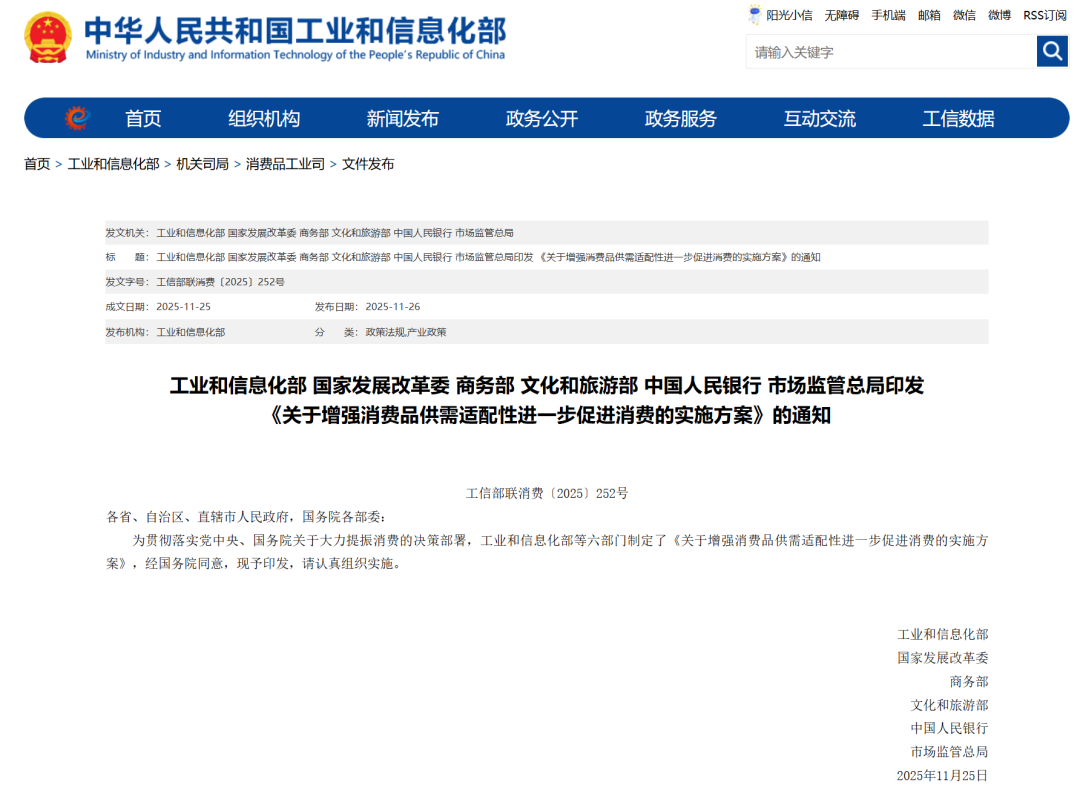
利好来了。 日前,经国务院同意,工业和信息化部、国家发展改革委、商务部、文化和旅游部、中国人民银行和市 场监管总局联合印发《关于增强消费品供需适配性进一步促进消费的实施方案》(以下简称《方 案》),以消费升级引领产业升级,以优质供给更好满足多元需求,实现供需更高水平动态平衡。这是 党的二十届四中全会召开后首个印发的关于促消费政策文件。 《方案》提出,到2027年,消费品供给结构明显优化,形成3个万亿级消费领域和10个千亿级消费热 点,打造一批富有文化内涵、享誉全球的高品质消费品;到2030年,供给与消费良性互动、相互促进的 高质量发展格局基本形成,消费对经济增长的贡献率稳步提升。 《方案》部署了5方面19项重点任务。一是拓展增量,加速新技术新模式创新应用,包括加快布局新领 域新赛道、推广高效响应制造新模式、强化人工智能融合赋能等。二是深挖存量,扩大特色和新型产品 供给,包括促进绿色产品扩容迭代、推动农村消费品提质升级、大力发展休闲和运动产品、推动健康产 品创新发展、扩大历史经典名品影响力、拓展多元兴趣消费供给等。三是细分市场,精准匹配不同人群 需求,包括丰富婴童产品供给、加强优质学生用品供给、扩大时尚"潮品" ...
突然爆发!涨停!刚刚,利好来了!
证券时报· 2025-11-26 07:04
利好来了。 日前,经国务院同意,工业和信息化部、国家发展改革委、商务部、文化和旅游部、中国人民银行和市场监管总局联合印发《关于增强消费品供需适配性进一步促 进消费的实施方案》(以下简称《方案》),以消费升级引领产业升级,以优质供给更好满足多元需求,实现供需更高水平动态平衡。这是党的二十届四中全会召开 后首个印发的关于促消费政策文件。 《方案》提出,到2027年,消费品供给结构明显优化,形成3个万亿级消费领域和10个千亿级消费热点,打造一批富有文化内涵、享誉全球的高品质消费品;到 2030年,供给与消费良性互动、相互促进的高质量发展格局基本形成,消费对经济增长的贡献率稳步提升。 《方案》部署了5方面19项重点任务。一是拓展增量,加速新技术新模式创新应用,包括加快布局新领域新赛道、推广高效响应制造新模式、强化人工智能融合赋 能等。二是深挖存量,扩大特色和新型产品供给,包括促进绿色产品扩容迭代、推动农村消费品提质升级、大力发展休闲和运动产品、推动健康产品创新发展、扩 大历史经典名品影响力、拓展多元兴趣消费供给等。三是细分市场,精准匹配不同人群需求,包括丰富婴童产品供给、加强优质学生用品供给、扩大时尚"潮品"供 给、 ...

事关促消费,六部门印发重磅文件
财联社· 2025-11-26 06:56
工业和信息化部、国家发展改革委、商务部、文化和旅游部、中国人民银行、市场监管总局印发《关于增强消费品供需适配性进一步促进消 费的实施方案》。方案指出,到2027年,消费品供给结构明显优化,形成3个万亿级消费领域和10个千亿级消费热点,打造一批富有文化 内涵、享誉全球的高品质消费品。到2030年,供给与消费良性互动、相互促进的高质量发展格局基本形成,消费对经济增长的贡献率稳步 提升。 工业和信息化部 国家发展改革委 商务部 文化和旅游部 中国人民银行 市场监管总局印发《关于增强消费品供需适配性进一步促进消费的实 施方案》的通知 各省、自治区、直辖市人民政府,国务院各部委: 为贯彻落实党中央、国务院关于大力提振消费的决策部署,工业和信息化部等六部门制定了《关于增强消费品供需适配性进一步促进消费的 实施方案》,经国务院同意,现予印发,请认真组织实施。 工业和信息化部 国家发展改革委 商务部 文化和旅游部 中国人民银行 市场监管总局 2025年11月25日 / / 关于增强消费品供需适配性进一步促进消费的实施方案 / / 为贯彻落实党中央、国务院关于大力提振消费的决策部署,增强供给与需求的适配性,进一步释放消费潜力, ...

旧衣回收不能背离环保初心
Bei Jing Qing Nian Bao· 2025-11-24 10:11
Core Viewpoint - The second-hand clothing recycling industry is facing significant issues such as misleading price estimates and vague quality inspection standards, leading to consumer dissatisfaction and potential exploitation [1][2][3] Group 1: Industry Issues - The industry has seen a rise in complaints regarding discrepancies between estimated and actual payout for recycled clothing, with examples of consumers receiving as little as 0.7 yuan for items initially valued at up to 200 yuan [1] - Platforms often use vague criteria like "dirty or damaged" to determine the quality of clothing, allowing them to manipulate acceptance rates and control costs [2] - Some platforms operate without proper business registration and continue to function despite being listed in abnormal business records, indicating a lack of regulatory oversight [2] Group 2: Consumer Challenges - Consumers face significant barriers in asserting their rights, including difficulties in providing evidence, high costs, and lengthy processes [2] - The lack of transparency in quality inspection standards puts consumers at a disadvantage during disputes, while platforms often delay responses to complaints, effectively cutting off avenues for redress [2] Group 3: Proposed Solutions - Establishing a unified national standard for clothing classification and quality inspection is essential, including clear metrics for material, brand, and condition [3] - Implementing a qualification review and dynamic exit mechanism for recycling companies, particularly those with high complaint rates, is necessary to ensure accountability [3] - Enhancing consumer protection by requiring platforms to provide inspection reports before processing clothing and introducing a "first compensation" mechanism to facilitate claims [3]
以旧换新与智性消费共振,二手电商进入“结构化增速”
美股研究社· 2025-11-21 07:36
Core Viewpoint - The article highlights the significant growth of the second-hand electronics market driven by the new smartphone release cycle and government subsidy policies, positioning second-hand e-commerce as a crucial player in the circular economy [3][5][18]. Group 1: Market Dynamics - The upcoming releases of flagship smartphones like Xiaomi 17 and iPhone 17 are expected to trigger a new wave of device upgrades, benefiting the entire consumer electronics supply chain [3]. - The second-hand e-commerce sector, particularly companies like Wanwu Xingsheng (Ai Huishou), reported a total revenue of 5.15 billion yuan in Q3, a year-on-year increase of 27.1%, with non-GAAP operating profit reaching 140 million yuan, up 34.9% [3][5]. - The demand for second-hand devices is being fueled by a combination of AI advancements and the accelerated turnover of old devices, with consumers increasingly willing to trade in their old devices as part of a rational spending strategy [3][5]. Group 2: Policy and Consumer Behavior - The introduction of national subsidies for mobile and other 3C products has stimulated upgrade demand, with retail sales of communication devices increasing by 19.9% year-on-year in the first three quarters [5][6]. - Young consumers are shifting their perception of second-hand transactions from a sign of financial struggle to a rational decision that reflects environmental consciousness and consumer intelligence [6][20]. - Following the launch of the iPhone 17, search volume for second-hand Apple phones surged by 150%, and inquiries for device recycling increased by 210% [6]. Group 3: Industry Transformation - Second-hand e-commerce is evolving from a supplementary role in the consumer electronics market to a strategic hub for product circulation, supported by government initiatives to standardize second-hand goods transactions [7][9]. - The industry is expected to transition from reliance on subsidies to sustained demand driven by consumer habits and technological advancements [7][9]. - The second-hand market is becoming a vital part of the modern consumption system, necessitating platforms to enhance their capabilities in supply chain management and quality assurance [9][12]. Group 4: Technological Advancements - The integration of AI and automation in quality inspection and pricing processes is crucial for scaling the second-hand market, with Wanwu Xingsheng's Matrix system recognized for its contribution to waste reduction [13][15]. - The company has expanded its offline presence to 2,195 stores across 298 cities, enhancing its delivery capabilities and customer experience [12][15]. - The growth of the second-hand market is also reflected in the significant increase in compliance refurbishment revenue, which rose by 102% year-on-year [16]. Group 5: Circular Economy and Future Outlook - The second-hand market is positioned as a structural winner in the dual trends of a "stock society" and a circular economy, with the potential for significant growth as consumer awareness of resource efficiency increases [18][19]. - The expansion of multi-category recycling services has led to a 95% year-on-year increase in transaction volume for high-value items like luxury goods [19][23]. - The article emphasizes that the second-hand e-commerce sector is not just a business but a narrative about resource efficiency, consumer rationality, and sustainable growth [23].


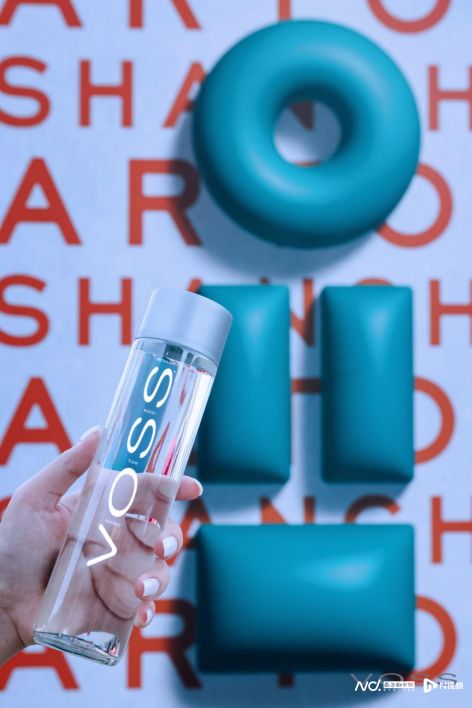
从挪威岩层到中国秘境,VOSS以“替塑”行动推动绿色转型
Nan Fang Du Shi Bao· 2025-11-21 04:52
Core Insights - VOSS, a high-quality drinking water brand from Norway, is leading the green transformation in the industry by launching recyclable aluminum can packaging for its sparkling mineral water in China, promoting a "plastic replacement" initiative [1] - The brand emphasizes "high quality and sustainability" as its dual engines, continuously innovating in product and experience while focusing on quality, scenarios, and environmental protection [1][3] Brand Values - VOSS's brand narrative reflects a deep dialogue from the Norwegian rock layers to urban life, encapsulating three core values: "natural purity," "pioneering spirit," and "calmness" [3] - The brand's commitment to local development is highlighted by its choice of Shennongjia in Hubei as its only recognized natural mineral water source outside Norway since 2016, ensuring a balance between quality and nature [3] Market Trends - The Chinese market is shifting from "functional consumption" to "quality consumption," with consumers increasingly concerned about the source, composition, and environmental attributes of water [7] - VOSS sees opportunities in enhancing daily experiences into more ritualistic and quality-oriented moments, particularly in fine dining and high-quality lifestyle scenarios [9][11] Sustainability Initiatives - VOSS is committed to long-term practices in water source management, ecological protection, green packaging, and corporate social responsibility [4] - The brand's focus on "design aesthetics + sustainable responsibility" is evident in its use of recyclable aluminum cans, making sustainability a visible and participatory aspect for consumers [9][11] Future Strategies - VOSS plans to focus on three key areas in the Chinese market: maintaining high-quality water sources that reflect Nordic purity, enhancing channel collaboration to solidify its positioning in high-end hotels and fine dining, and integrating high-quality lifestyle attitudes with social responsibility [12]