太空算力

Search documents
中科星图副总裁、商业航天战略部总经理郝雪涛:太空算力“一张网”重塑智能应用新生态
Zheng Quan Ri Bao Zhi Sheng· 2025-12-23 16:13
Core Viewpoint - China's commercial space industry is transitioning from "experimental exploration" to "ecosystem construction," marking a new development phase for companies like Zhongke Xingtu Co., Ltd. [1] Group 1: Strategic Direction - Zhongke Xingtu aims to occupy a significant position in the commercial space industry under its "one body, two wings" strategy, focusing on space cloud computing as a new development opportunity [1] - The company plans to leverage its technological advantages in the space cloud constellation field to gain a favorable position in the space computing sector [1] Group 2: Space Computing Development - Space computing involves deploying computational resources in space to enhance data processing and analysis capabilities, particularly benefiting the AI industry [1] - Zhongke Xingtu is developing a space computing network in collaboration with Sugon Information Industry Co., Ltd., aiming to create a "space-ground integrated" intelligent computing architecture [2] Group 3: Technical Challenges - The development of space computing faces several technical challenges, including energy utilization, efficient heat dissipation, radiation-resistant chips, stable data computation, and space debris avoidance [3] - The company recognizes that reducing satellite launch costs is crucial for domestic commercial space development, advocating for focused R&D on reusable rocket technology and standardized satellite production [3] Group 4: Market Expansion - The satellite application market is expanding, driven by increasing demand from industries like low-altitude economy and autonomous driving, which require enhanced satellite data capabilities [4] - Zhongke Xingtu aims to transition satellite data from mere collection to "edge intelligence," enhancing the efficiency of satellite data usage [4] Group 5: Full Industry Chain Layout - Zhongke Xingtu is actively expanding its capabilities across the entire commercial space industry chain, from upstream satellite constellation design to downstream satellite application [5] - The company is investing in upstream satellite rocket component manufacturers to strengthen its aerospace electronic equipment manufacturing capabilities [5] Group 6: International Market Strategy - Zhongke Xingtu plans to leverage its autonomous space information service system for global expansion through technology export and localized innovation [6]

钧达股份:全球低轨卫星规划总量已突破10万颗,标志着行业正式迈入密集组网与规模化发展新阶段
Zheng Quan Ri Bao Wang· 2025-12-23 14:12
Core Viewpoint - The global low Earth orbit (LEO) satellite constellation deployment and space computing industry are entering a phase of explosive growth, positioning the space economy as a core arena for reshaping global technological competition [1] Industry Summary - According to the International Telecommunication Union (ITU), the total planned number of global low Earth orbit satellites has surpassed 100,000, marking a new stage of dense networking and large-scale development in the industry [1] - The functionality of low Earth orbit satellites is continuously upgrading, expanding from remote sensing and communication to on-orbit AI training and low-latency edge computing tasks, which increases the demand for satellite energy to be "lightweight and high-efficiency" [1] Company Summary - As AI computing clusters rapidly expand, ground computing is facing dual challenges of energy supply and heat dissipation efficiency, with power and cooling demands expected to exceed the capacity of existing ground facilities, making space computing a critical solution [1] - The prospects for explosive growth in space computing are clear, indicating significant investment opportunities in this sector [1]

商业航天明年还有催化,“十五五”首个国际性产业盛会将举办,超75%国内火箭企业有望出席
Xuan Gu Bao· 2025-12-23 08:02
Event Overview - The 2026 Beijing International Commercial Aerospace Exhibition will be held from January 23 to 25, 2026, at the Yichuang International Convention Center in Beijing, co-hosted by the Zhongguancun Yichuang Commercial Aerospace Alliance and Beijing Yichuang Star Arrow Technology Development Co., Ltd. [1] - This exhibition marks the first international commercial aerospace event in the "14th Five-Year Plan" period, aiming to create a platform for the entire industry chain and is expected to gather over 75% of leading domestic rocket manufacturing companies, with more than 300 exhibitors and over 20,000 professional visitors [1][2] Exhibition Highlights - The exhibition will feature four core areas: satellite manufacturing, rocket and launch systems, aerospace applications, and aviation services and support [2] - The third Beijing Commercial Aerospace Industry High-Quality Development Conference will take place concurrently, showcasing the latest innovations in the industry through reports, roundtable discussions, and project signings [2] Global Competition Acceleration - In December 2025, the Zhuque-3 rocket successfully completed its maiden flight, and China has launched several satellites, including the Resource-3 04 satellite and a constellation of low-orbit satellites [3] - Internationally, significant developments include Trump's reaffirmation of the goal to return to the Moon by 2028, SpaceX's plans for an IPO with a target valuation of approximately $1.5 trillion, and advancements in satellite technology by companies like Starcloud and Google [3] Market Growth Projections - According to a report by the Ministry of Industry and Information Technology, China's commercial aerospace market is expected to exceed 2.5 trillion yuan by 2025, with annual output value in rocket launches and satellite manufacturing projected to reach 85 billion yuan by 2030 [4] - The maturation of reusable rocket technology is anticipated to enable China to achieve 100 launches per year by 2030, with a cost of approximately 10 million yuan per launch [4] Industry Chain Companies - In the upstream sector, key players in rocket manufacturing include Superjet Co., Srey New Materials, Aerospace Power, and others, focusing on rocket structure components and engine support [7] - In satellite manufacturing, China Satellite is a leading company, with others like Guobo Electronics and Zhenlei Technology possessing core technologies in satellite payloads [7] Midstream and Downstream Services - The midstream sector benefits from increased launch frequency, with companies providing rocket launch and recovery services, while ground equipment providers like Haige Communication and Zhongke Xingtai offer ground control and data processing services [8] - Downstream applications focus on satellite communication, remote sensing, and navigation, with companies in the low-altitude economy, such as Lijun Co. and Weihai Guotai, also benefiting from industry integration [9]


开源证券:太空算力有望推动商业航天产业变革 可复用火箭是规模化应用关键
智通财经网· 2025-12-23 03:04
Group 1 - The core viewpoint is that policy and industry collaboration is driving a new turning point for China's commercial aerospace sector [1] - The expected operational cost of China's ultimate space computing power is projected to be only 1/12 of that on the ground, indicating significant economic value [2] - The successful vertical recovery test of the Zhuque-3 rocket and the imminent maiden flight of the Long March 12A rocket highlight advancements in reusable rocket technology [1][3] Group 2 - The commercial aerospace sector's large-scale application heavily relies on low-cost and high-frequency launch capabilities, with reusable rockets being crucial [3] - By 2030, China is expected to achieve 100 launches per year at a cost of approximately 10 million yuan per launch, with the annual output value of rocket launches and satellite manufacturing reaching 85 billion yuan [3] - The development of space computing power is anticipated to provide a new path for forming an economic closed loop in China's commercial aerospace sector [2] Group 3 - Beneficiary companies in the commercial rocket sector include Superjet, Srey New Materials, Aerospace Power, and others [4] - Satellite payload companies include China Satellite, Guobo Electronics, and others [4] - Downstream application companies include Haige Communication, Zhongke Xingtou, and others [4]
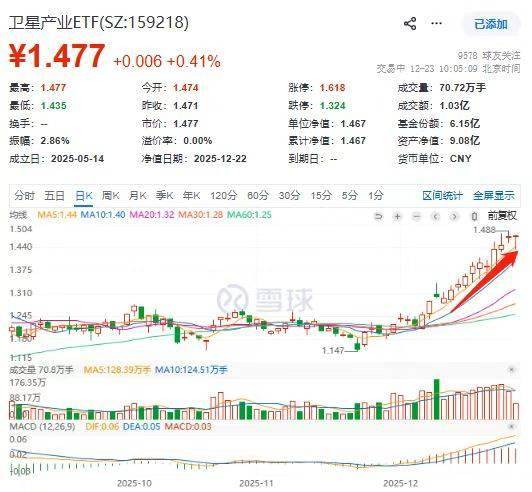
强势翻红冲击11连阳!卫星产业ETF(159218)升势不止,中国卫星涨6.15%再创10年新高
Sou Hu Cai Jing· 2025-12-23 02:27
国金证券发布研究报告称,在商业航天领域,SpaceX已成全球商业航天风向标,马斯克着手规划太空 算力蓝图。我国在"十五五"规划建议明确将航空航天列为战略性新兴产业集群重点发展方向,近期可复 用火箭密集发射,星网与千帆星座加速组网。无论从海外映射亦或是国内催化来看,商业航天产业趋势 已迎奇点时刻。 12月23日,卫星板块触底反弹再度走强。数据显示,截至10时5分,卫星产业ETF(159218)放量涨 0.27%,盘中冲击十一连阳;权重股中国卫星涨6.15%,再刷历史新高! 风险提示:基金有风险,投资需谨慎。 ...

低轨卫星+太空算力双轮驱动,太空光伏远期市场可观,科创新能源ETF(588830)备受关注
Xin Lang Cai Jing· 2025-12-23 01:48
Group 1 - Strategic cooperation agreement signed between Junda Co. and Shangyi Optoelectronics to explore the application of perovskite battery technology in space energy [1] - The low Earth orbit satellite and space computing power are expected to drive a significant market for space photovoltaics, with an estimated launch of around 15,000 satellites by 2030, potentially generating a total power output of 150 MW [1] - The market space for space photovoltaics is projected to be substantial, with Musk proposing the deployment of 100 GW of AI computing power in space annually [1] Group 2 - Gallium arsenide is currently the mainstream technology for space photovoltaics, offering advantages in efficiency and radiation resistance, but is expensive for large-scale applications [1] - Crystalline silicon technology is cost-effective for large-scale deployment, with enhancements in radiation resistance and power density expected from HJT technology [1] - Perovskite technology may be a long-term option, with potential conversion efficiencies exceeding 30% and superior power density compared to crystalline silicon and gallium arsenide [1] Group 3 - The Sci-Tech Innovation Board New Energy ETF closely tracks the Shanghai Stock Exchange Sci-Tech Innovation Board New Energy Index, which includes 50 major companies in the photovoltaic, wind power, and new energy vehicle sectors [2] - As of November 28, 2025, the top ten weighted stocks in the index include companies like Canadian Solar, Trina Solar, and JinkoSolar, collectively accounting for 47.84% of the index [2]





钧达股份:低轨卫星功能升级对星载能源 “轻质量、高效率”的诉求持续升级
Zheng Quan Shi Bao Wang· 2025-12-23 01:08
Core Viewpoint - The space photovoltaic market is entering a rapid growth phase driven by the deployment of low Earth orbit (LEO) satellite constellations and the burgeoning space computing industry, positioning the space economy as a key arena in reshaping global technological competition [1] Industry Summary - The total planned number of global low Earth orbit satellites has surpassed 100,000, indicating a new phase of dense networking and large-scale development in the industry [1] - The functionality of low Earth orbit satellites is continuously upgrading, expanding from remote sensing and communication to high-computing tasks such as on-orbit AI training and low-latency edge computing, which increases the demand for lightweight and high-efficiency energy solutions [1] - The rapid expansion of AI computing clusters is leading to energy supply and heat dissipation challenges for ground computing, with power and cooling demands exceeding the capacity of existing ground facilities, making space computing a critical solution [1]
钧达股份(002865) - 002865钧达股份投资者关系管理信息20251223
2025-12-22 23:34
证券简称:钧达股份 证券代码:002865 问题四:钙钛矿电池在太空应用有什么优势? 投资者关系活动类别 □ 特定对象调研 ☑ 分析师会议 □ 媒体采访 □ 业绩说明会 □ 新闻发布会 □ 路演活动 □ 现场参观 □ 其他(请文字说明其他活动内容) 参与单位名称及人员姓名 东吴证券股份有限公司徐铖嵘;民生证券股份有限公司林誉韬; 天风证券股份有限公司敖颖晨;中信证券股份有限公司吴子祎; 长江证券股份有限公司任佳惠;中信证券股份有限公司林劼;山 西证券股份有限公司肖索;中国国际金融股份有限公司胡子慧; 广发证券股份有限公司邹昱旻;天风证券股份有限公司艾方好; 西部证券股份有限公司杨敬梅;万家基金管理有限公司陈飞达; 平安资产管理有限责任公司李文杰;华福证券有限责任公司卢大 炜;汇添富基金管理股份有限公司李宁;华泰证券股份有限公司 宫宇博;中信建投证券股份有限公司任佳玮;财通证券股份有限 公司李晨;东方财富证券股份有限公司朱晋潇;光大证券股份有 限公司郝骞;开源证券股份有限公司周航;上海申银万国证券研 究所有限公司马天一;兴业证券股份有限公司杨森;交银施罗德 基金管理有限公司费琼艳;摩根士丹利基金管理(中国)有限 ...
运力瓶颈突破在即,商业航天投资主线明确,航空航天ETF(159227)布局价值凸显
Mei Ri Jing Ji Xin Wen· 2025-12-22 06:27
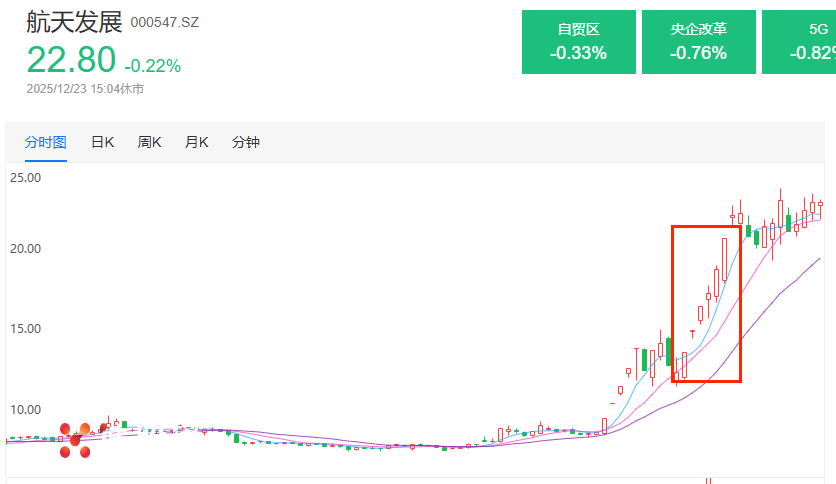
Group 1 - The Aerospace ETF (159227) has a slight increase of 0.08% as of December 22, with a trading volume of 229 million yuan, maintaining its position as the largest in its category. The latest fund size reached a new high of 2.177 billion yuan [1] - China's two major satellite constellations, the State Grid Constellation (GW Constellation) and the Qianfan Constellation, have successfully launched 16 and 6 groups of satellites respectively, significantly increasing launch frequency and the number of satellites in orbit. By 2025, China's commercial space industry is expected to achieve breakthroughs across the entire satellite manufacturing, launching, networking, and application chain [1] - CITIC Securities indicates that by December 2025, SpaceX will have successfully launched 3,095 Starlink satellites, and domestic development of a recoverable medium-sized launch vehicle comparable to Falcon 9 is anticipated, marking a turning point in capacity constraints. The significant reduction in launch costs is expected to accelerate the realization of markets for satellites, terminals, and computing power, confirming the investment position of commercial space [1] Group 2 - The Aerospace ETF (159227) closely tracks the National Securities Aerospace Index, covering leading companies across the entire industry chain including fighter jets, aircraft engines, rockets, missiles, satellites, and radars, aligning perfectly with the "aerospace integration" strategic direction. The commercial aerospace concept accounts for a high weight of 64% [2] - The top ten holdings include industry leaders such as Aerospace Development, China Satellite, Aerospace Electronics, AVIC Aircraft, and AVIC High-Tech [2]
国盛证券:全球加码空天时代 国内火箭回收加速打破产业瓶颈
Zhi Tong Cai Jing· 2025-12-22 06:25
Group 1 - The U.S. government, under Trump's administration, has signed an executive order to enhance space policy support, aiming to ensure U.S. leadership in space exploration, security, and commercial sectors by 2028 and establishing a permanent lunar outpost by 2030 [1] - The order includes directives for deploying nuclear reactors on the Moon and in orbit, upgrading launch infrastructure, and developing commercial pathways to replace the International Space Station by 2030, stimulating private sector innovation and investment [1] Group 2 - The Starship rocket has successfully conducted multiple test flights and is validating its V2 version, which is crucial for future deep space exploration and the deployment of Starlink V3 satellites [2] Group 3 - The first large language model (LLM) trained using H100 space GPUs has been developed, showcasing the potential for AI workloads to be run in space, with plans for a 5GW orbital data center equipped with solar panels and cooling systems [3] - Starcloud's next phase includes a launch in October 2026, which will carry multiple H100 GPUs and integrate the Blackwell platform to enhance AI performance [3] Group 4 - China's commercial space sector is expected to see significant advancements by 2025, with multiple private aerospace companies completing rocket launch tests and the development of reusable rockets, which will lower launch costs and mature the commercial space profit model [4] - The recent launch of the Zhuque-3 rocket, despite a recovery test failure, is viewed as a valuable experience for China's private space industry in rocket recovery technology [4] Group 5 - Relevant companies in the space computing sector include Shunhao Co., Ltd. (002565.SZ), Putian Technology (002544.SZ), and Maiwei Co., Ltd. (300751.SZ) [5] - Companies involved in rocket technology include Western Materials (002149.SZ), Aerospace Power (600343.SH), and Aerospace Machinery (600151.SH) [5] - Satellite-related companies include China Satellite (600118.SH), Shanghai Hanxun (300762.SZ), and Zhenlei Technology (688270.SH) [6]