
市值管理

Search documents
中粮科工:公司持续关注粮仓机器人的应用前景
Zheng Quan Ri Bao Wang· 2026-01-05 09:13
Core Viewpoint - The company is enhancing its market value management practices by implementing a new system to improve operational efficiency and investment value [1] Group 1: Market Value Management - The company has developed a "Market Value Management System" in compliance with relevant laws and regulations [1] - The company aims to strengthen its market value management and standardize related behaviors [1] Group 2: Operational Focus - The company will focus on its core business while improving operational efficiency and profitability [1] - The company plans to enhance its operational quality and investment value through high-quality information disclosure and multi-channel investor relations management [1] Group 3: Research and Development - The company is paying close attention to the application prospects of grain storage robots and is committed to actively expanding related research projects [1]

大连证监局持续开展常态化走访 助力辖区上市公司高质量发展
Zheng Quan Shi Bao Wang· 2026-01-05 09:11
打击财务造假,提高规范运作水平 财务造假是资本市场的毒瘤,严重侵害投资者合法权益。近年来,辖区连续发生多起财务造假、违规担 保案件,给辖区资本市场生态造成负面冲击。大连证监局坚决落实监管"长牙带刺",有棱有角的要求, 2025年3月对ST智云(300097)财务造假行为作出行政处罚,对造假行为组织者、纵容者、知情者全范 围处罚,合计罚款930万元。同时,压实资本市场看门人职责,同步启动对中介机构的追责。2025年9月 对*ST聆达(300125)资金占用、违规担保事项,对公司及时任董事长、副董事长合计罚款500万元, 以精准问责压实市场主体责任,持续传递严监严管信号。大连证监局在走访上市公司中,严促公司高管 提高合规意识,提升规范化运作水平,用案例警示企业,真正将《关于进一步做好资本市场财务造假综 合惩防工作的意见》落实到位。 化解上市公司风险,提高上市公司质量 大连证监局深入贯彻落实国务院关于走访上市公司、推动上市公司高质量发展的工作部署,联合地方政 府相关部门建立走访工作机制、细化走访流程、明确落实举措、开展政策宣导等,持续开展常态化走访 上市工作。在大连证监局推动下,大连市制定了有效运用资本市场支持企业 ...
豫园股份2025年度投资者关系全景报告:以美学为核、以出海为翼,市值管理提质增效之路
Quan Jing Wang· 2026-01-05 03:49
Core Business and Strategic Implementation - The company focuses on its core business and cultural globalization as dual drivers for growth, with significant improvements in profitability and cost efficiency [2][3] - The overall operating gross margin reached 11.45%, an increase of 1.03 percentage points year-on-year, while the jewelry fashion segment saw a gross margin rise of 0.66 percentage points to 7.73% [2] - Cost control measures led to a 21% reduction in management expenses year-on-year, with a notable 28% decrease in the third quarter, allowing more funds for core business development [2] Cultural Globalization Breakthrough - 2025 is marked as a breakthrough year for the company's global expansion, with multiple cultural IPs successfully entering international markets [3] - The company's lantern festival showcased in Vietnam, Thailand, and Singapore, receiving extensive media coverage and recognition [3] - The opening of the first overseas store for Songhe Lou in London became a popular destination, while the company accelerated its duty-free and overseas channel expansion [3] Investor Relations and Shareholder Returns - The company upgraded its investor relations with over 1,000 communications with domestic and international investors, significantly enhancing market recognition [4] - The annual performance briefing included innovative formats, attracting over 90,000 views, a 30% increase year-on-year [4] - Shareholder returns are supported by a stable dividend policy, share buybacks, and an employee stock ownership plan, ensuring long-term alignment of interests [6][7] ESG and Corporate Governance - The company has maintained an MSCI ESG rating of A for three consecutive years, becoming an industry benchmark [8] - Environmental management practices have been enhanced, with four subsidiaries receiving six third-party certifications [8] - Governance structure improvements include the proposed cancellation of the supervisory board to enhance decision-making efficiency [9] Risk Management - The company is actively addressing challenges in the consumer and real estate sectors, with a focus on improving cash flow and reducing debt ratios [10] - The strategic emphasis on cultural leadership, financial stability, and reasonable valuation aims to enhance market capitalization [10]

国企集团、上市公司、领导干部:股市涨了,2026年市值管理还搞不搞?怎么搞?
Sou Hu Cai Jing· 2026-01-05 02:20
Group 1 - The A-share market is experiencing a gradual recovery, with the Shanghai Composite Index rising from 3,211 points at the beginning of the year to a peak above 4,000 points, currently stabilizing around 3,900 points, reflecting an annual increase of approximately 25% [3] - As the market improves, many companies are seeing their stock prices rise, alleviating some of the pressure on their market capitalizations [3] - The positive sentiment in the market is expected to continue into 2025, suggesting a more favorable environment for listed companies [3]


股市必读:稳健医疗(300888)12月31日董秘有最新回复
Sou Hu Cai Jing· 2026-01-04 19:24
Core Viewpoint - The company, Steady Medical (300888), is experiencing a decline in stock price despite the overall market performance, indicating potential concerns regarding its market perception and investor confidence [2][3]. Group 1: Stock Performance - As of December 31, 2025, Steady Medical's stock closed at 37.84 yuan, down 0.58%, with a turnover rate of 0.42% and a trading volume of 24,600 shares, amounting to a transaction value of 93.56 million yuan [1]. - The company’s stock has decreased by 8% this year, contrasting with a 50% increase in the ChiNext index, leading to concerns about its market valuation [2]. Group 2: Management Responses - The management acknowledges that stock price fluctuations are influenced by various external factors and emphasizes their commitment to enhancing shareholder returns and market recognition through solid operations and performance improvements [2][3]. - The company maintains a dual-driven strategy of "medical + consumer" to enhance its competitive edge and is focused on improving operational performance and shareholder value [2][3]. Group 3: Investor Concerns - Investors have expressed concerns about the company's stock structure, noting that the major shareholder holds a significant portion, while institutional ownership remains low, questioning the company's appeal to institutional investors [2]. - There are worries that the prolonged low stock price may affect the company's market expansion and customer trust, potentially leading to a negative feedback loop impacting overall business performance [2]. Group 4: Market Activity - On December 31, the main funds experienced a net outflow of 10.58 million yuan, accounting for 11.3% of the total transaction value, while retail investors saw a net inflow of 5.66 million yuan, representing 6.05% of the total [4].
泰恩康2025年资本市场认可度再创新高
Zheng Quan Ri Bao Wang· 2026-01-04 13:46
Core Insights - In 2025, Guangdong Tianenkang Pharmaceutical Co., Ltd. (referred to as "Tianenkang") is committed to the core philosophy of "putting investors first," focusing on information disclosure, corporate governance, market value management, and social responsibility to enhance compliance and steadily increase corporate value [1][2] Group 1: Corporate Achievements - Tianenkang has received multiple authoritative awards for its outstanding performance in innovation research and development, market value management, corporate governance, and ESG practices, reflecting broad market recognition of its high-quality development [1] - On December 15, 2025, Tianenkang was included in the sample range of the CSI 1000 Index, indicating robust fundamental operations and good market liquidity, which marks its investment value recognized by index compilers [1] - The company launched an employee stock ownership plan on August 5, 2025, to stimulate internal motivation and inject strong momentum for long-term development [1] Group 2: Investor Relations Management - Tianenkang has established multiple communication channels for investor relations, holding two performance briefings and receiving over 200 institutional visits throughout the year, including six research meetings with various institutions [2] - The company responded to 51 investor inquiries on the interactive platform, focusing on key investor concerns such as CKBA clinical progress and product development pipeline [2] - In 2025, Tianenkang laid a solid foundation for high-quality development through precise information disclosure, an efficient governance system, innovative market value management, and solid ESG practices, with plans to deepen investor communication and optimize capital operation strategies [2]
抢疯了!普茅上线i茅台,半小时售罄
Shang Hai Zheng Quan Bao· 2026-01-01 04:20
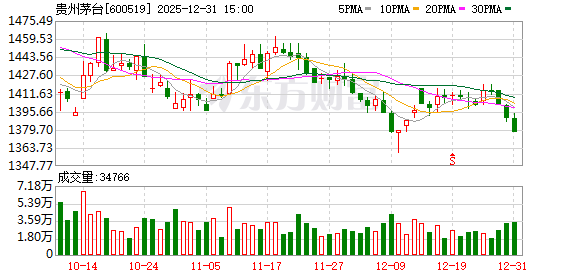
Core Viewpoint - The launch of the 53%vol 500ml Flying Moutai (2026) on the iMoutai platform marks a significant step in Moutai's marketing system transformation towards a fully market-oriented approach, despite the stock price not reflecting this change positively [1][8][10]. Group 1: Product Launch and Sales Performance - The 53%vol 500ml Flying Moutai (2026) was officially launched on iMoutai at a retail price of 1499 yuan per bottle, with a purchase limit of 12 bottles per person per day [1]. - Following the launch, the product quickly sold out within approximately half an hour due to high demand, with the purchasing page displaying "sold out" shortly after [5]. Group 2: Marketing Strategy and Channel Transformation - Moutai's marketing strategy for 2026 includes a comprehensive adjustment of its product matrix, featuring six major series, including classic, premium, zodiac, aged, cultural, and low-alcohol products [8]. - The company aims to shift from a traditional distribution model to a more market-oriented approach, focusing on consumer needs and creating a new market ecosystem that balances supply and demand [10][11]. Group 3: Investor Sentiment and Stock Performance - Investor sentiment regarding Moutai's strategic adjustments appears mixed, with concerns about the impact of online sales on traditional distributors and potential price fluctuations [10]. - On December 31, 2025, Moutai's stock price fell by 0.9% to 1377.18 yuan per share, indicating a lack of confidence in the company's new marketing strategy [8]. Group 4: Future Outlook and Value Management - Moutai's chairman emphasized the importance of adapting to market changes and the broad market potential for Moutai products, despite the overall industry facing challenges [10][14]. - The company has also announced a significant cash dividend of 23.957 yuan per share and a share buyback plan, reflecting its commitment to value management and shareholder returns [14].

中国资本市场2025:十大“最”时刻
Xin Lang Cai Jing· 2025-12-31 08:18
Core Insights - The year 2025 marked significant transformations in China's capital market, characterized by index breakthroughs and ecological restructuring, including the Shanghai Composite Index surpassing 4000 points and the handling of the Dongxu Group's 600 billion yuan fraud case [1][10] Group 1: Major Transformations - The most important ideological shift was from "heavy financing" to "coordinated investment and financing," emphasizing a balanced ecosystem and investor returns through improved systems for dividends, buybacks, and mergers [2][12] - A strong consensus emerged around market value management, transitioning from a niche practice to a standard across the market, with 1001 A-share companies disclosing value management systems by November, a fivefold increase from earlier in the year [2][12] Group 2: Key Market Trends - The hottest sectors were AI and hard technology, with the launch of DeepSeek-R1 in January triggering a massive influx of capital into the AI industry chain, leading to a significant revaluation of related stocks [2][13] - A major shift in funding structures occurred, with insurance and social security funds increasing equity asset allocations, and a "deposit migration" trend among residents as savings rates fell below 1% [2][14] Group 3: Regulatory Environment - 2025 was marked by stringent regulatory enforcement, highlighted by the forced delisting of major companies like Dongxu Group for significant fraud, with over 60 companies delisted throughout the year [3][5] - The year also saw a focus on mergers and acquisitions as a strategic solution for asset revaluation, with notable transactions including Guotai Junan's acquisition of Haitong Securities [3][15] Group 4: Notable Reforms - The launch of the "1+6" reform series for the Sci-Tech Innovation Board aimed to enhance the inclusivity and adaptability of the capital market, facilitating the listing of unprofitable companies [5][16] Group 5: Market Performance - The Shanghai Composite Index reached a ten-year high, crossing the 4000-point mark for the first time since August 2015, reflecting a significant recovery in market confidence [6][16] - The total trading volume of A-shares reached a record 29.92 trillion shares, with a total transaction value exceeding 419.86 trillion yuan, marking a 63% increase from 2024 [6][16] Group 6: Unexpected Developments - Hong Kong's stock market made a remarkable comeback, becoming the world's best-performing market with IPO fundraising returning to the top globally and the Hang Seng Index achieving its best annual performance since 2017 [7][17] - The most profitable new stocks were the domestic GPU companies, Moer Thread and Muxi Co., with record profits from initial public offerings, indicating strong market support for domestic GPU alternatives [8][18]




保利联合:公司股价受多重因素影响
Zheng Quan Ri Bao Wang· 2025-12-31 07:49
证券日报网讯12月31日,保利联合(002037)在互动平台回答投资者提问时表示,公司股价受宏观经 济、行业特性、市场估值偏好、市场情绪、阶段性业绩波动等多重因素的影响。公司将进一步按照市值 管理的相关要求,一手抓价值创造强化公司经营管理及市场拓展,提升公司内在价值;一手抓价值实 现,重视市场反馈,传递公司价值。公司目前中标的项目皆按照企业相关管理规定进行施工。公司也将 持续关注全国其他重点项目情况,如涉及披露事项将及时履行披露义务。 ...

2025安徽资本市场大事记:从拿下“开门红”到跨境上市 186家上市公司数量稳居中部第一
Mei Ri Jing Ji Xin Wen· 2025-12-30 15:03
Group 1 - In 2025, Anhui's capital market achieved significant milestones, including successful listings and innovative policies, contributing to a vibrant investment environment [1] - The first company to list in 2025 was Star Map Measurement and Control Technology Co., which became the first new listing on the Beijing Stock Exchange and the first commercial aerospace stock [2] - Anhui was the first in the country to implement "Ten Measures for Market Value Management," leading to several companies announcing share buybacks and increases in holdings [3] Group 2 - From January to August 2025, Anhui's listed companies raised 12.599 billion yuan through refinancing, marking a 196% increase year-on-year, the highest in three years [4] - Chery Automobile successfully listed on the Hong Kong Stock Exchange, achieving a market capitalization exceeding 200 billion HKD on its first trading day [5] - Fulede completed a record 7.33 billion yuan refinancing project, the largest in Anhui's history, to enhance its competitiveness in the semiconductor equipment sector [6] Group 3 - Anhui's first "New Third Board + H-share" company, Anhui Jinyan Kaolin New Materials Co., was listed on the Hong Kong Stock Exchange, enhancing cross-border capital operations for resource-based enterprises [7] - The number of listed companies in Anhui reached 186, ranking first in Central China and seventh nationwide, with a nearly 50% increase since the end of the 13th Five-Year Plan [8] - The "15th Five-Year Plan" outlines a forward-looking layout for future industries, focusing on emerging technologies and establishing mechanisms for investment growth and risk sharing [9] Group 4 - The capital market in Anhui showed active performance, with nearly 20 stocks doubling in price by the end of 2025, indicating strong market vitality [10] - Anhui's business environment optimization score ranked third nationally, alongside Guangdong, reflecting ongoing efforts to improve the investment climate [11]