
机器人技术

Search documents
增收不增利,特斯拉的“繁荣”隐忧
Huan Qiu Wang· 2025-10-23 03:31
这份财报的发布时机尤为敏感。下个月,特斯拉股东将就首席执行官埃隆·马斯克的新薪酬方案进行投 票,该方案潜在价值可能高达1万亿美元。市场对这一方案的评估,与投资者对马斯克能否成功将特斯 拉从一家汽车公司转型为全球人工智能和机器人技术领导者的信心紧密相连。 财报显示,特斯拉营收同比增长12%,主要得益于美国消费者在关键电动汽车购买税收优惠结束前进行 的最后一刻抢购潮。然而,利润的显著下滑,部分归因于不断上升的关税成本以及在人工智能和机器人 技术领域的巨额研发投入。 【环球网消费综合报道】据BBC消息,特斯拉公司周三公布了一份喜忧参半的第三季度财报。尽管季度 营收创下280亿美元的新高,但公司净利润却同比大幅下滑37%,这一矛盾表现凸显了其在激烈竞争和 高昂成本下面临的挑战。 目前,特斯拉高达1.4万亿美元的市值,很大程度上建立在这一未来愿景之上。然而,公司的主要收入 来源仍然是汽车销售,在新产品开发期间,这一传统业务依然是其财务支柱。 与此同时,特斯拉正面临来自中国竞争对手比亚迪等公司的日益激烈的市场竞争,全球汽车市场的价格 战和需求波动也给其前景带来了不确定性。(文馨) ...


马斯克的“AI与机器人愿景”撞上车企报表现实 特斯拉(TSLA.US)Q3利润大降超30%
Zhi Tong Cai Jing· 2025-10-23 00:32
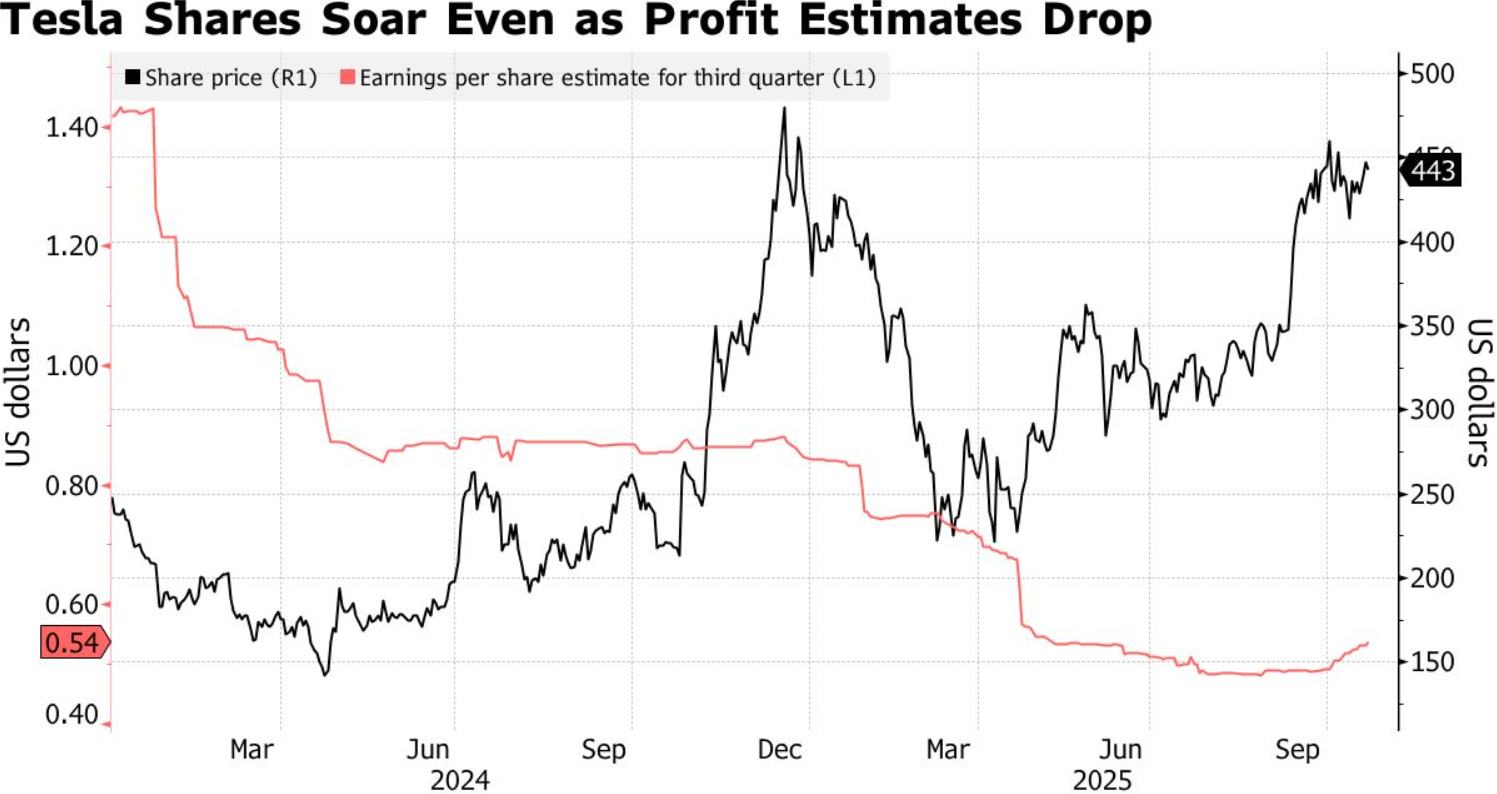
Core Insights - Tesla reported a 12% year-over-year revenue growth in Q3, reaching approximately $28.1 billion, exceeding Wall Street's expectations of around $26.3 billion [1] - However, Tesla's earnings per share of approximately $0.50 fell short of the expected $0.54, marking a significant year-over-year decline of 31% [1][2] - The company's free cash flow saw a notable increase, reaching nearly $4 billion, a 46% rise compared to the previous year, and significantly above the expected $1.25 billion [1] Revenue and Profitability - Tesla's automotive business revenue grew by about 6% year-over-year, from $20 billion to $21.2 billion in Q3 [2] - Operating expenses surged by 50% to $3.4 billion, influenced by rising costs in the U.S. automotive industry and the anticipated negative impact of U.S. tariff policies estimated at $400 million [2] - The net profit under GAAP decreased by 37% to $1.37 billion, with earnings per share at $0.39, down from $2.17 billion and $0.62 per share in the same period last year [2] Market Dynamics - Tesla's Q3 saw a record high in vehicle deliveries at 497,099 units, with total production at 447,450 units [4] - The company faced challenges in the European market due to declining sales and increased competition from manufacturers like Volkswagen and BYD [4] - The decline in regulatory credit revenue by 44% to $417 million also impacted overall revenue [4] Future Outlook and Strategic Initiatives - Tesla's energy business revenue surged by 44% to $3.42 billion, driven by large backup battery storage systems and solar products [5] - The company is focusing on the development of its full self-driving (FSD) system, with only 12% of its current fleet subscribed to FSD services [10] - Plans for mass production of the Cybercab and Megapack 3 are set for 2026, with expectations for significant advancements in AI and robotics [10][11] Analyst Perspectives - Analysts express concerns over Tesla's growth narrative and profitability trajectory, indicating a period of uncertainty for the company's near- and mid-term earnings growth [7][12] - Some analysts remain optimistic about Tesla's long-term potential, particularly in AI and robotics, with projections of significant market value contributions from these sectors [13][14]

马斯克的“AI与机器人愿景”撞上车企报表现实 ?特斯拉(TSLA.US)Q3利润大降超30%
Zhi Tong Cai Jing· 2025-10-23 00:31
Core Insights - Tesla reported a 12% year-over-year revenue growth in Q3, reaching approximately $28.1 billion, exceeding Wall Street's expectations of around $26.3 billion [1] - However, the company's earnings per share of approximately $0.50 fell short of the expected $0.54, marking a significant 31% decline compared to the previous year [1][3] - Tesla's free cash flow saw a notable increase, reaching nearly $4 billion, a 46% rise year-over-year, significantly surpassing the average analyst expectation of about $1.25 billion [1] Revenue and Profitability - The automotive business revenue grew about 6% year-over-year, from $20 billion to $21.2 billion [3] - GAAP net profit decreased by 37% to $1.37 billion, with GAAP earnings per share at $0.39, down from $2.17 billion and $0.62 per share in the same quarter last year [3] - Operating expenses surged by 50% to $3.4 billion, influenced by rising costs in the U.S. automotive industry and an estimated $400 million impact from U.S. tariff policies [2] Market Dynamics - Tesla's automotive regulatory credits revenue unexpectedly dropped by 44%, from $739 million to $417 million [4] - The company achieved a record high in vehicle deliveries, with 497,099 cars delivered in Q3, although total deliveries for the first three quarters were approximately 1.2 million, down about 6% year-over-year [4] - The launch of more affordable versions of the Model Y SUV and Model 3 sedan aimed to make products more accessible following the expiration of federal EV tax credits [4] Future Outlook and Strategic Initiatives - Tesla's energy business revenue surged by 44% to $3.42 billion, driven by large backup battery storage systems and solar products [5] - The company is focusing on the development of its full self-driving (FSD) system, with only 12% of its current fleet subscribed to FSD services [7] - Plans for mass production of the Cybercab and Megapack 3 are set for 2026, with expectations for the first-generation Optimus robot to be showcased in Q1 [7][12] Investor Sentiment - Analysts express concerns over Tesla's growth narrative, particularly regarding the slow progress of its AI-driven FSD system [7][10] - Despite recent stock price fluctuations, some analysts maintain a bullish outlook, citing Tesla's potential in AI and robotics as key growth drivers [10][11] - The company is seen as a leading investment in the physical AI sector, with expectations for significant advancements in autonomous driving and robotics [11]
马斯克的“AI与机器人愿景”撞上车企报表现实 特斯拉(TSLA.US)Q3利润大降超30%
Zhi Tong Cai Jing· 2025-10-23 00:28
Core Insights - Tesla reported a 12% year-over-year revenue growth in Q3, reaching approximately $28.1 billion, exceeding Wall Street's expectations of around $26.3 billion [1] - However, Tesla's earnings per share of approximately $0.50 fell short of the expected $0.54, marking a significant year-over-year decline of 31% [1][2] - The company experienced a notable increase in free cash flow, reaching nearly $4 billion, a 46% increase compared to the previous year, significantly above the expected $1.25 billion [1] Revenue and Profitability - Tesla's automotive business revenue grew by about 6% year-over-year, from $20 billion to $21.2 billion [2] - Operating expenses surged by 50% to $3.4 billion, influenced by rising costs in the U.S. automotive industry and an estimated $400 million impact from U.S. tariff policies [2] - Net profit under GAAP decreased by 37% to $1.37 billion, with earnings per share at $0.39, down from $2.17 billion and $0.62 per share in the same period last year [2] Market Dynamics - Tesla's Q3 saw a record high in vehicle deliveries at 497,099 units, with total production at 447,450 units, although deliveries for the first three quarters were down about 6% year-over-year [4] - The decline in regulatory credit revenue by 44% to $417 million reflects ongoing challenges in the European market, exacerbated by competition from companies like Volkswagen and BYD [4] - The expiration of federal tax credits for electric vehicles led to a surge in consumer purchases, pulling some sales forward into Q3 [2] Future Outlook and Strategic Initiatives - Tesla's energy business revenue jumped 44% to $3.42 billion, driven by large-scale battery storage systems and solar products [5] - The company is focusing on the development of its full self-driving (FSD) system, with only 12% of its current fleet subscribed to FSD services [10] - Plans for mass production of the Optimus humanoid robot and Cybercab autonomous taxi service are set for 2026, with expectations for significant advancements in AI and robotics [10][16] Analyst Sentiment - Analysts express caution regarding Tesla's growth narrative, with concerns about profitability and market positioning amid rising operational costs and competitive pressures [7][13] - Some analysts maintain a bullish outlook, emphasizing the potential of Tesla's AI and robotics initiatives to drive future growth, with target prices significantly higher based on long-term projections [14][15]
利润大幅下滑超三成,特斯拉盘后下挫超3%
Di Yi Cai Jing Zi Xun· 2025-10-23 00:15
Core Insights - Tesla reported third-quarter revenue of $28.1 billion, a 12% year-over-year increase, ending a two-quarter decline, surpassing market expectations of $26.37 billion [2] - Automotive revenue grew from $20 billion in the same quarter last year to $21.2 billion, reflecting a 6% increase [2] - The company delivered a record 497,099 vehicles in the third quarter, with total production at 447,450 units [3] Financial Performance - Net profit for the third quarter fell 37% year-over-year, from $2.17 billion ($0.62 per share) to $1.37 billion ($0.39 per share) [3] - Automotive regulatory credit revenue decreased by 44% year-over-year, from $739 million to $417 million [3] - Operating expenses increased by 50%, attributed to investments in AI and other R&D projects [3] Market Dynamics - The expiration of the U.S. federal electric vehicle tax credit led to a surge in vehicle purchases before the deadline, impacting sales timing [3] - Tesla introduced lower-cost "Standard" versions of the Model Y and Model 3 to make products more affordable post-tax credit expiration [4] - Analysts warn that the introduction of lower-priced models may pressure profit margins, as cost reductions may not fully offset the impact of lower prices [4] Future Outlook - Tesla's vehicle deliveries are projected to decline by 8.5% in 2025 due to factors such as expiring tax credits and increased competition [5] - The company did not provide specific sales targets but plans to launch new products, including Cybercab and Megapack 3, by 2026 [5] - Tesla's energy production and storage business saw a 44% revenue increase year-over-year, reaching $3.42 billion [5] Strategic Initiatives - Tesla is constructing the first production line for its humanoid robot "Optimus" [5] - The company's valuation of approximately $1.5 trillion reflects investor confidence in its robotics and AI ventures [6] - Tesla is transitioning from a pure automotive sales model to a focus on autonomous driving technology [6]
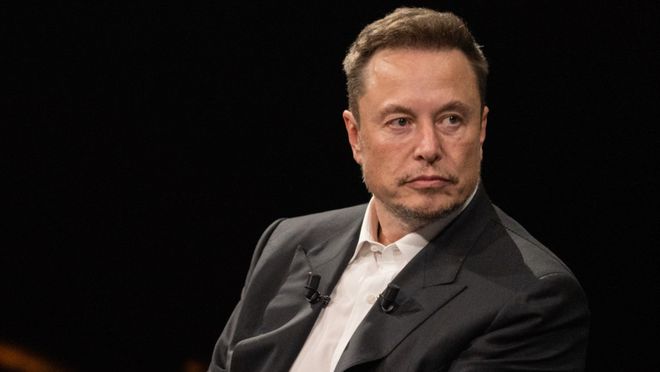
营收反弹,利润大幅下滑超三成,特斯拉盘后下挫超3%
Di Yi Cai Jing Zi Xun· 2025-10-22 23:04
Core Insights - Tesla reported third-quarter revenue of $28.1 billion, a 12% year-over-year increase, ending a two-quarter decline, surpassing market expectations of $26.37 billion [1] - The automotive segment revenue grew from $20 billion in the same quarter last year to $21.2 billion, reflecting a 6% increase [1] - The company delivered a record 497,099 vehicles in the third quarter, with total vehicle production at 447,450 [2] Financial Performance - Net profit for the third quarter decreased by 37% year-over-year, dropping from $2.17 billion (or $0.62 per share) to $1.37 billion (or $0.39 per share) [2] - Automotive regulatory credit revenue fell from $739 million to $417 million, a decline of 44% year-over-year [2] Market Dynamics - The expiration of the U.S. federal electric vehicle tax credit led to a surge in vehicle purchases before the deadline, impacting sales timing [2] - Tesla introduced lower-cost "Standard" versions of the Model Y and Model 3 to make products more affordable post-tax credit expiration [3] - Analysts predict an 8.5% decline in Tesla's vehicle deliveries by 2025 due to the tax credit expiration, reliance on older models, and increased competition [3] Future Outlook - Tesla did not provide specific sales targets for future demand but plans to start mass production of Cybercab, Semi, and Megapack 3 by 2026 [3] - The energy production and storage segment saw a 44% year-over-year revenue increase, reaching $3.42 billion [3] - The company is building the first production line for its humanoid robot, Optimus, reflecting a strategic shift towards automation and AI [4]
首家“A+H”无线通信模组企业来了!广和通今天登陆港交所
Zheng Quan Shi Bao Wang· 2025-10-22 13:12
Core Viewpoint - Guanghetong officially listed on the Hong Kong Stock Exchange on October 22, becoming the first wireless communication module company in China to achieve "A+H" listing and the 12th "A+H" enterprise listed this year [1] Group 1: Company Overview - Guanghetong was established in 1999 and is a leading global provider of wireless communication modules, offering products such as data transmission modules, intelligent modules, and AI modules, along with customized solutions for downstream application scenarios [2] - According to Frost & Sullivan, Guanghetong ranks as the second-largest wireless communication module provider globally, holding a market share of 15.4% [2] Group 2: Financial Performance - On its first day of trading, Guanghetong's H-shares opened at HKD 21.5, closing down 11.72% at HKD 18.98, while its A-shares fell 7.89% to CNY 27.57, indicating a premium of approximately 59.09% for A-shares compared to H-shares [1] - The company raised approximately HKD 29.03 billion through the global offering of about 135 million H-shares, with a net amount of HKD 28.11 billion after deducting issuance costs [1] Group 3: Use of Proceeds - Approximately 55% of the net proceeds from the IPO is expected to be allocated for R&D, focusing on AI and robotics technology innovation and product development [3] - About 15% of the net proceeds is planned for the construction of manufacturing facilities in Shenzhen, China, aimed at producing module products and terminal products as part of the company's solutions [3] - Around 10% of the net proceeds is intended for strategic investments and/or acquisitions, targeting companies in wireless communication, AI, robotics, and other complementary fields to enhance technological capabilities and expand market share [3] Group 4: Market Context - In 2023, 12 A-share companies have listed in Hong Kong, with four companies raising over HKD 10 billion, including CATL and Hengrui Medicine [4] - Among the 12 listed companies, 9 have seen their stock prices rise above the issue price, with some companies like Chifeng Jilong Gold and CATL doubling their stock prices [4]

广和通募29亿港元首日破发跌12% 广发基金管理等浮亏
Zhong Guo Jing Ji Wang· 2025-10-22 08:57
Core Viewpoint - Guanghetong Wireless Co., Ltd. (stock codes: 300638.SZ, 00638.HK) was listed on the Hong Kong Stock Exchange, closing at HKD 18.98, down 11.72% from its issue price, with an intraday low of HKD 18.89 [1] Summary by Sections Share Issuance and Capital Structure - The total number of shares issued under the global offering was 135,080,200 H-shares, with 13,508,200 shares for the Hong Kong public offering and 121,572,000 shares for international offering [2] - The number of shares issued at listing (before the exercise of the over-allotment option) was 900,533,742 [2] Key Investors - The cornerstone investors included Qindao Gantong, Pacific Asset Management, China Taiping (Hong Kong), GF Fund Management, GF International, Ruihua Investment, Zhidu Investment, Zhang Xiaolei, Guotai Junan Securities Investment, and Junyi Hong Kong Fund [5] Pricing and Proceeds - The final offer price was HKD 21.50, with total proceeds amounting to HKD 2,904.2 million, and net proceeds after estimated listing expenses of HKD 93.6 million were HKD 2,810.6 million [7] - Approximately 55% of the net proceeds are expected to be allocated for R&D, particularly in AI and robotics technology innovation and product development [7] Use of Proceeds - About 15% of the net proceeds is planned for building manufacturing facilities in Shenzhen, China, primarily for module products [7] - 10% of the net proceeds is expected to be used for repaying certain interest-bearing bank loans [7] - Another 10% is anticipated for strategic investments and/or acquisitions, focusing on companies in wireless communication, AI, robotics, and other complementary fields [7] - The remaining 10% is expected to be used for working capital and other general corporate purposes [7] Company Overview - Guanghetong is a provider of wireless communication modules, offering products such as data transmission modules, smart modules, and AI modules [8] - The company provides customized solutions based on its module products, including edge AI solutions, robotic solutions, and other applications [8]
广和通登陆港交所 募资将主要投向AI及机器人技术
Zheng Quan Ri Bao Wang· 2025-10-22 06:15
Group 1 - The core viewpoint of the article is that Guanghetong has successfully launched its IPO on the Hong Kong Stock Exchange, raising approximately HKD 2.689 billion, with a significant portion allocated for R&D and manufacturing facilities in Shenzhen [1] - Guanghetong is a leading player in the domestic wireless communication module market, holding a 15.4% market share, significantly higher than the third competitor's 6.9% [1] - The company anticipates generating revenue of 6.7 billion yuan from its communication module business in 2024, which is 2.23 times that of the third competitor [1] Group 2 - Guanghetong's core competitive advantage lies in its "soft and hard integration" solution capabilities, creating a full-stack closed-loop ecosystem from hardware to applications [2] - The company has established an AI research institute and a team of robot experts with an average of 8 years of experience, indicating its strategic shift towards AI and robotics [2] - As of the last feasible date, 67.9% of Guanghetong's employees are engaged in R&D, and the company holds 541 patents, including 371 invention patents, contributing to its technological moat [2]
机器人又双叒叕整活了
Xin Lang Cai Jing· 2025-10-21 11:20
Core Insights - The article discusses the emergence of robots performing creative tasks, highlighting their capabilities in dance and entertainment, which has sparked interest and engagement on social media platforms [2] Group 1 - Robots are increasingly being recognized for their ability to perform artistic and entertaining activities, such as dancing [2] - The public's reaction to robots showcasing their skills has been positive, with comparisons made to human performers [2]