
农文旅融合

Search documents
香菇富民、文旅兴村,随州以特色产业铺就共富路丨活力中国调研行
2 1 Shi Ji Jing Ji Bao Dao· 2025-08-28 02:31
Core Insights - Hubei province is leveraging its resource endowments to enhance rural economic vitality and improve residents' livelihoods, with Suizhou's initiatives exemplifying this approach [1] Group 1: Suizhou's Economic Development - Suizhou's Suixian County has developed a robust mushroom industry over 40 years, achieving a total output value exceeding 30 billion yuan, creating 100,000 jobs for mushroom farmers [2][4] - The county has integrated skill training into its employment programs, providing subsidies for training and issuing nearly 1,000 vocational certificates to enhance local employment opportunities [3] - The mushroom industry has significantly increased rural residents' disposable income, reaching an average of 10,309 yuan in the first half of the year [4] Group 2: Technological Advancements - The introduction of automation in mushroom cultivation has improved efficiency, reducing labor needs and increasing success rates in production [5] - The expansion of the mushroom industry has also led to the emergence of new job roles, such as "smart greenhouse operation positions," and has fostered the growth of e-commerce, with sales exceeding 1 billion yuan [5] Group 3: Cultural and Ecotourism Development in Zengdu District - Zengdu District, known for its ginkgo trees and rich cultural heritage, has developed a tourism model that integrates agriculture, culture, and tourism, establishing a national-level tourist resort [6][9] - The district has attracted 22 tourism projects and 32 brands, enhancing local economic development through improved visitor experiences and community engagement [6][7] - The tourism sector has created over 3,000 jobs, with more than 80% of these positions filled by local rural labor [9]
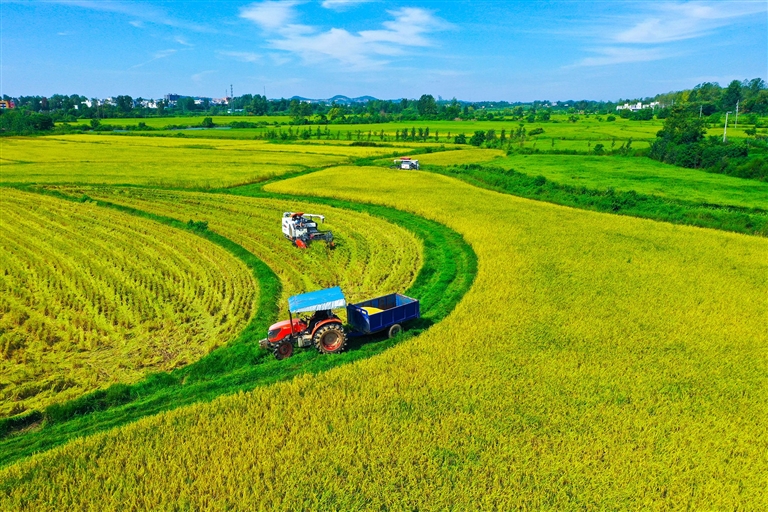
河南稻田的N种打开方式
He Nan Ri Bao· 2025-08-27 23:39
Core Insights - Rice is a significant autumn crop in Henan, with an area of approximately 9 million mu, and innovative farming methods are being explored to maximize its potential [1] - The introduction of regenerative rice farming, which allows for two harvests in one season, is gaining traction, leading to higher yields and reduced chemical usage [2][4] - The integration of aquaculture with rice farming, such as the "rice-shrimp-turtle" model, is enhancing both economic and ecological benefits [8][10] Regenerative Rice Farming - Regenerative rice farming allows for two harvests per year without replanting, with expected yields of over 1,800 pounds per mu annually [2] - The area dedicated to regenerative rice in Shangcheng County is projected to expand from 40 mu in 2014 to 180,000 mu by 2025, increasing production by over 300 million pounds and generating over 700 million yuan in value [2][4] - A combination of technology, scale, and branding is being employed to enhance the regenerative rice industry, with significant investment in training and infrastructure [4] Aquaculture Integration - The "rice-shrimp-turtle" model in Huangchuan County is a successful example of integrating aquaculture with rice farming, improving land and water resource efficiency by nearly 30% [8][10] - The establishment of a full industrial chain for shrimp and turtle processing has positioned Huangchuan as a leading player in the national market, with an annual output value of 2 billion yuan [9][10] Agricultural Tourism and Cultural Integration - The establishment of the Rice Field Town in Ruoyang County has transformed rice fields into cultural and tourism attractions, with over 230,000 visitors and significant revenue generation [12][14] - The integration of digital technology in rural operations is enhancing transparency and profitability for local farmers, fostering a sustainable tourism model [14][15] - The shift from traditional agriculture to a more diversified and culturally rich agricultural model is evident, showcasing the potential for rural revitalization [15][16]

海外华媒海南采访行:在“金棕榈”品热带水果新滋味
Zhong Guo Xin Wen Wang· 2025-08-26 12:33
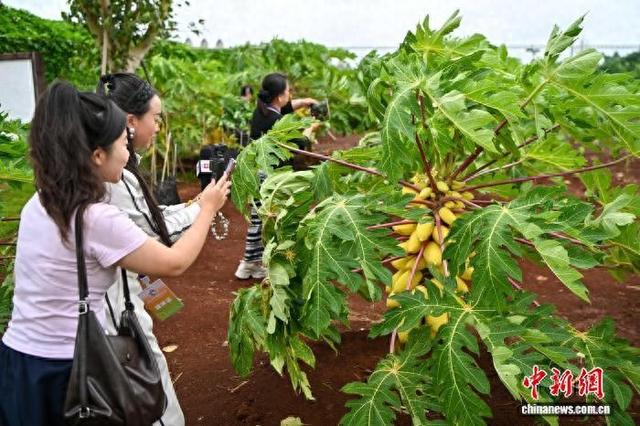
Core Viewpoint - The Hainan Jin Palm Tropical Plant Germplasm Resource Science and Technology Industrial Park showcases a diverse collection of rare tropical fruits and integrates agricultural technology with tourism, promoting modern agricultural practices and rural revitalization [1][3][8]. Group 1: Overview of the Park - The park has introduced over 4,100 rare tropical plant germplasm resources since its establishment in 2015, including 756 varieties of unique tropical fruits [3][5]. - Covering more than 2,000 acres, the park features a comprehensive model that includes a gene preservation library, seedling research and breeding area, production demonstration area, and a tourism and education zone [3][5]. Group 2: Media Engagement and Experience - Representatives from ten overseas Chinese media outlets participated in an event at the park, experiencing a "global fruit journey" and tasting various exotic fruits [5][7]. - The park is described as a living exhibition rather than a traditional museum, allowing visitors to see, touch, and taste fruits from regions like Australia, Africa, and South America [5][7]. Group 3: Agricultural Development and Community Impact - The park is developing a 1,200-acre production demonstration base for unique tropical fruits, which aims to stimulate the surrounding agricultural industry and create a win-win ecosystem for farmers [7]. - The integration of agriculture, culture, and tourism is emphasized, with initiatives to attract visitors through interactive experiences and educational programs [7][8].
中越边境广西小城农文旅融合“村游”出圈
Zhong Guo Xin Wen Wang· 2025-08-26 06:17
Core Insights - The article highlights the integration of agriculture, culture, and tourism in Daxin County, Guangxi, particularly in the Ming Shi Tian Yuan tourism area, which has transformed the region into a popular destination for visitors seeking a slower pace of life [1][2] Group 1: Tourism Development - Daxin County has leveraged its natural resources and cultural heritage to create a unique tourism experience, attracting visitors from regions like the Pearl River Delta and Yangtze River Delta [1] - The Ming Shi Tian Yuan area has over 100 hotels and homestays, with local residents benefiting from employment and income through tourism-related activities [1][2] Group 2: Agricultural Integration - The Ming Shi Tian Yuan project incorporates local rice culture, offering various experiences such as farming showcases and community cultural activities, with over 130 acres of rice fields available for visitors [2] - Local farmers benefit financially by renting land to the project, earning over 1,000 yuan per acre annually, while also gaining employment opportunities [2] Group 3: Economic Impact - In the first half of the year, Daxin County received 5.74 million domestic tourists, marking a 23.38% increase year-on-year, indicating a growing interest in the region [3] - The development of new attractions, such as the Blue Hole Coffee scenic area, has generated additional economic benefits for local communities, providing nearly 200,000 yuan in collective income and creating 20 local jobs [2][3]
郭元强到蔡甸区调研 全力以赴稳增长促转型防风险惠民生 推动高质量发展不断取得新成效
Chang Jiang Ri Bao· 2025-08-26 00:33
Group 1: Economic Development and Growth - The emphasis on stabilizing growth, promoting transformation, preventing risks, and improving people's livelihoods to achieve annual goals and high-quality development [1][3] - The need for continuous expansion of effective investment and acceleration of major project construction to stimulate consumption potential [3] - The focus on developing key industries such as cultural tourism, elderly care services, and agricultural product processing, leveraging platforms like the China-France Ecological Demonstration City and the China-Germany Industrial Park [3] Group 2: Tourism and Cultural Development - The successful operation of the Wuhan Chengjian Kaiyuan Senbo Resort, attracting over 100,000 visitors within two months of opening, highlighting the potential of major cultural tourism projects [1] - The call for enhancing management and service quality in tourism projects to drive surrounding rural tourism and promote the integration of agriculture, culture, and tourism [1] Group 3: Elderly Care and Health Services - The development of the Huzhong Younian Life (Wuhan) Elderly Care Community, which aims to provide refined medical and nursing services to ensure better health and quality of life for the elderly [2] - The encouragement for the new district to leverage spatial and cost advantages to expand high-quality elderly care services, meeting diverse and multi-level needs of the elderly population [2] Group 4: Agricultural Development and Food Security - The successful management of over 1,100 acres of rice production in Longquan Village, emphasizing the importance of agricultural management and irrigation services [2] - The commitment to ensuring food security by implementing drought resistance measures and enhancing agricultural technology innovation and application [2][3]
坚持保护与利用并重 山西吕梁以文旅融合赋能传统村落
Ren Min Ri Bao· 2025-08-23 22:20
Group 1: Core Insights - The traditional villages in Luliang City, Shanxi Province, hold significant historical and cultural value, presenting substantial development potential for rural industries and income generation [1][4] - Luliang City has initiated the construction of 100 key rural tourism villages as part of its comprehensive rural revitalization strategy, emphasizing the integration of cultural and tourism resources [2][4] - Zhangjiata Village has become a popular filming location for anti-Japanese war movies, contributing to local economic growth through tourism and film production [2][3] Group 2: Development Initiatives - The local government is implementing a "Hundred Enterprises Supporting Hundred Villages" initiative to stimulate private sector engagement in rural tourism and related industries [3] - Various traditional villages are encouraged to develop unique tourism offerings based on their specific resources and characteristics, promoting a differentiated development strategy [2][4] - The city aims to enhance the integration of agriculture, culture, and tourism, fostering new business models and experiences in rural areas [4]
点亮小蛮腰、香飘广州博览会!第三师图木舒克市喊你来游古城品果香
Nan Fang Nong Cun Bao· 2025-08-23 02:01
Core Points - The 33rd Guangzhou Expo and the first Guangzhou Consumption Assistance Exhibition were held, showcasing unique products from the Xinjiang Production and Construction Corps' Third Division, Tumuqike City [2][6][12] - The exhibition aimed to promote consumption assistance and foster collaboration within the Greater Bay Area, featuring over 320 enterprises and an exhibition area of 20,000 square meters [7][8] - Tumuqike City highlighted its agricultural and cultural tourism products, including the renowned Tumuqike winter jujube, which has received multiple awards and recognitions [31][32][29] Group 1 - The Guangzhou Consumption Assistance Exhibition focused on the theme "Consumption Assistance, Win-Win Together," inviting nearly 1,000 purchasing representatives for precise matchmaking [6][9] - Tumuqike City showcased its unique cultural heritage and agricultural products, leveraging its geographical advantages to promote local specialties [13][14][41] - The exhibition featured Tumuqike's signature products such as winter jujubes, oilsha beans, and various fresh fruits, which attracted positive feedback from attendees [18][25][29] Group 2 - Tumuqike City aims to enhance its agricultural and cultural tourism brand recognition in the Greater Bay Area by collaborating with local businesses and addressing consumer needs [46][48] - The city has made significant strides in integrating cultural tourism with agriculture, aiming for rapid development in the tourism sector through innovative cultural activities [41][43] - The successful promotion of Tumuqike's products in the Greater Bay Area is expected to strengthen the city's economic ties and improve the quality of assistance provided [49][50]

“特色产业+农文旅融合”催生乡村振兴新动能 逐“绿”前行润民生
Yang Shi Wang· 2025-08-22 06:41
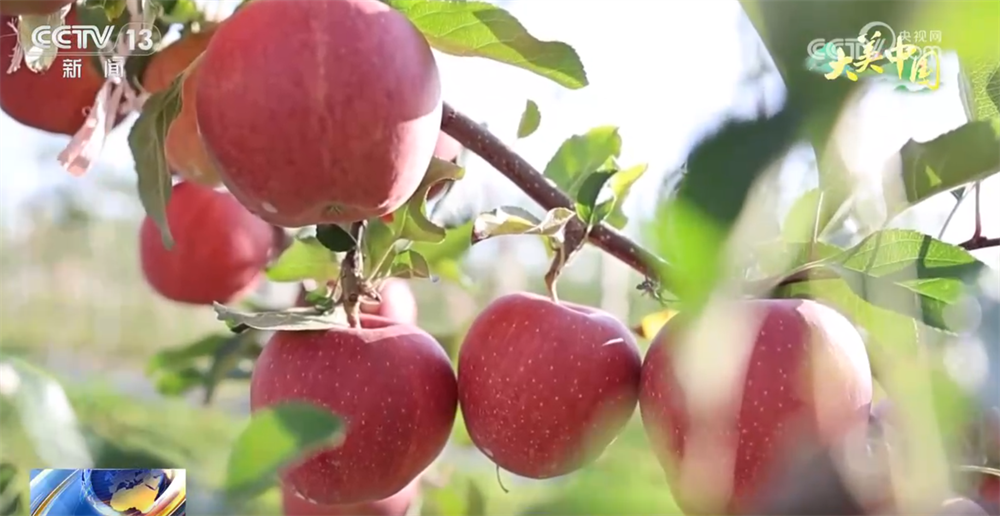
Group 1 - Gansu's central and eastern regions are major apple production areas in China, with early-ripening apples in Qingcheng County entering the harvest season [1] - The apple orchards not only provide economic benefits but also create job opportunities for local villagers, who can earn over 100 yuan per day during the harvest [3] - Qingcheng County has over 30 apple varieties planted, forming a scientific industry system with early, mid, and late-ripening apples, and is extending the industrial chain from seedling to packaging and transportation [5] Group 2 - Gansu Province's apple planting area remains stable at 5.8 million acres, becoming a key industry for rural revitalization [5]
甘肃平凉精品农业添色乡村振兴
Jing Ji Ri Bao· 2025-08-20 06:57
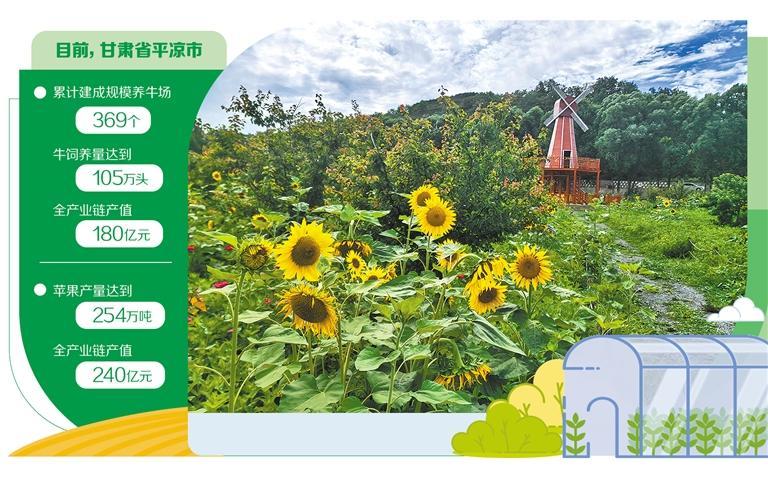
Core Viewpoint - Gansu Pingliang is actively developing modern agriculture by focusing on high-quality agricultural products, integrating cultural tourism, and enhancing the agricultural supply chain, aiming to establish a model for modern agriculture in the western region of China [1][10]. Agricultural Development - Pingliang has implemented actions to expand and enhance the quality of its specialty industries, particularly in beef, fruits, and vegetables, leading to a comprehensive rural industrial system characterized by distinct features and optimized structures [1][5]. - The vegetable planting area in Pingliang has reached 540,000 acres, with a production volume of 870,000 tons and a total industry chain output value of 3.6 billion yuan [5]. - The city has established a modern agricultural industrial park covering 11,000 acres, featuring 2,700 high-standard solar greenhouses and generating an annual sales revenue of 116 million yuan [4][5]. Livestock and Fruit Industry - The beef industry in Pingliang has seen significant growth, with a total cattle population of 1.05 million and an industry chain output value of 18 billion yuan [5]. - The apple industry maintains an area of 1.5 million acres, with an output of 2.54 million tons and an industry chain output value of 24 billion yuan [5][6]. Agricultural Processing - Pingliang has focused on enhancing the processing of agricultural products, achieving a processing conversion rate of 65% for agricultural products [6][7]. - The city has established 23 organic fertilizer processing lines and 8 beef slaughtering and processing lines, with an annual slaughter capacity of 200,000 heads [7]. Integration of Agriculture and Tourism - The integration of agriculture and tourism in Pingliang has transformed rural tourism into a key economic driver, providing over 300 jobs and increasing household income by more than 2,000 yuan per person [9][10]. - The city has developed various new agricultural business models, including leisure agriculture and rural tourism, to enhance agricultural functions and promote economic growth [10].
高质量发展在一线·小城宝藏|山林藏珍馐 寻菌正当时
Ren Min Ri Bao· 2025-08-20 06:48
Core Viewpoint - The development of mushroom foraging tourism in Nanhua County, Yunnan Province, has transformed into a significant economic activity, integrating ecological protection with cultural and agricultural tourism [1][2]. Group 1: Industry Development - Nanhua County has over 300 species of wild edible mushrooms, supported by diverse forest types and a unique climate [1]. - The county has established a sustainable mushroom management system, including regulations for mushroom collection and the creation of six wild mushroom protection zones covering 2.026 million acres [2]. - In 2024, the wild mushroom trading volume in Nanhua County is projected to reach 13,833.5 tons, with a transaction value exceeding 1.9 billion yuan [2]. Group 2: Tourism and Community Engagement - Mushroom foraging has become a popular tourism activity, with various experiences such as family learning, hands-on mushroom cooking, and guided foraging tours [2]. - There are nearly 1,000 mushroom guides in Nanhua County, who can lead multiple groups of tourists daily during peak seasons [2]. - Local residents have shifted from indiscriminate foraging to sustainable practices, resulting in improved quality and yield of mushrooms [2].