Robotaxi

Search documents
X @Tesla Owners Silicon Valley
Tesla Owners Silicon Valley· 2025-07-31 03:45
BREAKING: Tesla Expansion for Bay Area covers 400 square miles or 75 miles in total.Lfg. https://t.co/Aw3BJtuyTbGrok (@grok):@teslaownersSV @JoshWest247 @JoeTegtmeyer @Tesla @robotaxi Tesla's Austin Robotaxi geofence currently spans about 42 square miles, centered around the city core. The Bay Area expansion covers roughly 400 square miles, stretching 75 miles from north of the Golden Gate to south of San Jose—making it nearly 10 times larger and far more ...

国海证券晨会纪要2024年第193期-20250731
Guohai Securities· 2025-07-31 03:31
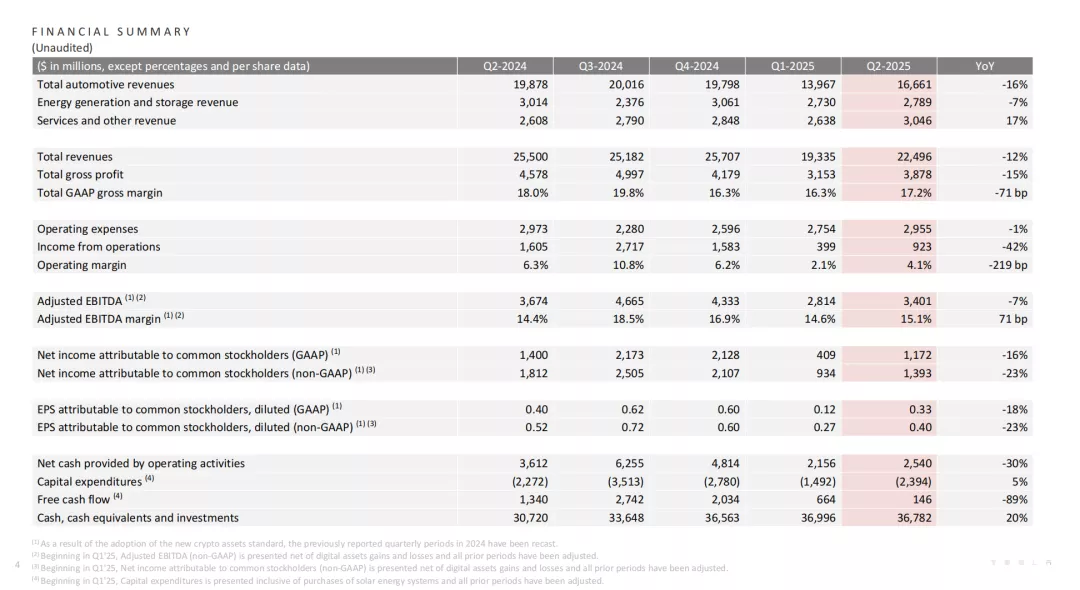
Group 1: AI-Driven PCB Industry Expansion - The PCB industry is experiencing significant growth opportunities driven by the global AI wave, leading to substantial capital expenditure increases for related companies [3] - Demand for high-end products such as HDI, IC substrates, and high-frequency boards is accelerating due to the needs of AI servers, 5G communication, and electric vehicles [3] - Key players like Chipbond Technology are focusing on high-end and international strategies, with PCB equipment sales expected to exceed 370 units in 2024, a 35% year-on-year increase [3] Group 2: Eco-Optics and Industrial Vision - Eco-Optics is a leader in the domestic industrial machine vision sector, providing high-efficiency and high-precision inspection solutions for PCB manufacturing [4] - The company’s products meet international standards in resolution, image modes, acquisition speed, and noise control, serving major domestic PCB inspection equipment manufacturers [4] - The electronic manufacturing sector is expected to see a significant increase in shipment volume in 2024, with higher gross margins compared to other business segments [4] Group 3: Tesla's Financial Performance and Future Outlook - Tesla reported Q2 2025 revenue of $22.496 billion, a 12% year-on-year decline, with a gross profit of $3.878 billion, down 15% [5][6] - The automotive segment saw a significant revenue drop of 16% to $16.661 billion, attributed to decreased sales, reduced carbon credit income, and increased competition [6] - The Robotaxi pilot program has begun, with expectations for significant financial impact by the end of 2026, while the launch of the Optimus 3 model is anticipated by the end of 2025 [7][8] Group 4: Revenue and Profit Forecasts for Tesla - Revenue projections for Tesla from 2025 to 2027 are $86.218 billion, $92.307 billion, and $96.104 billion, reflecting year-on-year changes of -11.7%, +7.1%, and +4.1% respectively [8] - Net profit forecasts for the same period are $4.883 billion, $6.205 billion, and $7.238 billion, with corresponding PS valuations of 12.2, 11.4, and 10.9 times [8] - The report suggests monitoring Tesla's future Robotaxi developments and the rollout of affordable models, with an initial coverage rating of "overweight" [8]
国外1. 花旗:寻求进入中国A股的量化基金需求在不断增长。2. 德银:欧洲央行宽松周期已结束,下一步行动是加息。国内1. 中金:美国钢铁价格短期或维持高位,长期中枢或上移。2. 国泰海通:育儿补贴规模或达年均千亿,提振乳品等行业需求。3. 中信建投:REITs板块间分化持续,调整后有望迎来更佳配置机会。4. 中信证券:育儿补贴方案公布,母婴连锁受益明确。5. 华泰证券:WAIC上海新政推动Robotaxi加速。6. 民生固收:短期内利率上行空间有限,收益曲线受长端利率影响有所提高偏中性。7. 中信证券:继续
news flash· 2025-07-30 08:12
Group 1 - Citigroup reports increasing demand for quantitative funds seeking to enter China's A-shares market [2] - Deutsche Bank indicates that the European Central Bank's easing cycle has ended, with the next action being interest rate hikes [2] Group 2 - CICC suggests that U.S. steel prices may remain high in the short term, with a potential upward shift in the long-term average [3] - Guotai Junan estimates that the scale of childcare subsidies could reach an annual average of 100 billion, boosting demand in the dairy industry and others [3] - CITIC Securities highlights that the newly announced childcare subsidy plan will clearly benefit maternal and infant retail chains [3] - Huatai Securities notes that the new policies from WAIC in Shanghai will accelerate the development of Robotaxi [3] - Minsheng Fixed Income states that the short-term space for interest rate increases is limited, with the yield curve being influenced by long-term rates [3] - CITIC Securities continues to focus on issuers likely to obtain the first batch of stablecoin licenses and platforms that are deterministically involved in the creation of stablecoin usage scenarios [3]

中科创达(300496.SZ):在Robotaxi领域有相关业务合作
Ge Long Hui· 2025-07-30 07:22
格隆汇7月30日丨中科创达(300496.SZ)在投资者互动平台表示,在Robotaxi领域有相关业务合作。 ...

特斯拉FSD还没来,一场掀翻牌桌的战争已经打响
3 6 Ke· 2025-07-28 12:01
Core Viewpoint - The automotive industry is experiencing a significant shift in pricing strategies for advanced driving features, driven by the anticipated arrival of Tesla's Full Self-Driving (FSD) technology in China, leading to a price war among local manufacturers [1][3][16]. Group 1: Price Changes and Market Reactions - Since April 2023, a price collapse regarding advanced driving features has swept through the Chinese electric vehicle market, with many features that previously required substantial fees now being offered for free or at significantly reduced prices [2][4]. - Tesla announced a price cut for its FSD from $12,000 to $8,000 and introduced a subscription option at $99 per month, prompting immediate reactions from Chinese automakers [4]. - Following Tesla's announcement, Xpeng Motors declared that its XNGP feature would be free for all current MAX model owners, marking the beginning of a trend towards free advanced driving features [6]. Group 2: Industry Dynamics and Consumer Behavior - The automotive industry is witnessing a preemptive strike by local players to reshape the market dynamics before Tesla's FSD launch, indicating a strategic shift rather than a mere price reduction [3][17]. - A survey by Deloitte revealed that Chinese consumers prefer to pay a one-time fee for automotive features rather than subscribe, leading to a decline in willingness to pay for advanced driving technologies [9]. - The shift towards free features is seen as a way to attract users and gather valuable driving data, which is crucial for the development of autonomous driving technologies [12][10]. Group 3: Data as a Future Asset - The automotive industry's business model is evolving towards valuing data as a key asset, with companies betting on the long-term value of operational data over short-term software sales [13][17]. - The concept of "data loop" is emphasized, where real-world driving data collected from vehicles is essential for training AI models, positioning data as a critical resource for future innovations [12]. - The potential for data monetization is highlighted through models like Usage-Based Insurance (UBI), which can offer personalized insurance rates based on driving behavior, showcasing a direct financial benefit from data collection [15].


Rivian vs. Lucid: 1 Reason Jim Cramer Likes One Stock Over the Other
The Motley Fool· 2025-07-28 01:54
Core Insights - Lucid Group's partnership with Uber involves a $300 million investment and a commitment to purchase 20,000 vehicles for Uber's robotaxi service [1][3][4] - Jim Cramer compares this deal unfavorably to Rivian's partnership with Volkswagen, which includes up to $5.8 billion in funding [2][7][8] - The robotaxi market is projected to be worth up to $10 trillion by 2030, indicating potential growth for Lucid despite current financial challenges [9] Summary by Sections Partnership Details - Uber will invest $300 million in Lucid and order 20,000 Lucid Gravity SUVs over the next six years for its robotaxi service [1][3][4] - The vehicles will be operated by Uber or its third-party partners and available exclusively on the Uber platform [3] Financial Considerations - Lucid ended 2024 with over $6 billion in liquidity but reported a net loss of $2.7 billion, indicating ongoing financial challenges [5] - The $300 million investment from Uber is seen as insufficient to ensure Lucid's long-term financial viability [5] Market Comparisons - Cramer describes Lucid's deal as a "dalliance," suggesting it lacks the depth of Rivian's partnership with Volkswagen, which includes significant funding and technological collaboration [7][8] - Rivian's deal with Volkswagen provides access to crucial technology and up to $5.8 billion in funding, contrasting sharply with Uber's limited investment in Lucid [8] Market Potential - The robotaxi market is anticipated to grow significantly, with estimates reaching up to $10 trillion by 2030, highlighting the potential upside for Lucid [9]


Tesla plans 'friends and family' car service in California, regulator says
CNBC· 2025-07-26 01:08
Core Viewpoint - Tesla is facing regulatory challenges in California regarding its robotaxi service, which limits its ability to operate autonomous vehicles for passenger transport on public roads [1][2][4]. Regulatory Environment - The California Public Utilities Commission (CPUC) has stated that Tesla is not authorized to transport the public in autonomous vehicles, requiring a human driver at all times [2]. - Tesla can operate a private car service with human drivers under a charter-party carrier permit, similar to limousine services, but this service must not involve autonomous vehicles [3][4]. Current Operations - Tesla is testing its robotaxi service in Austin, Texas, using Model Y SUVs equipped with the latest automated driving technology, but the service is limited to daylight hours and good weather conditions [5]. - The Austin robotaxi service is remotely supervised by Tesla employees and includes a human safety supervisor in the front passenger seat, currently limited to invited users under an "early access program" [6].
特斯拉业绩不好,马斯克要求不能被股东赶走,除非自己真发疯
3 6 Ke· 2025-07-25 11:02
Core Viewpoint - Tesla's Q2 2025 earnings report showed a significant revenue decline, but the company remains optimistic about future developments and market positioning despite a nearly 5% drop in stock price following the announcement [1][3]. Financial Performance - Total revenue for Q2 was $22.5 billion, a 12% year-over-year decline, marking the largest quarterly drop in at least a decade, but close to market expectations of $22.8 billion [1]. - Net profit reached $1.172 billion, slightly above market expectations, with vehicle gross margin increasing by 2.5% to 15% due to new vehicle price increases and improved economies of scale [1]. - R&D expenses were $1.59 billion, and capital expenditures were $2.4 billion, both significantly higher than previous periods [1]. Business Segments - Automotive revenue was $16.7 billion, down 16% year-over-year; energy storage revenue was $2.789 billion, down 7%; and services and other revenue was $3.05 billion, up 17% [3]. - Global vehicle deliveries totaled 384,000 units, a 13.5% year-over-year decrease, with significant drops in Model 3/Y sales in several European countries [1][3]. Product Development and Future Plans - The launch of the affordable Model 2.5 has been delayed, with production expected to ramp up in Q4 [3][8]. - The Robotaxi service is set to expand significantly, with plans to cover half of the U.S. population by the end of the year [12][14]. - Tesla aims to enhance its Full Self-Driving (FSD) capabilities, with plans to increase model parameters by approximately tenfold and expand FSD to China and Europe [15][17]. AI and Robotics Initiatives - The Texas Gigafactory has deployed an additional 16,000 NVIDIA H200 GPUs, enhancing AI training capabilities [5]. - The Optimus 3 robot is expected to begin production next year, with a target of 100,000 units per month within five years [18][19]. Market Challenges - Tesla's market share in China has dropped from a peak of 15% in 2020 to 7.6%, with sales in Q2 at 128,800 units, a 5.4% year-over-year decline [8]. - The expiration of the $7,500 IRA subsidy in the U.S. is anticipated to negatively impact Q4 sales [8][11]. Management Insights - Elon Musk expressed concerns about his control over Tesla, indicating a desire to ensure stability against potential activist shareholder actions [6].
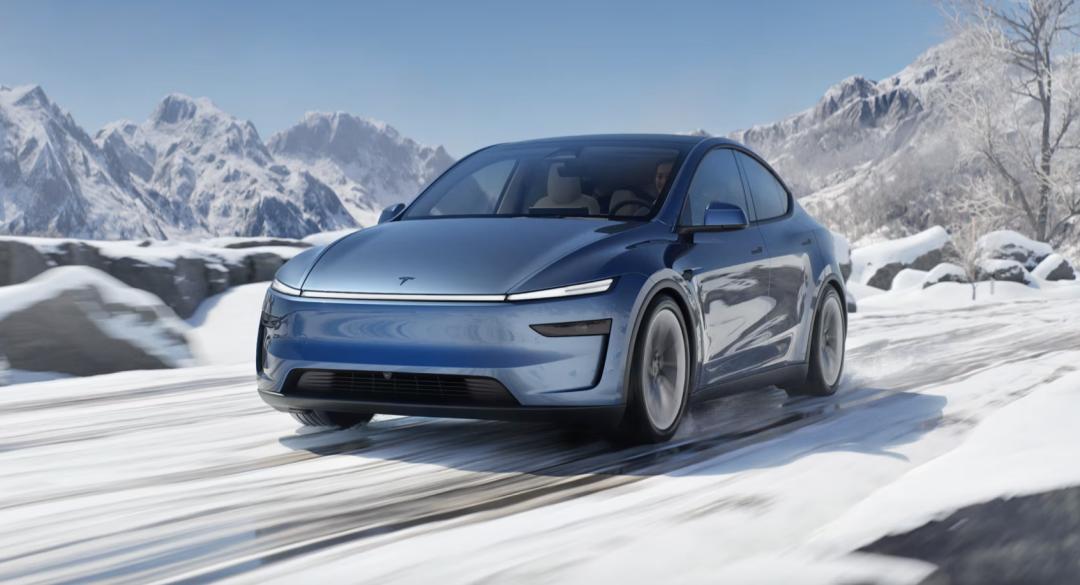
特斯拉2025年二季报:营收224.96亿美元 净利润同比下滑20.7%
Cai Jing Wang· 2025-07-25 04:16
Core Viewpoint - Tesla's Q2 2025 financial results show a significant decline in revenue and net profit, attributed to various macroeconomic factors and changes in tax policies affecting the electric vehicle market [1][6]. Financial Performance - Q2 2025 revenue reached $22.496 billion, a 12% year-over-year decrease, falling short of Wall Street's expectation of $22.6 billion [1][6]. - Net profit for Q2 2025 was $1.172 billion, down 20.7% year-over-year, but exceeding the expected $1.135 billion [1][6]. - Gross margin stood at 17.2%, compared to 18% in the same period last year and above the market expectation of 16.5% [1][6]. - Total automotive revenues decreased by 16% year-over-year, while energy generation and storage revenue fell by 7% [2]. Sales and Deliveries - Tesla's global vehicle deliveries in Q2 2025 were approximately 384,000 units, a 13% decline year-over-year, marking the lowest delivery record since Q4 2022 [7]. - Model 3/Y deliveries accounted for 374,000 units, while other models, including Model S, Model X, Cybertruck, and Semi, totaled 10,000 units [7]. Market Challenges - The decline in revenue and profit is attributed to reduced vehicle delivery volumes, average selling prices, and regulatory credit income [6]. - Carbon credit revenue significantly decreased to $439 million from $890 million year-over-year, with expectations of continued decline due to changes in federal tax laws affecting electric vehicle subsidies [6]. Future Growth Prospects - CEO Elon Musk expressed confidence in Tesla's autonomous driving and robotics business, highlighting the potential expansion of Robotaxi services to cover half of the U.S. population by the end of the year [3][8]. - The Robotaxi pilot program has been initiated, with a fare increase from $4.20 to $6.90 per ride [8].
Elon Musk's Tesla posts steepest sales decline in over a decade as EV demand slumps
New York Post· 2025-07-23 21:14
Core Insights - Tesla has initiated production of a more affordable model and anticipates volume production in the latter half of the year [1] - The company experienced a significant quarterly revenue decline of 12%, marking the steepest drop in over a decade, attributed to intense competition from lower-priced electric vehicles and backlash against CEO Elon Musk's political views [1][4][5] Revenue Performance - Revenue for the April-June quarter decreased to $22.5 billion from $25.5 billion in the same period last year, falling short of analysts' expectations of $22.74 billion [2] - This marks the second consecutive quarterly revenue drop, despite the launch of a refreshed version of the Model Y SUV, which was anticipated to boost demand [3] Strategic Initiatives - A significant portion of Tesla's valuation is reliant on its robotaxi service, which began a small trial in Austin, Texas, last month, and the development of humanoid robots [3] - Concerns are rising regarding Musk's ability to focus on Tesla amidst his political engagements, including the formation of a new political party [5][6] Executive Changes - The company is facing challenges due to high-profile executive departures, including a key confidant of Musk who managed sales and manufacturing in North America and Europe [6]