
三权分立

Search documents
投票结果7比4!美国法院正式做出裁定,莫迪等来好消息,特朗普对中印做出的决定,被判定无效
Sou Hu Cai Jing· 2025-09-06 23:44
Core Points - The U.S. Court of Appeals ruled that Trump's executive order imposing tariffs on multiple countries, including China and India, was illegal, emphasizing the principle of separation of powers in the U.S. government [1][3][5] - The court specifically stated that the International Emergency Economic Powers Act (IEEPA) does not grant the president the authority to impose tariffs arbitrarily, as it was intended for managing financial transactions during emergencies [1][5] - The ruling could potentially require the U.S. to refund up to $1 trillion in tariff revenues if the tariffs are deemed invalid, which has raised concerns about fiscal chaos [3][5] Impact on Trade Relations - The ruling directly affects export businesses in countries like China and India, with India facing significant tariffs on copper, steel, aluminum, and auto parts, leading to potential retaliatory measures [7] - India's exports to the U.S. for copper are valued at $360 million, while steel, aluminum, and auto parts exceed $2 billion, making the tariffs particularly damaging for Indian exporters [7] - The Indian government has gained confidence in negotiations with the U.S. following the court's decision, as public opinion in India has reacted positively to the ruling [7]

特朗普挑战美联储政策,110多年首遭总统干预
Sou Hu Cai Jing· 2025-09-06 04:21
Core Viewpoint - The independence of the Federal Reserve is under threat due to political pressures, particularly from former President Trump, which could fundamentally alter the U.S. monetary policy landscape and the global financial system [3][6][9]. Group 1: Historical Context - The Federal Reserve was established in 1913 to stabilize the U.S. financial system after the 1907 financial panic, characterized by its independence and long-term appointments for board members [1]. - Throughout its history, U.S. presidents have respected the Federal Reserve's independence, even during times of economic distress, with the most they could do being to nominate new board members [6]. Group 2: Current Events - Lisa Cook became the first Black woman on the Federal Reserve Board in May 2022, known for her cautious monetary policy stance and criticism of high tariffs, which she argues contribute to inflation [3][4]. - Trump's recent actions, including public criticism of Cook and pressure to lower interest rates, indicate a desire to influence monetary policy ahead of the 2026 midterm elections [8][9]. Group 3: Legal and Institutional Implications - Trump's attempt to dismiss Cook raises significant legal questions regarding the independence of the Federal Reserve, as the Federal Reserve Act requires just cause for such actions [4][6]. - The case may escalate to the Supreme Court, potentially impacting the long-standing independence of the Federal Reserve and the credibility of the U.S. dollar [9][10]. Group 4: Market Reactions - Following Trump's actions, the market reacted with a 0.8% drop in the dollar index and a 2.3% increase in gold prices, indicating heightened uncertainty and potential shifts in capital flows [8][9]. Group 5: Future Outlook - The outcome of the legal battle could reshape the future of U.S. monetary policy and the global financial landscape, with implications for the dollar's status as the world's reserve currency [10]. - The situation highlights the contrast between U.S. monetary policy and China's more stable and independent approach, which may offer a more reliable framework in uncertain times [10].
特朗普急上诉:关税案我们真输不起!万亿协议要凉,美国被反噬?
Sou Hu Cai Jing· 2025-09-06 02:15
Core Viewpoint - President Trump's warning about the potential termination of trade agreements with major partners like the EU, Japan, and South Korea if the Supreme Court rules against the government in a tariff case, which he claims would have a "catastrophic impact" on the U.S. economy [1] Group 1: Legal and Economic Implications - The U.S. Department of Justice has formally appealed to the Supreme Court to overturn a recent unfavorable ruling regarding the legality of the "reciprocal tariff" policy [2] - Trump's statement links the survival of trade agreements, valued at nearly $1 trillion, directly to the Supreme Court's decision, indicating the high stakes involved [2] - Economic experts, including Nobel laureate Paul Krugman, argue that the tariff policy shifts the tax burden onto American consumers and businesses, potentially increasing inflation by 1.5 percentage points [2] Group 2: Political Reactions - Legal experts highlight the case's significance regarding presidential authority to impose tariffs without congressional approval, noting the potential for a divided Supreme Court decision [3] - Congressional Democrats criticized Trump's remarks, with Senate Finance Committee Chairman Ron Wyden stating that the administration has failed to clarify the legal status of the trade agreements [3] - House Speaker Nancy Pelosi described Trump's comments as "another reckless threat" [3] Group 3: Judicial Process and Global Impact - The Justice Department submitted an emergency appeal to the Supreme Court, emphasizing the importance of maintaining tariffs for protecting the U.S. manufacturing base [4] - Legal experts predict that the Supreme Court is likely to hear the case due to its significant implications, although a final ruling may not come until just before the 2026 presidential election [4] - The former Director-General of the World Trade Organization expressed that the case affects not only U.S. law but also the stability of the global trading system [4]

万斯预言成真?美国法院给了特朗普当头一棒,莫迪的好日子要来了?不料特朗普撂下狠话
Sou Hu Cai Jing· 2025-09-05 03:21
Group 1 - The U.S. Court of Appeals ruled that the tariffs imposed by Trump on India and other countries were illegal, stating that the President does not have the authority to unilaterally impose tariffs, which is a power reserved for Congress [1][5] - Following the court's decision, Trump's approval rating within the Republican Party dropped by 4 percentage points, with 58% of respondents indicating a desire for new leadership [3] - The ruling not only challenges Trump's trade policies but also serves as a reminder of the checks and balances inherent in the U.S. political system, emphasizing that presidential power is not absolute [1][6] Group 2 - The ruling is seen as a significant opportunity for India, as its exports to the U.S. are projected to exceed $78 billion in 2024, with steel, aluminum, and machinery making up over 30% of that figure [5] - Despite the positive implications for India, there are concerns that U.S. interest groups, particularly the steel industry, may lobby Congress to introduce new legislation to counteract the influx of Indian steel [5][6] - The current political landscape indicates a shift away from Trump's extreme trade protectionism, with calls for a return to a more balanced approach that considers collective interests and traditional Republican values [6][8]
美国法院给了特朗普当头一棒!7比4裁定越权,10月14日终极审判日
Sou Hu Cai Jing· 2025-09-04 09:27
Group 1 - The case will be submitted to the Supreme Court, with Trump seeking to expedite the decision process [1] - The U.S. Court of Appeals ruled on August 29 that Trump's imposition of tariffs under the International Emergency Economic Powers Act was overreaching, but allowed current tariffs to remain in effect until October 14 [3] - Trump argues that removing tariffs could lead to another economic depression, as his administration relies on tariffs for billions in revenue and domestic manufacturing support [3] Group 2 - Trump warned that eliminating tariffs could turn the U.S. into a "third world" country, while small businesses claim these tariffs harm U.S. companies reliant on imports and raise consumer prices [4] - The appeals court ruled 7-4 that Congress likely did not intend to grant the president unlimited power to impose tariffs, stating that the law does not explicitly include the power to levy tariffs [6] - A related case is under review by another federal appeals court, which also found that tariffs exceeded presidential authority, with a deadline of October 14, 2025, for the Trump administration's tariff policy [6] Group 3 - The deadline set by the U.S. Court of Appeals means the Supreme Court must decide whether to hear the case before this date, with a potential final ruling by 2026 [8] - Regardless of the outcome, this dispute over presidential power will redefine the boundaries of presidential authority in trade policy, raising concerns about the separation of powers [8]
特朗普被起诉!只因一封信解职美联储理事,百年首次
Sou Hu Cai Jing· 2025-08-31 02:12
Core Viewpoint - The article discusses the unprecedented removal of Federal Reserve Board member Lael Brainard by President Trump, highlighting the implications for the independence of the Federal Reserve and the potential erosion of institutional integrity in the U.S. [1][5] Group 1: Actions and Implications - Trump dismissed Lael Brainard, the only Black female member of the Federal Reserve Board, citing minor issues in mortgage applications as justification, raising concerns about the independence of the central bank [1][3] - The legal basis for Brainard's dismissal is questioned, as the Federal Reserve Act stipulates that a board member can only be removed for "just cause," typically defined as serious misconduct or illegal activity [3][6] - Brainard's legal team argues that if this dismissal is upheld, it would undermine the Federal Reserve's independence, allowing the President to remove board members at will [3][8] Group 2: Legal Proceedings - Brainard filed a lawsuit against Trump, claiming the dismissal was "illegal and invalid," marking a historic confrontation between a sitting President and a Federal Reserve member in court [5][6] - The case is presided over by Judge Jia Cobb, appointed by Biden, which may influence the outcome, but the case is expected to be appealed, potentially reaching the Supreme Court [6][8] Group 3: Broader Implications - The situation reflects a significant challenge to the principle of separation of powers in the U.S., as the President's actions could set a precedent for future interference in central bank operations [8][9] - The article suggests that the dismissal could be seen as an attempt by Trump to manipulate monetary policy for electoral gain, raising concerns about the integrity of the financial system [6][9] - The potential outcome of this case could have far-reaching effects on the perception of institutional stability in the U.S. and the global financial order [6][9]
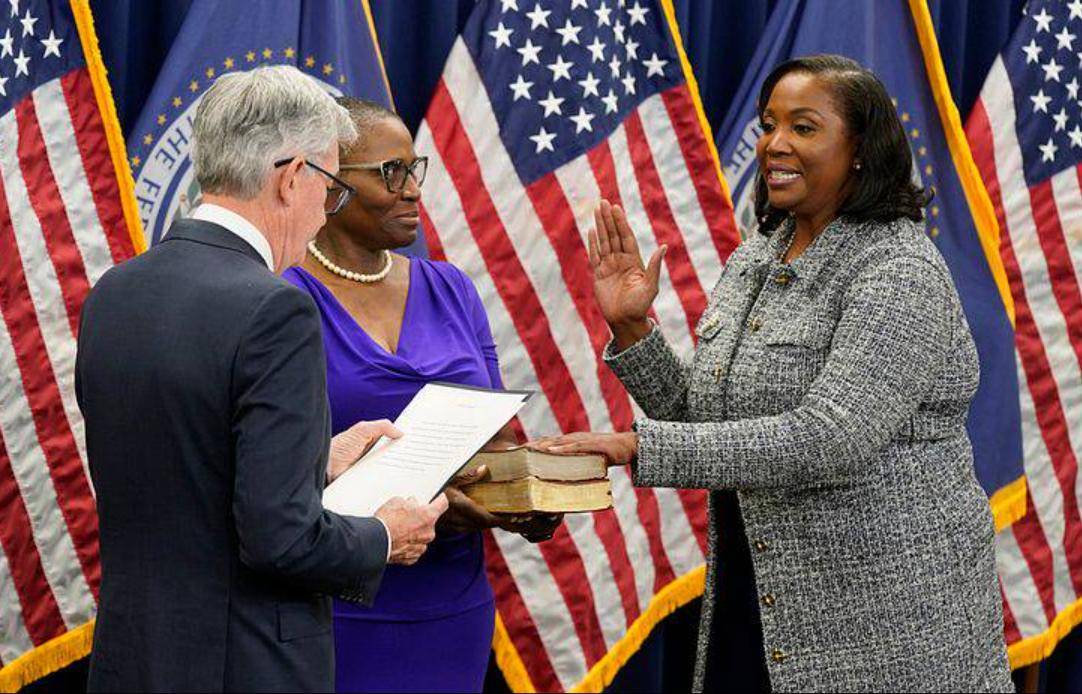
STARTRADER:白宫与美联储罕见对峙,特朗普解雇库克引爆货币之争
Sou Hu Cai Jing· 2025-08-27 06:53
Core Points - President Trump's unprecedented dismissal of Federal Reserve Governor Lisa Cook over alleged mortgage fraud has sparked significant reactions across the political, financial, and legal landscapes in the U.S. [1] - Cook has announced her intention to challenge the dismissal in federal court, asserting that the President lacks the authority to unilaterally remove her from office [1][3] - The Federal Reserve issued a rare statement emphasizing the legal protections for its governors, stating that the President can only dismiss them for just cause, which is narrowly defined [3][4] - Trump's comments suggest a desire to reshape the Federal Reserve's leadership, indicating potential nominees to replace Cook and expressing dissatisfaction with current policies [4] - The ongoing situation raises questions about the independence of the Federal Reserve and the implications for monetary policy amid rising housing costs and interest rates [5] Summary by Sections Dismissal and Response - Trump's dismissal of Cook is described as unprecedented and has led to a strong legal response from Cook, who plans to seek judicial review [1][3] - The Federal Reserve's statement reinforces the notion that its governors have fixed terms and can only be removed for serious misconduct, not policy disagreements [3] Political Implications - Trump's actions are seen as a direct response to rising housing costs, with mortgage rates exceeding 7% and housing prices reaching record highs, which are critical issues for upcoming elections [4] - The potential reshaping of the Federal Reserve's leadership reflects Trump's broader strategy to influence monetary policy in light of economic pressures [4] Legal and Market Reactions - The situation could lead to a constitutional confrontation regarding the limits of executive power over independent regulatory bodies, with historical precedents suggesting strong protections for Federal Reserve governors [5] - Market reactions include a rise in two-year Treasury yields and a strengthening of the dollar, indicating investor concerns over policy uncertainty and the potential impact on inflation expectations [5]
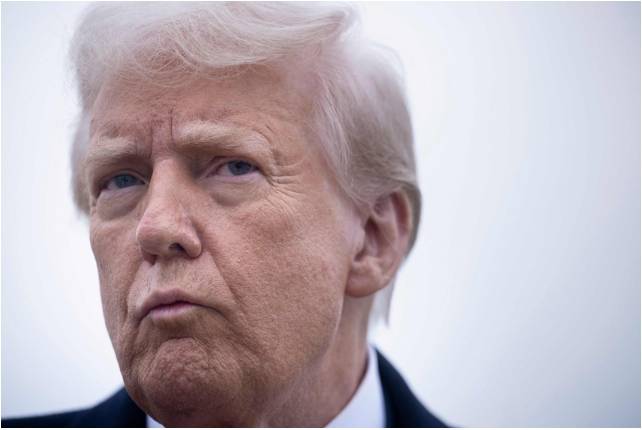
从威胁起诉到名单曝光 特朗普对美联储“双线施压”
Yang Shi Xin Wen· 2025-08-14 04:56
Core Viewpoint - President Trump is considering legal action against Federal Reserve Chairman Jerome Powell over the rising renovation costs of the Fed's headquarters, which have escalated from $1.9 billion to approximately $2.5 billion, indicating a strategy to pressure Powell to resign before his term ends in 2026 [1][4][9]. Group 1: Legal Action and Implications - Trump's potential lawsuit against Powell is seen as a rare and direct pressure tactic, as historically, presidents have had contentious but less confrontational relationships with Fed chairs [1][4]. - The lawsuit is perceived as part of a broader strategy to create public pressure and find justification for Powell's removal, as the president cannot directly dismiss him due to term protections [4][7]. - Legal challenges to the lawsuit include sovereign immunity, lack of standing, and the political question doctrine, which may hinder Trump's ability to proceed with the case [7][9]. Group 2: Candidate List for New Fed Chair - Following Trump's announcement of a potential lawsuit, a new list of candidates to succeed Powell has emerged, expanding from four to eleven candidates, with eight identified as core contenders [12][13]. - Key candidates include Michelle Bowman, Kevin Hassett, Kevin Walsh, Christopher Waller, James Bullard, Philip Jefferson, Loree K. Logan, and Kevin Summerlin, with Waller being a prominent choice due to his pragmatic policies aligning with Trump's economic views [14][16]. - The candidate list reflects a mix of political loyalty and policy alignment, indicating Trump's intent to appoint someone who can support his economic and monetary policy goals [17]. Group 3: Strategic Messaging - The candidate list signals a dual approach of maintaining some continuity while also preparing for significant policy shifts, balancing market reassurance with potential future changes [17]. - Trump's actions represent a coordinated effort to undermine Powell's legitimacy while simultaneously shaping market expectations regarding future monetary policy [18].
废除拜登政策?特朗普又走了一步臭棋,美法院紧急叫停!
Sou Hu Cai Jing· 2025-07-12 09:55
Group 1 - The U.S. Supreme Court's ruling on July 8 allows the Trump administration to proceed with a plan to reduce the federal workforce by approximately 260,000 employees, marking a significant victory for Trump [1] - The White House has declared this decision a decisive victory, claiming it will enhance government efficiency, leading to the revocation of several key policies from the Biden administration [1] - Trump's team is actively pursuing various actions, including the repeal of birthright citizenship protections and the reimplementation of travel bans for certain Muslim-majority countries, indicating a shift towards political retribution under the guise of reform [5] Group 2 - A federal judge in New Hampshire issued a temporary nationwide injunction halting Trump's birthright citizenship restrictions, which were set to take effect on July 27, indicating potential legal challenges ahead [7] - The injunction provides a buffer period for the Trump administration to appeal, potentially escalating the issue to the Supreme Court, which may have to reassess its previous rulings on national injunctions and the constitutionality of Trump's policies [7] - Civil rights lawyers warn that if implemented, the birthright citizenship policy could lead to a significant identity crisis in the U.S., affecting thousands of children born in the country [7] Group 3 - The Trump administration is restructuring the power dynamics through the judicial system, with a focus on appointing conservative judges, which raises concerns about the balance of power among the three branches of government [10] - The ongoing reforms are being scrutinized for their potential to either improve efficiency or undermine democratic institutions, highlighting the contentious nature of these changes [10]
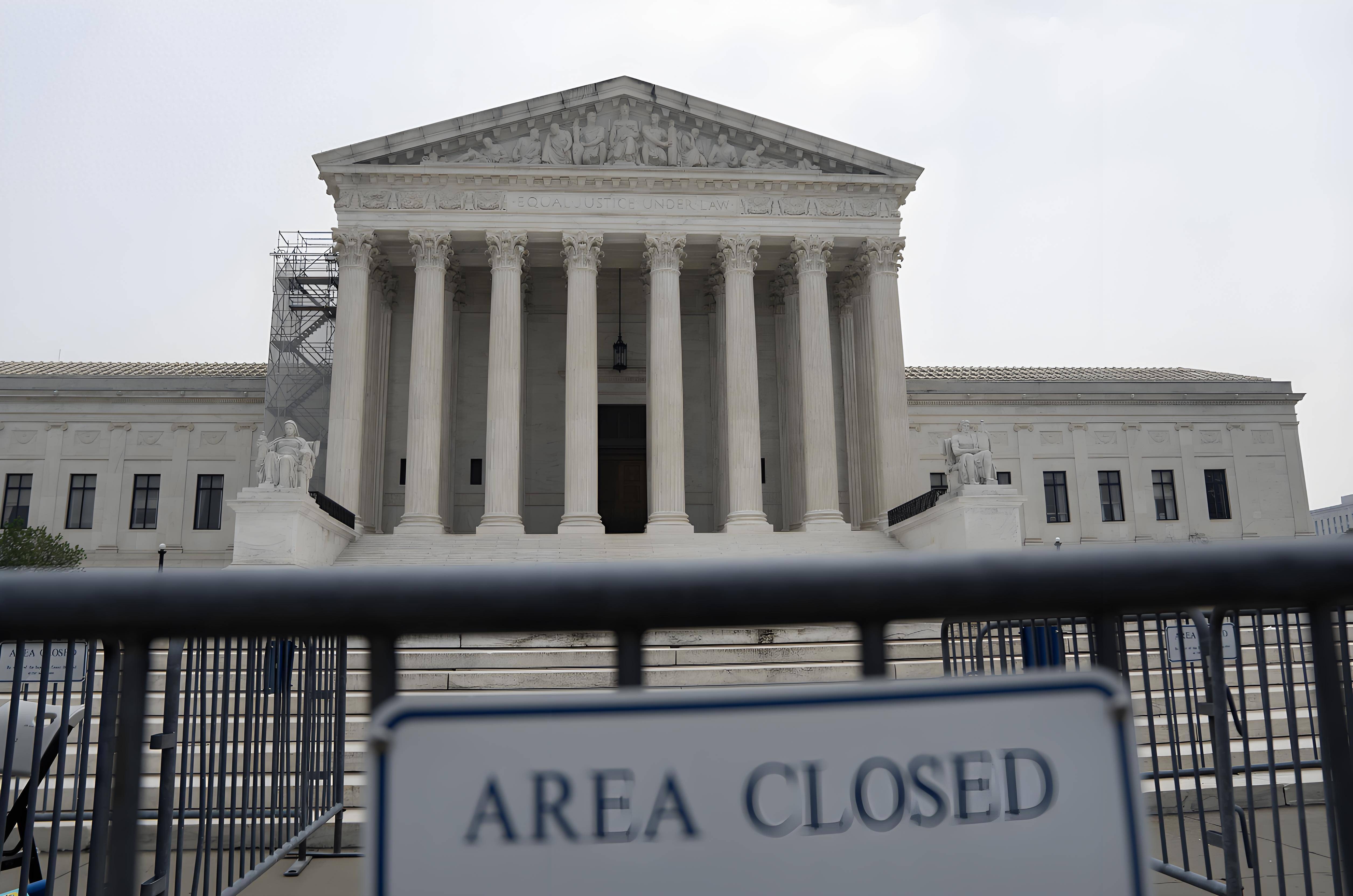
特朗普政府的那些官司,现在怎么样了
Xin Hua She· 2025-06-16 08:27
Core Points - The Trump administration is facing numerous lawsuits, with over 300 legal challenges arising from executive orders within the first five months of governance [1] - Key lawsuits include those related to tariffs, immigration, and government efficiency, with many expected to reach the Supreme Court [9] Tariff Litigation - The Trump administration's tariff policies have led to at least seven lawsuits from various states and organizations, with a notable case involving 12 states challenging the legality of "reciprocal tariffs" [2] - The U.S. International Trade Court ruled against the administration's tariffs, but the decision was temporarily stayed by the Federal Circuit Court [2][3] Harvard University Lawsuit - Harvard University is engaged in a significant legal battle with the Trump administration over the freezing of approximately $2.2 billion in federal funding, which the university claims is an attempt to control academic decisions [4][5] - The lawsuit represents a broader conflict between higher education institutions and the Trump administration, with implications for the 2024 presidential election [4][6] Immigration Litigation - The Trump administration has initiated multiple lawsuits regarding immigration policies, including the attempt to eliminate "birthright citizenship" and terminate temporary legal status for certain immigrants [7] - The Supreme Court is expected to rule on these immigration-related cases, which could facilitate the deportation of nearly one million immigrants [7] Government Efficiency Department Lawsuits - The establishment of the "Government Efficiency Department" has led to over 40 lawsuits due to significant cuts in federal spending and employee layoffs [8] - Notable cases include a temporary injunction against mass layoffs and lawsuits from public broadcasting entities challenging the termination of federal funding [8] Supreme Court Dynamics - Many of the significant lawsuits involving the Trump administration are likely to be adjudicated by the Supreme Court, where the conservative majority may influence outcomes favorably for the administration [9] - The political polarization in the U.S. raises questions about the independence of the judiciary, as justices face pressure from both liberal and conservative factions [9]