
五年规划

Search documents
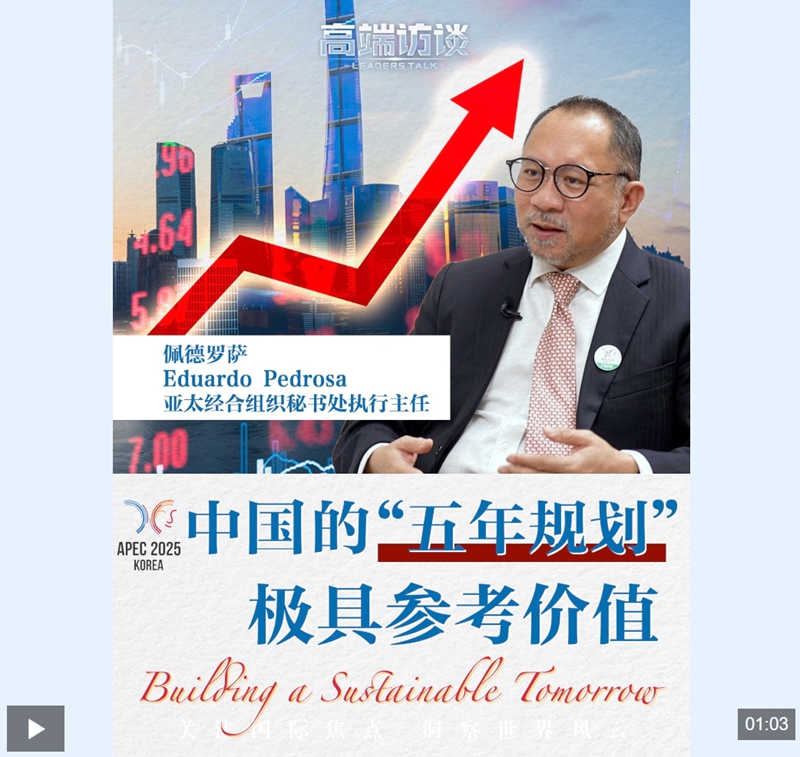
视频丨APEC官员:中国的“五年规划”极具参考价值
Yang Shi Xin Wen Ke Hu Duan· 2025-11-02 13:11
Core Insights - The Executive Director of the APEC Secretariat, Pedroso, emphasized the importance of maintaining foresight, setting clear development goals, and evaluating expected outcomes for global economies [2] Group 1 - Pedroso highlighted that China's "Five-Year Plan" serves as a valuable reference for many economies worldwide [2]

上海市委常委会传达学习习近平总书记重要讲话精神,听取第八届进博会城市服务保障工作汇报,并研究了这些重要事项
Di Yi Cai Jing· 2025-10-31 13:20
Group 1 - The meeting emphasized the importance of implementing the strategic guidance of the five-year plan to promote high-quality economic and social development in Shanghai [1][2] - The city aims to enhance the quality of the China International Import Expo (CIIE) by providing first-class urban services and showcasing a favorable business environment [2] - There is a focus on developing Shanghai as a key city for football development, with an emphasis on building a high-quality football ecosystem and promoting youth football [3] Group 2 - The meeting highlighted the need for comprehensive planning and public participation in the formulation of the "14th Five-Year Plan" to reflect the people's needs [1] - It was noted that the city should integrate the CIIE with major industrial developments and investment promotion activities to maximize its spillover effects [2] - The importance of adhering to the principles of the Party in the operation of the Party School was reiterated, aiming to enhance the quality of training and decision-making support for party members [2][3]
五年规划在A股市场的表现特征
淡水泉投资· 2025-10-31 11:03
Core Insights - The "14th Five-Year Plan" serves as a crucial guide for national economic and industrial development, indicating significant policy shifts and their potential impact on the capital market [1][2] - The "15th Five-Year Plan" (2026-2030) emphasizes a proactive policy approach to address both strategic opportunities and risks, focusing on enhancing economic growth and productivity [1][2] Policy Signals from the "15th Five-Year Plan" - The plan aims to build a modern industrial system and develop new productive forces, balancing the expansion of advantages with the reinforcement of weaknesses [2] - It emphasizes upgrading traditional industries while promoting emerging sectors such as renewable energy, aerospace, and advanced manufacturing [2] - The plan addresses insufficient effective demand by enhancing resident consumption rates and optimizing income distribution [2] Market Characteristics During Previous Five-Year Plans - Historical data shows that from the "10th Five-Year Plan" (2001) to the present, the Chinese capital market has experienced coordinated growth in both scale and quality [3] - The Shanghai Composite Index has shown a trend of increasing low points during each five-year planning period, with a general reduction in annualized volatility, indicating enhanced market stability [3][4] Market Performance Around Five-Year Plan Releases - The release of five-year plans has demonstrated a calendar effect on the A-share market, with significant short-term market reactions following the announcements [5][6] - Statistical analysis of market performance around the release dates shows varying impacts, with some plans leading to positive market movements shortly after their announcements [5][6] Industry Performance Linked to Policy - Emerging industries highlighted in the "12th" to "14th Five-Year Plans" have shown varied market performance, with certain sectors outperforming the overall market index [7][9] - Sectors such as environmental protection, semiconductors, and new energy have benefited from both policy support and favorable market conditions, acting as accelerators for growth [9][10]

站上4000点!A股,强势上攻!发生了什么?现在上车还来得及吗?
Sou Hu Cai Jing· 2025-10-29 09:00
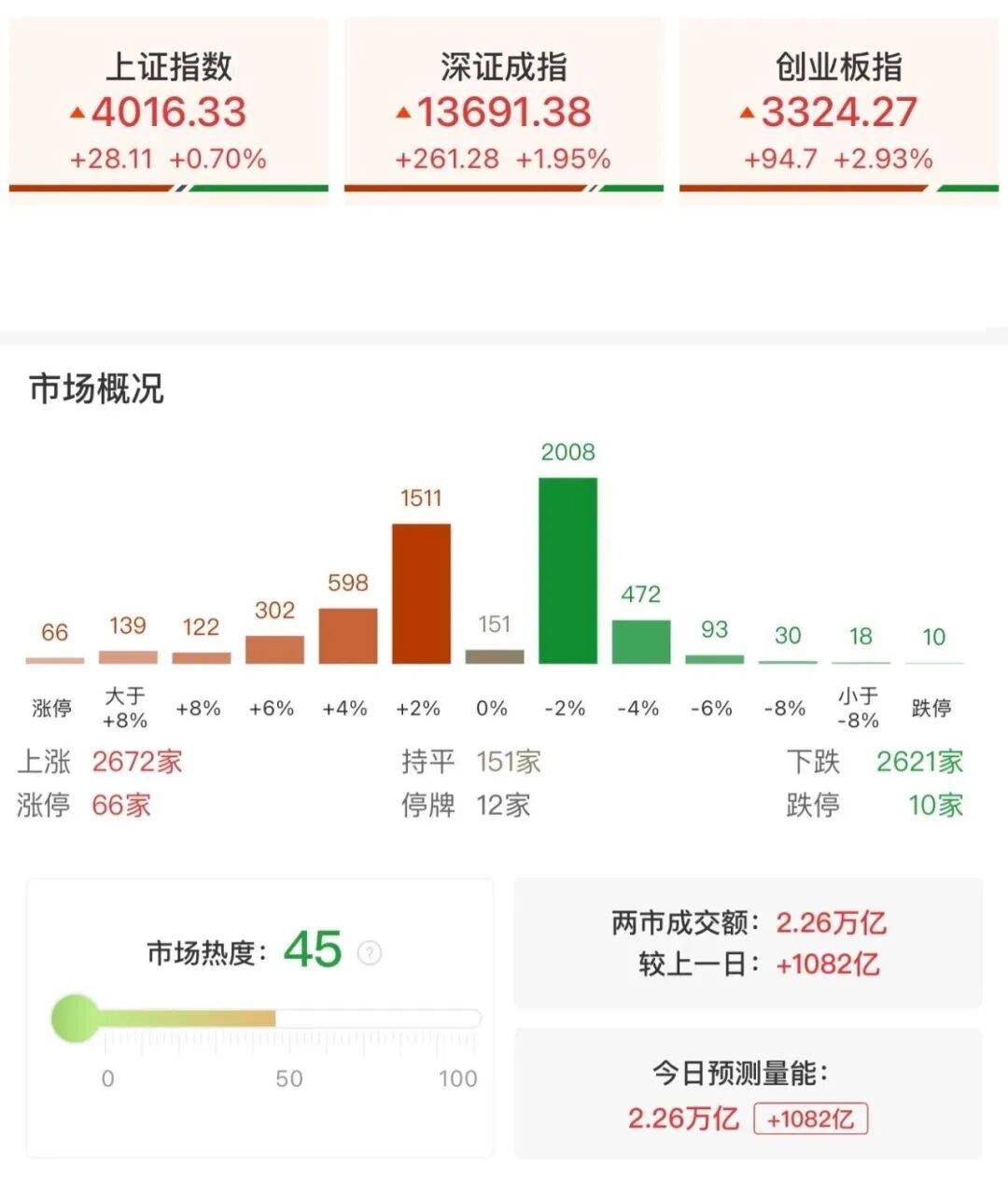
Market Performance - The A-share market experienced a strong rally, with major indices rising significantly, including the ChiNext Index which surged nearly 3% to reach a new high for the year [1] - The Shanghai Composite Index closed above 4000 points, while the North Stock Exchange 50 Index increased by over 8% [1] - The total trading volume in the Shanghai and Shenzhen markets reached 2.26 trillion yuan, an increase of 108.2 billion yuan compared to the previous trading day [1] Sector Performance - The energy storage sector showed strong performance, with companies like Sungrow Power and Tongrun Equipment hitting new highs [1] - The photovoltaic sector also saw explosive growth, with stocks such as LONGi Green Energy and Tongwei Co. reaching their daily limit [1] - The non-ferrous metals sector experienced a rapid rise, with Zhongfu Industrial hitting the daily limit [1] - Conversely, bank stocks collectively declined, with Chengdu Bank dropping nearly 6% [1] Market Drivers - The recent market rally is attributed to multiple factors, including the approval of the 14th Five-Year Plan by the Central Committee, which historically correlates with stock market uptrends [4][7] - The announcement of a new high-tech industry initiative aimed at accelerating the development of strategic emerging industries has sparked enthusiasm in the technology sector [7] - Improvements in external conditions and recovering economic data, along with a loosening of market liquidity, have provided positive support for the market [9] Economic Indicators - From January to September, the total profit of industrial enterprises above designated size reached 53,732 billion yuan, reflecting a year-on-year growth of 3.2% [10] - In September alone, profits for these enterprises increased by 21.6% year-on-year [10] Investment Strategy - A balanced investment strategy is recommended, combining aggressive positions in technology growth sectors with defensive positions in dividend-yielding value stocks [11] - It is advised to maintain a reasonable position size, ideally between 50-70%, and to adjust holdings based on market movements [11]
鄢一龙:五年规划为世界提供了一份难得的“中国确定性”
Sou Hu Cai Jing· 2025-10-28 03:52
Group 1 - The "14th Five-Year Plan" has laid a solid foundation for China's economic development, emphasizing the importance of long-term planning in achieving sustainable growth [2][4] - The "15th Five-Year Plan" focuses on building a modern industrial system, with a strong emphasis on the manufacturing sector, which currently accounts for approximately 30% of global manufacturing value added [4][7] - The integration of manufacturing and service industries is crucial, with a push towards digital solutions and service-oriented manufacturing to enhance competitiveness [5][7] Group 2 - The plan outlines 12 key deployments, with the first being the consolidation and strengthening of the real economy, indicating a strategic shift towards a new type of major power [4][8] - The emphasis on innovation-driven development marks a transition from merely addressing shortcomings to enhancing profitability and establishing a modern industrial framework [8][10] - The goal of achieving a per capita GDP level of middle-income countries by 2035 reflects China's commitment to maintaining mid-to-high-speed economic growth [10][11] Group 3 - China's ongoing commitment to opening up its market will create significant opportunities for international businesses, positioning China as one of the largest single markets globally [12][14] - The country's complete industrial system and strong manufacturing capabilities provide a stable foundation for global supply chains, enhancing production efficiency for partner countries [13][14] - China's focus on green production capabilities addresses global challenges in sustainable development, contributing to the green transition worldwide [13][14]
和音:中国何以成为“前瞻型国家”——读懂中国的确定性①
Ren Min Ri Bao· 2025-10-28 03:17
10月23日,中共二十届四中全会胜利闭幕。国际社会对全会予以高度关注,折射出中国五年规划在全球 议程中的分量。各方对中国继续发挥世界增长稳定锚和动力源作用抱有信心,期待在中国式现代化进程 中更好共享发展机遇。 科学制定和接续实施五年规划,是中国共产党治国理政的重要方式,也是国际社会读懂中国式现代化的 重要窗口。"中国是能够从长远着眼的国家,真的是一个前瞻型的国家。"意大利前总理蒙蒂的感慨,道 出了国际社会对中国既有五年规划也有百年目标的治国智慧的普遍钦佩。 "十四五"时期,面对错综复杂的国际形势和艰巨繁重的国内改革发展稳定任务,中国有效应对一系列重 大风险挑战,以高质量发展的确定性应对各种不确定性:经济增量预计将超过35万亿元,人均GDP已连 续两年超过1.3万美元,位居中等偏上收入国家前列,连续15年稳坐全球制造业"头把交椅",对世界经 济增长的年均贡献率保持在30%左右……无论外部环境怎么变化,中国坚持集中力量办好自己的事,信 心更强大、信念更坚定。 当今世界正处在深刻变革与动荡不安的十字路口,不确定性笼罩全球。统筹中华民族伟大复兴战略全局 和世界百年未有之大变局,中国在变乱交织的国际形势中保持确定性,必 ...
中国何以成为“前瞻型国家”(和音)
Ren Min Ri Bao· 2025-10-27 22:38
科学制定和接续实施五年规划,是中国共产党治国理政的重要方式,也是国际社会读懂中国式现代化的 重要窗口。"中国是能够从长远着眼的国家,真的是一个前瞻型的国家。"意大利前总理蒙蒂的感慨,道 出了国际社会对中国既有五年规划也有百年目标的治国智慧的普遍钦佩。 中国之所以能够创造改写人类历史的发展奇迹,一个重要原因就在于接续编制和实施五年规划,充分发 挥社会主义制度优势,坚持全国一盘棋,坚持一张蓝图绘到底。从1953年开始实施第一个五年计划,到 今年"十四五"规划即将收官,中国从一个积贫积弱的农业国成长为世界第一制造业大国、世界第二大经 济体。既登高望远,又脚踏实地,正是一个又一个五年规划的接续实施,推动中国式现代化不断向前发 展。在全球范围,中国五年规划赢得广泛赞誉,成为世界各国借鉴中国经验的重要方面。 一个坚持与世界各国共享机遇、共谋发展的中国,正日益成为动荡世界中"确定性的绿洲",为全球发展 持续贡献稳定力量、合作力量、进步力量 实现社会主义现代化是一个阶梯式递进、不断发展进步的历史过程。"十五五"时期是基本实现社会主义 现代化夯实基础、全面发力的关键时期。保持战略定力,增强必胜信心,展现历史主动,中国将不断开 ...
中国何以成为“前瞻型国家”(和音) ——读懂中国的确定性①
Ren Min Ri Bao· 2025-10-27 22:20
一个坚持与世界各国共享机遇、共谋发展的中国,正日益成为动荡世界中"确定性的绿洲",为全球发展 持续贡献稳定力量、合作力量、进步力量 10月23日,中共二十届四中全会胜利闭幕。国际社会对全会予以高度关注,折射出中国五年规划在全球 议程中的分量。各方对中国继续发挥世界增长稳定锚和动力源作用抱有信心,期待在中国式现代化进程 中更好共享发展机遇。 当今世界正处在深刻变革与动荡不安的十字路口,不确定性笼罩全球。统筹中华民族伟大复兴战略全局 和世界百年未有之大变局,中国在变乱交织的国际形势中保持确定性,必将对全球发展产生更加重大的 影响。全会审议通过的《中共中央关于制定国民经济和社会发展第十五个五年规划的建议》对未来5年 发展作出顶层设计和战略擘画,是乘势而上、接续推进中国式现代化建设的又一次总动员、总部署。 《建议》既有对大势的高瞻远瞩,也有以问题为导向的实事求是,对发展方向的擘画明确且清晰,有力 增强了国际社会对中国发展的信心。"这是塑造未来5年全球市场的会议""正是这种制度安排让中国能够 高效推进国家发展、实现长期目标""有望为全球创造更多发展机遇,提供更多有益方案"……各方的观 察与期待充分表明,一个坚持与世界各 ...
“五年规划”,把顶层设计和问计于民相统一
Xin Jing Bao· 2025-10-27 08:06
Core Insights - The "15th Five-Year Plan" is being formulated as a continuation of the "14th Five-Year Plan," emphasizing the integration of top-level design and public consultation to ensure effective governance and planning [1][2][4] Group 1: Planning and Governance - The formulation and implementation of five-year plans are crucial experiences for the governance of the Communist Party and represent a significant political advantage of socialism with Chinese characteristics [2] - The "15th Five-Year Plan" period is identified as a critical time for solidifying the foundation for achieving socialist modernization, requiring strategic planning across various sectors in response to new challenges and opportunities [2] Group 2: Public Engagement - Public consultation is highlighted as a vital source of wisdom and strength for the five-year planning process, with over 311.3 million suggestions collected during the online consultation for the "15th Five-Year Plan" [3] - Engaging with the public ensures that the planning process aligns with the actual needs and aspirations of the people, fostering a connection between government initiatives and public expectations [3][4] Group 3: Integration of Approaches - The combination of top-level design and public consultation is a distinctive feature of China's development planning system, enhancing the government's ability to coordinate and direct national development while mobilizing public initiative and creativity [4] - The emphasis on both strategic focus and grassroots input aims to create an environment where innovation can thrive at all levels, ensuring that every individual can contribute to the modernization process [4]
科技新观察|创新中国开启关键五年——“十五五”科技坐标解读①
Ke Ji Ri Bao· 2025-10-27 08:04
刚刚闭幕的党的二十届四中全会,审议通过了《中共中央关于制定国民经济和社会发展第十五个五年规 划的建议》(以下简称《建议》),对未来五年发展作出顶层设计和战略擘画。 习近平总书记强调,科学制定和接续实施五年规划,是我们党治国理政一条重要经验,也是中国特色社 会主义一个重要政治优势。 从1953年至今,15个五年规划(计划)见证着中国从一穷二白到繁荣富强的伟大飞跃,引领我国科技事 业取得长足发展,成为世界上具有影响力的科技大国。 "十五五"时期是基本实现社会主义现代化夯实基础、全面发力的关键时期,也是科技强国建设承上启 下、跨越发展的关键时期。党的二十届四中全会提出,"加快高水平科技自立自强,引领发展新质生产 力",为我国未来科技创新事业的关键五年擘画了新蓝图、锚定了新坐标。 自主创新的"关键推力" 五年规划是我国经济社会长远发展的"定盘星",也是我国科技事业"接力式"进步的"关键推力"。 "五年规划作为我们党治国理政的重要经验和中国特色社会主义的显著政治优势,对国家经济发展和科 技创新起到了方向指引、集聚动能、破解时代发展难题的战略性引领作用。"中国科学技术发展战略研 究院党委书记刘冬梅在接受科技日报记者专访时 ...