产业协同

Search documents
成都都市圈2025年GDP超3万亿元 同比增长5.8%
Xin Hua Cai Jing· 2026-01-29 09:08
Core Insights - The Chengdu metropolitan area is projected to achieve a GDP of 31,310.2 billion yuan in 2025, with a year-on-year growth of 5.8%, surpassing the provincial average by 0.3 percentage points, and accounting for 46.3% of Sichuan's total GDP [1][2] Economic Performance - Chengdu leads with a GDP of 24,763.6 billion yuan, while Meishan shows impressive growth with a GDP of 2,008.72 billion yuan; Deyang and Ziyang also progress steadily with GDPs of 3,387.1 billion yuan and 1,150.8 billion yuan, reflecting year-on-year growth rates of 5.4% and 5.8% respectively [1] - The industrial added value of the Chengdu metropolitan area is expected to grow by 7.4% year-on-year, exceeding the provincial growth rate by 0.9 percentage points, indicating strong momentum and complementary dynamics among the cities [2] Industrial Development - The metropolitan area is focusing on industrial collaboration, with nine key industrial chains projected to exceed a combined output of 12,000 billion yuan, and over 2,860 cross-city cooperative enterprises established [1] - Notable industrial growth includes Chengdu's new energy vehicles and lithium-ion batteries, with production increasing by 181.0% and 33.9% respectively; Deyang's electronic and communication equipment manufacturing rising by 44.9%; Meishan's lithium battery growth at 31.1%; and Ziyang's electronic information industry growing by 40.1% [2] Investment and Consumption - Fixed asset investment in the Chengdu metropolitan area is expected to grow by 1.8% year-on-year, outpacing the provincial growth rate by 4.2 percentage points [2] - The total retail sales of consumer goods in the metropolitan area are projected to reach 13,790.5 billion yuan in 2025, with a year-on-year growth of 5.4%, also exceeding the provincial average by 0.3 percentage points, and representing 47.3% of Sichuan's total [2]
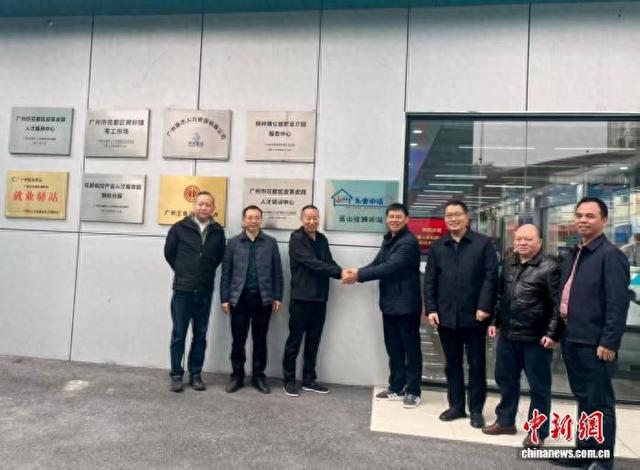
湘粤劳务协作再升级 湖南蓝山设驻外就业服务站
Xin Lang Cai Jing· 2026-01-29 08:28
Core Insights - The establishment of the "Le Ye Station" in the labor market of Shiling Town aims to provide convenient services for nearly 50,000 workers from Lanshan County, facilitating labor cooperation and industrial synergy between Hunan and Guangdong provinces [1][2] Group 1: Industry Development - Lanshan County, known as the "First City of Hunan-Guangdong Connection," has focused on the leather goods and luggage industry, attracting over 170 enterprises and accounting for 45% of the province's leather goods exports, making it a core export base for Hunan [1][2] - The local demand for skilled technical workers and management talents is continuously growing due to the expansion of industrial parks and the clustering of leading companies like Qixiu Technology and Jiayi Leather [1][2] Group 2: Labor Services - The newly established Le Ye Station will provide diversified services such as employment matching and policy consultation, enhancing cross-provincial labor cooperation between Hunan and Guangdong [2] - The station will offer special transportation services for Lanshan workers returning home and establish a rapid response mechanism for urgent needs, ensuring timely support for workers [2] Group 3: Talent Development - The station will serve as a platform for promoting Lanshan's industrial achievements and policies related to entrepreneurship and talent recruitment, aiming to deepen cooperation between enterprises in supply chain integration, technology research, and market expansion [2] - A talent information database will be created to systematically assess the skills, employment intentions, and willingness to return home among Lanshan workers in Guangdong, supporting the goal of making Lanshan a "Chinese Innovation Capital for Leather Goods and Luggage" [2][3] Group 4: Future Plans - Lanshan County plans to continuously optimize the operation and management of the station, transforming it into a "warm station" for workers, a "bridgehead" for talent connection, and a "new engine" for industrial development, promoting orderly labor flow and high-quality industrial collaboration between the two regions [3]

济宁“智造”托举“大国重器”
Da Zhong Ri Bao· 2026-01-29 02:29
Group 1 - The core viewpoint of the articles emphasizes the role of Jining's "smart manufacturing" in enhancing the capabilities of major national equipment through three "intelligent chains": wisdom, intelligence, and aggregation [1][6] - Jining has established a robust innovation ecosystem that integrates technological and industrial innovation, resulting in the creation of 206 provincial-level R&D centers and over 2,200 high-tech enterprises [2][3] - The digital transformation in Jining's manufacturing sector has reached a 92.7% rate among large-scale enterprises, significantly improving production efficiency and product reliability [3][4] Group 2 - The introduction of AI technology in construction machinery, such as the world's first AI intelligent bulldozer, has increased operational efficiency by 40% and represents a significant breakthrough in the global engineering machinery industry's smart transformation [4][5] - Jining's collaborative industrial ecosystem, characterized by the "chain leader system," has facilitated the integration of various industries, contributing to a 10.2% growth in manufacturing value added in 2025 [4][6] - Continuous breakthroughs in technological innovation and deep penetration of smart manufacturing have transformed Jining's manufacturing industry from a supporting role to a leading position in the sector [6]

成都都市圈GDP站上三万亿元台阶
Sou Hu Cai Jing· 2026-01-29 01:24
Economic Overview - The GDP of the Chengdu metropolitan area reached 31,310.2 billion yuan in 2025, accounting for 46.3% of the province's total [1] - The GDP growth rate for the Chengdu metropolitan area was 5.8%, surpassing the provincial average by 0.3 percentage points [1] - The total retail sales of consumer goods in the Chengdu metropolitan area amounted to 13,790.5 billion yuan, with a year-on-year growth of 5.4%, representing 47.3% of the province's total [2] Industrial Growth - The industrial added value above designated size in the Chengdu metropolitan area grew by 7.4% year-on-year, exceeding the provincial growth rate by 0.9 percentage points [2] - Key sectors showed significant growth: - Chengdu's new energy vehicles and lithium-ion batteries saw production increases of 181.0% and 33.9% respectively [2] - Deyang's main industries grew by 5.4%, with electronic and communication equipment manufacturing increasing by 44.9% [2] - Meishan's lithium battery production grew by 31.1%, and liquid crystal display modules increased by 20.6% [2] - Ziyang's electronic information industry grew by 40.1%, and lithium-ion batteries increased by 63.3% [2] Investment Trends - Fixed asset investment in the Chengdu metropolitan area increased by 1.8% year-on-year, outperforming the provincial growth rate by 4.2 percentage points [2] Strategic Initiatives - The "2026 Chengdu Metropolitan Area Collaborative Plan" aims to promote brand matrix expansion and diversify market outreach, focusing on key industries such as electronic information, equipment manufacturing, photovoltaic, and dental medical sectors [3] - The plan targets the expansion of over 800 product categories into overseas markets, with goals to add more than 700 foreign trade enterprises and exceed 4,000 cross-border e-commerce companies [3]
济宁|济宁“智造”托举“大国重器”
Da Zhong Ri Bao· 2026-01-29 01:13
Core Insights - The article highlights the role of Jining's manufacturing industry in supporting major national projects through the integration of three "intelligent chains": wisdom, intelligence, and aggregation [2][3][7] Group 1: Technological Innovation - Jining's manufacturing sector leverages technological innovation as a key driver, exemplified by the production of high-speed train brake discs that meet international standards through advanced casting formulas and heat treatment processes [2][3] - The local government has established 206 provincial-level R&D centers and nurtured 1,378 high-quality enterprises, including 95 national-level "little giants" and champions, contributing to breakthroughs in critical technologies [3][4] Group 2: Digital Transformation - The depth of digital transformation in Jining's manufacturing industry is underscored by a 92.7% digital transformation rate among regulated enterprises, supported by initiatives like the "Ten Major Projects" and "Eight Major Actions" for digital economy development [4][5] - The revenue of the core digital economy industry has surpassed 80 billion, indicating significant growth and efficiency improvements in production processes [4][5] Group 3: Collaborative Ecosystem - Jining's manufacturing ecosystem is characterized by collaborative efforts across the industrial chain, with a focus on collective strength rather than isolated efforts, which is essential for supporting advanced manufacturing [4][6] - The "chain leader system" implemented in Jining promotes collaboration among enterprises, enhancing the overall industrial framework and contributing to a 10.2% increase in manufacturing value added [5][6] Group 4: AI and Smart Manufacturing - The launch of the world's first AI smart bulldozer by Shantui Engineering Machinery Co., which improves construction efficiency by 40%, marks a significant advancement in the intelligent transformation of the engineering machinery industry [5][6] - The integration of AI technology in manufacturing processes has facilitated a seamless connection between R&D, production, and service, driving innovation and collaboration among upstream and downstream enterprises [5][6]
增速达百分之五点八,高于全省零点三个百分点 成都都市圈GDP站上三万亿元台阶
Si Chuan Ri Bao· 2026-01-29 00:25
Economic Overview - The GDP of the Chengdu metropolitan area reached 31,310.2 billion yuan in 2025, accounting for 46.3% of the province's total [1] - The GDP growth rate for the Chengdu metropolitan area was 5.8%, surpassing the provincial average by 0.3 percentage points [1] - Chengdu led the metropolitan area with a GDP of 24,763.6 billion yuan, while Meishan's GDP reached 2,008.72 billion yuan, entering the "200 billion club" [1] Industrial Growth - The industrial added value above designated size in the Chengdu metropolitan area grew by 7.4% year-on-year, exceeding the provincial growth rate by 0.9 percentage points [2] - Notable growth in specific sectors included a 181.0% increase in Chengdu's new energy vehicles and a 33.9% rise in lithium-ion battery production [2] - Deyang's main industries saw a 5.4% increase, with electronic and communication equipment manufacturing growing by 44.9% [2] Investment and Consumption - Fixed asset investment in the Chengdu metropolitan area increased by 1.8% year-on-year, outperforming the provincial growth rate by 4.2 percentage points [2] - The total retail sales of consumer goods reached 13,790.5 billion yuan, with a year-on-year growth of 5.4%, accounting for 47.3% of the province's total [2] Strategic Initiatives - The "2026 Chengdu Metropolitan Area Outbound and Overseas Plan" aims to promote brand matrix expansion and diversify market outreach, focusing on key industries such as electronic information and equipment manufacturing [3] - The plan targets the expansion of over 800 product categories into overseas markets and aims to add more than 700 foreign trade enterprises and exceed 4,000 cross-border e-commerce companies [3]
成都都市圈GDP站上3万亿台阶
Sou Hu Cai Jing· 2026-01-28 23:08
Core Insights - Chengdu Metropolitan Area's GDP reached 3 trillion yuan in 2025, accounting for 46.3% of the province's total, marking it as a key driver for high-quality economic development in Sichuan [1] - The GDP of the Chengdu Metropolitan Area grew by 5.8% year-on-year, surpassing the provincial growth rate by 0.3 percentage points [1] - Industrial collaboration is identified as the main engine for economic growth, with the value of nine key collaborative industrial chains exceeding 1.2 trillion yuan [1] Economic Performance - The industrial added value of the Chengdu Metropolitan Area increased by 7.4% year-on-year, outpacing the provincial growth rate by 0.9 percentage points [2] - Notable growth in specific sectors includes a 181.0% increase in Chengdu's new energy vehicles and a 44.9% increase in electronic and communication equipment manufacturing in Deyang [2] - Fixed asset investment in the Chengdu Metropolitan Area rose by 1.8% year-on-year, exceeding the provincial growth rate by 4.2 percentage points [2] Consumer Market - The total retail sales of consumer goods in the Chengdu Metropolitan Area reached 1.379 trillion yuan in 2025, with a year-on-year growth of 5.4%, accounting for 47.3% of the province's total [2] Future Plans - The "2026 Chengdu Metropolitan Area Outbound and Overseas Plan" aims to promote over 800 product categories in international markets, targeting the expansion of foreign trade enterprises and cross-border e-commerce [3]
瑞浦兰钧拟合共斥资5000万元透过收购和增资方式获取福安国隆纳米材料有限公司10.8696%股权
Zhi Tong Cai Jing· 2026-01-28 14:25
Group 1 - The company has entered into an investment agreement to acquire a 10.8696% stake in the target company, Fuan Guolong Nano Materials Co., Ltd., for a total consideration of RMB 5 million, which includes RMB 1 million for the purchase of existing shares and RMB 4 million for capital increase [1] - The target company offers a fourth-generation high-voltage lithium iron phosphate (LFP) that matches the cost of third-generation LFP while providing superior performance, which has been reflected in the company's commercial vehicle products [2] - The target company possesses industry-leading technology for nickel-iron-based LFP cathode materials and aims to achieve resource security and efficient utilization through collaboration with the company's controlling shareholder, Qingshan Group [2] Group 2 - The investment strengthens the company's control over the supply chain, which is crucial for its ongoing market expansion strategy in the commercial vehicle sector [2] - The target company has developed an "one-step joint sintering method" that reduces the number of sintering processes, lowers carbon emissions, and significantly decreases wastewater, making it more environmentally friendly [2] - The target company's fourth-generation LFP cathode materials have been in mass production for one year, with a total output of 15,000 tons as of November 2025, and the fifth-generation product is currently undergoing user testing [2][3]
瑞浦兰钧(00666)拟合共斥资5000万元透过收购和增资方式获取福安国隆纳米材料有限公司10.8696%股权
智通财经网· 2026-01-28 14:24
Core Viewpoint - The company has entered into an investment agreement to acquire a stake in Fu'an Guolong Lithium Material Co., Ltd., enhancing its control over upstream resources and ensuring supply chain stability in the commercial vehicle market [1][2]. Group 1: Investment Agreement - The company will purchase 100% of the target company's equity for RMB 10 million and subscribe to an additional capital increase of RMB 40 million, resulting in a total ownership of 10.8696% in the target company [1]. - The target company will not become a subsidiary, and its financial statements will not be consolidated into the company's financial reports [1]. Group 2: Product and Market Position - The target company offers fourth-generation high-voltage lithium iron phosphate (LFP) that matches the cost of third-generation LFP while providing superior performance, which has been reflected in the company's commercial vehicle products [2]. - The target company has developed industry-leading technology for nickel-iron-based LFP cathode materials, enabling resource collaboration with the company's controlling shareholder, Qingshan Group, to achieve efficient resource utilization and potential cost reductions [2]. Group 3: Environmental and Technical Advancements - The target company has implemented a "one-step joint sintering method" that reduces the number of sintering processes, lowers carbon emissions, and significantly decreases wastewater, contributing to environmental sustainability [2]. - The fourth-generation LFP cathode material has been in mass production for one year, with 15,000 tons produced by November 2025, and the fifth-generation product is currently undergoing user testing [2][3]. Group 4: Strategic Collaboration - The company recognizes the importance of collaborating with enterprises that have continuous technical development capabilities to maintain technological leadership and ensure confidentiality, with equity cooperation being an effective means to protect R&D advantages and promote deep collaboration [3].
山东加速济青都市圈联动:推进100个标志性工程 建10个产业协同园区|聚焦2026山东两会
Jing Ji Guan Cha Wang· 2026-01-28 14:03
Core Insights - The Shandong provincial government is accelerating the integration of urban clusters and the coordinated development of the Jinan and Qingdao metropolitan areas, with plans to implement 100 landmark projects by 2026 [2][9] - The Jinan metropolitan area covers 22,300 square kilometers with a population of approximately 18.1 million, while the Qingdao metropolitan area spans 21,500 square kilometers with around 15.6 million residents [4] - The integration of these metropolitan areas is driven by national policies aimed at creating a unified market and enhancing regional economic connections [4][6] Urban Cluster Integration - The Jinan and Qingdao metropolitan areas were approved for construction during the 14th Five-Year Plan period, marking a shift from isolated development to collaborative growth [3][4] - The government emphasizes the importance of urban clusters as a driver for regional coordinated development, with Shandong being the only northern province with two national-level metropolitan areas [6] Infrastructure Development - Significant progress has been made in transportation infrastructure, including the "bus-like" operation of the Jinan-Qingdao high-speed railway, facilitating a one-hour commute within the metropolitan area and 1.5 hours between the two [5][9] - The completion of key projects like the Weifang-Yantai high-speed railway and various highway upgrades supports the connectivity needed for metropolitan integration [5] Economic Impact - From 2018 to 2024, the combined GDP of the Jinan and Qingdao metropolitan areas increased from 38.8% to 42.1% of Shandong's total GDP, with their population share rising from 32.0% to 33.7% [5] - The provincial government aims to enhance policy coordination and deepen collaborative efforts to strengthen the competitive position of the Shandong Peninsula urban cluster [6][7] Industrial Collaboration - The integration of industries between Jinan and Qingdao is crucial, with a focus on creating a collaborative industrial development plan and identifying resource advantages [8][9] - The establishment of joint industrial parks and landmark projects is essential for fostering inter-city investment and ensuring mutual benefits through shared revenue mechanisms [9][10]